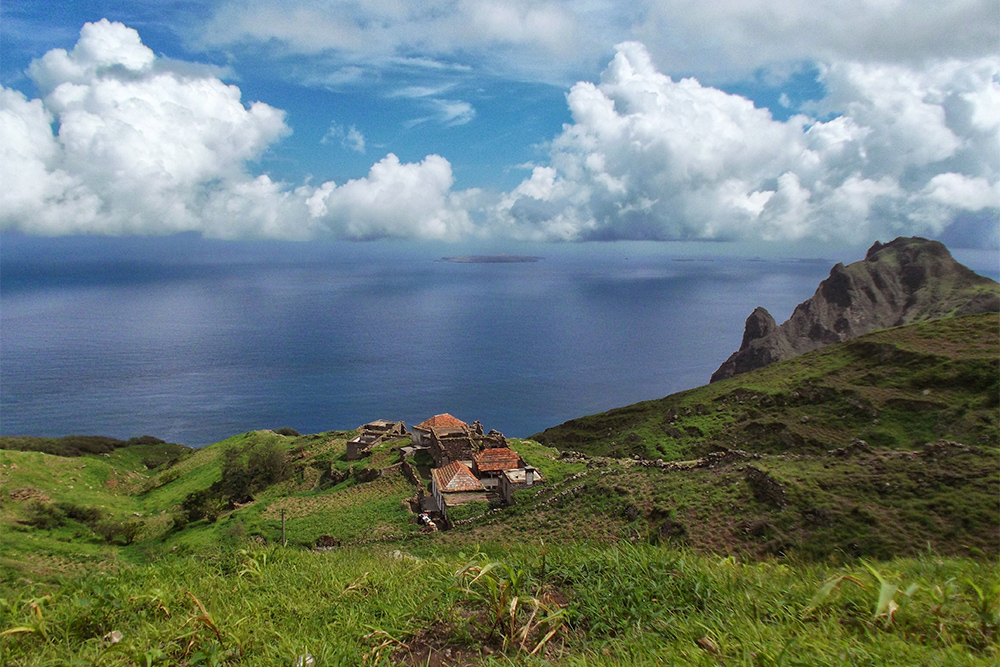
They say that Brava is the most beautiful of the Cape Verde islands. And indeed, it is a cute, small jewel in the middle of the ocean encircled by tiny islets. You can hike around the island in just a couple of hours. There are colorfully painted buildings, surrounded by pretty flowers, and, most importantly, pure serenity.
From Island to Island
Travelling between the islands is not always that easy. It strongly depends on which route you choose. Brava, the smallest and southernmost of the inhabited islands, does not even have an airport.
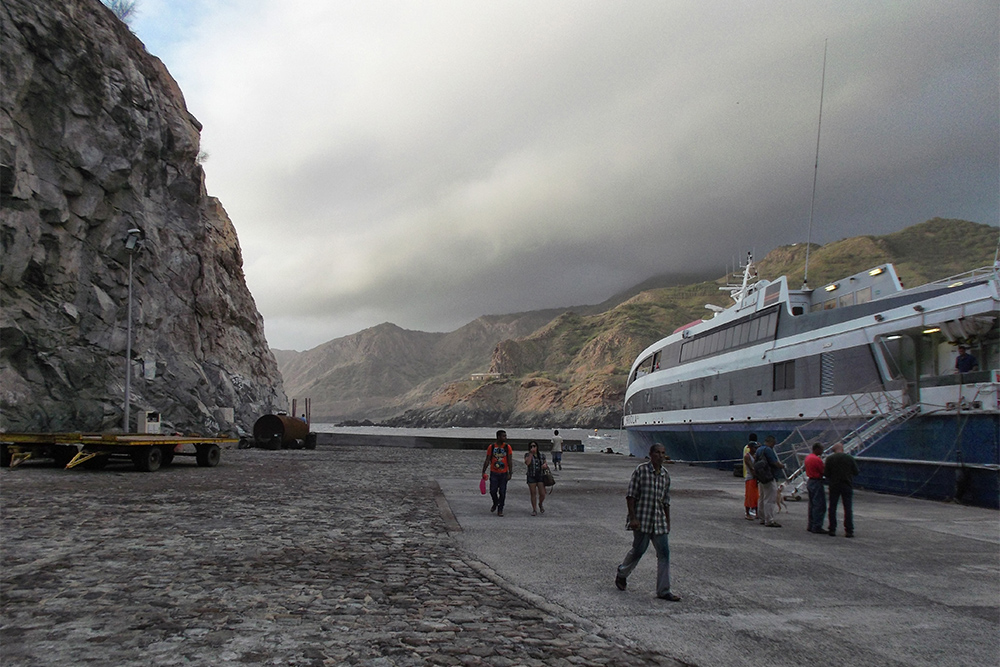
It’s a bit tricky to plan your Brava visit ahead because the ferry doesn’t go when the sea is too rough. So if you’re coming from Santiago, the best way is to plan a stay in Fogo and possibly go to Brava on short notice. Since there is not too much to do there, a stay of one or two days will be sufficient, anyway.
You can check out their schedule on their website, but stay flexible and avoid at any cost going to Brava at the end of your stay when you depend on reliable transport to an international airport.
Vila Nova Sintra
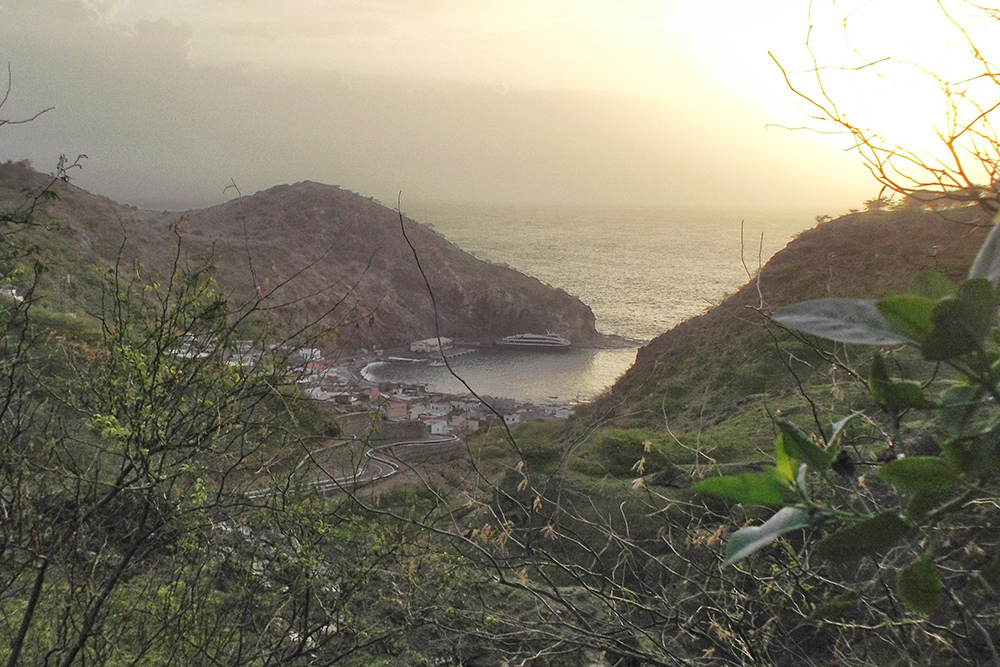
The ferry takes you to the port of Furna. There, disembarking in front of the massive mountain wall is one of the most impressive moments in Brava. Most travellers – thus on the ferry I took, I was the only tourist… – stay in Vila Nova Sintra, a romantic, picturesque place with adorable little houses lining charming narrow streets. To get here, you can take one of the Aluguers, the private taxis waiting at the port. Having your accommodation send an Aluguer for you is certainly a good option. A ride to Vila Nova Sintra should be around 6 €uro.
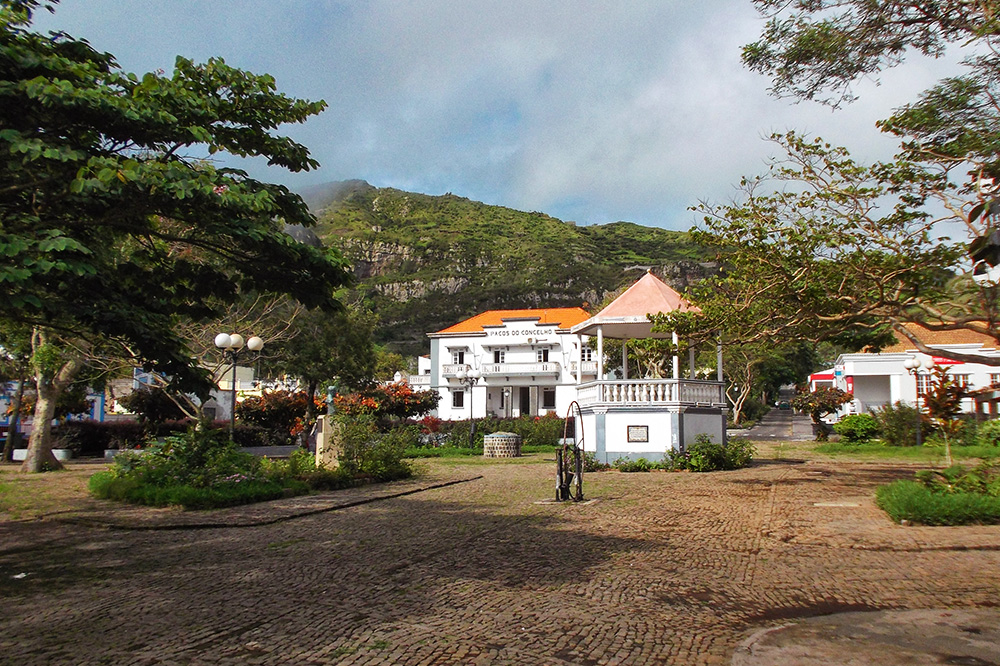
Vila Nova Sintra – named, obviously, after Sintra in Portugal – is said to be the prettiest town in all of Cape Verde. I don’t know about that, but it is certainly very picturesque and well-maintained. Also, it is deemed a bit wealthier than other parts, which is correct. As I pointed out in the main post, there are many Cape Verdians in the diaspora sending either money to the homeland or coming back to retire. Therefore, the old colonial houses were restored and kept in good condition.
The town’s very tranquil center is the Praça Eugénio Tavares, with a statue of this island’s most famous son.
The island is called Ilha das Flores – which translates to Isle of Flowers – for a reason: It is gorgeous and overgrown with lush greenery and many…flowers.
You should cherish that by hiking.
Taking a Dip
If you want to take a dip in the inky-blue ocean, there are two natural pools next to the port of Furna.
However, the water can be unpredictable and dangerous with currents and big waves, so I would choose Brava rather for hiking and enjoying the beautiful plants, and the ocean just from afar.
Taking a Hike
I took the popular hike from Vila Nova Sintra, crossing Nossa Senhora do Monte to Faja d’Água, which is a 6 6-kilometer hike.
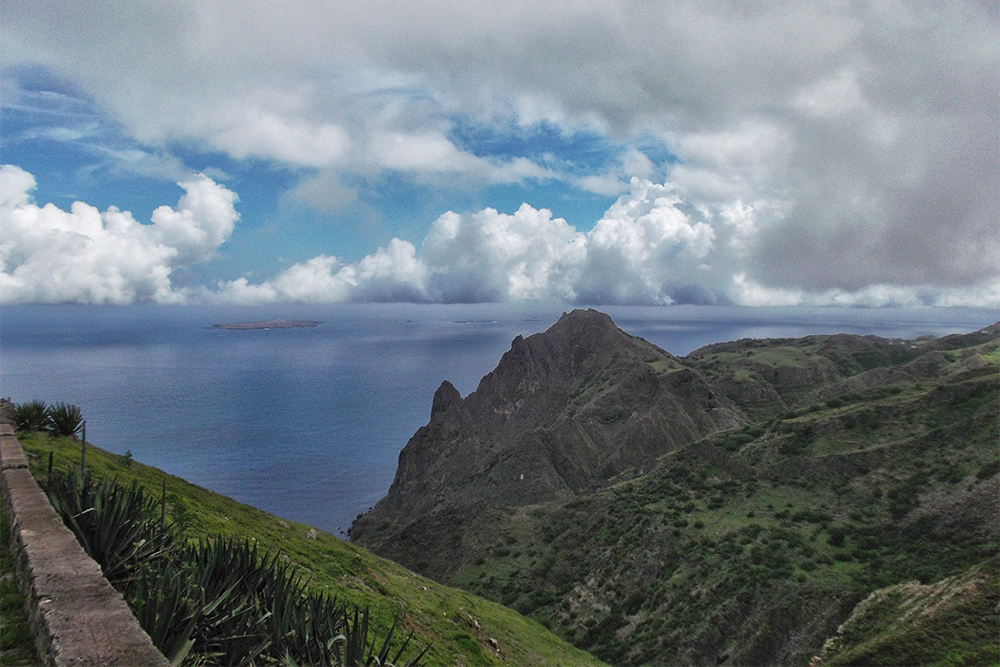
It took me, including many photo stops of the breathtaking views, about two hours.
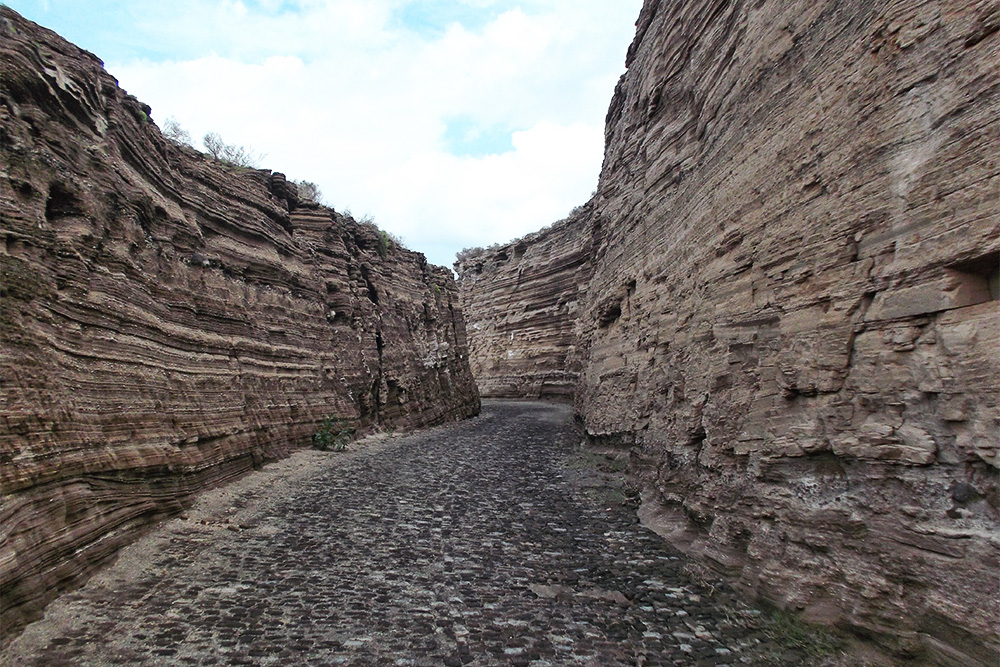
At Faja d’Água, I walked the main – at the same time, only – road up and down twice, passing kids whispering in awe turista to each other. So that gives you an idea of how many turistas they must have seen before.
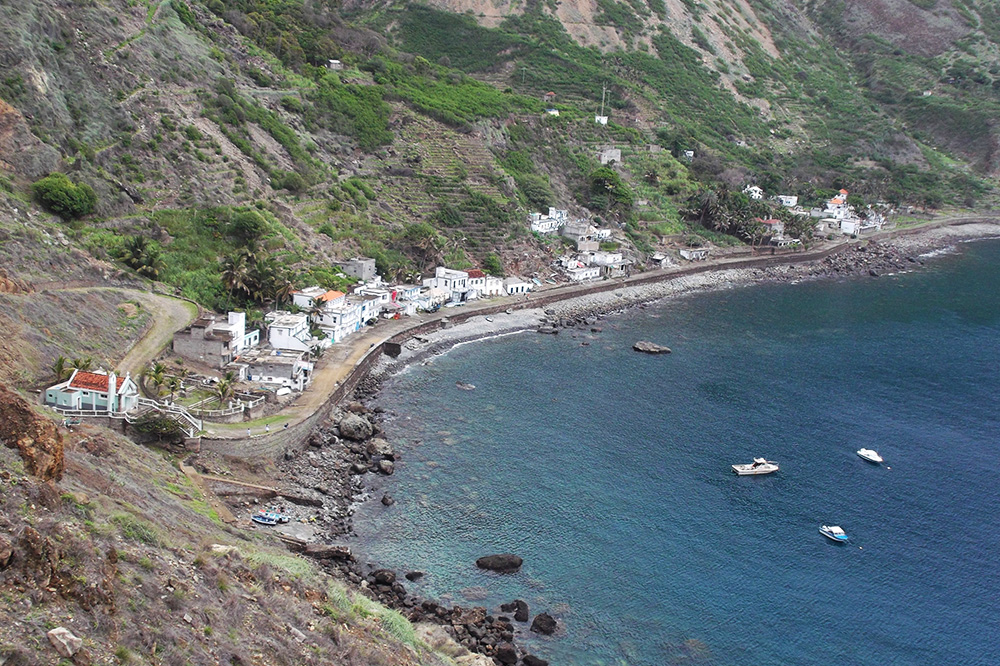
Before taking the ferry back to Fogo, I wanted to take another short hike up to João d’Nole.
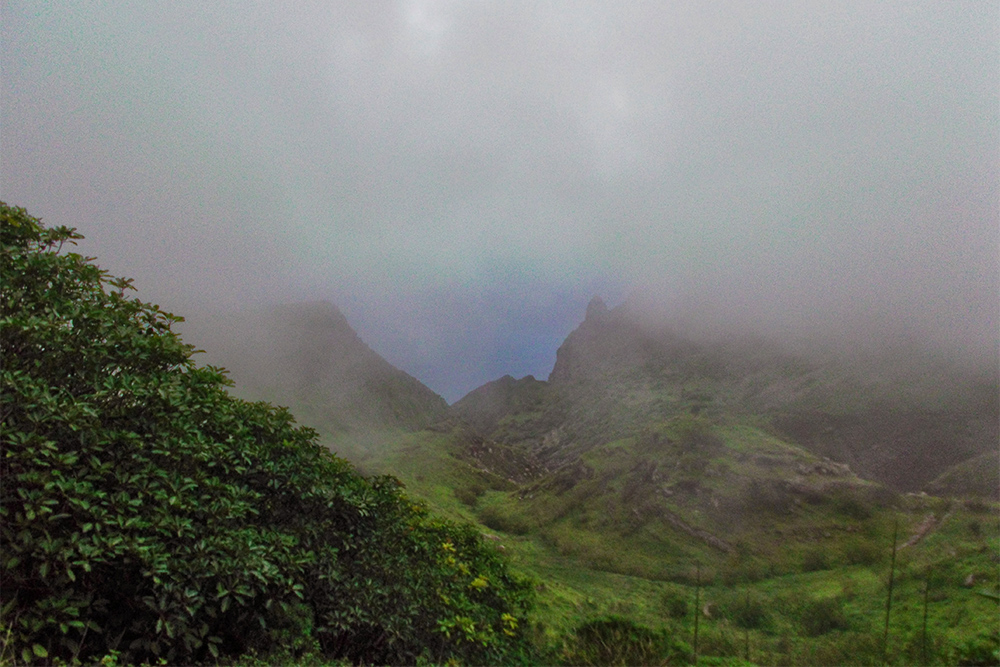
In the afternoon, there is a dense fog coming down on Brava. Within minutes, you cannot see your hand before your eyes. The fog also covers the pavement, makes it all wet, and turns it into chutes.
Of course, I slipped and fell and landed in an unforeseen complicated yoga position and hurt my ankle really, really bad!
And I was still lucky that I didn’t rip all the ligaments in my knee from this ‘sporty’ position. So this teaches me – and hopefully you – to always wear adequate hiking shoes with a good grip sole.
Practical Information on Brava
How to get there and around
As I explained above, not only is Brava an island that’s not accessible by plane, but also the ferry service to Fogo is limited. It also strongly depends on the weather conditions.
You can check the ferry schedule on this website, but stay flexible and avoid, at any cost, tight schedules at the end of your stay when you depend on reliable transport to an international airport.
There is no public transportation on the island of Brava. You can take a cab or an aluguer, a shared cab.
However, most of the time, you’ll be hiking, anyway.
Money
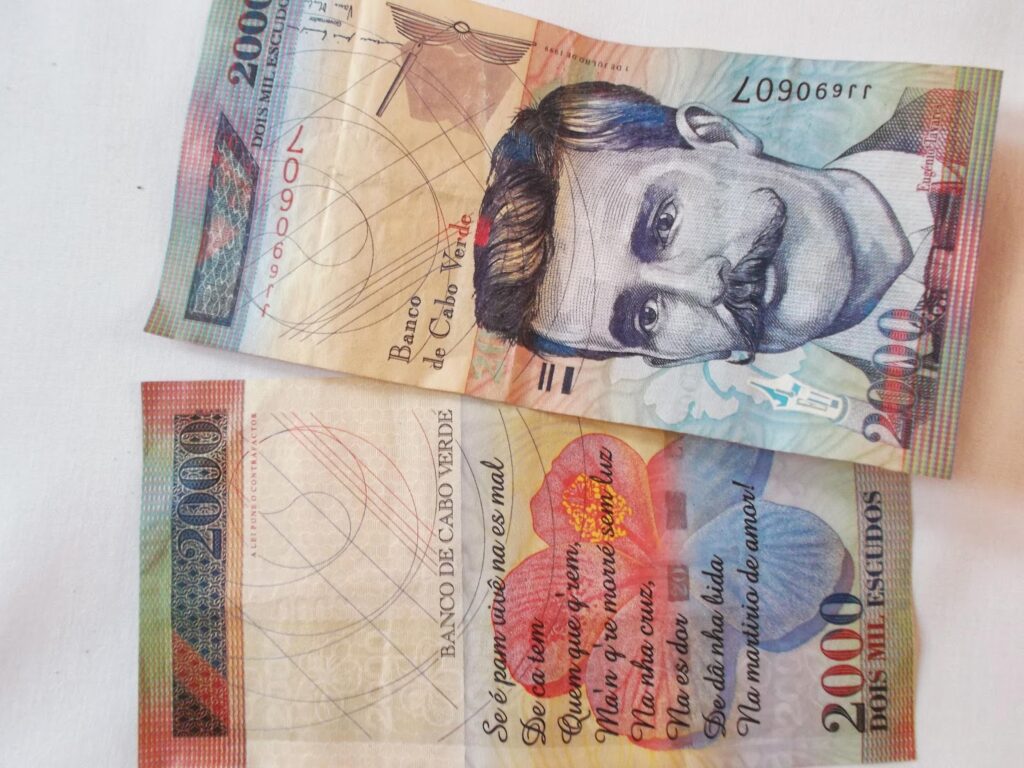
Another remnant from the Portuguese colonial times is the name of the local currency, which is called, just like in Portugal, until the installment of the €uro – Escudo, respectively Escudo de Cabo Verde, abbreviated CVE. For one US$, you get 99 CVE, for one €uro 110 CVE as of July 2025. You can check the current rate here.
Many hotels in Cape Verde decline credit cards due to the cost of clearance through Portugal. Sometimes, they accept some foreign currency like €uros, however, there usually is a disproportionate surcharge. Pre-payment of hotels, for instance, is therefore advisable. Credit cards are only accepted in the largest hotels and seldom at shops or restaurants.
In 2014, Banco Commercial do Atlântico installed the first ATM in the town of Fajã on Brava.
Language
As Cape Verde used to be a Portuguese colony, the official language is Portuguese, but people speak Crioulo. This is a local patois and, like many dialects, differs a tiny bit even from island to island.
People on Brava do speak some English, but it is certainly helpful to have some basic knowledge of the local language.
Before my trip, I’d practiced using babbel. The first lesson is free and supplies you with the most important words to interact with people.
Where to Sleep
I stayed at a small guest house in the heart of the town called Pensão Paulo Sena.
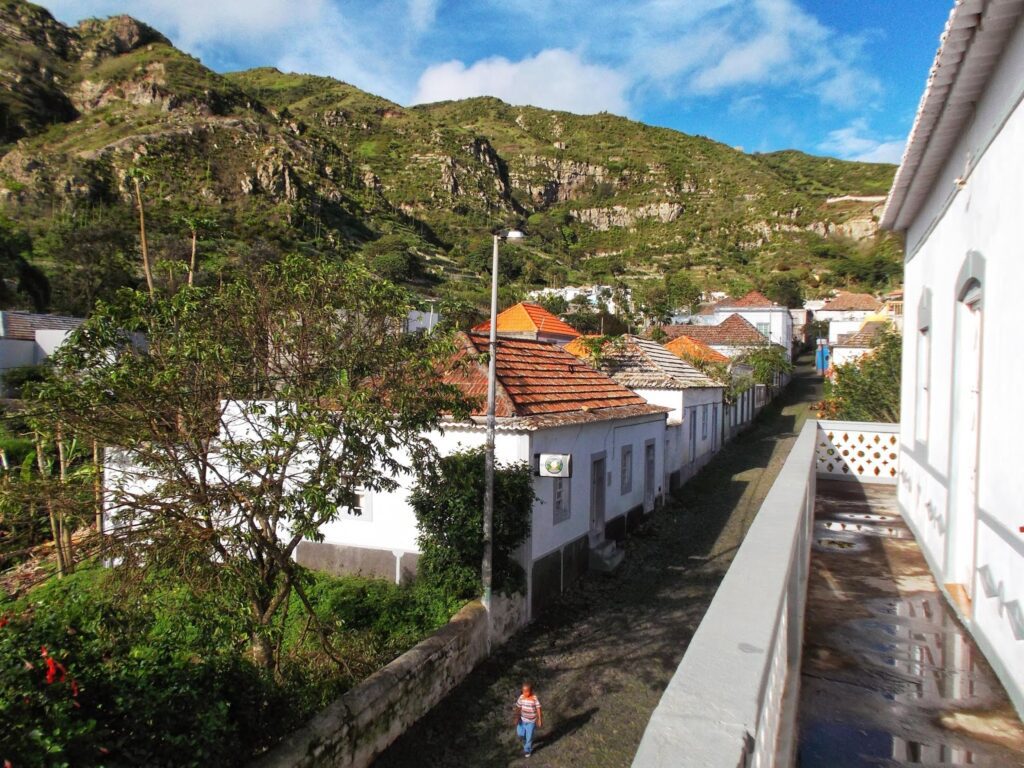
I stayed in a comfy room – a bit like spending the night at grandma’s. The breakfast was fine, and the dinner was just amazing. If you are rather into homey and quirky than into posh, it might be perfect for you.
Especially since Brava is a bit off the beaten track. Therefore, only a handful of suitable accommodations exist. You can check them out here*
Where to Eat
Brava is still a pretty hidden gem, so don’t expect a main road lined with restaurants. I believe that your best option is to have a home-cooked meal at your accommodation. If that’s not an option, try Esplanada Sodadi, a cozy place right on the Praça Eugénio Tavares, the main square. However, do not expect either star cuisine or a very varied menu – by the way, anywhere on the islands.
Do you want to read about all the other beautiful islands I’ve visited in Cape Verde? Then go to the main post and take your pick!
Pinnable Pictures
If you choose to pin this post for later, please make sure to use one of these pictures:
Did You Enjoy This Post? Then You Might Also Like These:
CAPE VERDE – a guide to five amazing islands
Guide to BRAVA, Cape Verde ‘s Blooming Little Island
Guide to SANTIAGO – Cape Verde ‘s Main Island
Guide to FOGO, Cape Verde ‘s Most Varied Island
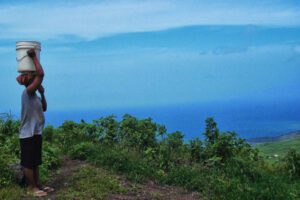
Guide to BOA VISTA, the World’s Most Attractive Heap of Sand
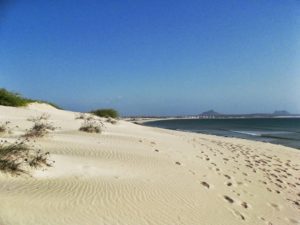
Guide to SAL – from Salt Mine to Coastal Paradise
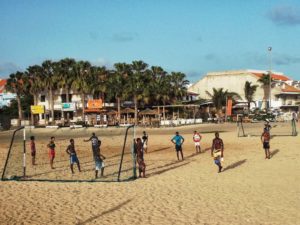
Note: I am completing, editing, and updating this post regularly – last in July 2025.
* This is an affiliate link. If you book through this page, not only do you get the best deal. I also get a small commission that helps me run this blog. Thank you so much for supporting me!
After going through a few of the articles on your blog, I honestly like
your style of writing. I saved it as a favorite to my bookmark website
list.
What should am American guest give to a Brava family providing accomodations?
Wow, that’s a good – and difficult – question. Do they have kids? I always like to give something to the kids like nice watercolors or colorful pencils or something the like. Other than that, it really depends on the family and also a bit on their social status as there are people who have everything and people who are really poor. How about inviting them to a nice restaurant once you’re there?
Very shortly this web page will be famous among all blogging users, due to its nice content
I definitely hope so 🙂
This place looks very peaceful! Their Escudos bill makes me smile reading the poem on it. I might not spend it and just keep it as a souvenir!
That’s why I took pictures 😀 It’s one of the most beautiful bills I’ve ever seen.
Wow, indeed what a cute little island! You have taken us to so many wonderful places…with comprehensive guides to boot!
Wow! This is really comprehensive. I think this post includes everything for planning a trip to Brava. Thank you so much, Renata.
You’re very welcome, however, I must admit that Brava is not that big – hence, it’s easy to cover 😉
Wow! These picture are breathtaking!!! Great tips for someone whose never been to that area of the world before. I’m adding it to my list.
You won’t regret it 🙂
The location looks (and sounds) to be absolutely lovely. I would rather like hiking and seeing those corridors.
It was one of my most pleasant hikes; and those views…. 😀
Wow. Amazing place and great pics too. Love to visit someday. Loved reading this post.
such a serene place! amazing views.. love the landscape photos!!!
This looks amazing! To be honest I didn’t even know Brava existed until reading your post, but it definitely looks like somewhere I’d like to go one day. The view from Pensão Paulo Sena is gorgeous.
Before I planned my trip to Cape Verde, I hadn’t heard of Brava either 😉
Wow this looks beautiful! I haven’t heard of Brava before!
This place looks interesting and I would love to visit it one day. The bay area looks amazing, I could imagine its romantic picturesque view during sunsets.
Oh wow! Looks really beautiful. I would love to visit this place soon!
Yes, it is a mesmerizing little island 🙂
A place to add to my bucket list.
I love the pictures. Brava is such an amazing place to explore.
I know people who went to Cape Verde for military reasons. As a tourist, I think I would like it best for the hiking!
Yes, but they have also amazing beaches, hot music, mystic volcanos….it’s a great place.
Brava looks absolutely gorgeous! I love being near the water (but not ON the water), and I’m a fan of lush, green, flower-filled landscapes. This would TOTALLY be my jam!
Surrounded by water – this place has your name on it 😉
Amazing! It looks really beautiful and peaceful. I wish I can visit this island one day
You won’t regret it.
We did a one day stop in Mindelo on Cape Verde after a trans-Atlantic tour. We were amazed with the natural beauty of the area. But your post has shown me there is so much more to see. I love the idea of taking the ferry between islands to see spots like Brava. But understand that planning with be a the whim of the weather. But definitely worth a day trip to Brava for a hike and those views.
Ah – Mindelo! That’s a place I missed out on. Would have love to visit for the vibrant music scene. But I’ll be back and then I’ll explore even more 🙂
Thanks for the guide 🙂 I would really love to take a hike in this place
I love everything about this place. It’s tranquil, it’s quite hidden so there are no big crowds, the views are gorgeous, and it’s slow-paced. Brava is for me.
Sounds like it 😉
Can’t wait to visit BRAVA, Cape Verde! Seems like a great place. Maybe after the pandemic? I miss traveling!
Viewing BRAVA, Cape Verde through your eyes and words, seems to be an incredible place to visit, thank you for taking me there.
So many amazing views! Looks like it would be the perfect getaway.
Not going to Lie I had to google & learn about Cape Verde in general because I actually thought the 10 island nation was closer to Africa than South America. What a crazy & unique history of Pirates, shipping, & sadly slavery.
As for Brava. I love all the amazing hikes you took from Vila Nova Sintra. Those view points of all the shorelines were so amazing. I especially love the sound of the route crossing Nossa Senhora do Monte to Faja d’Água. Though it saddens me a bit that the water isn’t really swimmable.
What a unique formation to discover too when you hiked amid that Stoney Couloirs. I had never heard of that before.
That looks like such an adorable island. What fun places to explore with a family!
It’s actually extremely family-friendly 🙂
Brava seems like the perfect place to get away and enjoy the scenery without lots of tourists. Thanks for the tip about the dangerous currents – I’m always the one wanting to jump right into the ocean, so it’s good to know.
As long as you are a good swimmer 😉
Looks like an amazing place to visit. I know I would in a heartbeat!
An exciting place to visit. A lot of beautiful and excited activities to do. I will surely enjoy that place.
This place looks amazing! I hope to visit this place someday.
Oh wow, this place looks so pretty! I would love to go to Brava 🙂 the coastline is EPIC! Wow!