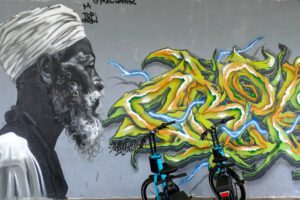
Since Latvia regained independence from the Soviet Union in 1991, the city has gradually embraced public art as a form of expression, moving from underground subculture to more mainstream recognition. Today, street art in Riga combines Eastern European influences with the best of contemporary urban creativity.

Riga
Riga’s historic center boasts a variety of religious architecture and townhouses from the 13th to 17th centuries, with Art Nouveau being a particularly distinctive element of the city’s architecture. As a matter of fact, Riga boasts one of the largest ensembles of Art Nouveau buildings in all of Europe! This architectural heritage reflects the city’s heyday as a trading metropolis during the Russian Empire.
Today, Riga reflects the turbulent history of various periods of rule and political change throughout Latvia. Most recently, Latvia’s independence in 1918 after the First World War, the Soviet occupation from 1940 onward, the Nazi occupation during the Second World War, and finally, renewed Soviet control until renewed independence in 1991. Each of these periods left its mark on the city’s development, social fabric, and cultural identity.
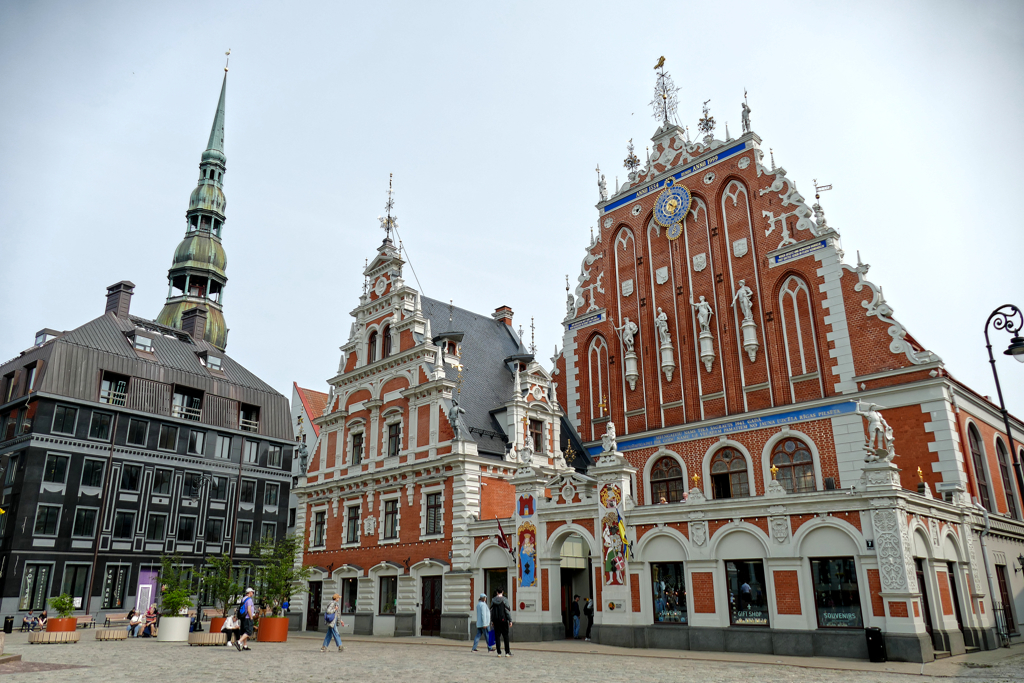
After gaining independence, Riga rapidly developed into a modern European center with a growing economy and cultural diversity. At the same time, the city has made strenuous efforts to preserve its historical heritage and enhance its public spaces. Riga’s creative scene is booming, as evidenced by innovative galleries and a growing number of design studios. The street art community remains relatively low-key. Considered to be the largest city in the Baltics, Riga’s urban art production is relatively marginal compared to either Tallinn or Vilnius. Nevertheless, there are a few noteworthy projects that I present in this post.
Notable Street Art Neighborhood
Street art increasingly defines Riga’s urban landscape and transforms designated spaces into dynamic open-air galleries. Murals, graffiti, and large-scale installations bring color, creativity, and meaning to the city’s walls, tunnels, and public spaces. Often, they reflect on topics related to the country’s identity, freedom, and cultural expression. Although Riga’s street art is growing at a rather slow pace, it’s worthwhile leaving the traditional sightseeing routes to discover also Riga’s street art. It simply gives you an additional perspective on the city.

From traditional paper, canvas, and cardboard frames, art has increasingly shifted to streets, sidewalks, tunnels, and walls. It is a manifestation of freedom and spontaneity.
Riga’s street art scene is still thriving in secret. Whether huge patriotic murals, personal homages, politically charged protest art, or creative trendy districts, there are exciting things to discover in many parts of the city.
The Artists
Riga’s street art community is rather small. Here, I’ll introduce you to the artists who have creatively shaped Riga’s streets. As always, you’ll find their Instagram accounts at the end of this post, where you can see more of your favorite artists’ works.
KIWIE
KIWIE is arguably the most active and well-known Latvian street artist. Although he remains anonymous, he has made a name for himself since the early 2000s with his striking visual language. KIWIE began his artistic career in classic graffiti, but soon developed his own style, more focused on figures and recurring motifs. Today, he is inspired by pop culture, urbanity, and a certain anarchic sense of humor. Beyond Riga’s borders, he has also immortalized himself in Wales, Paris, Vilnius, Hong Kong, and Tel Aviv, to name just a few of his locations.
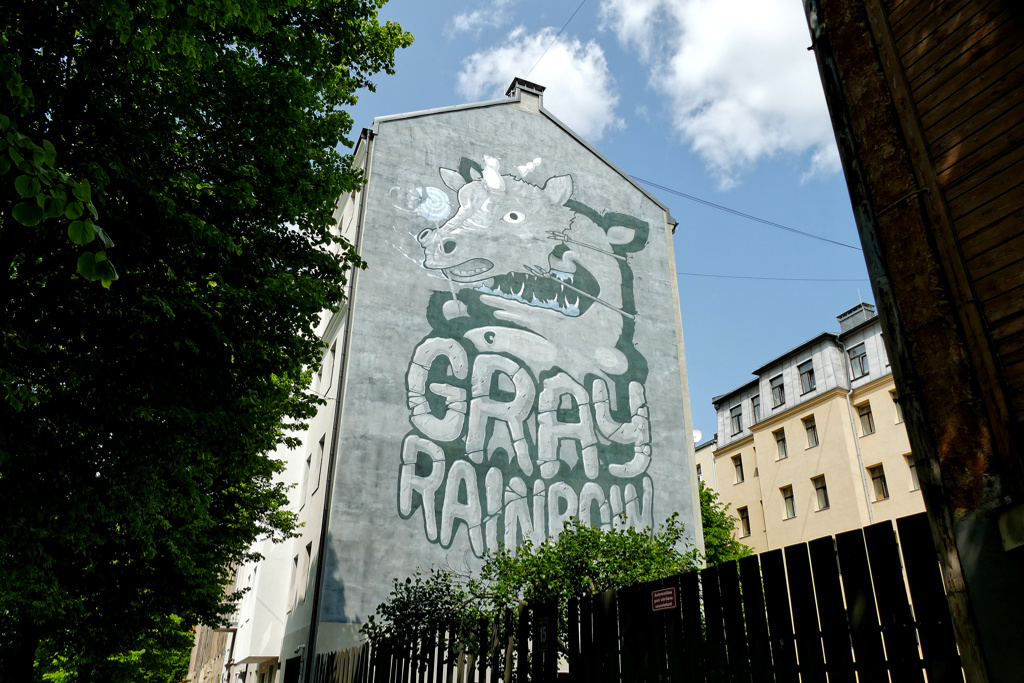
His work isn’t limited exclusively to the street: KIWIE has organized numerous exhibitions. He is known for questioning and blurring the boundaries between street art and gallery art.
There’s More
The launch of his project KIWIE 1001 in 2021 was particularly innovative: a combination of street art and blockchain. Real murals were digitized as NFTs, complete with GPS coordinates, a 3D model, and proof of authenticity. But his concept goes much further: If the real artwork is destroyed or removed, the associated NFT transforms into a so-called Ghost Monster, a digital specter of lost art. In doing so, KIWIE created a completely new form of sustainability and documentation in the street art scene.
KIWIE’s creativity also extends to fashion, product design, and brand collaborations. Among other things, he designed a large-scale graffiti for Porsche’s 75th anniversary and a 3D festival banner for the Latvian Song and Dance Festival.
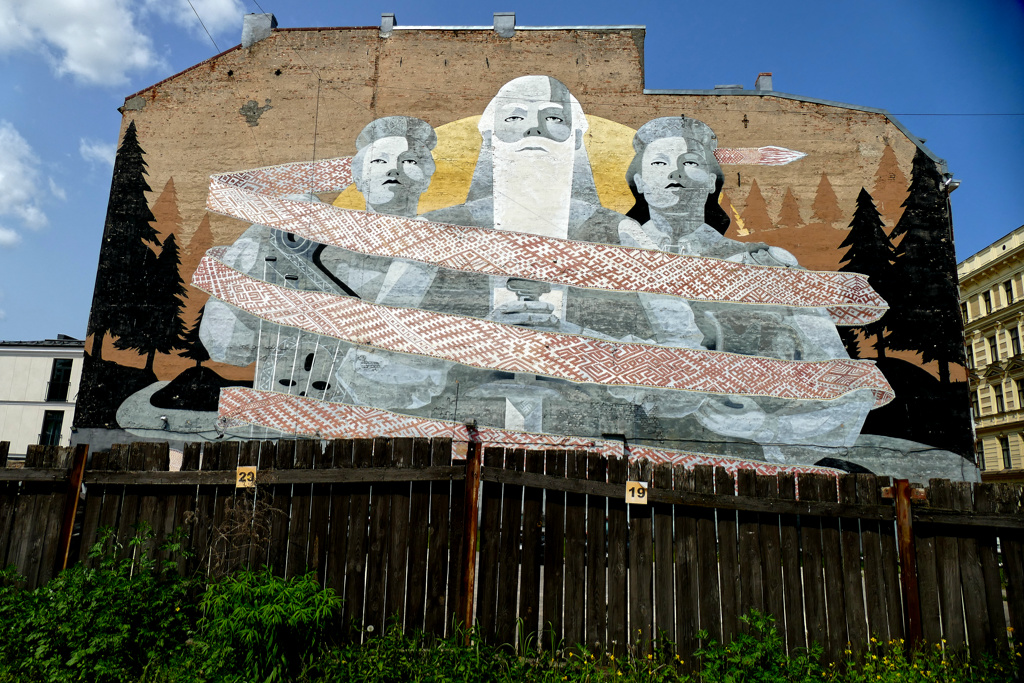
Sun. Thunder. Daugava. in English. KIWIE and Rudens Stencil have collaborated to create the largest mural in the Baltics. A historic Latvian song inspires it, and the artists incorporated traditional patterns to celebrate national identity. The artists create their work by using over 1,500 spray cans on approximately 800 square meters.
With his work, KIWIE exemplifies how street art can be combined with digital media, social relevance, and interdisciplinary creativity.
Dainis Rudens
Saule. Pērkons. Daugava. brings us right to Dainis Rudens. One of Latvia’s most well-known street artists, he is better known by his artist name Rudens Stencil. Rooted in the graffiti and hip-hop scene, he has specialized in large-scale murals since the 2000s, characterized by a strong visual language and social depth. Inspired by urban spaces and city life, Rudens prefers the stencil technique, which he often combines with free-form painting and spray paint.
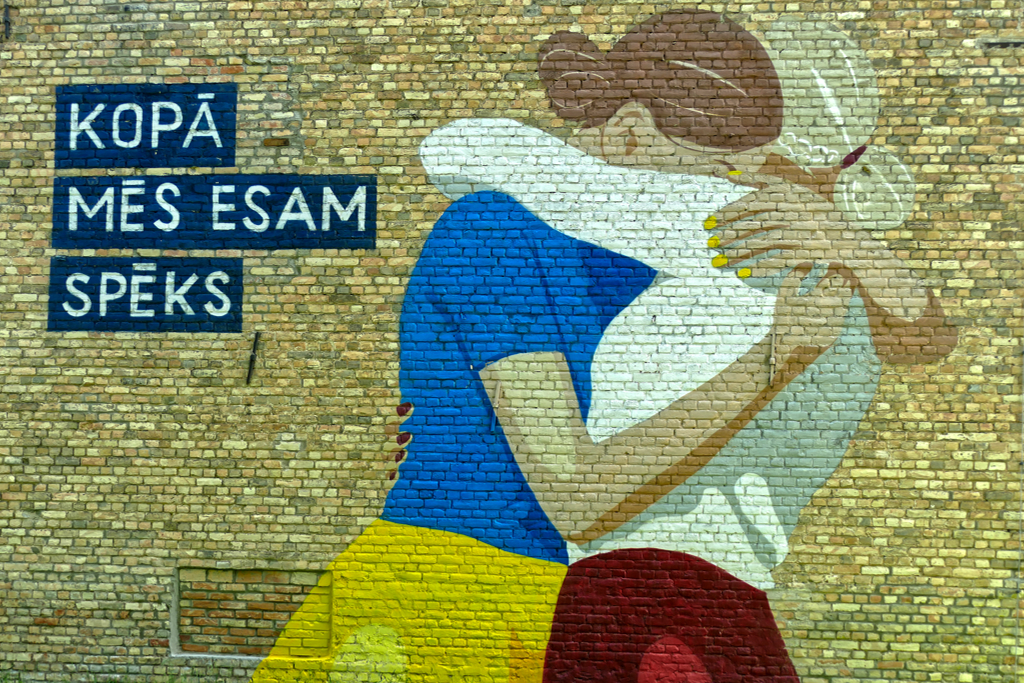
This collaborative work by Dainis Rudens and Ēriks Caune depicts a Latvian and a Ukrainian woman in a firm hug.
Rudens sees street art not only as an art form, but also as a social tool. For example, he initiated the campaign Atdod savu fasādi, which translates to the request Give Your Facade. This way, he searched social media for buildings he could embellish, always with the goal of enhancing the emotional value of urban space in mind.
In projects like the Solidarity Wall for Ukraine, in which around 40 artists participated, he also demonstrates his political and humanistic commitment.
And finally, the Tallinn Street Quarter, one of Riga’s urban meeting and entertainment spots, would seem unimaginable without the expressive and bright works by Rudens Stencil.
Ēriks Caune
Together we are Strong, which, in turn, brings us to Ēriks Caune aka Thobek. Thobek is a versatile artist who lives and works in Riga. Caune began his training in painting and printmaking, then completed a bachelor’s degree in visual communication at the Latvian Academy of Arts, and later returned to traditional painting for his master’s degree.
Today, he presents his works in solo and group exhibitions, but also frequently presents his work in urban spaces. He has participated in several collaborative projects, such as Saule, Pērkons, and Daugava.
Caune is also a vital part of the so-called Gallery Under the Bridge in the Čiekurkalns district, an open-air exhibition space beneath an overpass, which I am introducing below.
Miķelis Mūrnieks
Miķelis Mūrnieks is an emerging artist whose work oscillates between street art, sculpture, installation, and conceptual art. His works are characterized by a strong exploration of physicality, social tensions, and urban identity.
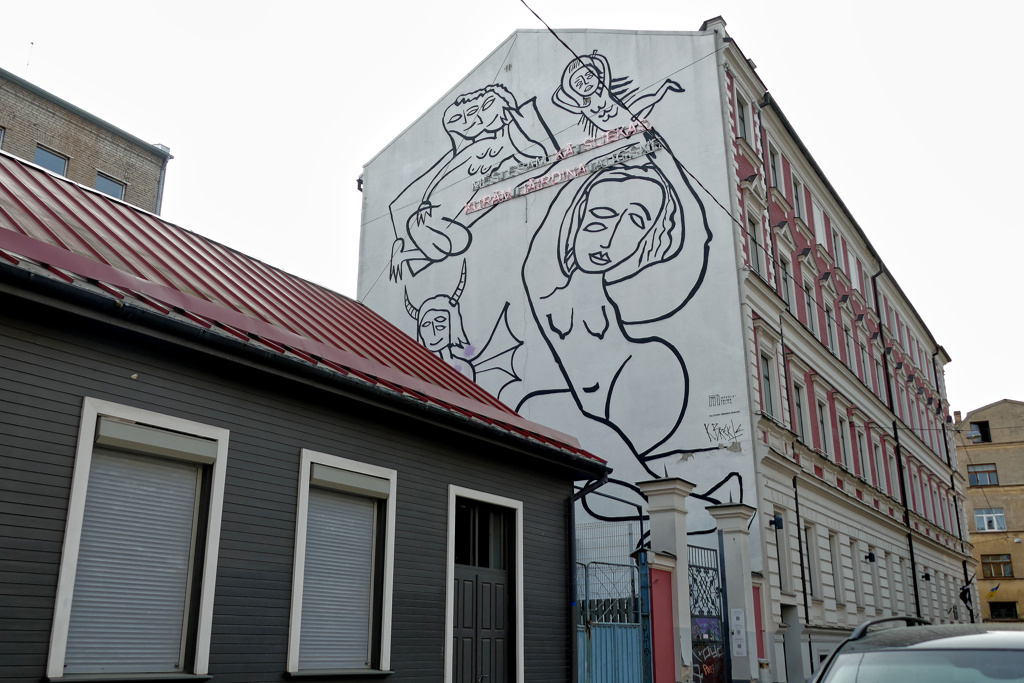
Kristians Brekte designed this homage to the Latvian painter Džemma Skulme, and Miķelis Mūrnieks executed the work together with KIWIE.
Mūrnieks initially gained recognition through projects in the experimental art world, particularly at the Latvian Academy of Arts, where he was part of the alternative exhibition space PILOT. Earlier works used materials such as stainless steel, polyurethane, and latex to explore body forms or tensions between soft and hard surfaces.
In 2022, he attracted attention with the installation Security Patterns, which he presented together with Karlīna Mežecka at the LOW art center in Riga. These works addressed aspects of surveillance, control, and public space without becoming bogged down in blatant statements. Instead, they impressed with their thoughtful choice of materials and spatial arrangements.
Miķelis Mūrnieks is part of a young Latvian art scene that experiments with materiality, theory, and social responsibility. His work is not loud and blatant, but it captivates with its impact and depth.
Edward von Lõngus
Edward von Lõngus is an Estonian stencil artist who is often compared to Banksy because of his style, socio-political themes, and enigmatic identity.
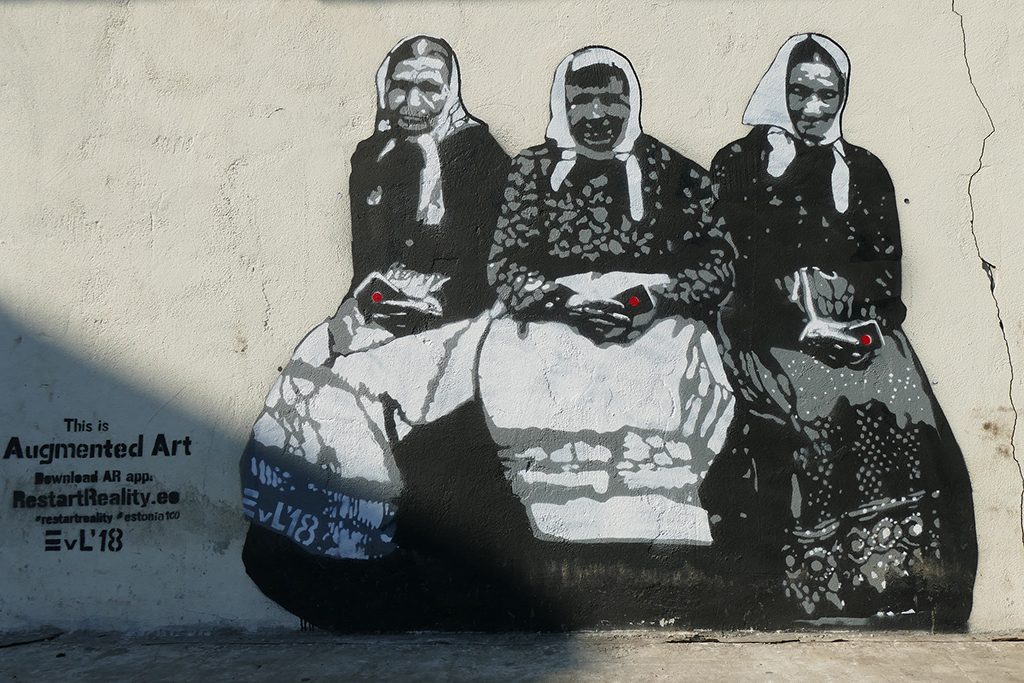
As part of his digital street art project (R)estart Reality, which took place as part of the Estonian Presidency of the European Union and the cultural program for the celebration of the 100th anniversary of the Republic of Estonia, he painted in Berlin, Brussels, Budapest, Copenhagen, Helsinki, London, Paris, Riga, Rome, Vienna, and Vilnius motifs that are closely linked to Estonian culture and history. Each character then tells something about Estonian traditions via an augmented reality app.
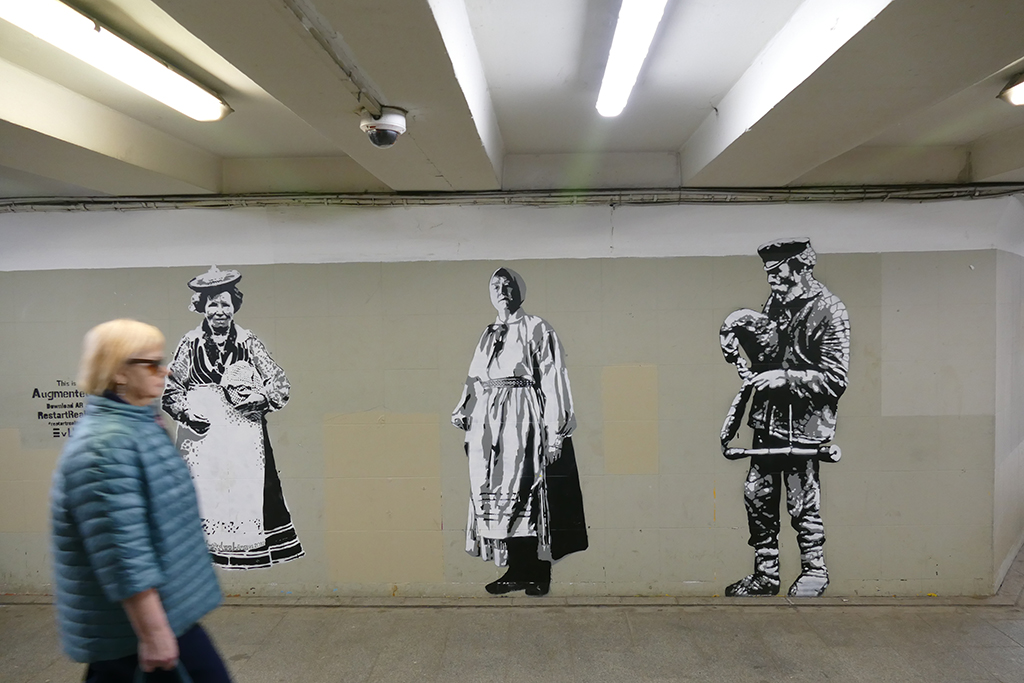
The Estonian Ministry of Foreign Affairs awarded Edward von Lõngus the 2018 Culture Prize for this work.
I’ve also introduced Edward von Lõngus’s art project in my posts on Best Street Art in BRUSSELS
and Best Street Art in Vilnius.
Leonards Laganovskis
One of the oldest murals in Riga was created by Latvian artist Leonards Laganovskis in 2005 as a gift for Latvia’s 100th anniversary. It depicts the coats of arms of all Latvian cities and towns. Due to subsequent administrative reforms that altered municipal boundaries, the mural was updated in 2018 under Laganovskis’ direction.
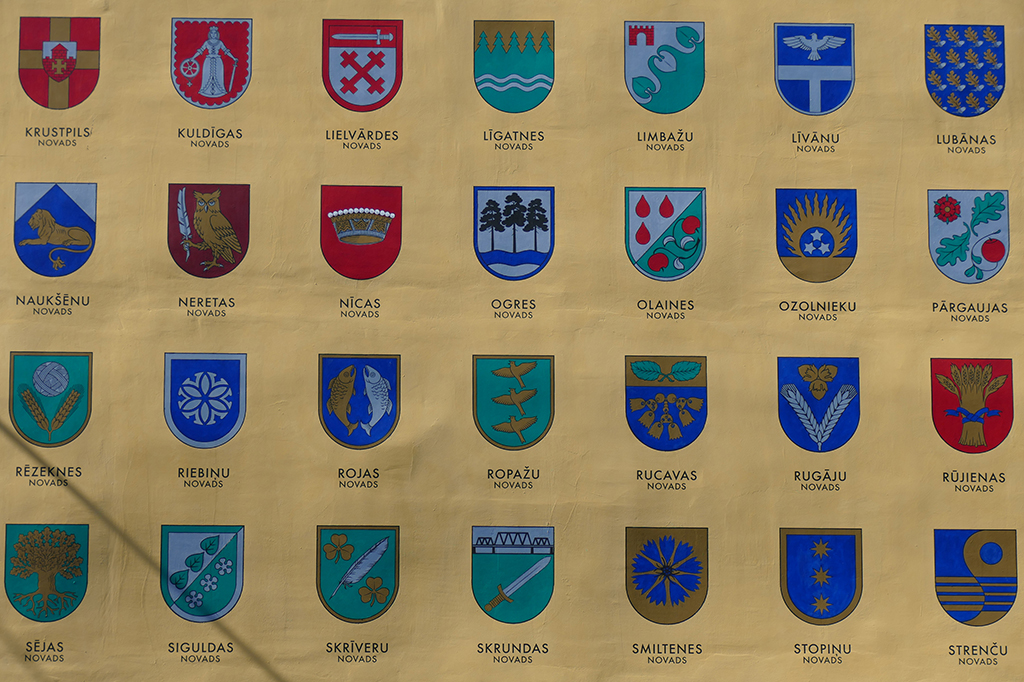
Laganovskis is known for his conceptual and text-based works. He studied stage design at the Latvian Academy of Arts and has participated in numerous international exhibitions. His works are featured in prestigious collections, including the Latvian National Art Museum and the Estonian Art Museum.
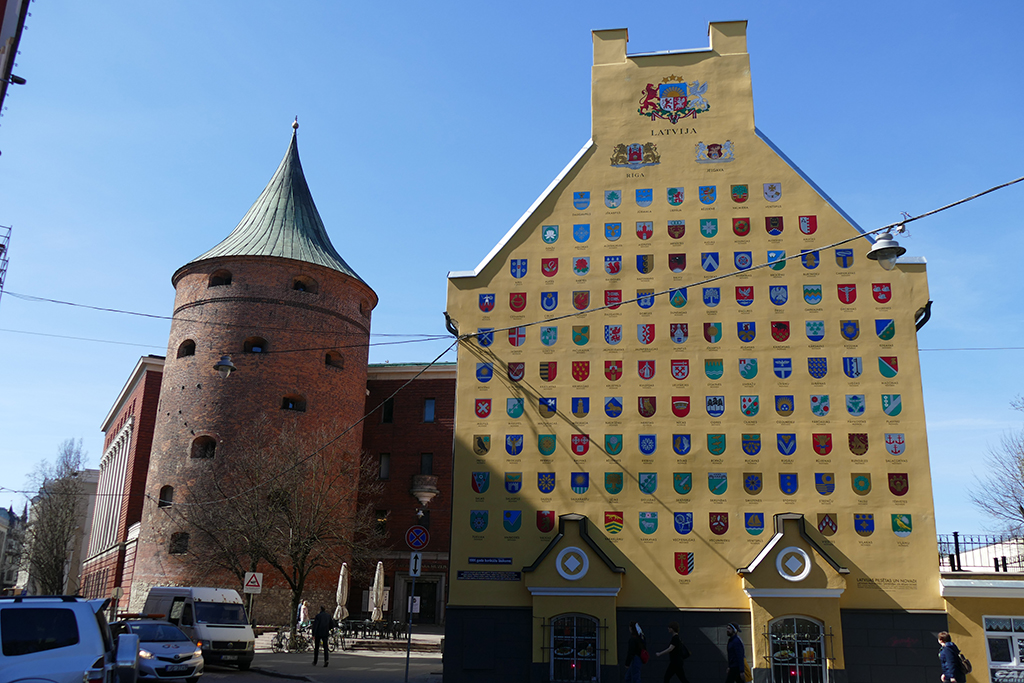
The mural is a living testament to Latvian heritage and local pride and is located on Smilšu iela, at a historically significant site related to Latvia’s 1991 struggle for independence.
Tallinas Iela Courtyard
Opened in 2017, Tallinas Iela Courtyard has quickly transformed from a former industrial complex into a dynamic space that unites art, culture, and community.
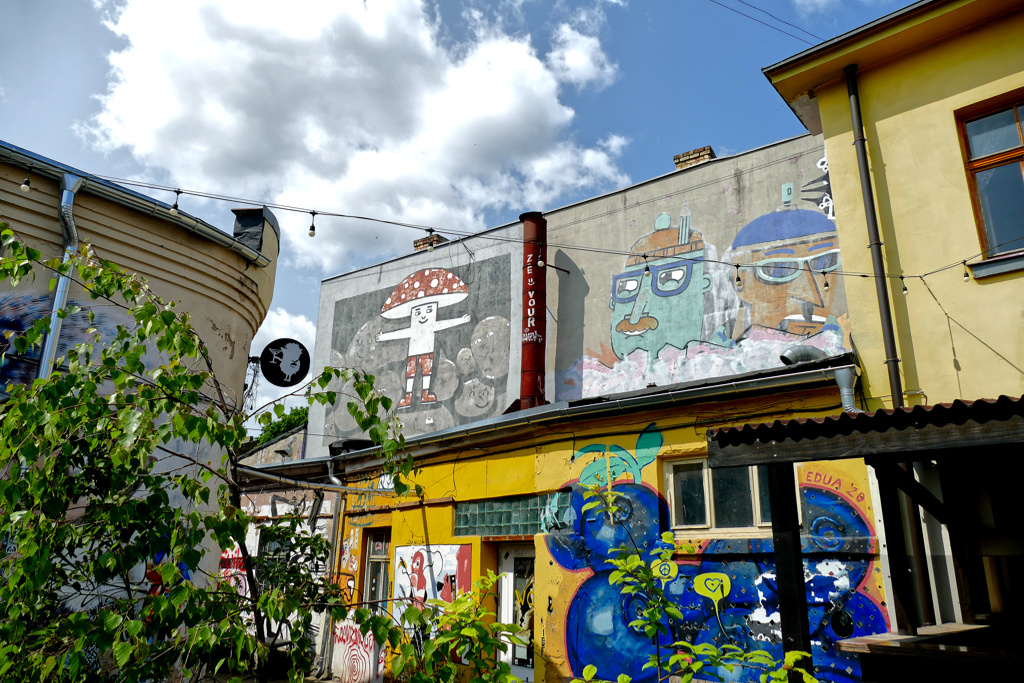
The complex consists of 16 renovated former residential buildings that now serve as venues for art exhibitions, live performances, workshops, and culinary experiences.
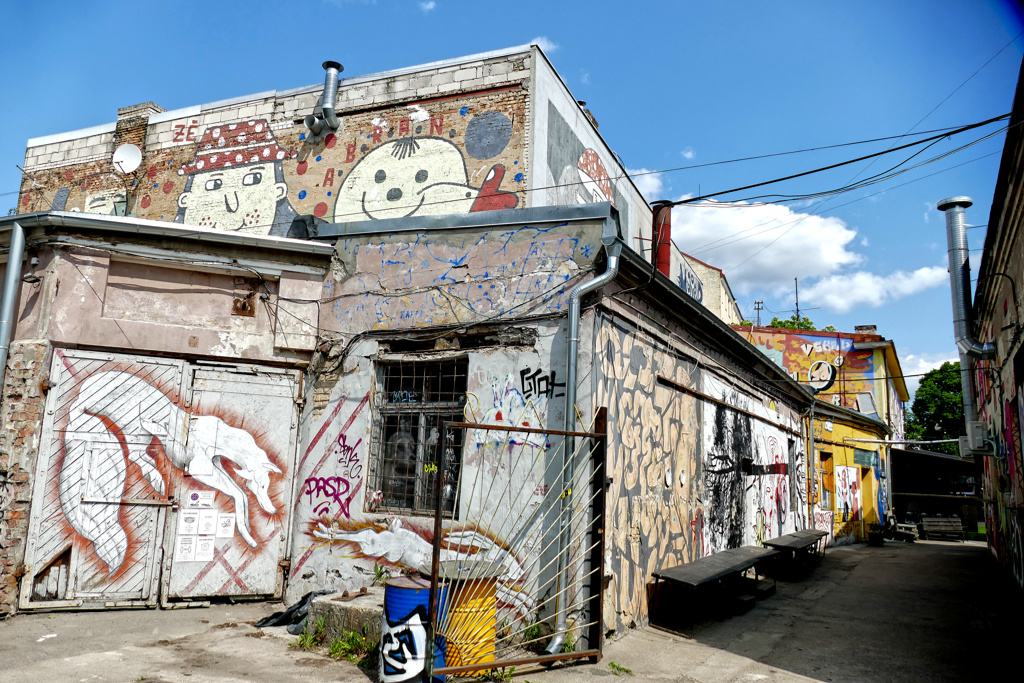
Whether you’re an art lover looking for the best street art or simply looking for a place to escape during your city tour, the complex offers dining and culture with plenty of industrial charm.
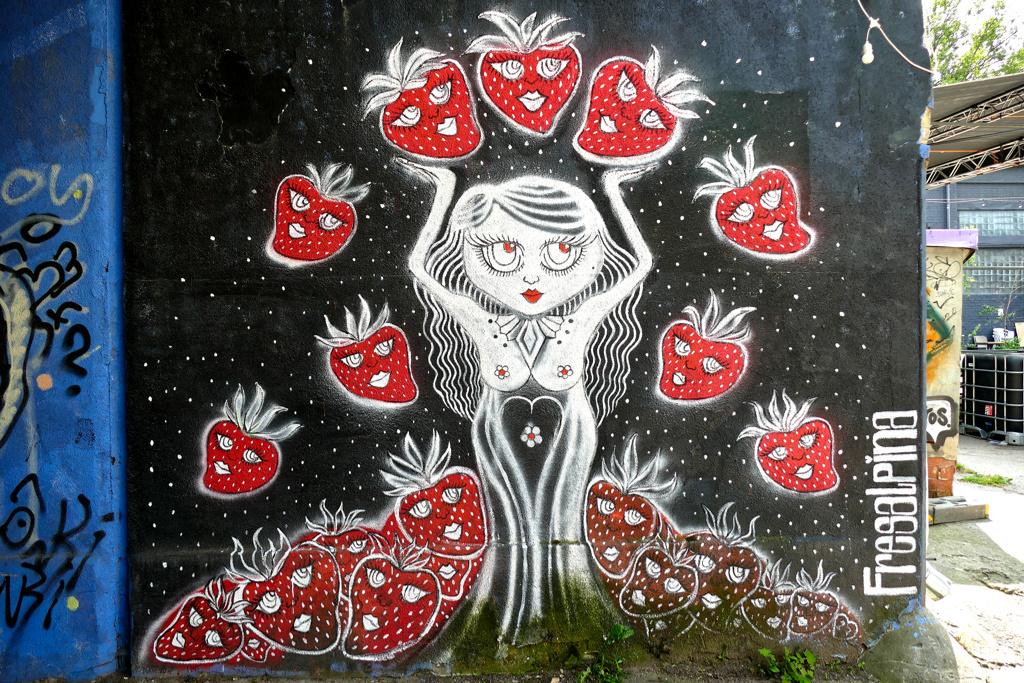
Opening hours vary depending on events and exhibitions. I recommend checking out the website of this amazing project before your visit.
Patiltes Galerija – Gallery Under the Bridge
Patiltes Galerija, which translates as Underpass Gallery, is a street art exhibition located beneath the supports of the Gustava Zemgala Overpass in Riga’s neighborhood Čiekurkalns. In 2021, it transformed a dreary urban space into a vibrant visual corridor. The project was initiated by the illustration and art collective called Popper as part of Riga’s Summer Culture Program.
The project aims to demonstrate the potential of high-quality street art as an enriching element of urban design and to advocate for more structured planning and municipal support for public art initiatives.
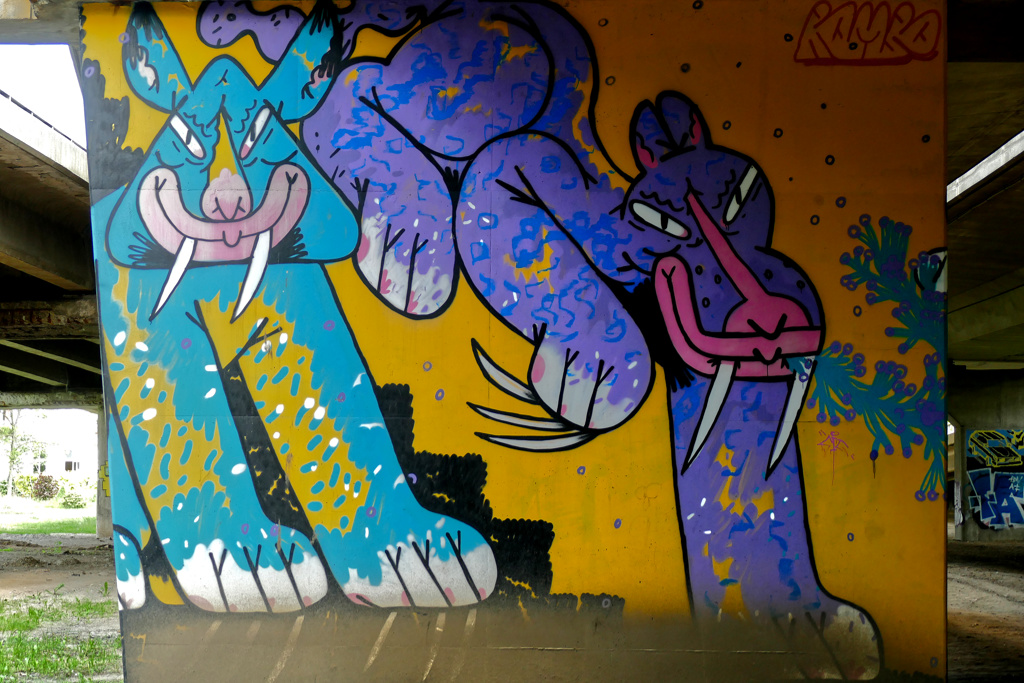
The participants were selected through an open call for proposals. The final selections were Latvian artists Ēriks Caune, Īdzība, Koostii, Lazy Bra, Rombo Kāos, Tron, Anna Vaivere, Zahars Ze, Ziepe Ziepe, and Mārtiņš Zutis, as well as the Lithuanian Trafik. All participating artworks have been officially approved by the Riga City Council.
Through collaboration with official bodies, the project highlights how street art can be meaningfully integrated into urban planning. The murals will remain in place for several years until the planned repairs to the bridge structure are completed.
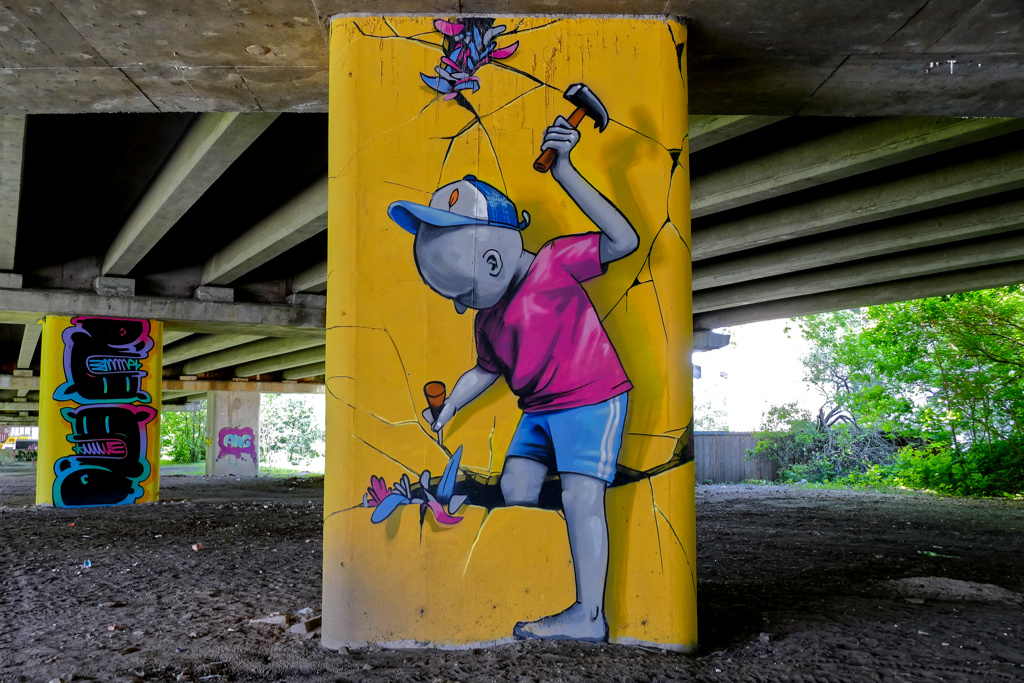
Unfortunately, the works aren’t signed. I’ve tried hard to identify the artists based on their style. However, I haven’t been able to do so for some of the columns. I’ve already introduced Ēriks Caune above, and here are five other participants. As always, I’d be delighted if you’d add further info in the comments section.
Roberts Galviņš
Roberts Galviņš, better known by his stage name Lazy Bra, is a street artist whose work is a significant part of Riga’s evolving urban art scene. He has been involved in several projects that have helped transform neglected public spaces into vibrant cultural landmarks. Patlites Galerija is one of the most notable, obviously.
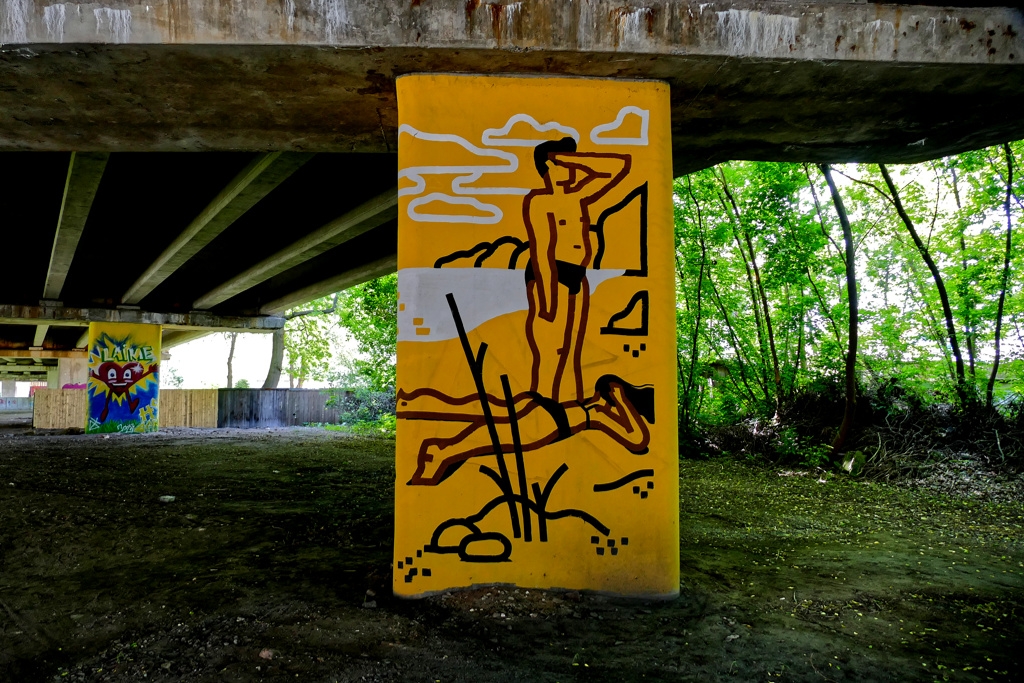
Lazy Bra has also participated in larger international collaborations, including the Blank Canvas Festival, where he collaborated with Polish artist VOUR on one of Riga’s largest murals to date. These initiatives underscore his role not only as an individual artist but also as part of a broader movement of creatives.
Tron Karton
Tron Karton is a street artist and graphic designer whose work includes murals, poster design, and zines. Since around 2012, he has also collaborated with other renowned Latvian artists such as KIWIE and Dainis Rudens. Together, they contribute to Riga’s growing reputation as a center of urban creativity.
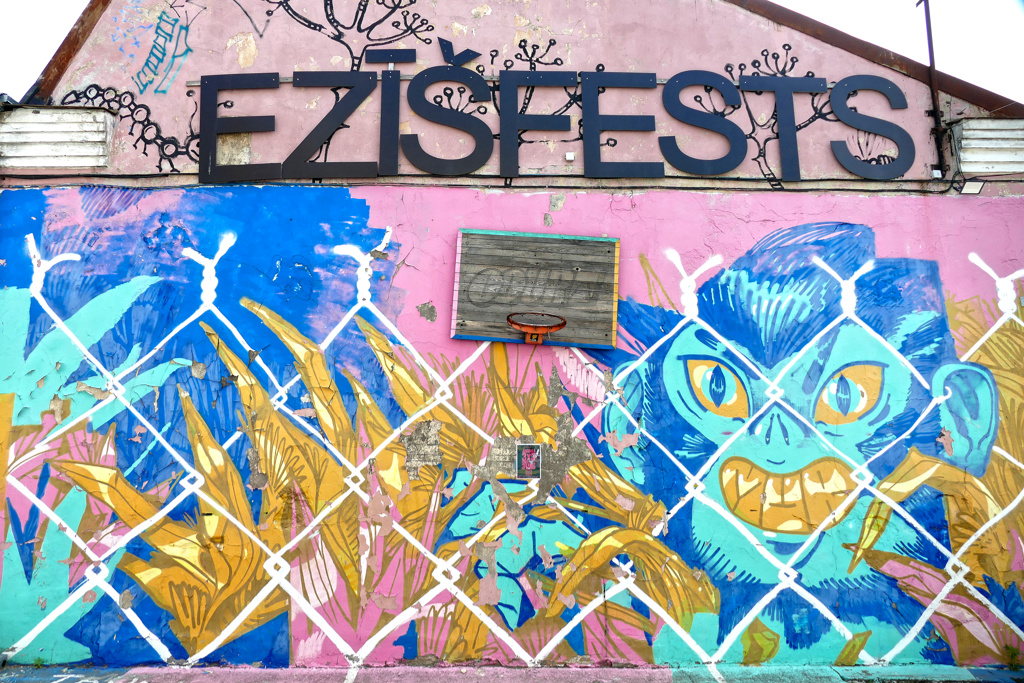
In addition to walls, Tron Karton’s practice also extends to graphic design. His poster work was presented at the Haapsalu Graphic Design Festival in Estonia in 2018.
Together with artist Lazy Bra, he developed the pocket magazine WANKaDOODLE, which was launched during the Riga Zine Fest.
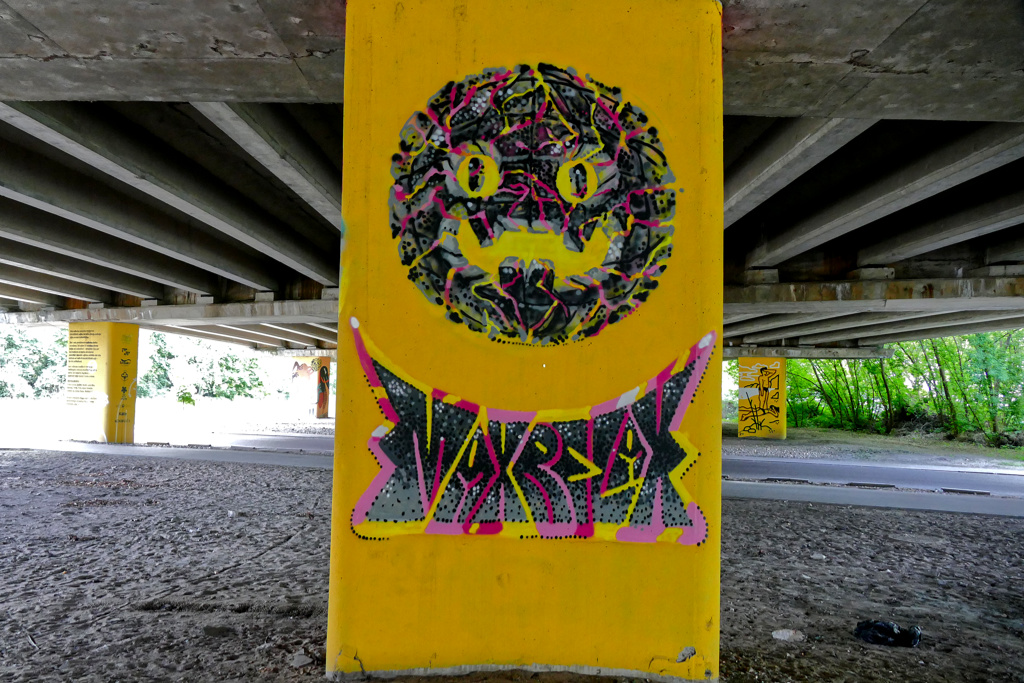
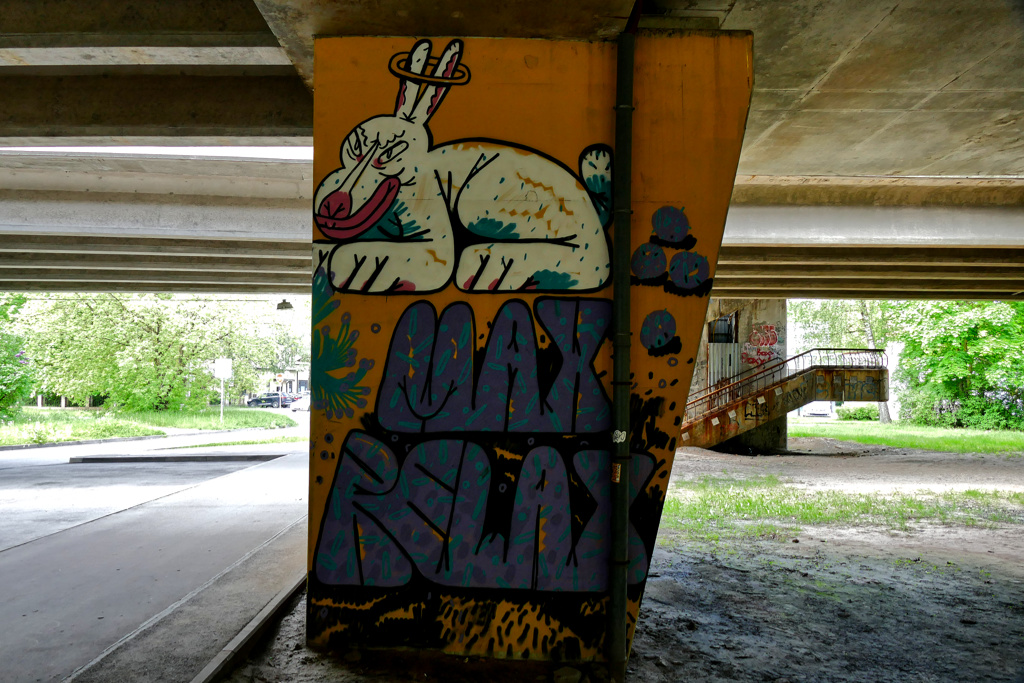
Tron Karton is distinguished by his multidisciplinary work. He is a street artist who transforms walls into characters and stories, a designer who experiments with bold poster art, and a zine author who explores the irreverent and subversive side of print culture.
Hoder
Hoder’s creative universe revolves around hearts. His work can be found on the streets and in galleries, and it always carries an emotional charge. However, for Hoder, the heart is not just a decorative motif. It is a mirror of human experience. Hence, his hearts on Riga’s walls express joy, love, pain, vulnerability, and even anger.
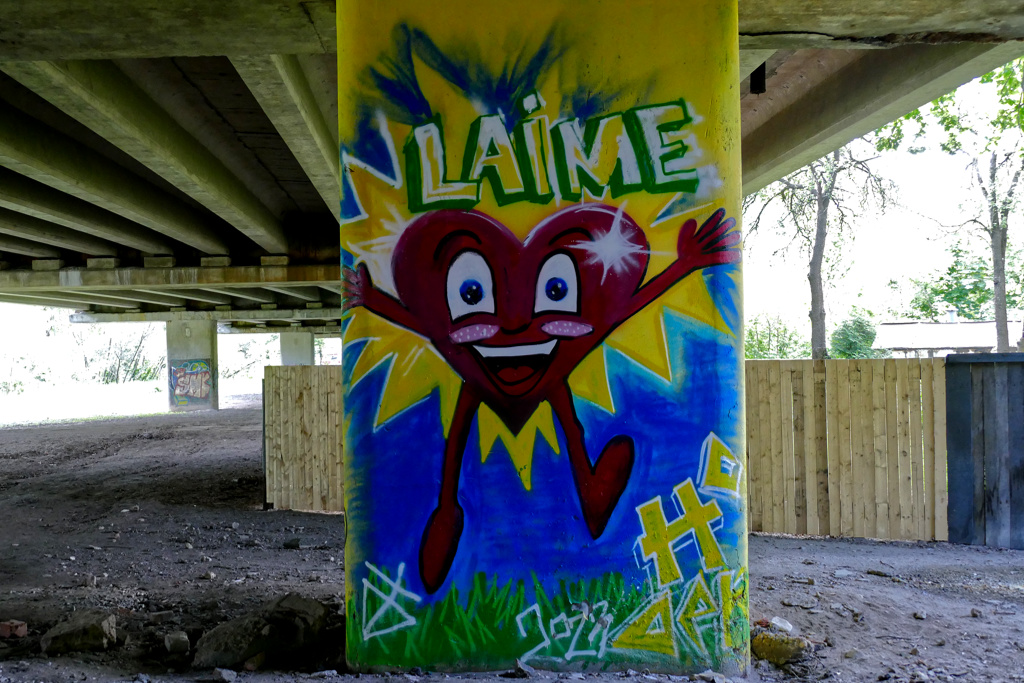
Hoder’s first solo exhibition, Love – The Center of the Universe, was held at the MABOCA Gallery in the Latvian city of Madona in 2025. The show was in fact a multisensory journey. Alongside felt, glass, ceramics, wood, textiles, and even 3D-printed hearts, visitors experienced an immersive audiovisual performance, which fused light, sound, and visual imagery into a living artwork. The exhibition even extended into community engagement, as Hoder was leading a graffiti workshop that invited participants to explore his techniques and the meaning of the heart in urban art.
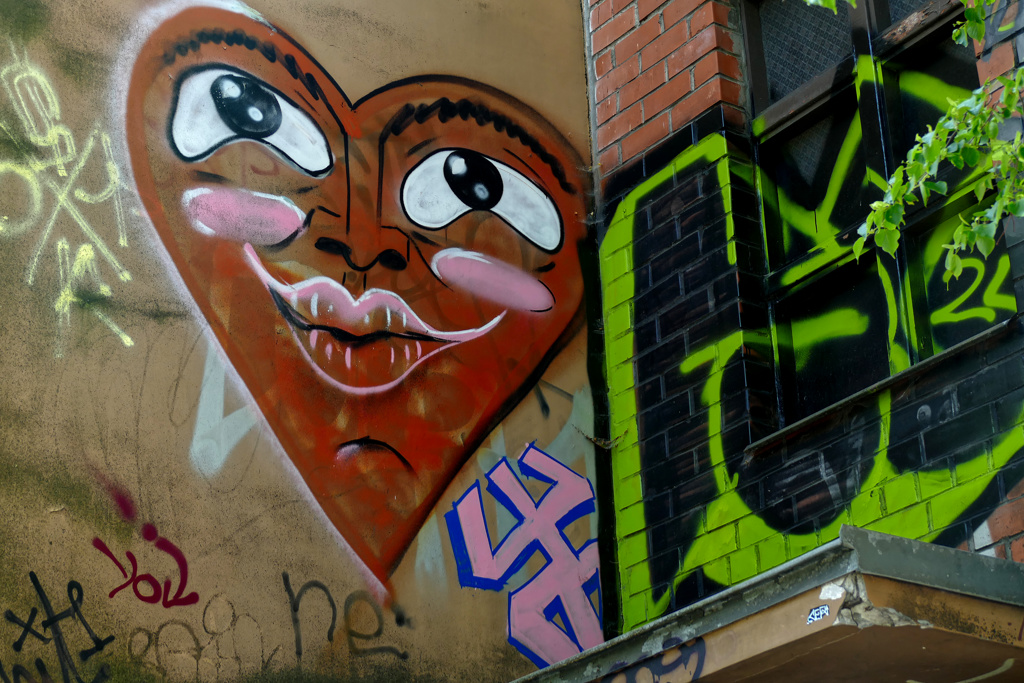
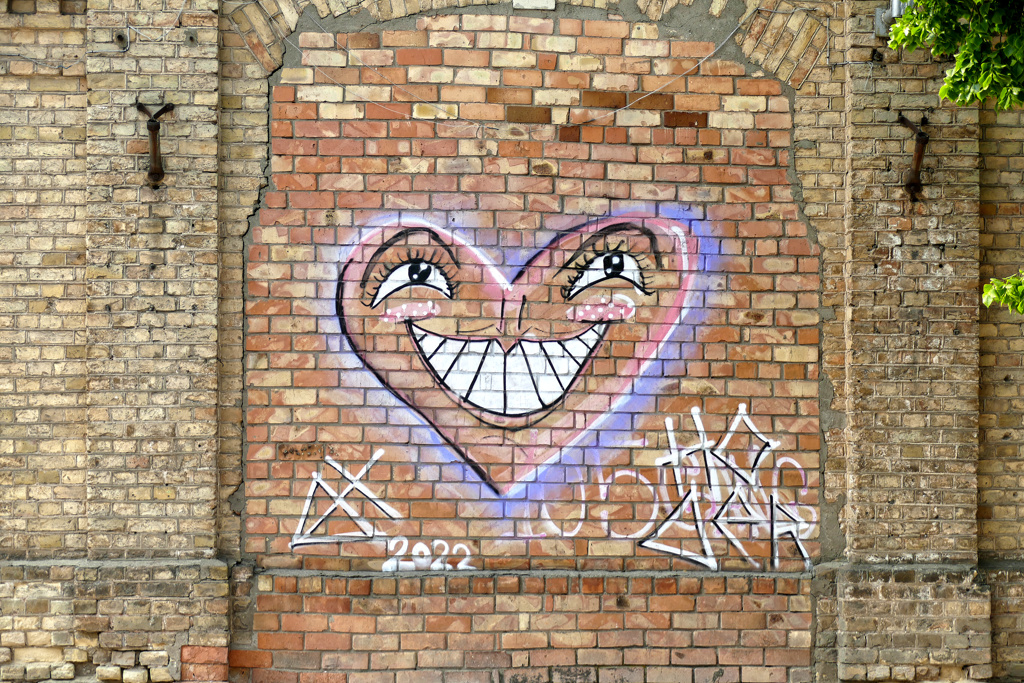
Through both his street pieces and his gallery projects, Hoder consistently demonstrates that his art is not about decoration but about resonance.
Anna Vaivare
After studying architecture at Riga University of Technology and receiving a master’s degree in printmaking from the Latvian Academy of Arts, Anna Vaivare began her artistic career with comics. Since then, she has developed a distinctive style that combines playful storytelling with expressive watercolor and gouache textures.
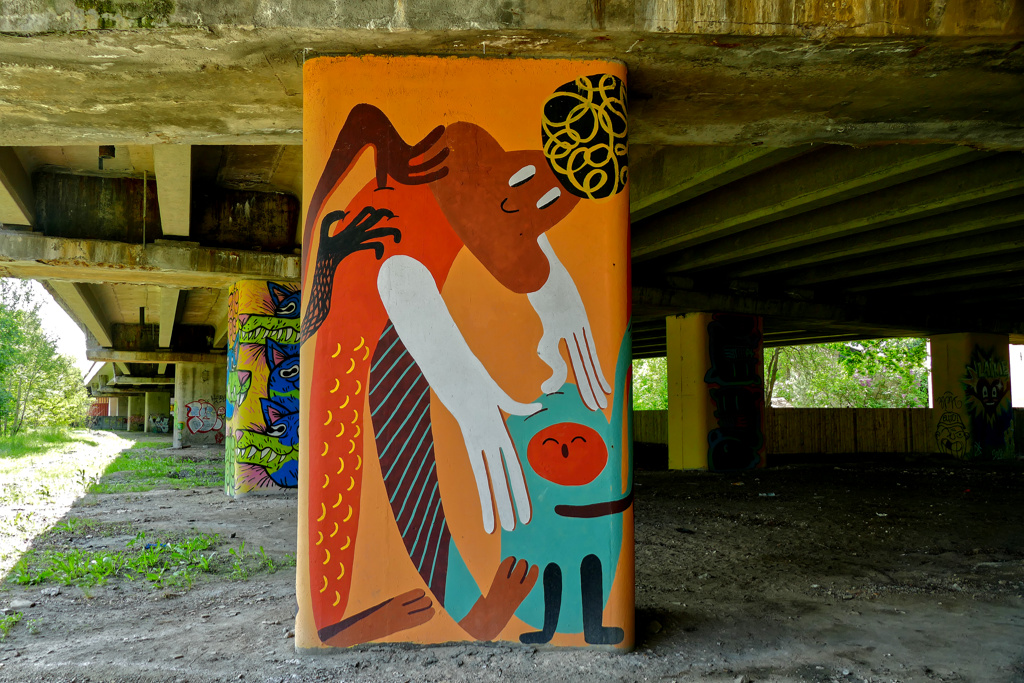
Her work includes children’s books, comics, public art, and design collaborations. In 2016, she received the Jānis Baltvilks Award from the International Baltic Sea Region for her illustrated book Saputrotā putra. Her other notable projects include the sticker album Lokosalīme for the Latvian Railway Museum and a porcelain plate collection. And, of course, large-scale murals.
Zahars Ze
Zahars Purvišķis aka Zahars Ze is a multidisciplinary artist whose work moves fluidly between street art, ceramics, illustration, graphic design, and printmaking. A graduate of the Art Academy of Latvia, where he studied functional design and graphics before completing a master’s degree in printmaking in 2019, Zahars has developed a distinctive visual language that combines bold character-driven imagery with playful, expressive detail.
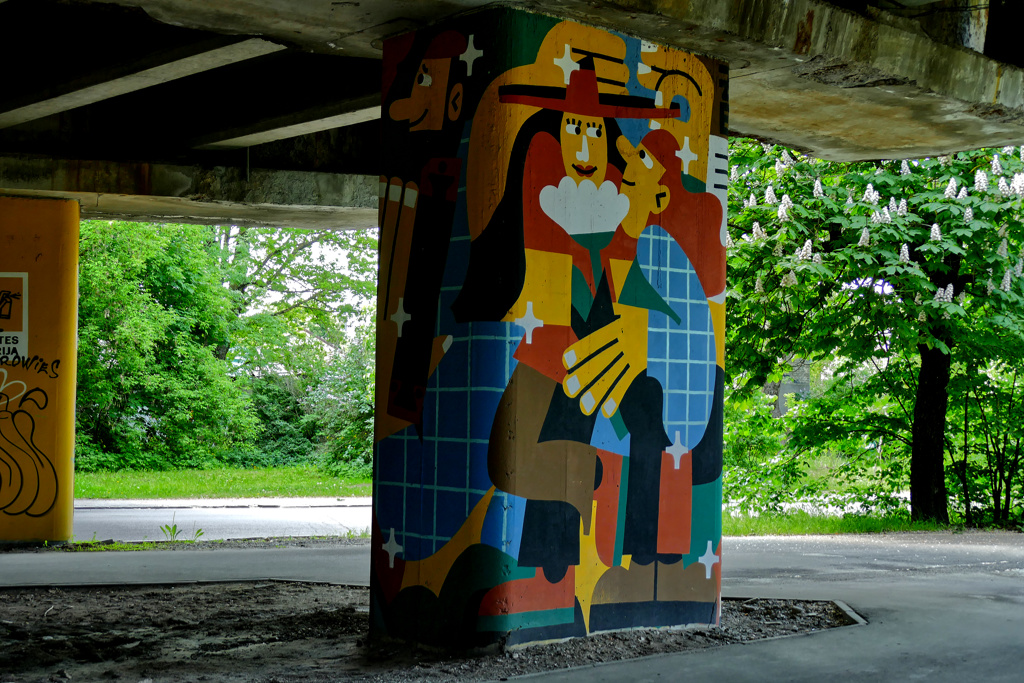
In recent years, he has become particularly visible in the Latvian street art scene. In 2024, he won the Street Art Slam in Rīga’s Torņakalns district. However, street art is far more than just decoration for Zahars. It reflects the creative energy of their residents.
Zahars has also achieved great recognition in ceramics and design. Together with fellow artist Esmeralda Purvišķe, he co-founded Krasta Keramika, a Rīga-based studio. In their exhibition Porcelāna padarīšana at the Rīga Porcelain Museum in 2023, they presented vases, plates, and pitchers decorated with whimsical characters and lively graphics, blending functional design with artistic exuberance.
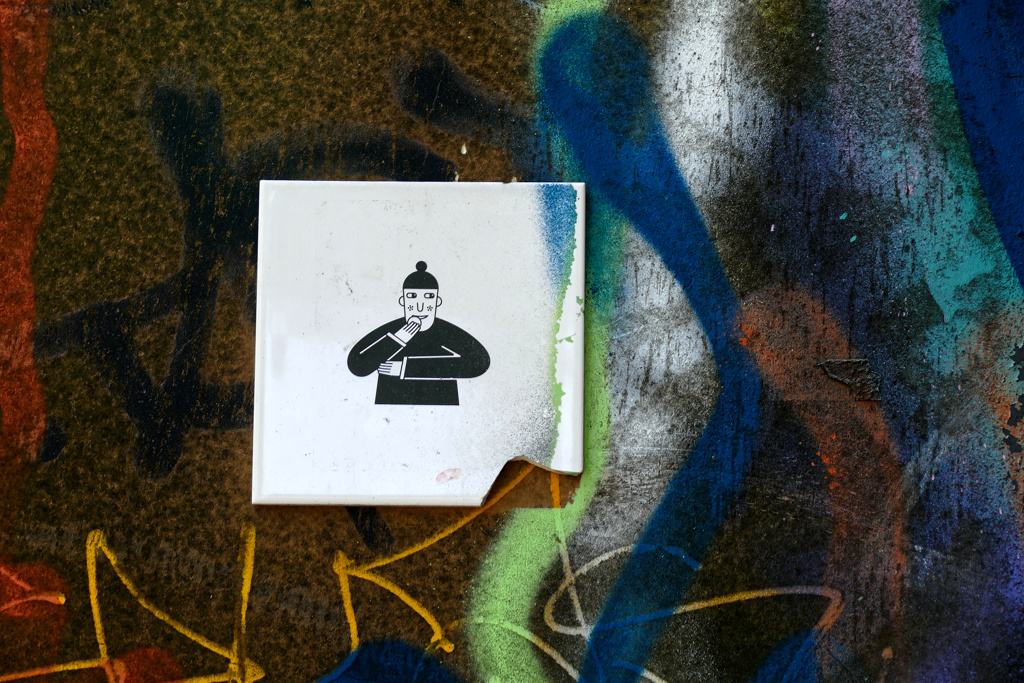
Across all his activities such as street art, ceramics, printmaking, and design, Zahars Ze builds a consistent yet multifaceted vision. His art often circles around ideas of comfort, memory, and belonging, expressed through vibrant colors, playful characters, and a spirit of experimentation.
Graffiti Wall in Support of Ukraine
The whole world was shocked when Russia invaded Ukraine in February 2022. For the Baltic republics, which had to exist under Soviet rule for decades, this had a completely different dimension. And so the shock lives on to this day, and Estonia, Latvia, and Lithuania have never tired of emphasizing their solidarity with Ukraine.
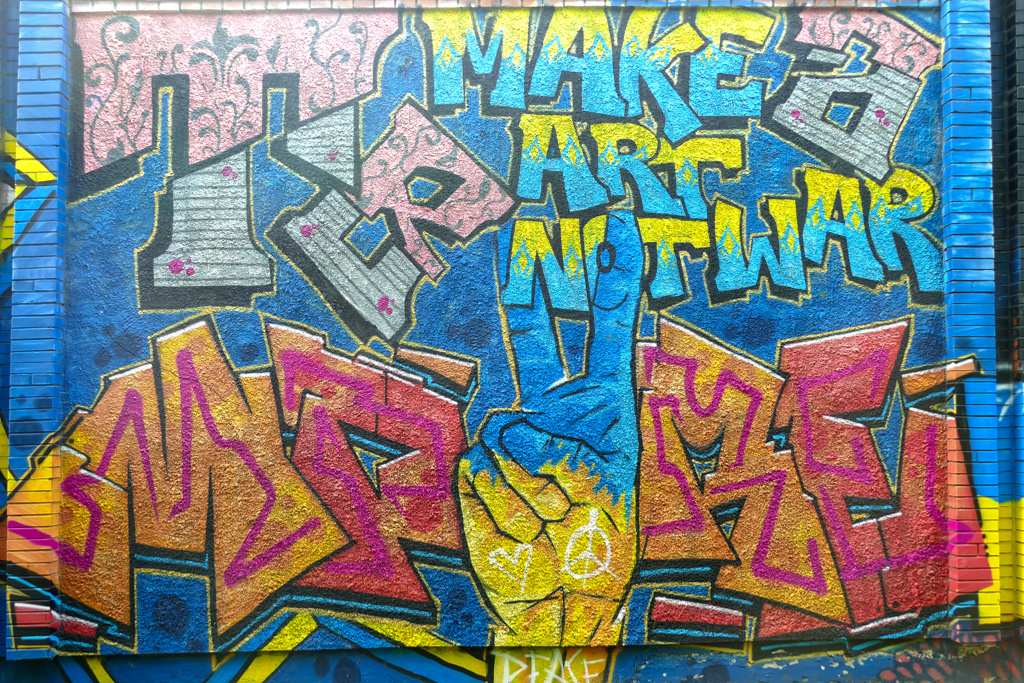
In July 2024, around 40 street artists came together to collectively paint a powerful tribute to Ukraine’s freedom, peace, and democracy. Spread across the wall, each artist contributed unique visual elements.
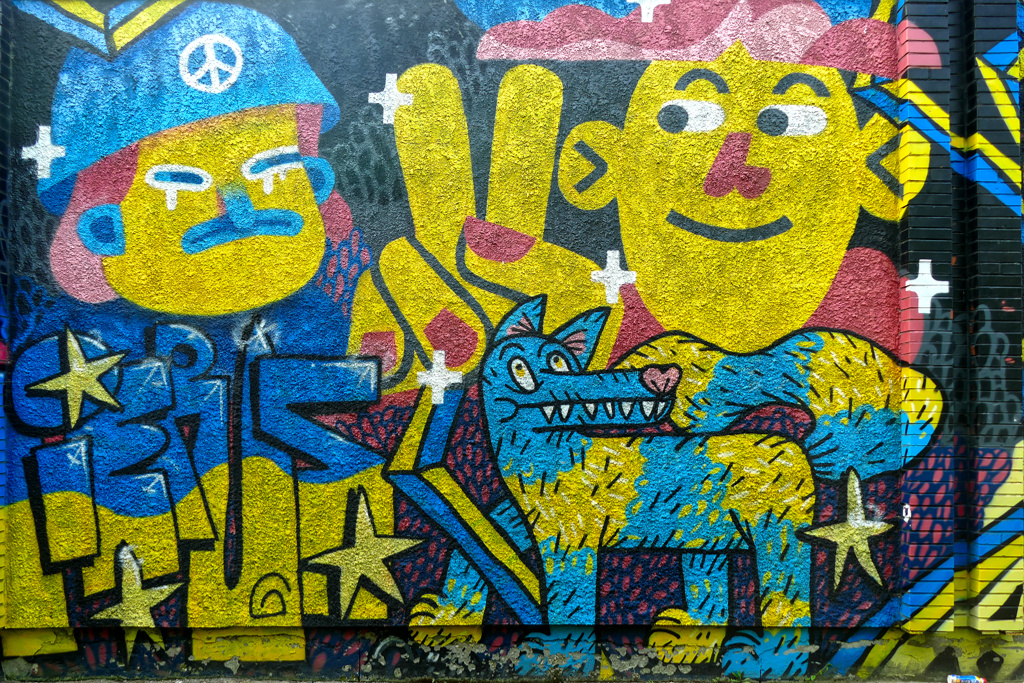
You’ll spot colorful figures, symbols, and messages brimming with vibrant symbolism and heartfelt solidarity. All the individual contributions merge into a cohesive narrative of solidarity in Ukraine’s struggle for peace, freedom, and democracy.
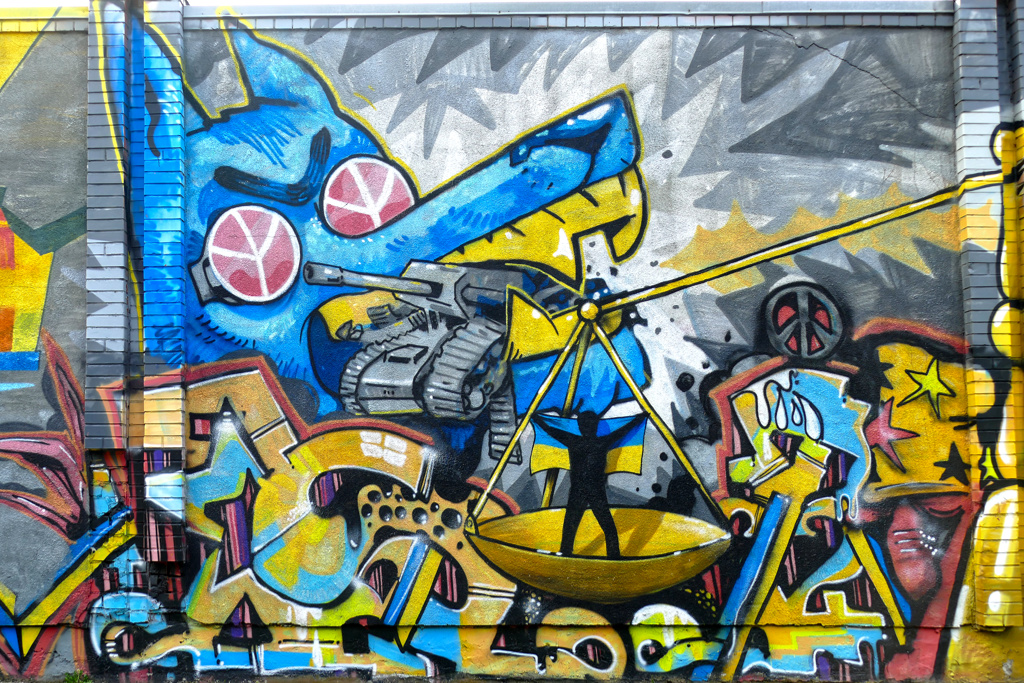
The project embraces a spirit of shared creative collaboration, where individual signatures provide a unified expression, hence specific details about which artist painted which section aren’t publicly documented.
Svini Savu Brīvību – Celebrate Your Freedom
The project Svini savu brīvību. Radi un dari (Celebrate your freedom. Create and do in English), organized by the Latvian Institute in cooperation with the Latvian Academy of Arts, was launched as a public art initiative to combine creativity with reflection on the country’s path to independence.
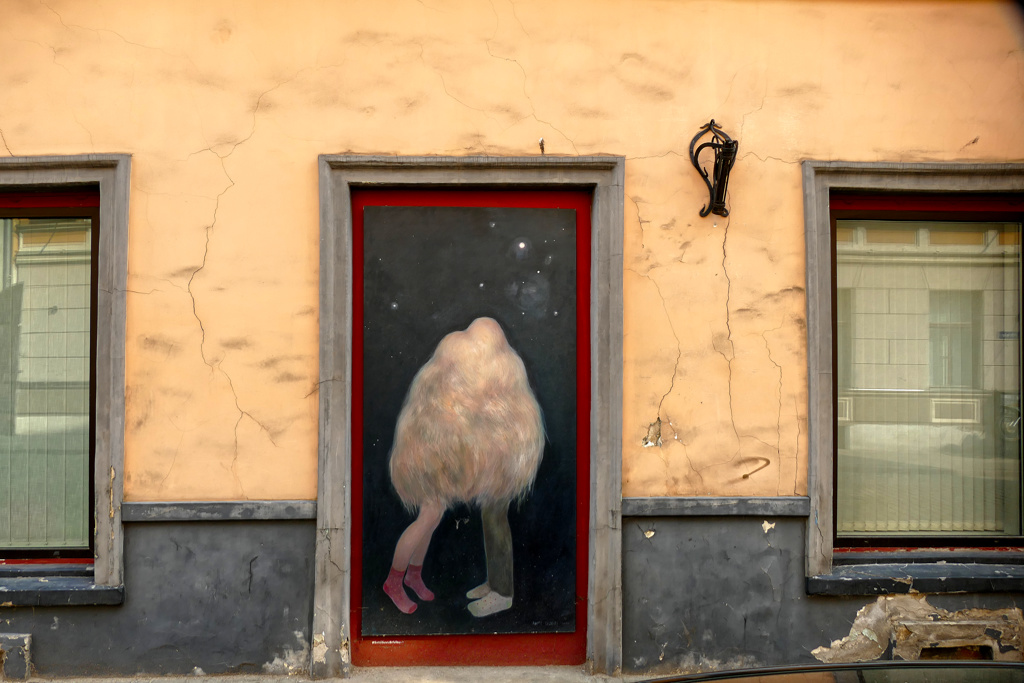
At its core, the project aimed to invite young talents to explore what freedom means in the contemporary Latvian context. By connecting artistic practice with themes of independence, participants were encouraged not only to reflect on freedom but also to actively shape it and illustrate it through creative interventions in the urban space.
The Riga project took place with installations and exhibitions along Pils Street and other central areas. These works publicly celebrated the values of freedom, creativity, and active citizenship.
Thus, Svini savu brīvību is not only an art project but also a civic gesture. A moment in which the public could celebrate freedom as a living, shared experience in the heart of the city through the language of art.
Commercial Murals
In some of my earlier street art posts, I criticized artists painting advertising murals for companies as a sellout. In Riga, the situation is the other way around: advertising on building walls becomes street art worthy of preservation.
The first example is a mural commissioned by the coffee house King Coffee Service. Today, Es Mīlu Kafiju is located there.
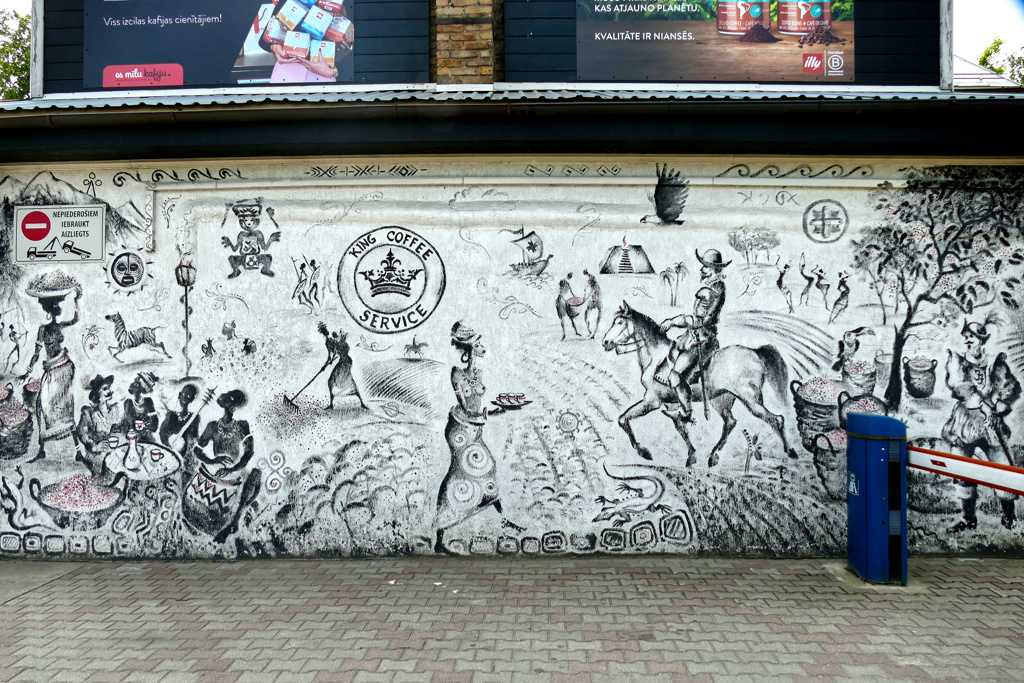
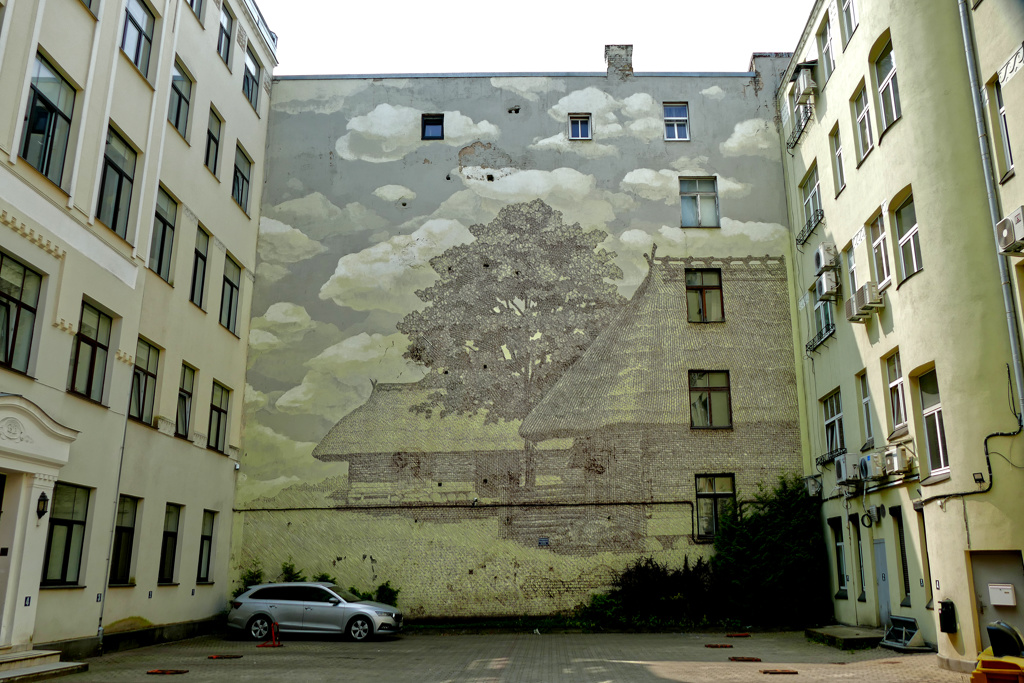
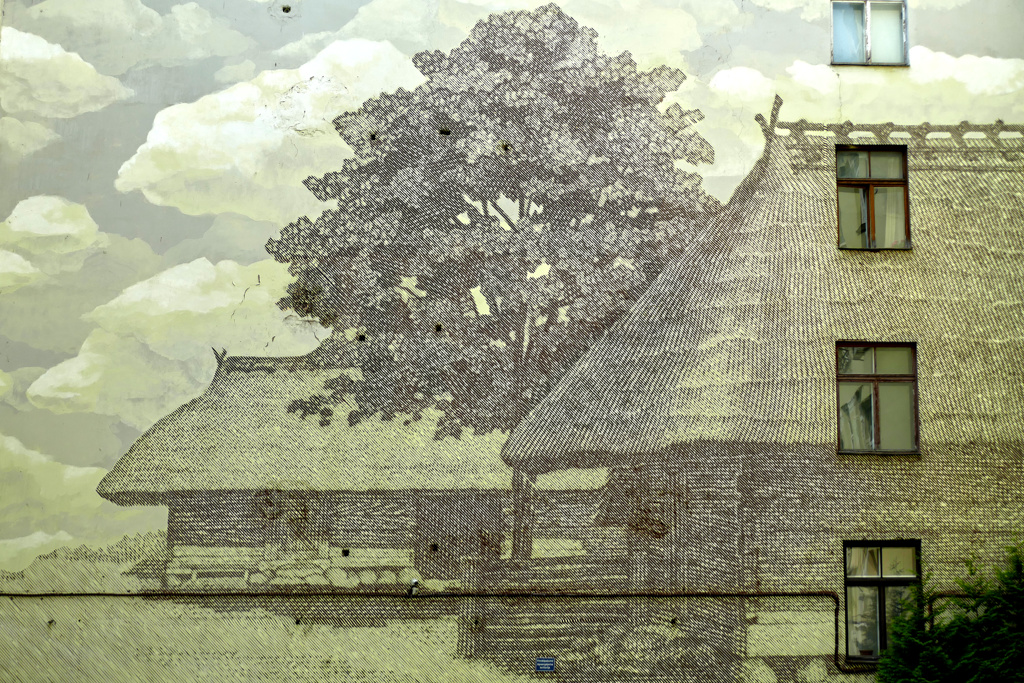
The work is designed in a style that mimics a charcoal drawing on a wall, although it is actually painted with durable paint. It tells the story of coffee, from its discovery to its arrival in Europe. As a matter of fact, coffee culture in Europe can be traced back to Venice in 1645. From there, the trade spread across the continent and later to the Americas. However, as coffee became increasingly popular during the colonial period, its production relied heavily on slave labor in colonies before the beans were shipped to Europe and exchanged for other goods. This painting also documents this.
Different Eras
Another mural advertises the Lada car brand and a car repair shop. It presumably dates back to 1985, when Latvia was still ruled by the Soviet Union. It reflects everyday life and, above all, the design aesthetic of that era. So, it’s something for fans of the vintage style. Funnily enough, the work is listed on all street art platforms as part of Riga’s urban art, even though the painter is unknown and most likely wasn’t a recognized street artist.
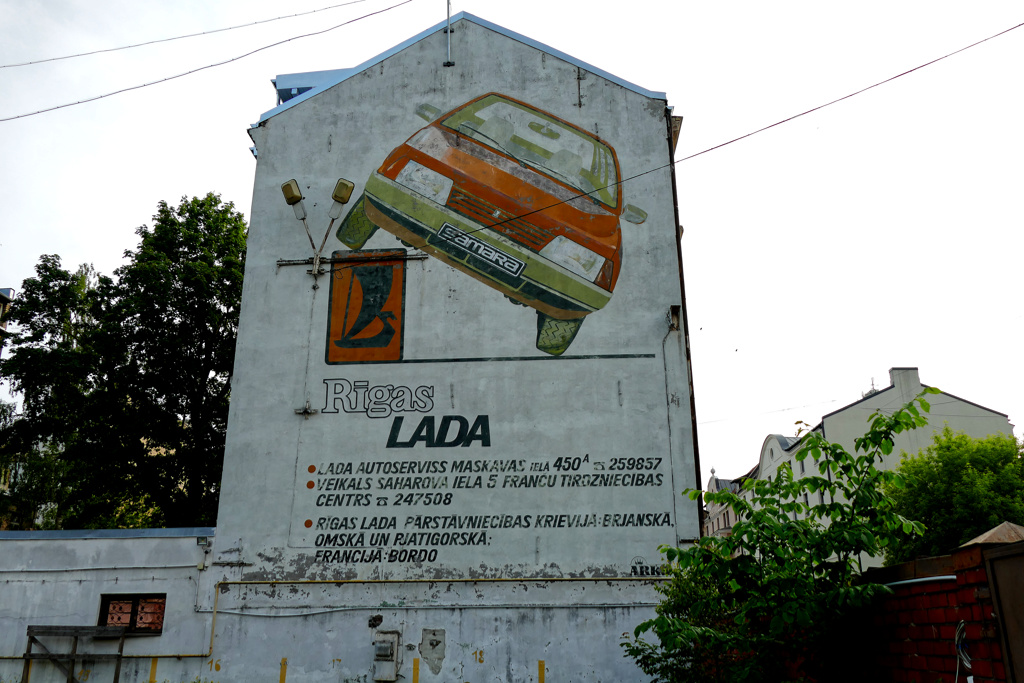
In any case, this mural is an authentic testament to the visual culture of bygone times in Riga.
In contrast, just a few blocks away, there’s a mural commissioned by the telephone company Zelta Zivtiņa, which is just one part of a far-reaching, highly intelligent, and extremely witty campaign. The two protagonists, styled in the style of questionable 70s fashion, are a pair of detectives whose work relies on Zelta Zivtiņa products.
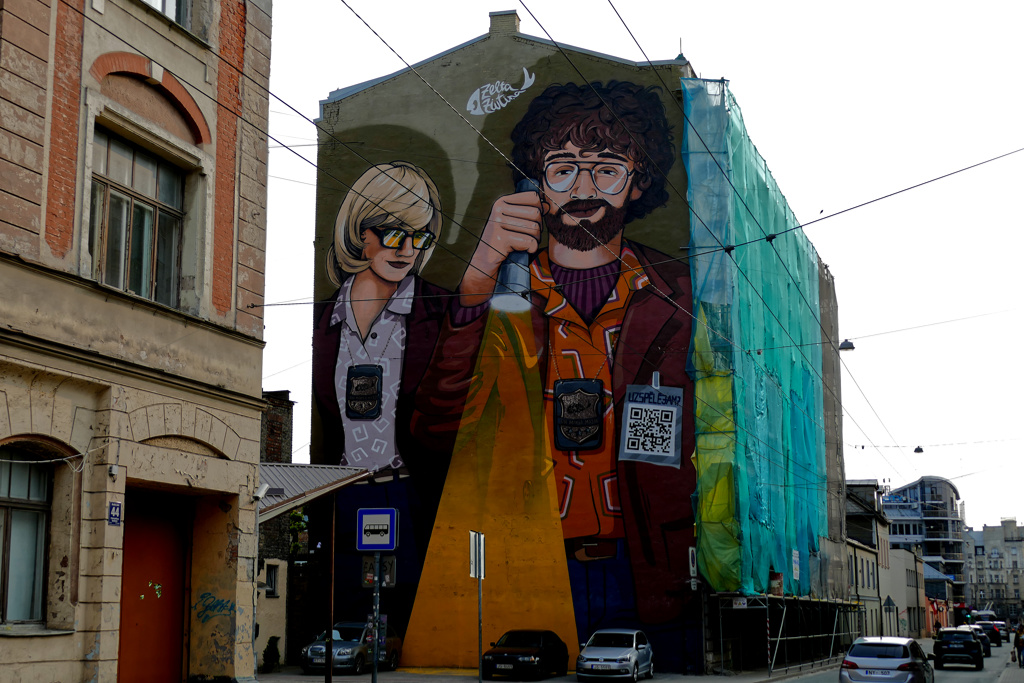
I know the mural has been heavily criticized for its commercialism. Nevertheless, Zelta Zivtiņa’s mural has been shortlisted at the Mi:t&Links Baltic communication awards 2025. And indeed, this campaign by Zelta Zivtiņa, just like its predecessors, is quite ingenious, which is something the commercial critics have to give them credit for.
On Instagram
To dig deeper into the subject and see more of the amazing art the above-featured artists have created, you can just check out their Instagram accounts:
Ēriks Caune
Fresalpina
Roberts Galviņš
Hoder
Tron Karton
KIWIE
Leonards Laganovskis
Miķelis Mūrnieks
Dainis Rudens
Anna Vaivare
Edward von Lõngus
Zahars Ze
Ziepe Ziepe
How to Get Around
You can see from the map below that the works are mostly spread out across the city. It’s recommended to visit them either by bike or by public transport. Riga has a network of trams, buses, and trolleybuses. This combination of different modes of transport ensures comprehensive accessibility.
A single ticket for a 90-minute journey costs 1.50 €uros. In my experience, however, it’s a good idea to purchase day tickets. These cost 5 €uros for 24 hours, 8 €uros for 72 hours, and only 10 €uros for 5 days! Tickets are available at ticket machines, kiosks, or via the official Rīgas Satiksme app. Contactless payment methods such as bank cards are also accepted.
Map
This map should help you find the murals I’m introducing in this post. Clicking on the slider symbol at the top left or the full-screen icon at the top right will display the whole map, including the legend.
Looking for urban art was only one of the awesome things I got to do during my visit to Riga. In my post Best of RIGA – a Guide to Latvia’s Entrancing Capital, I take you on a comprehensive city tour.
Pinnable Pictures
If you choose to pin this post for later, please use one of these pictures:



Did You Enjoy This Post? Then You Might also like these:
The World’s Largest Mural in Incheon
Best Street Art in BRISTOL – Part II: North Street
JIDAR Street Art Festival – How Rabat Celebrates International Urban Art
Best Street Art in PARIS: How Mehdi Ben Cheikh Transformed the 13th Arrondissement Into An Open-Air Gallery
Best STREET ART in PALMA de MALLORCA
BRISTOL – What to Do on the Best Weekend Break You’ll Have in a Long Time
Best Street Art in LISBON – Part II: Marvila

BORDEAUX: Best Street Art on the Right Bank of the Garonne