Even if you have only around 24 hours, a stopover in Vilnius is an excellent opportunity to get to know Lithuania’s charming capital.
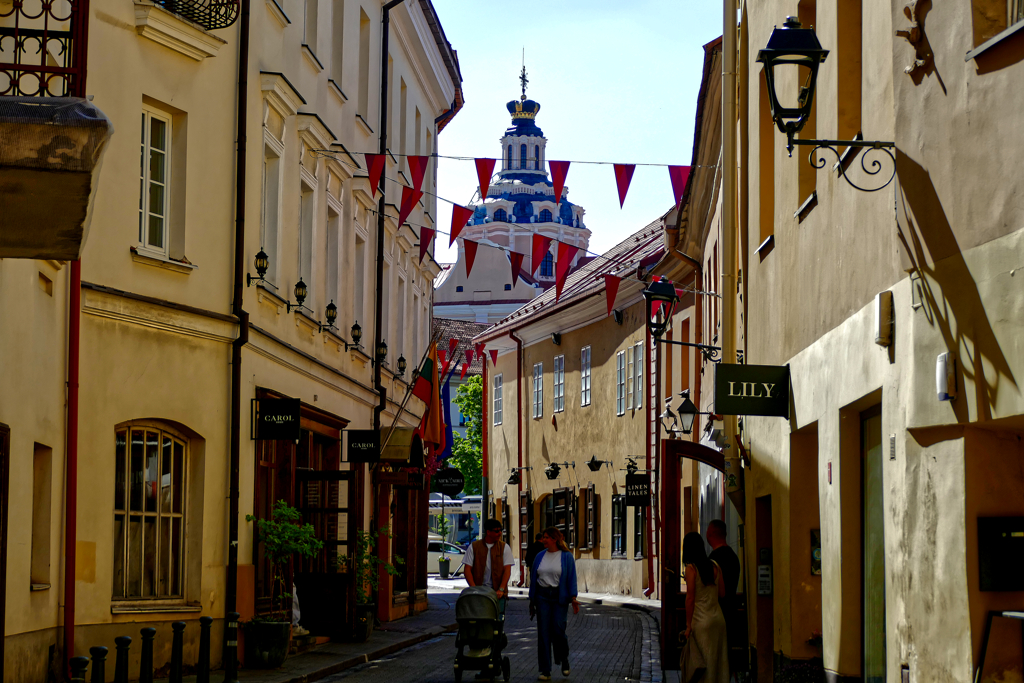
The city offers a fascinating blend of history, culture, and architecture. From the medieval Old Town district to modern art galleries and cozy cafés, Vilnius is compact and diverse, ideal for a short but worthwhile tour of discovery.
Welcome to Vilnius
Vilnius has a rich and eventful history dating back to the Middle Ages. The first documented mention of the city dates back to 1323, when Grand Duke Gediminas declared it the capital of the Grand Duchy of Lithuania. Under his rule, Vilnius began to establish itself as a political and cultural center. The city flourished and became an important trading center between Western and Eastern Europe.
In the 16th century, Vilnius experienced a Renaissance period when Vilnius University was founded, making the city a center of science and learning. During the Polish-Lithuanian Union, Vilnius was part of the joint Polish-Lithuanian Kingdom and experienced cultural and economic prosperity, but also repeated attacks from neighboring powers.
In the 18th and 19th centuries, Vilnius fell under Russian rule. The city experienced a period of Russification and was affected by political unrest and uprisings that threatened the national identity of Lithuanians.
After the First World War and the fall of the Russian Empire, Vilnius became the capital of the newly founded Lithuania in 1918. However, by 1920, Poland had taken control of the city until it was annexed by the Soviet Union in 1940. Lithuania remained under Soviet rule until 1990.
With the regaining of independence, a period of reconstruction and modernization began. Vilnius’s Old Town, a UNESCO World Heritage Site since 1994, now attracts visitors from all over the world. The city has established itself as a modern center that combines tradition and innovation.
 Local Currency
 Local Currency
€uro / 1 €UR = 1.17 US$ as of November 2025 / current rate.
Contactless payment, as well as credit cards, are widely accepted.
Emergency Contacts
 Emergency Contacts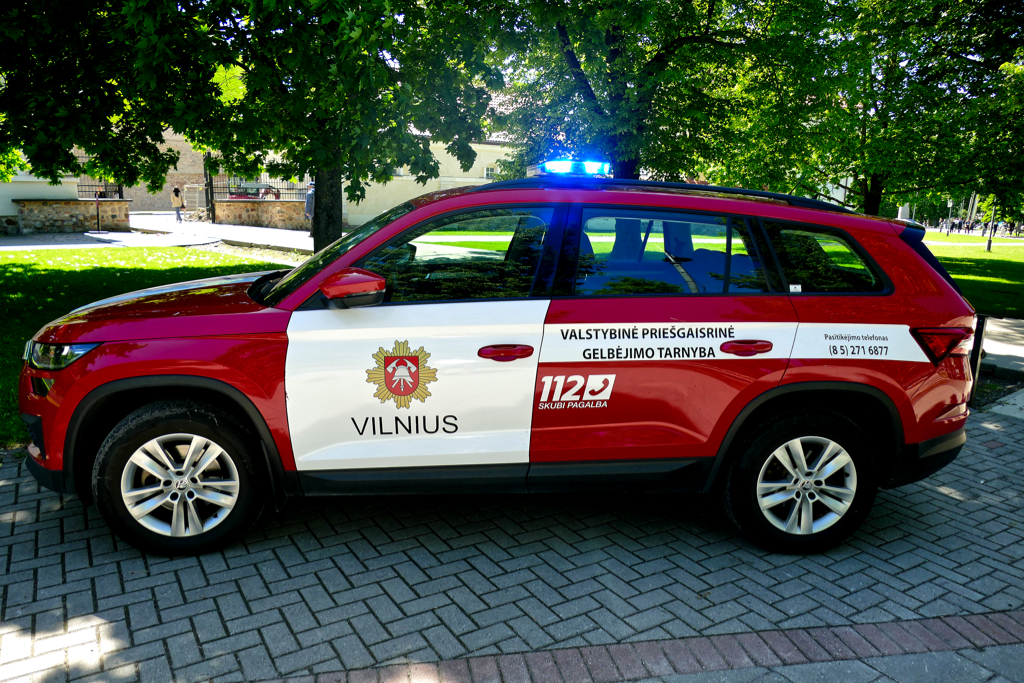
112 is the universal emergency number that will connect you to police, the fire patrol, and ambulance services.
Airport
 Airport
Vilnius Čiurlionis Airport / IATA-Code: VNO
Tourist Info Online and Onsite
 Tourist Info Online and Onsite
Vilnius Tourist Information Centre
Pilies Gatvė 7
01123 Vilnius
Phone: +37052629660
Email: tic@govilnius.lt
Getting Around
 Getting Around
Vilnius Airport is the largest and busiest airport in Lithuania and is located about 6 kilometers south of the city. Getting from the airport to the city center is super easy, even by public transport.
There is a small train station directly in front of the airport. The train ride to Vilnius Station takes about ten minutes and a ticket costs about 1 €uro. Alternatively, bus line #88 connects the airport to the city center and the major hotels for as little as 90 cents.
Between midnight and 5 a.m., night bus #88N shuttles passengers for the same fare.
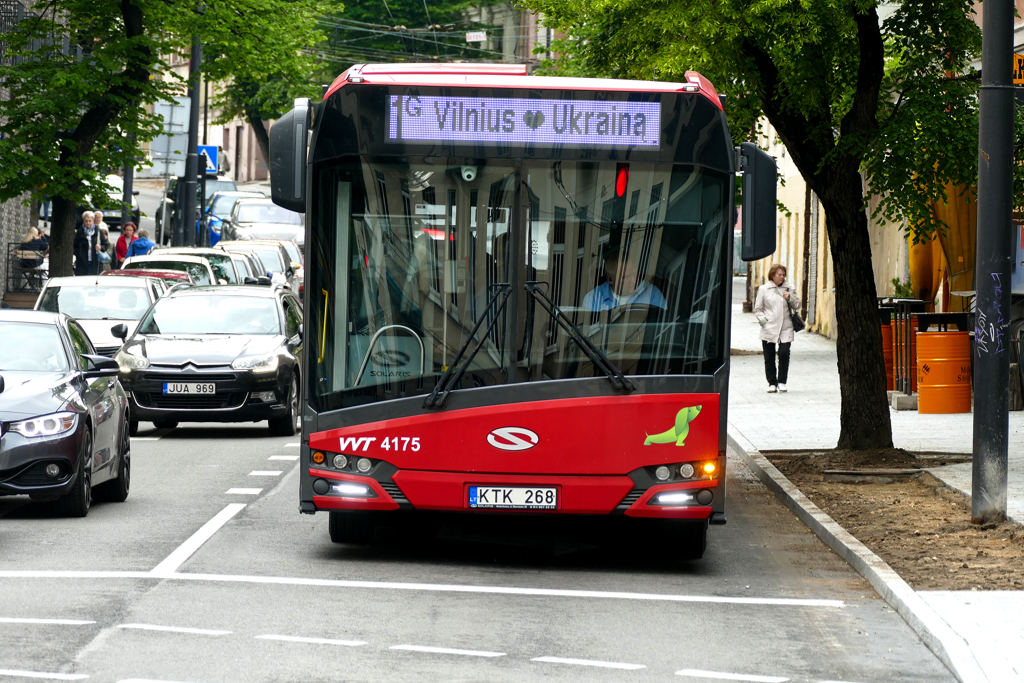
The old town is easy to explore on foot. Nevertheless, like virtually all European cities, Vilnius has a well-developed public transportation system, consisting primarily of buses and trolleybuses. The network is comprehensive and, above all, very affordable.
A single ticket costs 0.65 €uros in an app, whereas a paper ticket costs 0.90 €uros. For 5 €uros, you can get a 24-hour day ticket, and a 3-day ticket costs only 8 €uros. Note that apparently, the app works only with Lithuanian phone numbers, and everything is in Lithuanian. Therefore, I’d argue that the best way to buy tickets is by getting the Vilniečio Card. There are ticket machines at some stops, and paper tickets are also available on the bus. Keep in mind that you cannot pay cash but need to use a contactless means of payment.
Morning Activities
 Morning Activities
You don’t really need a sophisticated plan to enjoy Vilnius in the sunshine. You can simply stroll through the beautiful old town and call it a day, literally.
However, I’m suggesting a route where you’ll see many of the most important landmarks.
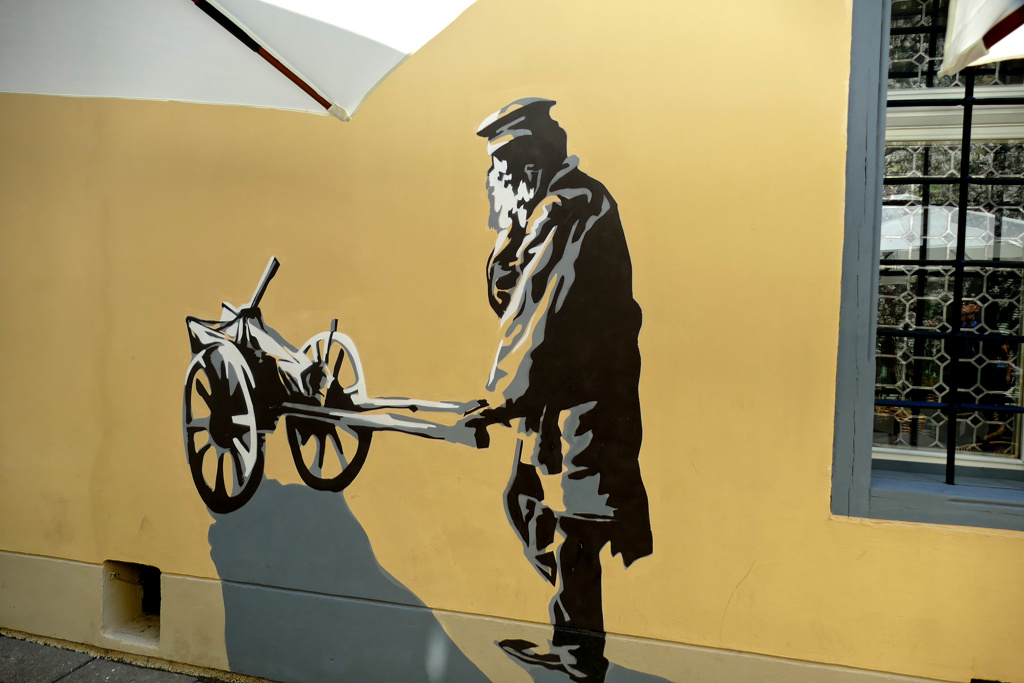
Begin your walk at Town Hall Square right next to the Radisson Collection Astorija Hotel*. From there, head east along Pilies Gatvė toward the former Jewish Quarter.
It was once a thriving hub of Vilnius’ Jewish community. As you wander the Stiklių Gatvė and the adjacent narrow alleys, notice the memorial plaques marking the locations of former synagogues, schools, and community centers.
One of the most iconic cafés is Ponių Laimė, located right in the heart of the former Jewish Quarter, which today is equally known as the Glass Quarter.
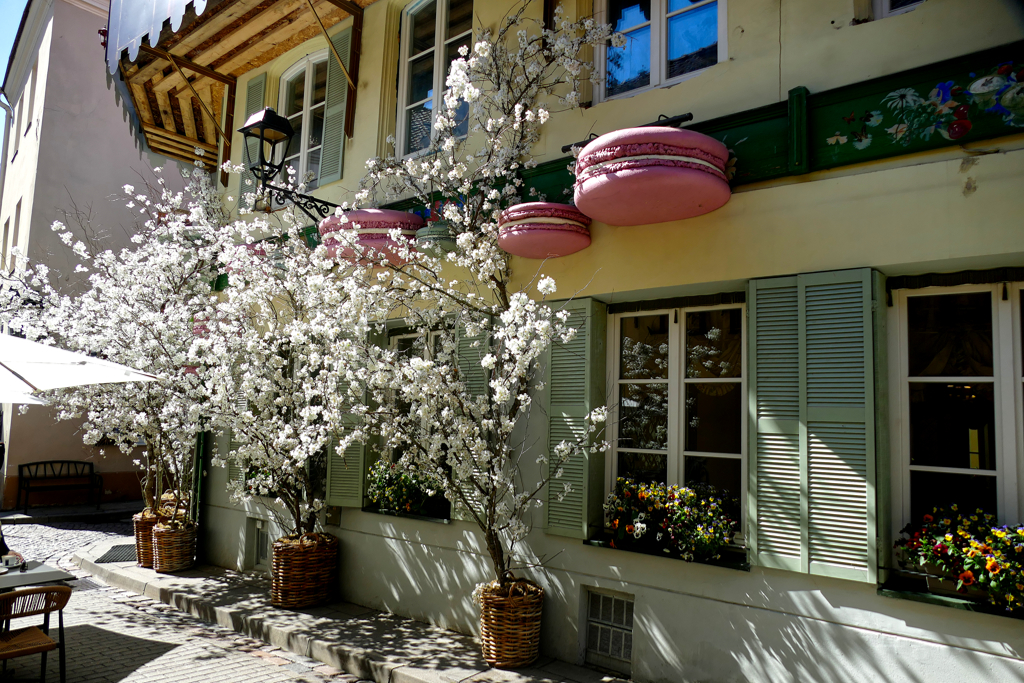
Yes, admittedly, the façades of many shops and cafés in Vilnius are elaborately decorated, but Ponių Laimė takes it up a notch with its oversized macarons and elaborate floral decorations. Ponių Laimė, which translates to ladies’ delight, is famed not only for its over-the-top decor, but also for its delicious desserts. So, if you are in need of a break while exploring Vilnius, this is the place to be.
By the way, in my post Best And Most Beautiful Coffee Houses in Vilnius, I’m introducing 15 of the city’s finest, coziest, and trendiest cafés, so you might want to check it out.
The Very Heart
Continue southwest along Didžioji Gatvė, and you’ll get back on Pilies Gatvė. Its name translates to Castle Street in English. In fact, it is one of the oldest, most famous, and historically significant streets in Vilnius’s old town, which connects the Town Hall Square with the Cathedral Square.
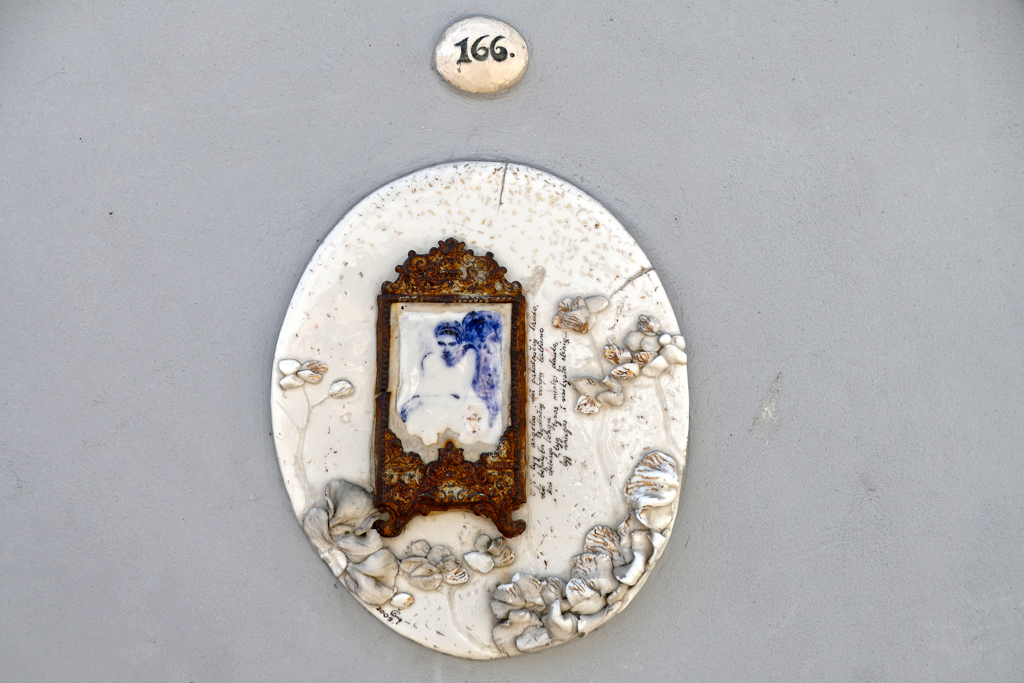
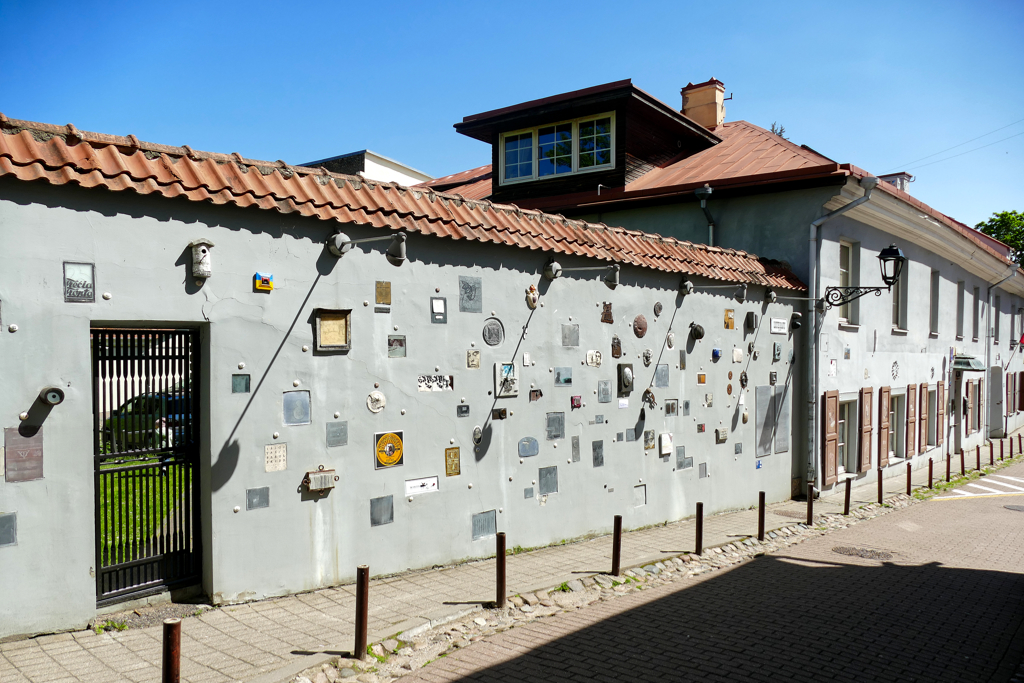
Coming from Didžioji Gatvė, turn right at the next corner to admire Literatų Gatvė, the Literature Lane. It is one of the city’s most charming streets and actually a unique open-air art project dedicated to literature and its authors with a connection to Lithuania.
Back on Pilies Gatvė, at the next corner to your left is the historic complex of Vilnius University, one of the oldest higher educational institutions in Eastern Europe. Inside is also Vilnius’ St. John’s Church with the famous St. John’s Bell Tower. At 68 meters, it is one of the tallest historic towers in Vilnius and has an observation deck offering a 360° view of the old town. For a 5 €uros entrance fee, you can take an elevator up if you don’t want to make the entire climb on foot. From this glass-enclosed level, you already have a good view. However, you can still climb some very steep stairs up to the terrace.
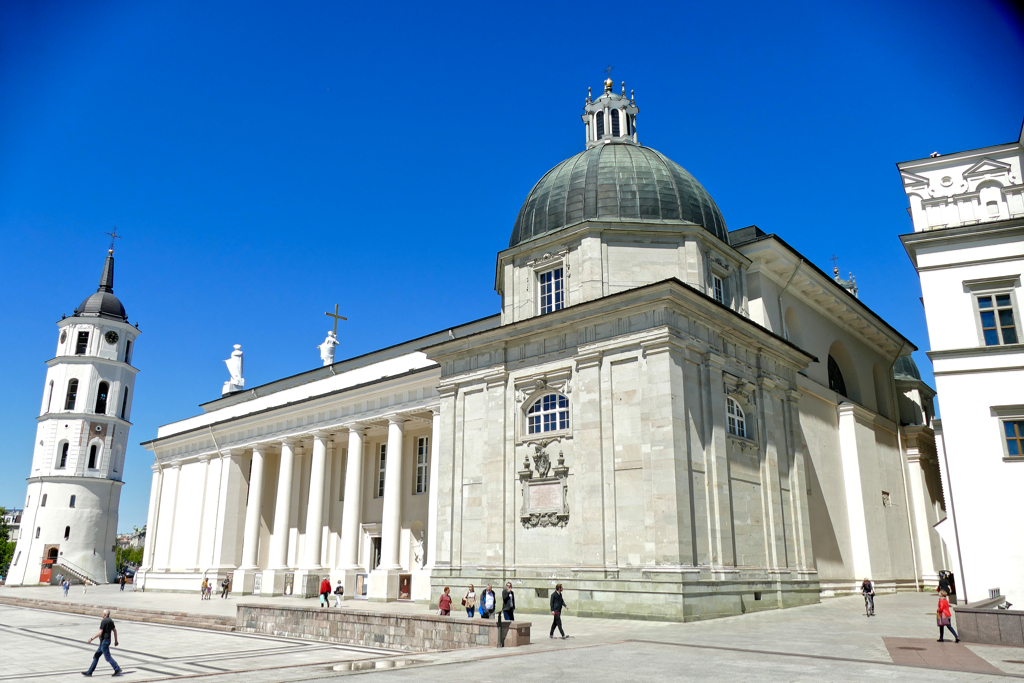
On the Cathedral Square at the end of Pilies Gatvė stands the neoclassical Vilnius Cathedral. It impresses with its grand columns and serene interior, while the Cathedral Bell Tower stands separately, offering a glimpse of the city from above. Don’t miss the supposedly miraculous Stebuklas Tile, where tradition says you turn around three times for good luck!
Going Up
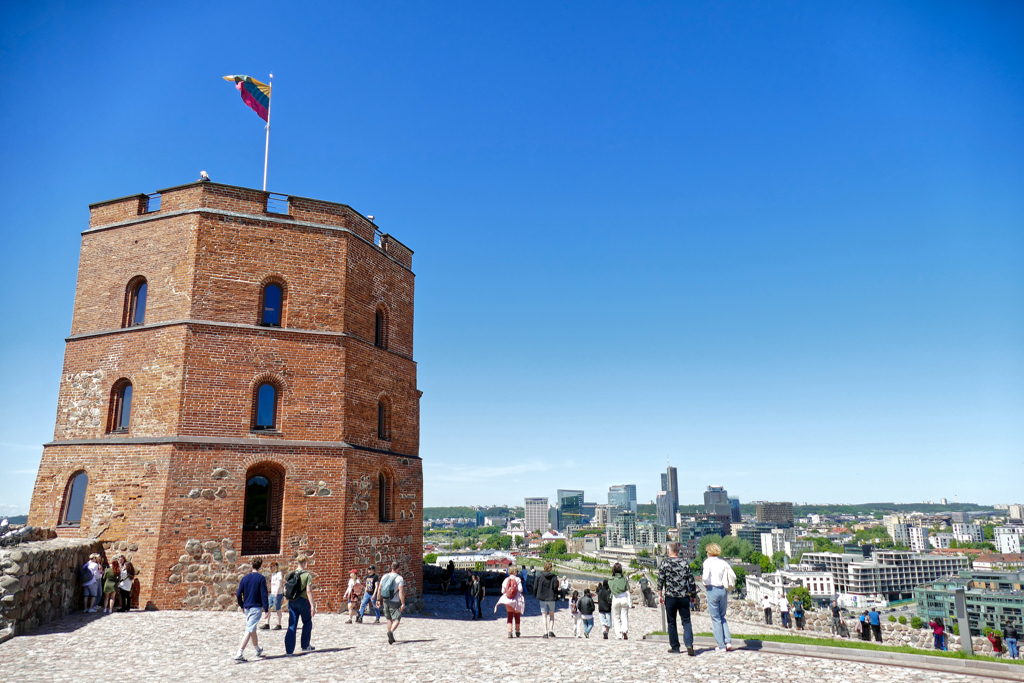
Behind Cathedral Square begins the ascent to Gediminas’ Tower, walking up the hill via Castle Hill path or taking the funicular for a more comfortable and quicker ascent.
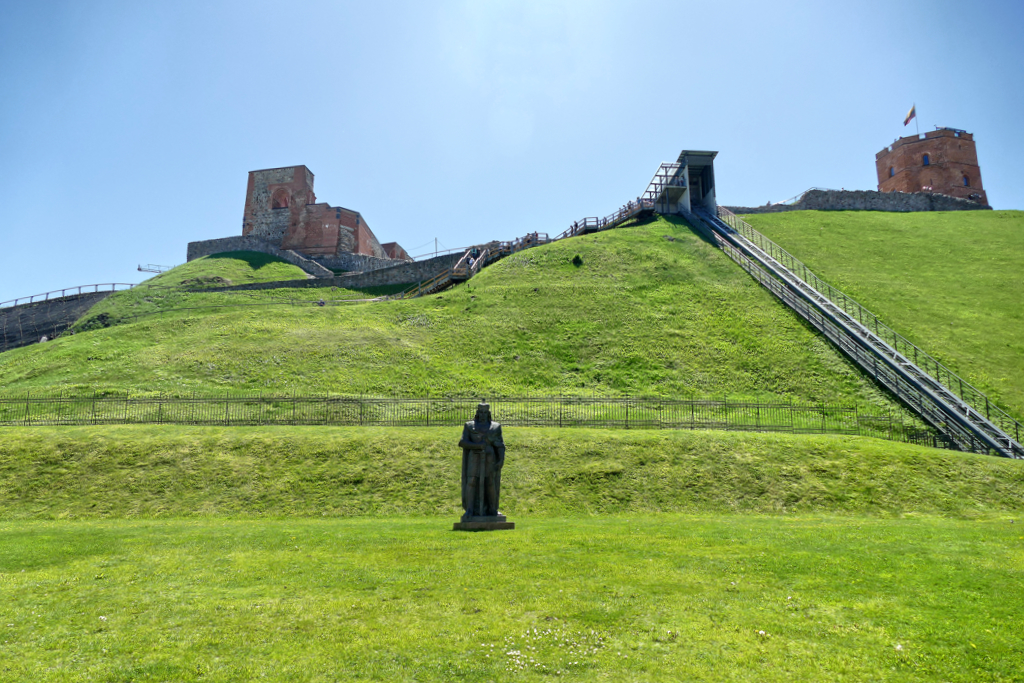
At the top, Gediminas’ Tower offers a small exhibition on Lithuania’s history and the best panoramic view of Vilnius.
This tour takes you through Vilnius’ civic, religious, and cultural history, and now it’s time for some traditional delicacies.
Although the Katpėdėlė restaurant has various branches around town, the one off Cathedral Square is the most charming one and also the closest when coming from the Gediminas’ Tower.
Morning Activities
 Morning Activities
I won’t lie, Vilnius is much more enjoyable when the weather is good. But unfortunately, you don’t have a choice, and luckily, you can fill a day with inspiring activities.
Just as every first-time traveller to Paris pays a visit to Notre Dame and hardly any sightseer misses St. Peter’s Basilica in Rome – or more precisely in Vatican City – every newbie to Vilnius will visit the Cathedral Square. And very rightly so, since this is where some of the most important historical sites are located.
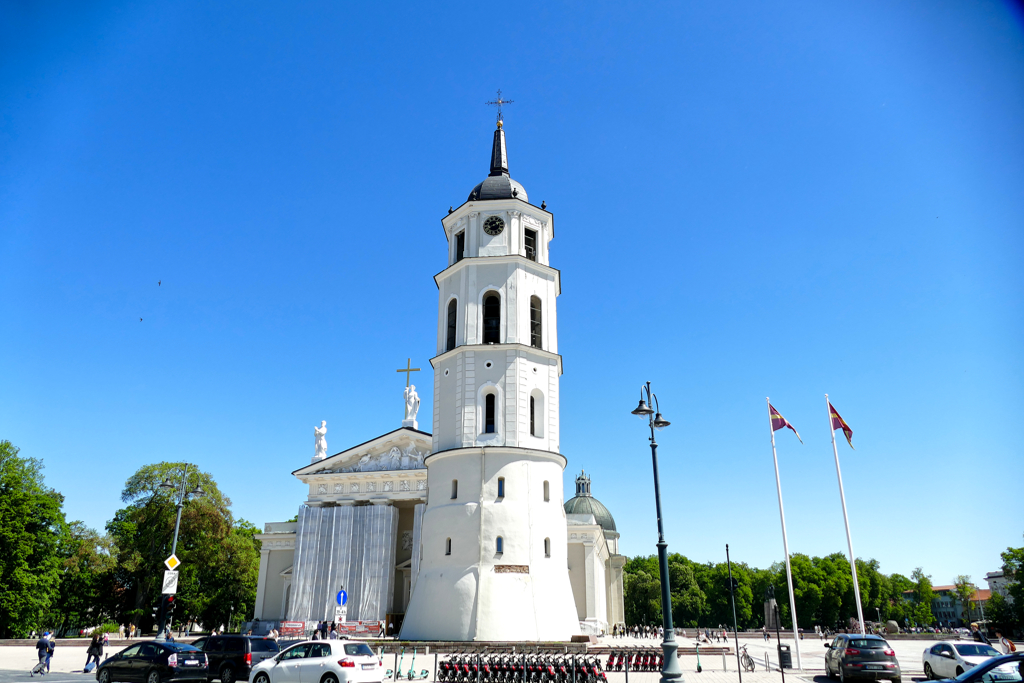
The most imposing structure is the Cathedral of St. Stanislaus and Ladislaus, or Vilnius Cathedral for short. It was originally built after the Christianization of Lithuania in 1387.
Over the centuries, it was rebuilt several times due to fires and wars.
In addition to the final resting places of several bishops and noblemen, the cathedral also houses the tombs of Saint Casimir, whose chapel is a masterpiece of the early Baroque, as well as King Alexander Jagiellon of Poland and Vytautas the Great, a ruler of the Grand Duchy of Lithuania.
The Cathedral’s bell tower is yet another great structure to climb in order to get a grand view of Vilnius.
Palace of the Grand Dukes of Lithuania
Right next to the Cathedral stands the imposing Palace of the Grand Dukes of Lithuania. Its construction began in the 15th century during the rule of Grand Duke Vytautas the Great. Sigismund the Old expanded in the early 16th century. The palace became the political, administrative, and cultural center of the Grand Duchy of Lithuania and later the Polish–Lithuanian Commonwealth. It also functioned as the residence for Lithuanian rulers until the mid-17th century.
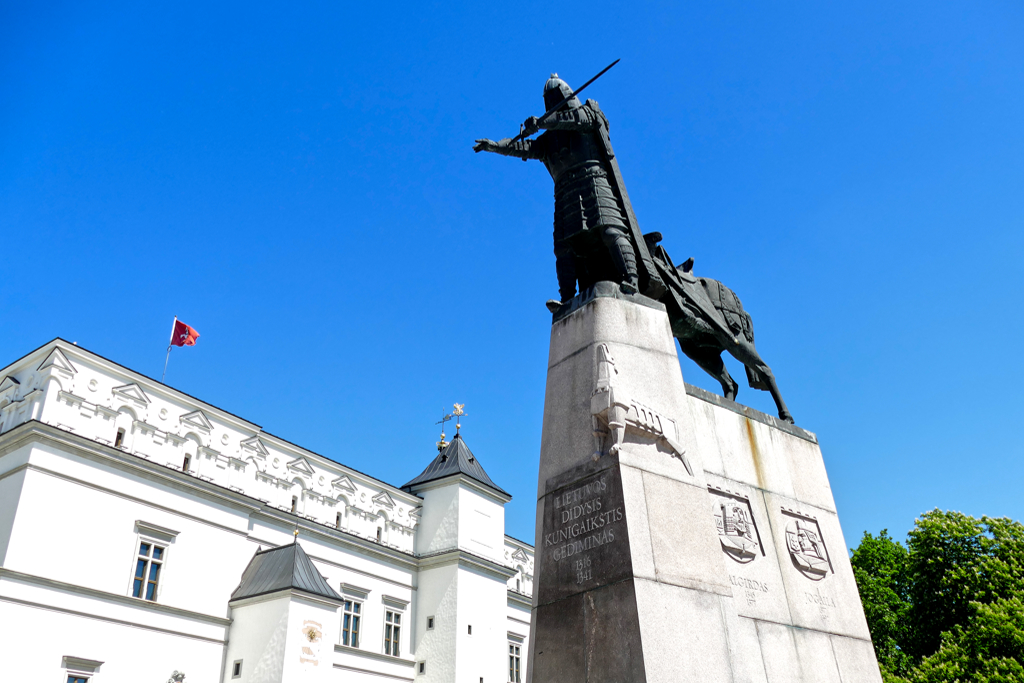
However, during the Russo-Polish War, the palace was severely damaged in 1655, and when Vilnius was under Tsarist control, it was completely demolished in the early 1800s. Reconstruction began only in 2002, and the palace was reopened to the public in 2009.
Today, it houses a cultural center and a museum, which includes authentic archaeological remains, reconstructions of the Renaissance and early Baroque interiors, and exhibitions on Lithuanian statehood, diplomacy, and art.
Visiting hours for the palace vary depending on the month and day of the week, from 10 a.m. to 6 p.m. to 8 p.m. The palace is closed on Mondays. Admission prices for various tours range from 4 €uros to 8 €uros each; a combination ticket for 16 €uros allows you to visit all areas. The Palace of the Grand Dukes of Lithuania is, of course, included in the Vilnius Pass*.
Katpėdėlė, where you should have lunch, is right next to the square.
Lunch
 Lunch
LunchKatpėdėlė is just steps away from Cathedral Square.

This restaurant is renowned for offering authentic Lithuanian cuisine in a cozy, rustic setting. They offer a variety of classic Lithuanian dishes.
Starting every day at 11.30 a.m., Katpėdėlė provides a delightful culinary experience that captures the essence of Lithuanian hospitality and tradition.
Afternoon Activities
In the afternoon, we’re off to visit an extremely different kind of neighborhood. Užupis is certainly one of the most interesting neighborhoods in Vilnius.
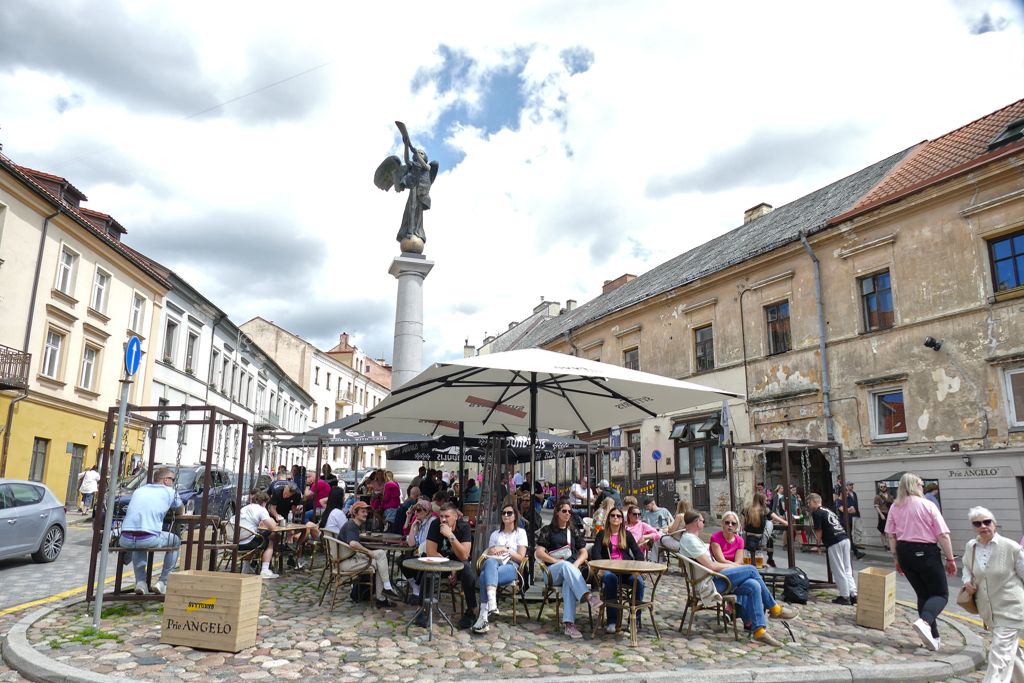
The name Užupis means beyond the river and aptly describes its location: The district is separated by the small Vilnia River directly east of the old town.
This location made Užupis a simple suburban neighborhood for centuries, inhabited by workers, artisans, and later also Jewish families. It was located on the outskirts of the city, was often flooded, and suffered long-term infrastructure neglect. After World War II, the neighborhood rapidly deteriorated, particularly during the Soviet era. Many buildings stood empty, and it was considered a social hotspot.
After Lithuania’s independence in 1990, artists, creatives, and nonconformists discovered the neighborhood. They began occupying empty houses, setting up studios, and transforming the area into an alternative cultural space.
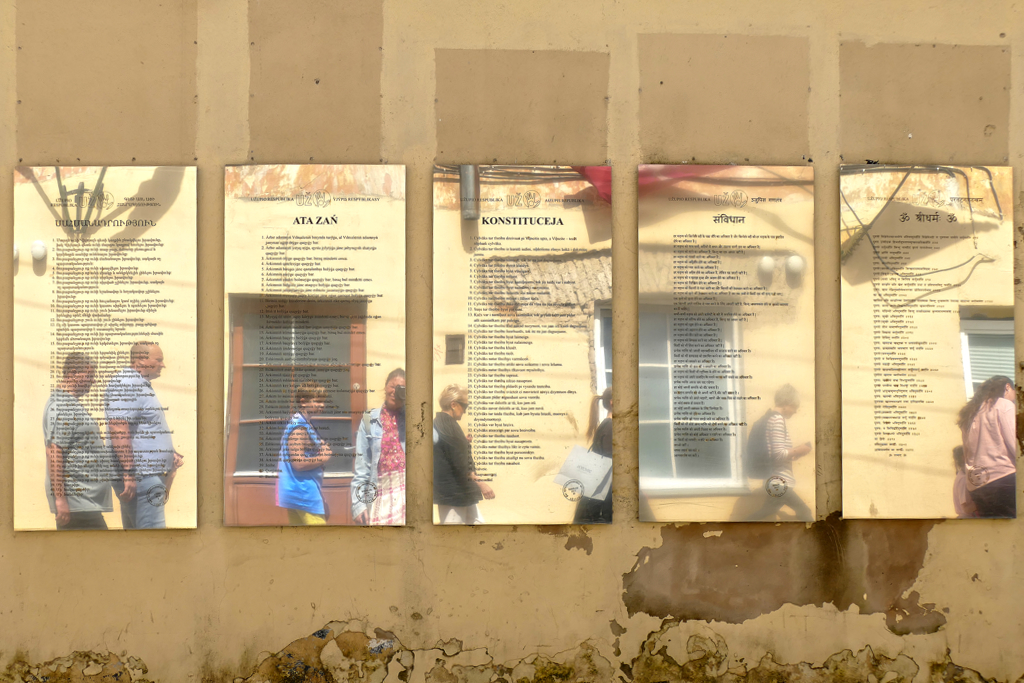
This culminated in the residents symbolically proclaiming the so-called Republic of Užupis on April 1, 1997. This was an ironic and poetic statement for self-determination, artistic freedom, and humanity. Since then, Užupis has had a small border post, a flag, and a president. The constitution of the free republic can be found along Paupio Gatvė. It is displayed on metal plaques in over 50 languages.
Despite increasing popularity and gentrification, Užupis remains a symbol of freedom, creativity, and cosmopolitanism.
Depending on where you walk in Užupis, you can stroll back to the Pilies Gatvė for a classic Lithuanian dinner. If you’re tired of walking, just take the bus to Cathedral Square.
Afternoon Activities
In the afternoon, you might want to learn a bit more about Lithuania’s ever-changing history. The perfect place to do so is the Museum of Occupations and Freedom Fights. It might be unpleasant walking there for around 15 minutes if it rains too hard. Alternatively, you can take bus #17 at Naujininkai stop and get off at Juozo Tumo-Vaižganto Gatve.
Established in 1992, this museum is housed in the former KGB headquarters. It’s the dark place where, during the Soviet era, interrogations and even executions took place. Today, the exhibitions span Lithuania’s Sovietization, the armed resistance, partisan struggles, Gulag deportations, and KGB clandestine operations.
The museum is open from Wednesday to Saturday from 10 a.m. to 6 p.m., and on Sundays, it closes already at 5 p.m. The general entrance fee is 6 €uros. Keep in mind that you’ll experience a deeply stirring and disturbing visit. Also, joining a guided tour is highly recommended for the full context.
To get from the Museum of Occupations and Freedom Fights to the MO Museum, you can either walk for about 15 minutes, or you can opt for bus #7 or bus #21 in the direction of Stotis and get off at the stop MO muziejus.
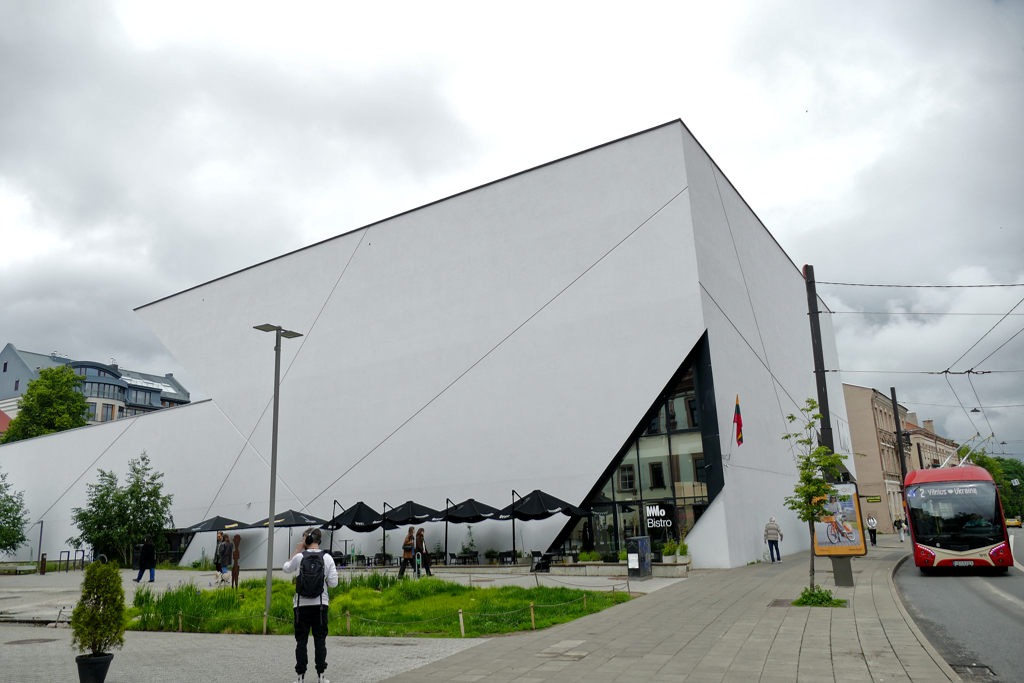
Opened in 2018, the MO Museum is housed in a unique building designed by superstar architect Daniel Libeskind.
Although it’s small in scale, Libeskind himself noted it as one of his favorites. It showcases over 6,000 modern and contemporary Lithuanian works, ranging from the 1950s to today.
Beyond its core collection, MO offers changing exhibitions as well as workshops, film screenings, concerts, and lectures. It is open from Wednesday to Monday between 10 a.m. and 8 p.m. The general entrance fee is 11 €uros.
Dinner
Traditional Lithuanian food reflects the country’s agrarian history, seasonal produce, and hearty, rustic flavors.
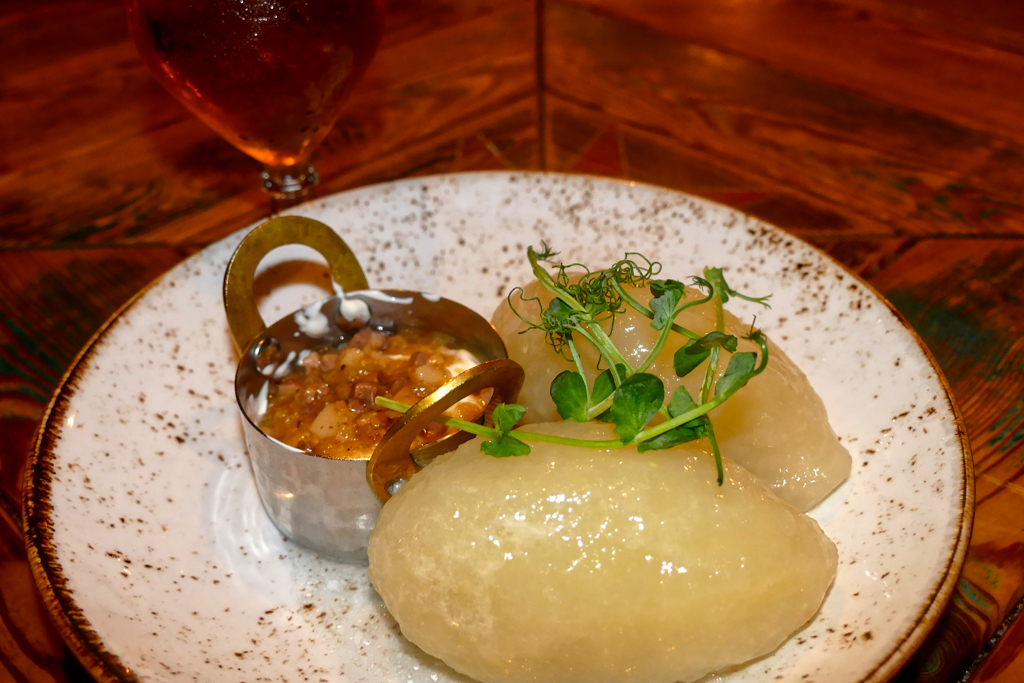
Key traditional foods include, first and foremost, Cepelinai. These large potato dumplings, named after zeppelins due to their shape, are typically stuffed with minced meat, cheese, or mushrooms. As if that’s not hefty enough, they are served with sour cream and bacon sauce.
One of the most alluring places to enjoy some of the best Cepelinai is Berneliu Uzeiga Pilies, right on Pilies Gatvė.
Nightcap
 Nightcap
Weather permitting, there’s no better place for a sundowner than the pop-up rooftop bar of the Radisson Collection Astorija Hotel*. Here, you can enjoy your drink with priceless views of all of Vilnius.
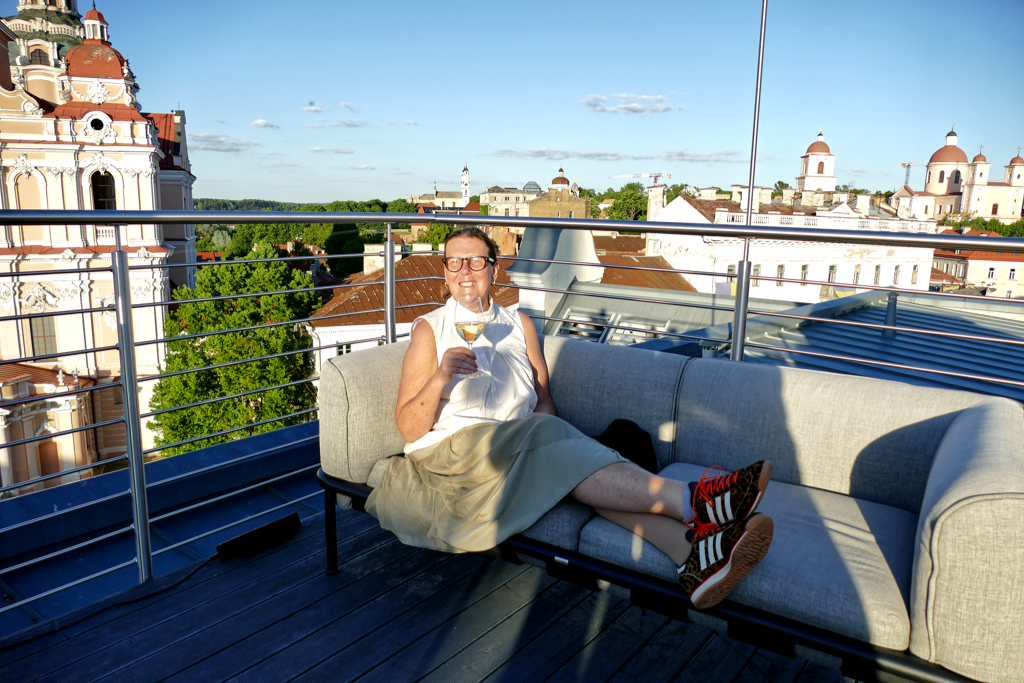
But even if it rains, you don’t have to miss out on a delicious nightcap, because on the ground floor next to the entrance, there is an indoor bar with a grand view of the iconic Casimir Church and its busy forecourt.
Accommodation
 Accommodation
Even if you are in Vilnius for only one night, the Radisson Collection Astorija Hotel*, with its comprehensive, first-class service, is definitely recommended. In addition to tastefully furnished rooms, it offers many extras such as beautifully designed common areas, an elegantly designed restaurant, and a great bar overlooking the square and the passersby.
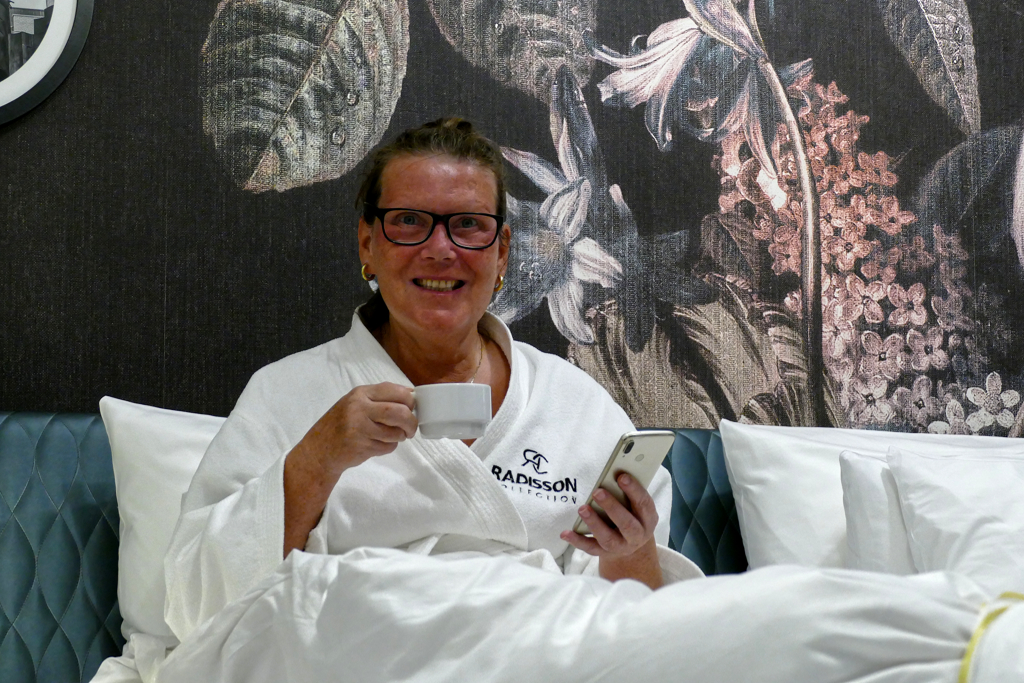
In addition to the luxury and comfort of the Radisson Collection Astorija Hotel**, there couldn’t be a better location to spend the night in Vilnius. It’s located right next to Town Hall Square, and all the points of interest in the historic old town and even some of the New Town can be reached on foot in just a few minutes. And if you do need to take public transportation, you’ll find stops for countless lines nearby.
Nevertheless, if, for whatever reason, you prefer to stay at a different place, you’ll certainly find a suitable lodging option on this map*:
Map
This map should help you to easily find all the wonderful places I’m introducing in this post. To switch between the itineraries for a sunny and a rainy day, just open the legend at the top left corner, and you can hide or unhide the respective layer as you wish. This way, the map will show only the section you really need and be clearer.
If you have more time to spare in Vilnius, make sure to check out my comprehensive post What to See on an Unforgettable Weekend in VILNIUS. There you’ll find lots of places and activities to choose from.
Pinnable Pictures
If you choose to pin this post for later, please use one of these pictures:
Did You Enjoy This Post? Then You Might Also Like These:
24 hours in AMSTERDAM
24 hours in BORDEAUX
24 hours in DUSSELDORF
24 hours in COPENHAGEN
24 hours in BANGKOK
24 hours in MUNICH
24 hours in BERLIN
24 hours in SINGAPORE

Disclaimer: I was invited to stay at the Radisson Collection Astorija Hotel. Also, Go Vilnius supported my blogger trip by supplying me with a 72-hour Vilnius Pass. However, all opinions on these services are mine and weren’t by any means influenced by my cooperation partner.
*This is an affiliate link. If you book through this page, not only do you get the best deal. I also get a small commission that helps me run this blog. Thank you so much for supporting me!
Icons: money bag by Roundicons from www.flaticon.com, police car, train, sun, glass, and bed by Freepik from www.flaticon.com, takeoff plane and board made by ultimatearm from www.flaticon.com, info made by Roundicons from www.flaticon.com, umbrella made by Kiranshastry from www.flaticon.com, food plate by Vectors Market from www.flaticon.com