Picturesquely framed by the shimmering blue of the Caribbean Sea, the northern half of the island of Saint Martin is as French as Gauloises and Baguette. Saint Martin distinctively blends tropical allure with a French twist, and in this post, I’ll show you what you absolutely should not miss.
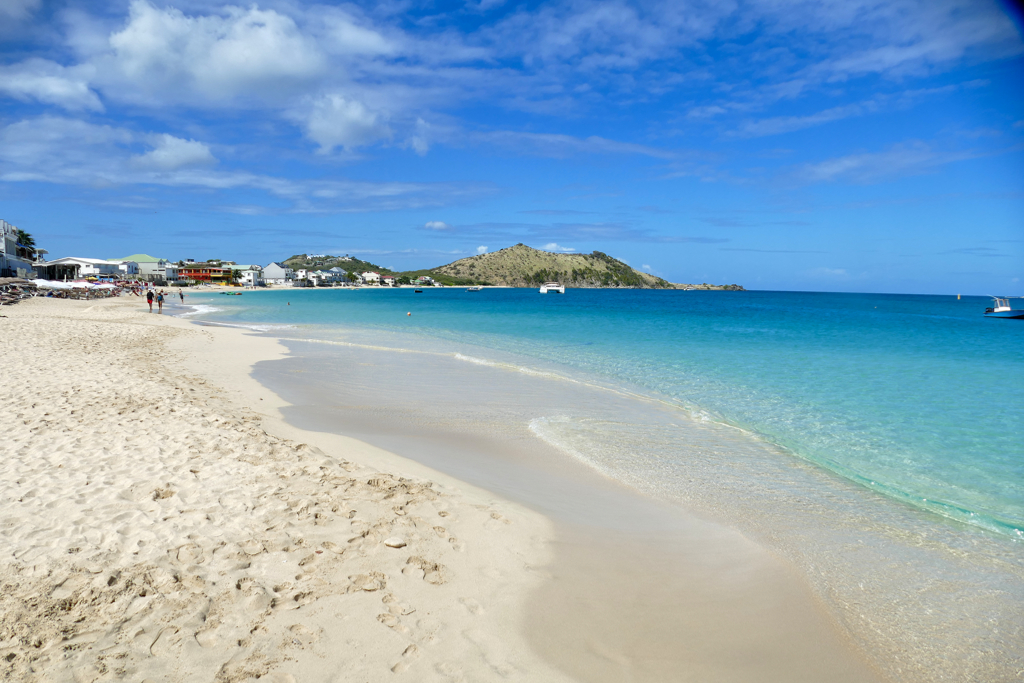
From the bustling marina of Marigot with its markets and fine patisseries to the tranquil coves of Anse Marcel and the lively beach clubs of Orient Bay, Saint-Martin offers the perfect balance between relaxation and indulgence. Nature lovers can hike to the viewpoints of Loterie Farm, while foodies enjoy first-class dishes at beachfront bistros in Grand Case.
Whatever floats your boat, you’ll find your little corner of Saint-Martin where time slows down, and paradise seems within reach.
Bienvenue à Saint-Martin
Like its southern neighbor, Saint-Martin’s colonial story began in the 1600s, when France and the Netherlands decided to divide the island rather than wage continuous war over it. In 1648, the Treaty of Concordia established the peaceful coexistence that still defines the island to this date. Today, Saint-Martin has the political status of a so-called Collectivité d’outre-mer, hence, an overseas collectivity. The French language, laws, and cultural traditions define daily life. Also, the inhabitants are French nationals and EU citizens. Yet, they have their own territorial council.
While the Dutch part of the island thrives on entertainment, shopping, and a cosmopolitan feel, Saint-Martin leans more toward European grace and a slower pace. Instead of casinos and cruise ship crowds, you’ll find gourmet dining, local lolo barbecue stands, and chic beach clubs.

Despite the contrasts, Saint-Martin and Sint Maarten flow seamlessly into one another. There are no border controls, and many locals cross daily for work, shopping, or leisure. Hence, both sides share the same postcard-perfect coastline, Caribbean vibes, and an amazing story of peaceful coexistence, from which many other states could learn a thing or two.
What Not to Miss in Saint-Martin
Yes, there is a physical border between the Dutch and French parts of Saint Martin. Nevertheless, although I draw a clear line between the two parts in my travel guides, this hard border doesn’t exist in reality. You can travel freely between the two sides, and many day-trippers visit places on both sides as part of their excursion. One of the nearly ten bus lines operating on the island even connects the two main towns, Philipsburg on the Dutch part and Marigot on the French side.

Regardless, I’ve chosen to present the two parts separately to fully showcase their unique landscapes and cultural characteristics. However, you’ll find them harmoniously combined on the overview map at the end of both posts, which will make your travel planning easy and complete.
In fact, there is one important aspect that can have dramatic consequences when crossing borders, and that’s the internet connection: while European roaming is available in the French part, it isn’t on the Dutch side. And if you forget that, your next phone bill will mercilessly remind you that you’ve actually been in two different countries. I can only advise you to always keep your phone in airplane mode to avoid any risk.
Marigot
The French part of Saint Martin essentially begins at the eastern end of the Simpson Bay Causeway, which runs from the airport across Simpson Bay Lagoon. From there, you can reach Marigot, the main town of Saint Martin, in just under five minutes. Yes, it’s only the main town and not the capital, mind you, because that’s Paris – we’re walking on French ground, after all.

I like to immerse myself in everyday life when I travel, and Marigot offered me all the everyday life I need to be happy.
Home Away From Home
Marigot, with its roughly 5,000 inhabitants, effortlessly blends Caribbean and French savoir vivre. Picturesquely situated on a sheltered bay on the island’s west coast, it offers a natural harbor with very photogenic backdrops of turquoise water, sailboats, and colorful houses.

Marigot’s special charm stems primarily from its casual ambiance. In the downtown area, there’s a large market where local vendors offer spices, fresh fruit, fish, handicrafts, and Caribbean specialties. Here, islanders and tourists mingle in harmonious unity. Besides Saint Martin’s fantastic beaches, this was what I liked much better here than on the Dutch side: apart from Orient Bay, which I think is undeservedly praised, there are no purely touristy resorts.
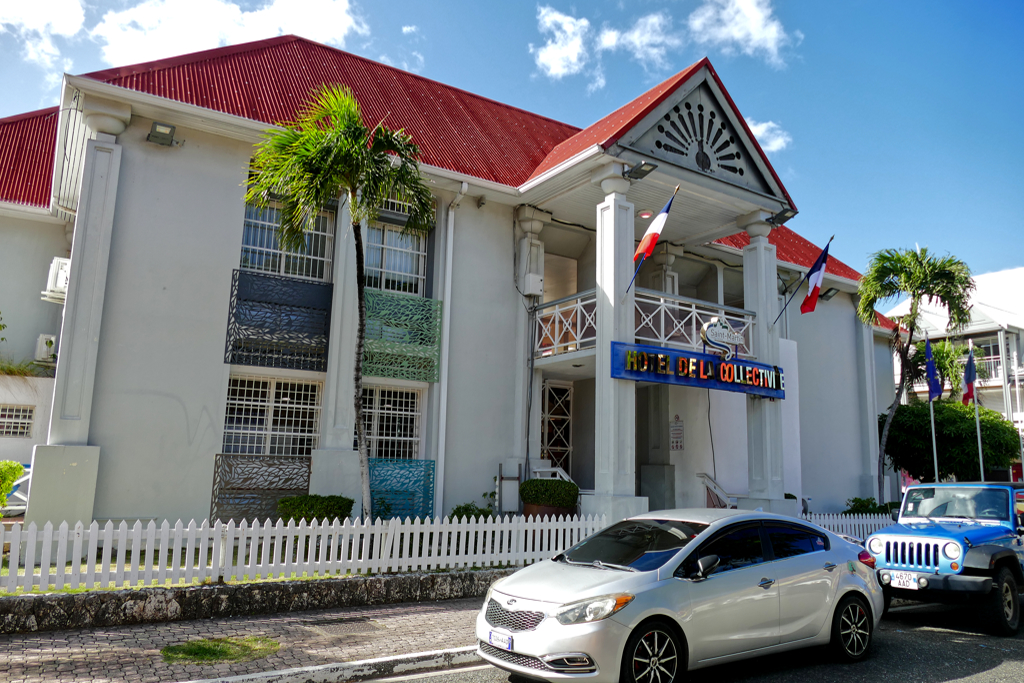
Whether in the towns or along the beaches, an organic mix of locals and visitors is palpable everywhere. In Marigot, small boutiques, cafés, and French bakeries cater to the needs of both groups. You’ll feel more like you’re in a small, slightly run-down town in the South of France —only with palm trees and a sea breeze.
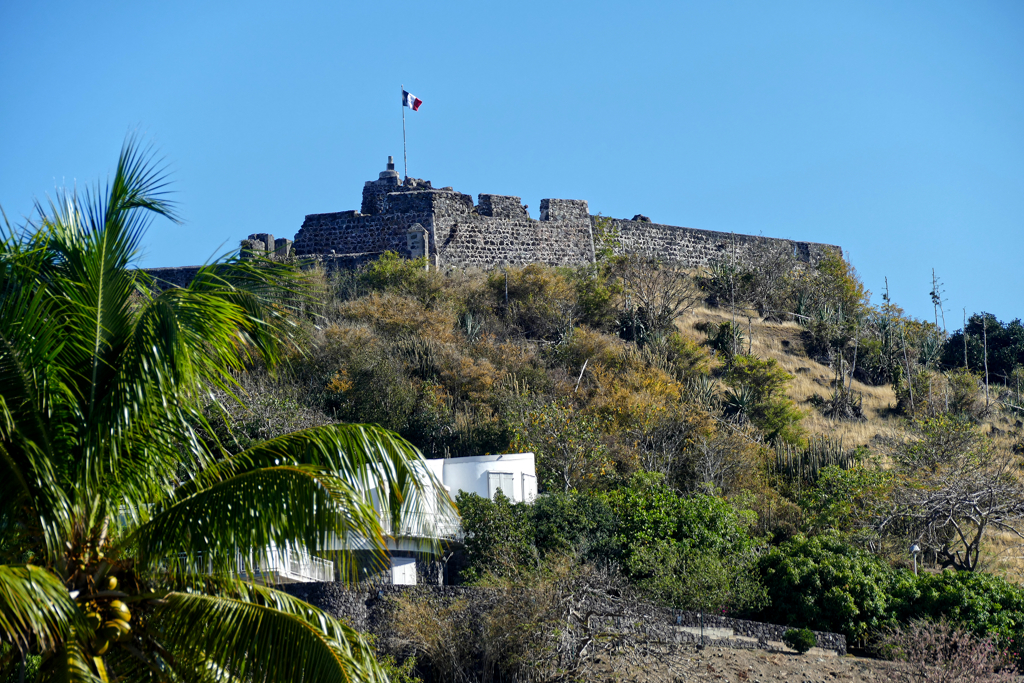
Marigot is also an excellent base for exploring the island by bus or taking a boat to nearby beaches and neighboring islands. Despite its role as an administrative center, the town has a relaxed and welcoming atmosphere. It is well worth a visit, even if you choose to stay elsewhere on the island.
Rambaut
Although Marigot is situated on the water and boasts a picturesque coastline, it unfortunately doesn’t have a beach. The nearest beach is located at Galisbay, about a twenty-minute walk away. A far better option is to take the bus towards the French Quarter and get off at the corner of Route du Mourne Valois and Rue de Friars Bay.

From there, it’s about a twenty-minute walk to the beautiful Friars Bay Beach. It’s definitely worth a visit, but be warned: the walk can feel quite long in the heat and without much shade. Luckily, you don’t have to carry much, as you can rent chairs and parasols at two very pleasant and relaxed bar-restaurants on the beach. Even if you simply spread out your towel in the shade, you can still get your refreshments from them.
Beach Hopping With a View
Once you’ve recovered from the walk and revitalized yourself in the crystal-clear water, you should definitely push yourself to walk a little further. The walk along the Piste Anse Guichard is short and pleasant, as it leads along the coast and offers breathtaking views.
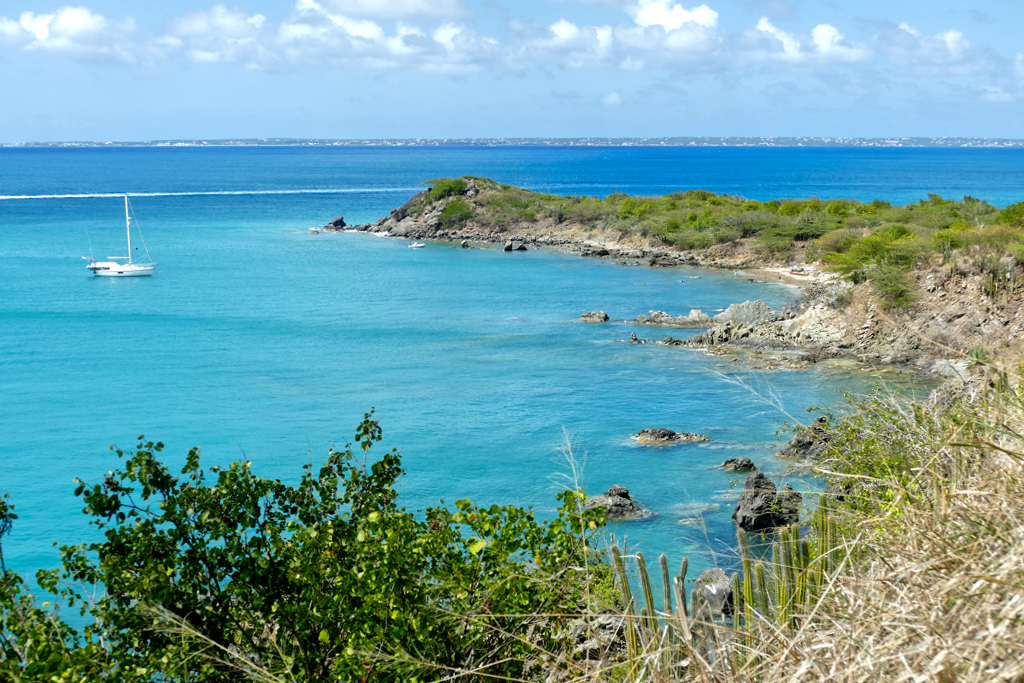
After about ten minutes, you’ll reach Happy Beach and immediately understand why this beach truly deserves its name. For me, it’s probably the most beautiful beach on the entire island. Deep turquoise water fringes the white, powdery sand. No beach chair rentals disturb the idyllic scene. You’ll find yourself in a secluded Robinson Crusoe setting. This does mean, however, that you need to bring everything you need for your day at the beach, including plenty of drinking water.
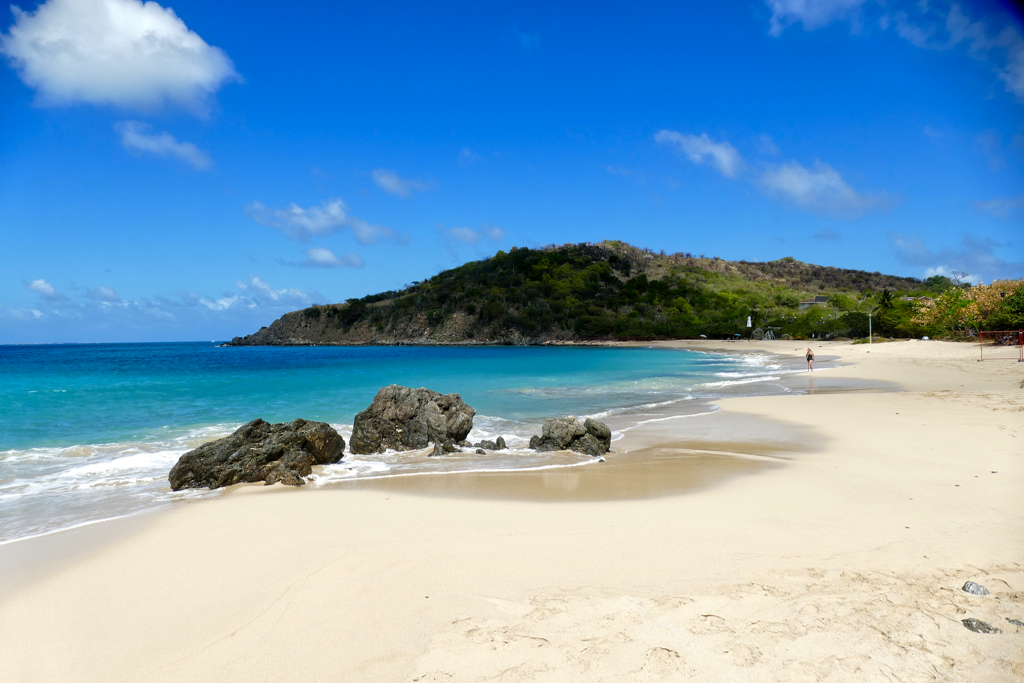
You don’t need to worry about shade, as there are numerous trees along the beach. At the northern end, visitors enjoy naturism. Personally, I don’t mind, but I know that visitors, especially those from the USA, can sometimes react with surprise, to say the least, so here’s a little heads-up.
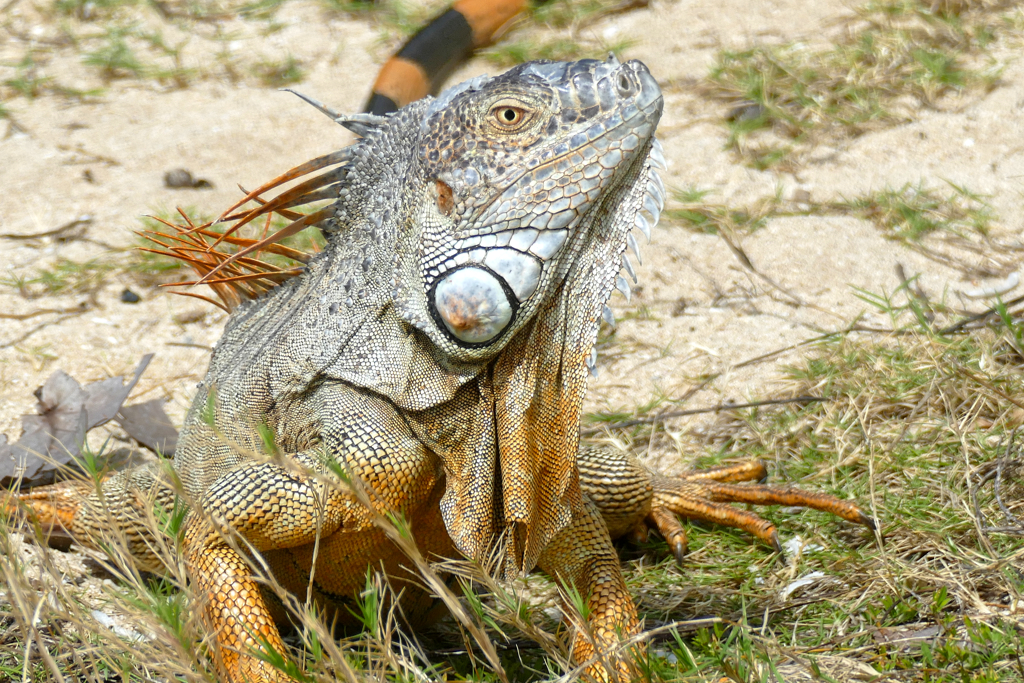
If you, like me, took the bus to Friars Bay Beach, you can skip the return trip and walk directly from Happy Beach back to the main road, where you can hail a bus back to Marigot or further towards the French Quarter.
This also means you can get off right at the turnoff to Happy Beach, obviously.
You’ll find lots of suggestions and tips on how to visit the island’s most beautiful beaches, also by public bus, in my post The Best Beaches Around Saint Martin You Can Easily Visit by Public Bus.
Off the Beaten Path
If you’re looking for a change of pace from the beach, you’ll find it in the higher elevations of Rambaut. Rambaut is a quiet, less touristy base for nature experiences away from the beaches. The area is characterized by hills, lush vegetation, and a relaxed, almost secluded atmosphere. It’s here that you’ll find Loterie Farm, a former plantation that’s now a private nature reserve and a diverse destination. Visitors will find a unique blend of adventure and relaxation. There are hiking trails through the tropical forest, a zipline and treetop climbing course, and a stylish pool area with a restaurant that feels more like a jungle club than a traditional nature park. While access to the hiking trails is mostly free or nearly free, you’ll naturally have to pay a hefty fee to use the facilities, such as the pool, climbing park, or ziplining.
Directly above Loterie Farm rises Pic Paradis, at approximately 424 meters, the highest point on the island. It can be reached either by road or via hiking trails. The hike up is challenging, but if you take your time and start early, it’s a great excursion. Keep a sharp eye out, as you might spot monkeys. And once uphill, you’ll be rewarded with breathtaking views across the entire island and the surrounding Caribbean Sea.
Rambaud is therefore one of the best hidden gems for those who want to experience the lush, tropical side of the island in addition to the beach and sea.
We Have a Winner
Originally, the land now known as Loterie Farm was a sugar plantation in the 18th century, part of the colonial economic system. Because the land was allocated through a lottery or auction, it is called Loterie Farm to this date.
In the 19th century, sugar production on the island declined, and many plantations were abandoned or fell into disrepair. The land was reclaimed by tropical forest, ultimately forming the basis of the nature reserve it is today.
It wasn’t until the late 20th century that the area was rediscovered and developed. The goal was to preserve the original natural environment while simultaneously creating a place for visitors. The result is a combination of nature reserve, adventure park, and recreational area with a strong focus on sustainability and visitor experiences.
Grand Case
Leaving the less touristy district of Rambaut, you reach one of Saint-Martin’s main tourist destinations, Grand Case.
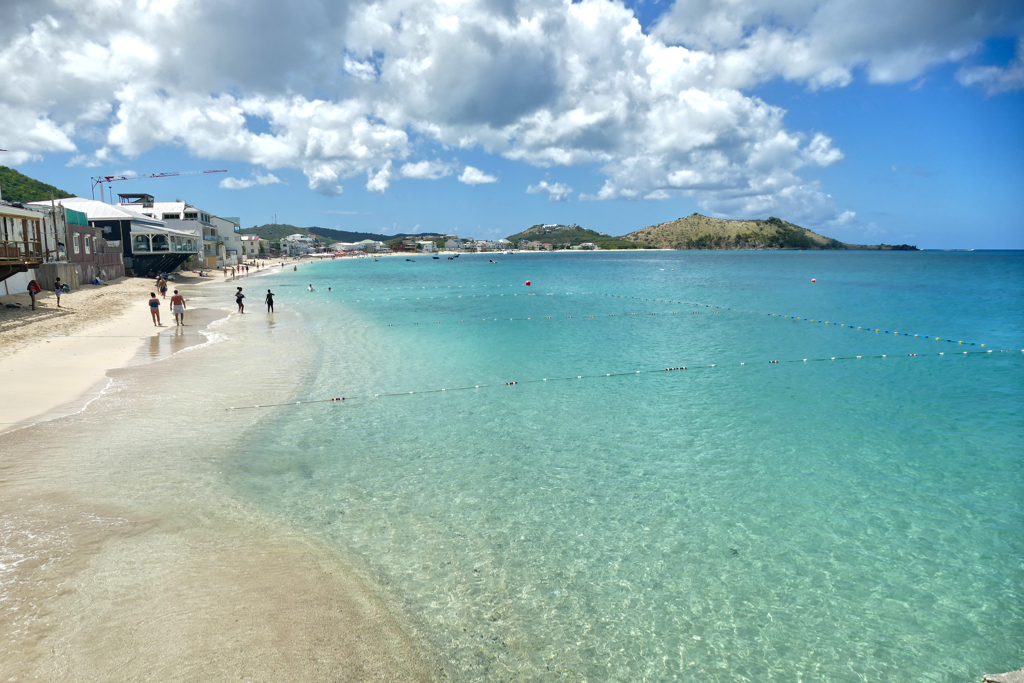
I personally love Grand Case. I admire how the place has managed to maintain such an authentic atmosphere along its beautiful sandy beach. Only a relatively small section has beach clubs, which, with their sun loungers and colorful cocktails, bring a bit of an Ibiza vibe to the Caribbean coast. Otherwise, the beach is free, and you can spread out your towel in the shade of the trees or small holiday accommodations. It never feels hectic or crowded. I find it particularly charming that local school classes often come to the beach for swimming lessons at midday. The combination of all this creates a harmonious and easygoing atmosphere between locals and visitors. Grand Case is my happy place.
Keeping it Simple
However, just as the beach at Grand Case forms a harmonious mix of locals and visitors, so does the town itself.
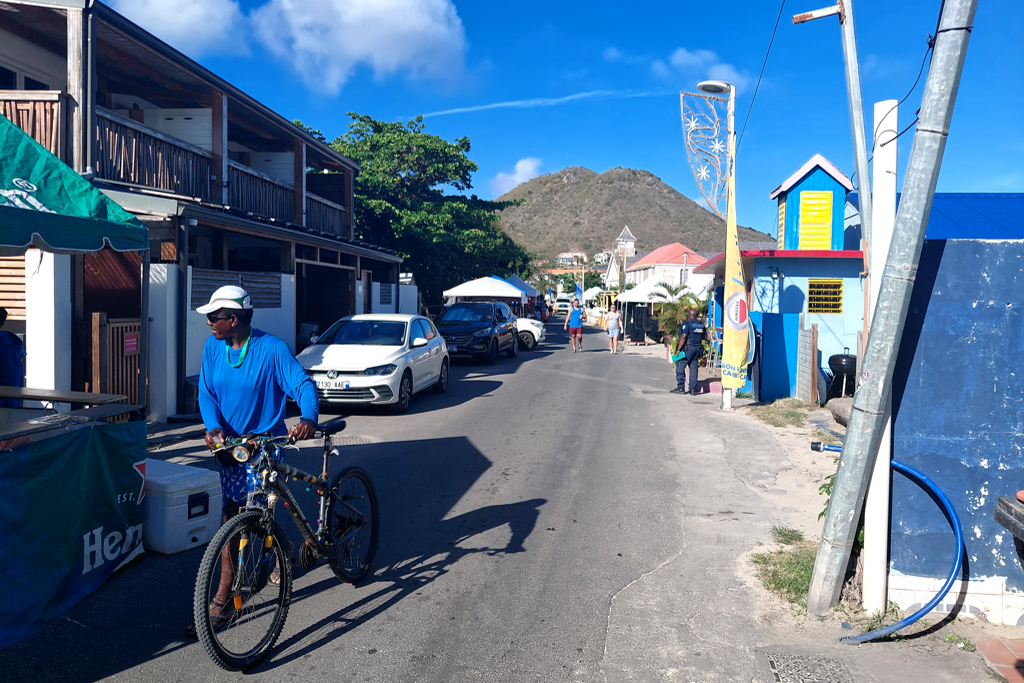
Originally, Grand Case was a small fishing village that developed along a sheltered bay. Obviously, its location was ideal: peaceful, with good fishing conditions and access to the sea. Like many places on the island, Grand Case emerged in the context of the colonial division between France and the Netherlands in the 17th century. While large plantations were primarily located inland, Grand Case remained a simple, locally focused settlement with modest infrastructure for a long time.

In the 18th and 19th centuries, life there was heavily influenced by fishing and small-scale farming. The population consisted mainly of descendants of enslaved people who established their own communities after the abolition of slavery. These local structures and family networks continue to shape the town today. Despite its popularity, Grand Case remains a place with a strong local identity.
Tables Turn
A turning point came in the 20th century when Saint-Martin slowly opened up to international tourism. While other parts of the island focused more on large resorts, Grand Case developed in a different direction. To this day, it remains small, charming, and strongly influenced by its cuisine. The town is famous as the gourmet capital of the Caribbean, thanks to its blend of French and Creole influences.

A characteristic feature is the so-called Lolos. These simple barbecue restaurants are located right on the street and exemplify an uncomplicated, authentic food culture deeply rooted in the local community.

Despite its success as a tourist destination, Grand Case remains a place where everyday life and visitor culture coexist. Fishing boats on the beach, local festivals, and the strong presence of family businesses demonstrate that the town has not lost its roots. It is precisely this blend of authentic village life and culinary excellence that makes Grand Case one of the most culturally interesting places on Saint-Martin.
Cul-de-Sac and Île Pinel
Cul-de-Sac is just a few minutes away by car or public bus. The name literally translates to dead end. This is very fitting, as the shallow bay is almost entirely enclosed by land, giving it a particularly secluded vibe.
Historically, Cul-de-Sac has been a classic fishing and agricultural area. The protected lagoon offers ideal conditions for small boats and local fishing. To this date, you can see fishermen heading out early in the morning.

The area is also ecologically relevant, as it borders a delicate lagoon and coral reef system protected by sandbanks and small islands. This often results in very calm and clear water. This later also benefited tourism.
Island in the Stream
Talking ’bout tourism: To visitors, Cul-de-Sac is primarily known as the departure point for Îlet de Pinel.
This small, flat island, located in a protected natural area, is just a few minutes away by boat. It belongs to the ecologically sensitive coastal area and is part of the island’s eastern lagoon system.

The island has been uninhabited, but occasionally used for fishing or short stays. Today, it’s a popular, but deliberately limited, destination that focuses heavily on experiencing nature. I was all the more surprised, then, that almost all visitors had found a spot on one of the two sandy beaches. I think a short hike across the island is the most appealing part. You can simply lie by the water on any of the other beaches in Saint Martin, too.
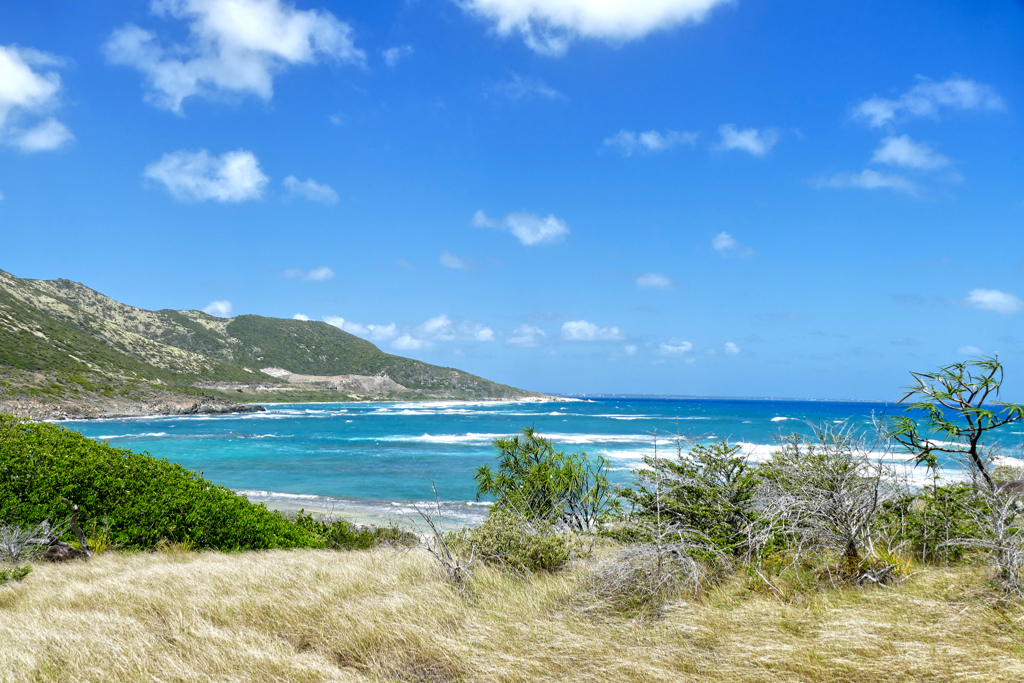
Just behind the coastline begins a dry, sparse vegetation of low shrubs, coastal plants, and the occasional palm tree, perfectly adapted to the sun, salt, and wind.

Walking across the gentle hills, you have magnificent views of Saint Martin’s east coast as well as the wilder side facing the Atlantic. And yes, afterward, you can still relax on the beach.
Orient Bay
Just a few minutes from Cul-de-Sac lies a completely different side of Saint-Martin. Orient Bay is arguably the island’s most famous beach and has changed dramatically over the past few decades. It used to be much quieter, characterized by local use and smaller, less densely populated buildings. However, with the expansion of tourism on the French side, Orient Bay Beach has become one of the island’s main hotspots, complete with hotels, beach bars, and water sports facilities. Today, the beach feels very developed and lively, attracting many visitors but also resulting in a distinctly touristy atmosphere. It’s one of the beaches where day-trippers are literally dropped off by the busload from cruise ships.
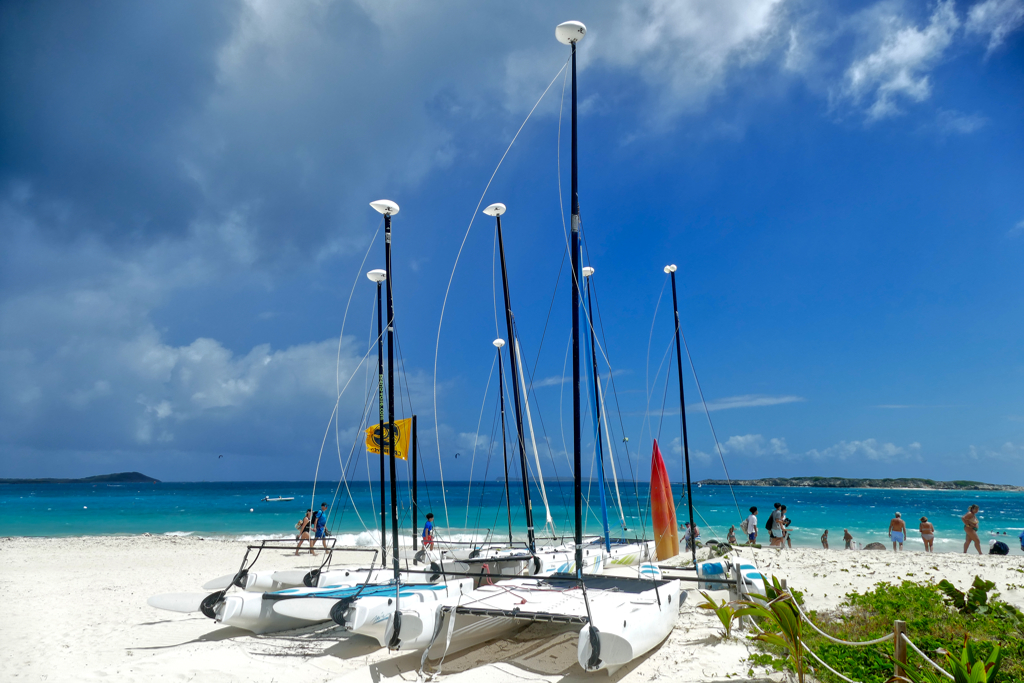
So, if, like me, you’re looking for an authentic, tranquil atmosphere, you’ll likely perceive this development as a loss of genuine character in favor of infrastructure and visitor comfort.
Furthermore, just beyond the main road, you’ll find a ramshackle development of holiday accommodations, apartments, and hotels. Some of these are separated from the road by barriers and private driveways. From the barrier on the main road to the beach, it’s a good twenty-minute walk in the dazzling sunlight, along high walls surrounding luxury properties. The whole area feels like a resort zone. Everything is clearly geared towards the comfort of holidaymakers and less integrated into an authentic village structure.

At the same time, a boulevard of restaurants and beach clubs has sprung up around the bay, where numerous beach bars, cafes, and international restaurants compete for visitors’ attention – something some travelers find lively, while others find it too touristy and commercial.
Quartier-d’Orléans
The Quartier d’Orléans aka French Quarter is located on the east coast of the island and another final stop before you cross into the Dutch part. As a matter of fact, it is considered one of the oldest continuously inhabited settlements on the French side. Historically, the area was primarily agricultural and fishing-based. Hence, it is significantly less developed for tourism than the west coast around Marigot or Grand Case. Even today, the quarter remains primarily a residential area with a local character.

With an estimated population of several thousand, Quartier d’Orléans is one of the larger settlements on the island, but it is not a classic city in the tourist sense and is usually described more as a village. For travelers, the area therefore offers only a limited number of classic tourist attractions, but therein lies its charm: Instead of tourist traps, you’ll find primarily authentic everyday life, small local shops, and an unvarnished glimpse into how many residents of Saint Martin actually live.
Nearby are also quieter stretches of coastline and natural areas, better suited for walks or short breaks than for typical beach tourism. Those who want to leave behind the touristy image of the island will find a more authentic, unvarnished impression of the island here, far removed from the familiar postcard views.
Landmarks
That being said, I’d like to point out the sites in the immediate vicinity of the French Quarter that are definitely worth seeing. North of the city lies the so-called Amuseum Naturalis at The Old House. Don’t worry, it’s not a classic museum in the usual sense, but rather a deliberately simple open-air educational project situated on a historically significant site. The focus is on the site itself, a former plantation whose use dates back to 1766. Over time, its agricultural use evolved from coffee and sugar production to salt extraction from nearby ponds.
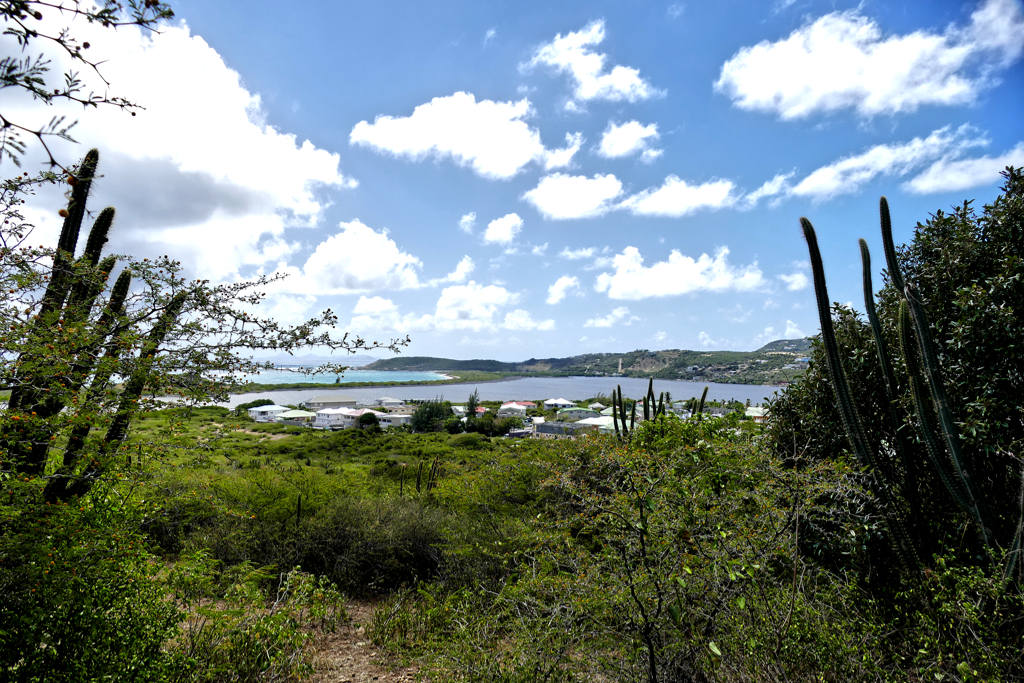
The current building is not the original plantation house, as earlier structures were destroyed, partly by hurricanes. The current structure dates from the 20th century. The exhibition itself is largely organized outdoors and deliberately avoids elaborate museum displays. Instead, smaller information stations can be found along the paths and in the garden. They are focusing on the local flora and fauna, traditional crops, medicinal methods, and cultural influences from Africa and the Caribbean. The project is run by the environmental organization Les Fruits de Mer, whose approach emphasizes education, community engagement, and accessibility.
Hold Your Horses
Nearby is the Ranch du Galion, which operates in a completely different, yet thematically related, context. It is not primarily a tourist riding stable, but rather a facility dedicated to the rescue and care of abandoned horses. Many of the animals come from difficult living conditions and receive long-term care here. The riding program also serves to financially secure the animals’ upkeep.
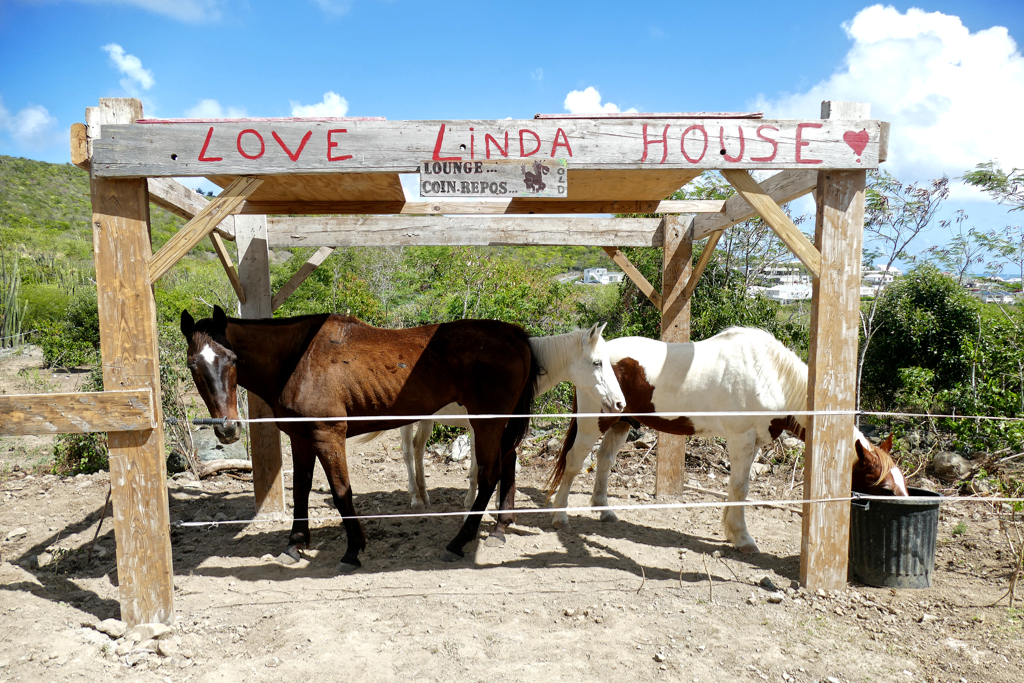
The ranch is characterized by its relatively natural environment, situated on expansive grounds between the coastline and the rolling hills. The offered horseback riding excursions lead through the area surrounding Le Galion, including protected nature reserves and stretches of beach.
Last but not least lies the main border crossing to the Dutch side right south of the French Quarter. It is marked by a simple stone border monument and is one of the very few clearly visible signs of this otherwise completely open border. It actually serves solely as a symbolic marker and is a quirky subject for touristy photographs.
Jimmy Sheik All Around
All over the island, you’ll notice Jimmy Sheik’s vibrant murals. Therefore, to conclude this post, I’d like to introduce you to this ubiquitous street artist. Jimmy Sheikboudhou aka Jimmy Sheik hails from Guadeloupe, but his works can be found throughout the Caribbean, as well as in Bangkok, Marrakech, and Paris. His style is characterized by Caribbean motifs in vibrant colors.
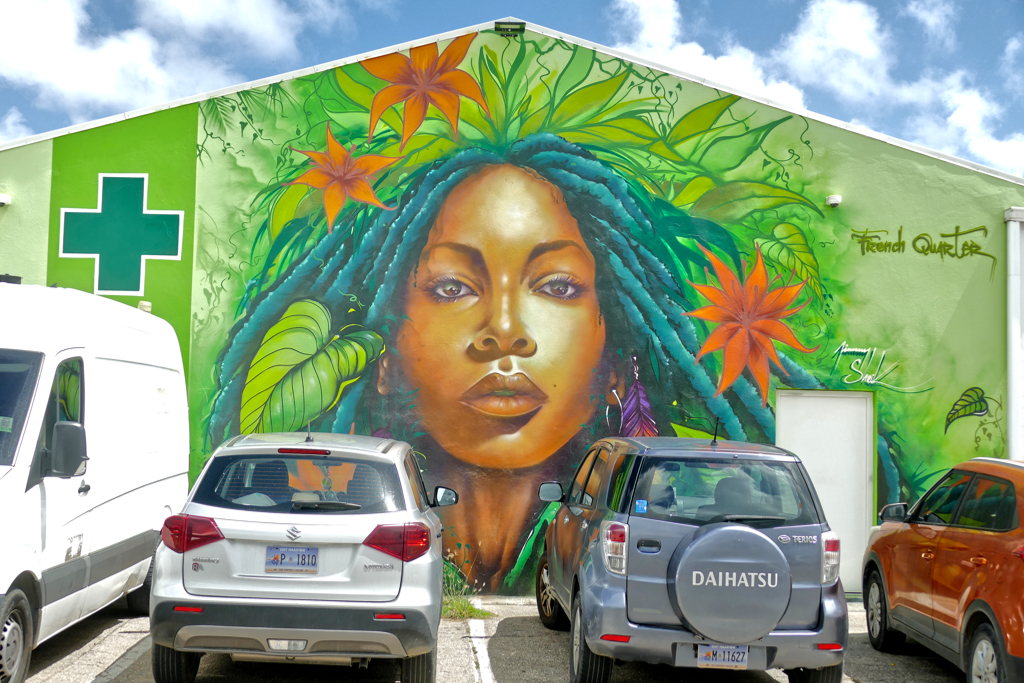
A recurring motif is the butterfly, symbolizing hope, transformation, and paying homage to his butterfly-shaped home island of Guadeloupe. His many works on Saint Martin are part of a larger cultural and social process that gained particular significance after Hurricane Irma in 2017. The island was devastated by the storm, and with the reconstruction came a desire to redesign public spaces not only functionally, but also culturally. Street art became a kind of healing measure in this process.

In this context, Jimmy Sheik is particularly appreciated for his We Love… project. The recurring slogan We Love… expresses more than just his love for the island. In fact, it primarily stands for community and solidarity.

He often paints his works in cooperation with local initiatives that use street art as community projects. Volunteers, such as young people, are frequently involved. Therefore, his murals can be found not only in urban areas but also often anywhere along roadsides. It would be a creative challenge to discover as many of his works as possible, either by chance or intentionally.
Have fun with it!

I’ve introduced Jimmy Sheik in my posts Best Street Art in GUADELOUPE as well as Best Street Art in SINT MAARTEN.
Practical Information
How to Get There
The French side of the island also has an airport, Aéroport de Saint-Martin – Grand-Case. This airport primarily serves connections within the Caribbean. Regular flights are available to destinations including Guadeloupe, Martinique, and Saint Barthélemy. There are also occasional international connections, such as to Miami or Paris, though these are often seasonal. For most long-haul flights, travelers use the larger Princess Juliana International Airport on the Dutch side of the island.
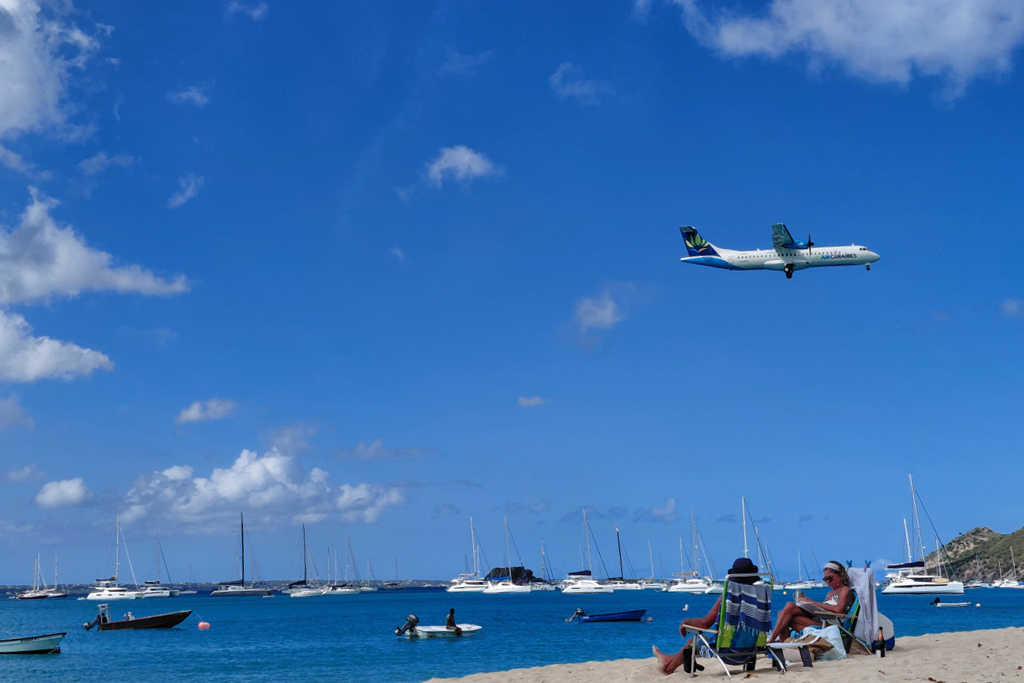
Princess Juliana International Airport is the third-largest airport in the Caribbean in terms of flight operations. It is located in the west on a narrow strip of land between the sea and a lagoon. Due to its political affiliation with Europe, EU citizens need no visa but a passport valid for at least three months. All others should check out my post World’s Most Complete Travel Information. Arrivals at the French airport Aérodrome de Saint-Martin – Grand-Case are treated as domestic flights due to its political status. This means Europeans can enter with just a national identity card. Although this sounds fun, I would not do it. If, for some reason, you have to leave the sector, you might be in trouble.
Obviously, various ferries also sail to the islands of Anguilla, Saba, Saint Barthélemy, and Sint Eustatius, and via Statia, also to Saint Kitts.
Going Public
Just for the record, it’s easily possible to get from the airport to Philipsburg on the Dutch side by public bus. To take the bus to Marigot, however, you have to change buses at the Cole Bay roundabout. Although I usually have no problem taking the bus, on both of my visits, I took a taxi after landing. It’s just so annoying when you’re exhausted after a long flight and have to lug your luggage around while searching for the correct address of your accommodation. On the return journey, however, I took the bus to the airport from both Philipsburg and Marigot. This worked out perfectly, and I saved a lot of money.
How to Get Around
The public bus system is actually very good and covers almost the entire area. While you can’t get to every place, you can reach most points of interest for a small fare, especially if you’re based in Marigot. This was definitely a deciding factor in choosing my accommodation in a residential part of the city. Public buses run on several routes between 5 a.m. and midnight, but without a fixed schedule. The start and end points of each route are indicated on signs in the windshield. One of the buses connects Marigot with Philipsburg, the capital of Sint Maarten.
There are clearly marked bus stops, but you can also hail a passing bus from anywhere. Similarly, you can get off anywhere by calling out. Fares cost between one and three dollars, depending on the distance. You should have the exact fare, or at least small change if possible.
Within individual towns, the best way to get around is on foot. Outside of towns, there are, unfortunately hardly any decent sidewalks. However, I didn’t find the local drivers as reckless as in other countries. I find it admirable that some people even ride bicycles, given the heat, especially since the island is characterized by many hills, some of them quite steep. I wouldn’t worry about the condition of the roads or the behavior of the drivers, though.
All taxi drivers and tourist offices have a detailed list of fares. Obviously, renting a car is a valid option.
This Traffic is Not My Jam!
And now something that applies to all vehicles on the island. No matter whether you have a rental car, take a taxi, or take the bus: The traffic is insane! There’s hardly a time of day when the few main roads that traffic relies on aren’t completely jammed. You crawl along in a seemingly endless line at a snail’s pace. Including long stretches where nothing moves at all. It’s infuriating. But it is what it is.

You absolutely have to keep this in mind if you need to be somewhere at a specific time, including going to a jetty or, most importantly, to the airport.
Luckily, I’m a rather anxious person and therefore tend to leave early rather than late. That definitely paid off. Besides wanting to be at the airport two hours before my flight, I also allowed over two hours for the drive from Marigot. Yes, normally you shouldn’t need more than 30 minutes. But the traffic in Saint Martin is anything but normal. I can only warn you to leave well in advance, you won’t regret it.
Visiting Organized
Although Saint Martin has a quite comprehensive and reliable bus system, it’s much easier to visit its attractions on a guided tour. Plus, you get tons of valuable information, obviously.
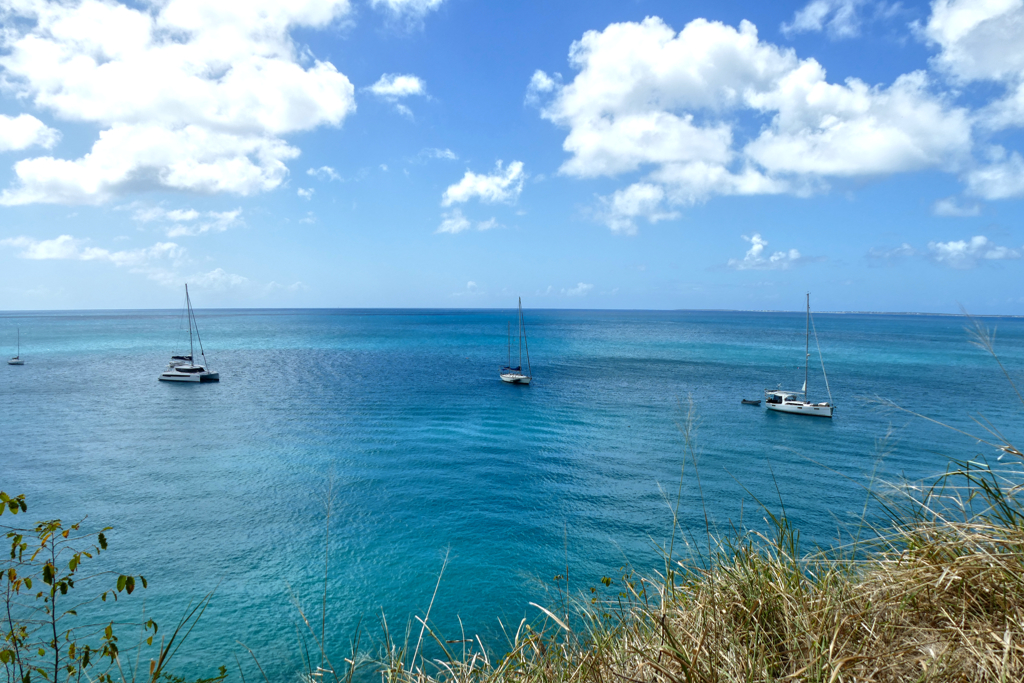
Also, if you’re planning to explore the surrounding waters, either by cruising or snorkeling, you’ll need to join an organized tour – unless you have your own yacht. Here are some suggestions for which unforgettable day trips to join*:
Where to Stay
As mentioned many times before, the Dutch side is heavily geared towards US tourism, and this is also reflected in the preferred type of accommodations. You’ll find numerous all-inclusive resorts and rather soulless yet luxury hotels.
The French side is noticeably different. Small boutique hotels and, above all, self-catering holiday apartments and houses are far more common. This contributes to harmonious coexistence with the local neighbors, obviously. Even in the tourist hotspot of Orient Bay, individual accommodations such as apartments and villas predominate, although these have virtually nothing in common with the classic local houses.
However, in a holiday apartment, you have the opportunity to truly experience Saint-Martin with all your senses. I really enjoy this, so I rented a place in the heart of Marigot’s residential area, Concordia, from Anne and Bruno*. The accommodation was rather basic, but I had absolutely everything I needed, including a fully equipped kitchenette, air conditioning, and even a washing machine. Since I relied on public transportation, proximity to the downtown area and the bus station was important to me. Both were just a 15-minute walk away.
However, everyone has different expectations and requirements for vacation rentals. That’s why you’ll find a wide selection of very different lodging options on this map*:
What to Eat
The French side of Saint Martin is a small paradise for food lovers, blending French cuisine with Caribbean flavors. Especially in places like Grand-Case, the area is considered the culinary heart of the island, often even called the Gourmet Capital of the Caribbean.

Here you’ll find everything from elegant restaurants serving French haute cuisine to relaxed Lolos. These traditional small beachside grills offer freshly grilled fish, lobster, and other Creole specialties. In Marigot, the capital of the French side, cafés and bistros also reflect the typical mix of European and Caribbean cuisine.
Just stroll along the food court behind the market in downtown Marigot, and you’ll be spoiled for choice. Besides locals, expats from other Caribbean countries like Jamaica, Haiti, and the Dominican Republic also run small food stalls here. While the eateries may seem simple, the atmosphere is authentic, and the food is always excellent.
Cash and Cards
Until now, 21 European countries have replaced their former local currency with the €uro starting in 2002. As Saint-Martin is politically part of France, its official currency is the €uro. Nevertheless, US Dollars are widely accepted and most of the time converted one to one despite the actual exchange rate of 1 US$ to 0.85 EUR as of April 2026. Therefore, it’s better to pay in US dollars, especially for pricier goods and services. For instance, if you pay for the ferry to Anguilla in dollars, you save four €uros per trip.
However, you can pay by credit card at basically every business. Nevertheless, you’ll need cash, for instance, for the bus.
My Tip:
While it’s perfectly fine to pay in US dollars, I would advise against paying in €uros. Although they are accepted in the Dutch part of the country, they are converted at a one-to-one rate to the US dollar. However, the current rate – as of March 2026 – is 1 USD to 0.85 €uros. This means you lose 15 percent on every transaction.
Language
While it’s not easy to get by on the French Caribbean islands such as Guadeloupe and Martinique without a decent command of French, you can get along perfectly well with English and Spanish in Saint-Martin. This is because people from both parts of the island also live or work in the French part. I had the impression that everybody was at least quinquelingual.
Spanish is becoming increasingly important in everyday life due to the many immigrants, especially from the Dominican Republic. So you really don’t need to worry about communication!
Connection and Communication
One of the perks of Saint-Martin being actually part of Europe is the connectivity. Since June 2017, no roaming charges have applied within the EU with a European mobile phone contract. Therefore, roaming is available just like in the so-called Métropole or Hexagone, hence, in France.
This being said, I avoided turning my data on whenever I could. It can occur that your phone switches networks, you’re virtually leaving Europe, and things get extremely expensive pretty fast. Therefore, even if you have European roaming, you should rather use the Wi-Fi provided by your accommodation, as well as by most restaurants and even beach bars.

However, if you don’t have a European phone contract, you can still connect to the internet without any issue at many places like eateries, cafés, and, of course, hotels. If you insist on being online 24/7, you can get a SIM card, obviously. There are prepaid SIM cards from many companies. Orange France distributes the cheapest one, other brands are, for instance, Digicel and RED Caraïbe. However, keep in mind that some companies might also charge an activation fee.
In the French part of Saint Martin, they use European plug types C and F. Their voltage is 230 V, and the frequency is 50 Hz. Whereby, as nowadays all these chargers have integrated adapters, in general, the voltage and frequency don’t really matter.
By the way, you’ll find comprehensive travel info in my post World’s Most Complete Travel Information – an indispensable globetrotter classic.
Map
On this map, I’m showing you where to find the spots worth visiting during a stay on the island. To switch between the Dutch south and the French north, just open the legend at the top left corner, and you can hide or unhide the respective layer as you wish. This way, the map will show only the section you really need and be clearer.
Apart from the French north, I also visited the Dutch south, obviously. To read about it, go to my post Best Things to Do in Sint Maarten, the Dutch Half of the Friendly Island. Then, I compiled the best beaches in my post The Best Beaches Around Saint Martin You Can Easily Visit by Public Bus. And if you need a compressed day trip itinerary, you’ll love my post A Self-Organized Day Trip Around Saint Martin by Public Bus.
Pinnable Pictures
If you choose to pin this post for later, please use one of these pictures:


Did You Enjoy This Post? Then You Might Also Like These:
What Not to Miss in BRIDGETOWN, Barbados’ Exciting Capital
MAGNIFICENT MARTINIQUE: Ten Places Not to Miss on Your Visit (even when exploring by public bus)
Guide to HAVANA – Welcome to the Club
SANTIAGO – Capital of Afro-Cuban Culture
Guide to CIENFUEGOS – the Fancy Side of Cuba
Beyond Your Imagination: The 15 Best Beaches in Barbados You Can Easily Visit by Public Bus
Carnival 2025: Floats’N’Festivities on ARUBA, BONAIRE, and CURACAO
How to Travel the Caribbean Individually And on a Budget
* This is an affiliate link. Hence, if you book through this page, not only do you get the best deal. I also get a small commission that helps me run this blog. Thank you so much for supporting me!
This is an amazinge guide! Keep up the great work.
Thank you, I’m so glad you like it!