Nestled in the big wet heart of the Caribbean, Sint Maarten, the Dutch half of this unique dual-nation island, offers the best of European charm and tropical allure combined. Known for its white-sand beaches and laid-back atmosphere, this southern part of the island pulses with life and color.

Apart from lazing on the beach and taking refreshing dips in the beautiful waters, you can also sail into picturesque lagoons, snorkel among coral reefs, or simply unwind at a beachside bar with a rum punch in hand. As you stroll down the streets lined with pastel façades of the lively neighborhood of Philipsburg or hike through lush tropical greenery, make sure you don’t miss out on a fun scare as planes roar dramatically over your head alongside the waters of the world-famous Maho Beach!
Dutch Roots Meet Caribbean Vibes
Before up to seven cruise ships a day invaded today’s Sint Maarten, Christopher Columbus is said to have discovered the island on his second voyage back in 1493. Although he didn’t actually land there, he named the island after Bishop Saint Martin of Tours. Other than today’s crusaders cruisers, Columbus’s description of the island made it seem worthless to his commissioner, the Spanish crown. Therefore, it remained virtually untouched for another century.
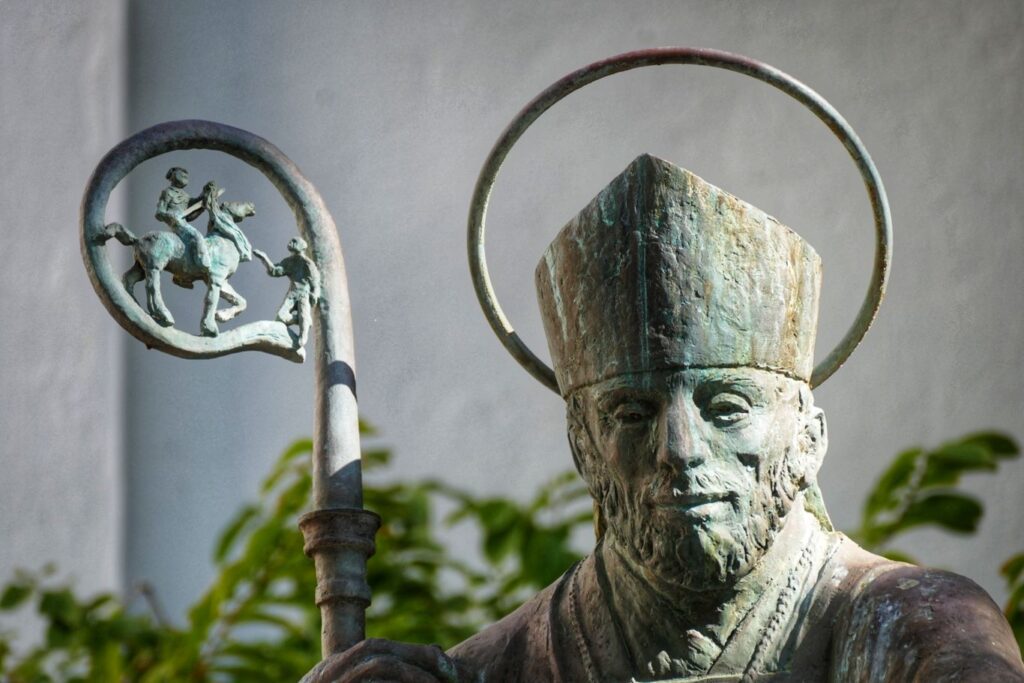
Eventually, something began that tragically happened almost everywhere else in the Caribbean, too: The English, French, Spanish, and Dutch – all nations, none of which, strictly speaking, had any business being there – fought over the island.
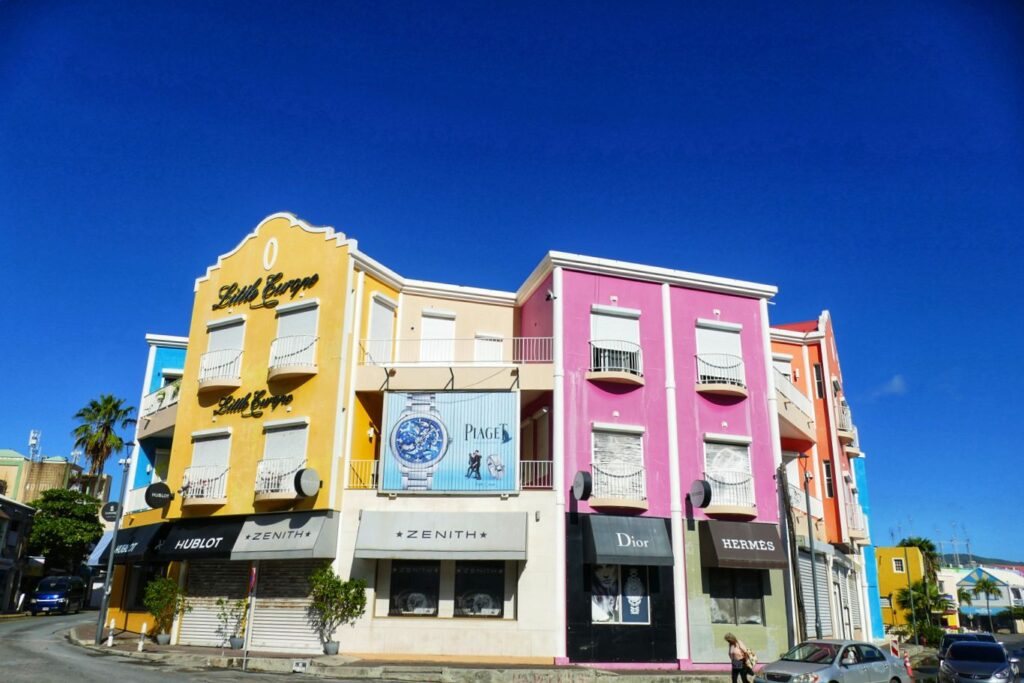
After some back-and-forth, the Dutch and French signed the Treaty of Concordia in 1648. The population consisted largely of descendants of colonial settlers as well as enslaved people abducted from Africa. After the French abolished slavery on April 16, 1848, it wasn’t abolished on the Dutch side until 1863.
To this day, the two parts of the divided island coexist in perfect harmony. So when people speak about The Friendly Island, they’re referring to one single Caribbean gem, yet politically, split in two: French Saint-Martin in the north and Dutch Sint Maarten in the south.
Both sides boast lovely beaches and an amiable island vibe. However, due to the respective hegemony, they not only differ when it comes to customs, cuisine, and language. They also have very different political statuses, which affect various aspects of everyday life.
While in this post, I’m guiding you around the Dutch side, I’m introducing the French part in my post What not to Miss in Saint-Martin, the French Half of the Friendly Island.
On A Personal Note
Although I draw a clear line between the Dutch and French parts of the island in my guides, this hard border doesn’t exist in reality. You can travel freely between the two sides, and many day-trippers visit places on both sides as part of their excursion. One of the nearly ten bus lines operating on the island even connects the two main towns, Philipsburg on the Dutch part and Marigot on the French side.
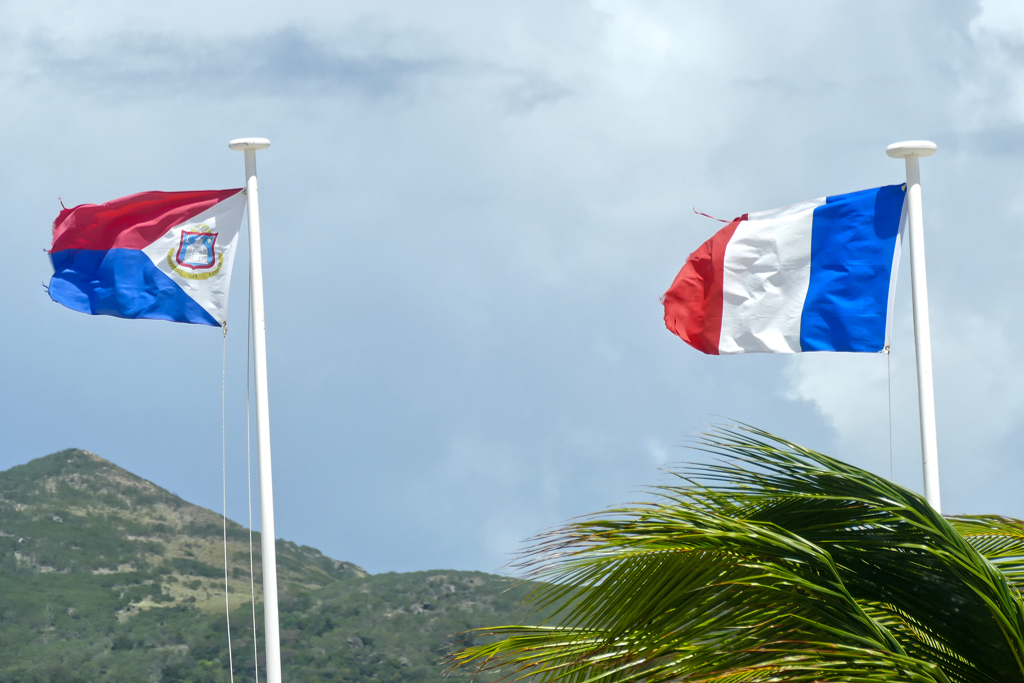
Regardless, I’ve chosen to present the two parts separately to fully showcase their unique landscapes and cultural characteristics. However, you’ll find them harmoniously combined on the overview map at the end of both posts. This will make your travel planning easy and complete.
Welkom in Nederland
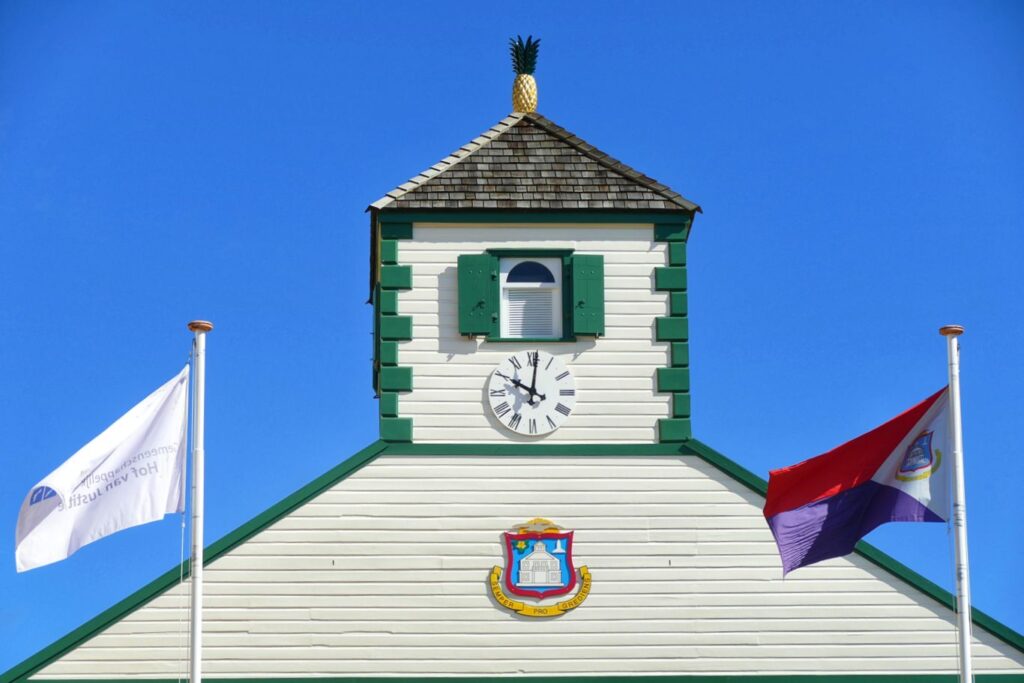
For centuries, Sint Maarten was associated with the Netherlands Antilles. However, in 2010, it was granted the status of a constituent country within the Kingdom of the Netherlands. This autonomy gave the island control over most of its internal affairs while maintaining ties to the Dutch crown, similar to Aruba and Curaçao. Sint Maarten has its own government and parliament, while defense and foreign policy remain under the control of the Kingdom.
In comparison to the French half, the Dutch side is the far livelier part of the island. Casinos, beach clubs, and bars keep the nights buzzing. At the legendary Maho Beach, planes thunder just overhead as they land at Princess Juliana International Airport. This beach has become an unmissable must-visit for adventurous travellers. But don’t worry, as beyond all the brouhaha, visitors can also find some quieter nooks, like the hiking trails up to Fort Amsterdam or serene bays along the southern coast.
Game Without Borders
To me, Sint Maarten and Saint Martin are absolutely exemplary and a model of best practice when it comes to social policy. Despite their differences, the two sides of the self-proclaimed friendly island are seamlessly connected. There are no border checks, and in a single afternoon, you can sip a café au lait in Marigot before you cross back to Philipsburg for a rum punch at sunset.
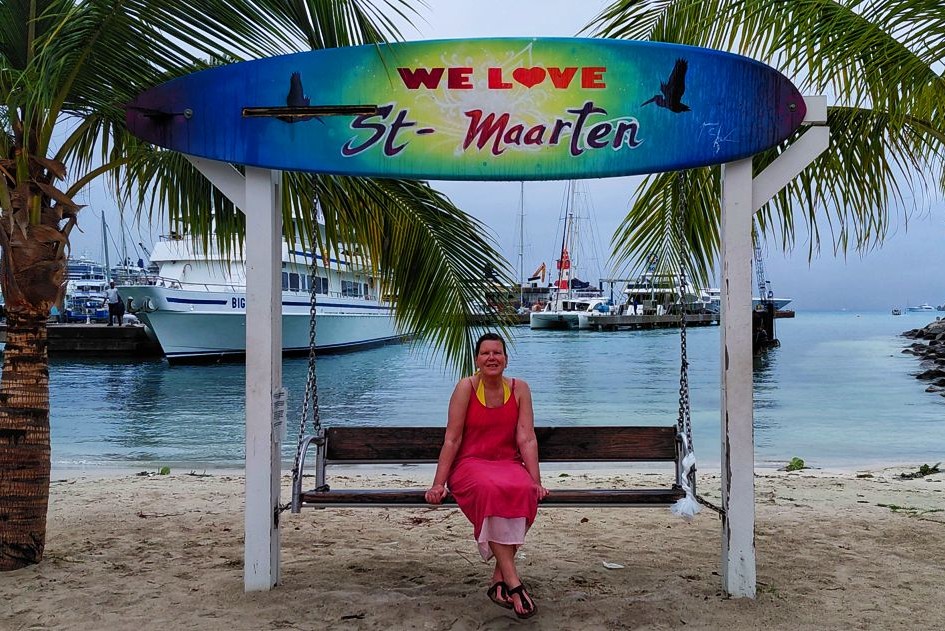
In fact, the island perfectly illustrates the arbitrariness and absurdity of national borders. Mind you, there are people who call for shoot-to-kill orders at frontiers. Sint Maarten proves just how arbitrary and ridiculous national borders actually are. If you take the bus on the Dutch side in Philipsburg towards Marigot, you have to keep your eyes peeled to catch the modest Bienvenue en Partie Française, meaning Welcome to the French side written on a small sign along the road. No border control whatsoever. This frontier exists as much as it doesn’t.
That’s how it should be in a perfect world!
United Nations of Sint Maarten
But Sint Maarten’s example should also be groundbreaking in another respect: Over 120 different nationalities live on this tiny island of 87 square kilometers! Besides English and French, you obviously hear Dutch, but also Spanish, and Portuguese, and then many more languages I can’t even identify. And no, I’m not talking about tourists. People from many different countries of origin make up Sint Maarten’s population. Actually, more than two-thirds of the inhabitants were born abroad. Some of the largest groups come from the Dominican Republic, Haiti, Jamaica, Guyana, India, and, of course, France and the Netherlands. In times of growing hostility towards migrants basically everywhere, they demonstrate how peaceful and equal coexistence is possible.
To me, this phenomenon added a whole different quality to my stay. But even if you don’t care about socio-political issues, you will at least be grateful for all those wonderful cuisines these expats brought with them. The variety – as well as quality – of food on the island is simply mind-boggling!
Fun Fact
From 2013 until 2017, Donald Trump owned a mansion in Sint Maarten. Sadly, neither the island’s proverbial friendliness nor the openness to other nations and cultures seems to have rubbed off on him.
The Must-Dos of Sint Maarten
I’m a real stickler for organization and planning, and even before my trip to the twin islands of Sint Maarten, I scoured digital and print media for inspiration. The results were disappointingly meager. Everyone raved about Sint Maarten, some even claiming it’s the best place in the Caribbean. Nevertheless, ideas for things to do beyond the beaches were nowhere to be found.
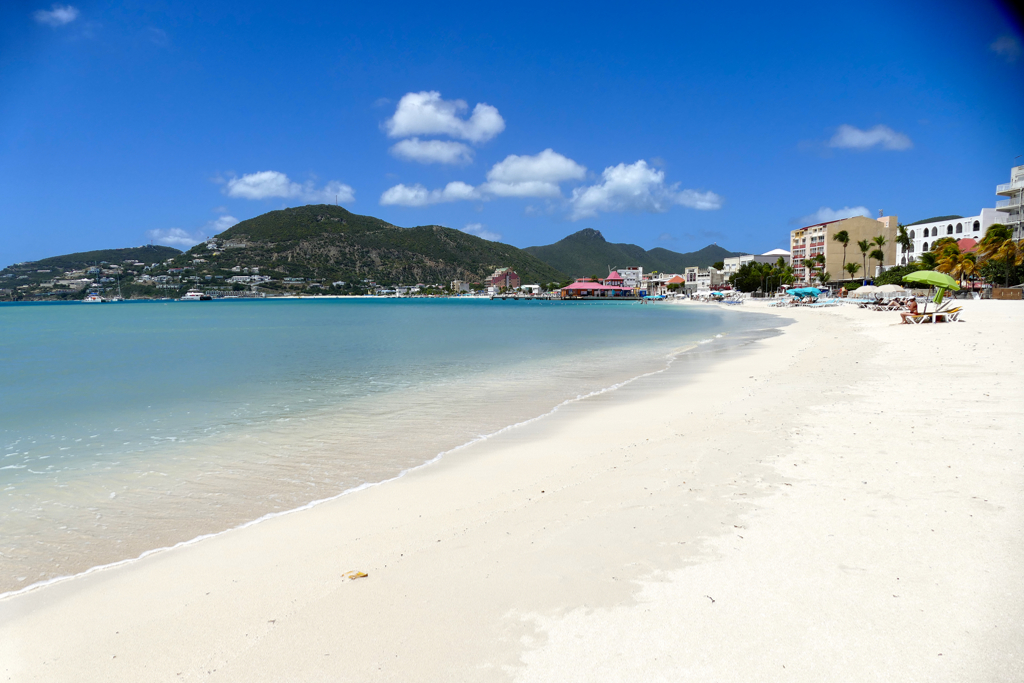
Don’t get me wrong: I love beaches! Spending days with a good book on a lounger in the dappled shade, only getting up to cool off in the crystal-clear water, is totally my jam.
But eventually, my inner Dora the Explorer kicks in. She taps me firmly on the shoulder and holds out hiking boots and binoculars. “This is a country, not a beach,” she says.
I completely agree with my inner Dora. I get up, brush the sand off, and follow her to where the real Sint Maarten is.
Want to tag along?
Philipsburg
As much as I love the Caribbean as a region, let’s be honest, the cities on the islands are rarely something to write home about. They’re often run-down and inhospitable. Usually, you go there to run urgent errands. As soon as you’re done, it’s straight back to the beach area. Surprisingly, Philipsburg, the capital of Sint Maarten, is a delightful exception – though only upon closer inspection.
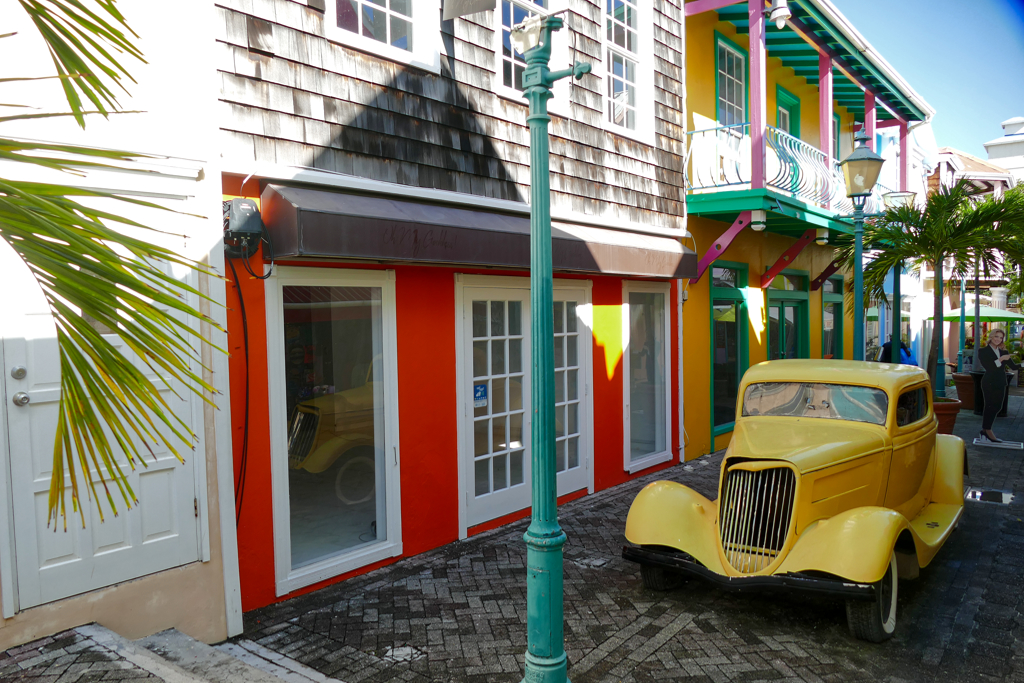
As a matter of fact, it’s not only the beautifully painted buildings that give Philipsburg its cutesy charm. It’s most importantly the many pieces of colorful street art that you’ll find at literally every corner. These murals are so plentiful that I dedicated an entire post to the Best Street Art in Sint Maarten.
Various Kinds of Visitors
I was surprised. I was surprised that upon landing at Princess Juliana International Airport, less than half of the passengers I had flown with from Amsterdam to Sint Maarten disembarked. The other half continued on to Trinidad. Very strange for a flight to the Caribbean during peak season. I’d experienced something different on my other trips.
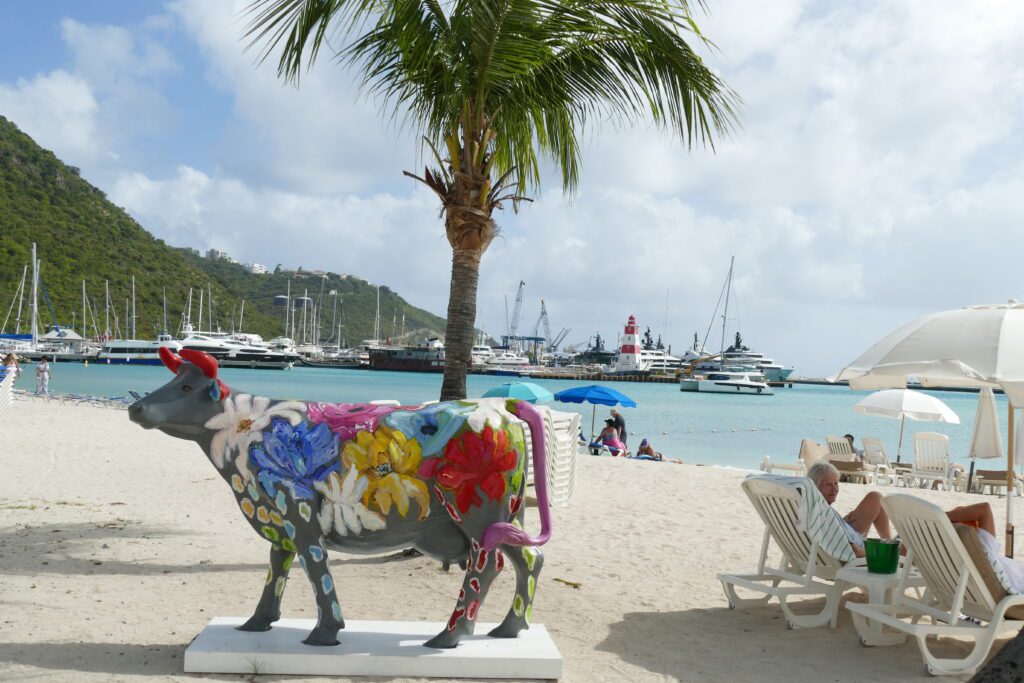
I was surprised. I was surprised that hardly any of my fellow travellers seemed to have settled in Philipsburg. Don’t get me wrong, the place was packed with visitors during the day. But these seemed to come almost exclusively from the huge cruise ships that docked in the port of Philipsburg day after day. Day-trippers. There didn’t seem to be any visitors who had settled in for a longer stay.
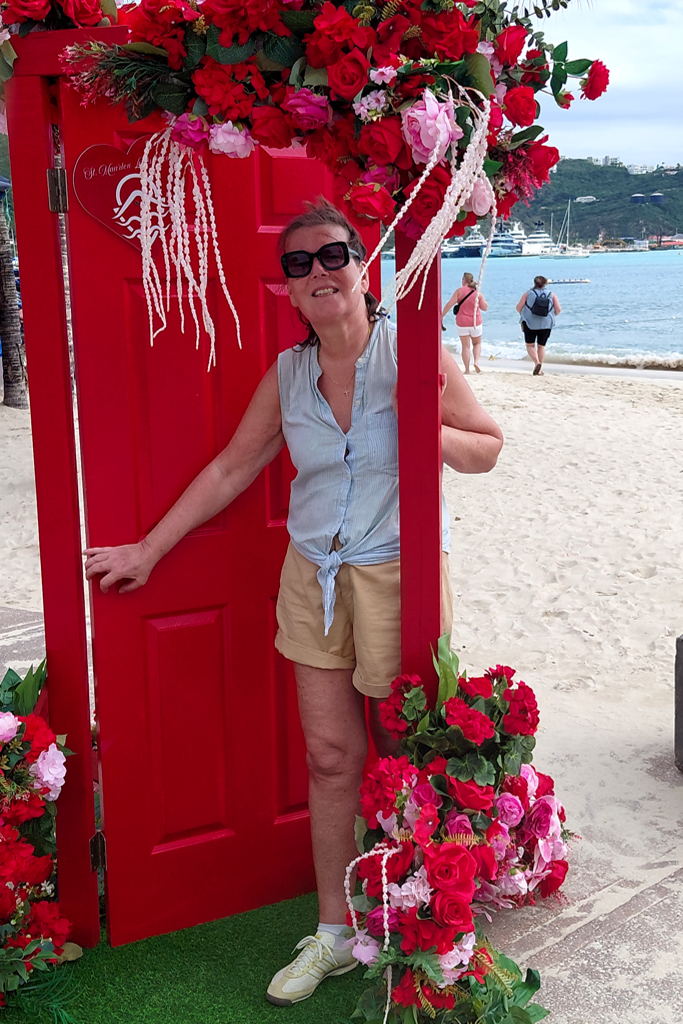
And so, during the day, it was chaotic, the streets and shops as crowded as the run-up to Christmas. Music was already blaring from the bars at 10 a.m., and the sun loungers on the beach were quickly taken. Then, from about 3 p.m. onwards, the beach slowly emptied. The employees gradually removed the sun loungers and parasols, the shop owners put the displayed merchandise back, and lowered the shutters.
By 5 p.m. at the latest, Philipsburg was once again the charming, slightly sleepy town it once used to be.
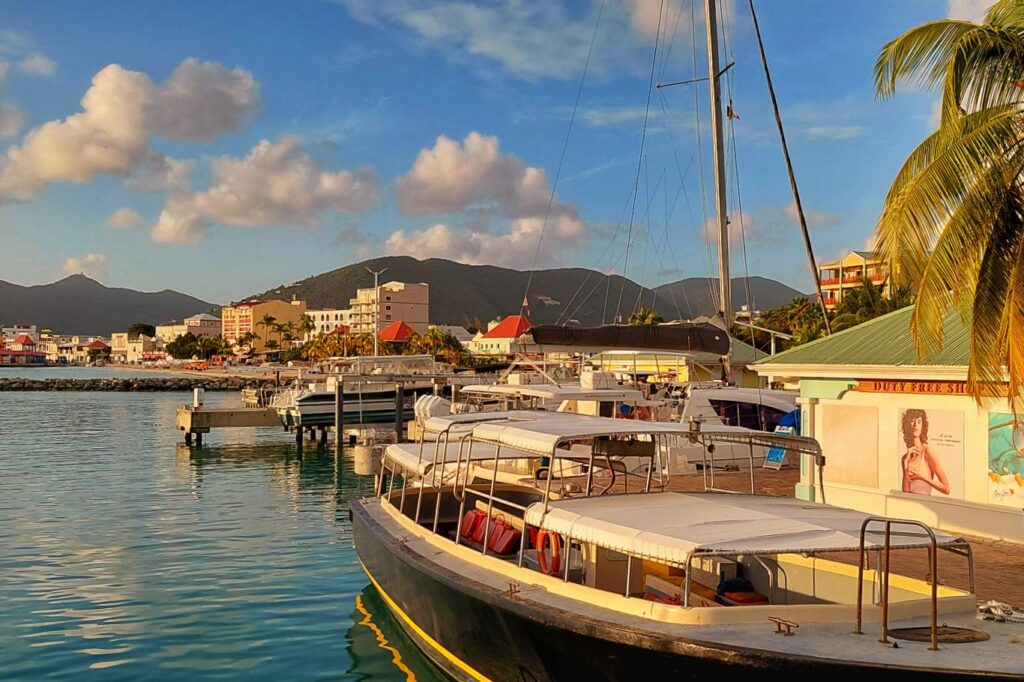
At Second Glance
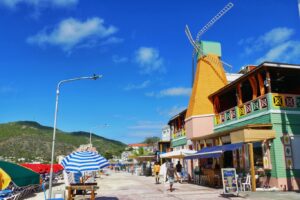
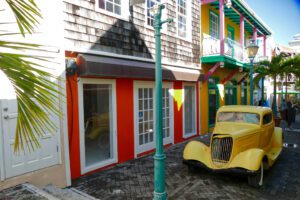
Philipsburg only won me over at second glance. At first, I only noticed the hustle and bustle organized for the cruise ship passengers and was quite taken aback by how many jewelers fit into a single small town. Obviously, a lot, believe you me. But then I was able to block all that out and delight in the charming little wooden buildings, which, like tropical paintings, shone in all the colors of the rainbow against the bright blue sky.
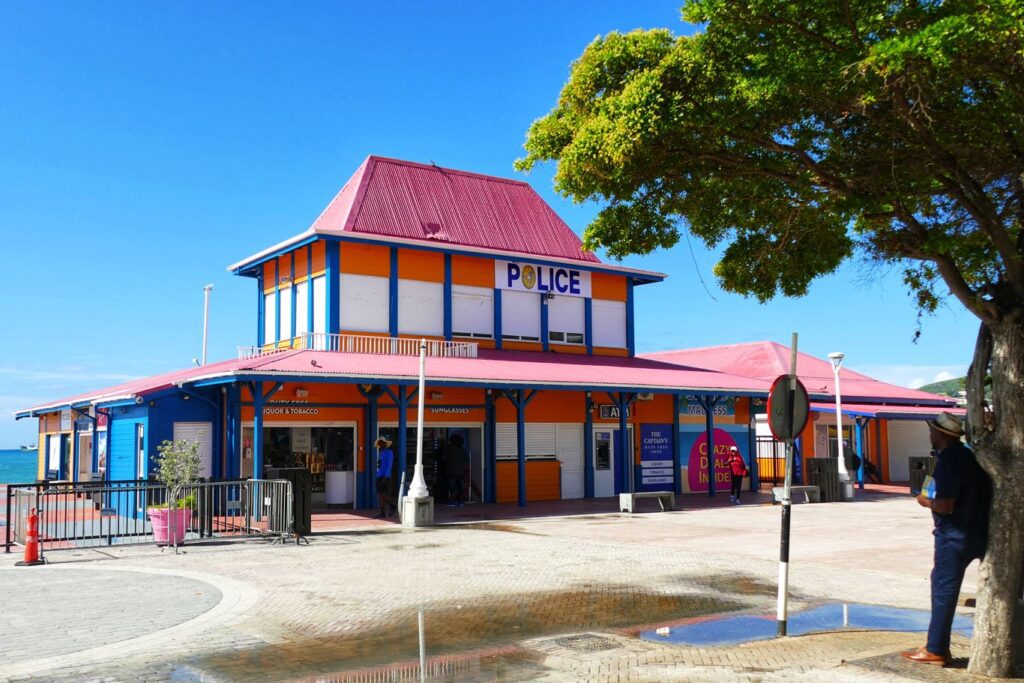
In 1763, the Scotsman John Philips, serving in the Dutch Navy, founded the settlement of Philipsburg, strategically located on the narrow strip of land between Great Bay and the Great Salt Pond. It developed into an important trading and port town first and foremost due to the local salt harvest. Mind you, in that era, salt was not only a condiment, but more importantly a means of conservation.
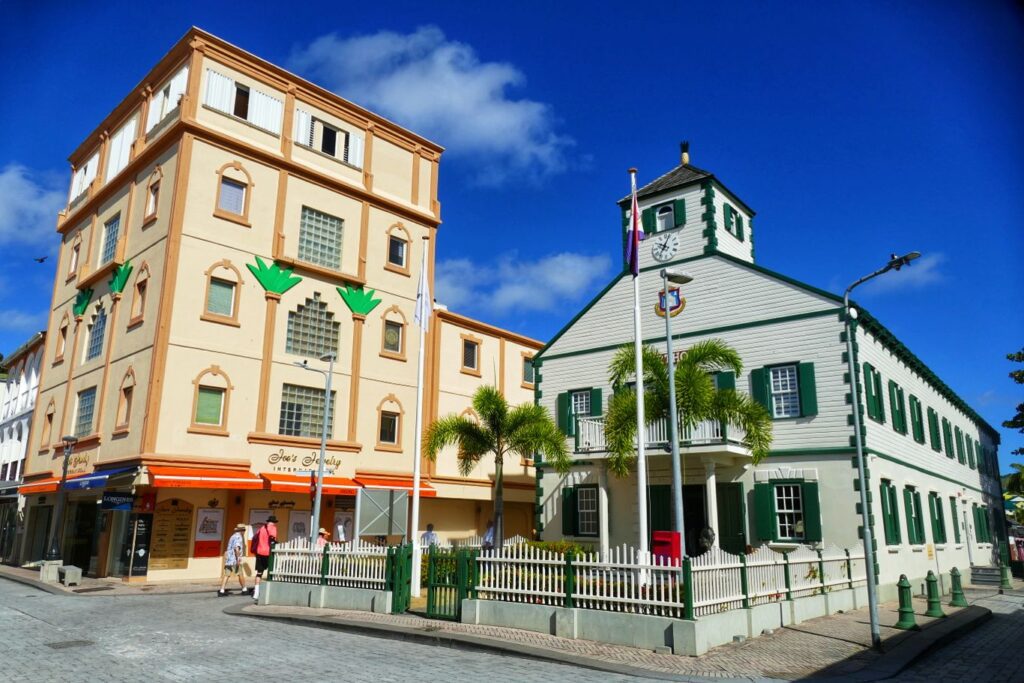
In the 18th and 19th centuries, the town grew with trade, obviously still under colonial administration. The beautiful courthouse from 1793, among other things, is a testament to this period.
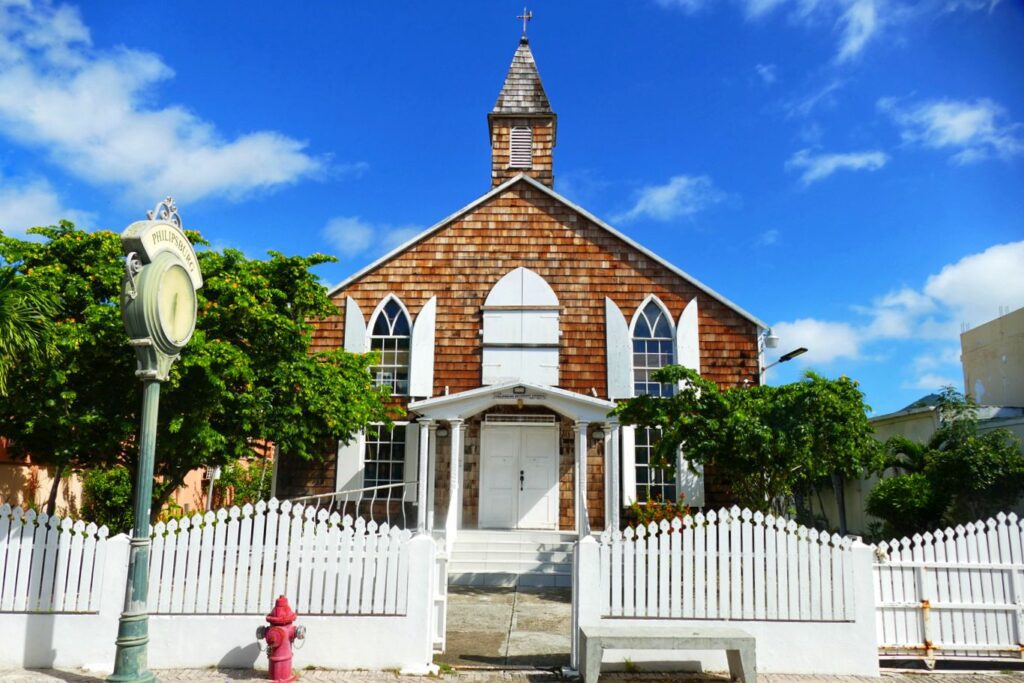
Today, the town thrives on its duty-free economy and, of course, tourism.
The Real Life
You’ll get a good sense of how life in Philipsburg works in the quieter side streets behind the bustling Front Street. In these narrow alleys and sheltered backyards, with their small restaurants and local shops, the daily lives of the locals unfold. Here you can also try local delicacies at food stalls, known as Lolos. They offer Caribbean specialties like roti, curries, jerk chicken, and johnny cakes. In the cafes and bars away from the boardwalk, you’ll find more authentic places to sit and observe everyday life.
This being said, a stroll along the Great Bay Boardwalk is definitely beautiful. However, you should choose early morning or late afternoon to fully appreciate the special atmosphere when the locals chill out on the beach while kids are cycling or rollerblading on the deserted boardwalk.
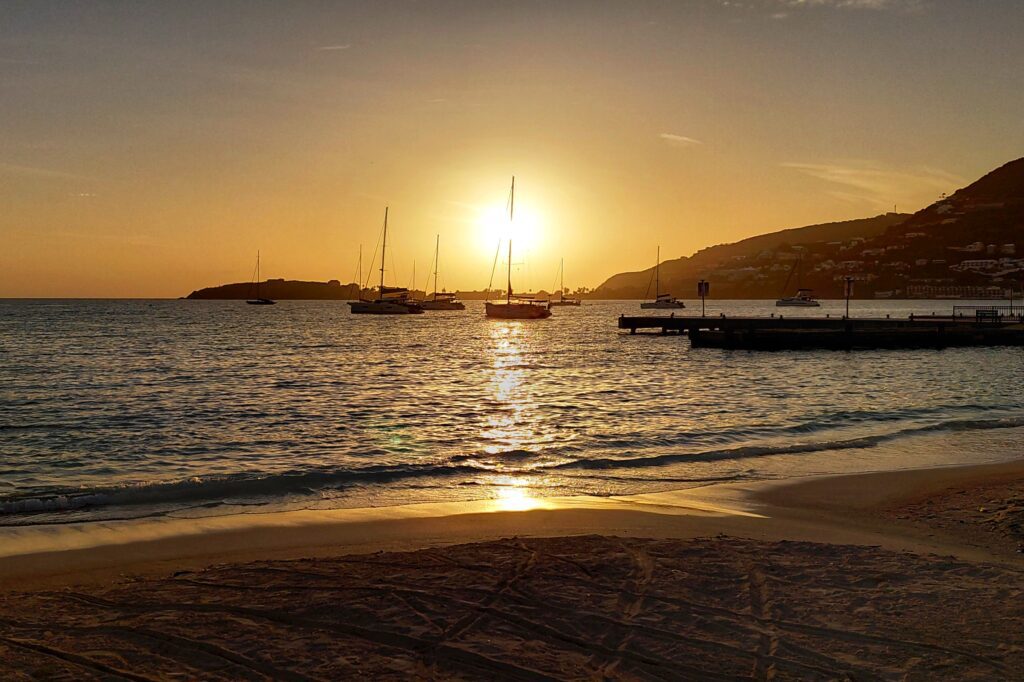
However, for true seclusion, cross the main road C.A. Cannegieter, to the so-called Great Salt Pond. This tranquil natural pond, located just behind downtown, with its mangroves and diverse birdlife, is rarely visited by tourists.
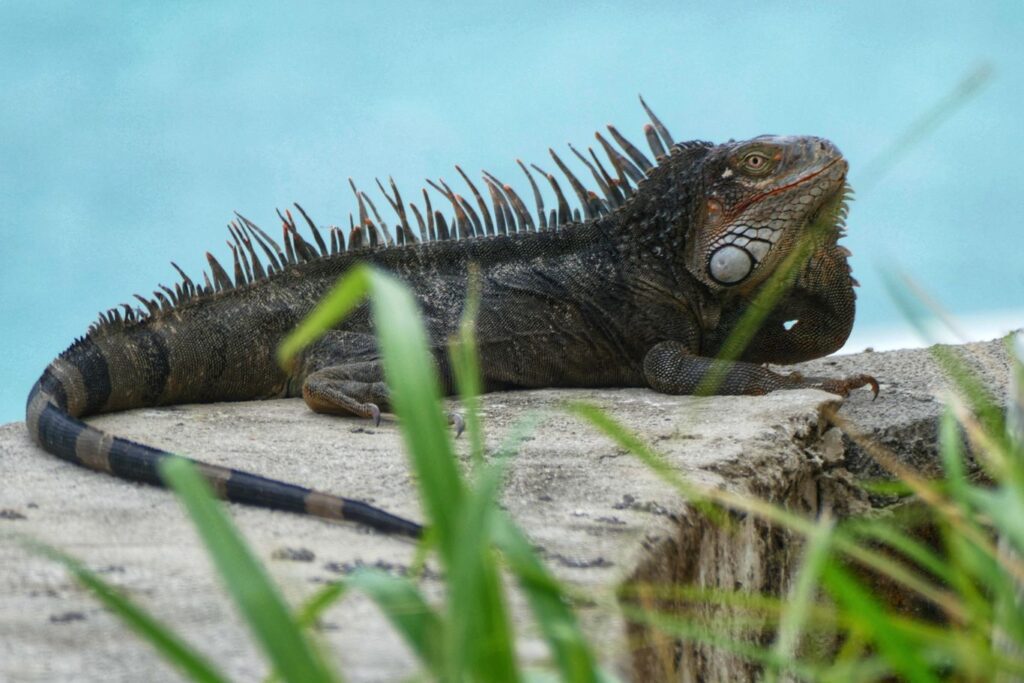
In addition, the small Sint Maarten Heritage Museum, located near the end of the boardwalk, provides an overview of the island’s daily life, history, and culture.
Art in the Streets
Apart from all these cute, colorful buildings, you’ll also find an astonishing amount of urban art in Sint Maarten.
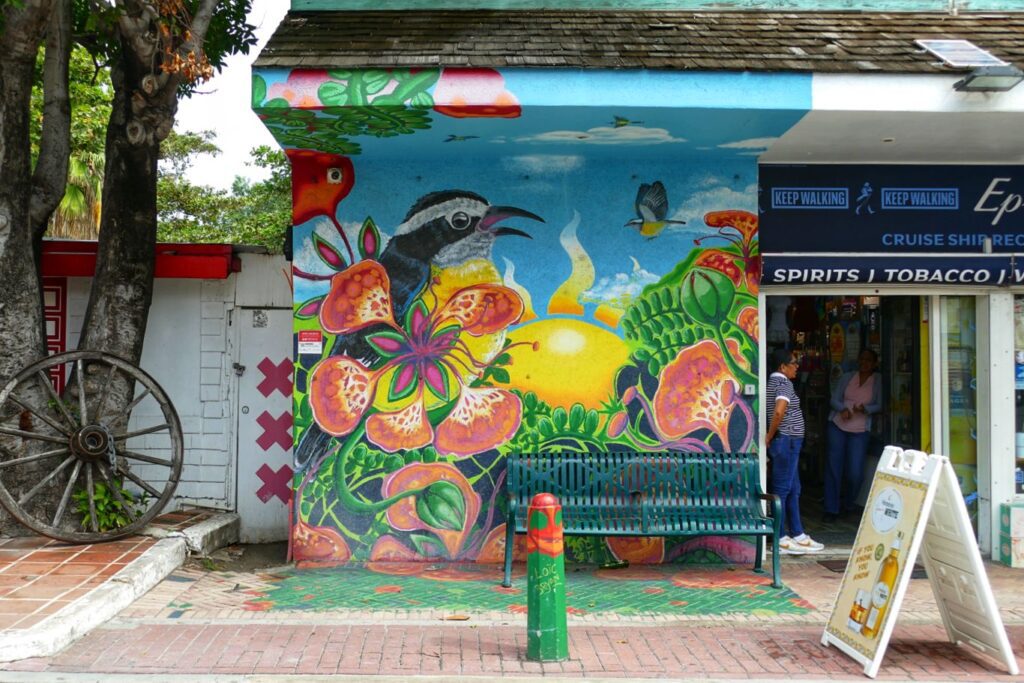
This is primarily thanks to the ColorMeSXM project. Launched in 2019, it aims to embellish the capital through large-scale murals by local and regional artists. They are depicting the island’s people, traditions, and culture in their powerful murals. While ColorMeSXM designed a very professional self-guided tour of the first 20 artworks, many more have been added since.
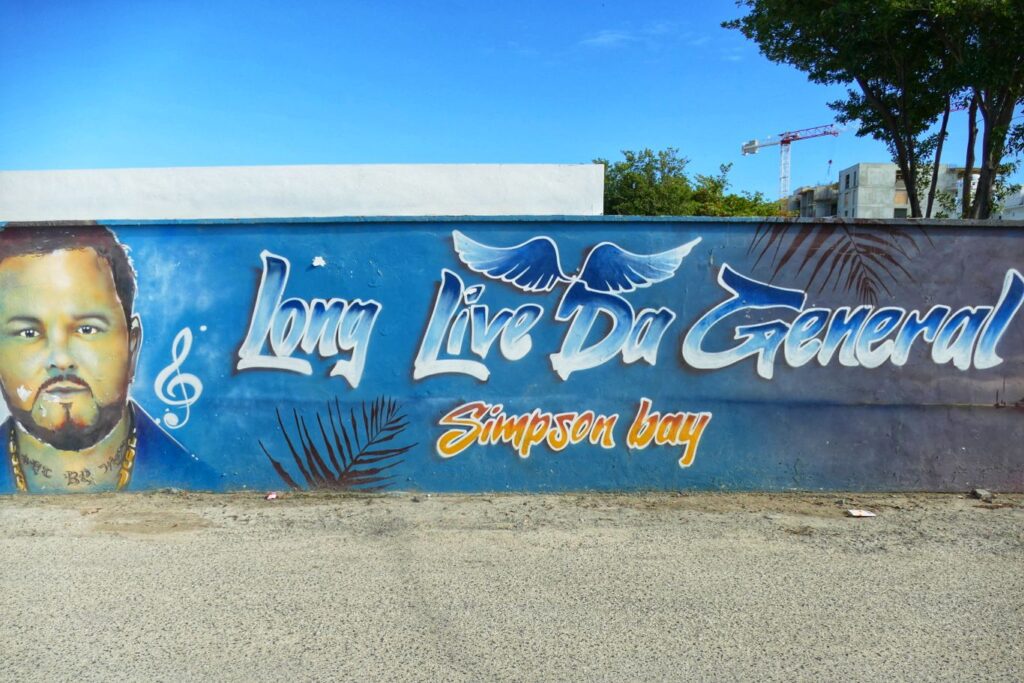
I’d particularly like to highlight Jimmy Sheik. I’ve already introduced this street artist in my post Best Street Art in GUADELOUPE about urban art in his home country. However, what he has accomplished in Sint Maarten—and of course, Saint-Martin—is truly extraordinary.
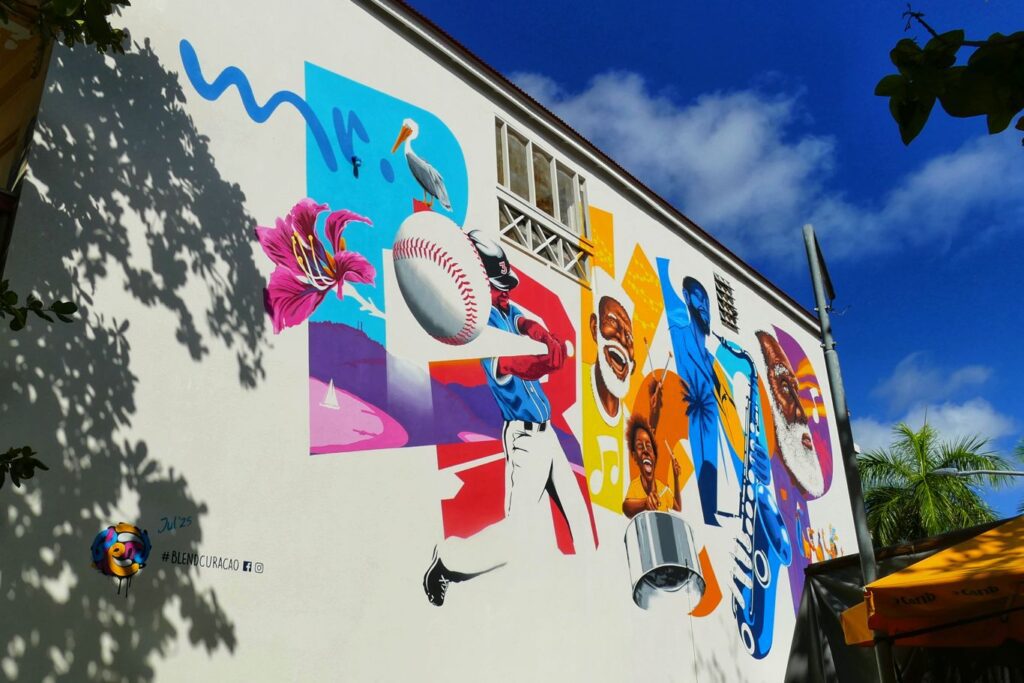
Now, it would be beyond the scope of this comprehensive post to introduce all the amazing artists and their works. But don’t worry, I’ve fully covered you in my post Best Street Art in Sint Maarten!
Art in Roundabouts
Speaking of street art, I’d like to highlight a series of sculptures in the roundabouts that I absolutely love. Not because they’re so beautiful, but because, for a change, they don’t honor some King or Queen, but rather local everyday heroes.
Most of these bronze statues placed in roundabouts were made by Michael Maghiro. He is a Nigerian-born artist who’s been living on the island for quite some time.
Already at the Airport roundabout, you’re greeted by a small flock of brown pelicans, the national bird of Sint Maarten, Maghiro sculpted.
One of the most famous of the statues, however, is the Salt Pickers at the Great Salt Pond roundabout in Philipsburg. It depicts five enslaved salt workers. In contrast, the Freedom Fighter at Philipsburg’s Pondfill roundabout celebrates the end of slavery in 1863. Another resistance figure from the slavery period stands at the Cay Hill/Belair hospital roundabout.
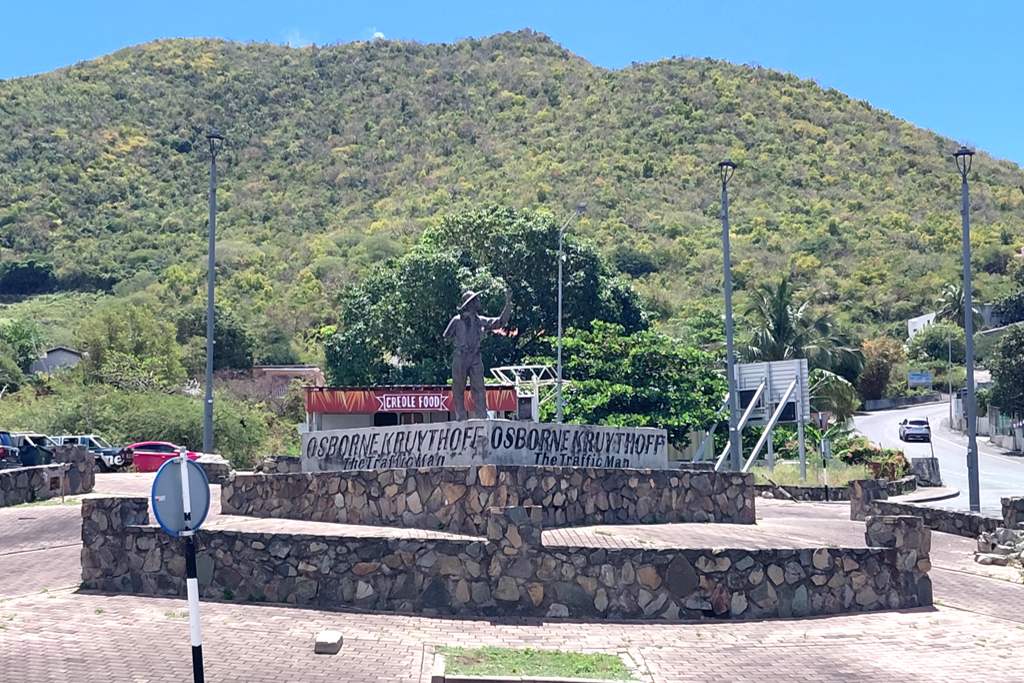
Bus driver Jean-Frédérique Brooks, baker Lalie Duzanson, and Alec the Butcher decorate the Dutch Quarter roundabout.
Last but not least, there is the Anti-Domestic-Violence Awareness Monument by the Peridot Foundation at the Cul-de-Sac roundabout.
I’ve marked all the above-mentioned statues on the map at the end of this post. This should help you design an unusual art tour.
Art Under Water
If the rich street art on land isn’t enough for you, you can go underwater to admire an extraordinary art project.
Located off the coast of Little Bay are more than 300 sculptures installed along a designated trail under the sea. It creates a museum-like experience that you explore by snorkeling or diving. The sculptures reflect the history and cultural heritage of Sint Maarten from the indigenous roots to contemporary culture. As a matter of fact, many pieces are life casts of real local people. The sculptures are made from environmentally friendly, pH-neutral materials that supposedly encourage coral growth and marine settlement. This way, they create new habitats for fish and other marine life.
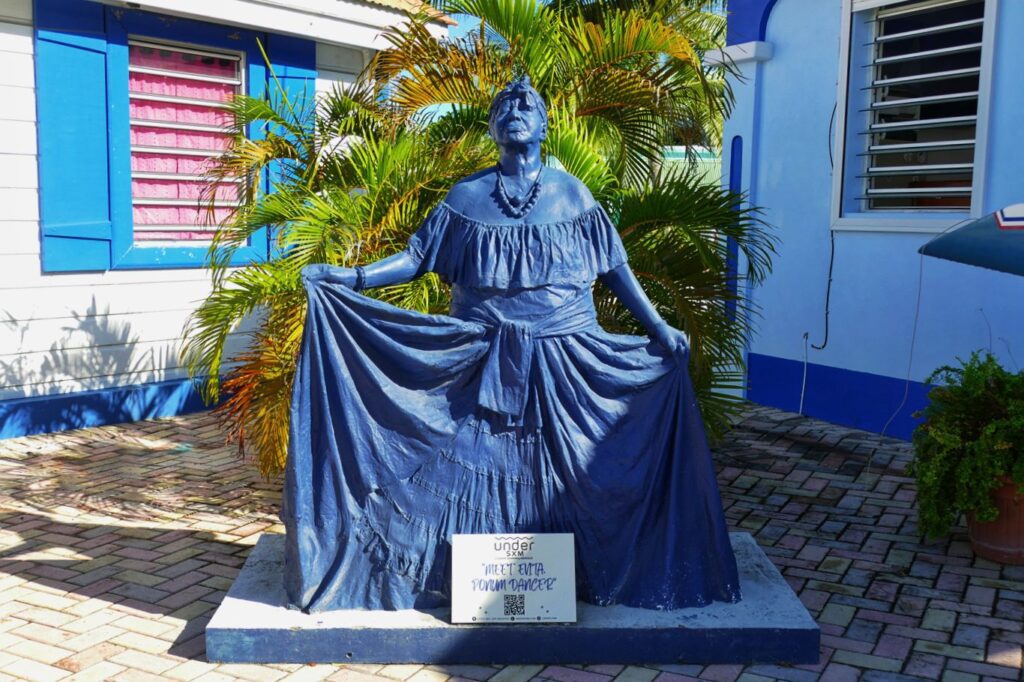
Under SXM is exceptional, but by no means unique, as it is part of a broader Caribbean trend of underwater art installations. In fact, British artist Jason de Caires Taylor created the Molinere Underwater Sculpture Park off the shore of Grenada already back in 1990. This example was later followed by the Museo Subacuático de Arte in Cancún, the Museum of Underwater Art in Queensland, the Museo Atlántico in Lanzarote, and various others.
Fun Fact
Perhaps the oldest known underwater art installation is the bronze statue of Christ the Lord of the Abyss, which was installed in the Mediterranean Sea in the Italian town of Fruttuoso in 1954.
Over the Hump to Little Bay
As we are on it: Under SXM is definitely not the only reason to pay Little Bay a visit. Depending on your starting point at Great Bay, the walk there takes up to an hour. Unfortunately, there’s no public bus that can drop you off nearby, so if you don’t want to walk, you’ll have to take a taxi. I walked and rested a bit on the beach along the way.
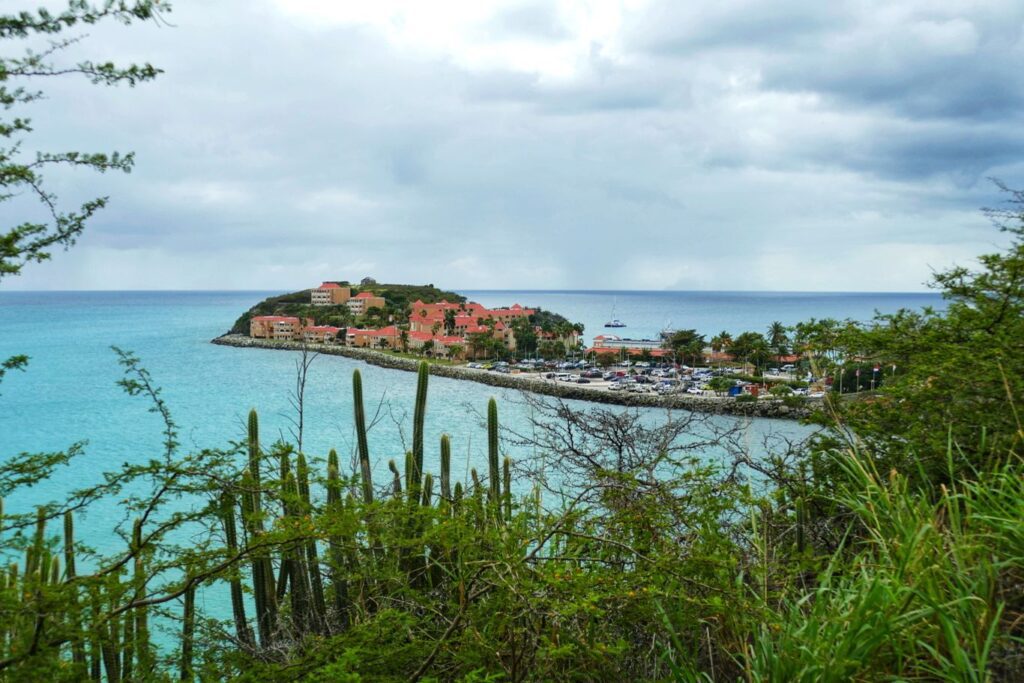
This way, it was manageable even in the heat, and the short trip was absolutely worth the effort. Mind you, a visit to the ruins of Fort Amsterdam is worthwhile, not just for history buffs. Even more impressive than the ruins of this historic site are the views across the sea to the two flanking bays, Little Bay and Great Bay.
Fun Fact
The first hotel was built on Little Bay Beach as early as 1955. But it wasn’t until five years later that the entire island had electricity!
Island With a View
Sint Maarten is extremely hilly. This is annoying if you need to walk or have to cycle since it’s constantly downhill and then immediately uphill again. An island like a rollercoaster. Yet at the same time, this makes the island particularly picturesque. Above all, it offers many amazing viewpoints.
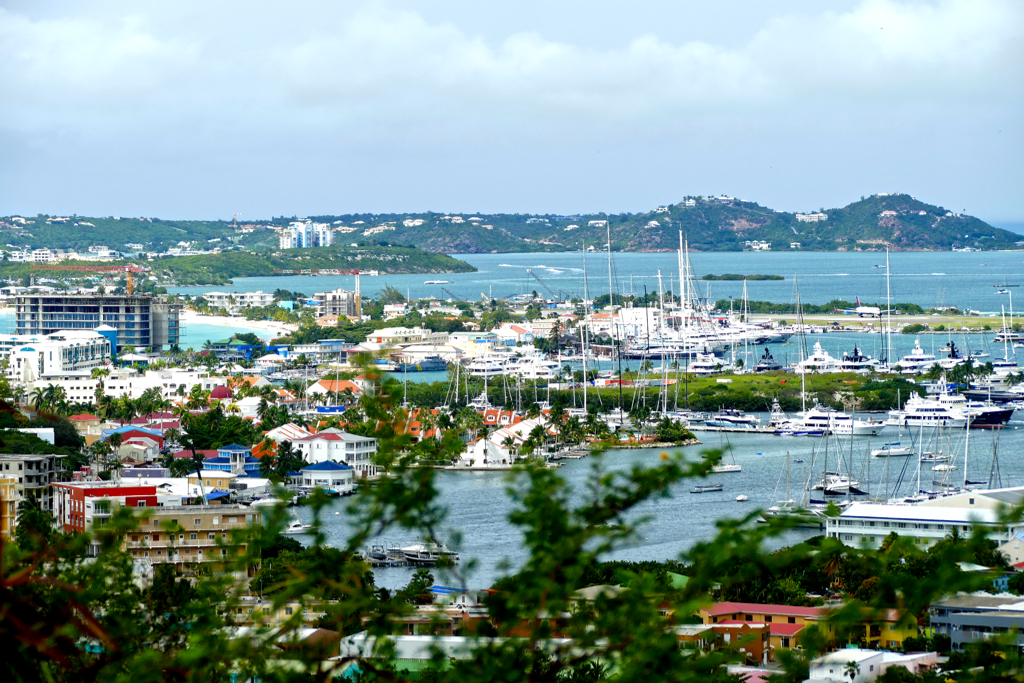
My personal favorite is Bell’s Lookout at the top of Cole Bay Hill. From here, you have a breathtaking view across the entire Simpson Bay Lagoon all the way to the southwestern tip, where you can spot the condominiums of Cupecoy. Another big advantage of this great spot is that the public bus stops here. Hence, you can easily get off and, once you’ve taken all your pictures, get back on the next one.
Another amazing viewpoint lies above Philipsburg in the so-called Dutch Quarter. This is also a spot you can easily access by public bus in just a couple of minutes. From here, you have an incredible view across the lagoon all the way to Great Bay and the sea beyond.
Unfortunately, a visit to the next place is not so easy. You’ll need a rental car or a taxi. Then, to get to the Sentry Hill Viewing Deck, you have to take a chairlift to the top at the Rainforest Adventures Park, which is located at the Blackland Estate. I find it a bit scary, but there’s no other way to reach the island’s most spectacular viewpoint.
However, all you daredevils will be rewarded with a spectacular 360° view. From here, not only do you see basically all of Sint Maarten. On clear days, you will also spot the neighboring islands Saba, Saint Barths, Anguilla, Saint Eustatius, and, if you’re lucky, even St. Kitts-Nevis.
If the chairlift ride wasn’t thrilling enough for you, you can give your adrenaline an extra boost by taking the Flying Dutchman zipline back downhill.
On a length of about 853 meters and a drop of roughly 320 meters, the Flying Dutchman is the world’s steepest zipline!
Simpson Bay
The fact that the lights in Philipsburg go out, at least figuratively speaking, shortly before sunset brings us to another settlement you absolutely shouldn’t miss.
Simpson Bay, located just six kilometers northwest of Philipsburg, originally developed as a small fishing village. For centuries, the region was heavily influenced by the sea—fishing, boatbuilding, and later, salt production in the nearby lagoon played key roles.
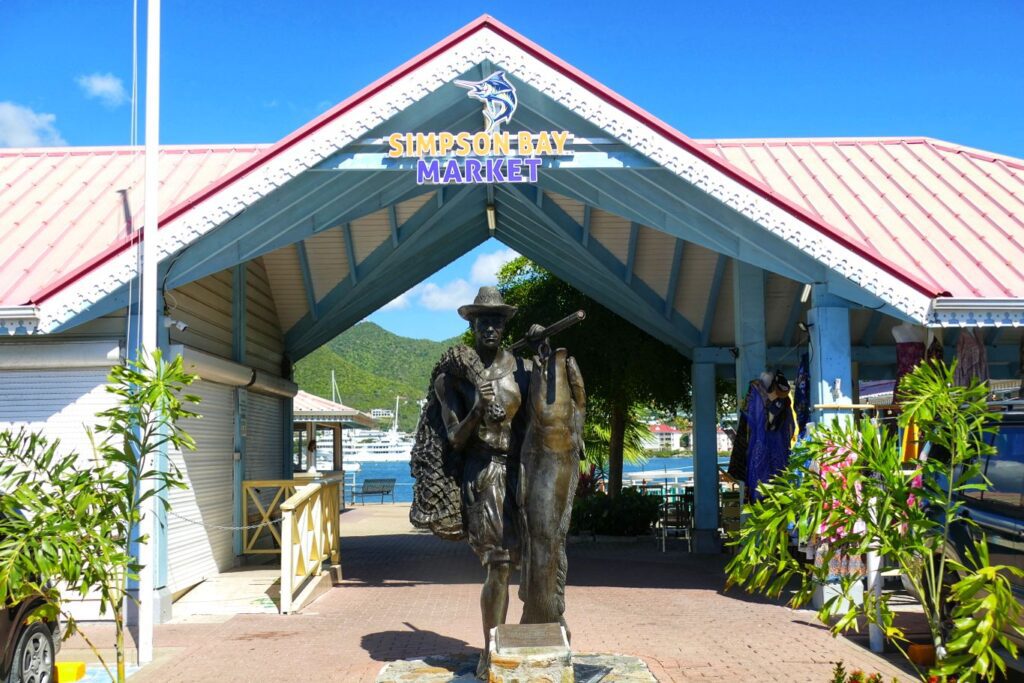
With the rise of tourism in the second half of the 20th century, the town changed considerably. Hotels, restaurants, marinas, and entertainment venues sprang up, especially around Simpson Bay Lagoon. Today, Simpson Bay is practically the party strip of the Dutch side of the island, but it also offers plenty of other attractions.
After all, Simpson Bay Lagoon is a key natural area for the island, and the sunsets here in the west are, of course, particularly beautiful.
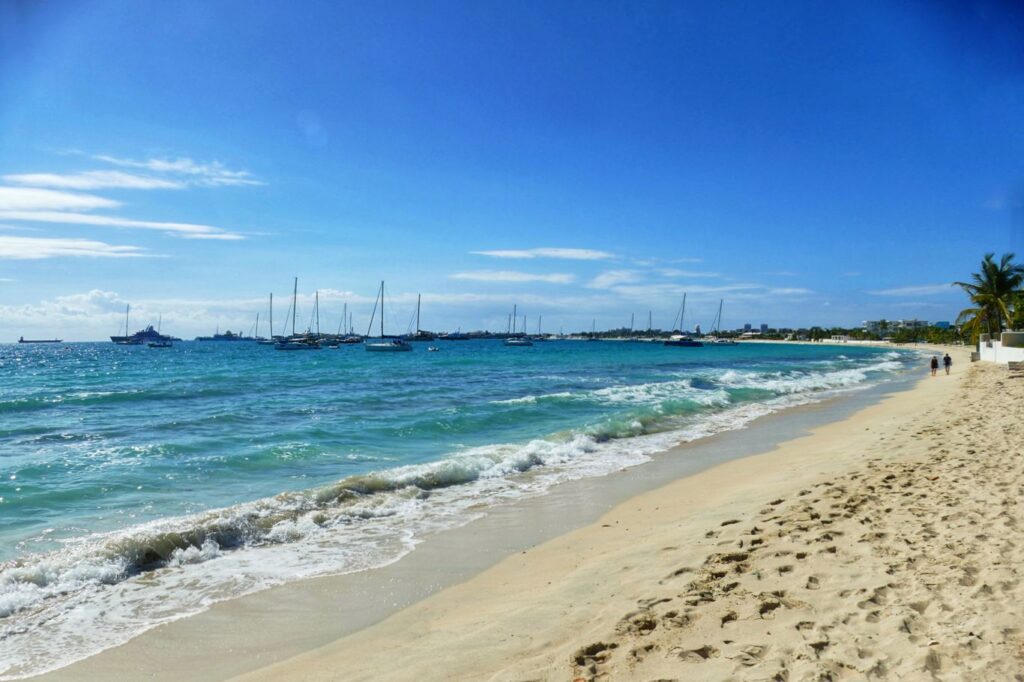
For me personally, the extremely long Simpson Bay Beach is also the most beautiful beach on the island—not least because it’s completely uncommercialized. However, this means you’ll need to bring everything you need for a perfect day at the beach. That definitely includes something to provide shade!
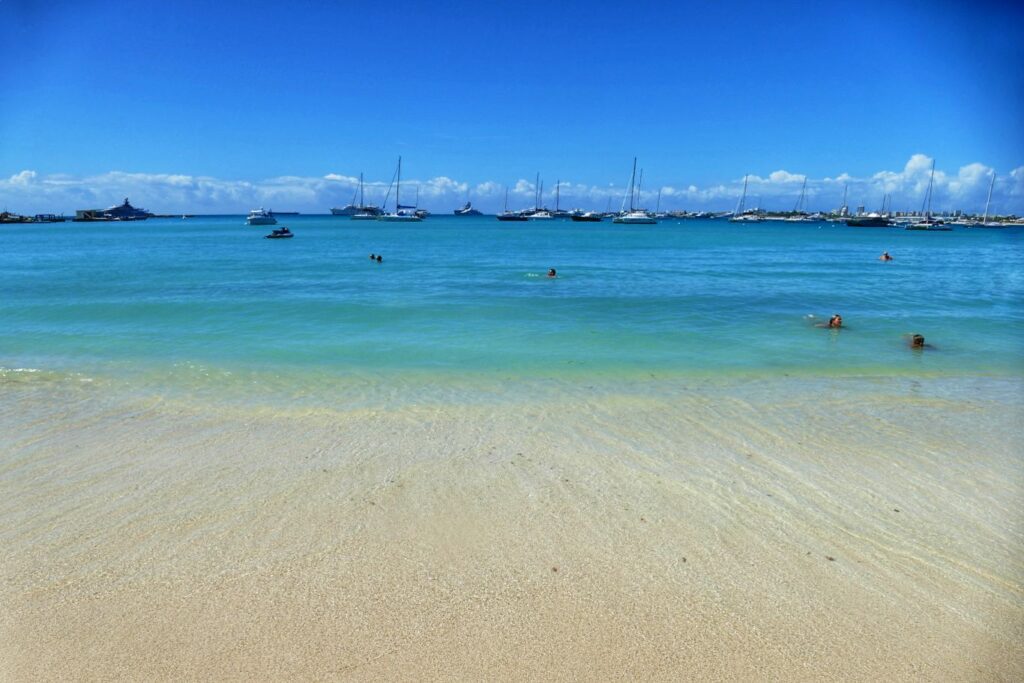
I’ve compiled a complete checklist of things to make your beach day perfect in my post The Best Beaches Around Saint Martin You Can Easily Visit by Public Bus. There, as the title suggests, you’ll also find a list of my personal favorite beaches on both sides of the island.
Maho Beach
Talking ’bout beaches: The Simpson Bay district is also home to the international airport, and thus to the most unusual attraction Sint Maarten has to offer.
Because of the proximity of the runway to Maho Beach, the Princess Juliana International Airport is located in such a small area that airplanes fly very low over the heads of tourists. This also includes wide-body aircraft like the Airbus A340 or the Boeing 747, obviously.
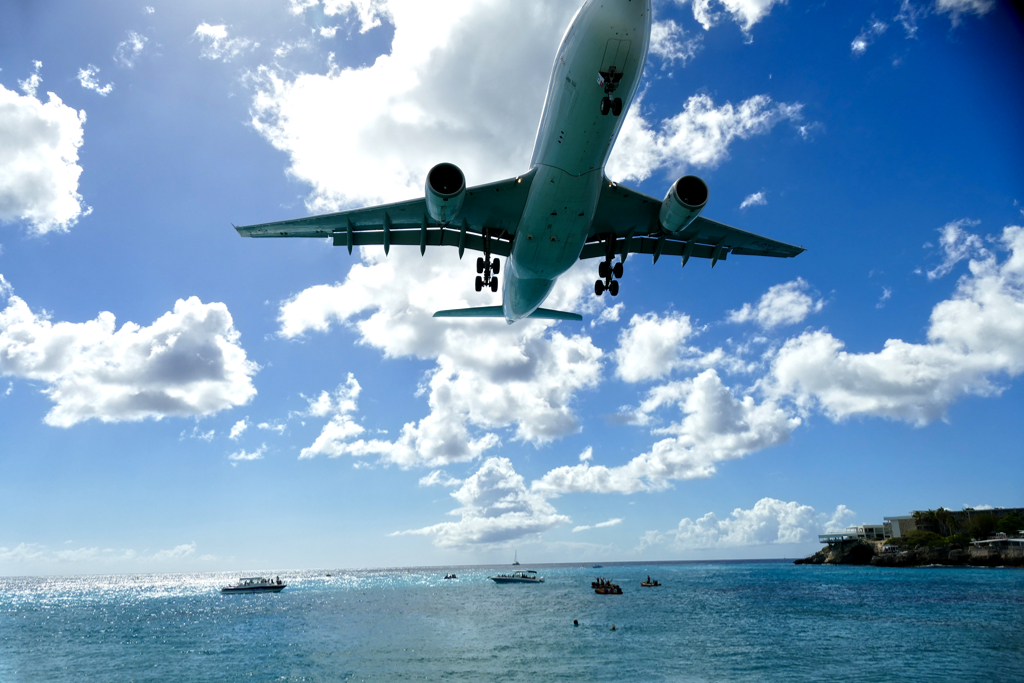
Therefore, you can stand directly underneath those planes and take photos. With all the excitement, hardly anyone pays attention to the warning signs. Some people give literally everything for an impressive picture. Even though in 2017, a visitor from Australia lost her life, to this date, onlookers continue to stand behind the planes during takeoffs and try to withstand the pressure wave.
By the way, you can read about how many people are losing their lives because of their Instagram presence in my post Most Instagrammable: Till Death Do Us Part.
Bar With a View
It’s best to stand to the side, especially when planes are taking off. The Sunset Bar and Grill on the Eastern end of the pretty small beach has turned the whole spectacle into a profitable business. Here, onlookers can not only enjoy refreshments, but the owners also update an information board quoting landing times, airlines, aircraft, and departure points.
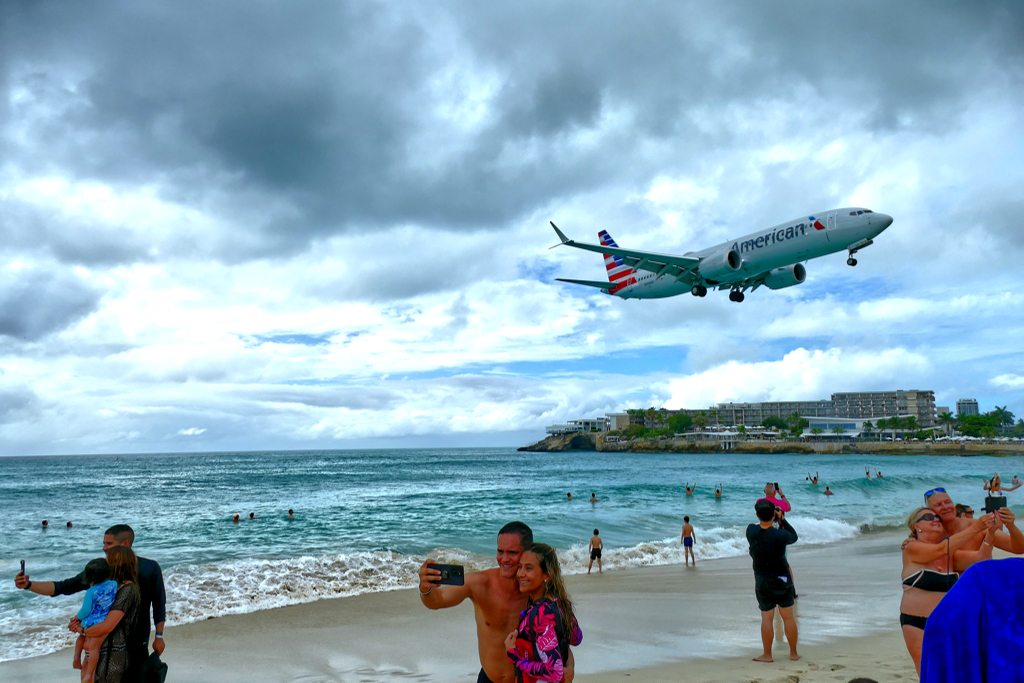
I have to admit that I was also really keen to see the biggest planes land. But as is so often the case these days, I’d already seen so many impressive photos of Maho Beach online that I felt like I was just ticking something off my list. The element of surprise was missing. Besides, it doesn’t feel particularly thrilling if you have to fight your way through hundreds of other onlookers. The atmosphere was more like a Black Friday sale. So, my urgent advice is: If you want to go to Maho Beach, go on a day when there are as few cruise ships in port as possible!
A Beach to Relax
Yes, Maho Beach is a beach, obviously. But when it comes to sunbathing and swimming, it’s the worst choice you could make. It’s truly absurd: at any other beach, you’d be incredibly annoyed if planes were constantly flying overhead, wouldn’t you? Luckily, you don’t have to spend the rest of the day in Maho after you’ve had your fair share of deafening landings and takeoffs. A short ten-minute walk will take you to Mullet Beach.
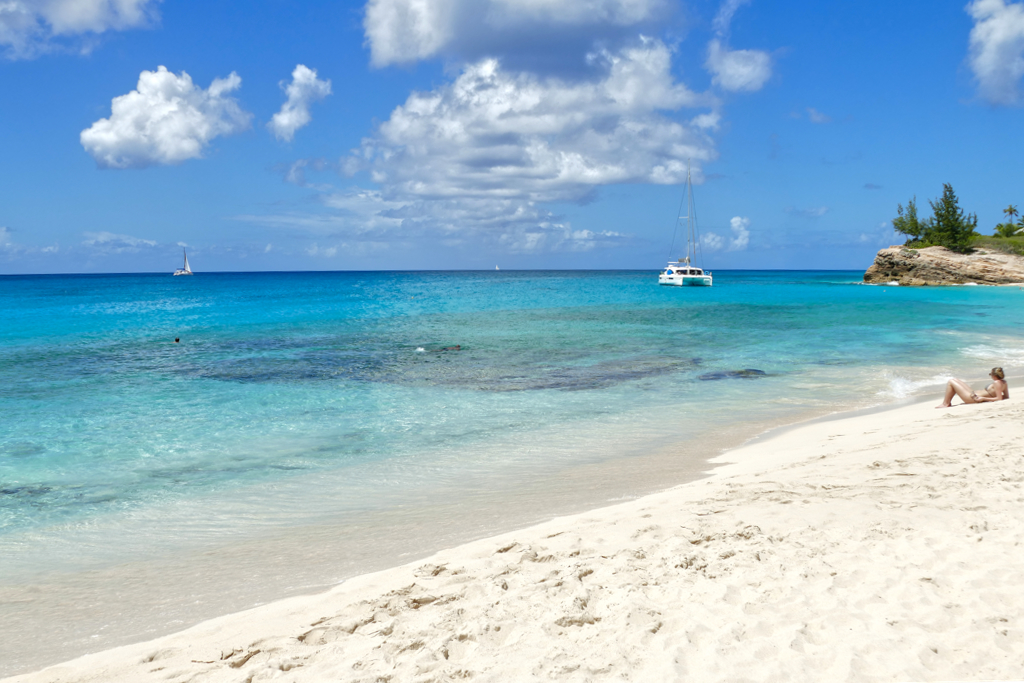
Most people rave about Mullet Beach. It must have been more secluded and less commercialized in the past. Now, it’s in major parts covered with rental sun loungers and umbrellas. However, at the far end towards Cupecoy in the southwest, it kept its dreamy vibe.
As I said before, I have compiled my favorite beaches on both the Dutch and French sides of Sint Maarten in post The Best Beaches Around Saint Martin You Can Easily Visit by Public Bus.
Practical Information
How to Get There
Princess Juliana International Airport is the third-largest airport in the Caribbean in terms of flight operations. It is located in the west on a narrow strip of land between the sea and a lagoon. Due to its political affiliation with Europe, EU citizens need no visa but a passport valid for at least three months. All others should check out my post World’s Most Complete Travel Information. Arrivals at the French airport Aérodrome de Saint-Martin – Grand-Case are treated as domestic flights due to its political status. This means Europeans can enter with just a national identity card. Although this sounds fun, I would not do it. If for some reason you have to leave the sector, you might be in trouble.
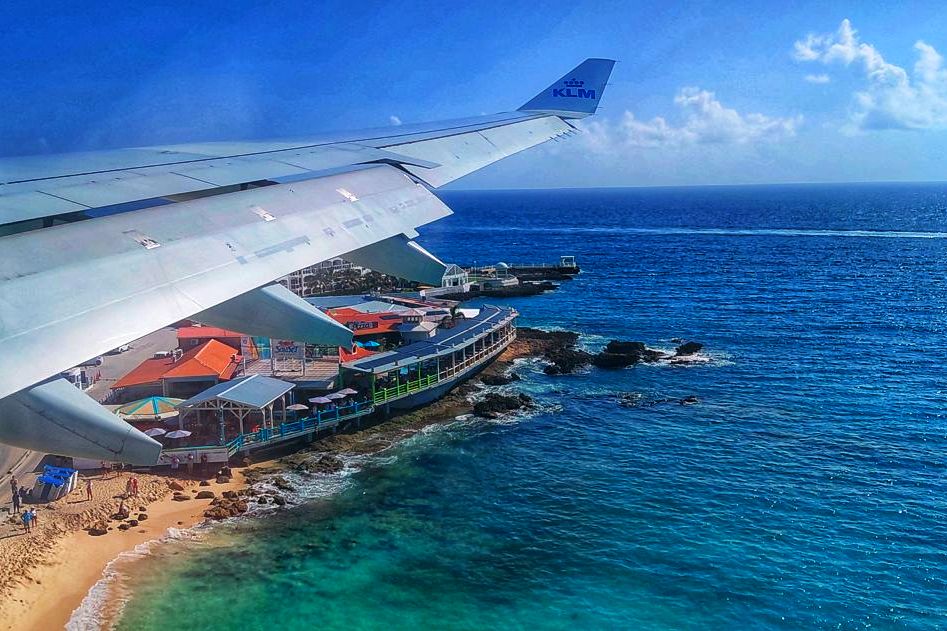
If you continue to other destinations in the Caribbean, you’ll probably have to travel with the Dutch national airline WinAir. Beware that their tickets are relatively expensive compared to what you pay for intercontinental flights.
Obviously, various ferries also sail to the islands of Saba, Saint Barthélemy, and Sint Eustatius, and via Statia, also to Saint Kitts. From the French part of the island, there is a regular ferry service to the island of Anguilla.
How to Get Around
The public bus system is actually very good and covers almost the entire area. While you can’t get to every place, you can reach most points of interest for a small fare, especially if you’re based in Philipsburg. This was definitely a deciding factor in choosing my accommodation on the outskirts of the city. My only wish would be that there were also a bus to the Point Blanche neighborhood. Public buses run on several routes between 5 a.m. and midnight, but without a fixed schedule. The start and end points of each route are indicated on signs in the windshield. There’s also a bus that connects Philipsburg with Marigot, the main town on the French side, as well as with the so-called French Quarter, Quartier d’Orleans in French.
There are clearly marked bus stops, but you can also hail a passing bus from anywhere. Similarly, you can get off anywhere by calling out. Fares cost between one and two dollars, depending on the distance. You should have the exact fare, or at least small change if possible.
Within individual towns, the best way to get around is on foot. Outside of towns, there are, unfortunately hardly any decent sidewalks. However, I didn’t find the local drivers as reckless as in other countries. I find it admirable that some people even ride bicycles, given the heat, especially since the island is characterized by many hills, some of them quite steep. I wouldn’t worry about the condition of the roads or the behavior of the drivers, though.
All taxi drivers and tourist offices have a detailed list of fares in US dollars. Yet, the taxi driver from the airport to my accommodation still managed to rip me off. The standard fare from the airport to Philipsburg is about 25 US dollars, and to the cruise port, it’s 30 US dollars.
Obviously, renting a car is a valid option.
This Traffic is Not My Jam!
And now something that applies to all vehicles in Sint Maarten, whether you have a rental car, take a taxi, or take the bus: The traffic is insane! There’s hardly a time of day when the few main roads that traffic relies on aren’t completely jammed. You crawl along in a seemingly endless line at a snail’s pace. Including long stretches where nothing moves at all. It’s infuriating. But it is what it is.

You absolutely have to keep this in mind if you need to be somewhere at a specific time—I’m thinking particularly of flights. Luckily, I’m a rather anxious person and therefore tend to leave early rather than late. That definitely paid off in Sint Maarten. Besides wanting to be at the airport two hours before my flight, I also allowed two hours for the drive from Philipsburg. Yes, normally you shouldn’t need more than 20 minutes for the twelve kilometers. But the traffic in Sint Maarten is anything but normal. I can only warn you to leave well in advance; you won’t regret it.
Visiting Organized
Although Sint Maarten has a really comprehensive and reliable bus system, it’s much easier to visit its attractions on a guided tour. Plus, you get tons of valuable information, obviously. If you’re planning to explore the surrounding waters, either by cruising or snorkeling, you’ll need to join an organized tour unless you have your own yacht. Here are some suggestions for which unforgettable day trips to join*:
Where to Stay
Since tourism is Sint Maarten’s main industry, there are many kinds of accommodation to choose from. However, many visitors who don’t stay on their cruise ship come mostly on a standard holiday package, which includes a stay at one of the large hotels or even resorts. Obviously, this kind of tourism drives up prices. Finding budget-friendly yet convenient accommodation on the island is not always easy.
Nevertheless, for my stay, I chose an apartment in a residential area close to the cruise terminal and within walking distance to the center of Philipsburg. Since I’m not driving, I also wanted to be within walking distance of the bus station so that I could explore the island by public coach.
However, there are tons of very different lodging options in the area, and here are some suggestions*:
What to Eat
In the Dutch part of the island, you’ll find Caribbean cuisine. In restaurants, it’s adapted a bit more to international tastes and is relatively expensive. However, in small street food stalls, you can get jerk chicken, curried goat, oxtail, and roti—vegetables or meat wrapped in a flatbread—usually just as delicious, but much cheaper. Rice and beans are often served as side dishes.
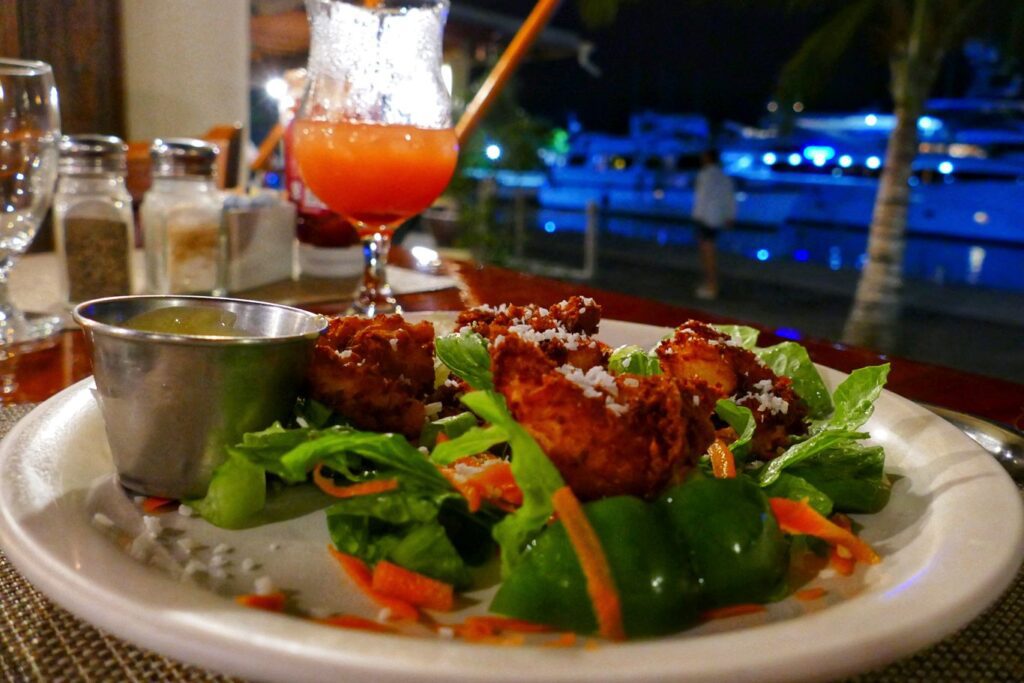
Because it’s part of the Netherlands, this part of the island also has many Dutch products, including, of course, cheese and, of course, Dutch beer.
My Tip:
Large supermarkets have a hot food counter where complete meals are offered in excellent quality at unbeatable prices. The rotisserie chicken and sticky pork ribs I bought there are unforgettable. I also couldn’t get through a single beach day without the samosas—they’re simply addictive!
So, if you want authentic cuisine on a budget, head to the supermarket. However, keep in mind that they cater to breakfast and lunch. In the evening, most of the hot food is gone.
Cash and Cards
Since March 31, 2025, the Caribbean guilder has been the official currency of Sint Maarten. It is pegged to the US dollar at a rate of 1 USD = 1.79 XCG. However, in my ten days in Sint Maarten, I never once saw anyone pay with guilders. While prices in supermarkets, for example, are displayed in guilders, the cashier asks you which currency you’d like to pay in. Most of the time, this is done by credit card anyway. However, cash was always in US dollars. After ten days on the island, I don’t even know what the local guilders look like!
You can pay by credit card at virtually every business. Nevertheless, you’ll need cash, for instance, for the bus, but you can always pay in US dollars.
My Tip:
While it’s perfectly fine to pay in US dollars, I would advise against paying in €uros. Although they are accepted in the Dutch part of the country, they are converted at a one-to-one rate to the US dollar. However, the current rate – as of March 2026 – is 1 USD to 0.85 €uros. This means you lose 15 percent on every transaction.
Language
As I raved about above, there are no language problems on such an international island. English, French, Spanish, and Dutch are all spoken merrily and interchangeably.
Connection and Communication
In the Dutch part of the island, they use plug types A and B. Their voltage is 110 V and the frequency is 60 Hz. Whereby, as nowadays all these chargers have integrated adapters, in general, the voltage and frequency don’t really matter. Nevertheless, keep in mind that on the French side, they not only use plug types C and E, as in France. Most importantly, the voltage is 220 V – which might blow more than just your mind if you don’t use a converter, for instance, for your hair dryer.
By the way, you’ll find comprehensive travel info in my post World’s Most Complete Travel Information – an indispensable globetrotter classic.
Map
On this map, I’m showing you where to find the spots worth visiting during a stay on the island. To switch between the Dutch south and the French north, just open the legend at the top left corner, and you can hide or unhide the respective layer as you wish. This way, the map will show only the section you really need and be clearer.
Apart from the Dutch South, I also visited the French part in the North, obviously. To read about it, go to my post What not to Miss in Saint-Martin, the French Half of the Friendly Island. Then, I compiled the best beaches in my post The Best Beaches Around Saint Martin You Can Easily Visit by Public Bus. And if you need a compressed day trip itinerary, you’ll love my post A Self-Organized Day Trip Around Saint Martin by Public Bus.
Pinnable Pictures
If you choose to pin this post for later, please use one of these pictures:

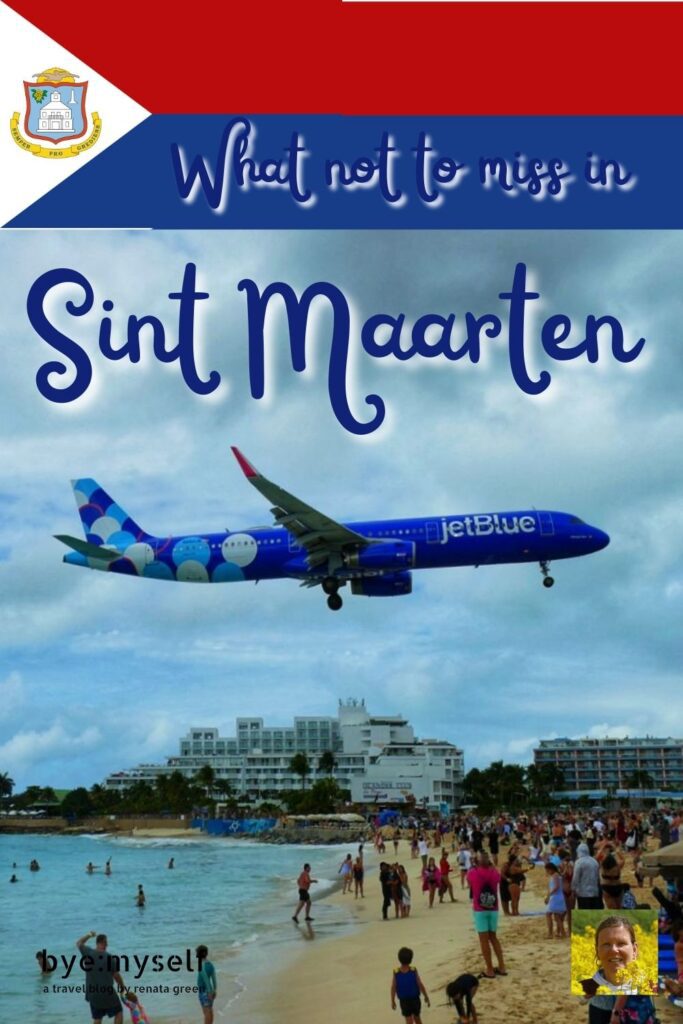
Did You Enjoy This Post? Then You Might Also Like These:
Guide to HAVANA – Welcome to the Club
GUADELOUPE: Complete Guide And Perfect Itineraries (also for travels by public bus)
Guide to VINALES – Cuba ‘s Rural Paradise
Best Street Art in SINT MAARTEN
Beyond Your Imagination: The 15 Best Beaches in Barbados You Can Easily Visit by Public Bus
Best Things to Do in Sint Maarten, the Dutch Half of the Friendly Island
A Self-Organized Day Trip Around Saint Martin by Public Bus
BONAIRE Totally Unexpected: Street Food And Urban Art Tour
* This is an affiliate link. Hence, if you book through this page, not only do you get the best deal. I also get a small commission that helps me run this blog. Thank you so much for supporting me!
Sint Maarten’s shared island setup is quite unusual in the Caribbean. What’s interesting is that the border has stayed peaceful for centuries, which is rare considering how many islands in the region changed colonial control multiple times.
Totally agreed! Too bad this peaceful togetherness is not found everywhere around the world…