Particularly in recent years, Sicily has developed from an insider tip into a holiday destination for aficionados of history, passionate nature lovers, but also the rich and famous – and not just since the second season of The White Lotus, which is set primarily in the incredibly picturesque town of Taormina. However, while places like Cefalú, San Vito Lo Capo, and obviously Taormina are groaning under the influx of visitors, life in the capital Palermo continues largely unaffected by this development. Actually, that’s not a bad thing. On a two-day visit, it allows you and me to experience the real, authentic Sicily from up close.
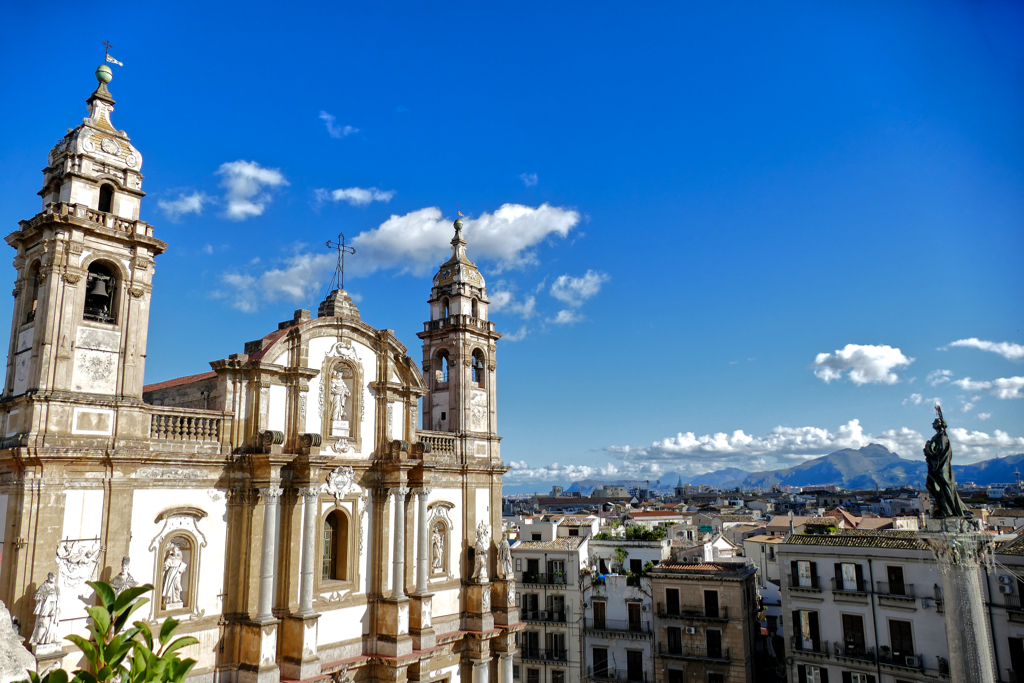
Hence, in this post, I’ll show you the best things you definitely shouldn’t miss – even those that are a bit off the beaten path.
- Palermo
- Benvenuti a Palermo
- Centro Storico
- Quattro Canti
- Piazza Pretoria
- Church and Monastery of Santa Caterina
- The Monastery Pastry Shop I Segreti del Chiostro
- Chiesa di Santa Maria dell'Ammiraglio
- Chiesa di San Giuseppe dei Padri Teatini
- No Mafia Memorial
- Chiesa del Santissimo Salvatore
- Cattedrale di Palermo
- Villa Bonanno
- Palazzo dei Normanni
- Byzantine Mosaics in Sicily
- Kalsa
- There's More
- Practical Information
- Map
- Pinnable Pictures
Palermo
With almost 650,000 inhabitants, Palermo is not only the political and cultural center of Sicily but also Italy’s fifth-largest city. The Phoenicians founded the city as a trading post in the 8th century BC. In contrast to other large cities in Sicily, Palermo never came under Greek rule, but was located near the border with the Greek-speaking eastern part of the island.
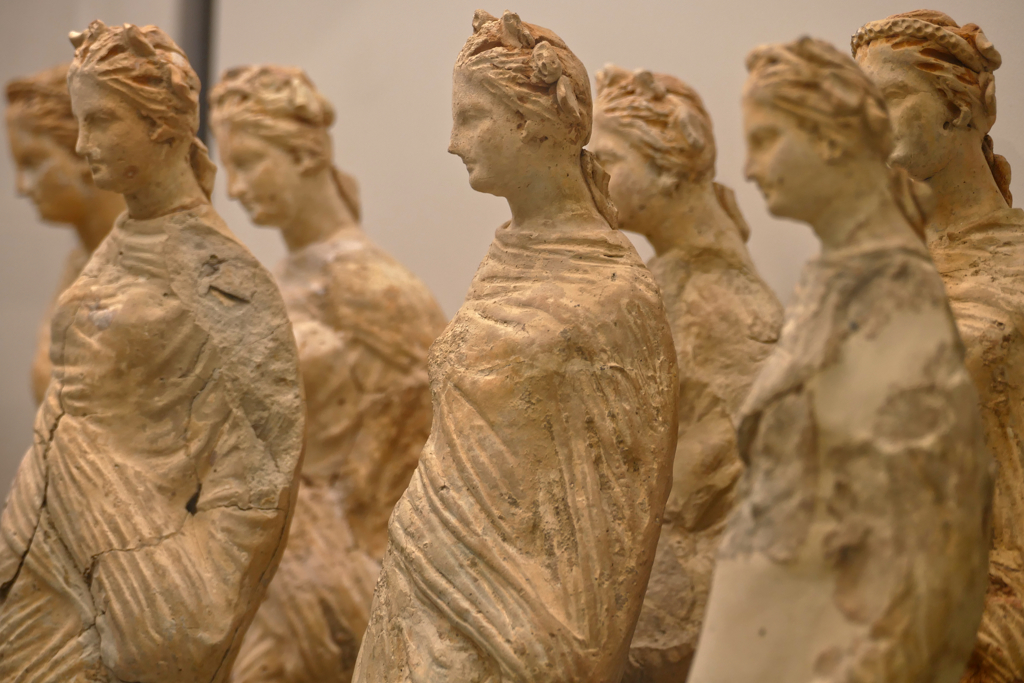
In 831, Palermo became the Sicilian capital of Arab emirs and developed into a thriving economic center through the cultivation of orange and citrus trees. It was similar in size to the Islamic metropolises of the time, such as Cairo or Baghdad, so that among the European cities, only Byzantium and Córdoba had more inhabitants.
Since ancient times, Sicily has been the granary of the world and the most sought-after agricultural country of the Middle Ages. This made it a bone of contention among political powers.
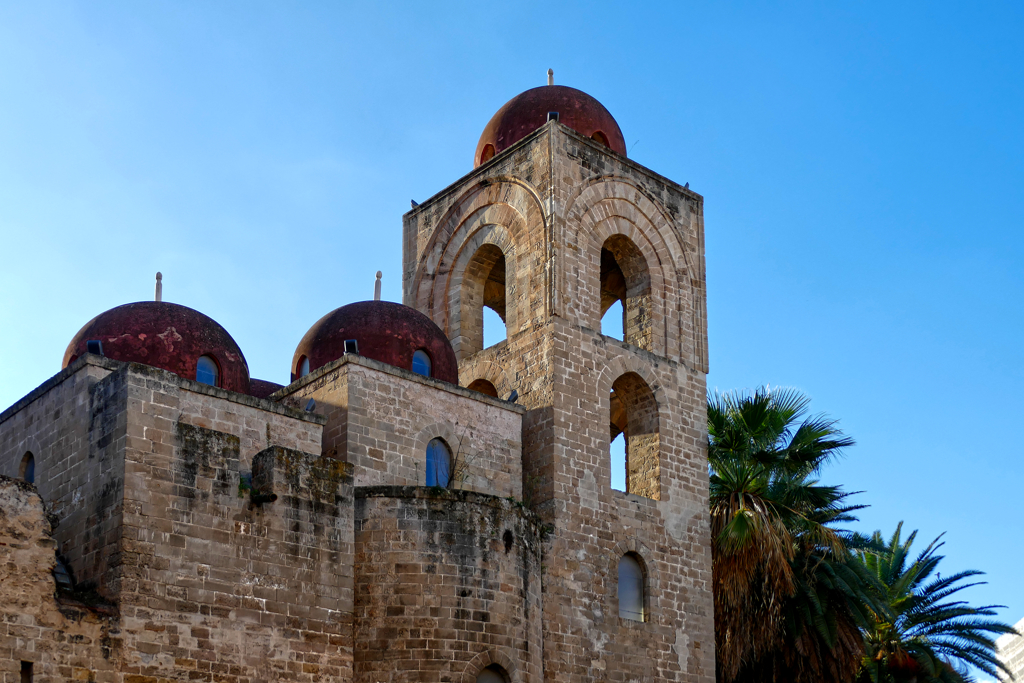
In 1072, the Normans conquered Palermo. Under the Norman rulers, numerous churches and palaces with clear Arabic stylistic influences were built. Buildings such as the La Zisa summer residence in the style of an Arabian desert castle or the churches of San Giovanni degli Eremiti and San Cataldo are evidence of an amazing Arab-Byzantine-Norman symbiosis.
Tables Turn
The cultural heyday under the Normans lasted until 1194, after which the Roman-German Hohenstaufens, the French Anjou dynasty, and the Spanish Aragonese took control – and the handover rarely took place peacefully. In 1860, Giuseppe Garibaldi moved into Palermo, and just the following year, Sicily became part of the newly founded Kingdom of Italy.
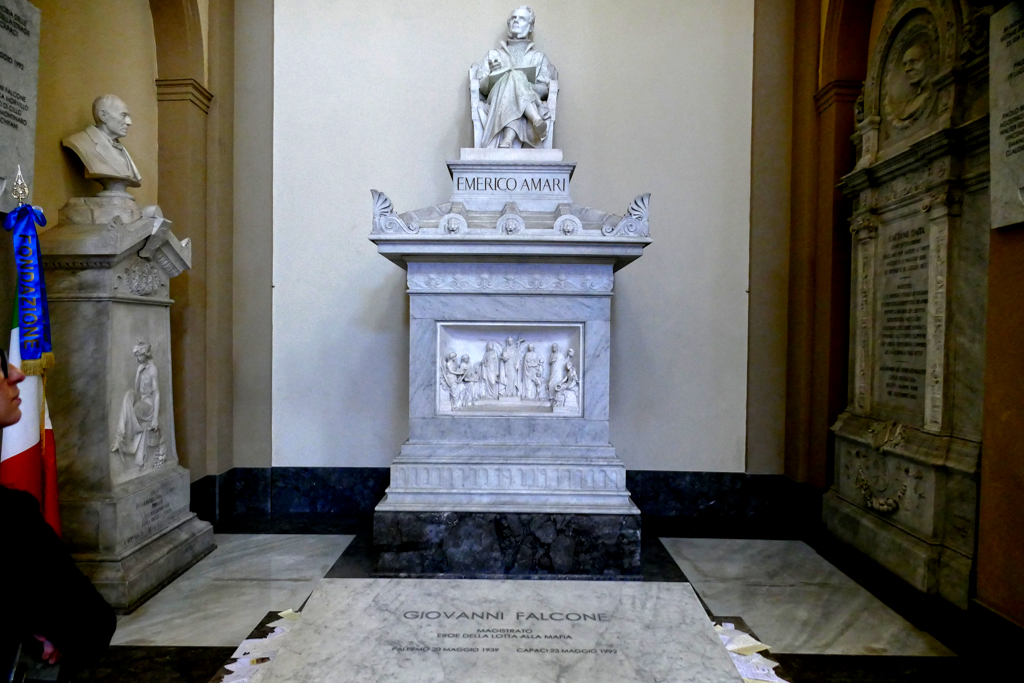
From the end of WWII to the end of the 20th century, Palermo was firmly in the hands of the Mafia. It was the scene of two major mafia wars and was one of the most violent cities in Europe. In the 1980s, prosecutors Giovanni Falcone and Paolo Borsellino in particular fought against it. Sadly, both were murdered by the mafia in quick succession near Palermo in 1992.
Nonetheless, during Mayor Leoluca Orlando’s long tenure from 1985 to 2022, there was a major improvement in public life in the city. Supported by politicians, artists, and the population, Orlando fought resolutely against the mafia. The crime rate decreased, and today Palermo is considered the safest city in Italy.
And so Palermo, with all its contrasts, is a place where ancient traditions coexist with modern vibrancy. Its diverse cultural heritage, amazing historical landmarks, mouthwatering local cuisine, and most importantly, warm Sicilian hospitality create a unique and unforgettable travel experience.
Benvenuti a Palermo
There are a lot of good things to say about Palermo, but that doesn’t mean that the city makes it easy for anyone arriving to love it at first sight. Palermo’s big, soft heart beats beneath a rough, at times almost menacing shell. It’s loud, it’s dirty, the narrow streets are getting crowded, and the buildings are giving way under the pressure of time, losing their plaster and crumbling in places. And this applies even to those structures where you can still see the former splendor. Palermo doesn’t dress up.
You have to take it as it is.
Where there is light, there is shadow.
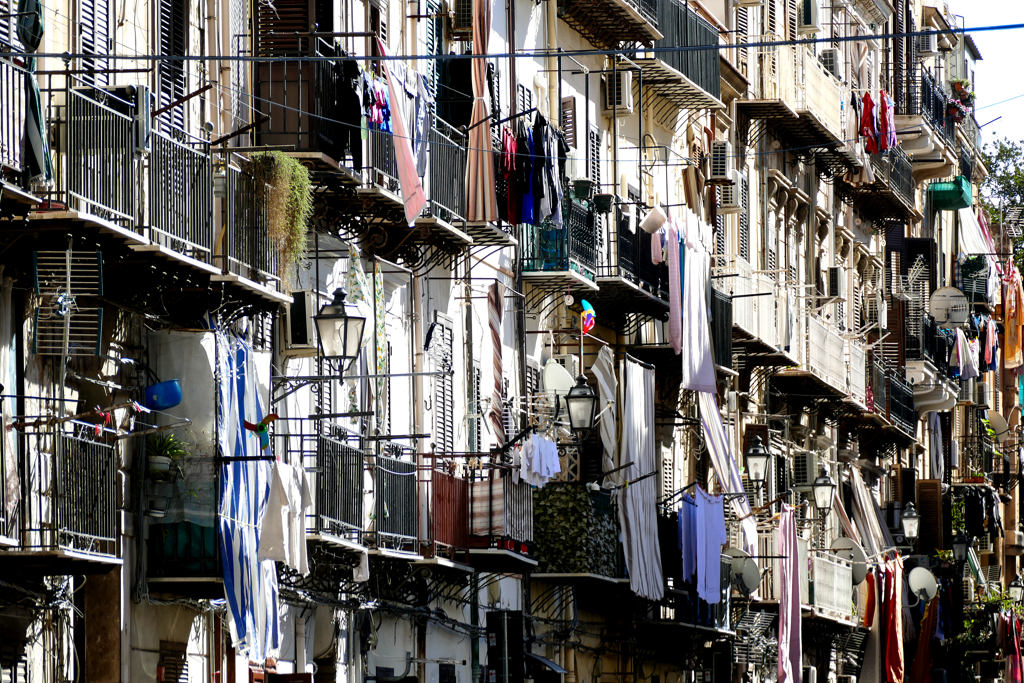
It also took me a few hours to discover the heart of gold beneath Palermo’s armor of rusty scrap metal, before I could fully love the city.
Access to Palermo is certainly easier in the historical places that UNESCO has listed as World Heritage Sites. Whether the cathedral, the Norman Palace, or the Fontana Pretoria – in these places, you can hesitantly make first contact with Palermo. Once you’re acclimated, you can expand the friendship to the less sugarcoated parts.
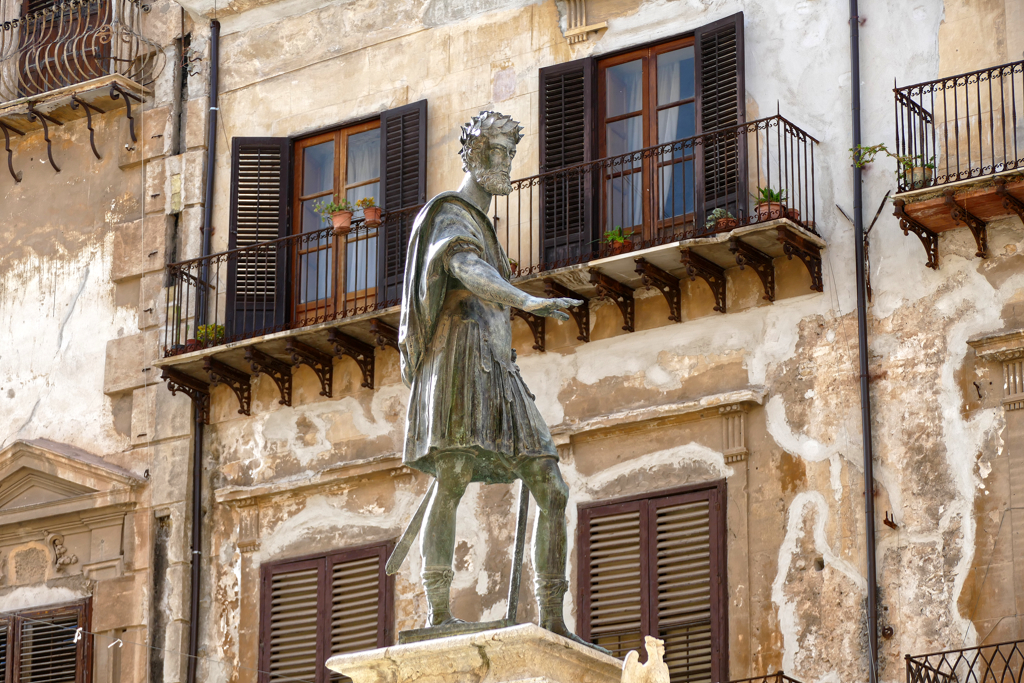
There are many charmingly dilapidated buildings along bumpy cobblestone streets. The best way to discover them is to simply meander around. Lose yourself in the hustle and bustle of the residential districts, where you can get to know the authentic Palermo and rub shoulders with her welcoming and kind residents.
Centro Storico
As mentioned, Palermo’s historic center is rich in attractions that reflect the city’s fascinating history and cultural diversity. Most are located west of the main shopping street Via Roma in the area around Via Vittorio Emanuele. Here the most amazing landmarks alternate with countless restaurants and bars as well as small specialty shops. Basically, you could spend days on the two kilometers of this boulevard, which runs from Porta Felice almost on the shores of the Mediterranean in the east to Porta Nuova in the west, right next to the Palazzo dei Normanni. No wonder that the road was laid out in ancient times and was already part of the Roman road network.
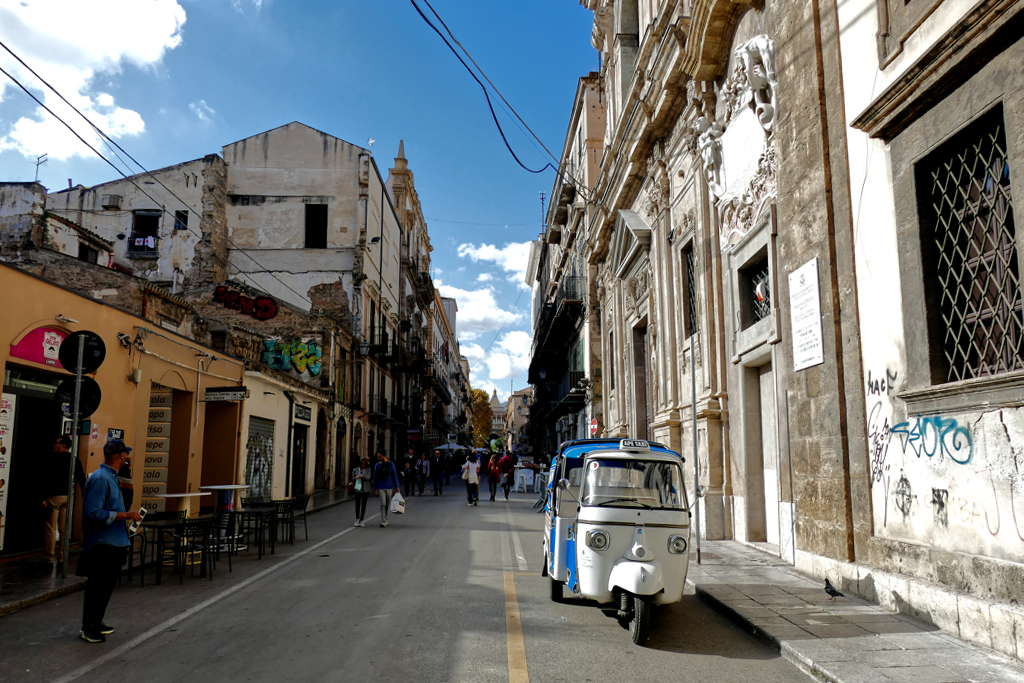
The historic center of Palermo is easy to explore on foot, and every corner holds surprises! Allow yourself enough time to soak up the lively atmosphere.
Quattro Canti
One of Palermo’s most distinctive landmarks is the so-called Quattro Canti. Quattro Canti, or four corners in English, are four amazingly decorated façades that frame the intersection of the two traffic axes, Via Vittorio Emanuele and Via Maqueda.
Officially, the Piazza Vigliena is named after the Spanish Viceroy Juan Fernandez Pacheco de Villena, the commissioner of the ensemble. From 1608 to 1620, the Florentine architect Giulio Lasso built a palace at each of the four corners of the intersection.
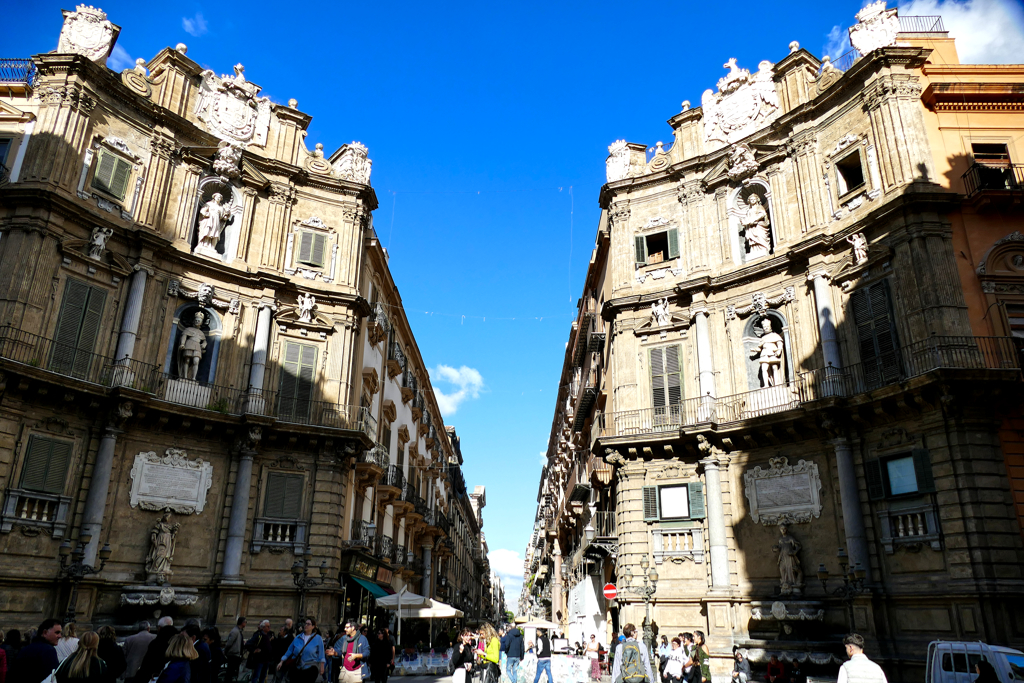
The ensemble is designed according to a sophisticated plan. Not only do all fountains and statues have a symbolic meaning, but they also stand for four different districts.
In the southern corner is the so-called Palazzo Reale, which represents spring and honors the ruler Charles V. It stands in the Albergheria neighborhood.
Then comes the so-called Monte di Pietà in the west, which borders the Seralcadio district. It symbolizes summer and tributes to Philip II.
Next to it in the north, hence, in the Loggia district, is the Castellammare. It conveys autumn and praises Philip IV.
And finally, the Tribunali stands in the up-and-coming district of Kalsa, represents winter, and honors Philip III in the southern corner of the square.
No wonder this extraordinary square was one of the settings in which some of the most important scenes of the movie Palermo Shooting were filmed!
As a matter of fact, I could spend hours in the square enjoying all the fascinating details. But we are only at the beginning of our tour, and there is still so much more to come.
Piazza Pretoria
Just around the corner from the Quattro Canti is one of the most impressive squares Palermo has to offer. Magnificent palaces like the Palazzo Bonocore literally seem to shield Piazza Pretoria from the main street. Framed by the Dominican Church of Santa Caterina and the Palazzo Pretorio, Palermo’s town hall, the Mannerist fountain Fontana Pretoria stands at its center and is indisputably the main attraction.
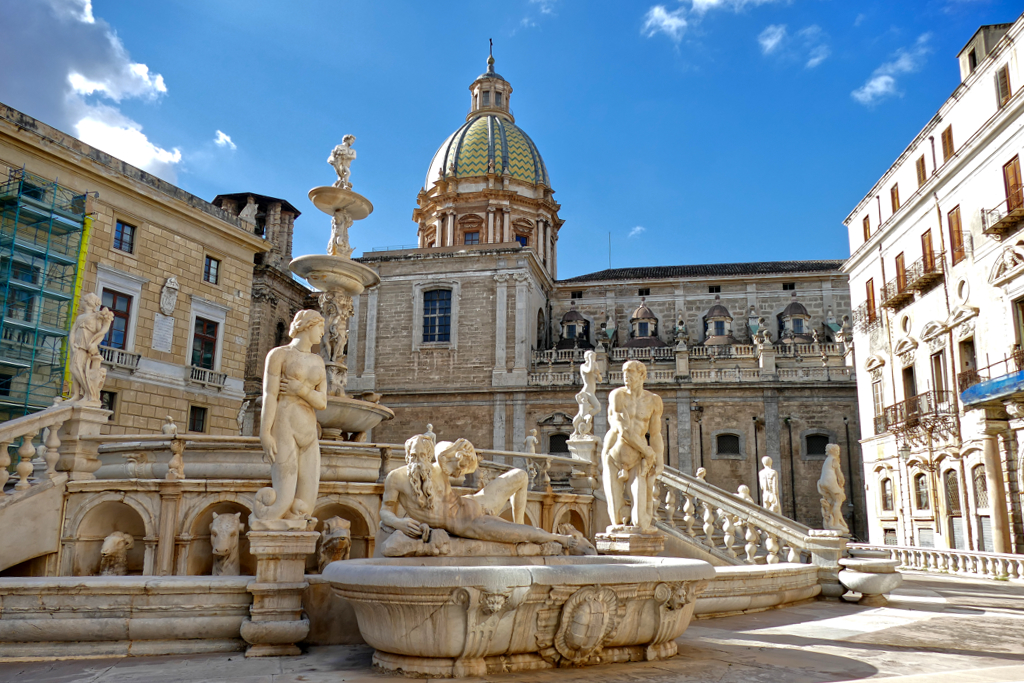
According to legend, in its early days, the square was called Piazza della Vergogna, or Square of Shame, because it is decorated with many sculptures in their birthday suits. Francesco Camilliani made this with the help of several artists from Florence. Don Pedro Álvarez de Toledo originally commissioned them for the park of his castle in Florence. Since the client fell into financial ruin, he sold the statues to Palermo. The ensemble was dismantled into 644 parts, shipped, and rebuilt at its current location in 1573.
The large fountain consists of three concentric basins and a central fountain column. Stairs lead across the outer pool on four sides to the middle pool. Statues of river gods and nymphs stand and lie at the pools and on the railings of the stairs.
Church and Monastery of Santa Caterina
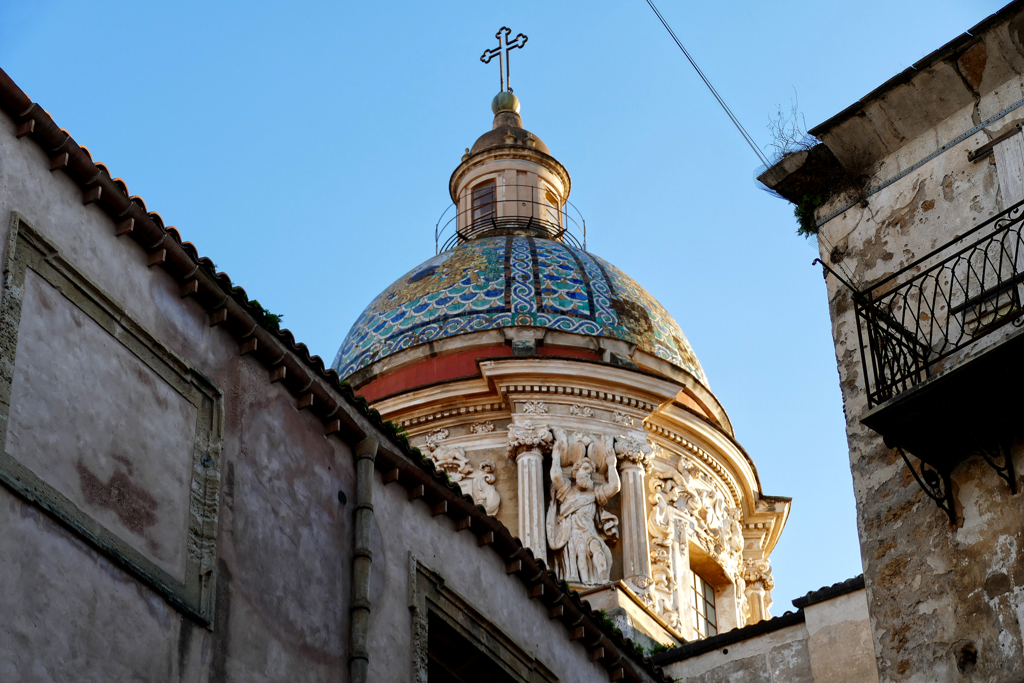
The Church of Santa Caterina of Alexandria is one of the most sumptuous Baroque monuments in historic Palermo, rising between Piazza Bellini and Piazza Pretoria. Its origins lie in a female Dominican monastery founded in the early 14th century, which over time became one of the city’s wealthiest and most prestigious convents, attracting daughters of noble families.
The present church was constructed mainly between 1566 and 1596, then lavishly embellished in the 17th and 18th centuries, reflecting both Counter-Reformation ideals and Sicilian taste for theatrical splendor. Behind its relatively sober exterior unfolds an overwhelming interior: polychrome marble inlays, gilded stucco, frescoes, sculptures, and a radiant dome celebrating the Dominican order. The church was designed so the cloistered nuns could attend services unseen, from hidden galleries and choir spaces.
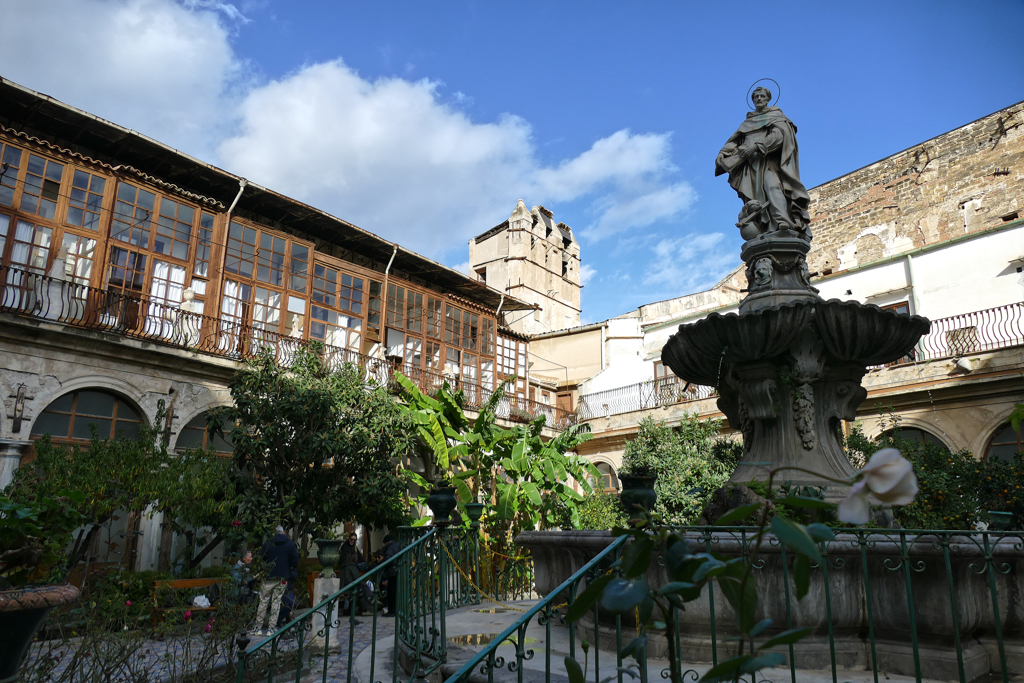
The monastery itself once occupied an entire city block and functioned as a self-contained world, with cloisters, refectory, cells, infirmary, and workrooms. Remarkably, Dominican nuns lived here in strict enclosure until 2014. After their departure, the complex was restored and opened to the public, allowing visitors today to walk through its silent corridors, admire the cloisters, and climb to the terraces, which offer some of the most beautiful panoramic views over Palermo’s historic center.
The Monastery Pastry Shop I Segreti del Chiostro
Within the former monastery operates the celebrated pastry shop I Segreti del Chiostro, which revives the ancient tradition of Dominican monastic confectionery. For centuries, the cloistered nuns of Santa Caterina prepared refined sweets inside the convent, both for religious feasts and as a discreet source of income, passing recipes orally from one generation to the next. Today, those recipes are carefully preserved and recreated using traditional methods and high-quality local ingredients.
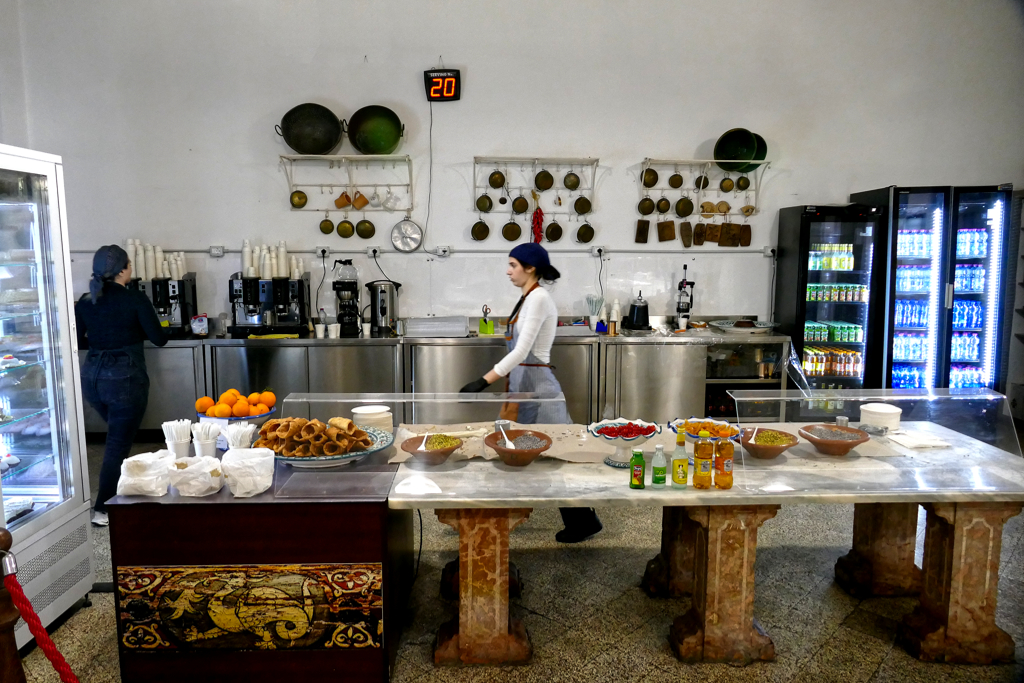
The dolceria specializes in classic Sicilian convent pastries such as cassatelle di Santa Caterina filled with sweet ricotta, minne di vergine, marzipan (frutta martorana), almond biscuits, and seasonal specialties like buccellati. Visiting the pastry shop is more than a culinary stop: it is an extension of the monastery’s history, where devotion, artistry, and gastronomy meet, allowing visitors to literally taste a living chapter of Palermo’s cultural and spiritual heritage.
In general, the pastry shop is open every day from 10 a.m. to 6 p.m.
Chiesa di Santa Maria dell’Ammiraglio
No sooner have you stepped onto Piazza Bellini, still dazed by the beauty and uniqueness of the monastery and the pastry shop, than you are already standing before the next historical and architectural wonder and masterpiece.
The church Santa Maria dell’Ammiraglio, better known as La Martorana, was founded in 1143 by George of Antioch, the powerful admiral of King Roger II. From the beginning, it was concoctedas a statement of prestige and cultural synthesis, blending Byzantine spirituality with Norman political power. Although the building was modified several times over the centuries—most notably with Baroque additions in the 17th and 18th centuries—its medieval core remains intact and breathtaking.
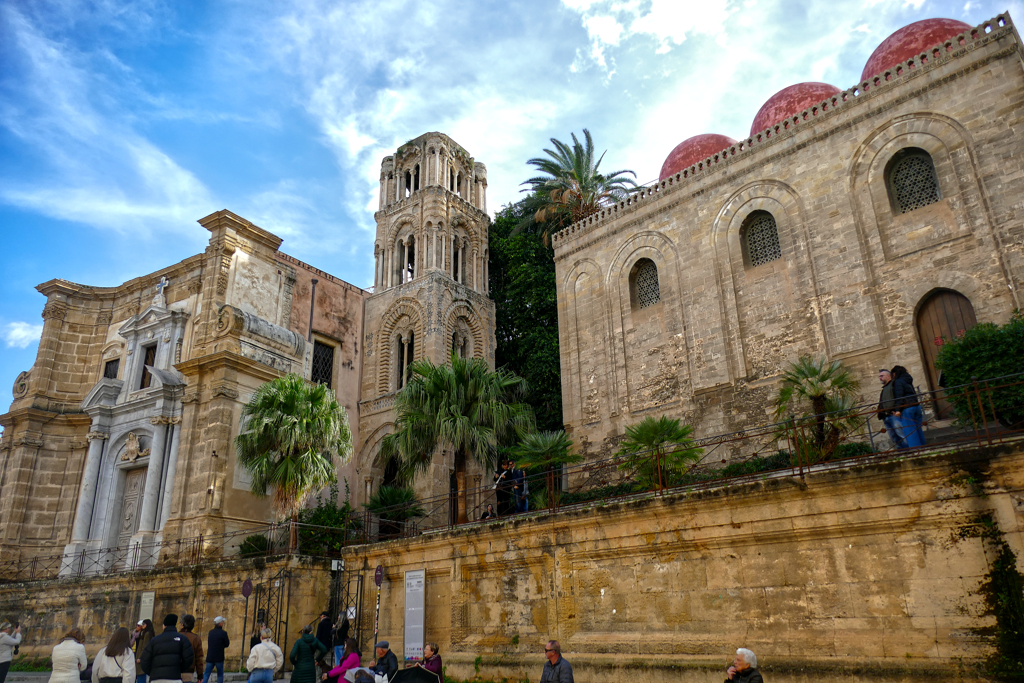
What makes La Martorana exceptional is its Byzantine mosaic cycle, among the finest preserved outside Constantinople. The interior is dominated by a golden, luminous atmosphere: Christ Pantocrator looks down from the dome, surrounded by angels, prophets, and scenes from the life of the Virgin Mary. Particularly famous is the mosaic showing King Roger II being crowned directly by Christ, a powerful image asserting the divine legitimacy of Norman rule in Sicily. Nearby, a mosaic portrait of George of Antioch presenting a model of the church to the Virgin reflects Byzantine court iconography rarely seen in Western Europe.
Chiesa di San Giuseppe dei Padri Teatini
The Piazza Bellini is just one block apart from the Quattro Canti, back on Via Vittorio Emanuele, is the church of San Giuseppe dei Teatini. Giacomo Besio, a member of the Theatine Order, provided the design, and the church was then built between 1612 and 1645.
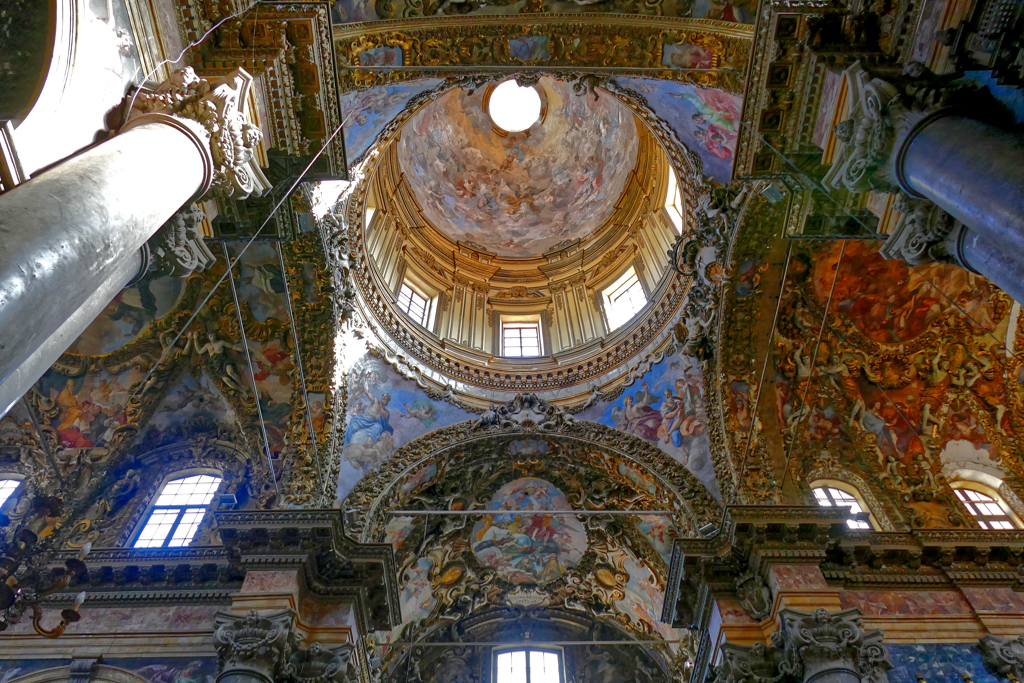
The three naves of the church are separated by columns made of Billiemi marble. Frescoes, paintings, stucco work, and sculptures lavishly decorate the walls and ceilings.
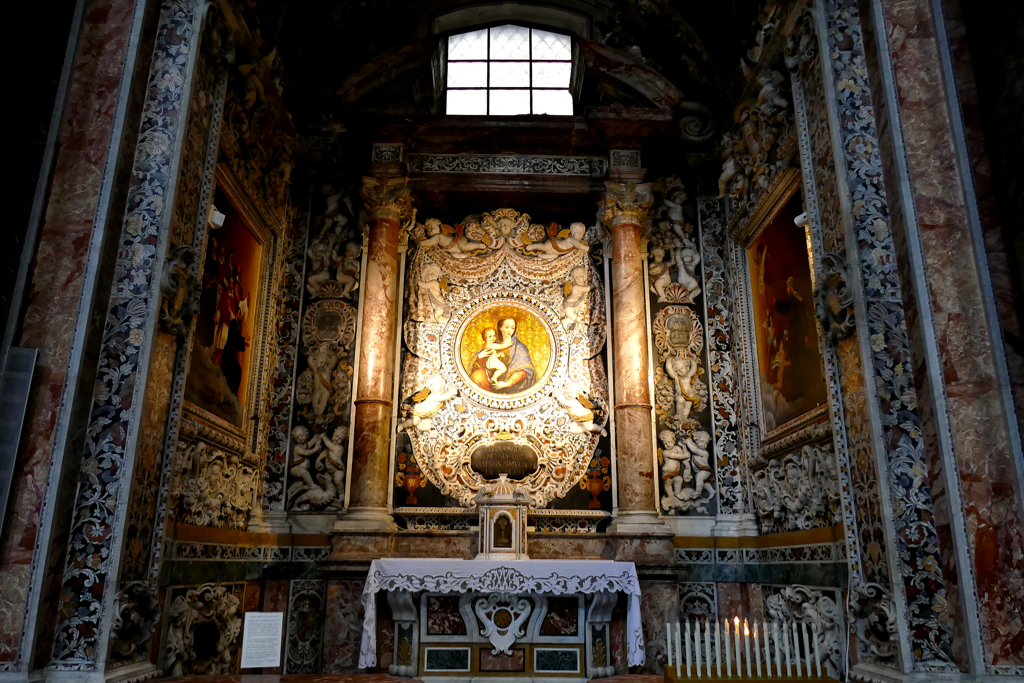
While you can visit the church for free, you have to pay a small entrance fee of 3 €uros to visit the crypt located below the church.
No Mafia Memorial
For decades, the stigma of the mafia has been attached to Sicily and all the towns, especially Palermo. Whether with fear and concern or with an excited horror and almost admiration that Hollywood films leave behind, parts of Italy and organized crime are inextricably linked in the news and, therefore, in our minds. Of course, the mafia was always only a small, although unfortunately very powerful, part of everyday Sicilian life. It reminded me a bit of Colombia, which to this day, even 40 years after the heyday of the drug lords, has not been able to completely shake off its stigma. This is sad and very unfair to the vast majority of the population.
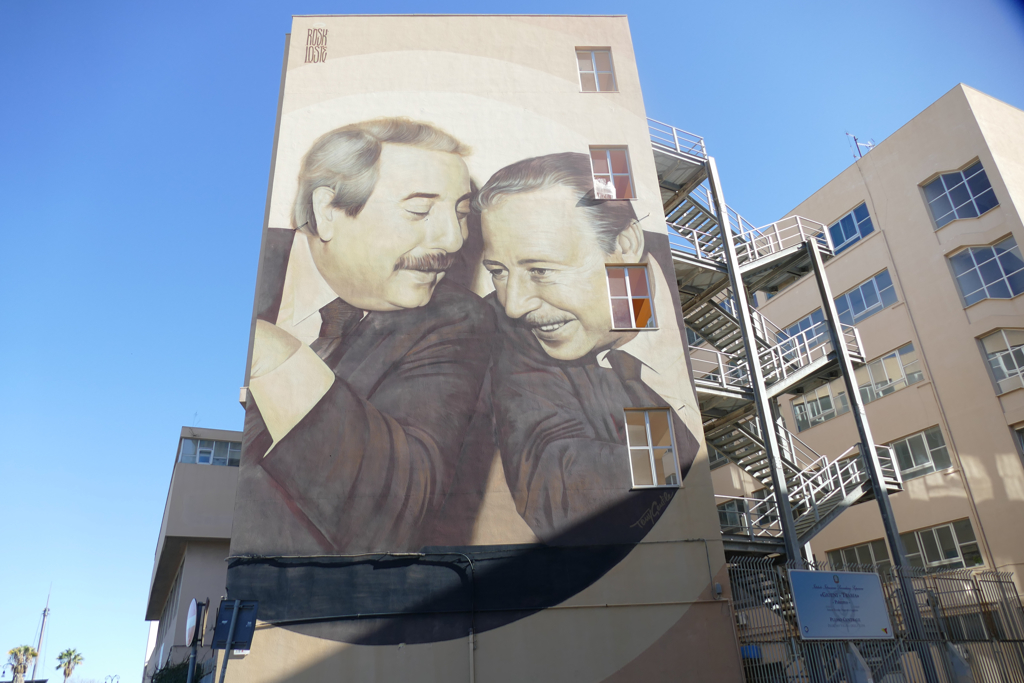
Therefore, for Sicilians, the topic has absolutely none of the supposed adventurous appeal that it has in other regions. When the Mafia murdered Italian judge Paolo Borsellino in 1992, around 15,000 citizens took part in the funeral procession in Palermo. Borsellino, a close friend and colleague of Giovanni Falcone, who was also murdered by the Mafia a few months earlier, was considered one of the leading figures in the fight against organized crime in Italy. The enormous crowd at his funeral procession underscored the importance of his work and society’s desire for justice.
Telling the Whole Story
Sicily has seen the birth of the Mafia, but also the determined fights against it. Therefore, a No Mafia Memorial was installed at Palazzo Gulì in 2017. The palace of a 19th-century merchant family facing the Via Vittorio Emanuele was chosen for this challenging endeavor on purpose.
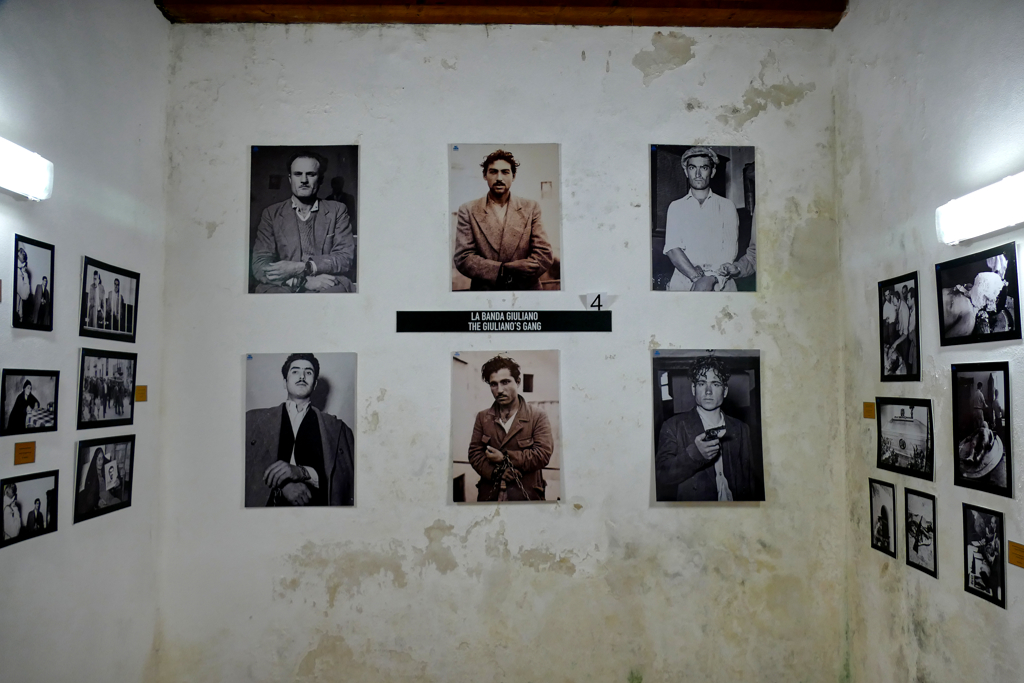
The museum consists of several exhibitions that trace the beginning and development of the Sicilian Mafia by explaining the social and economic conditions in the past that were fertile soil for organized crime. Also, they offer a journey through the most important historical events of the fight against the mafia in the city of Palermo.
The Memorial delves deeper into storylines that are often reduced to a few episodes and stereotypes by the film industry, but also by other media.
The No Mafia Memorial is open from Wednesday to Monday from 11 a.m. to 5 p.m., and the visit is free of charge.
My Tip
If you want to learn what impact the Mafia had on the lives of ordinary people, far from the often eerily fascinating and almost glamorous narrative of The Godfather and other blockbusters, I highly recommend the charming series The Mafia Only Kills in Summer. In two seasons, the series follows the fortunes and mostly misfortunes of the Giammaresi family in Palermo. The story is heartfelt, very funny, terribly sad, exciting, and very, very human.
Chiesa del Santissimo Salvatore
A bit further up, you’ll reach the outstanding church Chiesa del Santissimo Salvatore. Here you have to pay a small entrance fee of two €uros, yet, if you ask me, it’s worth every cent.
In 1072, during the Norman conquest, the site of today’s Baroque masterpiece hosted a Basilian monastery and church. Fast forward just a few centuries, and you’ll find tales of royal intrigue: Constance, Queen of Sicily, spent her youth cloistered here, tucked away like a medieval Rapunzel thanks to a grim prophecy that her marriage would doom the kingdom. Spoiler alert: she got married anyway.
By 1501, the monastery had swapped the Eastern Rite for Latin, and in 1528, a new church rose from the site. But as nothing in Palermo comes easy, the house of worship faced a major setback when an earthquake in 1726 wrecked its dazzling main altar.
Gilded Glory
Step inside and prepare to be dazzled. The elongated dodecagon plan creates an otherworldly sense of space. The walls shimmer with polychrome Sicilian marble, and as you gaze upward, you’ll spot amazing stucco and a dome interior once awash with frescoes by Vito D’Anna, depicting the fragmented yet still radiant Glory of St Basil.
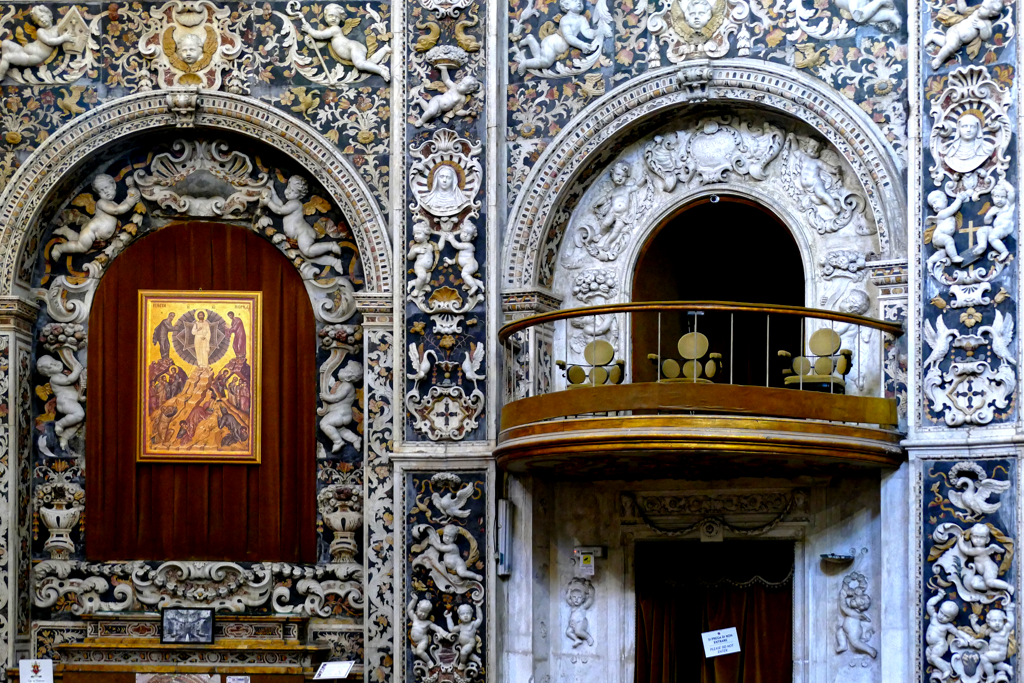
The chapels don’t skimp on spectacle, either. The Chapel of St Basil boasts a frescoed mini-dome by Filippo Tancredi, while the entrance staircase flaunts Vito D’Anna’s vivid scenes of St Basil healing a child and preaching to the masses. The apse, meanwhile, stages a dramatic marble tableau featuring Christ on the cross, flanked by Archangel Michael, Saint Cajetan, and Saint Mary Magdalene. Overseeing it all is Cedri’s resplendent Coronation of Santa Rosalia.
Whether you’re a history buff, an art lover, or just a sucker for a good story, this baroque beauty is a must-visit. Come for the architecture and stay for the tales of queens, quakes, and artistic triumphs. The church is open every day from 10 a.m. to 1 p.m. and then again in the afternoon from 2 p.m. to 4.30 p.m.
Cattedrale di Palermo
And just a few steps further, we come to the Queen of Palermo’s houses of worship, the Cathedral of Maria Santissima Assunta. In its current form, the building was completed in 1185 in the Norman-Arabian style and underwent several renovations over the centuries. A cathedral was built on the site of the current building already in the 6th century under Pope Gregory the Great. The Arabs had converted this cathedral into a mosque. After Roger I’s conquest of Palermo, the mosque became the seat of the archbishop again.
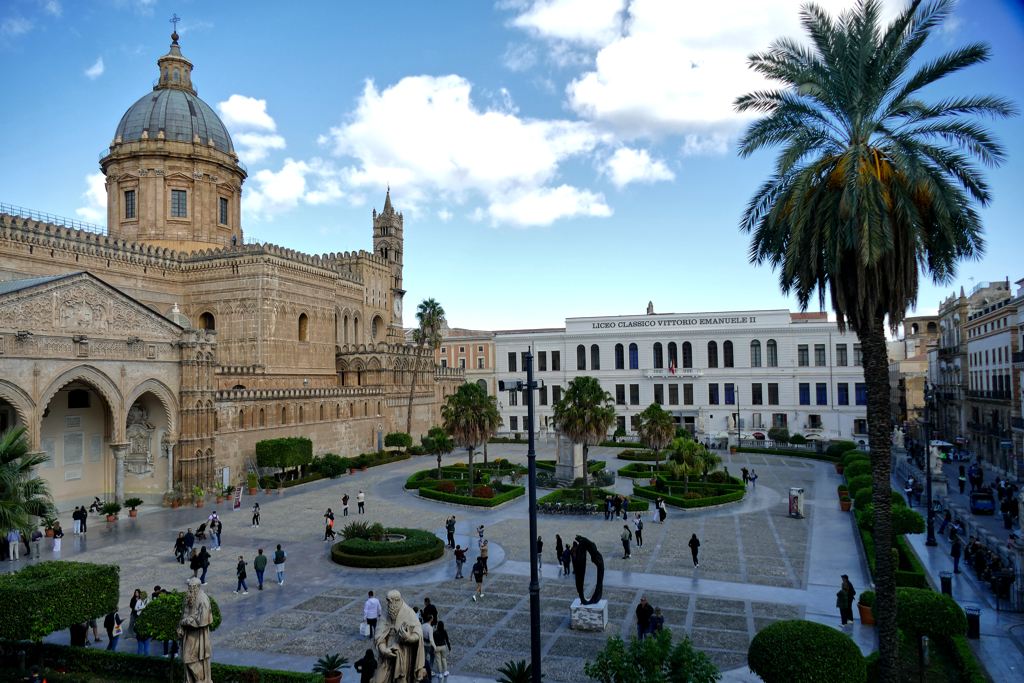
When the old cathedral was badly damaged by an earthquake in 1169, it was demolished and replaced by today’s new building. The cathedral underwent its last major renovation in the 19th century when the old defensive tower in front of the west facade was given a neo-Gothic addition. Since the renovation in the 18th century, the royal tombs have been placed in a side chapel at the back of the right aisle. Originally, they stood to the right and left of the main apse. The entrance to the treasury is to the right of the Chapel of Saint Rosalia. The highlight of the collection is a crown modeled on the coronet of the Byzantine emperors.
Getting High
But like the Milan Cathedral, the cathedral’s main attraction is climbing to its roof. Visiting the upper areas of the building is a unique experience. The climb takes place via narrow spiral staircases and corridors that lead to the roof terraces of the cathedral. From there, you have a breathtaking view of Palermo, the sea, and the mountains. You can also get a close look at the cathedral’s architectural details, such as the towers and domes. However, the climb to the roof is not barrier-free and requires a certain level of physical fitness. On sunny days, sunscreen and a hat are recommended as there is little shade on the roof.
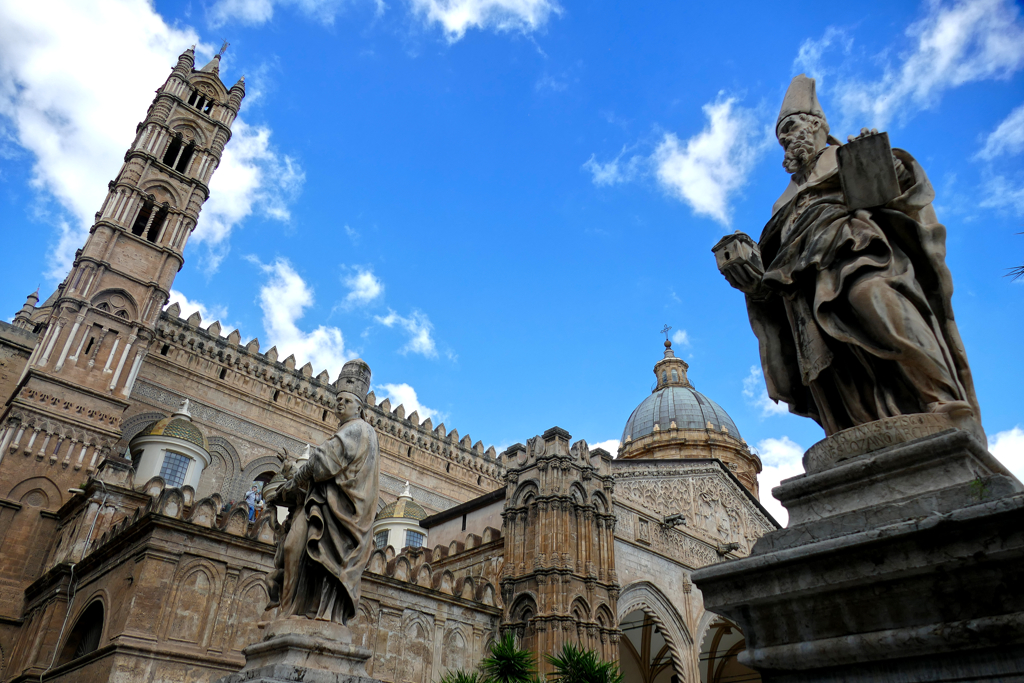
While the cathedral is open from Monday to Saturday between 7 a.m. and 7 a.m. and Sundays from 8 a.m. to 1 p.m. and then again in the afternoon from 4 p.m. to 7 p.m., visiting hours in the roofs, the royal tombs, the crypt, and the treasury are more limited.
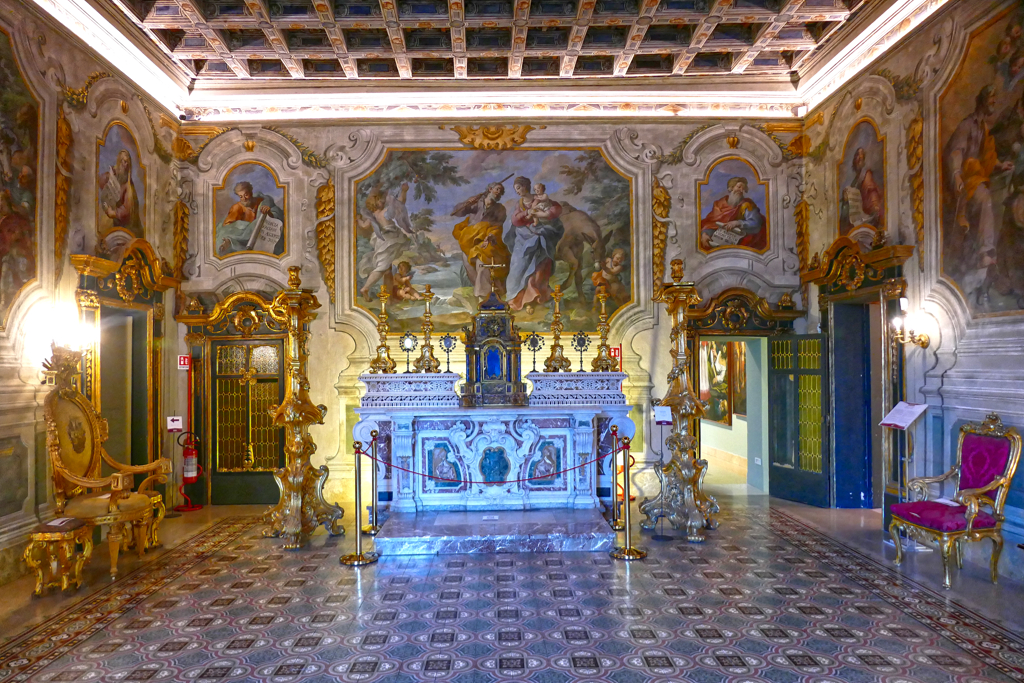
It’s best to find out the exact opening times before your visit on their Website. There you can also buy the ticket that’s right for you, as there are different combos, the most complete being a visit to the above-mentioned parts as well as the Diocesan Museum across the street for 15 €uros.
Creepy Credence
And so I’m standing in front of the gate of the Santa Rosalia Chapel, trying to get the best possible picture of the silver and gilded splendor of the area where the reliquary urn containing the body of Saint Rosalia is kept.
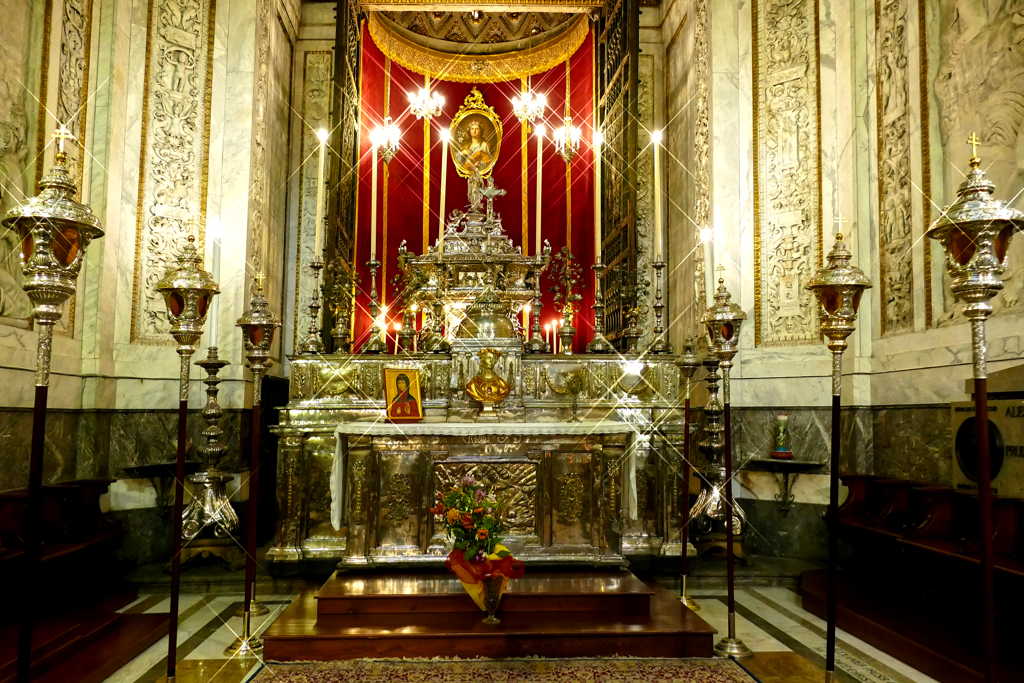
Suddenly, a lady resolutely pushes herself in front of me. She’s a little hunched over, and as she gets down on her knees right next to the bars, I see that something in her jacket seems to be moving. And sure enough, now that she opens the jacket further, I see a gray, somewhat disheveled poodle! The lady continually whispers something into the pooch’s floppy ear. Then she takes each of his front paws in one hand and brings them together in prayer. I can hardly believe my eyes: She teaches the dog to pray!
While the two beings are quietly praying, I walk towards the exit, still a little stunned. Next to the door is a sign with a bunch of pictograms about what is forbidden in the cathedral.
One of these bans applies to dogs.
Villa Bonanno
To recover from the slightly disturbing incident at the Cathedral, I decide on a short break on a park bench at the adjacent Villa Bonanno. This beautiful park connects Palermo’s two main attractions, namely the Cathedral and the famous Norman Palace. Its lush greenery, elegant palm trees, and colorful flowerbeds offer a relaxing retreat from the strain of sightseeing. Named after Palermo’s former mayor Pietro Bonanno, it was designed by architect Giuseppe Damiani Almeyda in the early 20th century.
Statues and monuments are scattered throughout the garden, adding to the historical ambiance. These include busts of notable figures and decorative elements that harmonize with the gardens. One of the villa’s most notable attractions, however, is the ancient Roman archaeological remains, including mosaics and fragments of structures. As a matter of fact, Villa Bonanno combines natural beauty with a touch of history.
What’s A Villa?
Maybe this is the right moment to make clear that a villa in Italian doesn’t refer exclusively to a mansion. That would be rather a palazzo. Instead, Villa describes a manor or estate. Therefore, it might be confusing that the Villa Bonanno is not some fat crib but a spacious park.
Palazzo dei Normanni
Far more than just a touch of history offers the famous Palazzo dei Normanni, also known as the Palazzo Reale. The oldest parts of the complex are of Phoenician-Carthaginian origin from 800 BC! After the Norman conquest of Sicily, Roger II built this residence in 1130 AD. In fact, he made it his seat of government.
In the 16th century, the viceroys of Sicily rebuilt the old Norman palace and moved their headquarters there. During this reconstruction, three of the four towers were demolished. The east wing received a new facade as well as an inner courtyard in the Renaissance style. Ever since Sicily was annexed to Italy, the palace housed state authorities and military command posts. It has been the seat of the Sicilian Parliament since 1947.
The state rooms used by the regional government are only open to the public through guided tours. The Sala di Ercole, the Hercules Hall, serves the Parliament as a majestic assembly room. Giuseppe Velázquez frescoed in depicting the deeds of Hercules in 1799.
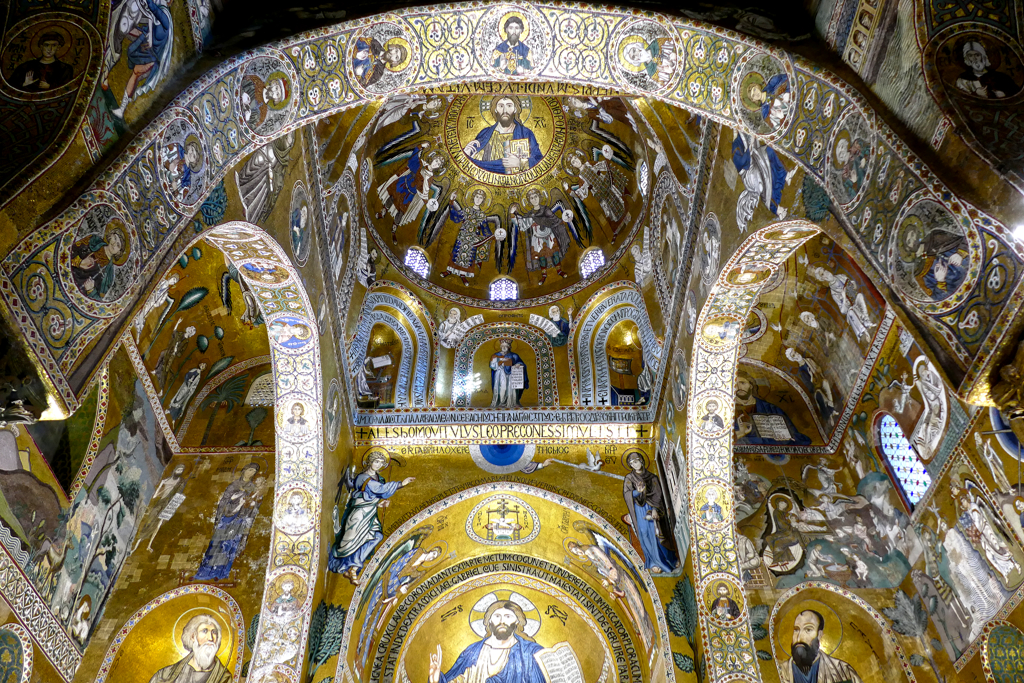
On the first floor is the highlight of the building, the Cappella Palatina court chapel.
Going to the Chapel
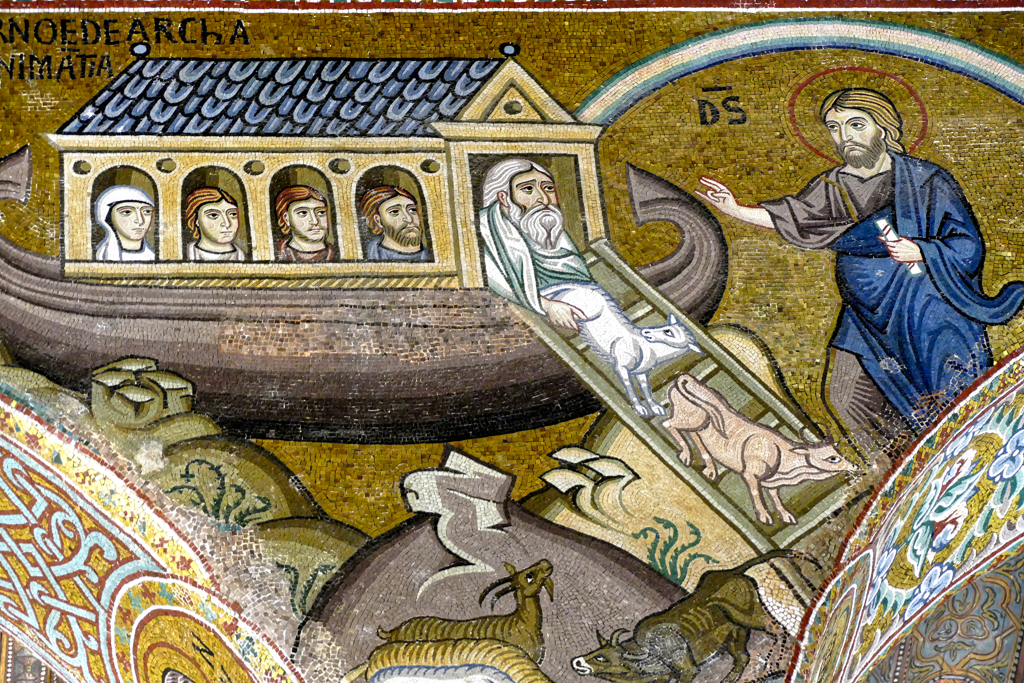
Roger II commissioned the Cappella Palatina between 1132 and 1140 AD in the Norman-Arab-Byzantine style. Artistic marble and porphyry adorn the floor while massive marble columns with Corinthian capitals support the richly embellished wooden ceilings. But the highlight is undoubtedly the magnificent mosaics on the walls and in the dome.
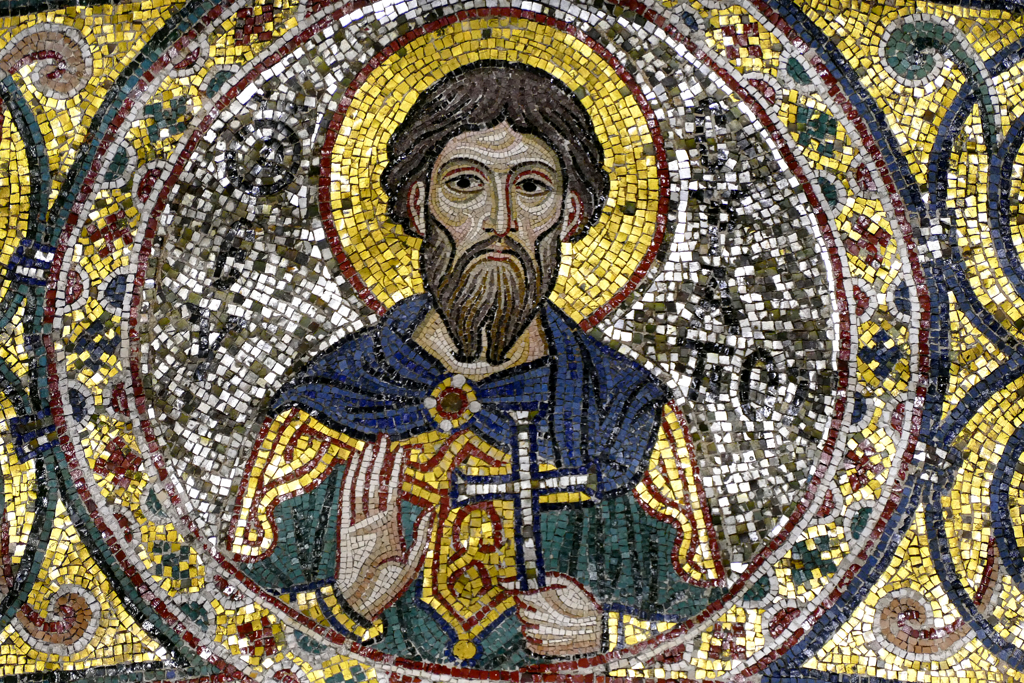
While eight angels line up around Christ as Pantocrator in the dome, depictions of the lives of Christ and Paul, as well as episodes from the Old Testament, are depicted on the side walls.
On Sundays, Holy Mass is celebrated at 10 a.m. and is open to the public.
The Palazzo dei Normanni is said to be Palermo’s most significant landmark, and I totally agree. The sight of the mosaics at the Cappella Palatina, but also at some of the Royal Apartments, simply blew me away. The entire complex can be visited for a regular entrance fee of 15.50 €uros every day from 8.30 a.m. to 4.30 p.m. On Sundays, they are closing already at 12.30 p.m.
Byzantine Mosaics in Sicily
Byzantine mosaics are among the most important visual media of the Middle Ages. They consist of small, colored glass and stone tesserae. Often, they have a gold background that makes the light glitter and makes the depicted figures appear to emerge from a celestial sphere. Their motifs follow a clear, theologically influenced pictorial order. At the center are Christ Pantocrator, Mary, prophets, apostles, and scenes from the Old and New Testaments. The mosaics were produced in a strictly hieratic style by highly specialized workshops, whose artists often had Byzantine training. In the Mediterranean region of the 12th century, these traditions also merged with local and Islamic influences to form a distinctive Norman-Arab-Byzantine art.
This interplay is particularly impressive in the Palazzo dei Normanni in Palermo, especially in the Cappella Palatina. The walls and vaults are covered with luminous glass and gold mosaics depicting biblical scenes and saints. Above it all, Christ Pantocrator reigns in the dome. Complementing this, other palace rooms—such as the Sala di Ruggero—feature non-biblical animal and plant motifs reminiscent of Oriental models. The result is a harmonious synthesis of Byzantine iconography with Arabic-influenced ornamentation and Norman representational art.
Similarly elaborate, but more focused on the liturgical space, are the works in Cefalù Cathedral.
My Tip
If you love mosaics as much as I do, don’t miss out on a visit to the absolutely mind-blowing Villa Romana del Casale. It stands a bit secluded on the outskirts of the town of Piazza Armerina. Mosaics made from an incredible 120 million individual stones cover the late Roman villa in an area of around 3,500 square meters. You can find out more about the villa in my post The Valley of Doric Temples of Agrigento And La Villa Romana del Casale di Piazza Armerina: A Day Trip Not to Miss.
Kalsa
As I mentioned above, the Via Vittorio Emanuele connects the city gates Porta Nuova in the west with Porta Felice in the east. The latter is a stone’s throw from the shores of the Mediterranean in Palermo’s Kalsa district. It is one of the city’s most historic and culturally significant areas. Its story spans centuries, reflecting Palermo’s diverse influences and transformations.
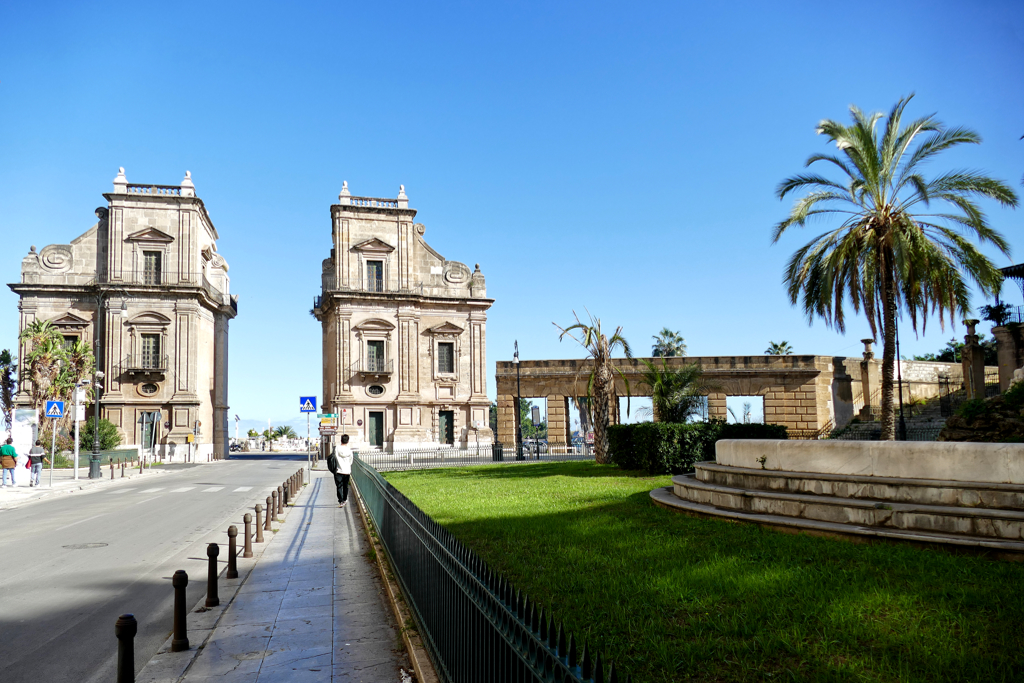
The Kalsa was established during the 9th–11th centuries when the Arabs ruled in Sicily. It was a fortified citadel and the administrative center of the Emirate of Sicily. It featured the emir’s palace, mosques, and administrative buildings. Therefore, the entire neighborhood was designed in the sophisticated Islamic urban style with narrow streets, gardens, and fountains.
After the Norman conquest in 1072, the area retained its prominence. Nevertheless, the Kalsa district evolved under the various successive rulers. Each of them left their architectural and cultural marks. Then, during the Baroque period, the Kalsa became home to aristocratic palaces and churches. They are still dominant features of this neighborhood.
Tables Turn
By the 19th and early 20th centuries, the neighborhood had fallen into disrepair, becoming one of Palermo’s poorer quarters. Also, the bombings of World War II further damaged the area, leading to significant urban decay.
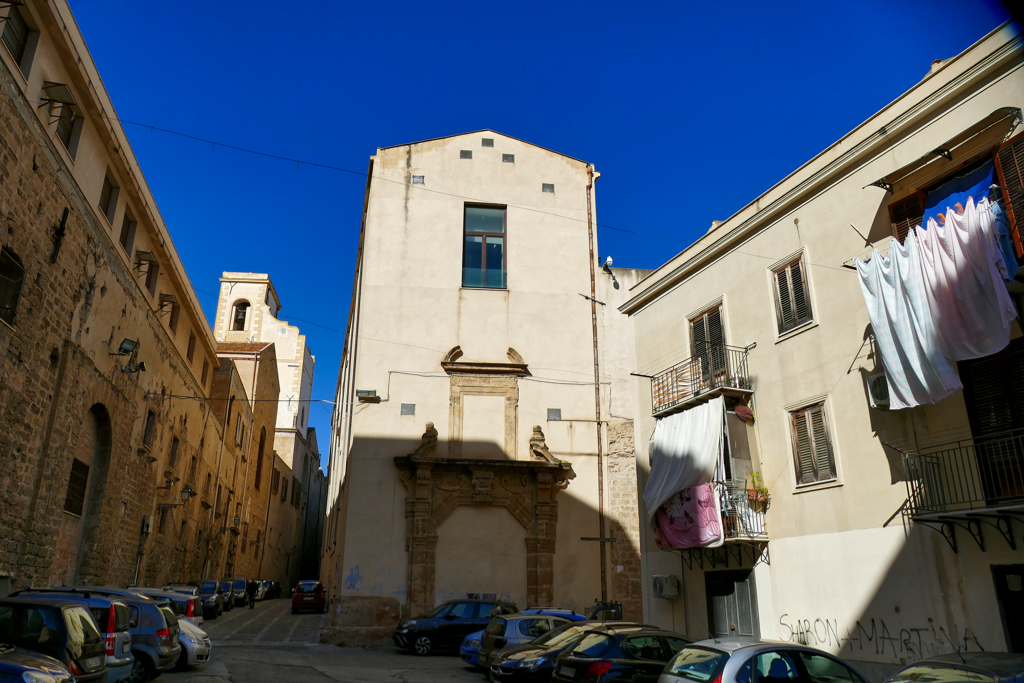
Nevertheless, the Kalsa has undergone a significant renaissance and is a vibrant neighborhood that combines historical charm with modern energy. While much of the Kalsa has been revitalized, parts of the neighborhood still face challenges, such as economic inequality and unfinished restoration projects. However, its blend of old-world charm and contemporary culture makes it one of the most fascinating areas in Palermo.
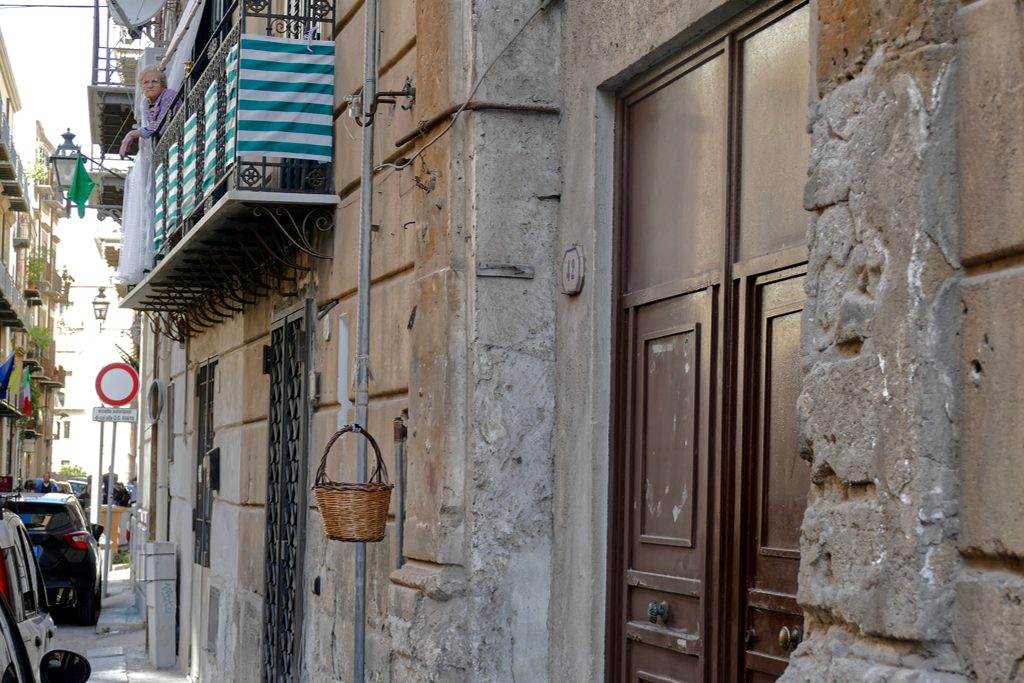
Whether you’re drawn by its rich history, architectural treasures, or vibrant modern life, the Kalsa remains a quintessential part of Palermo. The Kalsa is now a center for art, culture, and history, attracting both locals and tourists. The neighborhood boasts beautifully restored squares and streets, and a promenade offering stunning views of the sea.
Villa Giulia And Orto Botanico
The Villa Giulia is a park in Palermo. It is located east of the botanical garden and across from the Foro Italico waterfront area.
The garden was built in a place that was located outside the city walls in 1778. In fact, it was the first public park in Palermo and was named after Giulia, the wife of Viceroy Guevara.
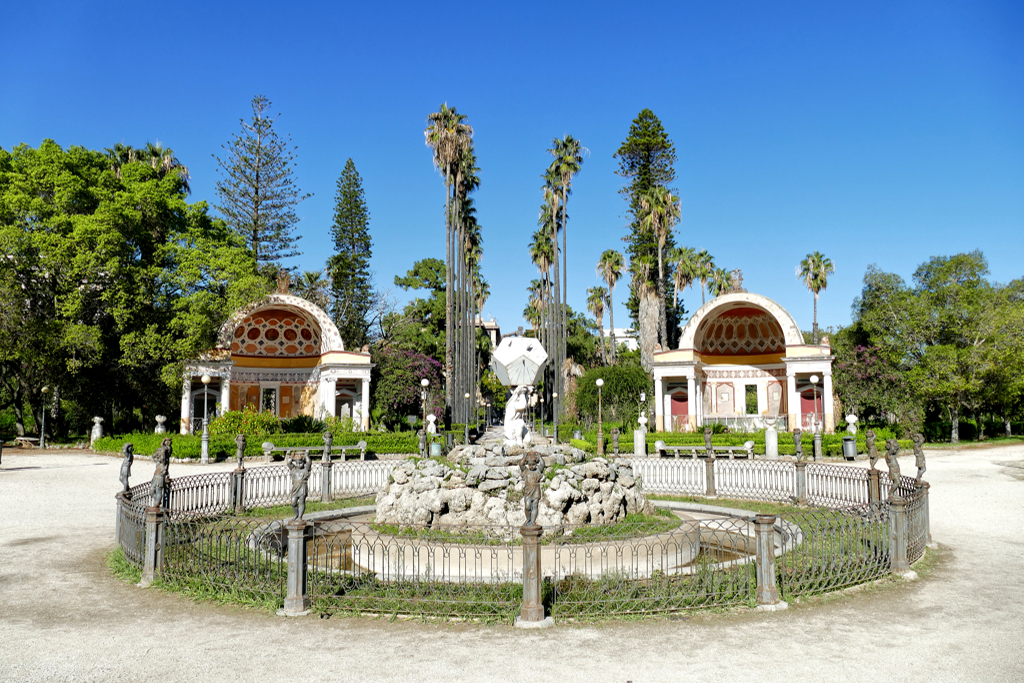
In 1872, four exedras designed by Giuseppe Damiani Almeyda were built in the central square in the neoclassical style. In the middle is a fountain with a sundial shaped like a dodecahedron.
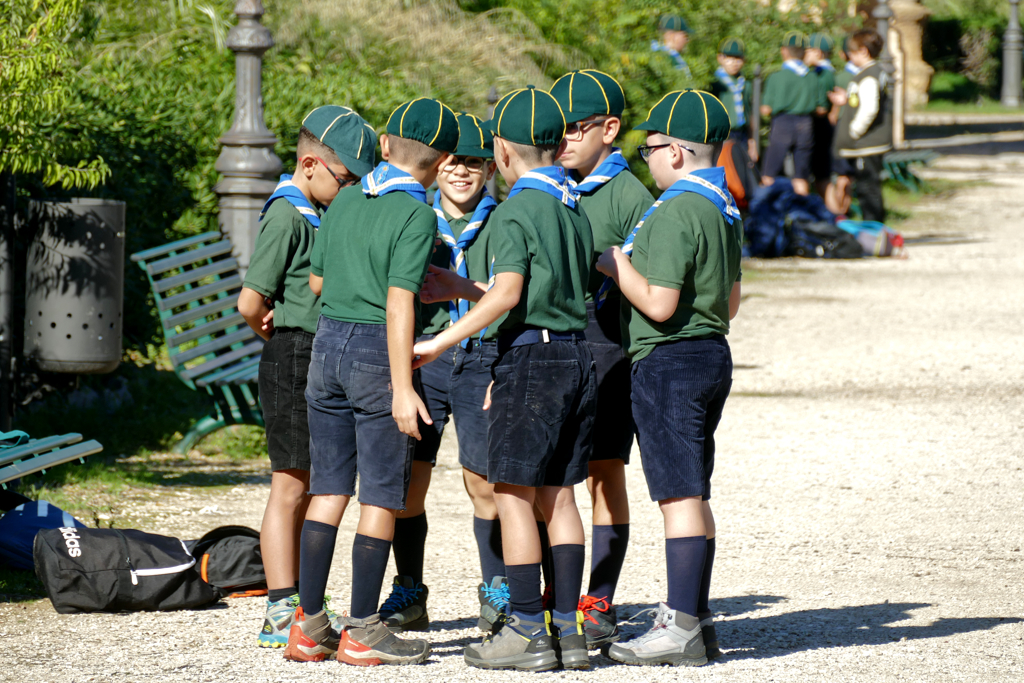
To the east of Villa Giulia is the Orto Botanico di Palermo, a botanical garden that is used by the University of Palermo as a teaching and research facility and is open to visitors. It is currently home to around 12,000 different species.
The Villa Giulia is open every day from 7 a.m. to 8 p.m.
Parks’N’Promenades
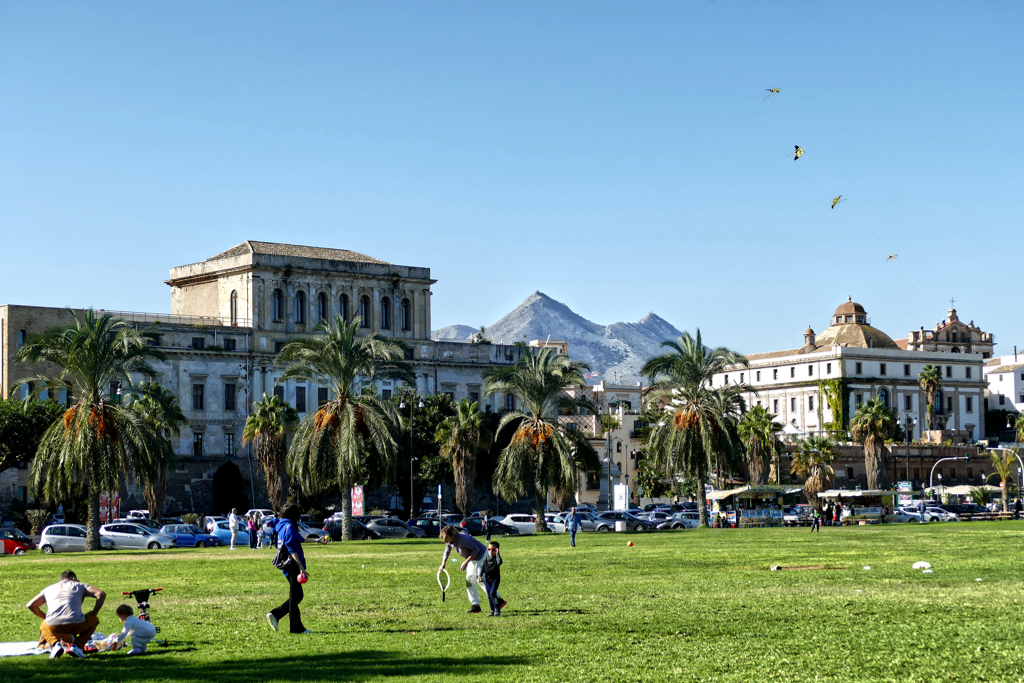
Since the Kalsa district borders the Mediterranean Sea, it is a popular area for locals to enjoy their leisure time. From the small marina Porticciolo di Sant’Erasmo, promenades, parks, playgrounds, and sports fields stretch all the way to the harbor.
Pubs’N’Palaces
Families and sports enthusiasts enjoy the spacious meadows along the waterfront. However, the younger, hip residents meet in the trendy cafes, restaurants, and bars that are springing up in Kalsa.
The restoration and gentrification of the district have also led to the venerable halls of the old palaces being transformed into museums and galleries.
The most prominent of these buildings is certainly the Palazzo Abatellis. The architect Matteo Carnilivari designed it in 1495. It was originally the residence of Francesco Abatellis, a prominent nobleman and port master. This stunning example of Gothic-Catalan architecture features an elegant blend of Gothic and Renaissance styles, characterized by its intricate stone carvings, graceful arches, and a central courtyard.
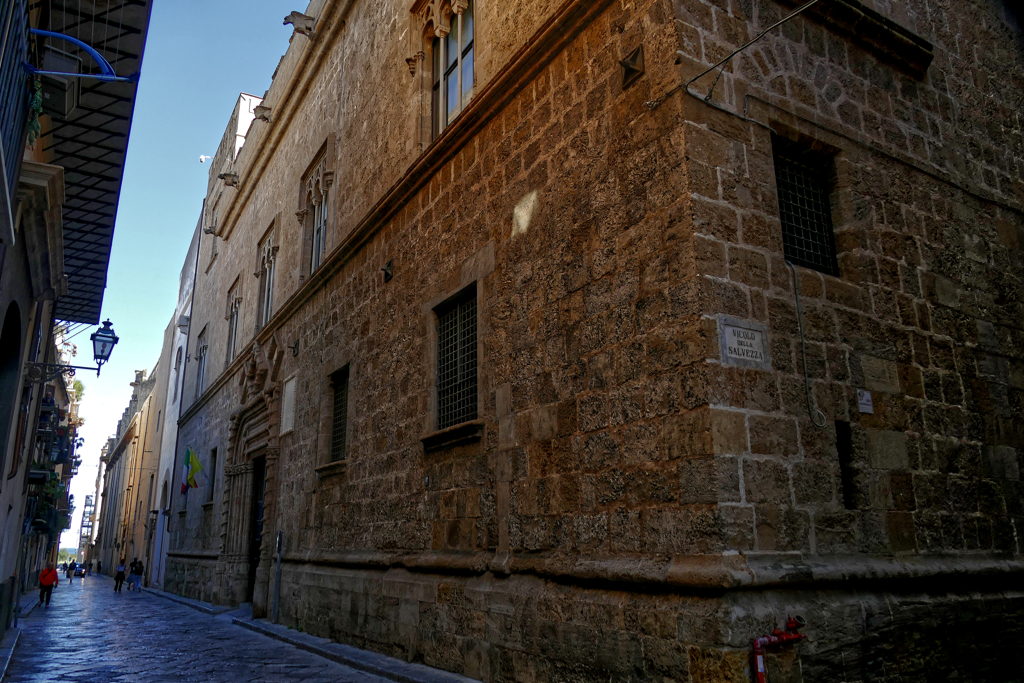
After Abatellis’ death, the building served various purposes, including as a monastery. In 1954, it became the home of the Regional Gallery of Sicily in 1954. The gallery houses an impressive collection of medieval and Renaissance art, including Antonello da Messina’s masterpiece Annunciata and the striking Triumph of Death fresco.
The museum is open from Tuesday to Sunday between 9 a.m. and 6.30 p.m. On Sundays, they are closing already at 1 p.m. The general entrance fee is 8 €uros.
Alongside Via Butera
As you continue down the street from Palazzo Abatellis towards the water, it is worth turning left into Via Butera. Here you’ll find two other impressive palaces.
At number 24 is the Palazzo Trinacria. Architects Andrea Gigante and Vincenzo Trombetta designed this remarkable example of 19th-century architecture in 1840 for Giuseppe Lanza Branciforte, the Prince of Trabia. It was the first building in the city that was explicitly planned as a hotel. Not only that, the 54 elegant rooms had their own bathroom. It also had one of the city’s first elevators. Over the years, the hotel hosted numerous illustrious guests, including Giuseppe Garibaldi.
The building was sold at the end of the 19th century. Today it is owned by the Fondazione Pietro Barbaro. Although there are also exhibitions taking place in the rooms on the ground floor, it should be noted that the palazzo cannot be visited outside of those halls.
Right next door is the Palazzo Butera, which is honestly much more worth visiting than the Palazzo Trinacria. Palazzo Butera is a magnificent Baroque palace commissioned by the Branciforte family, one of Sicily’s most important noble dynasties, in the late 17th century. It has magnificent architecture, elaborate frescoes, and impressive views of the Gulf of Palermo.
In recent years, the art collectors Massimo and Francesca Valsecchi have extensively restored and transformed Palazzo Butera. Today, it is a cultural center that combines historical splendor with modern artistic and intellectual activities.
The palace can be visited every day between 10 a.m. and 7 p.m. for a general entrance fee of 10 €uros.
Puppet on a String
Just around the corner from the Palazzo Butera is another must-see attraction, namely the Puppet Museum, Museo Internazionale delle Marionette Antonio Pasqualino. Obviously, it is dedicated to the rich Sicilian tradition of puppetry. Antonio Pasqualino founded the museum in 1975. Today, it houses an impressive collection of over 4,000 puppets, marionettes, and shadow theater pieces from around the world.
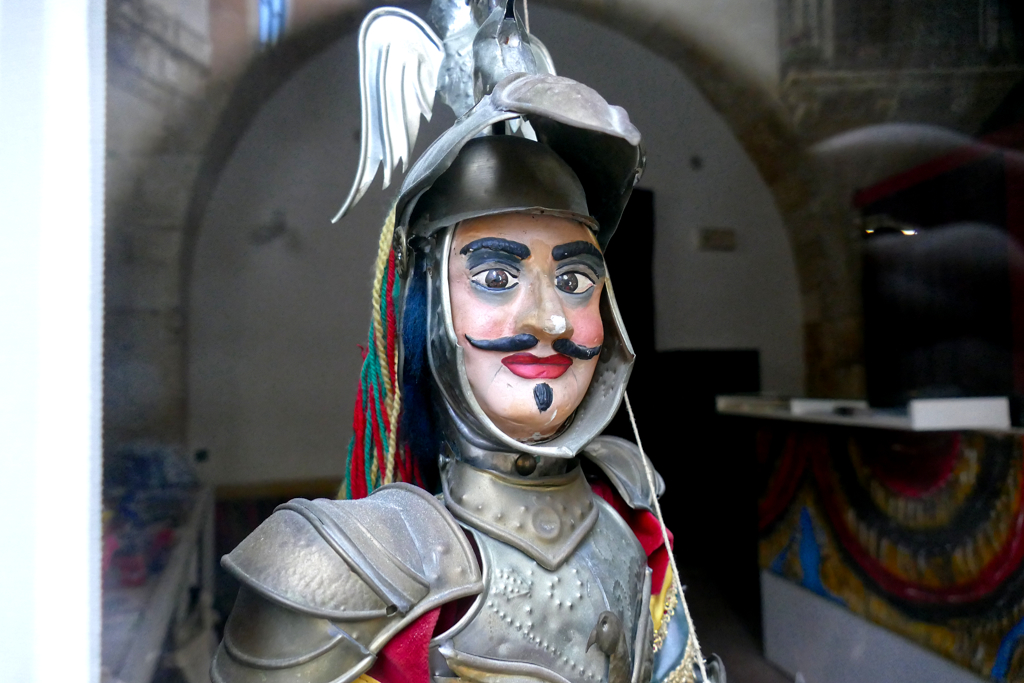
The focus is, of course, the Sicilian Opera dei Pupi, an art form recognized by UNESCO. The museum also organizes performances, festivals, and workshops to preserve and promote this unique cultural heritage for future generations.
The museum is open every day from 10 a.m. to 6 p.m., however, on Sundays and Mondays, they close at 2 p.m. The general admission is 5 €uros.
Puppet shows take place on Mondays at 11 a.m. and from Tuesday to Saturday at 5 p.m. The show lasts 45 minutes, and the general entrance fee is 10 €uros.
Modern Art Gallery Sant’Anna
Another worthwhile exhibition space to visit is the municipal Museum of Modern and Contemporary Art, the Galleria d’Arte Moderna Sant’Anna. Founded in 1910 to document the development of modern art in Sicily and Italy, the collection has been housed in the former Franciscan monastery and the adjacent Palazzo Bonet since 2006.
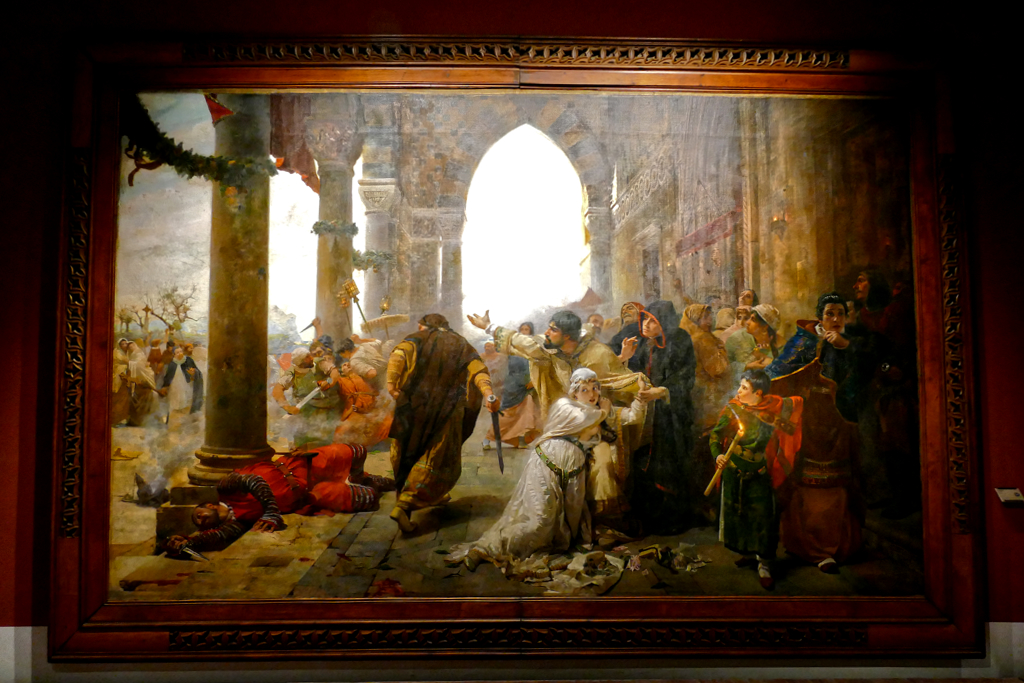
The collection primarily comprises paintings and sculptures from the late 19th to the 20th century. It showcases works from many Italian artistic movements, from Naturalism and Liberty to early modernism. In addition to the permanent collection, the museum regularly hosts temporary exhibitions, educational programs, and cultural events.
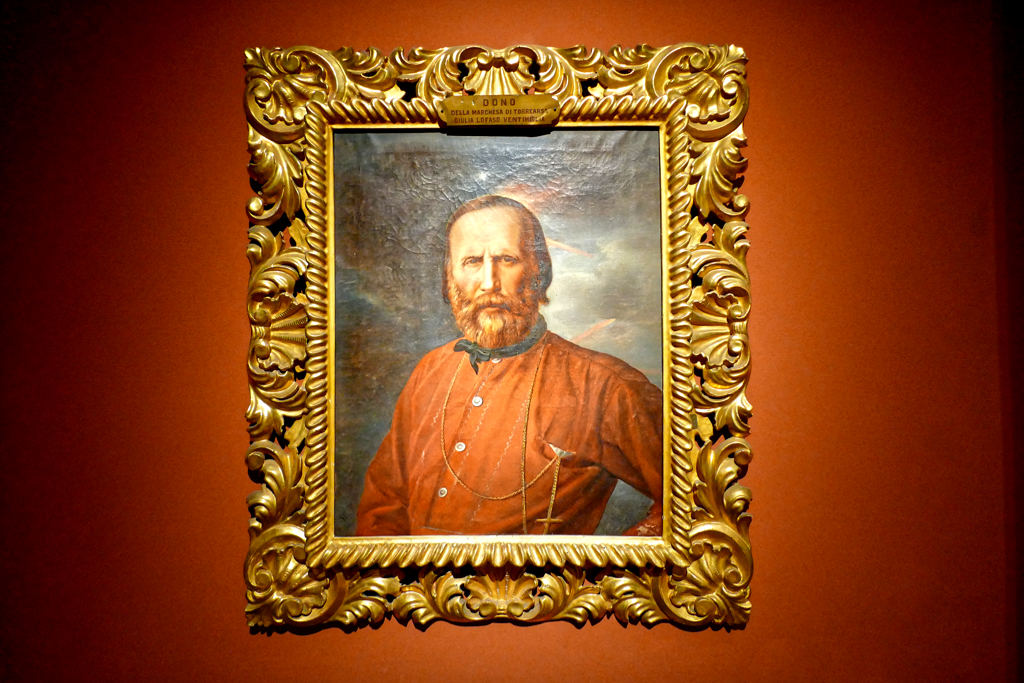
The Galleria d’Arte Moderna Sant’Anna is open Tuesday through Sunday from 9:30 a.m. to 6:30 p.m., and admission is 8 €uros.
There’s More
While Palermo’s main cultural and architectural attractions are clustered around Via Vittorio Emanuele, there are, of course, some unmissable sights and buildings to visit outside of this radius. Via Roma is one of Palermo’s main thoroughfares. It was built as a wide, elegant street in the late 19th and early 20th centuries as part of urban modernization efforts. Although it still has primarily architectural and historical significance, it has definitely lost its old splendor and glamor.
Chiesa di Sant’Antonio Abate
Sant’Antonio Abate at Via Roma 203 is a Gothic-style Roman Catholic church in the very vicinity of the historic Vucciria market. It is a testament and a cornerstone of Palermo’s cultural and spiritual landscape, reflecting the city’s rich heritage.
Dating back to 1220, the church originally stood near the medieval city walls. These walls featured two towers, which were erected during Muslim rule as part of Palermo’s fortifications. By the late 16th century, urban expansion led to the demolition of one tower. The other one became the foundation of today’s bell tower.
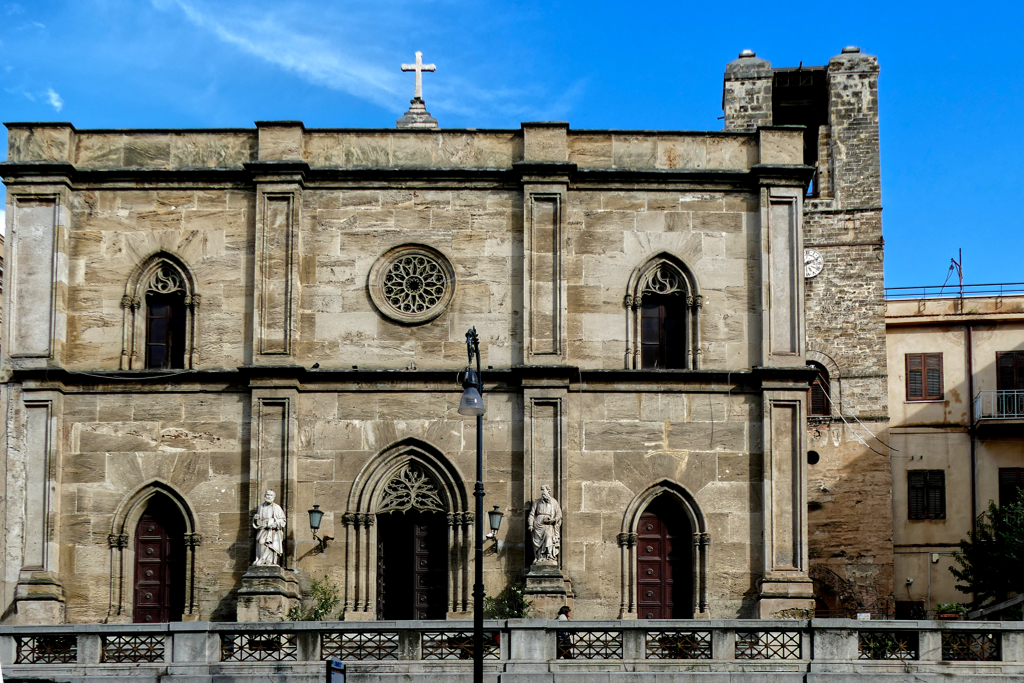
Over the centuries, Sant’Antonio Abate underwent multiple reconstructions, with its facade likely evolving after an 1823 earthquake. One enduring feature is the revered wooden icon of Ecce Homo. Originally installed in the 18th century, the icon is now housed inside the church. However, a replica can be admired in a marble-and-glass box on its exterior wall.
The church is open every day from 9.30 a.m. to 12.30 p.m. and then again from 1.30 p.m. to 4.30 p.m. The general entrance fee is 2.50 €uros.
Chiesa di San Domenico
San Domenico is a Dominican church, obviously. It is located in Piazza San Domenico, directly on the main street Via Roma. To the east, it borders the Oratorio del Rosario di San Domenico, which belongs to the monastery.
The first Dominican church from the 13th century in the Gothic style was followed by a Renaissance building from 1480, which was renovated in the middle of the 17th century by the Dominican priest and architect Andrea Cirrincione.
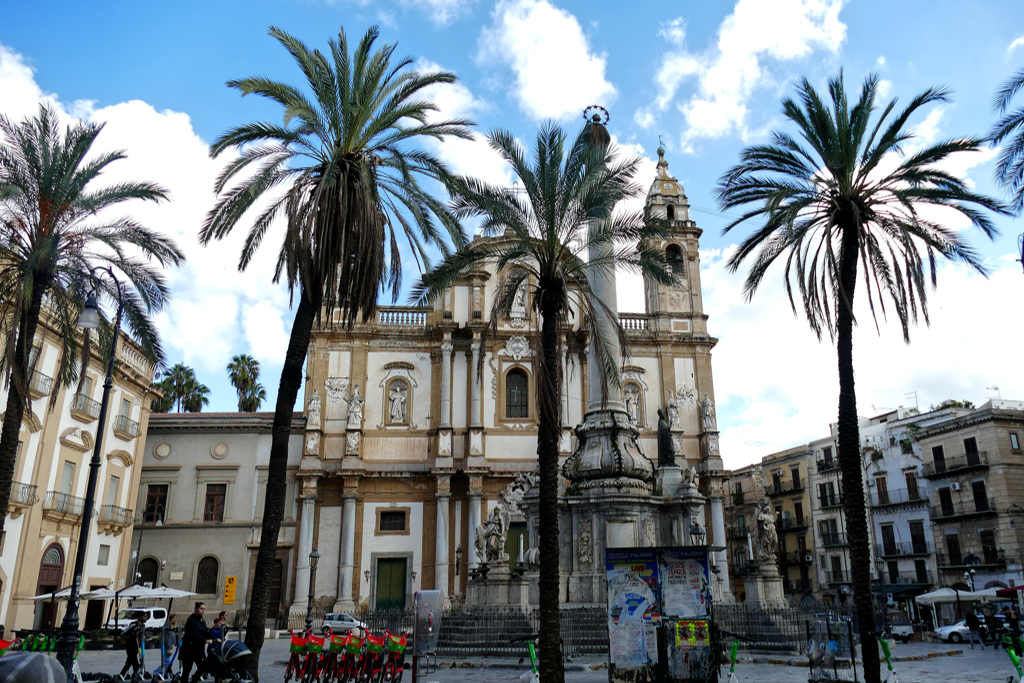
The three-aisled interior, divided by 16 columns, is Sicily’s largest church. Its altar houses the relics of the Palermo Saint Dominican Pietro Geremia. Also, there are numerous important sculptures, reliefs, and paintings in the church.
Since 1853, the church has served as a pantheon, hence, the burial place of famous Sicilians. Among others, Giovanni Falcone also found his final resting place here. He was a judge and prosecuting magistrate who tried to overthrow the power of the Sicilian Mafia.
In front of the church is the magnificent Piazza San Domenico, crowned by the Column of the Immaculate Conception. It was designed by Tommaso Maria Napoli in the classic Baroque style and then made by Giovanni Amico.
Bars and restaurants with lovely outdoor areas surround the square. Right around the corner is the historic Vucciria market.
My Tip
To get a good view from above of Piazza San Domenico and the adjacent Via Roma with all the magnificent buildings, you can simply take the elevator to the 5th floor of the Rinascente department store. From there, you can enjoy wonderful views – and if you want, delicious snacks and drinks too, as there is a glass-enclosed restaurant and a spacious outdoor terrace. But you can also just go up to benefit from the vistas and take pictures, as long as you don’t disturb the guests.
Archeological Museum Antonio Salinas
I have emphasized several times in this post that Sicily is a virtually inexhaustible cultural treasure trove. So it is, of course, not surprising that the city has a richly equipped archaeological museum. It is housed in the former monastery of the Congregation of Saint Philip Neri. It is part of a 16th-century building complex called Olivella. In 1866, it was converted into a museum.
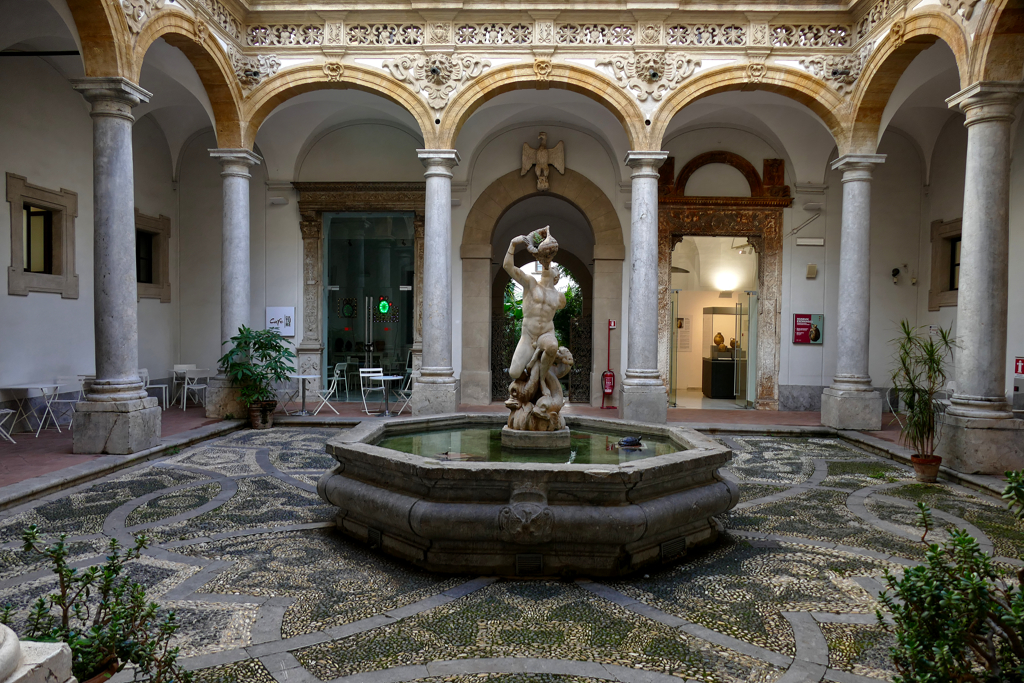
The exhibition rooms are located on three floors grouped around two inner courtyards with arcades that formerly served as the monastery’s cloisters.
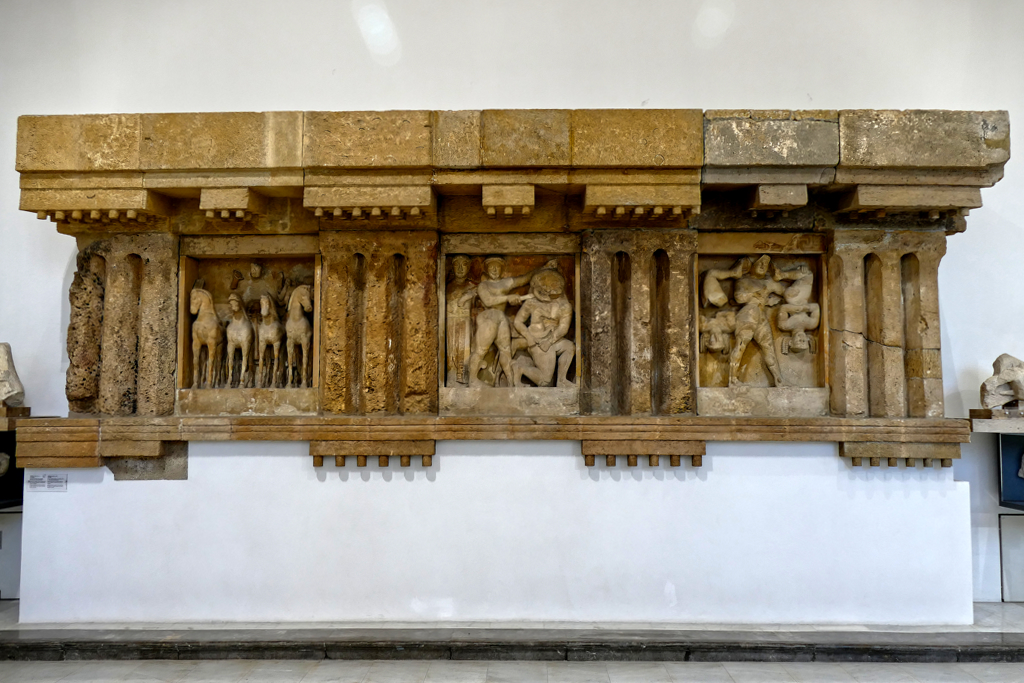
The collection of the Museo dell’Università, founded in 1814, forms the basis of the exhibition. Later, the archaeologist Antonino Salinas contributed greatly to expanding the collection. Finds from Selinunte are exhibited in a separate room. These are parts of Doric friezes, which are characterized by a sequence of triglyphs and metopes.
A separate room is dedicated to Greek bronze figures. The most impressive sculpture is probably a bronze ram from Syracuse. Together with a second ram, it decorated the main portal of the Castello Maniace. Another impressive sculpture is the bronze statue of Hercules wrestling with a deer.
The museum is open from Tuesday to Sunday from 9 a.m. to 7 p.m. However, on Sundays, they are already closing at 1.30. p.m.
Teatro Massimo
Just a couple of short blocks west of the museum is the Teatro Massimo, Palermo’s impressive opera house. Giovanni Battista Filippo Basile designed it in an impressive historicist fashion. It was then completed in 1897. In front of the main entrance is a portico made of six Corinthian columns. A monumental staircase leads to the portico, with two lion sculptures on either side.
On May 16, 1897, the Teatro Massimo opened with Verdi’s opera Falstaff.
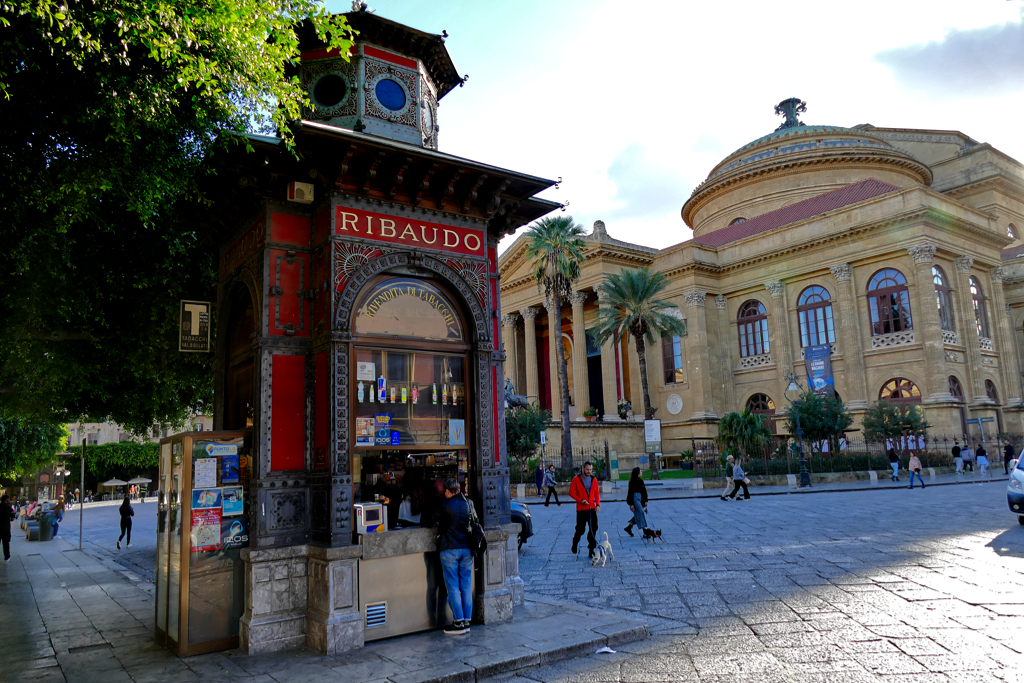
From 1974 onwards, the theater remained closed for over 20 years, allegedly due to structural defects. The real reason for this long hiatus was a construction policy obstructed by corruption and the mafia. It was only in 1997 that it was reopened, thanks to the efforts of then-mayor Leoluca Orlando on the occasion of the centenary with Verdi’s opera Nabucco. Hence, to this day, the Teatro Massimo symbolizes Palermo’s struggle for political and cultural resistance against the mafia.
Even if you’re not attending a performance, you can still visit the theater every day between 9.30 a.m. and 7 p.m., with the last visit starting at 6.20 p.m. Individual tickets can be purchased at the ticket office as well as online on Get Your Guide*. The latter ticket is valid for the entire day. If you also want to visit the Palazzo Butera in the Kalsa district, you might be interested in a combo ticket for 17 €uros.
Fun fact
The Teatro Massimo was the setting for the final scenes of Francis Ford Coppola’s film The Godfather III, where the opera Cavalleria Rusticana was played. The stairwell and stage hall of the house were still closed at the time, and were restored for film use on that occasion.
Muro della Legalità
You’ve probably already noticed: it’s virtually impossible to experience Palermo without being constantly and often unexpectedly reminded of the mafia’s machinations. And that brings us straight to the Muro della Legalità.
This so-called Wall of Legality in English is a touching monument that represents the fight against the mafia and the struggle for law and justice. Appropriately, it is located near the courthouse in a district strongly associated with the anti-mafia movement.
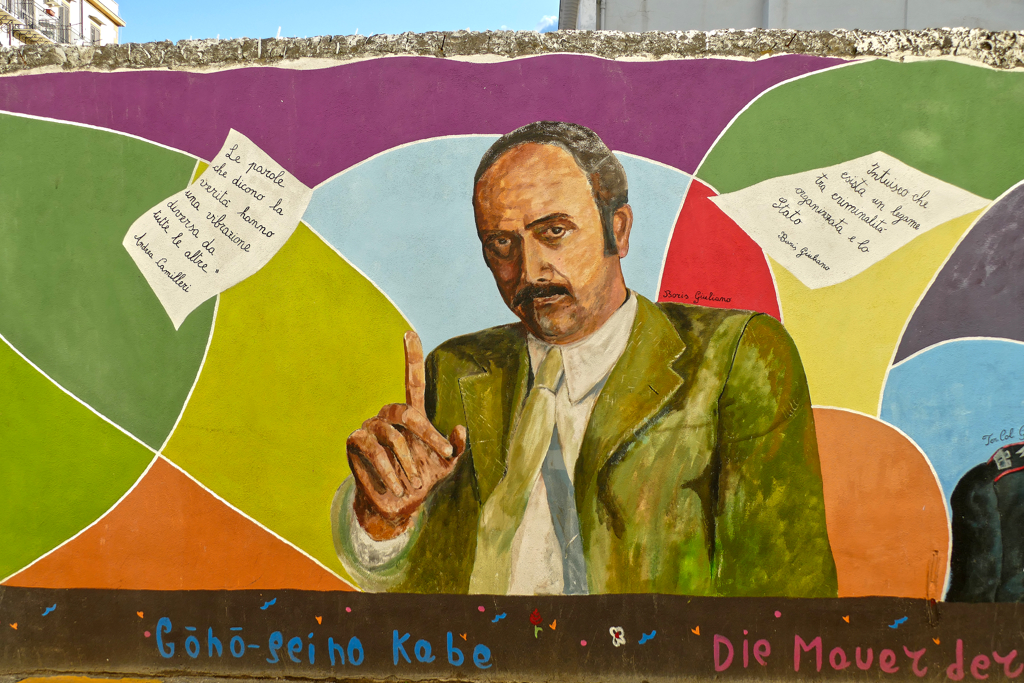
Obviously, the wall was created to show the commitment of the city of Palermo to the fight against organized crime and to commemorate the victims of the mafia. It represents the desire for a fairer society in which the values of law, peace, and solidarity prevail.
On the wall, there are portraits of personalities who lost their lives in the fight against the mafia, not only the famous judges, but also the lower-ranking police officers.
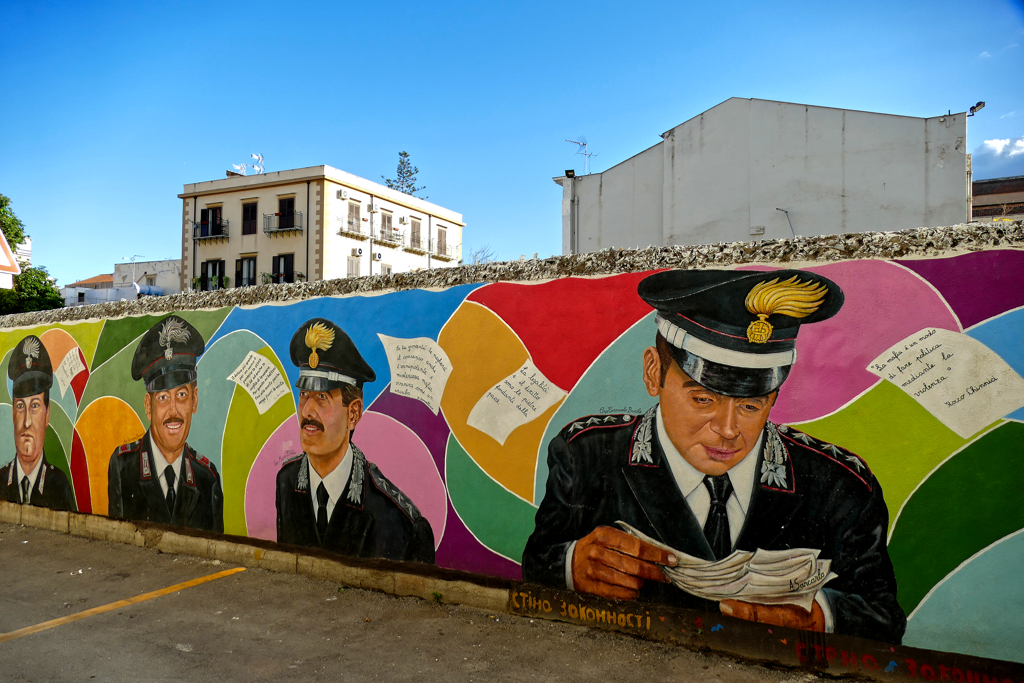
This wall combines art, history, and social activism for a better future without corruption and violence. It is another impressive beacon of the development of a city that was severely affected by the mafia.
Other Murals
While Palermo as such is often underrated, the city’s best street art also thrives in the shadows. Very unjustly so!
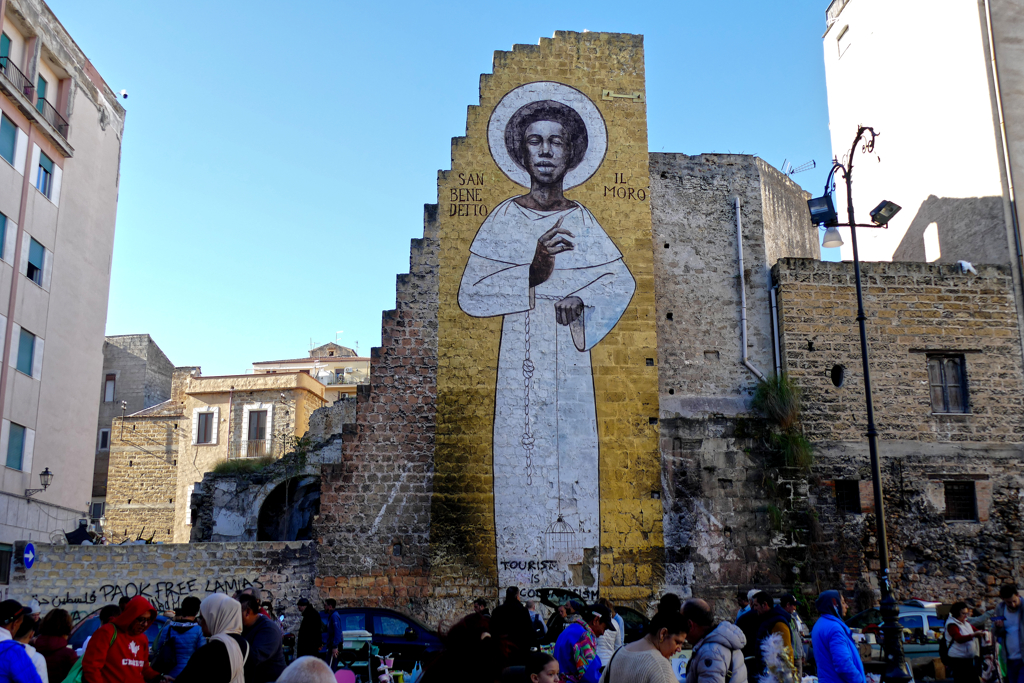
In many cities, the modern-day graffiti movement started as a claim of urban territory by gangs, but also as a response to political and social injustice. Therefore, I’m not surprised to have found Palermo’s most powerful murals in the Ballarò and Albergheria working-class neighborhoods, in the Brancaccio district, as well as in the re-emerging Kalsa.
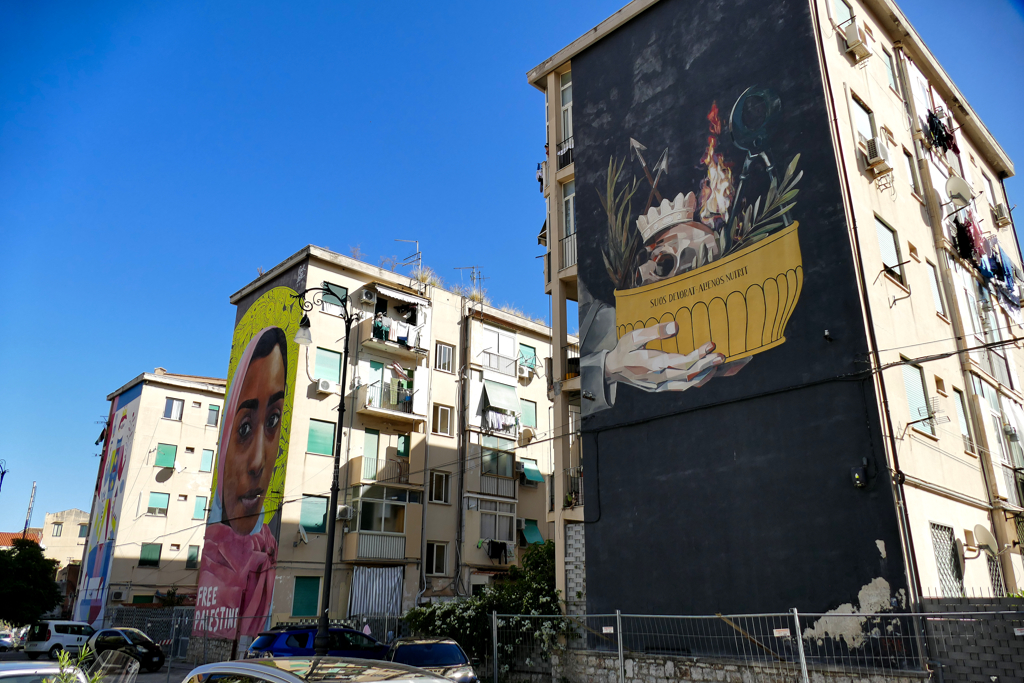
It is beyond the scope of this post to introduce them all. I would therefore like to refer you to my post Best Street Art in PALERMO. There you’ll find many amazing murals as well as extended information on the artists.
So this is what you get to see in two days if you don’t linger too much. Pretty great, right? And I haven’t even mentioned the unique Zisa palace, the museum of glazed majolica tiles, the quirky Catacombe dei Cappuccini, which are home to an incredible 8,000 corpses dating from the 16th to the early 20th century, and last but not least, the pristine beaches on the outskirts of the city. Well, at least I have something to excitedly look forward to on my next visit to Palermo.
I promise it won’t be long!
Practical Information
How to Get There
By Plane
The Palermo–Punta Raisi Airport, which is also known as Falcone–Borsellino Airport, is Sicily’s second-largest airport after the one in Catania. It is located about 35 kilometers west of Palermo. However, getting to the city center is extremely easy, even if you don’t rent a car or take a cab.
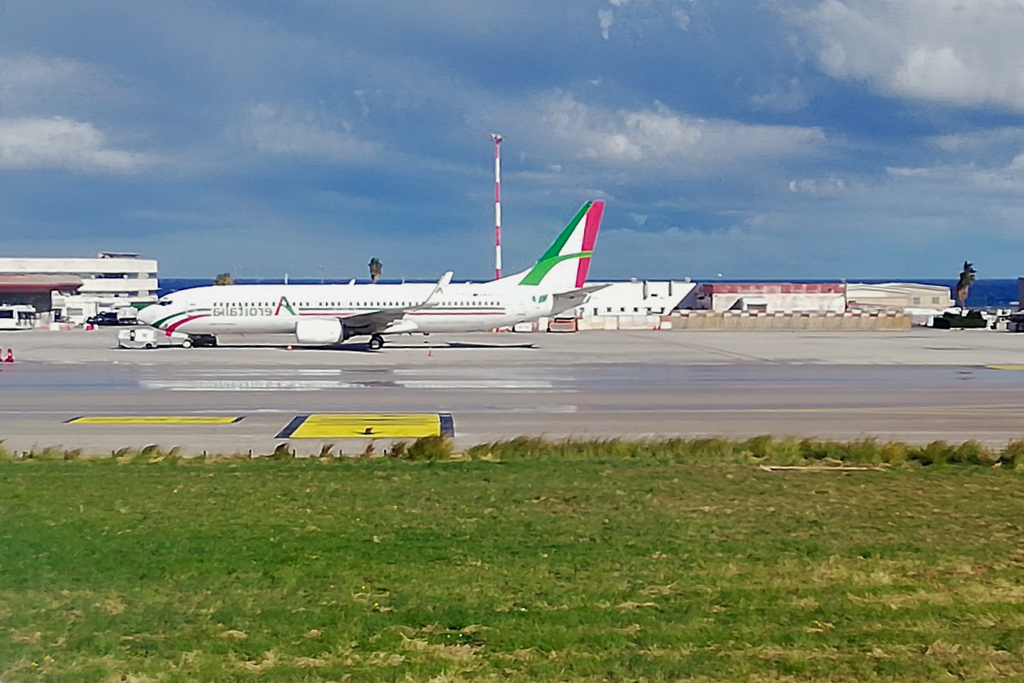
At least every half an hour, a train takes you from the adjacent station to Palermo’s central train station in around 50 minutes for as little as 6.80 €uros. And if that’s not enough, there are also buses every half an hour. There, you pay just 6 €uros one way and 10 €uros for a roundtrip.
By Ferry
Traveling to Sicily by ferry is a popular and scenic option, offering connections from mainland Italy and other locations. The most common national routes are from Villa San Giovanni in Calabria to Messina. This is the shortest crossing as it connects the tip of the mainland to northeastern Sicily. Therefore, the ride takes only around half an hour. Also, ferries run frequently, often every 30 minutes.
Ferries to Palermo leave from several ports in mainland Italy. From Naples and Salerno, the trip takes around ten hours, whereas cruises from Genoa and Livorno take about twice as long.
However, you can also take a ferry to Palermo from Sardinia’s capital Cagliari. This seasonal service takes around twelve hours and is a very scenic way to combine visits to both islands.
Especially during the summer and holiday seasons, early booking of tickets is highly recommended. If you opt for an overnight ferry, you can book cabins and reclining seats. Also, there is on-board dining. Although ferry travel is a great alternative to flying, take into consideration that schedules can be affected by rough seas, especially in winter. Also, keep in mind that not all ferries allow motorcycles, cars, or camper vans.
Land Transport
Getting to Sicily by train or overland bus from mainland Italy is straightforward, thanks to well-established transportation networks. Also, it is a very relaxed and scenic option.
Direct trains connect major Italian cities to Sicilian destinations such as Palermo, Catania, Messina, and Syracuse. As you opt for an overnight service, you save time and even money on accommodation. Trains to Sicily board a ferry to cross the Strait of Messina, which usually takes around half an hour. Passengers remain on the train as it is loaded onto the ferry.
For instance, from Milan, the overnight train takes 20 hours, from Rome it takes twelve hours, and from Naples, it takes only seven. Tickets can be purchased through Trenitalia, and advanced booking is recommended, especially during the high season and for overnight journeys.
Obviously, long-distance buses connect cities on the Italian mainland with major cities in Sicily, too. They take a bit longer but are also cheaper. The most popular operators are Flixbus and Itabus.
In Sicily, trains also connect bigger cities, however, travelling by overland bus is far more popular.
My Tip
Even if your hotel stores your luggage for you free of charge, this can be an impractical solution if it is not close to the train station. There is a storage place at the main train station. Yet, it has very bad reviews online, and I have also found that the opening times are handled very casually. Believe me, it can be nerve-wracking to find yourself standing in front of a locked door minutes before your train leaves and not knowing when the person in charge will be back to hand you your possessions.
Luckily, there is a small electronics shop just around the corner from the train station, which is not only more reliable than the storage in the train station. They are also much cheaper, as they store your luggage all day for just 5 €uros.
I had a very good experience there, hence, I am happy to recommend this option. You’ll find the exact location on the map below.
How to Get Around
Palermo has an extensive network of buses, four tram lines, and local trains, and Google Maps will show you all the routes. What Google doesn’t know, however, is that the schedules are fundamentally never correct due to crazy driving and terrible traffic jams. While you can still see which bus route goes where, you can only use the indicated times as a guideline.
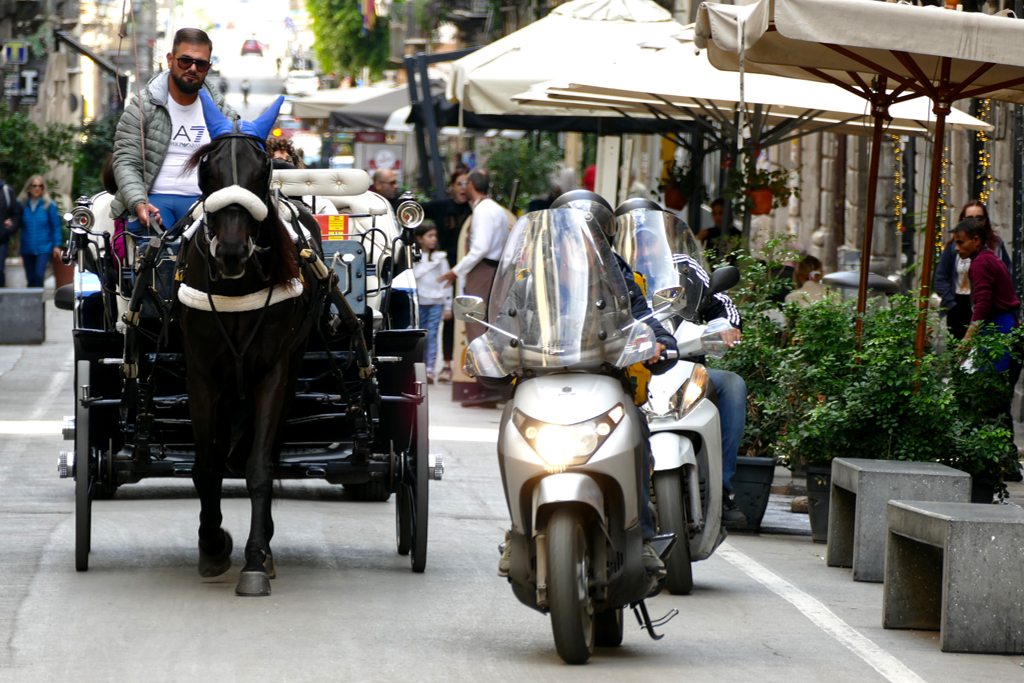
You can buy tickets for 1.40 euros in the Tabacchi shops and at the kiosk in front of Palermo Centrale train station. Once in the vehicle, you must validate it at a small machine. Many carriages now have modern readers that allow you to pay for your ticket contactless. However, in this case, you pay €1.80.
Obviously, you can explore the two-kilometer-long Via Vittorio Emanuele as well as the Kalsa neighborhood by walking. Although there is a city bike system in Palermo, I would not really recommend this option. While you can cycle undisturbed along the Via Roma or on the Foro Italico Umberto I along the waterfront, cycling on narrower side streets can quickly become a drag. Palermo is also not entirely flat, but I would see the streets clogged with pedestrians and cars as the biggest obstacle.
Visiting Organized
Although the regional bus system in Sicily is not bad at all, there are places on the island that are difficult to reach by public transport. If you are a slow traveler and can plan an additional overnight stay, exploring Sicily exclusively by public bus is definitely possible. But if you can’t plan a whole day for each remote attraction, joining an organized day tour is a great option.
Especially if you don’t have much time to spend in Palermo and don’t want to deal with opening times, the public bus system, and other minor challenges, organized visits and tours are a great option*:
Where to Stay
I think Palermo is the only city where I have ever recommended finding accommodation near the central station. If you come from an idyllic mountain village, the surroundings may seem a bit sketchy. But if you know other cities and their train station districts, Palermo will pleasantly surprise you.
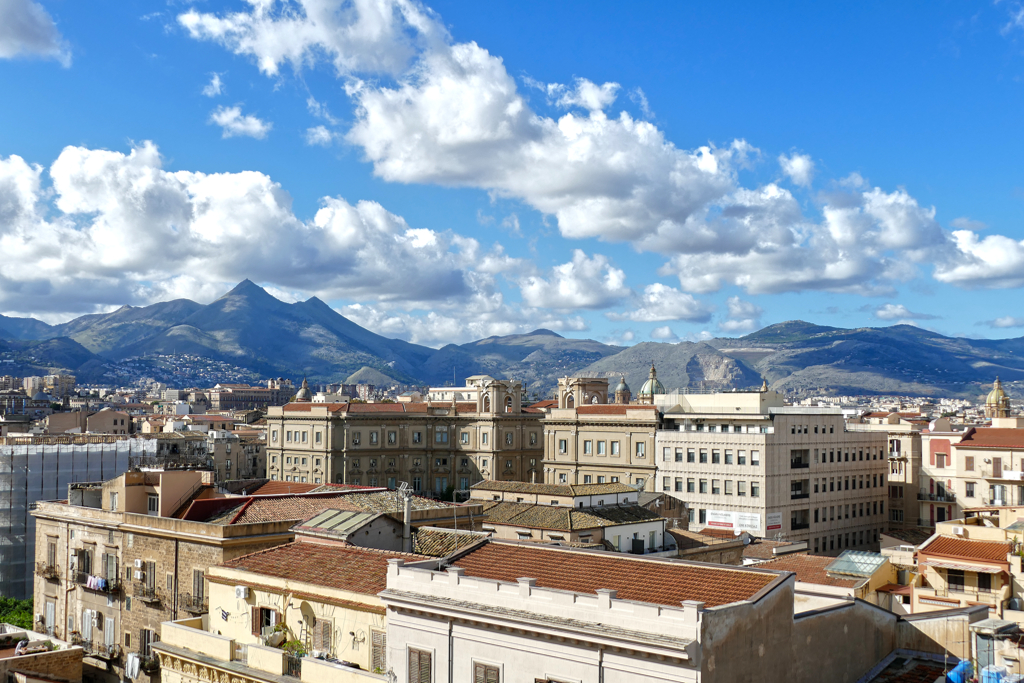
Of course, the neighborhood is not a local recreation area. Yet, it is completely okay. Most importantly, you will find a good selection of very comfortable accommodation at good prices. The train and bus stations are a stone’s throw away and can be reached in just a few minutes on foot. The historic center is also within walking distance. Alternatively, you can also take one of the many city buses, which all stop at the main train station, obviously.
I can particularly recommend the apartment hotel Multi Suite Palermo*. They offer beautiful, fully furnished apartments with a kitchenette that not only has a refrigerator, a microwave, and a capsule coffee maker, but also a washing machine. Particularly worth mentioning is the spacious roof terrace with a view of the entire city and beyond. There are even two whirlpools up there.
If you’d rather live a little more luxuriously and the train station area doesn’t suit you at all, you’ll find a large selection of accommodations for different needs and budgets on this map*:
Just so you know
Many travelers complain that Italian B&Bs only offer a selection of pre-packaged cakes, slices of bread, jams, and the like.
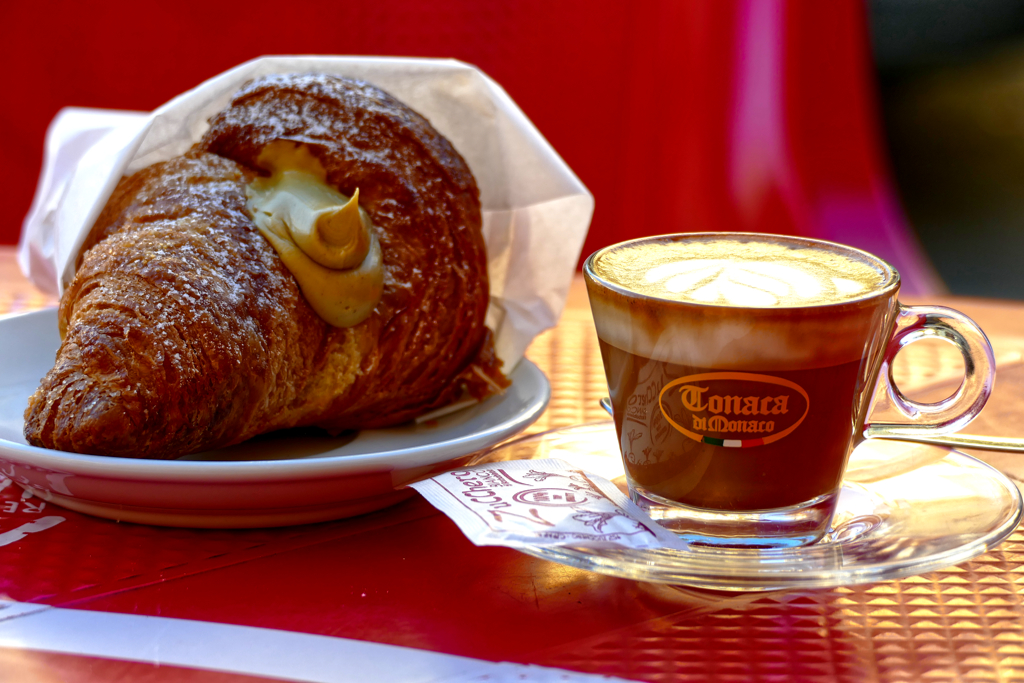
This is not due to the innkeepers’ stinginess but is required by law. For hygienic reasons, privately run accommodations are only allowed to offer industrially packaged food.
What to Eat
Palermo offers an incredible culinary experience rooted in its rich history and diverse cultural influences. It starts with the world’s best street food, like Arancine. They are fried rice balls stuffed with fillings like ham and cheese, spinach, a meat sauce called ragù, and many other delicious treats. Another popular snack is Panelle, Chickpea fritters often served in a sandwich with sesame-seeded bread. Sfincione is Palermo’s take on pizza: a thick, spongy crust topped with tomato sauce, onions, anchovies, breadcrumbs, and cheese.
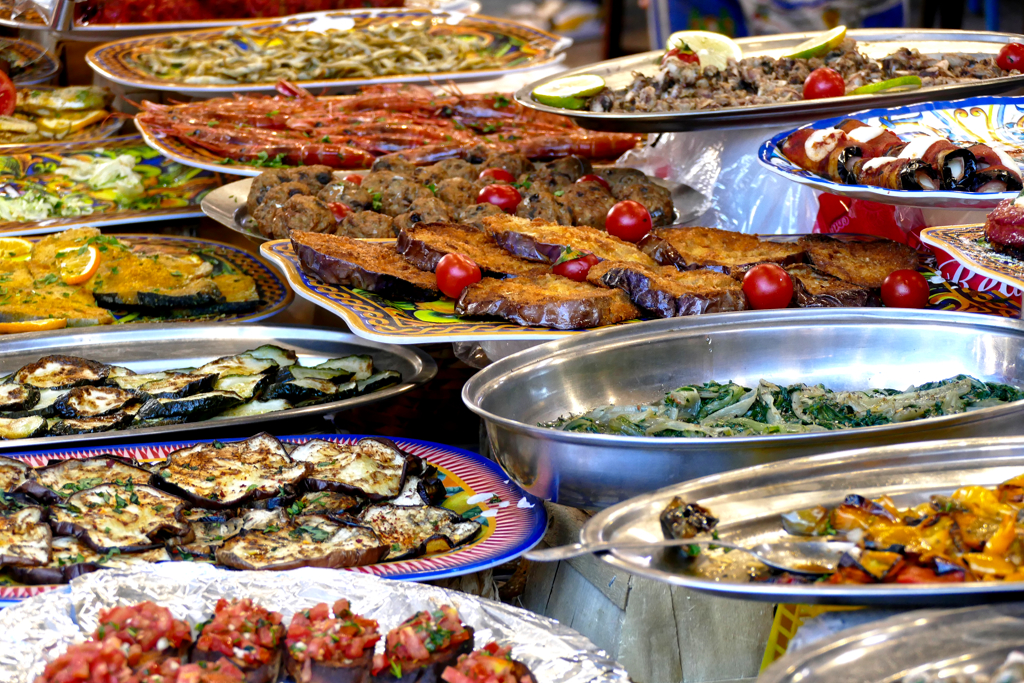
To cut a long story short: Palermo is street food heaven! You can grab a bite – always high in carbohydrates – at literally every corner.
Like in many other regions around Italy, Seafood is an indispensable staple. An unmissable street food snack is Frittura di Pesce, an assortment of small fried fish, shrimp, and calamari, sold in paper cones for a quick snack to go.
Flavors’N’Scents
Pasta con le Sarde is a quintessential Sicilian dish with fresh sardines, fennel, pine nuts, raisins, and breadcrumbs. Involtini di Pesce Spada is Swordfish Rolls stuffed with breadcrumbs, raisins, pine nuts, and herbs.
A flavorful traditional veggies delight is Caponata, a sweet-and-sour eggplant dish with capers, olives, celery, and tomatoes, served hot or cool as a side or appetizer.
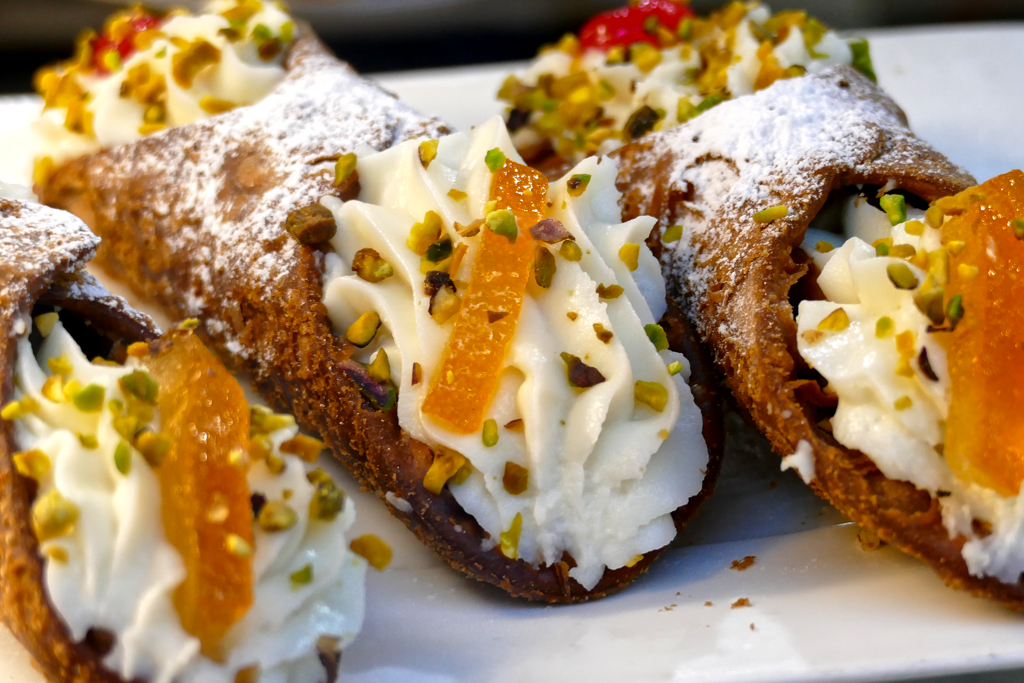
No Sicilian meal would be complete without a wonderful dessert. Sicily’s most famous dolce is cannoli. A cannolo – which is the singular – is a crisp pastry tube, mostly filled with lightly sweet ricotta cheese. However, there are also other fillings like vanilla or pistachio cream, which tend to be much sweeter and therefore even more filling.
Where to Eat
Traditional markets like the Mercato di Ballarò or Mercato del Capo are perfect for sampling a wide variety of street foods.
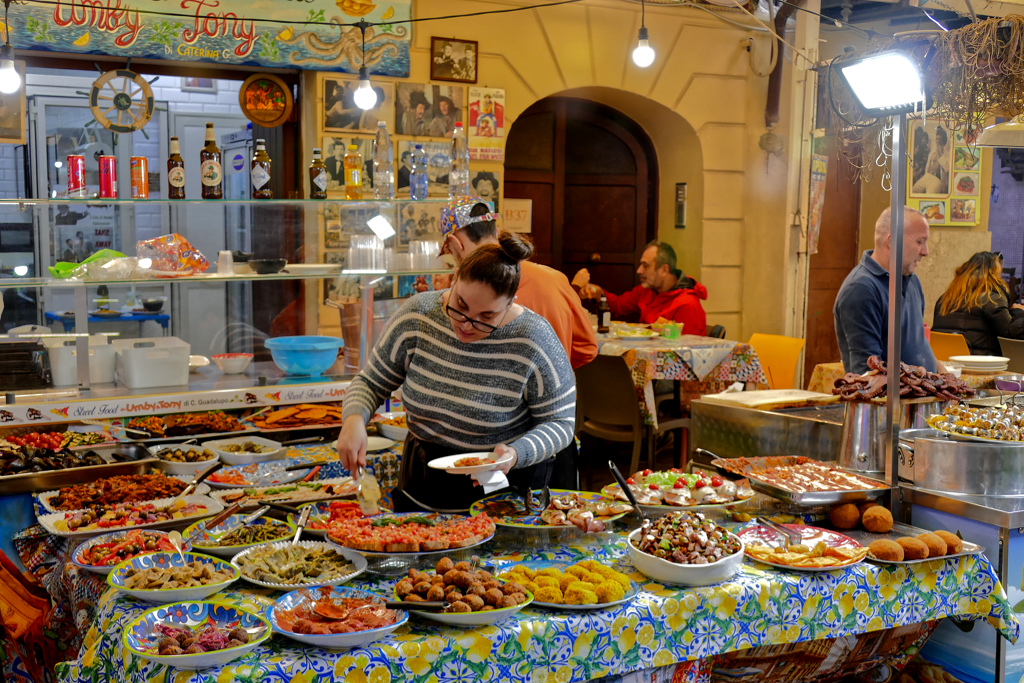
Nevertheless, if you wish to sit down for a more extensive meal at a great price, look for traditional Trattorias.
Basile Focacceria del Massimo
Basile Focacceria del Massimo is an authentic lunch spot in the heart of the city. The restaurant is especially known for its traditional Sicilian cuisine and offers a self-service concept: you pay for your desired dishes at the counter, receive a ticket, and then collect your food from the designated pick-up points.
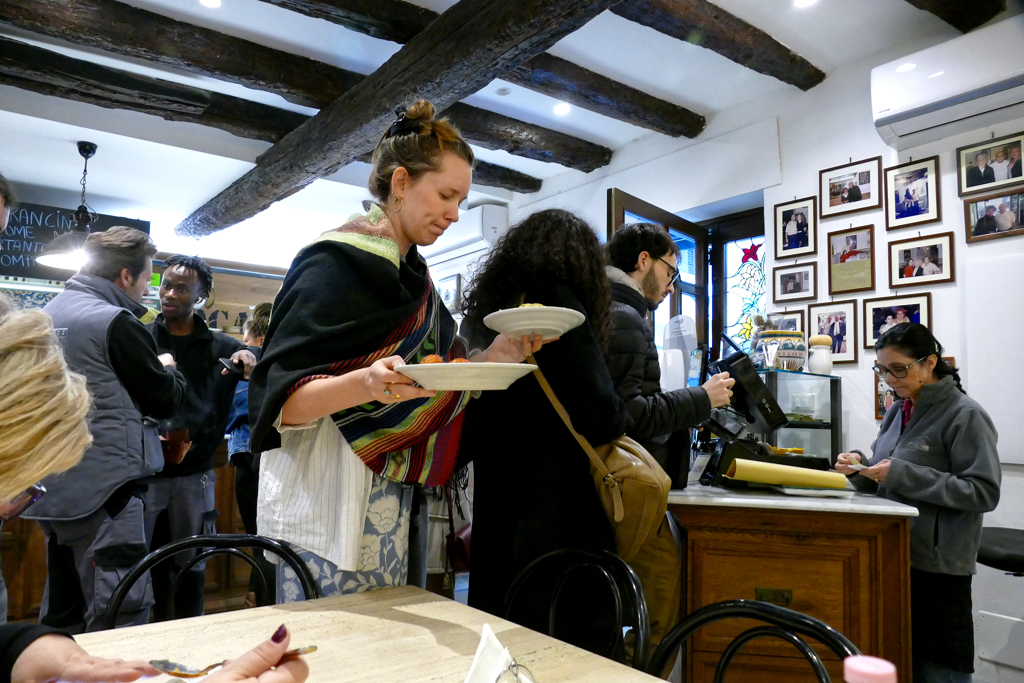
The menu includes fresh pasta, antipasti platters, seafood and meat dishes, as well as typical street food sides. The dishes are simple, honest, and homemade. There are also numerous vegetarian options among the antipasti and pasta dishes. You’d be hard-pressed to find better value for money anywhere else in Palermo: many pasta dishes cost just a few euros.
I love this focaccia, although it gets very crowded at lunchtime. The self-service system can also be a bit unusual for first-time visitors. But if you summon your courage, you will find a fantastic place in the Basile Focacceria del Massimo to enjoy an authentic Sicilian meal in the company of Sicilian professionals.
Antica Focacceria San Francesco
Antica Focacceria San Francesco is one of Palermo’s oldest and most renowned gastronomic institutions. Founded in 1834, it combines authentic Sicilian street food with a historic atmosphere.
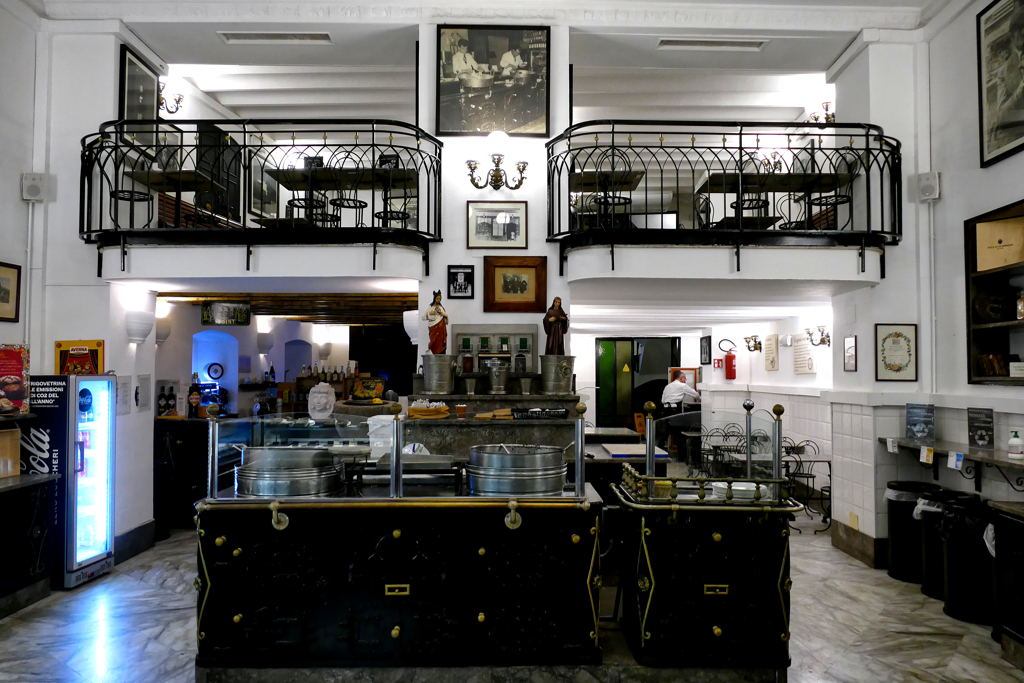
For decades, the focacceria has been frequented by locals, artists, and figures of the Risorgimento, and is therefore considered a meeting place for culture and cuisine.
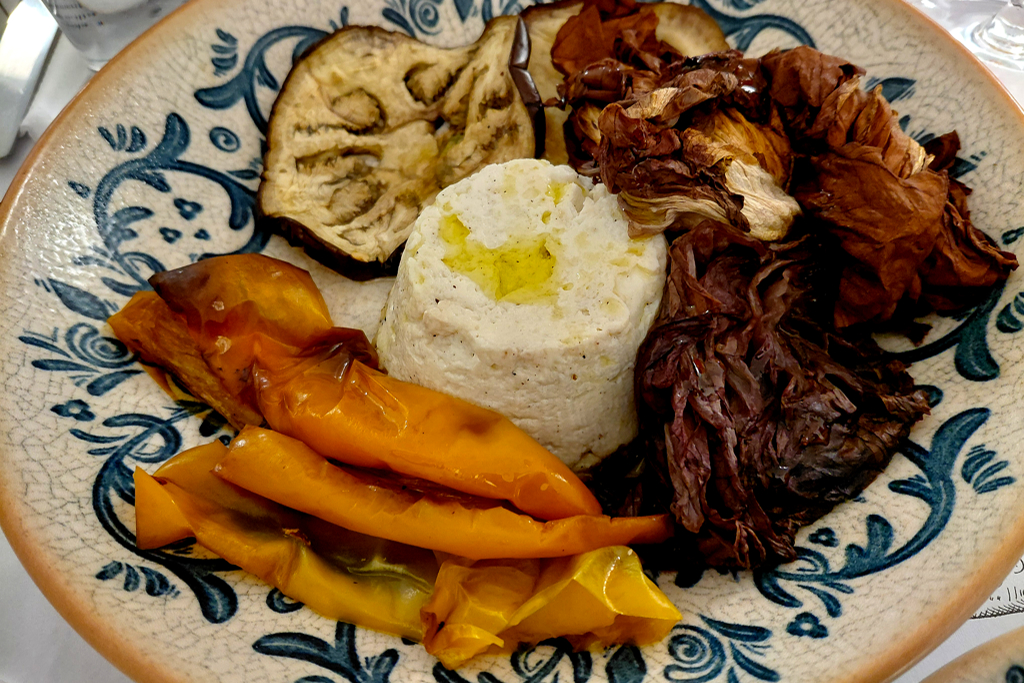
The menu features traditional specialties, and the interior retains historical elements, including cast-iron tables and antique decorations. With fair prices and offerings that reflect the culinary soul of Palermo, Antica Focacceria San Francesco is a must-visit for lovers of Sicilian traditions.
Just so you know
It should also be mentioned that Antica Focacceria San Francesco actively opposed extortion and protection money for decades in Palermo’s otherwise heavily Mafia-dominated environment. The owners refused to pay any protection money to the Mafia. Instead of silently paying, they initiated legal proceedings and, through their testimony, helped bring several extortionists to justice.
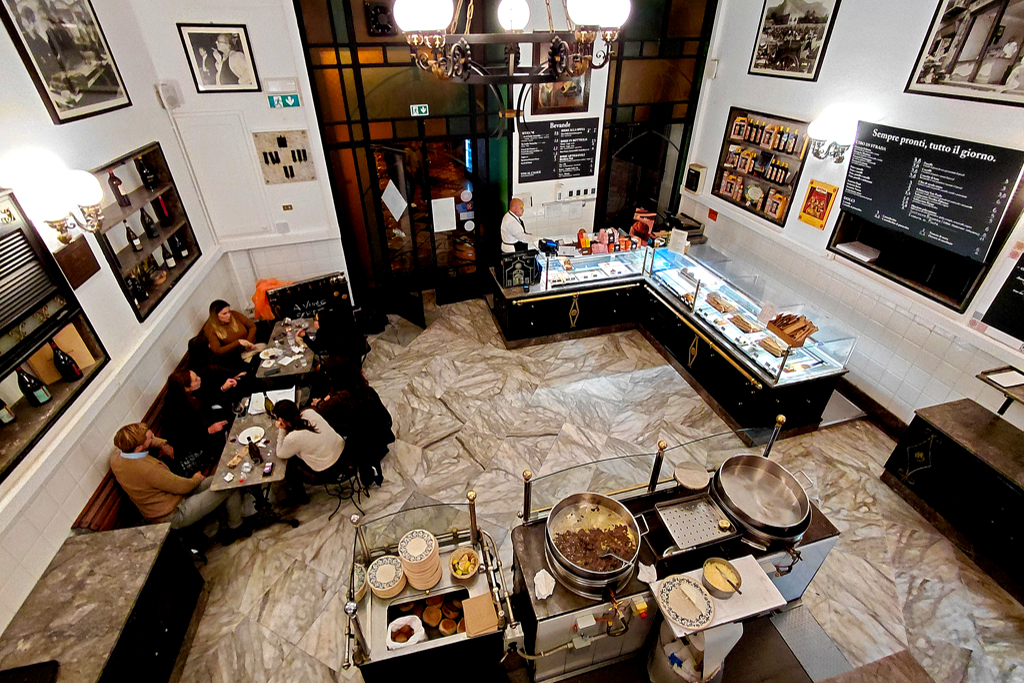
As a result, the focacceria became a symbol of peaceful resistance against the Mafia. It joined the Addiopizzo anti-Mafia movement, a grassroots initiative that supports businesses that refuse to pay and display a seal at their entrance.
Trattoria Trapani
Last but not least, another one of my favorites is Trattoria Trapani, just a stone’s throw from the central station. Also, a historic spot for classic Palermitan dishes is the Antica Focacceria San Francesco.
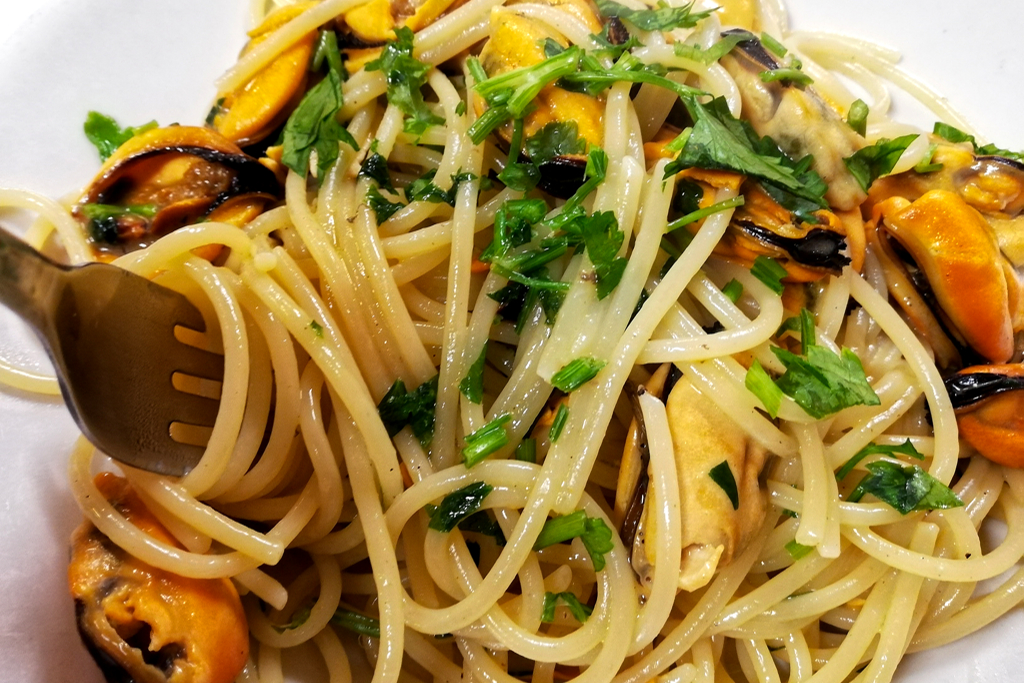
Trattoria Trapani is located just steps from Palermo Centrale train station. It’s a classic, family-run trattoria serving authentic Sicilian cuisine. The restaurant is particularly known for its homemade pasta, fresh seafood, meat dishes, and local specialties, often prepared with seasonal ingredients. There’s a welcoming, family atmosphere, and the service couldn’t be friendlier. The excellent value for money is especially noteworthy. The trattoria is open for lunch from [time] to [time] and again for dinner from 7 p.m. Unfortunately, it’s closed on Sundays.
Arancino Or Arancina?
For years, I called the delicious rice ball an arancino. Until I went to buy one of these delicacies at the Palermo bus station and was surprised to see that the sign said arancina.
Well, you live, you learn.
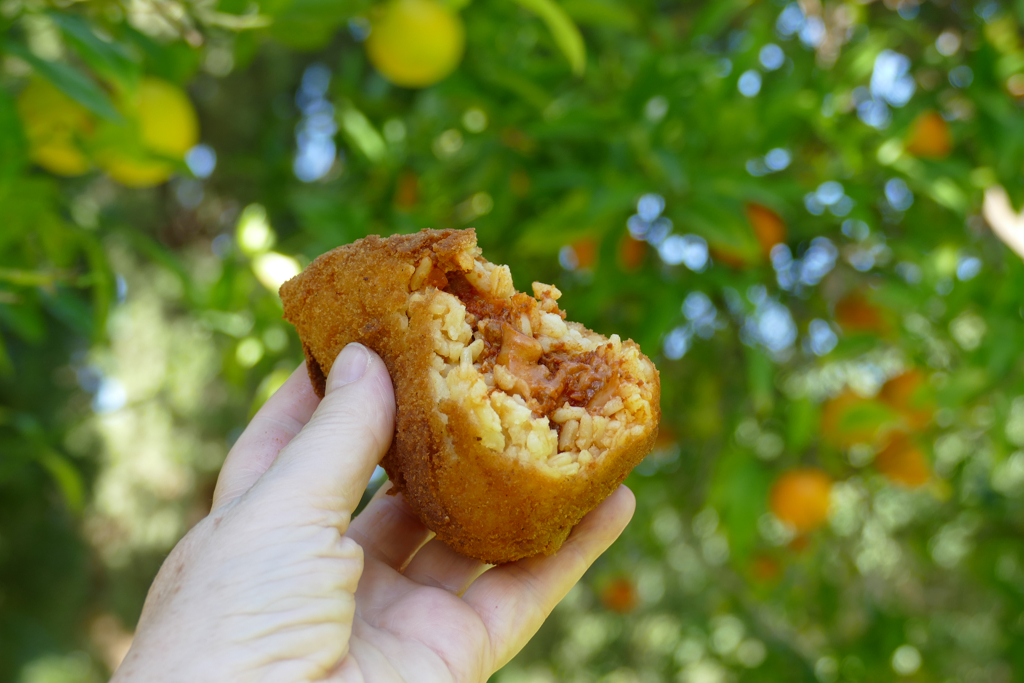
The next day, I wanted to get my daily fix of deliciously stuffed rice in a crispy crust in Syracuse. The saleswoman called it an arancino.
So what’s correct?
Quite simply: depending on where you are, both are accurate. In most Italian regions, delicious rice cones are called arancini, in the singular arancino.
But in Palermo, they say arancina, which makes it arancine in the plural.
Because here – and only here! – the treat is not a cone, but a ball.
Round like an orange.
Which is called arancia in Italian.
Hence, for Palermitani, the matter is clear: an orange-shaped ball can only be an arancina.
Buon appetito!
Cash And Cards
Until now, 21 European countries have replaced their former local currency with the €uro starting in 2002. Obviously, Italy is one of them. The exchange rate is 1 US$ = 0.85 EUR as of January 2026. However, you can check today’s conversion rate on this page.
Mind you, paying by card as well as contactless is accepted basically everywhere.
Language
Zushini, Gnotchi, Raditcho – I’m bleeding from my ears as I hear these mispronunciations so often.
Seriously, guys, it’s not so hard.
So here are some general rules: As in any other Romance language, C is hard when written before A, O, and U, hence, it’s pronounced K.
If followed by E or I, it’s tch as in witch.
Now, if a C followed by E or I should be pronounced K, an H is added: Bruschetta, Zucchini, Gnocchi, Radicchio – Brusketta, Zukini, Gnoki, Radikio.
On the other hand, if C followed by A, O, or U should be pronounced tch, they slip in a – silent! – I: Ciocolata, Ciabatta – Tchocolata, Tchabatta – forget about the I in-between.
Italian Classes in Sicily
As a matter of fact, it might be a great idea to learn some Italian or brush up on what you already know while in Sicily. A great place to do so is, for instance, the Italian Academy in Syracuse.
They advertise that they are professional and friendly, and I can fully confirm that. I took a two-week intensive course and progressed a whole level in that time.
So if you want to immerse yourself in Italian life with all your senses, look at what the school has to offer.
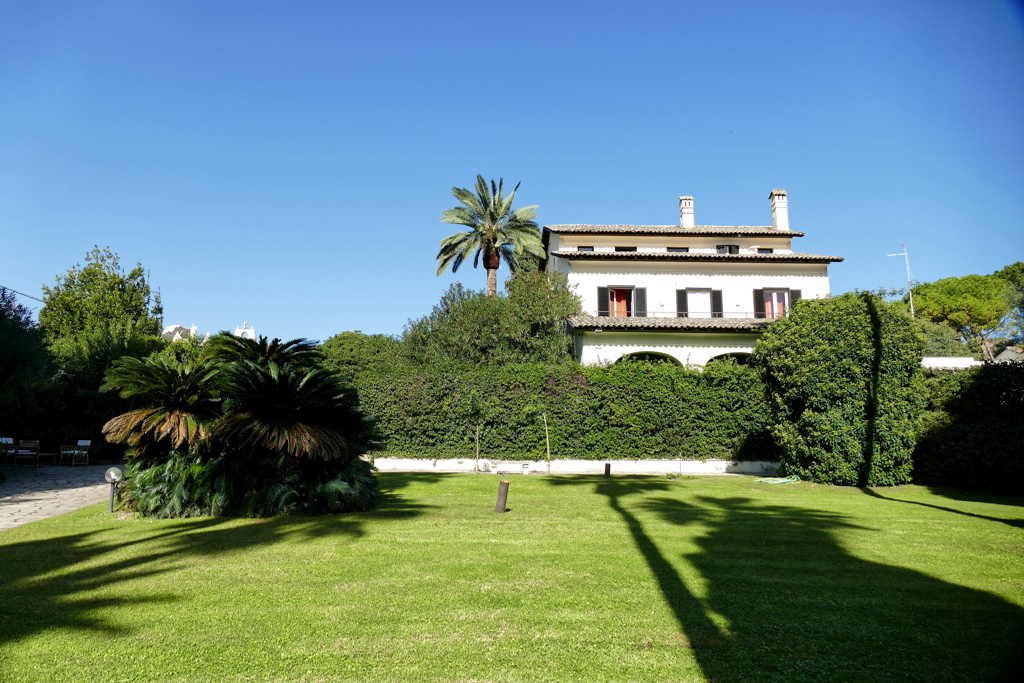
If you are interested in taking Italian classes, but you’re insecure about how to organize your stay, don’t worry. The friendly and efficient ladies at the academy’s office are accommodating and can arrange literally everything for you.
After a placement test, they advise you which class would be your best choice and help you with every little detail, including providing housing for the duration of your course.
Connection and Communication
Since June 2017, no roaming charges have been applied within the EU with a European mobile phone contract. This applies in all 27 countries of the European Union, as well as in Great Britain, Iceland, Liechtenstein, and Norway, and to all contracts.
In case European roaming is unavailable, you can connect to the internet without any issue at basically every museum, eatery, café, and, of course, hotel.
If you insist on being online 24/7, you can get a SIM card, obviously. There are prepaid SIM cards from various companies. For non-European travellers visiting Italy, the best SIM cards are Telecom Italia Mobile, in short, TIM. It is Italy’s largest mobile operator with excellent coverage and data speeds. Their best planshould be TIM Tourist SIM, which supplies you with 20 GB and 200 minutes to international numbers. It costs around 20 €uros and is valid for 30 days.
A good alternative is Vodafone Italy with their plan Vodafone Holiday. For 30 days, you get 30 GB and 300 minutes for calls, including international numbers, for around 30 €uros.
Finally, WindTre is a great option for budget-conscious travelers. Their WindTre Tourist Pass offers 20 GB and 100 minutes for international calls as well as unlimited calls within Italy.
However, e-sim cards are the easiest way to stay connected as you arrange everything on the internet. Airalo’s plans start at five US$ for 1 GB and go up to 10 GB for 20 US$. Holafly’s unlimited data plans for Italy start at around US$19 for five days.
Get the Power
The standard voltage in Europe is 220 V, and the frequency is 50 Hz. In Italy, they use three plug types, namely C, F, and L.
Whereby, since nowadays, all these chargers have integrated adapters, in general, the voltage and frequency don’t really matter. You only need an adapter for small appliances such as curling irons or hair dryers. But keep in mind that at basically every accommodation, you will have a hair dryer at your disposal.
You’ll find comprehensive travel info in my post World’s Most Complete Travel Information – an indispensable globetrotter classic.
Map
On this map, I’m showing you where to find the places I’m introducing in this post. Click on the slider symbol at the top left or the full-screen icon at the top right. This way, you will see the whole map, including the legend.
Palermo was the first and last stop of my trip to Sicily. To read about the others, go to this post and take your pick!
Pinnable Pictures
If you choose to pin this post for later, please use one of these pictures:
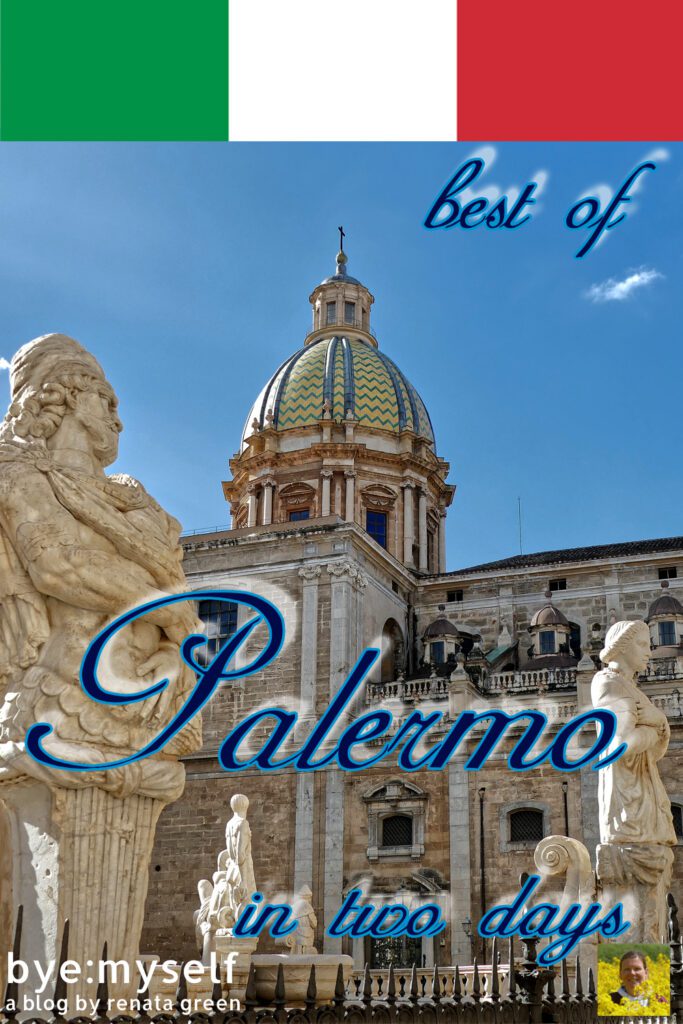
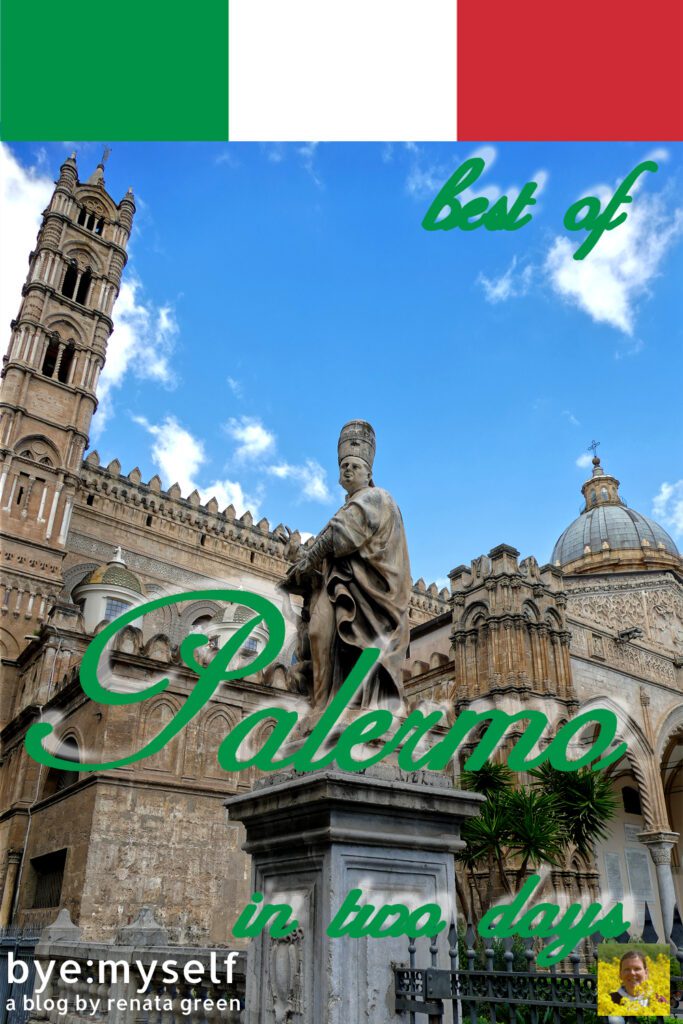
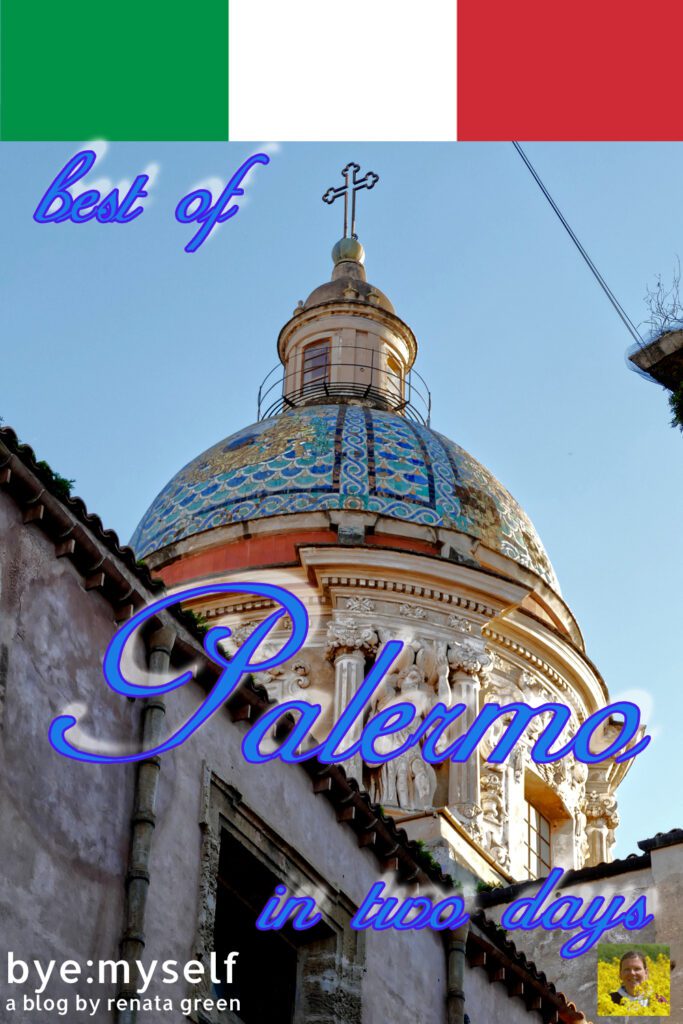
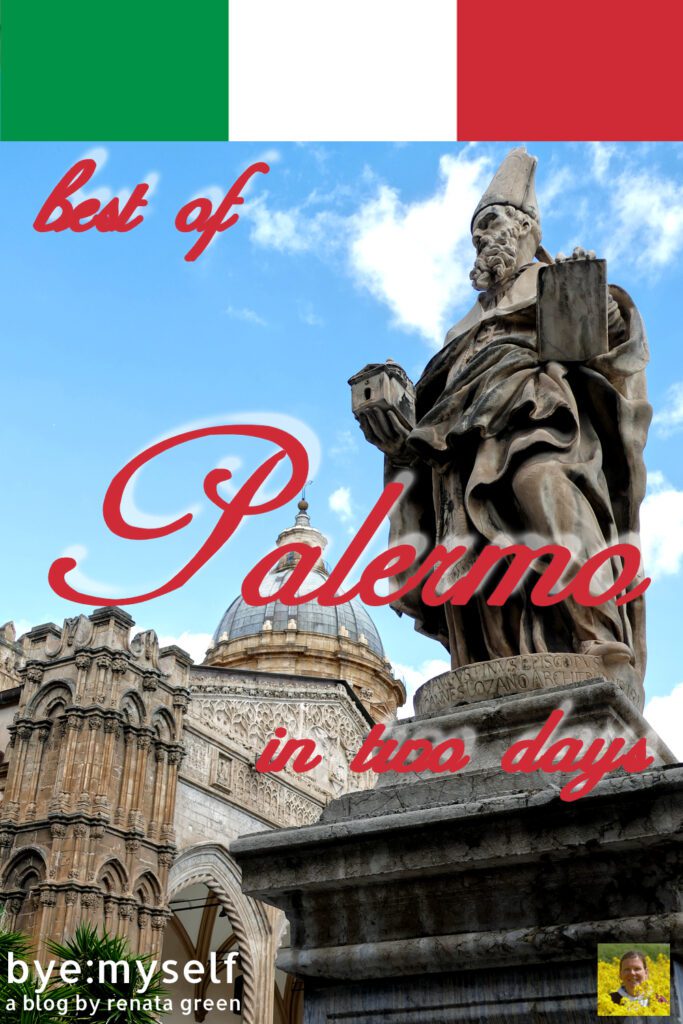
Note: This post is being regularly completed, edited, and updated – last in January 2026.
Did You Enjoy This Post? Then You Might Also Like These:
Sea, Salt, and Sunset: Experiencing the Best of TRAPANI
VENICE on a Budget: When to Go, Where to Stay, What to Eat, And Much More
Best Street Art in PALERMO
CINQUE TERRE – The World’s Most Picturesque Hiking Trails
Comprehensive Guide to FLORENCE – Home of the Medici, Cradle of the Renaissance
What to See in NOTO, the Baroque Town of Sicily
Back to School: Italian Classes at the Scuola Leonardo da Vinci
Welcome, World! Come In And Join Me In My Italian Online Course at the Scuola Leonardo da Vinci

* This is an affiliate link. Hence, If you book through this page, not only do you get the best deal. I also get a small commission that helps me run this blog. Thank you so much for supporting me!