Although the town of Meissen is quite small and not as internationally renowned as this acclaimed Cradle of Saxony actually deserves, it is one of Germany’s most historically significant cities and the perfect place to spend an unforgettable weekend!
Night slowly falls on the Albrechtsburg, Germany’s oldest castle complex.
Additionally, Meissen is home to Germany’s oldest castle and the site where European hard-paste porcelain was first produced in 1708. So, let’s explore what else this hidden gem has in store!
Whether you prefer beer or wine is, of course, a matter of taste. However, for some people, it is also a philosophical and social question. In fact, it was none other than Scottish novelist Robert Louis Stevenson who equated wine to poetry in a bottle. And as a world-famous writer, he certainly knew what he was talking about. No one said that about beer.
But no matter what your personal opinion on the cultural difference between beer and wine is, in one respect, you can only give preference to the latter: namely, when it comes to the beauty of the growing regions. In this regard, the grapevines beat the hop bushes by a mile! Proof of this was my recent hike along the Saxon Wine Trail. With its idyllic vineyards, enchanting castles, and magnificent villas, a day trip from Dresden into the Elbe Wine Region will definitely be one of the most heart-, soul- and stomach-filling trips you will have enjoyed in a long time.
Seusslitz Castle is only one of many majestic structures in the Elbe Wine Region.
Since the trail is lined not only by some amazing landmarks but also by countless eateries and wine bars, all you need are your hiking boots, a sun hat, and a little drinking water. Everything else is readily waiting for you alongside this truly mesmerizing path!
The heart of Saxony beats right here, in the city of Dresden. Already the nickname Florence on the Elbe is a clear reference to Dresden’s magnificent imperial structures and the city’s picturesque location on one of Germany’s longest and most scenic rivers. Its distinctive aura and elegance make Dresden one of Germany’s most beautiful and worthwhile travel destinations.
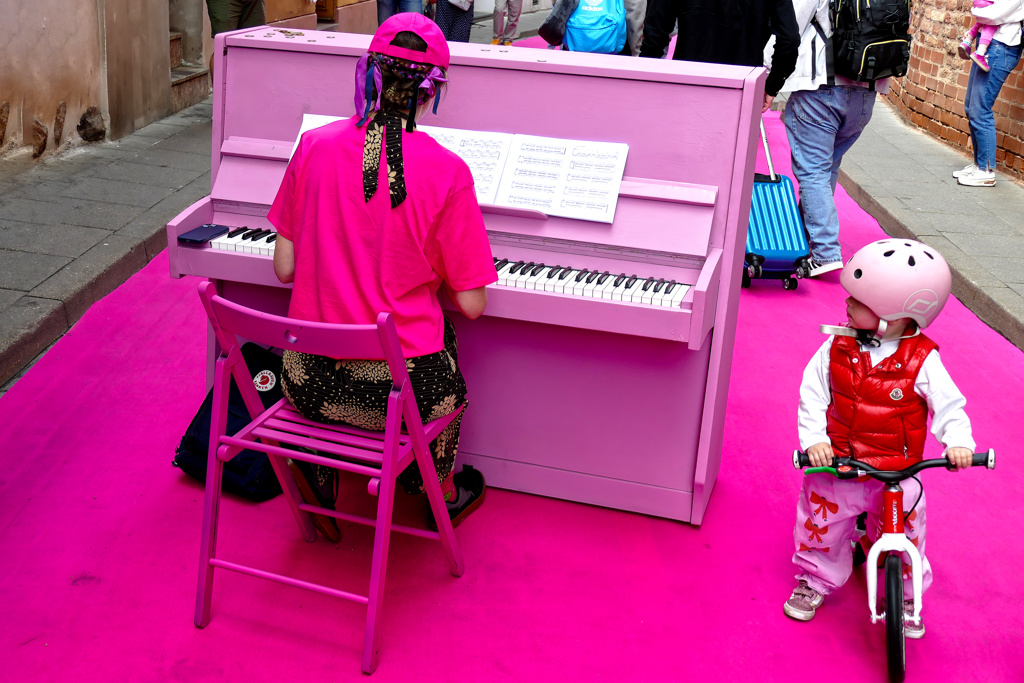
There is Mother’s Day and there is Father’s Day. There is Independence Day and there is Groundhog Day. Every day of the year, something or someone is being celebrated. And then there is soup. Not as a snack enjoyed during those celebrations. No, soup is actually the main character of a debauchery that the city of Vilnius celebrates as a kickstart into summer. Not just any soup, obviously. It’s Šaltibarščiai, the traditional pink soup that gets its color from its two main ingredients, kefir and red beet. For Lithuanians, it’s not just a refreshing dish, it’s a vibrant symbol of the country’s rich heritage, pride, and most importantly, pink joy in every bowl. La Vie en Rose!
While I love city breaks, I’m always completely exhausted afterwards. I have a severe case of FOMO, which is constantly triggered by the big city lights, its seductive museums, its tempting architectural gems, and other tantalizations. Food? I can eat later; after all, I had breakfast just a couple of hours ago. Drink? Fine, but only a sip on the go so I don’t become completely dehydrated. Plus, this ascetic way of visiting saves me from time-consuming trips to the bathroom. Two birds with one stone. Fortunately, there are also cities like Vilnius where leisure’n’pleasure are an important part of the culture, allowing me to both fulfill my mission as a self-proclaimed city scout and at the same time pamper myself and relax. This brings me to Vilnius’ rich coffee house culture. It needed to be explored. Someone had to do the job, so I sacrificed myself and can introduce you now to the best and most beautiful coffee houses in all of Vilnius.
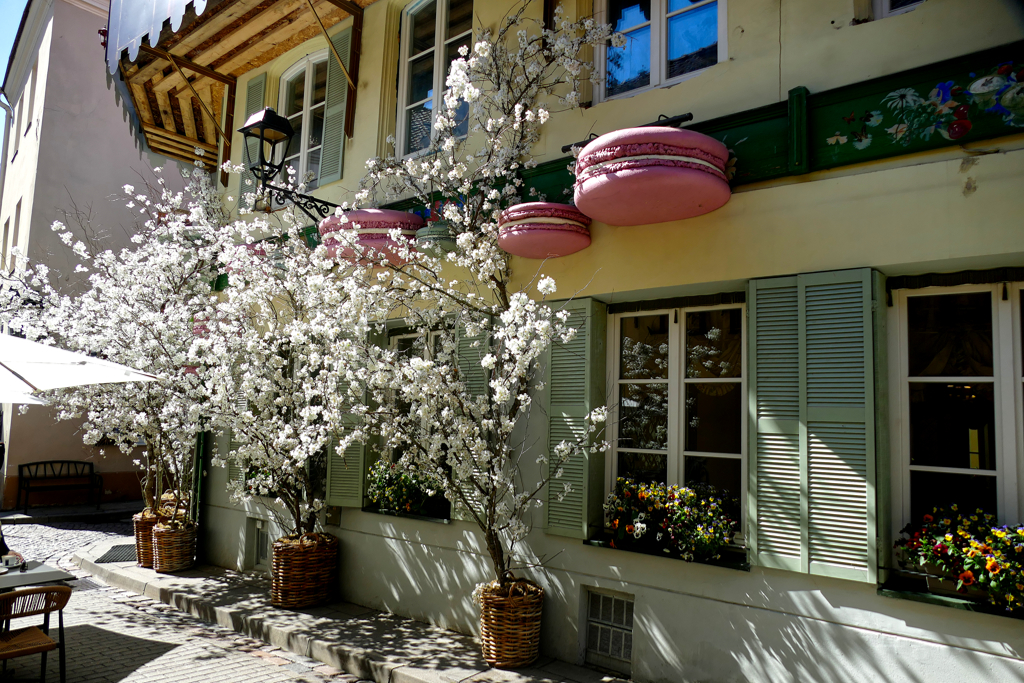
Poniu Laime is probably the only Café that’s at least as popular for its decoration as for its treats.This Way to the Whole Story ->
Vilnius, the vibrant capital of Lithuania, is rapidly becoming a dynamic center of street art, delighting locals and visitors. From striking larger-than-life murals to subtle stencil drawings in hidden alleys, the city’s urban art scene reflects a diverse mix of civic engagement and creative freedom. Mind you, these values hold particular significance in a country, finally independent after centuries of foreign hegemony and cultural oppression.
Brazilian twins Os Gemeos came back to Lithuania with a very personal mission: to pay homage to their grandfather, who is of Lithuanian descent.
In this post, I’ll take you to remarkable places where the best street art in Vilnius thrives. I’ll explore the stories behind some of the city’s most outstanding works and show you how urban art shapes Vilnius’ identity as a center of creativity and innovation.
The architectural style known as Vilnius Baroque is a regional variant of the Late Baroque in this specific part of Lithuania. Since this style is so unique, I’m dedicating this entire post to the amazing churches in the city of Vilnius.
Church of Saint Casimir, one of the most iconic structures built in the Vilnius Baroque style.This Way to the Whole Story ->
Lithuania might be small, but it’s steeped in history, innovation, and full of natural wonders, and its capital, Vilnius, effortlessly blends its rich traditions with modernity. But that’s by far not the only reason that makes the city an exceptionally exciting travel destination. Therefore, after having already featured the best places in the other Baltic Republics, it was finally time to see on a long weekend what Vilnius has in store. And let me assure you: the so-called Baroque Pearl of the Baltic is an incredibly lustrous gem!
Sundowner with a view: After a long day of sightseeing, a glass of wine on the amazing rooftop terrace of the Radisson Collection Astorija Hotel*, right across from the iconic Church of St. Casimir, is exactly what the ambitious traveller needs!This Way to the Whole Story ->
Are you heading to the Atlantic coast to take on those giant waves? Or do you want to enjoy an extensive wine tasting in the vineyards and chateaux around Saint-Émilion? Whatever the reason for your visit to this region of France, you’ll hardly be able to avoid at least a pit stop in the proverbial Pearl of the Southwest. I’m talking, of course, about Bordeaux, the charming wine capital of France. And that’s a good thing, because the city is definitely worth a visit, and with my guide for up to 24 hours, you’ll be able to make the most of Bordeaux.
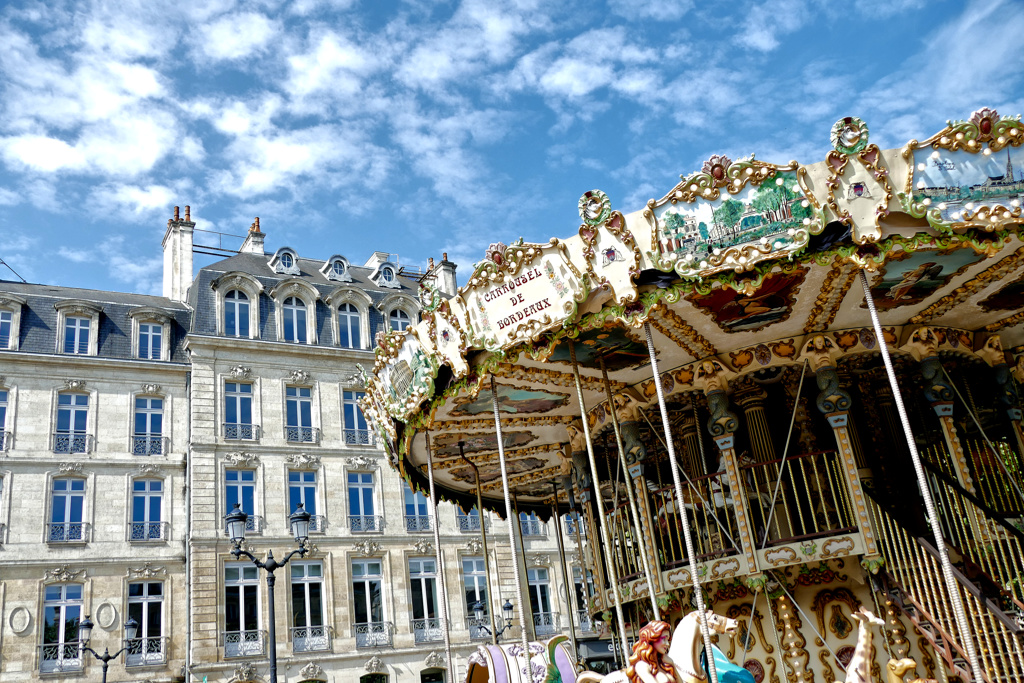
The retro charm of the old carousel blends enchantingly with the exquisite facades of Bordeaux’s magnificent buildings.
Normally, I would foresee at least two to three days in Bordeaux, even more if you really want to immerse yourself in the French savoir-vivre with leisurely strolls through the picturesque streets and plenty of breaks in cozy cafés. But sometimes, time is limited. Even more so, it should be used to its full potential, and below, you’ll find a perfectly designed itinerary.
After having introduced in my post BORDEAUX: Best Street Art on the Left Bank of the Garonne the best murals you’ll spot around the city’s historic old town, here is the best street art you’ll find alongside the right bank of the river Garonne.
Portrait by MAS.ONER decorating the facade of the Gymnase Thiers in the Bastide neighborhood on the right bank of the river Garonne.This Way to the Whole Story ->
By continuing to use the site, you agree to the use of cookies. more information
The cookie settings on this website are set to "allow cookies" to give you the best browsing experience possible. If you continue to use this website without changing your cookie settings or you click "Accept" below then you are consenting to this.