Whether you’re coming on a cruise ship, from one of the neighboring islands, or just want to experience the island in an authentic way at your own pace, a self-organized day trip by public bus will grant you a wonderful break from your daily beach life routine.
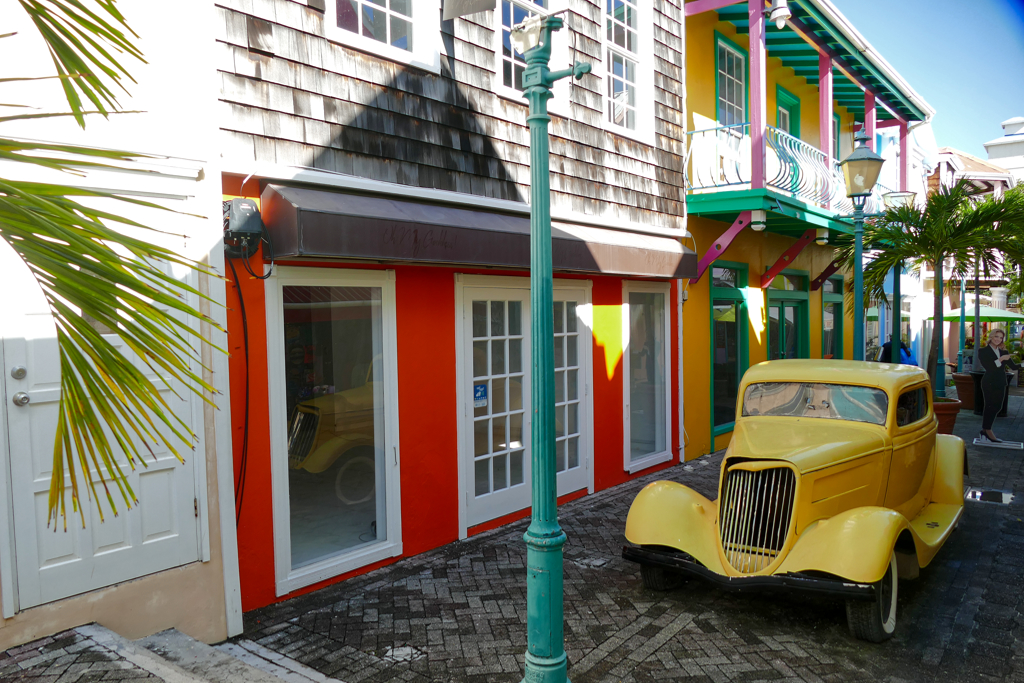
Saint Martin in a Nutshell
In my previous posts Best Things to Do in Sint Maarten, the Dutch Half of the Friendly Island and What Not to Miss in Saint-Martin, the French Half of the Friendly Island, I split my trip to this beautiful island according to its political division: The southern part of the island is a Constituent country within the Kingdom of Netherlands, while the north is French and, in fact, politically part of Europe!
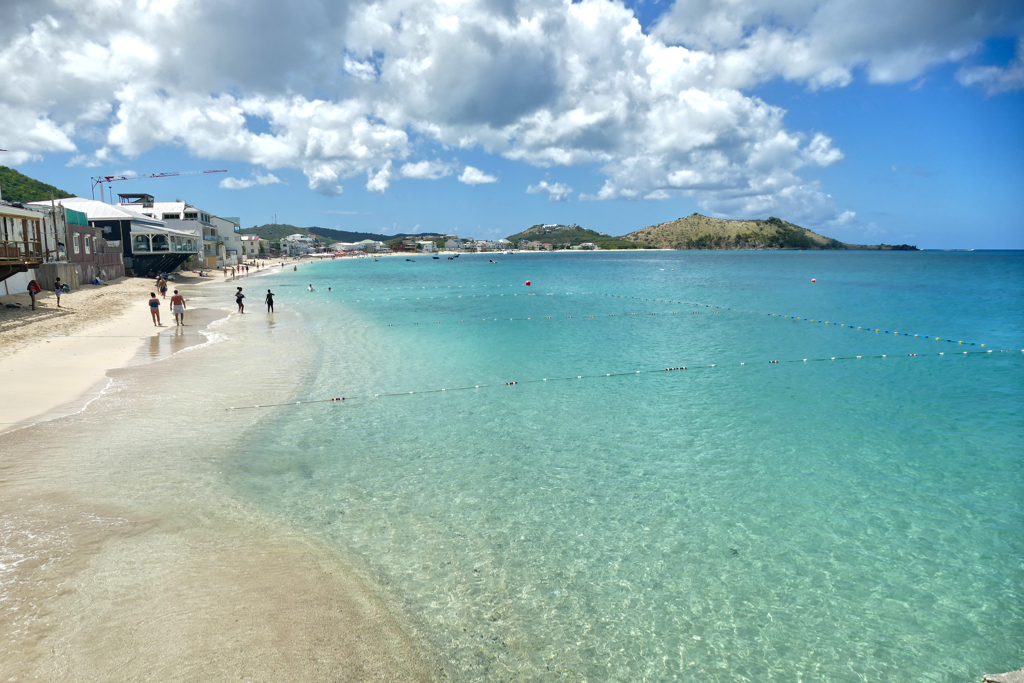
My division was intended to structure this diverse island clearly. As a matter of fact, in everyday life, the border is hardly perceptible. And where you do notice it, it’s easy to cross.
This also applies to the public bus system. And because Saint Martin, both parts combined, is only 87 square kilometers in size, it can be explored in just one day by public bus on a circular route. In this compressed travel guide, I follow the route and make stops for you at the most worthwhile spots.
Saint Martin: History, Identity, and Shared Destiny
Few places in the world embody the complexities of colonial history, cultural fusion, and modern globalism as vividly as this small Caribbean island. It stands as the smallest inhabited island in the world shared by two sovereign powers. Its story is a window into the broader currents of Caribbean history: indigenous displacement, European rivalry, the rise and fall of plantation economies, emancipation, and the transformation into a tourism-driven hub.
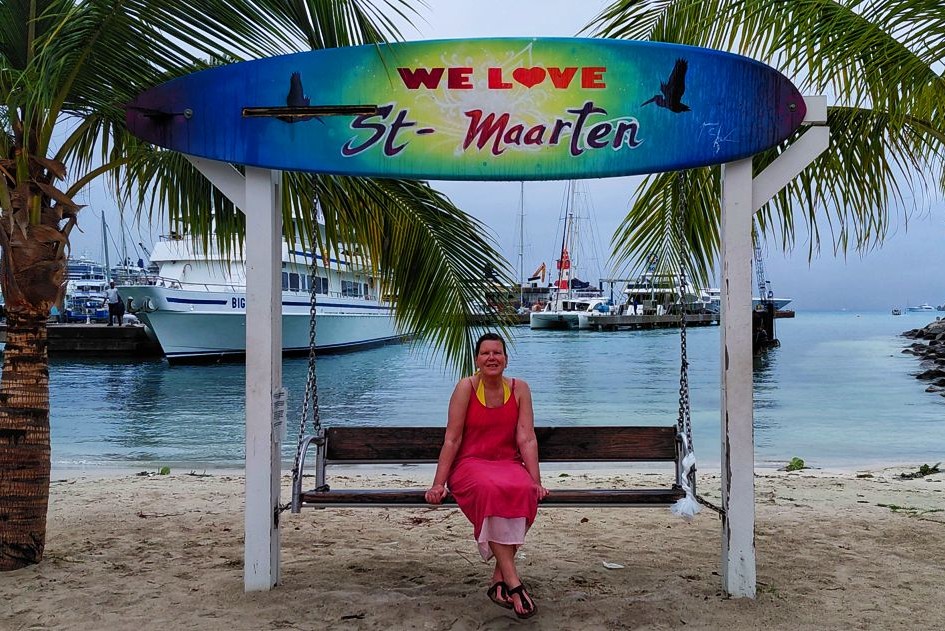
Despite its small size, Saint Martin has a varied geography with hills rising to about 400 meters, dry scrubland in some areas, and lagoons and salt pans that historically played a central role in the economy. The Great Salt Pond in present-day Philipsburg, for example, was a coveted resource because salt was essential in food preservation during the early modern period.
Before European contact, the island was inhabited by indigenous peoples, likely the Arawaks and later the Caribs. In 1493, Christopher Columbus sighted the island on his second voyage and named it in honor of Saint Martin of Tours. It was not until the early 17th century, however, that Dutch and French interests converged here. In 1648, both nations agreed to divide the island through the Treaty of Concordia.
Fun Fact
According to local lore, the borders were determined by a walking contest between a Frenchman and a Dutchman, each setting off in opposite directions from a central point. Supposedly, the Frenchman covered more ground because he drank wine, while the Dutchman, slowed by stronger spirits like genever, covered less. Therefore, the Dutch part, covering 34 square kilometers, comprises about 40% of the island, while the French occupy the northern 60% with 53 square kilometers.
Like most Caribbean colonies, Saint Martin installed plantation economies centered on sugarcane, cotton, and tobacco, fueled by enslaved African labor. Plantations were generally smaller and less profitable than those in larger Antilles, but slavery nonetheless defined the economy and social hierarchy.
The French abolished slavery in 1848, while the Dutch officially abolished it in their colonies in 1863.
After emancipation, the island entered a long period of economic stagnation.
The transformative moment came in the mid-20th century with the advent of mass tourism. In 1943, the opening of Princess Juliana International Airport on the Dutch side marked a turning point. Hotels, resorts, and casinos soon followed.
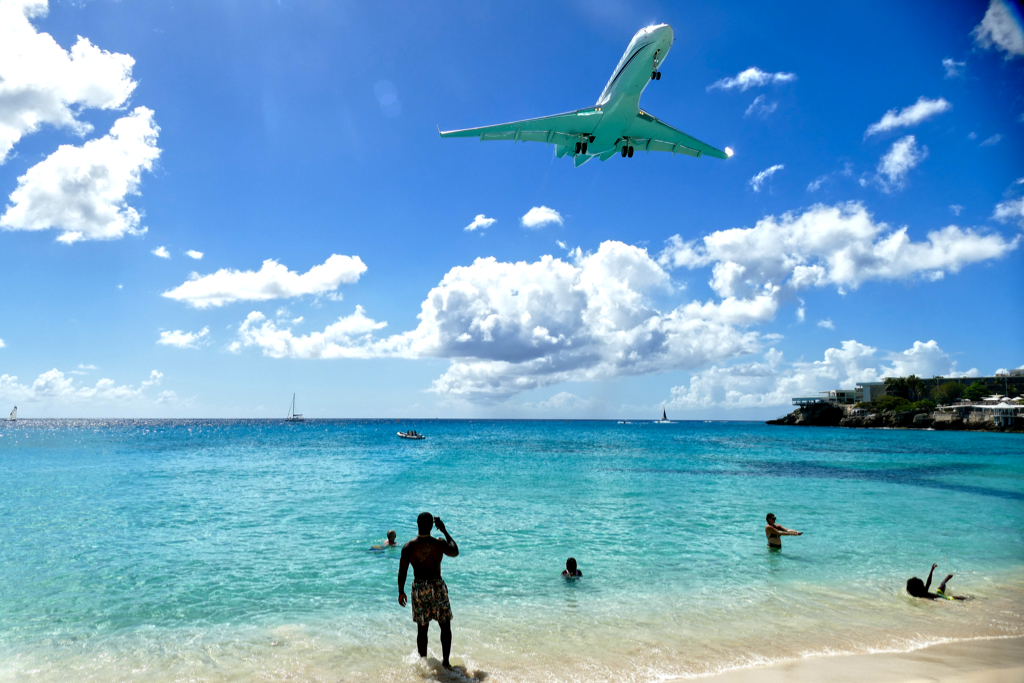
Despite the political border, the cultural life of the island is remarkably cohesive. The people of the island often see themselves as one community, transcending colonial divisions. The open border facilitates daily life, commerce, and family ties. Residents freely cross between Philipsburg, the Dutch capital, and Marigot, the main city on the French side. Tourists are enjoying the unique two cultures in one island experience.
Around Saint Martin By Public Bus
The public bus system is actually very good as it covers most of the island. While you can’t get to every place, you can reach most points of interest for a small fare. Public buses run on several routes between 5 a.m. and midnight, but without a fixed schedule. There are clearly marked bus stops, but you can also hail a passing bus from anywhere. Similarly, you can get off anywhere by calling out. Fares cost between one and two dollars, depending on the distance. You should have the exact fare, or at least small change if possible.
The start and end points of each route are indicated on signs in the windshield. There’s also a bus that connects Philipsburg with Marigot, the main town on the French side, as well as with the so-called French Quarter. And that’s exactly how our tour of the circular route begins. However, I would like to emphasize that you can join the tour at any point along the route, as it is a circular tour.
The entire route is generally served by three different buses. Of course, you’ll have to take more buses if you include stops at particularly scenic spots along the way.
For the sake of simplicity, however, we will begin in the capital of the Dutch part, namely Philipsburg.
From Philipsburg to Marigot
The first bus route starts in Philipsburg and ends in Marigot. You can board a bus along Philipsburg’s Back Street. Note that you won’t find a designated bus stop here. As soon as you see a bus with a Marigot sign, flag it down. Keep in mind that it could be a large bus or a smaller van. This actually makes no difference. The fare for the entire trip will be two US$. If you include stops, you pay for each leg around one to 1.50 US$, hence, your trip gets a little bit more expensive.
Philipsburg
Before you hop on the bus, take some time to explore Philipsburg.
Although up to six cruise ships dock in the city daily, Philipsburg can definitely be experienced beyond the tourist crowds. Away from the obvious commercial zones, the capital reveals an unhurried side that will surprise you.
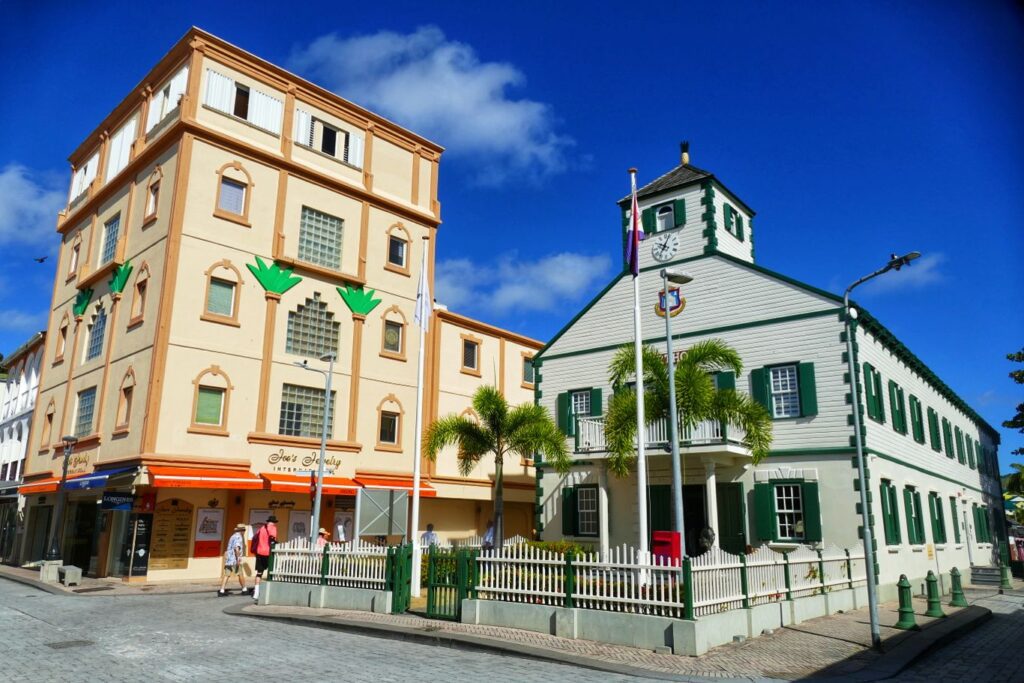
A major attraction lies in its waterfront location along the promenade, which connects the sea with city life. Here, you can enjoy a relaxing stroll, especially in the early morning. The blend of harbor atmosphere and open coastal city feels pleasantly laid-back.
The city’s history is also palpable. The colonial architecture, small administrative buildings, and historical structures tell of the eventful past of the island of Saint Martin. Those interested in this will gain a much richer, more authentic understanding here than in the purely tourist areas.
You quickly realize that Philipsburg is not just a backdrop, but a functioning community – with corners that aren’t geared towards mindless consumption. In my post Best Things to Do in Sint Maarten, the Dutch Half of the Friendly Island, you will find a detailed description of the city, including many suggestions on what to see.
Of course, a visit to the beach in Philipsburg is also worthwhile. However, I wouldn’t start there. I’ve saved it for the end of our tour. That way, you can enjoy the coastline at sunset.
And now let’s go to Backstreet and catch the bus, shall we?
Cole Bay
Sint Maarten is extremely hilly, an island like a rollercoaster. This makes the island particularly picturesque, and, above all, it offers many amazing viewpoints.
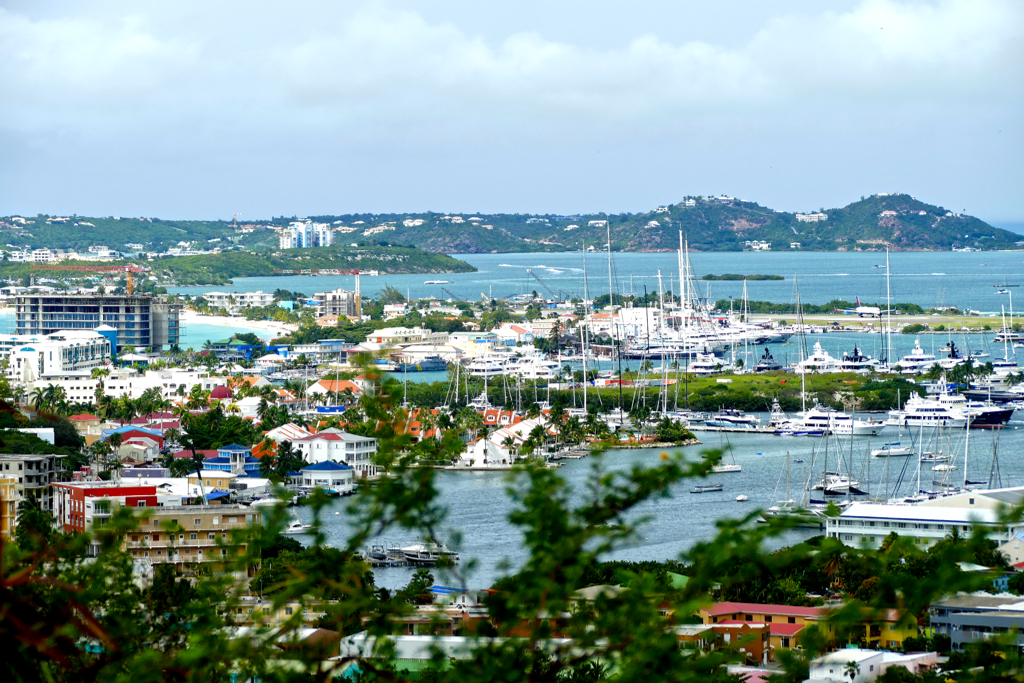
One of the most spectacular ones is Bell’s Lookout at the top of Cole Bay Hill. From here, you have a breathtaking view across the entire Simpson Bay Lagoon all the way to the southwestern tip.
At this point, one of Saint Martin’s notorious traffic jams could actually work in your favor. While nothing moves for minutes on end, you’ll have plenty of time to enjoy the view. Alternatively, you can also get off here to take photos at your leisure. Just let the bus driver know in time. A simple Stop at the Bell Lookout, please, is all it takes. Later, when you’re ready to move on, simply flag down the next bus. During the day, buses run every few minutes on this route.
As you continue towards the town of Cole Bay, keep your eyes peeled at the Cole Bay Roundabout. Here, you’ll spot Osborne “Traffic Man” Kruythoff on a pedestal. This is one of a series of sculptures decorating the island’s busiest traffic points.
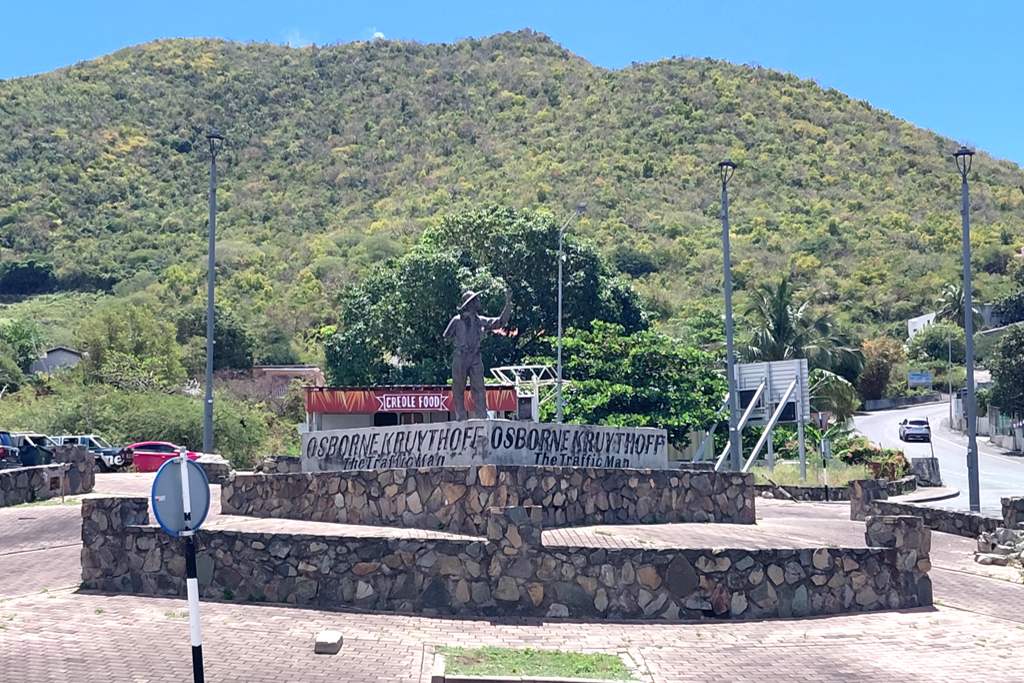
I simply love those statues. Not only for their decorative purpose, but because, for a change, they don’t honor some King or Queen, but rather local everyday heroes such as a salt picker, a bus driver, a butcher, and a baker, as well as freedom fighters. Most of these bronze statues were created by Michael Maghiro. He is a Nigerian-born artist who’s been living on the island for quite some time.
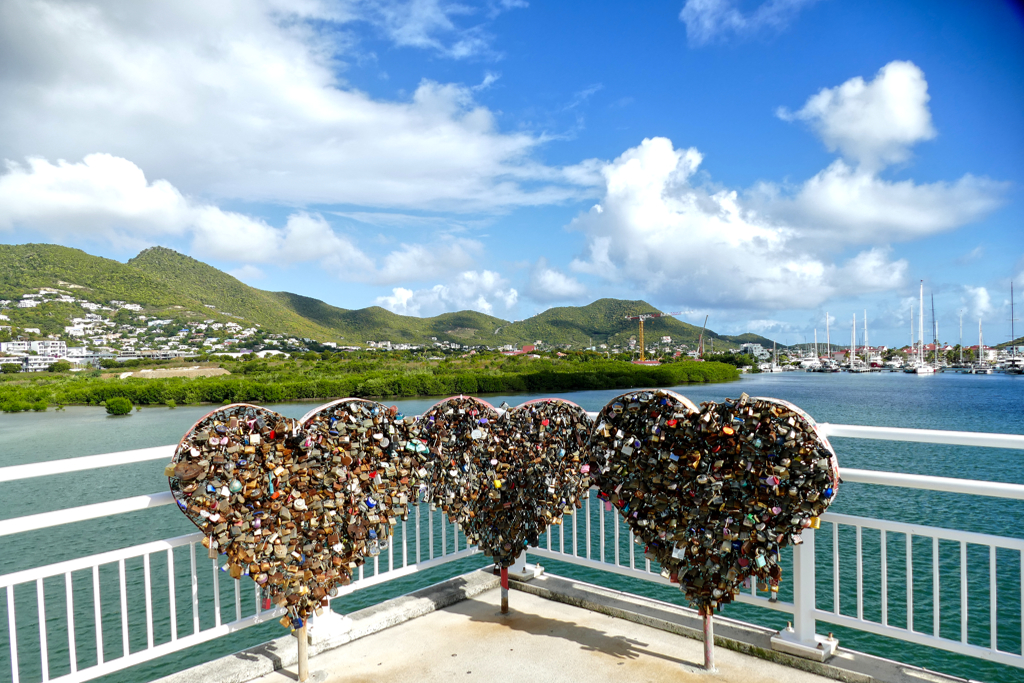
After the bus passes through Cole Bay, you’ll reach the Simpson Bay Lagoon Bridge. It serves a dual purpose: firstly, it allows road traffic—cars and pedestrians—to cross the lagoon, and secondly, it acts as a movable bridge, regularly opening to allow boats and yachts to pass between the lagoon and the open sea.
The current modern structure was completed in the late 1980s, following the construction of an earlier swing bridge in the same location.
The bridge is a vital transportation hub on the island and essential for shipping traffic in the busy marina and lagoon area. Pedestrians can also easily and quickly cross from Cole Bay to Simpson Bay, enjoying magnificent views of the lagoon with its mangroves and the majestic sailboats on the way.
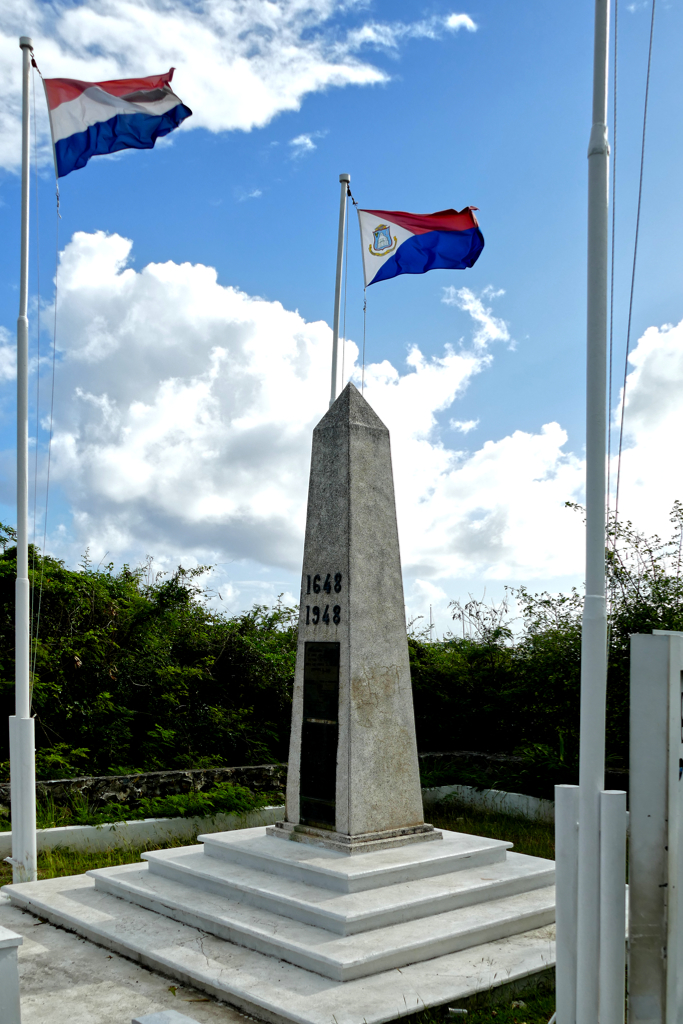
Just around the corner from the bridge is a border crossing to the French part of the island—if you can call it that. Here, one of the few remaining symbols commemorating the island’s division between two states stands: the Concordia Monument. It was erected in 1948 to mark the 300th anniversary of the Treaty of Concordia of 1648, which divided the island between the Kingdom of France and the Dutch Republic.
From Marigot to French Quarter
And before you know it, you’re in France, and therefore on European soil. Here you pay in euros, and your phone has European data roaming. But be careful, phones sometimes switch unexpectedly between networks, and this can result in very high costs. To be on the safe side, I would leave my phone in airplane mode and use the Wi-Fi networks exclusively. Those are available in many places.
Better safe than sorry.
The fact that Marigot’s bus station is the final stop for the first bus gives you the opportunity to look around the city a little before continuing on our circular route.
Marigot
Marigot, with its roughly 5,000 inhabitants, effortlessly blends Caribbean and French savoir vivre. It is picturesquely situated on a sheltered bay on the island’s west coast. A natural harbor serves as a very photogenic backdrop with turquoise water, sailboats, and colorful houses.

Marigot’s special charm stems primarily from its casual ambiance. In the downtown area, there’s a large market where local vendors offer spices, fresh fruit, fish, handicrafts, and Caribbean specialties. Here, islanders and tourists mingle in harmonious unity.
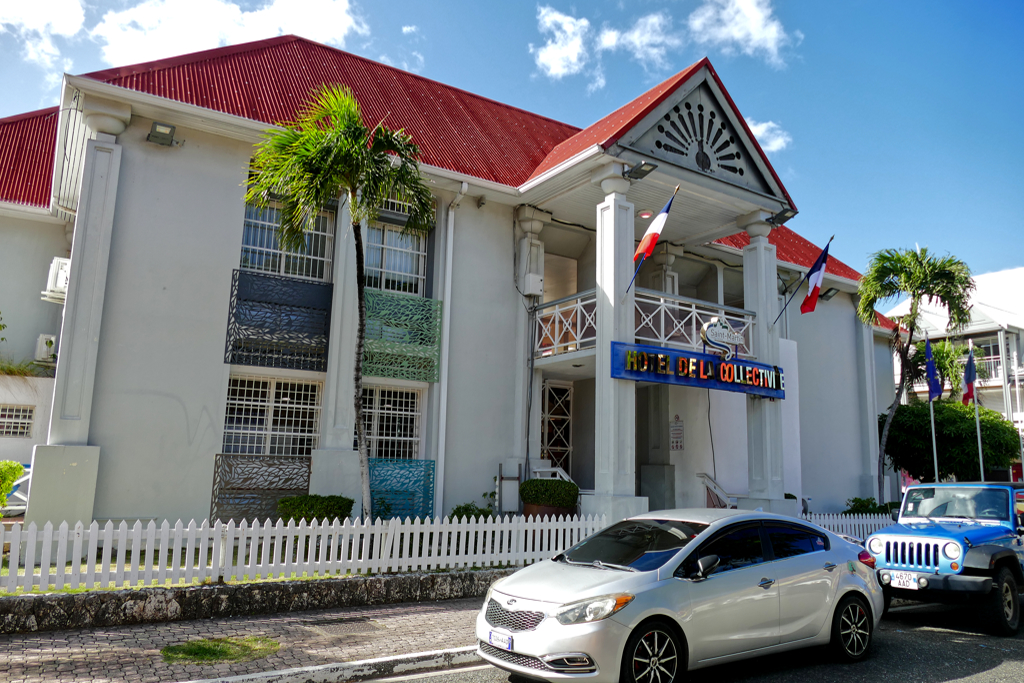
Small boutiques, cafés, and French bakeries cater to the needs of both groups. You’ll feel more like you’re in a small, slightly run-down town in the South of France —only with palm trees and a sea breeze.
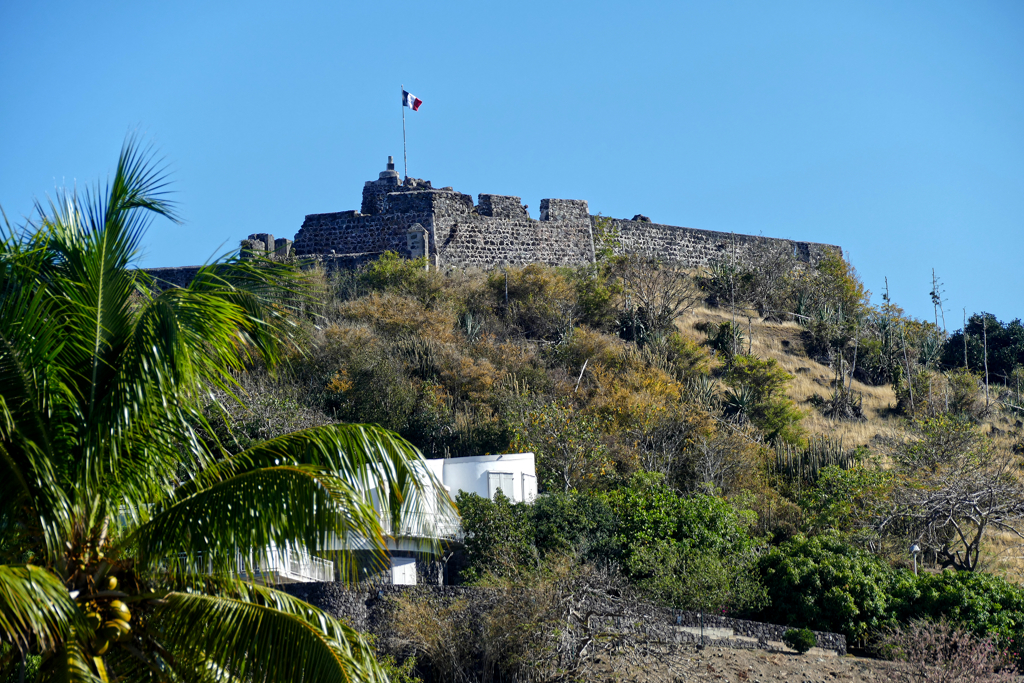
Marigot is also an excellent base for taking a boat to nearby beaches and neighboring islands. Despite its role as an administrative center, the town has a relaxed and welcoming atmosphere.
Grand Case
Now, back to the bus station, from where you can take a bus towards the French Quarter.
After just under 20 minutes and for only 2 €uros or US$, you’ll reach Grand Case. It’s definitely worth making a pit stop here – perhaps even a longer break on one of the island’s most pleasant beaches. Yes, this beach is also one of the most beautiful, but its real charm lies in its uniquely relaxed atmosphere.
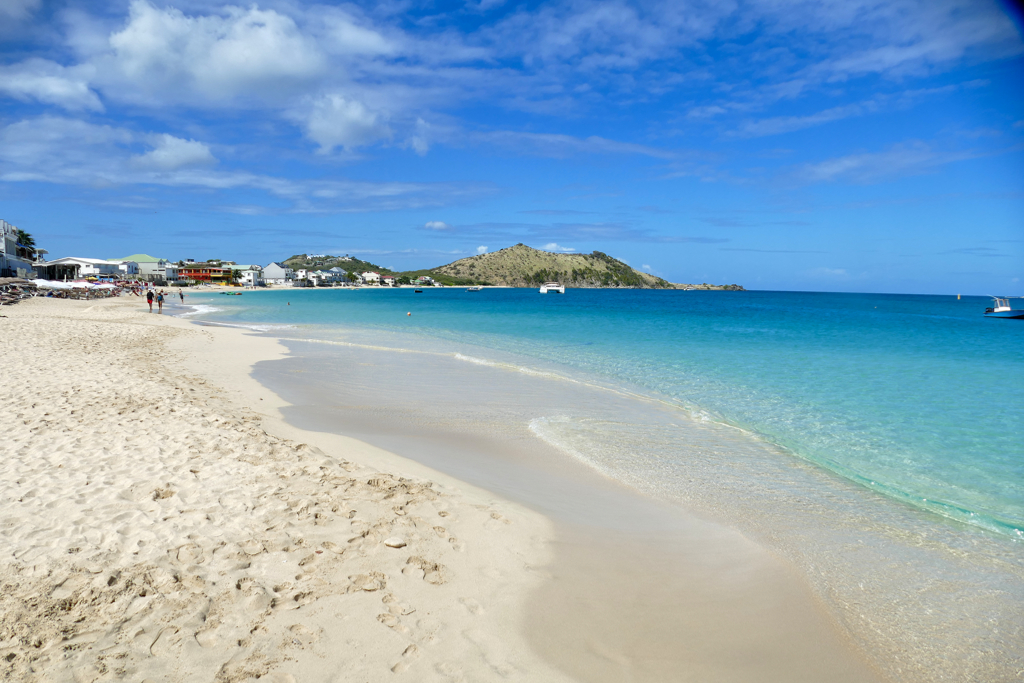
The former fishing village doesn’t have any obvious landmarks. It’s simply wonderful to stroll through the narrow streets and immerse yourself in everyday Caribbean life.
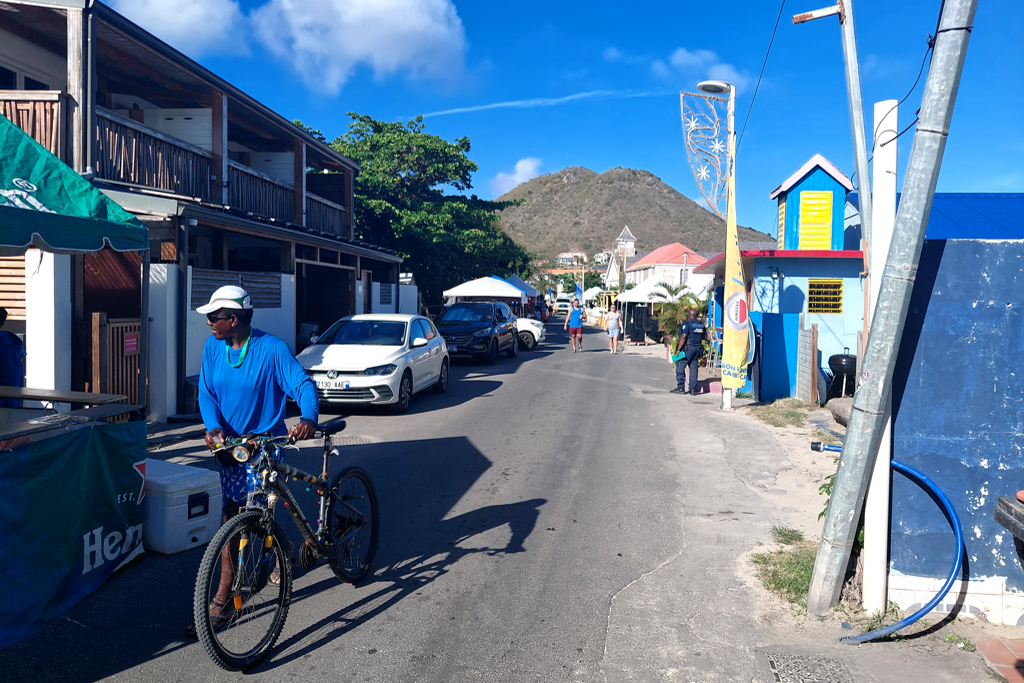
Grand Case is also definitely the perfect place to enjoy a delicious lunch before you continue.
Orient Bay
Once you’re ready, hop on the next bus – always heading in the same direction. It will now pass by the Grand Case-Espérance Airport.
If you’re lucky, it might make a detour to the remote village of Cul-de-Sac. It only goes there if passengers specifically request it. Besides locals, these are sometimes visitors who want to take the ferry from there to Île Pinel.
We don’t have time for a visit to the isle on this tour. Hence, we stay seated and continue to Orient Bay. This place is famous for its long beach. Personally, I find it far too busy and touristy. Besides, the walk from the main road where the bus stops all the way to the shore takes about 20 minutes in the blazing sun.
I think there are much better places on the island.
On Top of the Hill
However, a stopover is worthwhile behind Orient Bay above Le Galion Beach. Here is the Amuseum Naturalis at The Old House. Don’t worry, it’s not a classic museum in the usual sense. It’s a deliberately simple open-air educational project situated on a historically significant site. The focus is on the site itself, a former plantation whose use dates back to 1766. Over time, its agricultural use evolved from coffee and sugar production to salt extraction from nearby ponds.
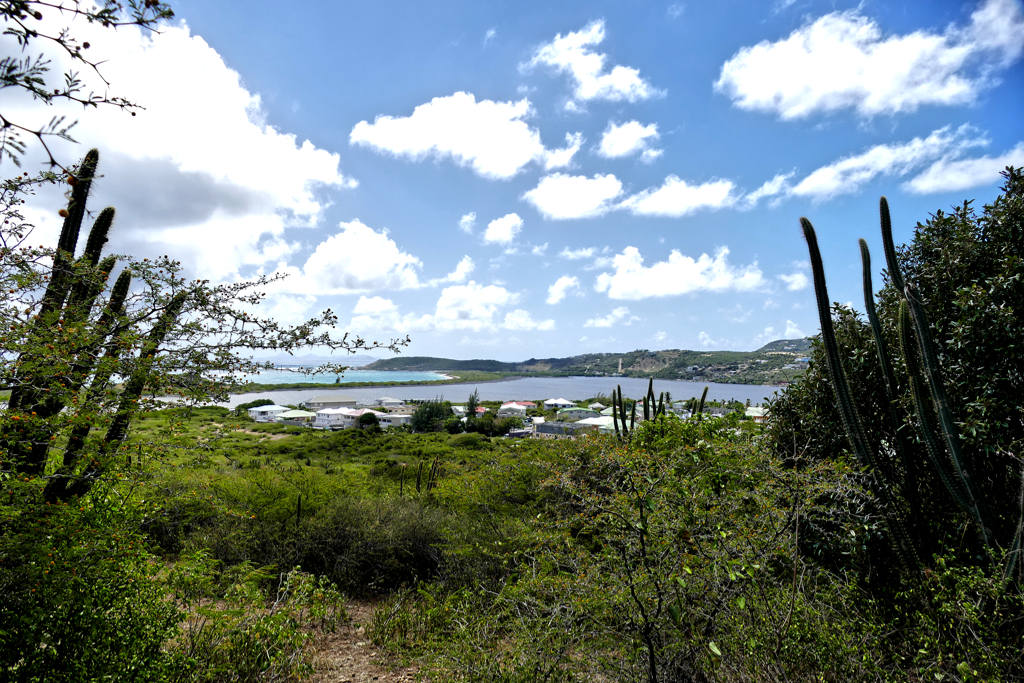
The current building is not the original plantation house, as earlier structures were destroyed, partly by hurricanes. The current structure dates from the 20th century. The exhibition focuses on the local flora and fauna, traditional crops, medicinal methods, and cultural influences from Africa and the Caribbean. The museum is open every day from 6 a.m. to 6 p.m., and entrance is free.
Hold Your Horses
Right next to the Amuseum Naturalis is the Ranch du Galion. It is not primarily a tourist riding stable. It’s rather a facility dedicated to the rescue and care of abandoned horses. Many of the animals come from difficult living conditions and receive long-term care here. However, a riding program also serves to financially secure the animals’ upkeep.
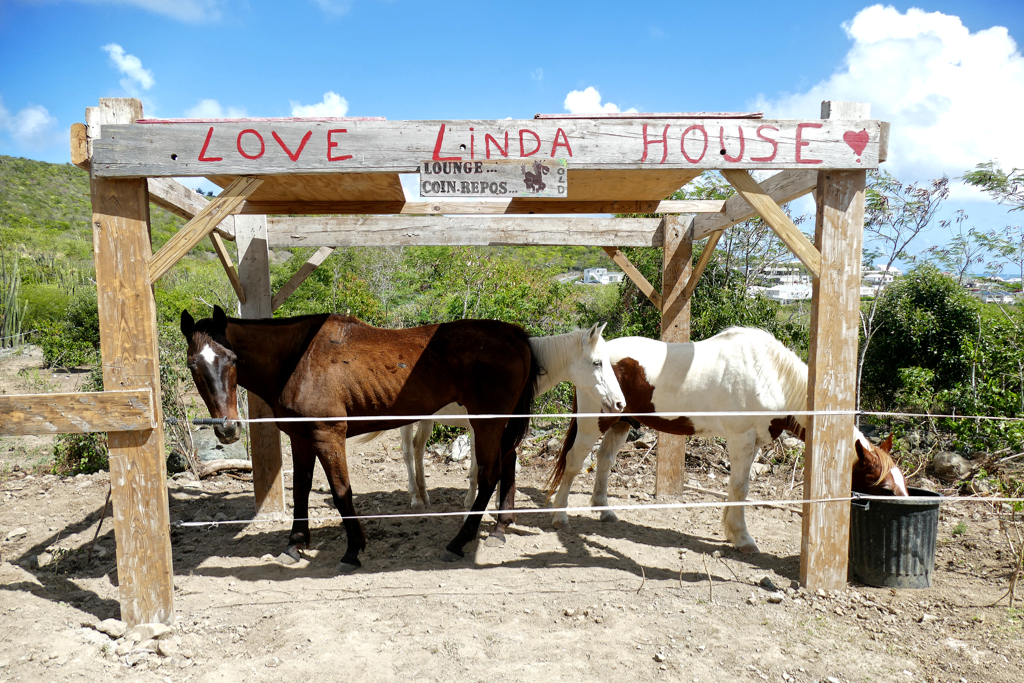
The ranch is characterized by its relatively natural environment, situated on expansive grounds between the coastline and the rolling hills. The offered horseback riding excursions lead through the area surrounding Le Galion, including protected nature reserves and stretches of beach.
French Quarter
Our next stop and the final destination of the bus is the so-called French Quarter, Quartier-d’Orléans in French.
Although it is considered one of the oldest continuously inhabited settlements on the French side, it has virtually nothing to offer tourists. Historically, the area was primarily agricultural and fishing-based.
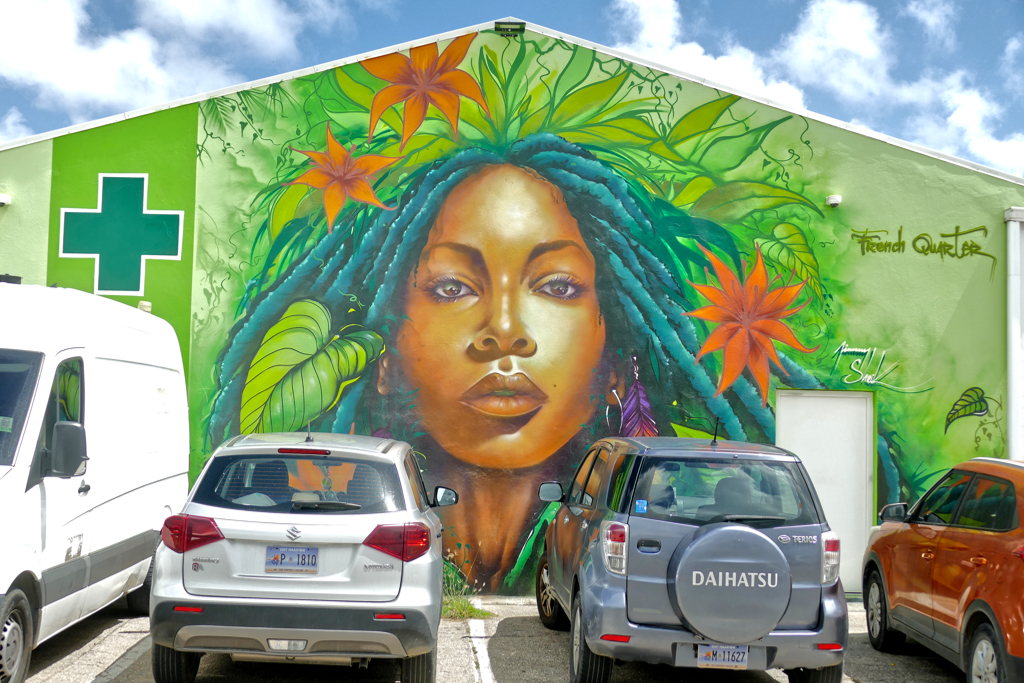
Hence, it is significantly less developed for tourism than the west coast around Marigot or Grand Case. Nevertheless, you must get off here, as it is the final stop for the bus from Marigot. Here we will take the third and final bus. It will take us back to Philipsburg via a different border crossing.
From French Quarter to Philipsburg
Right behind the town limits of French Quarter lies the main border crossing to the Dutch side. It is marked by a simple stone border monument, which actually serves solely as a symbolic marker and is a quirky subject for touristy photographs.
Dutch Quarter
From the French Quarter, it’s much closer to Philipsburg than if you go from Marigot. In fact, the bus only crosses the hills of the Dutch Quarter. Hills—that’s the keyword here: You might be a little tired from our tour, and glad to be on the bus and soon reach the final destination. But I urge you to keep your eyes peeled and ask the bus driver to drop you off at one of the spots in the Dutch Quarter that offers a million-dollar view of the Philipsburg salt flats and the vast ocean beyond.
Believe me, you won’t regret it.
And the next bus will be here in just a few minutes.
Yes, and then you can take that one back down the hill to Philipsburg and to where we started.
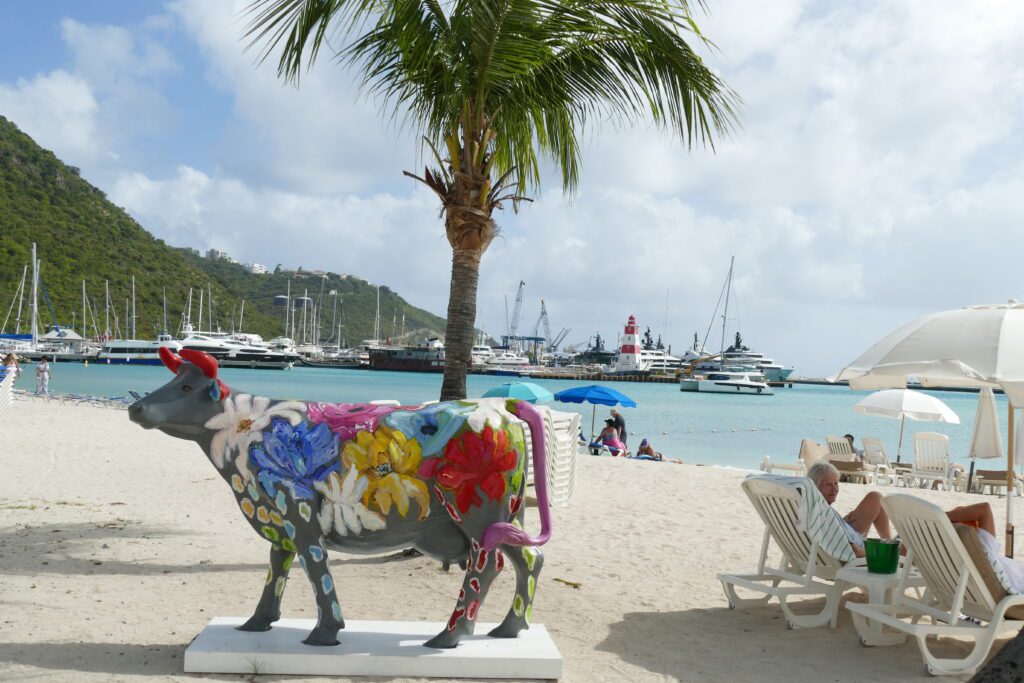
You made it!
Now you can relax on Grand Bay Beach after a wonderful excursion that costs you neither much time nor money.
Thanks for joining me!
Map
On this map, you’ll find all the amazing spots I’m introducing in my posts. Clicking on the slider symbol at the top left or the full-screen icon at the top right will display the whole map, including the legend.
This itinerary is a suggestion for an extraordinary day trip. Therefore, you won’t find the usual practical information about Saint Martin in this post. But don’t worry, you’ll find this, along with many other great suggestions for things to do on the island, in my posts Best Things to Do in Sint Maarten, the Dutch Half of the Friendly Island, and What Not to Miss in Saint-Martin, the French Half of the Friendly Island. Also, I compiled the best beaches in my post The Best Beaches Around Saint Martin You Can Easily Visit by Public Bus.
Pinnable Pictures
If you choose to pin this post for later, please use one of these pictures:
Did You Enjoy This Post? Then You Might Also Like These:
BONAIRE Totally Unexpected: Street Food And Urban Art Tour
Grub First, Then Ethics – Brace Yourself for Cuba
MAGNIFICENT MARTINIQUE: Ten Places Not to Miss on Your Visit (even when exploring by public bus)
CURACAO – Guide to the Caribbean Island That Has It All
Two Days in CARTAGENA
Guide to TRINIDAD – Cuba’s Colonial Fantasy
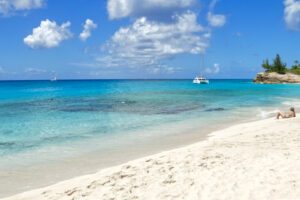
The Best Beaches Around Saint Martin You Can Easily Visit by Public Bus
Murals in CURACAO: The Best Street Art Projects in Willemstad
* This is an affiliate link. If you book through this page, not only do you get the best deal. I also get a small commission that helps me run this blog. Thank you so much for supporting me!
This is exactly what I was looking for. We are heading there in a couple of weeks, and your guide is sooo helpful!
I’m so glad this is helpful. I wish you a fantastic stay!