Antigua is one of those Caribbean islands you don’t just visit. You experience its unique blend of relaxed celebration of joy and tropical nature with all your senses.
Surrounded by turquoise waters, its 365 beaches offer a different seaside experience every day of the year. But Antigua is much more than just a beachfront destination. Behind the idyllic sandy shores lies a vibrant culture that instantly feels like home – only under palm trees.
So come along and see for yourself what not to miss on a grand tour around the island.
- To Feel the Soul of a Country, Take the Bus
- Home Away From Home
- Welcome to Antigua!
- The Best Places Not to Miss in Antigua
- Practical Information
- Map
- Pinnable Pictures
To Feel the Soul of a Country, Take the Bus
Unlike the West Station, which is a proper station with parking bays and signs, the East Station is more of a neglected, dusty lot. Nevertheless, there’s an unspoken order to it, so my bus, number 55, is always waiting in the same spot. Like most public buses, it’s a minibus with room for about 18 passengers. Luckily, it’s already quite full, because the drivers only hit the road when all the seats are taken. The gentleman from the Philippines is already there. I know where he’s from because someone recently greeted him jovially with Hey, Philippines. Political correctness isn’t exactly a priority here.

Now the man who works at the hardware store is getting on. I know where he’s working since he’s wearing a staff shirt. Then, the two ladies from the beauty salon board. Yes, if you take the bus every afternoon as I do, you eventually get to know most of the other passengers—without actually knowing them, of course.
The Latina now occupies the last free seat next to me. I’m guessing she’s from the Dominican Republic, since the vast majority of Antigua’s Spanish-speaking population hails from there. She scoops her daughter, still in her school uniform, onto her lap. Then she stuffs the daughter’s backpack and her full shopping bags into the footwell. I wonder how I’m going to get out later.
The driver, who was just swallowing the last bite of her burger at the bus station’s grill stand, walks around the bus to check things over. Then she settles into the driver’s seat and revs the engine.
Off we go!
In Da Hood
At this hour, Saint John’s main streets are hopelessly congested. We crawl along at a painfully slow pace. But our driver is a wily operator. She turns at the next opportunity and maneuvers the bus through the narrow back streets.
As she turns at the tennis courts, I call out, Stop at the corner, please. I get a few surprised looks. Yeah, you probably thought I was lost and was going to take the bus back to my all-inclusive resort, huh? But you’re way off. Upper Gambles is my hood, and I’m getting off right here.
In a kind of passenger Tetris, I manage to work my way from my seat in the back to the front and out of the bus. Through the open driver’s window, I press 2.25 EC$ into the driver’s hand, say goodbye, and carefully cross the street. Judging by the astonished looks, I seem to be the only tourist who has ever taken the bus.
Nevertheless, after four weeks on Antigua, I’m something like the passenger final boss.
Home Away From Home
To be able to easily catch the public bus, I deliberately settled on the outskirts of Antigua’s capital, Saint John’s. I’m not so keen on taking the bus because I’m doing social studies. Nor am I a quirky maniac. The simple reason is that I don’t drive. Nowhere in the world. Therefore, proximity to a reasonably functioning bus system is a prerequisite for my travels. And the system in Antigua does function reasonably well.
Yet, reasonably well is about it.
Buses don’t run after 6 p.m. or on Sundays. No big deal, I’m in no rush, I’m here for four weeks. Since I’m stuck on Sundays, I’ll just do laundry, the dishes, and work on my blog. Besides, my favorite supermarket, which is within walking distance, is also open on Sundays, so I’ll pick up some treats later.
On Monday morning, I’ll be back down at the bus stop, ready to explore another one of Antigua’s supposedly 365 beaches – and beyond.
Welcome to Antigua!
Antigua is the larger of the two main islands that make up Antigua and Barbuda, and the island’s history stretches back centuries. Long before European contact, Antigua was inhabited by the indigenous Arawaks and Caribs. In 1493, Christopher Columbus sighted the island on his second voyage to the Americas. He named it Santa Maria de la Antigua, reportedly after a church in the Spanish city of Seville.

Eventually, in 1632, English settlers arrived, establishing sugar plantations worked by enslaved Africans. This turned Antigua into a key hub for trade and British naval operations. The abolition of slavery in 1834 reshaped the island’s social and economic life. After decades of gradual self-governance, Antigua became an independent nation within the Commonwealth in 1981. Today, tourism, agriculture, and offshore finance drive the island’s economy.

However, first and foremost, Antigua is a paradise for nature lovers. The island boasts over 365 beaches, offering a new spot to soak up the sun every day of the year. Its waters are the perfect ground for snorkeling, while inland, lush hills, volcanic remnants, and scenic trails offer hiking opportunities far from the beaches.
The Best Places Not to Miss in Antigua
As I stated above, I had booked myself into a comfortable Airbnb in Upper Gambles, a lovely residential area on the outskirts of the island’s capital Saint John’s. Therefore, my guide starts in this very spot where most of the around 95K Antiguans live.
Saint John’s
Let’s get one thing straight: St. John’s isn’t a place that tries to please. But that’s precisely why it stays with you.

Especially in contrast to the beach resorts, the city feels somehow real. Nothing is over-curated, much seems incidental. And that’s exactly an authenticity that you immediately notice, even if you can’t quite put your finger on it.
This slightly rough-around-the-edges feel isn’t just a condition. It’s actually a vibe created by the heat that slows things down, causes damage to structures, and yet lifts everyone’s spirits.

The part around the harbor is functional and bustling. Cruise ships dock, souvenir stands open, taxis wait. Yet just a few streets apart, the mood shifts. There, the city shows its less polished side as old wooden houses line narrow streets. Many buildings still bear witness to the British colonial era, such as St. John’s Cathedral, whose white spires, while iconic, also show the marks of time and climate.
Da Real Ting
St. John’s is loud, direct, and unpretentious. Spots like the Public Market aren’t tourist traps, but simple places of supply. Here, it’s about fruit, fish, and local chitchat—not your perfect photo opportunities. The infrastructure sometimes seems improvised, and the streets aren’t always well-maintained. How often have I squeezed past open manholes, thinking that looking at my phone there instead of watching my step could cost me my life?

There’s a stark contrast between the duty-free zones for cruise ship passengers and the everyday lives of the residents. Those who embrace it will discover fewer sights in the traditional sense, but rather immerse themselves in the atmosphere created by the heat, music from open doors, conversations on the street, and an overall slow pace.
St. John’s isn’t a picture-postcard idyll – and that’s precisely what makes it so appealing.
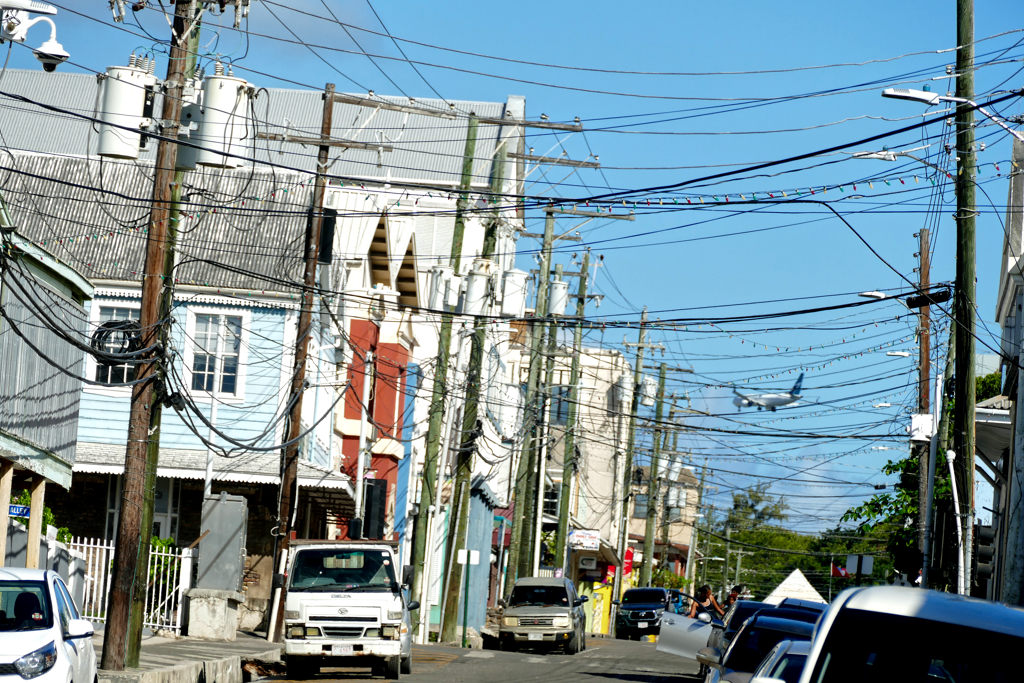
I spent four weeks in Antigua, and during that time, I walked across the city every single day. Not because I absolutely loved the city and couldn’t get enough of it. No, my reason was practical: I was exploring the island by public bus, and Saint John’s has two bus stations located at opposite ends of the city. I arrived at the East Station and had to walk across the city to the West Station, from where the buses depart for the beaches and other tourist destinations.
Five Islands Village
Five Islands Village is just a few minutes from St. John’s West Station on bus #61. Here, you’re atmospherically far removed from the bustling center of St. John’s, like stepping into its own little world. It’s not a popular destination. Simple houses, minimal infrastructure, and a focus on everyday life. People here don’t live for tourism, even though it’s slowly gaining ground.
So why should you come? Because a 25-minute walk will take you to Deep Bay Beach. The beach itself is quiet, almost secluded. The wreck of the SS Andes lies in the bay, visible from the shore – a detail that lends the scene an almost surreal quality, somewhere between a postcard picture and decay. The small lagoon behind the beach is reached via the narrow Lagoon Bridge Deep Bay – more of a functional crossing than a structure, but it’s precisely these kinds of places that stay with you.

And then, just a little further on, the Galley Bay Beach Resort & Spa* presents an almost jarring contrast: manicured grounds, an immaculate beach, and a tranquility that isn’t accidental but carefully cultivated. It feels like a parallel version of the same landscape—smoother, more controlled, optimized for relaxation. It’s precisely this juxtaposition that reveals how differently a place can feel depending on its intended audience.
This Land is Your Land, This Land is My Land
At this point, it’s worth noting that all beaches in Antigua are public. Of course, you can’t simply use the facilities of hotels or beach bars. Following the principle of wherever I lay my hat towel, that’s my home, you can set up your own parasol and spread out your beach towel anywhere. I did have some discussions with security about who owned the shade cast by the fixed umbrellas and even the trees, but that’s a philosophical debate that doesn’t belong in this tourist guide.
The important fact is that you can stretch out wherever you please.
Jolly Harbour
About 20 minutes south of Five Islands Village is Jolly Harbour. However, you’ll need to take a different bus from Saint John’s to get there. Actually, there are two options: #20, which runs directly from the West Station to Jolly Harbour and back to Saint John’s. And then there’s #22, which travels the entire length of the west coast, including Jolly Harbour. However, the #22 drops passengers off on the main road at the entrance to Jolly Harbour, unless you specifically ask the driver to take you into town.

Jolly Harbour feels like a deliberate antithesis to places like Five Islands Village. Nothing here has grown organically. Everything seems planned, arranged, and a bit artificial. Pastel-colored terraced houses, well-maintained paths, and a marina where the boats lie neatly in rows. It’s typical resort architecture, designed to function for visitors who want no surprises. Supermarket, restaurants, marina – everything’s there, all easily accessible. What’s missing becomes quickly apparent: that unfinished, improvised quality that makes other places on the island so vibrant.
Just a few steps from the bus stop is Jolly Beach. Yes, it’s broad, but unfortunately, the sun loungers and umbrellas of the Jolly Beach Resort & Spa* dominate the ambiance.

If, like me, you prefer more secluded beaches untouched by facilities, you only need to walk a few minutes north. Behind Sandra’s Beach Shop Bar and Grill, you’ll suddenly find yourself in a completely different coastal world. Here, the beach is lined with obviously very expensive holiday villas. It seems endless, and most importantly, there’s hardly a soul on this vast expanse of bright, almost blinding sand.
My Tip
If you’re coming to Jolly Harbour for a day at the beach, you don’t need to bring any provisions. The Epicurian supermarket has a branch right next to the bus station where you can get drinks, snacks, and small meals at the hot food counter. A huge plus for us bus passengers!
Beaches Like Beads on a String
The southwest coastline of Antigua strings together beaches that appear close on a map, yet feel surprisingly different once you get there. In fact, these beaches are less a succession of highlights than a continuum with subtle shifts in mood, use, and character. This is precisely what makes them so captivating.

Due to Antigua’s topography, the beaches are almost always separated by protruding hills. Therefore, a longer beach walk from bay to bay, like the ones I was able to undertake in several places, for example, on Martinique, is unfortunately not possible.
The only bays you can explore on foot are the first three beaches listed here. Actually, it’s a highly recommended beach-hopping experience. All you have to do is walk a very short distance up the main road from Valley Church Beach before turning onto a dirt road that leads first to Little Ffryes Beach and then to Ffryes Beach. To get back to the main road, you don’t have to retrace your steps. From Ffryes Beach, a different, short path takes you to the main road in about ten minutes.
Valley Church Beach
Valley Church Beach is named after Valley Church, obviously, and is one of those beaches that’s instantly accessible—not just physically, but also atmospherically. The beach is breathtakingly beautiful. In fact, it’s one of my all-time favorites. The sand is actually very fine crushed shells, so it doesn’t blow around even in a strong breeze. There are also plenty of trees and palms to provide shade. On calm days, this beach is absolutely idyllic.

However, on days when several cruise ships are in port, it can get quite crowded and noisy. Catamarans also bring day-trippers to the beach, where they can swim during their approximately one-hour break.

If you want peace and quiet, I recommend staying roughly in the middle section of the beach, as these enthusiastic bathers tend to flock towards the ends of the bay.
Little Ffryes Beach
Should Valley Church Beach ever become too busy for you, you can escape to a truly secluded beach in about 20 minutes. As I mentioned above, you only need to walk a short distance up the main road and turn right onto a dirt road that leads you directly to Little Ffryes Beach.

This small cove is like a gap between the two more developed beaches, which many simply overlook. This is precisely what creates that feeling of briefly skipping a beat.
Ffryes Beach
Next stop: Ffryes Beach. You can reach this beach either from Little Ffryes Beach, as described above, or by taking bus #22 and getting off at the respective turnoff from the main road. From there, it’s about a ten-minute walk towards the coast.

Although cruise ship passengers also come here, it’s considered one of the quieter, less crowded beaches on the island. Its fine, light sand, turquoise water, and the occasional piece of driftwood create a picture-perfect scene. The view of the offshore hills and the gentle play of colors in the sea, which shimmers from light blue to deep green depending on the time of day, is particularly beautiful.
Compared to the more famous beaches, it often feels more pristine and relaxed. There are only a few small beach bars, and it’s long enough for a short stroll. Generally, the southern half of the beach is more untouched than the northern half, where you’ll find almost ubiquitous sun loungers and rental umbrellas. Either way, anyone looking for a relaxed Caribbean beach without much hustle and bustle will find their jam right here.
Darkwood Beach
Darkwood Beach – well, opinions differ. Several locals recommended it, and after spending a day there, I wonder when was the last time they visited. It may well be that it used to be less crowded compared to more famous stretches of coastline like Dickenson Bay, but this ship seems to have sailed long ago. These days, it’s often packed – especially when cruise ships are in port or on weekends. Instead of a relaxed, secluded atmosphere, you’ll find a much more touristy environment, with correspondingly more activity on the beach and in the water.

In addition, there’s a large inflatable structure in the water with bouncy castles and obstacle courses. This makes the beach feel much livelier, which probably changed its character compared to ye olden dayz. The fine sand and clear water are still there, but the overall impression is more about action and infrastructure than tranquility. Beach bars and other businesses offer food, sun loungers, and organized activities. This makes the beach more attractive for the general tourist crowd, but also less pristine.
If you are looking for serenity’n’seclusion, you will be disappointed. This being said, I’d like to point out that the exceptionally clear water and the view of Montserrat Island on a clear day are definite highlights.
Crabbe Hill Beach
The perfect contrast to Darkwood Beach is just over a small hill away. Crabbe Hill Beach is significantly more pristine than most other beaches on the island and quickly became my favorite.
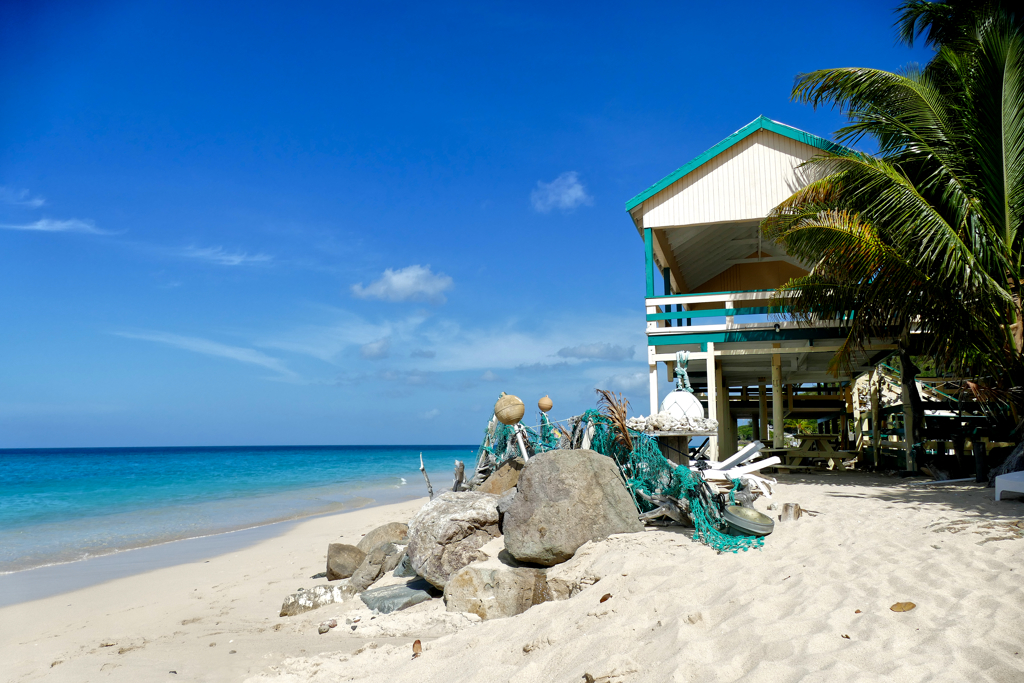
Unlike the more touristy spots, you’ll find hardly any infrastructure or organized activities here. It almost feels like being on a deserted island. The beach is very long and broad and offers breathtaking, unobstructed views of the ocean. Along the coast, you’ll find shady spots under trees and palms. The only drawback is the sand, which whips into your face in stronger winds. On windy days, I preferred to go to Valley Church Beach, where the sand, made from shell debris, is coarser and therefore more resistant to strong gusts.

Behind Crabbe Hill Beach lies the small village of the same name, considered one of the less affluent areas of the island and offering an authentic glimpse into everyday life. Here and there, you’ll find simple guesthouses and small, authentic restaurants.
Turners Beach
Right next to Crabbe Hill Beach is Turners Beach. As a matter of fact, the two beaches merge seamlessly into each other. If you walk south along the coast, you’ll only notice the change in infrastructure and atmosphere as you leave the paradise of Crabbe Hill and enter the hell of Turners Beach.
Okay, admittedly, that’s a bit of an exaggeration. But because of the proximity of the two stretches, the contrast between a secluded, idyllic beach and a bustling one is more painfully noticeable than elsewhere. However, it’s very far from being hell, obviously!

Of course, Turners Beach also has beautiful, soft sand and crystal-clear water. But it runs alongside a sprawling hotel complex and several restaurants. Sun loungers and parasols are available for rent, and catamarans carrying jolly, noisy day-trippers also dock here.
Morris Bay
First things first: I never thought it was possible, but the water at Morris Bay is even a bit clearer than at the other bays. Simply stunning. The beach itself feels even quieter and more secluded. One of those places where nothing particularly special happens – except that this very quietness is what makes it so special.

So why is it the only beach I left after just half an hour? To be honest, the beach is quite dirty. There was simply too much trash lying around. Plus, several very friendly dogs immediately came running up, eager to make themselves comfortable on my towel. They misinterpreted my attempt to shoo them away as an invitation to play. I gave up, packed my things, and headed to the main road to flag down the next #22 bus heading south.
Carlisle Bay Beach
And that brought me to the last pearl of this string of beaches, Carlisle Bay Beach. It’s noticeably more well-maintained and quieter than many of the island’s busier beaches, which is partly due to the adjacent Carlisle Bay Hotel*. The beach is wide, clean, and surrounded by lush greenery that extends almost to the sand, creating a more secluded atmosphere.
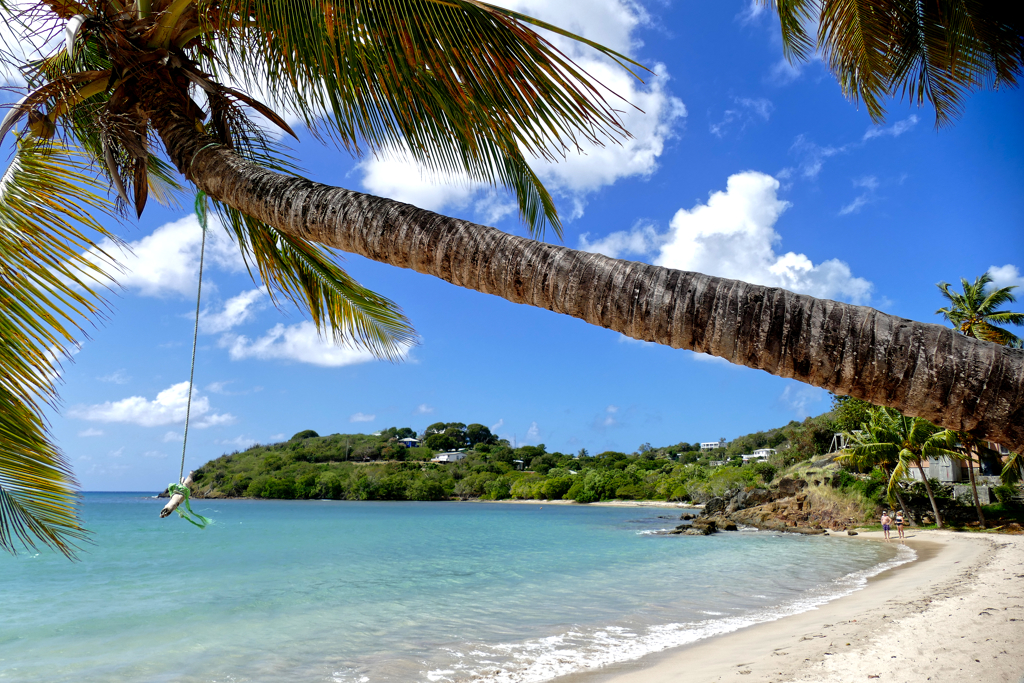
Behind the beach lies the small village of Old Road, which offers an authentic glimpse into local life. This creates a contrast between the rather exclusive stretch of beach and the simple, traditional character of the nearby village.
However, Carlisle Bay Beach is nice, but that’s about it. It’s the furthest from Saint John’s on this stretch, and personally, I don’t think it’s worth another long trip once you’ve visited it.
Fig Tree Drive
Bus #22 terminates in Old Road, which is a real shame, as the village borders the Fig Tree Drive, one of Antigua’s most famous scenic routes. So, if you want to drive this dream road, which winds through the lush, hilly interior of the island, you’ll need either your own vehicle, a taxi, or an organized island tour. I would recommend joining the latter, anyway.
The Fig Tree Drive connects the west and south coasts and is considered one of the most scenic drives on the island. Along the way, dense tropical rainforest alternates with small villages and banana plantations. Occasional viewpoints offer breathtaking vistas of the surrounding hills and the distant sea.

The name Fig Tree Drive derives from the many banana plants along the route. Fig means banana in the local dialect. Today, the road is especially popular with visitors who want to experience Antigua away from the beaches, as it gives a good impression of the rural and green interior of the island.
English Harbour
Fig Tree Drive leads inland to Matthews Road. If you’re feeling hungry, I highly recommend the mobile soup stand opposite the Catholic Church of Our Lady of Perpetual Help. For around 10 US$, you can sample the most amazing soups here at lunchtime. My favorite is the so-called Conchwater, a traditional Caribbean soup made with the tender meat of the large conch cooked in a flavorful broth with vegetables and herbs. Actually, it’s more like a chowder than water.

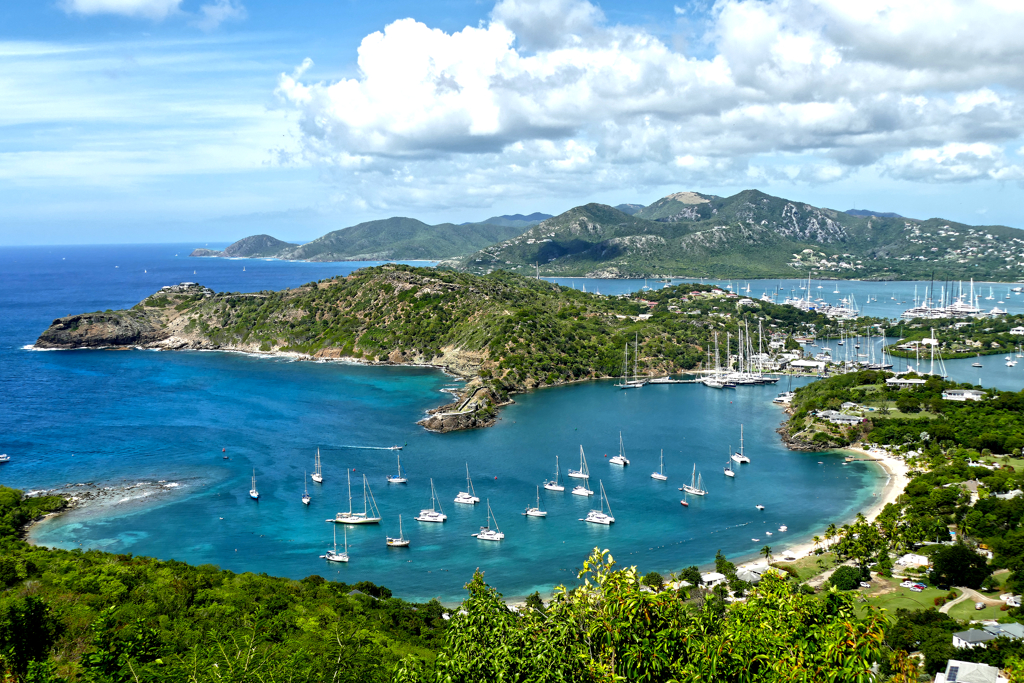
Refueled, we continue south to English Harbour, arguably the most famous part of the island, at least among tourists.
The region around English Harbour, together with the adjacent Falmouth Harbour, forms one of the island’s most important and posh maritime centers. The area is heavily geared towards sailing and yacht tourism. Hence, there are numerous anchorages, marinas, and boat service facilities. Besides its functional use, a dense tourist infrastructure has developed around the two harbors, including accommodations, restaurants, and small shops. It can get very busy, especially during peak season. Funny, since the topography is in contrast characterized by sheltered, deep inlets. These historically provided a safe natural harbor and remain crucial for nautical use to date.

Since English Harbour is known beyond the island’s shores, it is one of the most frequented tourist destinations. The #17 bus, which gets here from Saint John’s West Station, was the only bus I regularly saw carrying tourists. This is a sure sign that a self-organized trip here using public buses is quite easy and very inexpensive.
Nelson’s Dockyard
The historical heart of the English Harbour region is Nelson’s Dockyard, a former 18th-century British naval shipyard, now preserved as a restored ensemble and a UNESCO World Heritage Site. “That makes us as momentous as the Eiffel Tower in Paris or the Colosseum in Rome,” the adorable guide explains, her chest puffed out with pride.
Hmm, the status may be the same on paper, but the presentation is worlds apart, take it from me.

The complex consists of several former warehouses, workshops, and administrative buildings arranged around the sheltered natural harbor. The site is used for multiple purposes. It houses a small museum, some workshops, berths for sailboats, but above all, restaurants and souvenir shops.
To be honest, I was somewhat disappointed. Despite a brief tour, it struck me as less historical and more commercialized. Even in the museum, the gift shop offered almost more than the exhibits. UNESCO or not, the whole thing feels like a Disneyfication of its own history. The hefty entrance fee, by the way, is 50 EC$.

And while I’m at it, I simply have to criticize Antigua for the poor handling of its own history. Apart from the dockyard, historical sites are not maintained but more often than not left to decay. In my opinion, a commemoration of the colonial era would be beneficial. Not so much to honor this inglorious chapter of Britain’s history, obviously. But rather, to commemorate the descendants of the ancestors of today’s inhabitants who were brought to the island as slaves.
Pigeon Point Beach
English Harbour also boasts a very beautiful beach. However, you’ll reach it via a strenuous 20-minute walk first up and eventually down a steep hill.

Pigeon Point Beach lies in a sheltered bay. The beach is relatively small and consists of light-colored sand with gently sloping, calm water. Due to its location in the bay, there is generally little surf, making it suitable for swimming, although it lacks extensive tourist infrastructure.

There are a few basic amenities nearby, and I had the impression that it’s also very popular with locals. Which is always a good sign.
My Tip
If you’d like to experience a rather unusual type of beach for Antigua, I recommend venturing to Windward Bay Beach. At the southern end of Pigeon Bay Beach, a villa complex is blocked off by a barrier. Politely tell the security guard you’re going to Windward Bay Beach, and they’ll let you through without any problem.

After a short stretch on the dirt road, you’ll have to push your way through some loose undergrowth, and there it is. Located on the windward south coast, this beach is exposed to the open Atlantic Ocean. As a result, there are noticeable waves and strong currents. This, combined with the fact that I was alone on this deserted beach, was reason enough for me not to go in the water. Nevertheless, the short walk here was worthwhile to experience a completely different beach atmosphere.
Galleon Beach
Another beach worth visiting in English Harbour is Galleon Beach. It faces the south coast and borders directly on the entrance to the sheltered natural harbor. Its location makes it particularly interesting for visitors who want to observe both the beach and the boat traffic in and out of the bay, as sailboats and smaller vessels regularly pass by.

Compared to other beaches in the area, Galleon Beach is more developed, partly due to its proximity to accommodations and the possibility of starting activities like kayaking or snorkeling trips directly from there.
There is no public bus service anywhere near Galleon Beach, so you’ll need to get there by rental car or taxi.
It’s also possible to walk from English Harbour, but the route follows the main road and is almost five kilometers long. Hence, the walk takes a good hour. It can be quite strenuous, especially in the heat or without shade, particularly because the last stretch is a very steep descent on a poor road. Keep in mind that this will eventually be followed by a steep climb back up after your visit to the beach. Just sayin’.
Shirley Heights And Officers’ Quarters
Shirley Heights and the adjacent Officers’ Quarters are situated above English Harbour. They were originally part of the British defense system on the island during the 18th and 19th centuries. From here, access to the natural harbor of Nelson’s Dockyard, then an important naval base, was monitored. The complex was part of a network of fortifications intended to support the British fleet in the Caribbean and includes former barracks, residential buildings, and military observation posts. Today, the buildings are partially restored and primarily serve as a viewpoint and event venue, with their historical function only visible in the architectural structure.

The site is particularly valued for its location overlooking the south coast. While the structural remains of the officers’ quarters offer a glimpse into their former military use, the interpretation on-site is rather limited. I’d like to know who the one history buff is who ever came up here specifically for the ruins. I suspect everyone comes for the view—and rightly so.

Beyond its history, Shirley Heights is best known for its weekly parties. These are regular open-air events held in the late afternoon and evening, featuring live bands and attracting many visitors who come to eat, drink, and enjoy the legendary sunset. The event is particularly popular and lively during peak season.
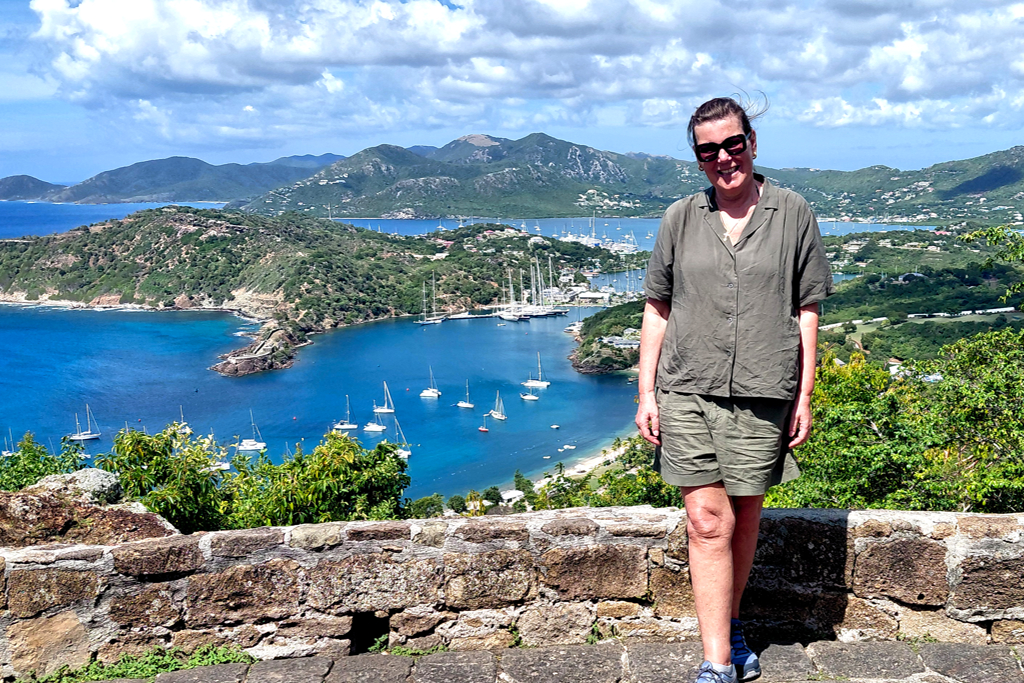
While it is technically possible to walk up from English Harbour, the route is steep, follows a winding road without continuous sidewalks, and takes at least an hour, depending on your starting point. Given the heat, traffic, and lack of shade, walking is not recommended. A taxi ride from English Harbour costs around 10 dolalrs during the day. Definitely money well spent!
Betty’s Hope Historic Sugar Plantation
Further inland, we come to another neglected site, exposed to the elements. Here, too, the opportunity to preserve history and honor the ancestors brought as slaves has been spectacularly squandered. Betty’s Hope is one of the most important surviving examples of colonial sugar production on the island. The plantation was founded in the 17th century and, for a long time, was a central component of Antigua’s agricultural economy, which relied heavily on sugarcane and the associated plantation structure. Like many such facilities, Betty’s Hope was historically based on enslaved labor.

Today, the site mainly features the restored windmills, along with some foundations and building remnants, intended to give a vague impression of its former industrial use. A small visitor center completes the site, offering a half-hearted presentation of the history of sugar production, plantation agriculture, and the social conditions.
Is Betty’s Hope Historic Sugar Plantation worth a visit?
The answer is a clear no!
Devil’s Bridge And Long Bay Beach
Devil’s Bridge and Long Bay Beach on the east coast are just minutes apart. Topographically, they are part of the same coastal landscape. Both belong to an open stretch of coastline heavily influenced by the Atlantic Ocean, characterized by rocky shores, crashing waves, and interspersed sandy coves.

Devil’s Bridge’s main attraction is a natural limestone formation, sculpted over a long period by wave erosion. The Atlantic surf has carved caves and eventually formed an arch of rock that sits directly above the water. The surrounding area is rather rugged, with jagged rocks, constantly crashing waves, and several blowholes through which water is forced during heavy seas. The area is not fenced off, but due to the forces of nature, it feels distinctly untamed, and you are walking right on the edge of the coast.
Just a few minutes away lies Long Bay Beach, a much calmer cove compared to the rocky coast at Devil’s Bridge. The beach is sandy and slopes gently into the water, although the Atlantic Ocean is still noticeable here.

Taken together, this makes for a short, easily combinable excursion: Devil’s Bridge showcases the geological and rugged side of the east coast, while Long Bay Beach forms the softer transition to a classic beach landscape.
Stingray City
I have to say upfront that I haven’t actually visited Stingray City myself. Yet it’s one of the most popular tourist attractions in Antigua.
The facility is located on the island’s northeast coast, in a shallow, protected marine area. The questionable fun is encounters with stingrays. A boat takes sightseers to a sandbar where they can stand in knee-deep water. There, they have the opportunity to observe the rays up close, touch them, and feed them.
Now, I don’t know how many photos I’ve seen online of tourists beaming as they hold a stingray on their arms. Frankly, when I imagine how many more of these beaming stingray handlers there must be every day, it makes me sick to my stomach. No one can tell me it doesn’t harm the animals. Nature didn’t create stingrays to be held aloft by tourists. For me, that’s reason enough not to participate in this animal cruelty.
However, if you insist on holding a poor stingray in the air, you will find Stingray City marked on the map at the end of this post.
Hodges Bay
Northern Antigua offers a stylish ambiance away from the major tourist centers. The beaches here are characterized by calm waters, making Hodges Bay a pleasant place for swimming and relaxation. The area is less crowded than other stretches of coastline on the island and appeals especially to travelers who value privacy and tranquility. Consequently, you’ll have to walk a bit further if you want to get here by bus. Bus #55 goes from Saint John’s East Bus Station to Crosbies, from where you can reach Boons Bay in ten minutes and Jabberwock Beach in a bit over half an hour.
On the way to Hodges Bay, bus #55 passes Bay Gardens, an exclusive shopping and lifestyle complex. It provides a stylish contrast to the natural tranquility of the bay and adds a sophisticated, modern element to the area. Here you’ll find chic boutiques, design shops, and upscale dining in a curated setting. The architecture of Bay Gardens is open and airy, blending picturesquely into the tropical surroundings. Unlike large shopping malls, this isn’t about quantity, but rather a more leisurely shopping experience.

So, if you’re looking to combine relaxation with a touch of exclusivity and comfort, this corner of the island offers a perfect blend of nature, tranquility, and high-quality products.
Dickinson Bay
Our island tour is drawing to a close. Before we arrive back in Saint John’s, we’re first heading to Dickenson Bay. This is by far the most famous beach on the island and is just a short ride from St. John’s on public bus #50. Its easy accessibility and various facilities make it a highly popular spot, especially for day-trippers from the cruise ships.
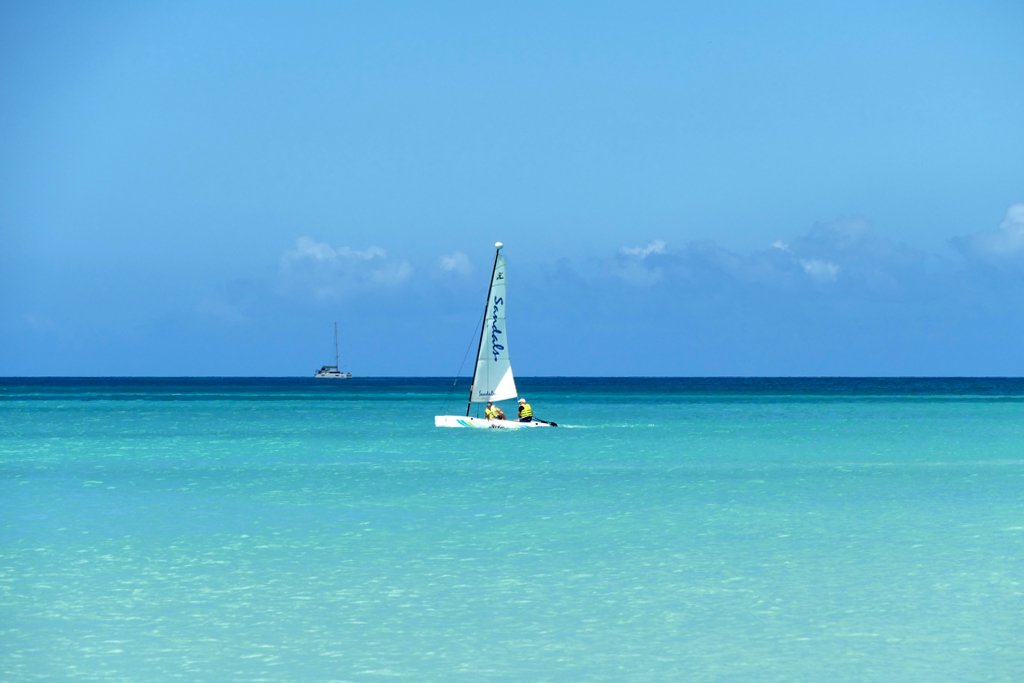
Unlike the quieter stretches of coastline south of the capital, Dickenson Bay is considerably more lively. Sandal’s Grand Resort* occupies roughly half of the entire beach area. South of it, smaller bars, restaurants, and water sports providers line the shore. Whether jet skiing, kayaking, or parasailing, here, the focus is more on excitement than serenity.

Despite the lively atmosphere, the beach’s length and width give it an open and spacious feel. Sun loungers and umbrellas are readily available, but there are also plenty of unoccupied areas. However, spots in natural shade can quickly become scarce, hence, bring your own parasol if you can.
One particular detail has made Dickenson Bay especially popular with Instagrammers: A traditional British telephone box provides a fiery red contrast to the tropical surroundings and the turquoise waters. It’s solely decorative, as you obviously can’t make a call from it.
Yet, this unexpected British everyday staple on a tropical beach contributes to Dickenson Bay’s great fame.
Practical Information
How to Get There
V.C. Bird International Airport is located about 8 kilometers northeast of St. John’s. Entry is straightforward for most arrivals: visitors from the USA, Canada, Europe, and the United Kingdom can generally enter visa-free and stay for up to six months. However, before arrival, an online immigration and customs form must be completed, generating a QR code. This saves time on-site but does not replace the standard immigration check.
Many hotels and resorts in Antigua offer transfers, sometimes included, sometimes for an additional fee. It’s worth checking this in advance. If not, you won’t be stranded for long even without a shuttle.
Taxis are readily available outside the terminal, usually with fixed fares depending on the distance. Nevertheless, it’s advisable to confirm the price before starting your journey. I paid 20 US$ from the airport to Upper Gambles on the outskirts of St. John’s—just as a guideline.
Several car rental companies are located directly at the airport. Reservations are highly recommended, especially during peak season. And as in many former British colonies, driving is on the left – which feels unusual at first, but surprisingly quickly becomes routine.
And another practical point: Services like Uber don’t exist in Antigua. So you’re reliant on traditional taxis, transfers, rental cars, or, as in my case, the public bus.
How to Get Around
I’ve already explained the possibilities of exploring the island by public bus in detail above. Public transportation in Antigua is nowhere near as extensive as, for example, in Barbados. This is mainly because nothing runs after 6 p.m. at the latest. And Sunday is a day of rest, without exception. Nevertheless, Antigua’s buses are an affordable way to reach many places and beaches and experience a lot of local culture firsthand.

In Saint John’s, there are two bus stations, East and West, serving their respective cardinal directions. From the East station, only bus #55, which goes to the north coast, is likely of interest to visitors. From the West station, buses run southwards along the west coast and north to Dickinson Bay. You’ll find the routes relevant for visitors marked on the map at the end of this post.
There are clearly marked bus stops, but you can also flag down a passing bus anywhere you are. Similarly, you can get off anywhere by calling out. Fares cost between one and three EC$, depending on the distance. You should have the exact fare, or at least small change if possible.

Within individual towns, the best way to get around is on foot. Outside of towns, there are, unfortunately, hardly any decent sidewalks. However, I didn’t find the local drivers as reckless as in other countries. I find it admirable that some people even ride bicycles, given the heat, especially since the island is characterized by many hills, some of them quite steep. Also, parts of the roads are in a dilapidated condition.
Organized Trips
Although the public bus system in Antigua is not bad, there are places of interest where buses simply don’t go. Especially if you are on the island for only one or two weeks, joining an organized day tour is a great option to save time and still get to see a lot.

Also, you’ll presumably need to join an organized tour if you want to engage in activities on the water, like sailing or snorkeling from a boat. Therefore, check out these organized trips’n’tours around Antigua and Barbuda*:
Where to Stay
Since tourism is one of Antigua’s main industries, there are many kinds of accommodation to choose from. However, most visitors come on a standard holiday package, which includes a stay at one of the large resorts. Obviously, this kind of tourism drives up prices. Finding budget-friendly yet convenient accommodation in Antigua is not always easy.
Nevertheless, for my stay, I chose an apartment in a residential part of Saint John’s within walking distance to many shops and eateries. Since I’m not driving, I also wanted to be within walking distance to a bus route so that I could explore the island by public coach.
I can highly recommend the Airbnb where I stayed. They have a comfortable studio for a solo tenant and also a more spacious apartment. However, there are tons of very different lodging options in the area, and here are some suggestions*:
What to Eat
The food culture in Antigua is heavily influenced by everyday Caribbean cuisine, a blend of African, British, and local flavors.
A key element is the street food culture, which is particularly evident in and around St. John’s. Small stalls and simple sales points offer dishes that are quickly prepared and often passed down through generations.

Typical dishes include hearty, filling meals like Pepperpot, a slow-cooked stew with meat and robust spices, often considered a traditional Sunday dish. Various soups are also common, such as Goat Water, a spicy soup that, despite its name, is more of a stew, or Fish Soup, which is often prepared with vegetables, pieces of dough, and local herbs. These dishes are cooked in large pots and sold by the portion – ideal for a quick yet satisfying snack.
The Invention of Street Food
Another classic is roti, a dish adopted from Indian cuisine that has become firmly established in the Caribbean. It consists of a thin flatbread filled with curry, usually chicken, goat, or vegetables. Roti is one of the most popular street food dishes and is often eaten wrapped in paper to go.

In addition, you’ll find simple snacks like Johnny Cakes, deep-fried or baked dough pieces, often served as a side dish or light meal. Grilled fish, barbecue or jerk chicken, and spicy rice dishes are also part of the everyday offerings at many street food stalls.
What’s typical is less a rigid structure and more an informal diversity. Some stalls are only open at certain times or on specific days of the week, while others are established meeting places in the neighborhood. Here, food is not just consumed, but also a social space – a place for conversation, encounters, and short breaks from the daily grind.
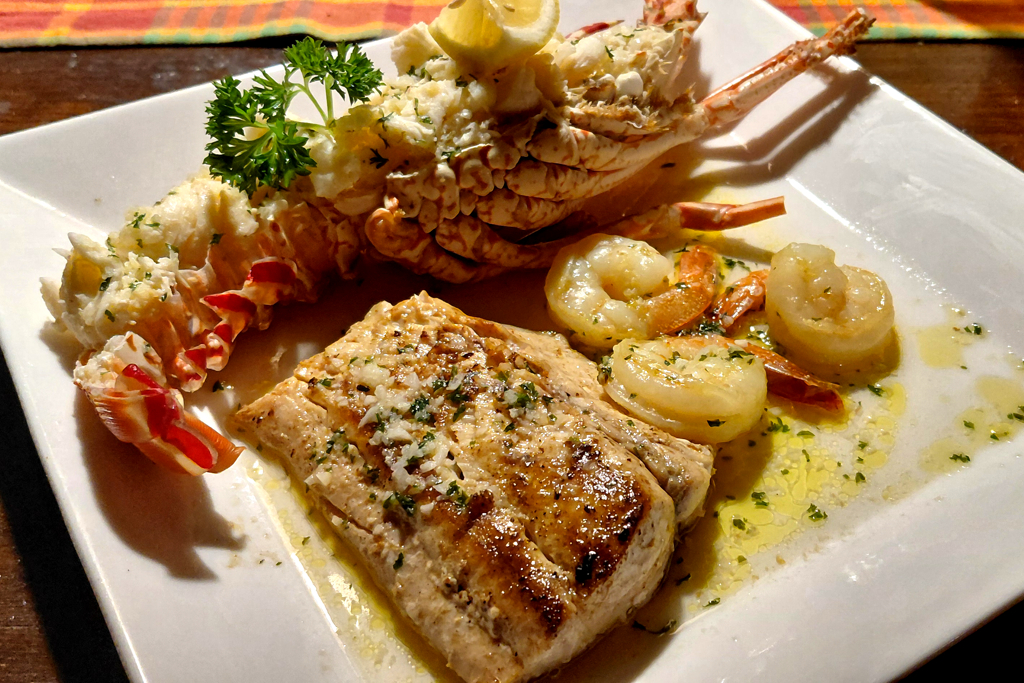
Nevertheless, besides its truly amazing street food, Antigua has a well-developed restaurant scene, ranging from simple eateries to fine dining. Especially in coastal areas, fish and seafood play a central role, obviously.
Cash And Cards
The Eastern Caribbean Dollar, abbreviated XCD or EC$, is the common currency of several island nations in the Eastern Caribbean. It is issued by the Eastern Caribbean Central Bank and is the official currency of eight territories, including Anguilla, Antigua and Barbuda, Dominica, Grenada, Montserrat, St. Kitts and Nevis, St. Lucia, and St. Vincent and the Grenadines.
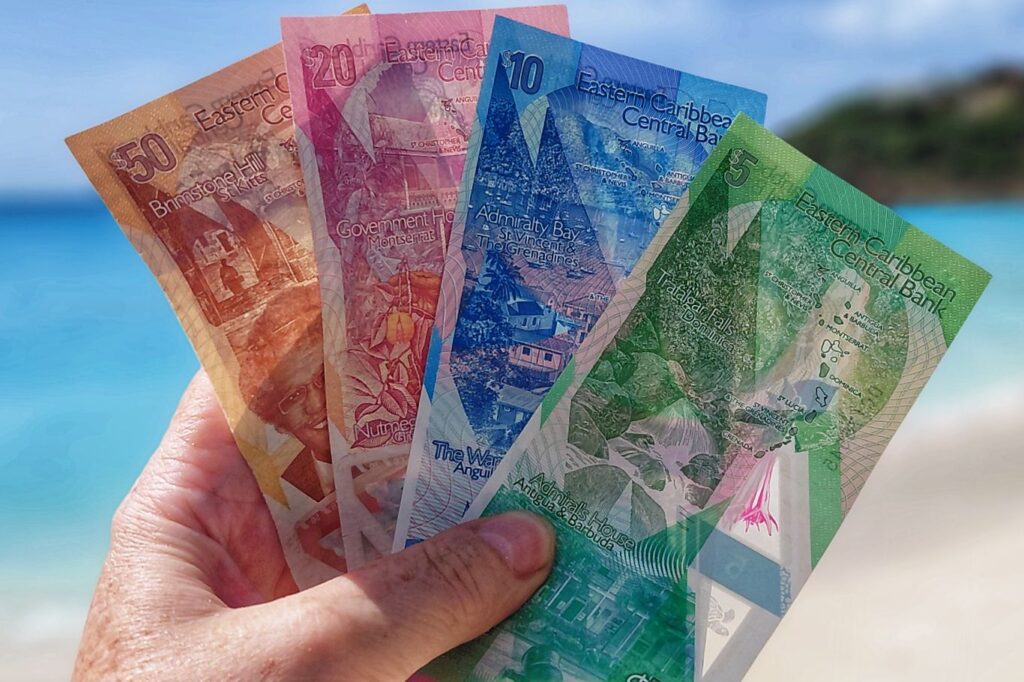
The EC$ was introduced in its current form in 1983 and is pegged to the US$ at an exchange rate of 1 US$ = 2.70 EC$. Therefore, both currencies are accepted basically everywhere on the islands, and so are all major credit cards.
That being said, especially if you intend to take buses, buy at the market, or from small businesses and vendors, you should have some local currency with you in small denominations. The exchange rate difference isn’t huge, but over time, it can add up.
Language
Antigua was a British colony, hence, the official language is English. Regardless, the most widely spoken tongue in daily life is Leeward Caribbean Creole. It has a unique rhythm, pronunciation, and slang.
Connection and Communication
First things first: As all accommodations and many restaurants, landmarks, and other places offer free Wifi, I daresay that you don’t need a data plan. Since it was my first time in Antigua, I was travelling solo and exploring the island by public transport, I simply felt safer having access to the internet on the road as well.
This being said, I was very happy with my Digicel card. I opted for data only since I had no intention of making phone calls. Also, online calls are a valid alternative.
The SIM card with a 30-day data plan of 50 GB cost me around 140 EC$. However, they have many different plans, so you might want to check out all the options on their website.
Alternatively, many visitors now opt for an eSIM, provided their smartphone supports it.
In Antigua, Type A and B electrical outlets are used, the same as those found in the USA. The mains voltage is 110–120 volts at a frequency of 60 Hz. Since most modern chargers have built-in voltage adapters, these differences are usually not a major issue for smartphones, laptops, or cameras. Nevertheless, you should always check whether your devices are suitable for 110–120 volts or support a voltage range of 100–240 volts. Extra caution is advised with devices such as hair dryers or other high-powered electrical appliances, as these can be damaged without a suitable voltage converter. While a simple plug adapter is often sufficient for the shape of the plugs, it does not replace a voltage converter.
By the way, you’ll find comprehensive travel info in my post World’s Most Complete Travel Information – an indispensable globetrotter classic.
Map
This map shows where all the mesmerizing places I’m introducing in this post are located.
Clicking on the slider symbol at the top left or the full-screen icon at the top right will display the whole map, including the legend.
Pinnable Pictures
If you choose to pin this post for later, please use one of these pictures:


Did You Enjoy This Post? Then You Might Also Like These:
One Week in BONAIRE: The Best Activities Beyond Diving
How to Travel the Caribbean Individually And on a Budget
CURACAO – Guide to the Caribbean Island That Has It All
Best Street Art in GUADELOUPE

BONAIRE Totally Unexpected: Street Food And Urban Art Tour
The Best Beaches in Curacao You Can Easily Visit by Public Bus
Two Days in CARTAGENA
Carnival 2025: Floats’N’Festivities on ARUBA, BONAIRE, and CURACAO

* This is an affiliate link. Hence, if you book through this page, not only do you get the best deal. I also get a small commission that helps me run this blog. Thank you so much for supporting me!
** I am very appreciative that Antigua and Barbuda Tourism Authority invited me to join an island tour. Nevertheless, all descriptions and opinions are mine and were in no way influenced by them.
This guide explained everything so comprehensively. It gives me a clear idea of what to expect.
I’m glad to read that. Antigua is a wonderfully relaxing place 🙂
What an excellent introduction to the island, thanks!
Thank you for your comment – so glad you like my guide!