Just outside Genua, the Ligurian coast begins to shift and gives way to Boccadasse, Nervi, and Camogli, three perfect escapes for a day trip that lets you enjoy local culture, cuisine, and dips in translucent waters.
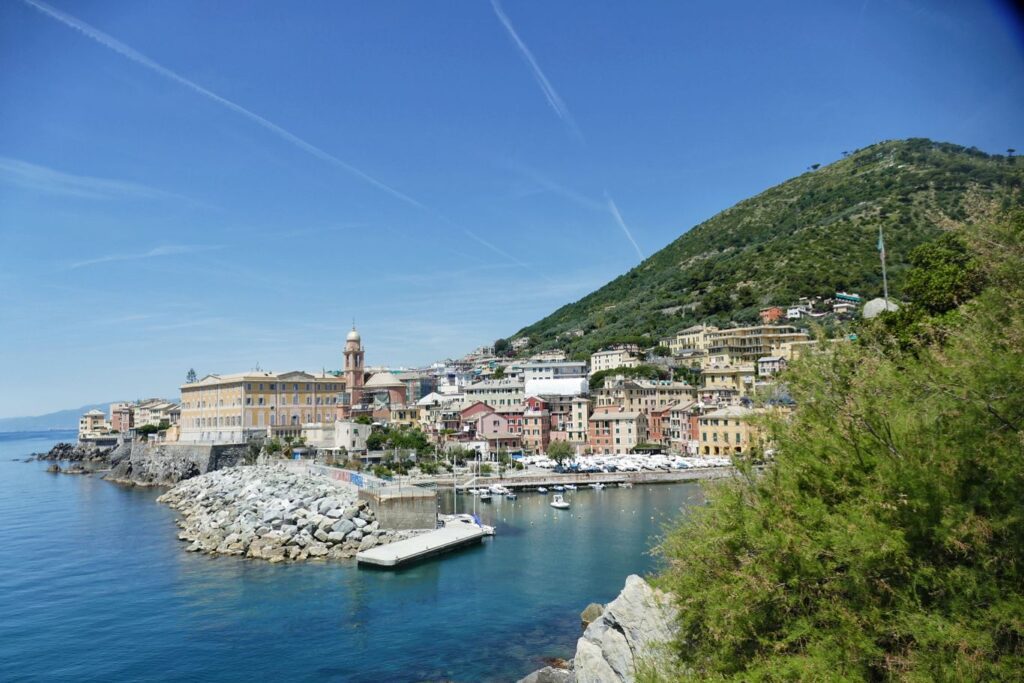
Just hop on one of the frequent regional trains and join me in my village-hopping in mesmerizing Liguria!
Out of Genoa
Genua, the capital of the Italian region of Liguria, is absolutely worth seeing and, in my opinion, quite underrated. Whether it’s the old palaces that tell of Genoa’s Golden Age, the port that awakened wanderlust not only in Christopher Columbus, the city’s most famous son, or the unusually numerous elevators and funiculars, there’s an incredible amount of extraordinary things to discover and enjoy in the city.
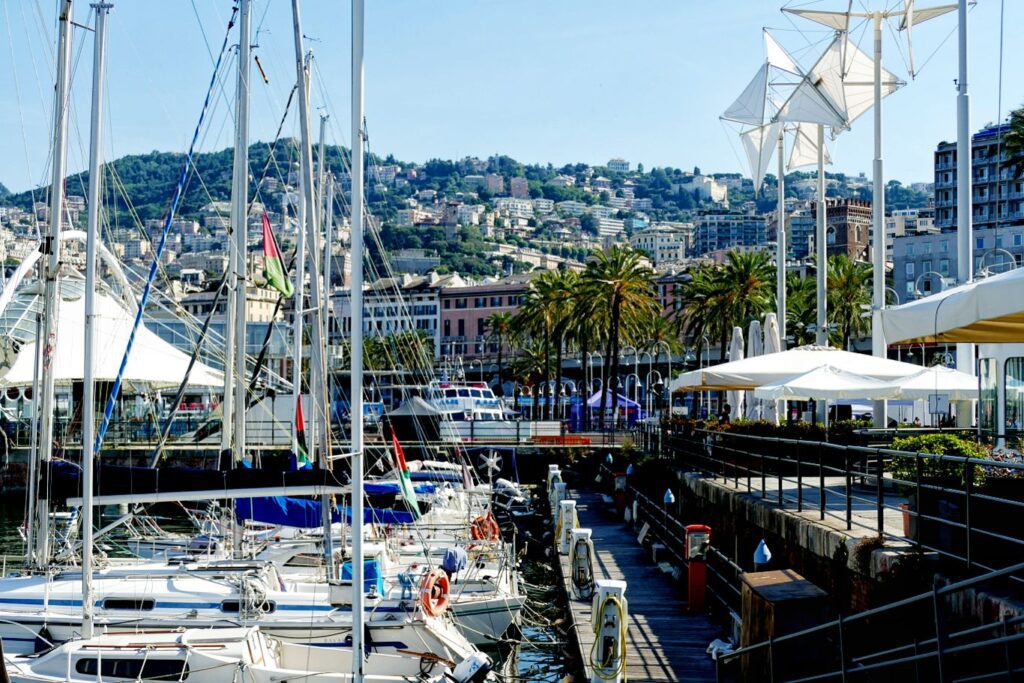
But Genoa can also be a bit exhausting. The city is fast-paced, loud, and overstimulating. Phew, no wonder you need a break after a few days at the latest. And Lady Liguria has thought of that too, creating some of the most beautiful hidden gems within quick, easy, and inexpensive reach of Genoa.
Believe it or not, it literally only takes minutes to swap the hustle and bustle of the big city for the peace and tranquility of picturesque coastal towns!
Boccadasse – so close yet so far
The public bus takes around twenty minutes to get from Genoa’s city center to Boccadasse. However, it can get very crowded.
Boccadasse feels as if it has somehow resisted the city’s expansion. While Genua sprawls in all directions with its streets, ports, and industrial areas, Boccadasse, despite its physical proximity, remains surprisingly far removed. A small bay, a few closely packed houses, a narrow beach of rounded stones, that’s all it takes to be happy.
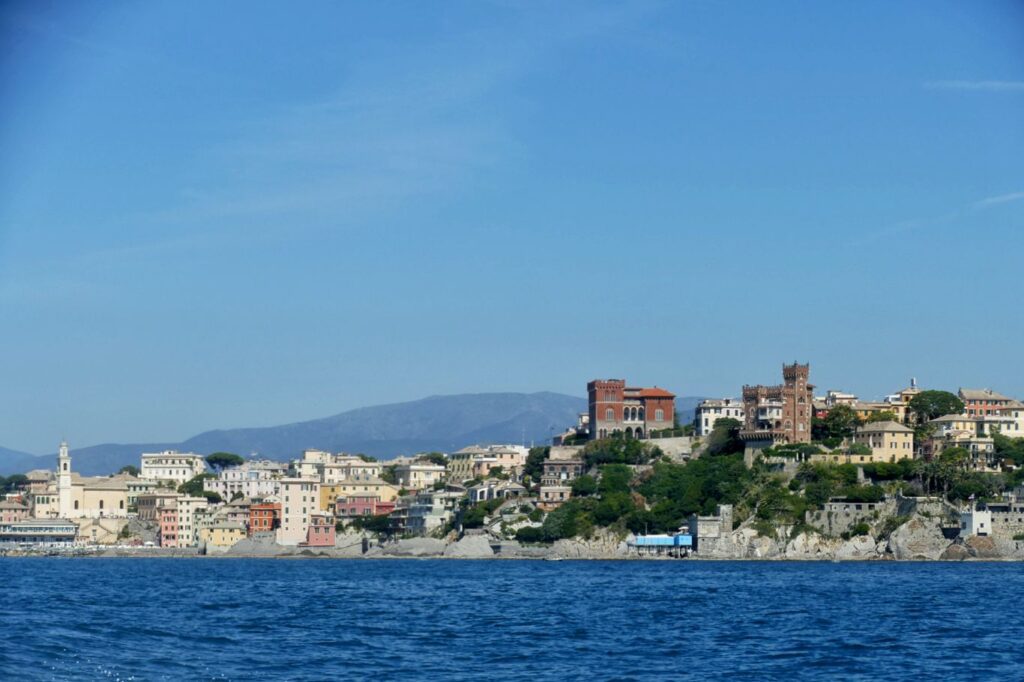
Originally, Boccadasse was a fishing village. It has always remained unaffected by the urban rhythm. Fishing boats were moored as life was consistently dictated by the sea.
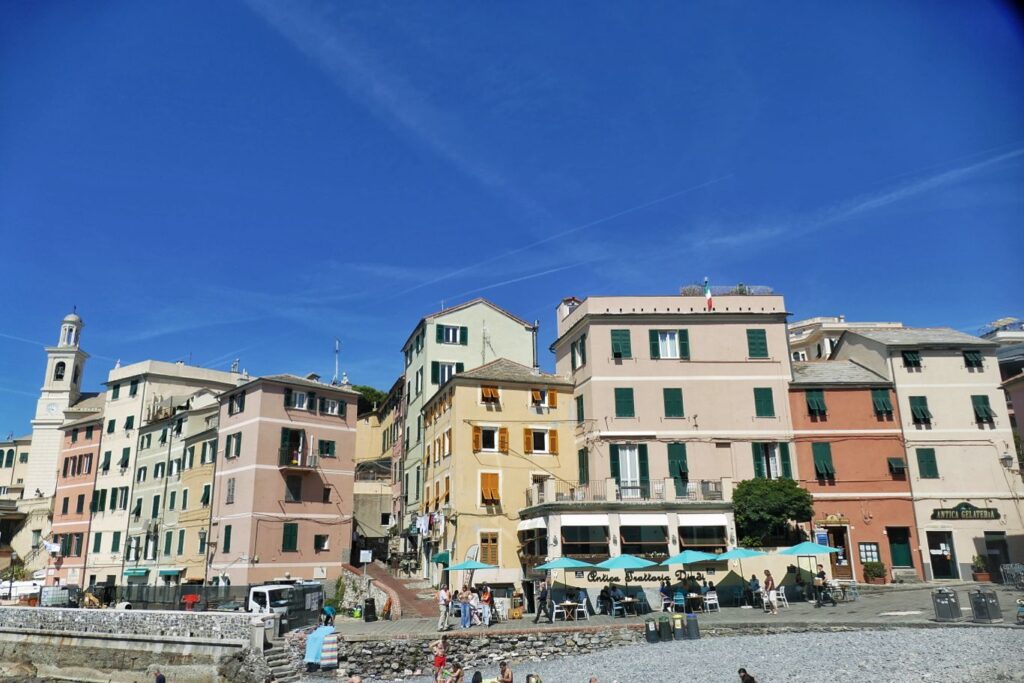
With Genoa’s expansion, Boccadasse was eventually incorporated, but not adapted. The structure of narrow streets, pastel-colored facades, and staircases that seem to lead directly into the water has been preserved. Nothing is symmetrical, much is slightly offset, and therein lies Boccadasse’s charm.
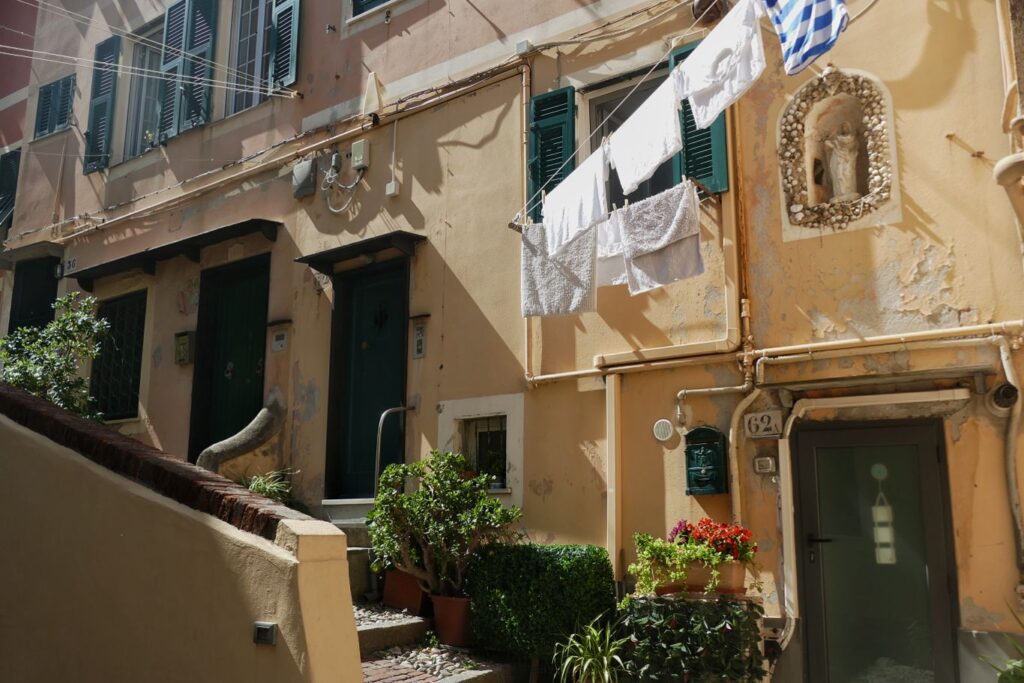
At its heart is not a single building, but the bay itself. Boats lie close to the shore, and the boundary between land and sea feels less like a line and more like a transition. Those who sit in the small restaurants quickly get the feeling that they are not in a tourist attraction, but in a functioning remnant of a traditional way of life.
On the Waterfront
At the edge, the view opens up towards the Ligurian coast, and on a clear day, the vista eventually fades into the Riviera. But Boccadasse itself remains self-contained. There is no large harbor, no dominant church, no center in the classical sense—only the bay as a fixed point.
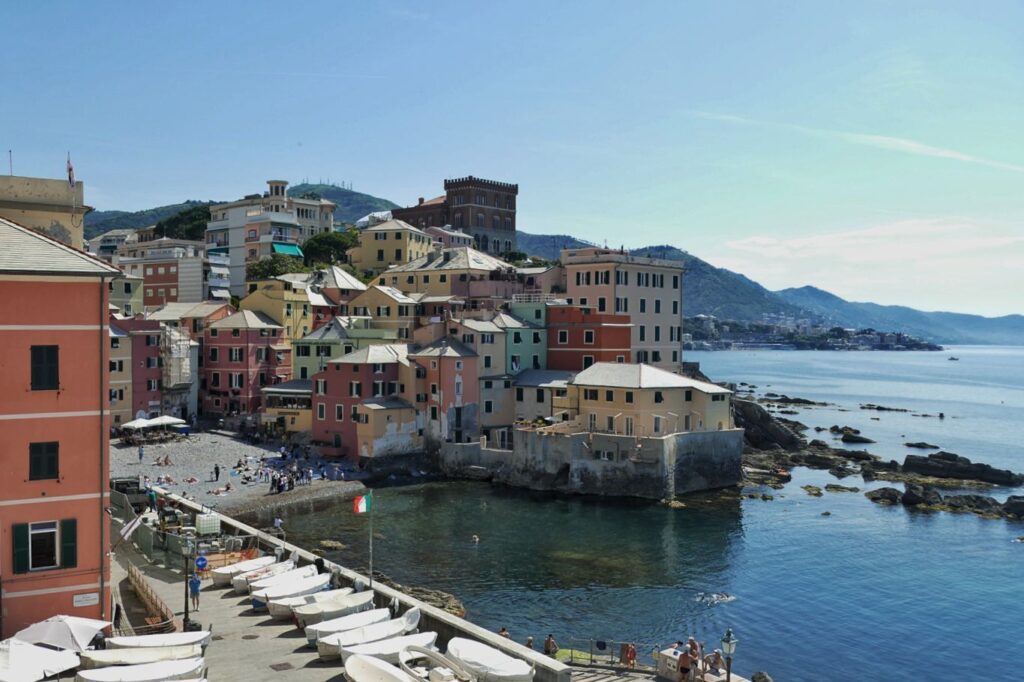
And speaking of water: Boccadasse also has a small, sheltered bay with a very narrow strip of shoreline made up of coarse, rounded pebbles and stones. This is the area that locals often refer to as the beach.
Swimming is quite common here, especially in summer, but it’s rather informal. There’s no touristy infrastructure, no rows of sun loungers, no umbrellas.
And that’s one of the things I really appreciate about Boccadasse!
Nervi – an immediate escape
A half-hour bus ride, and you’ll arrive in Nervi. In this outskirt of Genua, the urban bustle dissolves into parks, cliffs, and the sea.
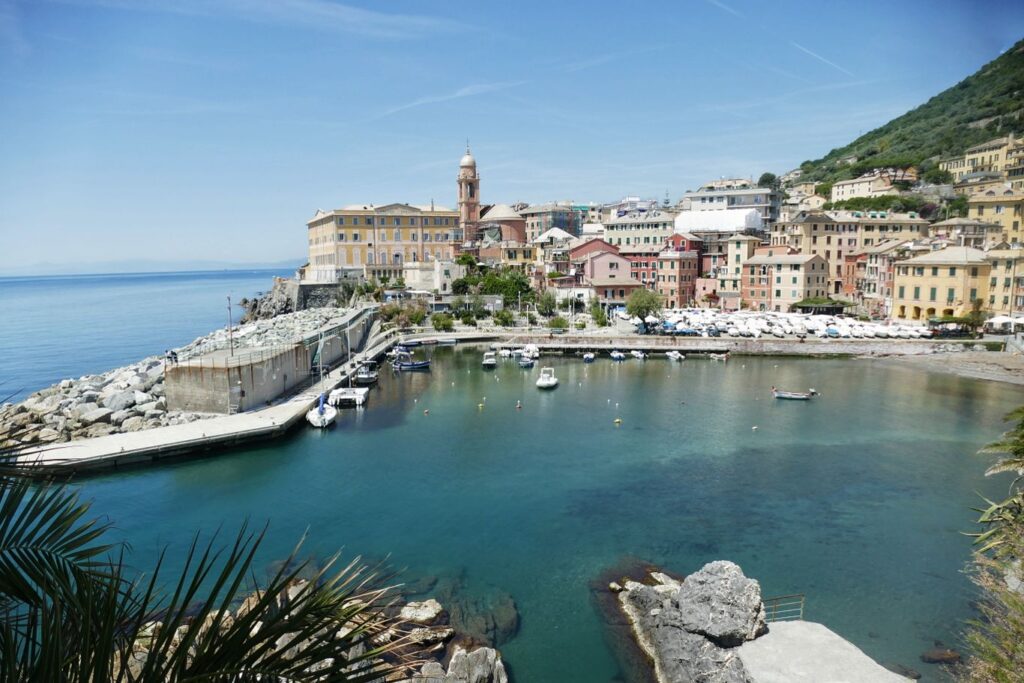
Historically, Nervi was an independent fishing village, only fully incorporated into the city in the 20th century. However, things began to change as early as the 19th century when wealthy Genoese families built villas with magnificent gardens. Retreating to the water also promised a milder climate. Thus, a place of hard fishing labour gradually transformed into a haven of relaxation, without its original character disappearing entirely.
This layering is most evident today in Nervi’s parks, the Parchi di Nervi. Old villas stand among dense trees, connected by paths that follow the shape of the land. Some buildings have been converted into museums. Nevertheless, others remain hidden behind vegetation and walls.
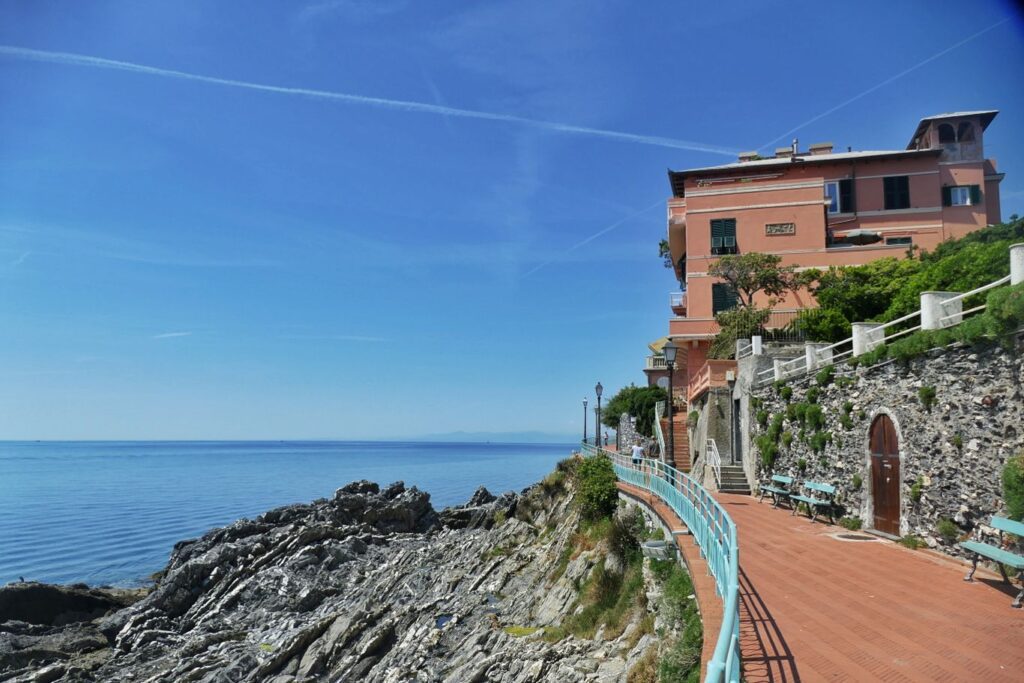
The Passeggiata Anita Garibaldi runs directly along the seafront. It stretches as a narrow promenade along the cliffs, connecting the parks with small bathing access points and viewpoints. Below, the waves crash against the rocks; above, strollers move in a relaxed pace.
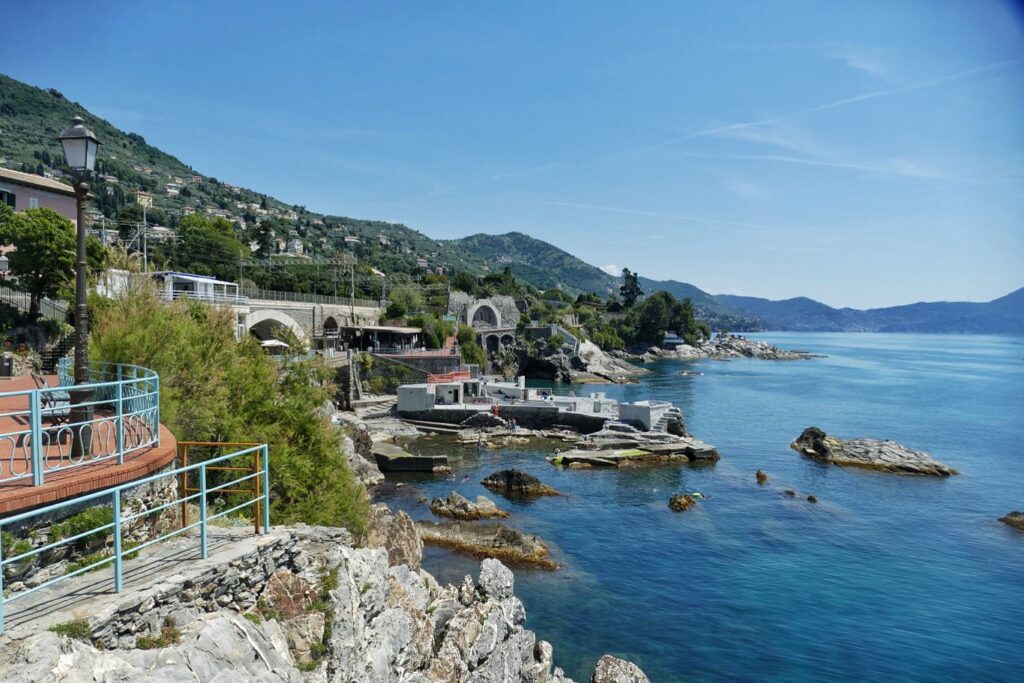
Nervi doesn’t have a classic beach in the sense of a wide expanse of sand. Swimming takes place at small access points between the rocks, often directly below the promenade.
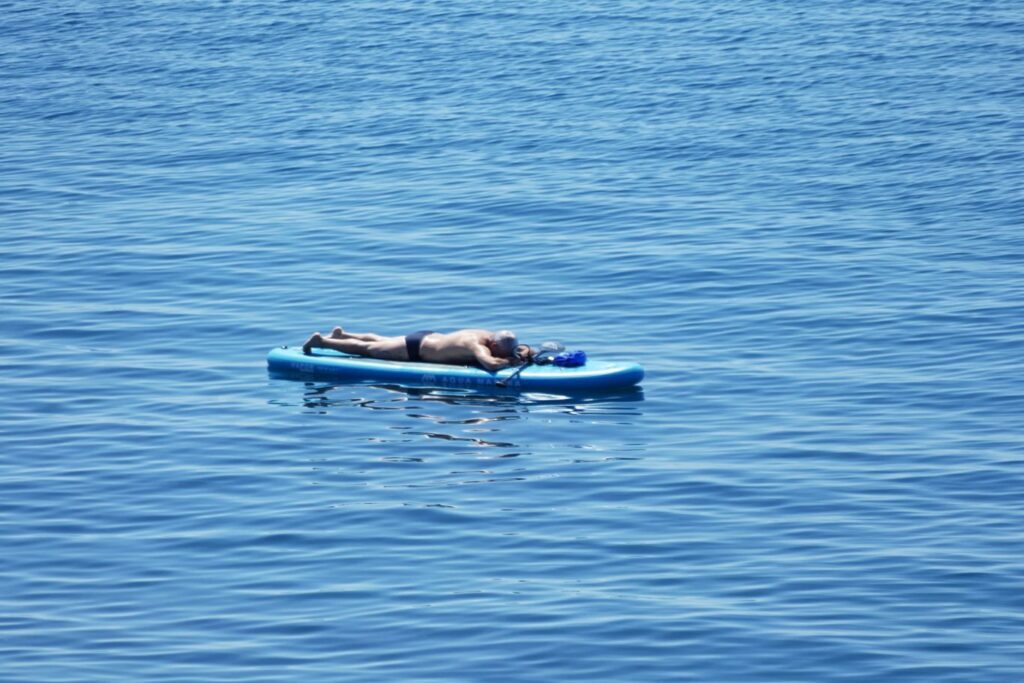
Unlike other coastal towns in the region, Nervi feels less planned. There’s no clear “front” to the sea, but rather many small transitions: garden walls, steps, openings in the greenery. Even the former villas seem more embedded than set apart.
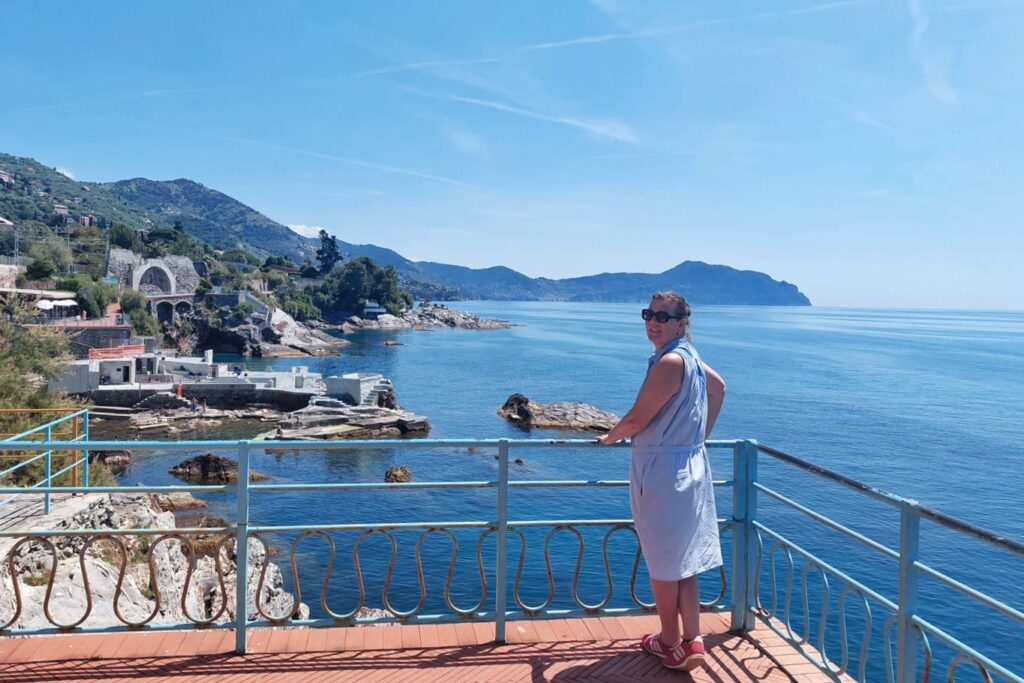
This makes it virtually impossible to reduce Nervi to a single image. It’s not a classic seaside resort, not a purely residential area, and not a park in the usual sense. It’s a kind of gradual fusion of settlement, landscape, and coastline.
Camogli – facades, focaccia, and a fishing port
Finally, you get to Camogli. At first glance, this small town seems like a quieter neighbor of the more famous resorts on the Ligurian coast. Here, too, tall, narrow houses stand close to the water. Their facades are painted in warm colors, their shutters often half-closed against the light. But unlike some of the more staged perfection found elsewhere, Camogli feels less artificially polished.
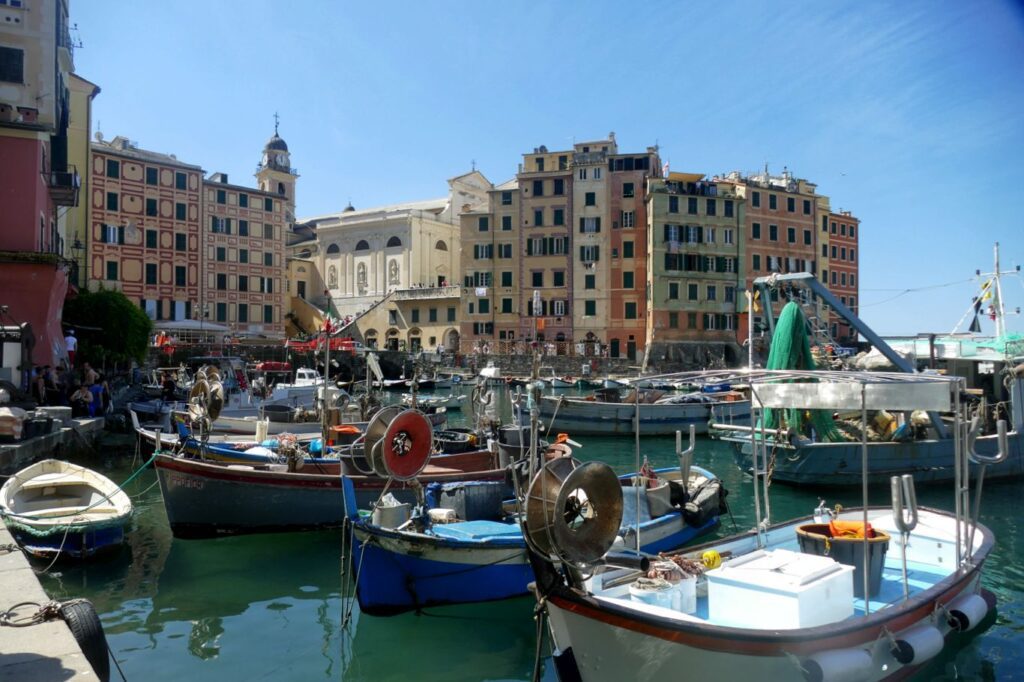
As a matter of fact, the town has a rich maritime past. In the 18th and 19th centuries, Camogli was an important seafaring center. As a matter of fact, at times it boasted one of the largest merchant fleets in Italy! Many of the captains came from here, and wealth flowed back into the town via the port. The unusually tall houses along the waterfront are therefore no coincidence. They were built so that as many families as possible could live with a sea view. Perhaps also to signal their return from afar.
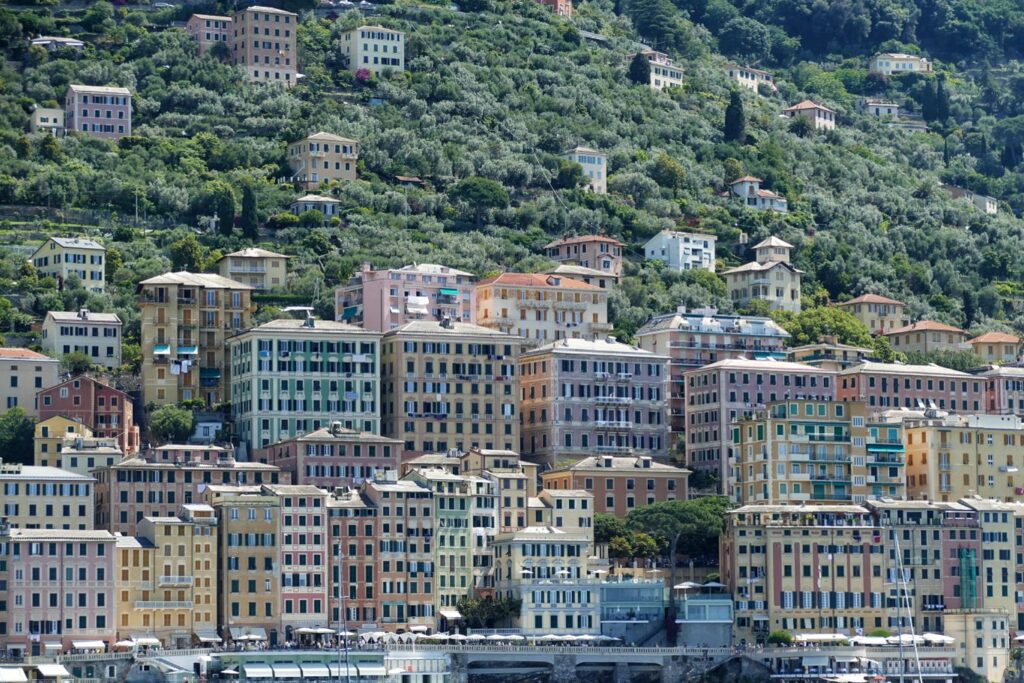
This close connection to the sea is still palpable today. Fishing boats still moor in the small harbor, even though tourism has long since become a major industry. Unlike in other Ligurian coastal towns, the transition here is less abrupt. There’s no clear separation between everyday life and tourism. Both coexist harmoniously.
A central building in Camogli is the Basilica di Santa Maria Assunta, which stands directly on the waterfront. Its Baroque facade and location on the edge of the harbor make it a prominent landmark. Right behind the Basilica is the medieval fortress Castello della Dragonara. This castle was built to protect the village and the coast, obviously. From here, the promenade stretches along the beach. This, my friends, is not just an opening to the sea.
No, it’s a real beach where you can rent chairs and umbrellas or just spread your own beach towel and enjoy a relaxing day!
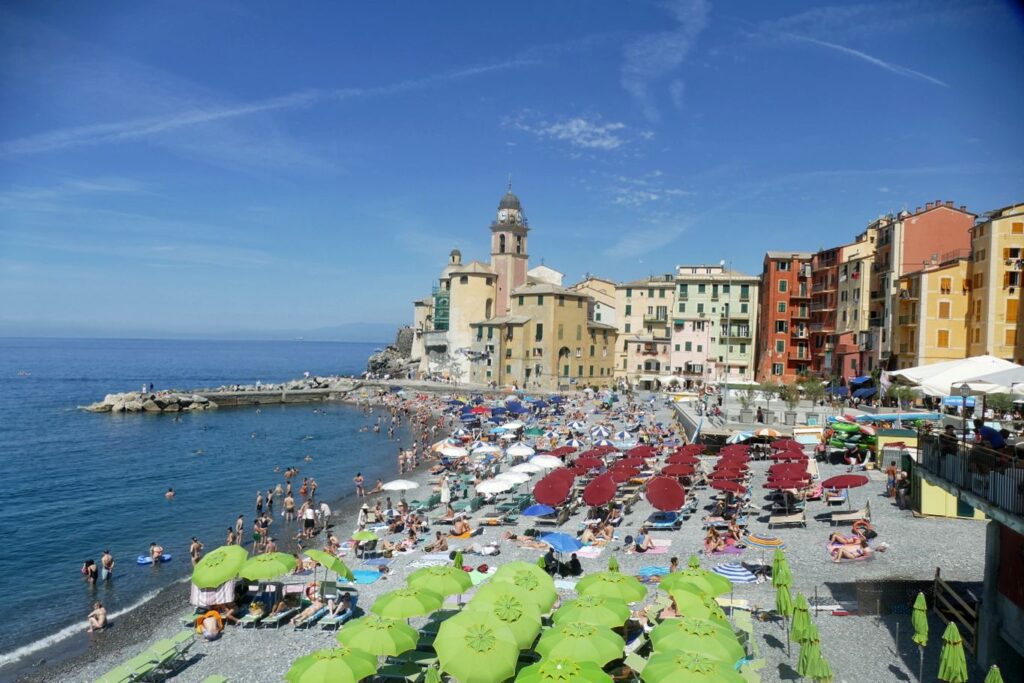
If you’re not a designated beach bum, you can go on amazing hikes through the Portofino Regional Natural Park. The paths into the hills begin almost immediately behind the last houses. A short walk uphill quickly leaves the town behind and offers a view of the coast.
You can find detailed information about Camogli in my post Day Trip to CAMOGLI – The Most Colorful Beach Town East Of Genoa.
How to Get Around
There are various city buses taking you from Genova’s Brignole station to Boccadasse, for instance #15 or #31, which is the more beautiful route as it goes alongside the water.
From Boccadasse, you can continue to Nervi by bus #15.
If you’re skipping Boccadasse and going straight to Nervi, you’d better take the regional train towards Sestri Levante at Genova Brignole. This train then also continues to Camogli.
Beware that if you have a 10 €uro day pass, it’s only valid to Nervi – on the bus and the train alike. If you’re going all the way to Camogli, you have to buy a separate ticket, which is only 3.50 €uro from Genova Brignole and 3 €uro from Nervi.
While this is the easiest and cheapest day trip you can possibly take from Genua, there is much more to see, and some of those activities are best booked as organized excursions*:
Want to visit Liguria’s marvellous coast from the water? Make sure to check out my post Take a Break: Day Trip from Genoa to CAMOGLI, SAN FRUTTUOSO, and PORTOFINO. Need comprehensive information on Genoa? In my post An Audience With GENOA – What Not to Miss When Visiting the Queen of Liguria, I have you covered.
Map
On this map, you see where the wonderful places I’m introducing in this post are located and how easy they are to access from Genoa. To switch between the three places, just open the legend at the top left corner, and you can hide or unhide the respective layer as you wish. This way, the map will show only the respective town and will be clearer.
Did You Enjoy This Post? Then You Might Also Like These:
location location location – my adventurous accommodation choices

A Day in BURANO: United Colors of Venice
Take a Break: The Three Best Beaches You Can Easily Visit From VENICE
Take a Break: Day Trip from Genoa to CAMOGLI, SAN FRUTTUOSO, and PORTOFINO
Welcome, World! Come In And Join Me In My Italian Online Course at the Scuola Leonardo da Vinci
The Valley of the Temples of Agrigento And La Villa Romana del Casale di Piazza Armerina: A Day Trip Not to Miss
LA SPEZIA and PORTO VENERE – Precious Gems on the Ligurian Coast
TORCELLO – a church, a bridge, and 15 residents
Pinnable Pictures
If you choose to pin this post for later, please use one of these pictures:
* This is an affiliate link. Hence, If you book through this page, not only do you get the best deal. I also get a small commission that helps me run this blog. Thank you so much for supporting me!