The legendary Mont Saint-Michel in the tidal flats of the English Channel is one of the most mesmerizing places in Europe. Located about one kilometer off the coast of Normandy, it is surrounded by the sea and steeped in legend. For me, the greatest wonder, however, was how easy it is to visit this extraordinary place independently using public transport. With minimal planning, you can take a self-organized day trip to Mont Saint-Michel even from Paris via Rennes. In this post, I provide you with all the necessary information for optimal planning, ensuring your own trip becomes a complete success and you have an unforgettable visit.
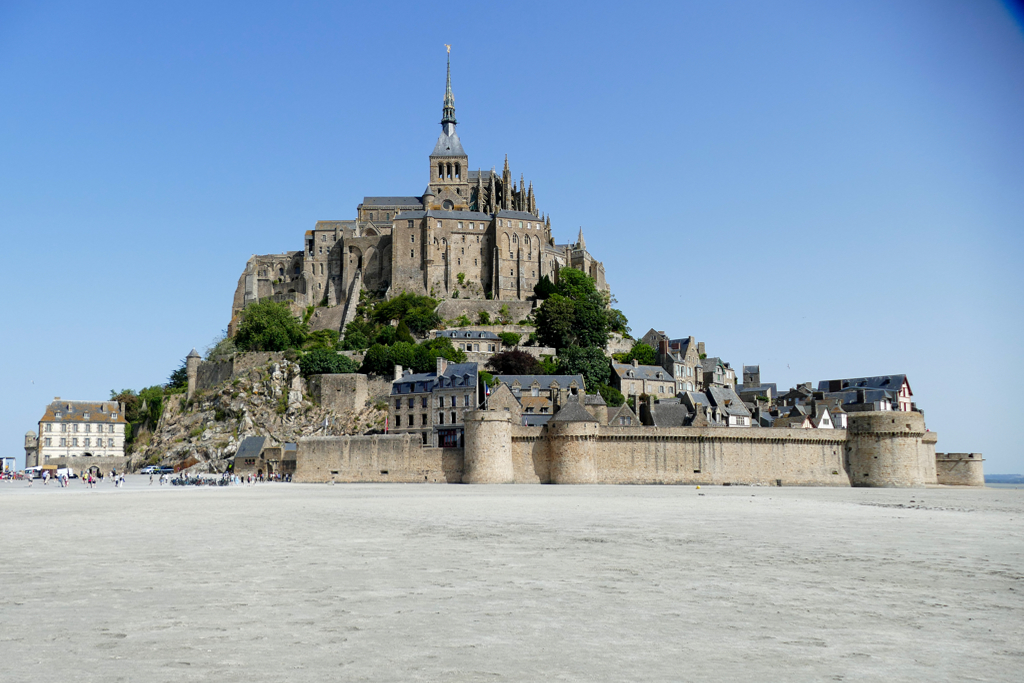
My One-Day-I-Want-to-See-It Destination
“Mom, stop! Please, stop!”, the young man has clearly had it with his bickering parents. We are standing in a line of maybe three hundred people. It’s already hot this early in the morning. Although this American family stands right next to me, I don’t know what they are arguing about. Honestly, I think they don’t know either. It’s just too hot. It has been around 40 degrees for days at this point. And I’m talking about Celsius. For the American family, this equals 104 Fahrenheit.
No wonder nerves are frayed.
I don’t really have a clear bucket list when it comes to travel. But Mont Saint-Michel is one of my one-day-I-want-to-see-it destinations. And today is the big day, although it is a bit unfortunate that it’s one of the hottest days in one of the hottest summers Europe has ever experienced.
I came here by public bus from Rennes. That’s quite cheap and actually a breeze. Whereby a breeze is what I am craving right now.
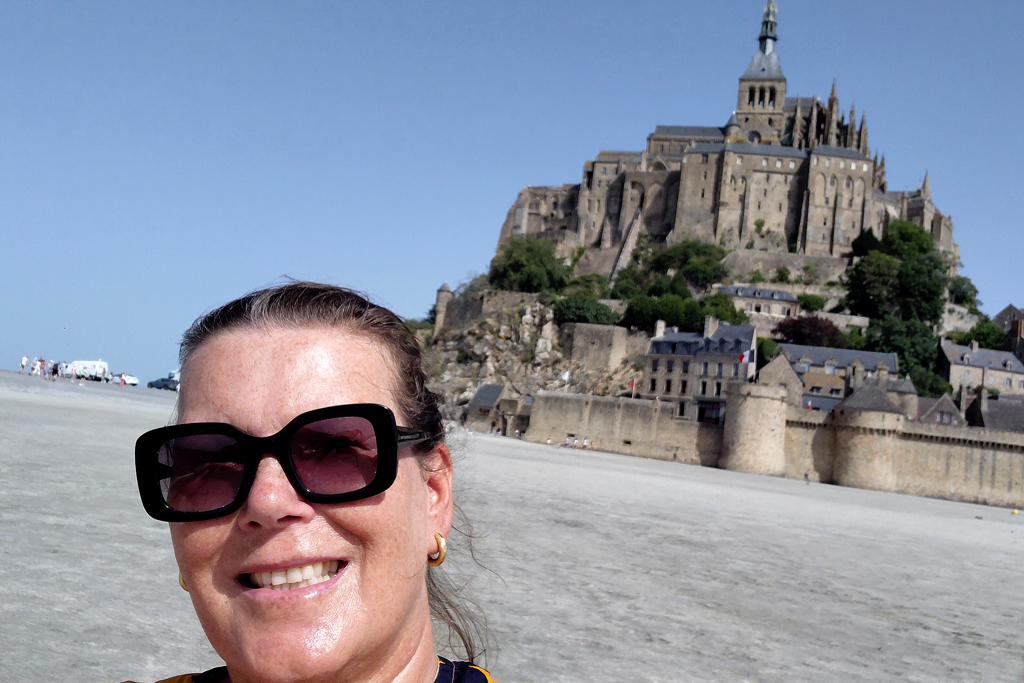
Obviously, the bus didn’t take me all the way to the foot of the Mont. The ride ends at the welcome center. From there, it’s still about 3 kilometers, which equals a walk of at least 45 minutes. In this heat? No way! Therefore, most visitors take the shuttle. Thus, we are standing in the scorching heat in a long line, with no shade whatsoever, waiting for the shuttle bus.
Never mind, today is the day: Mont Saint-Michel turns into My Today-I-Will-See-It Destination.
History and Significance
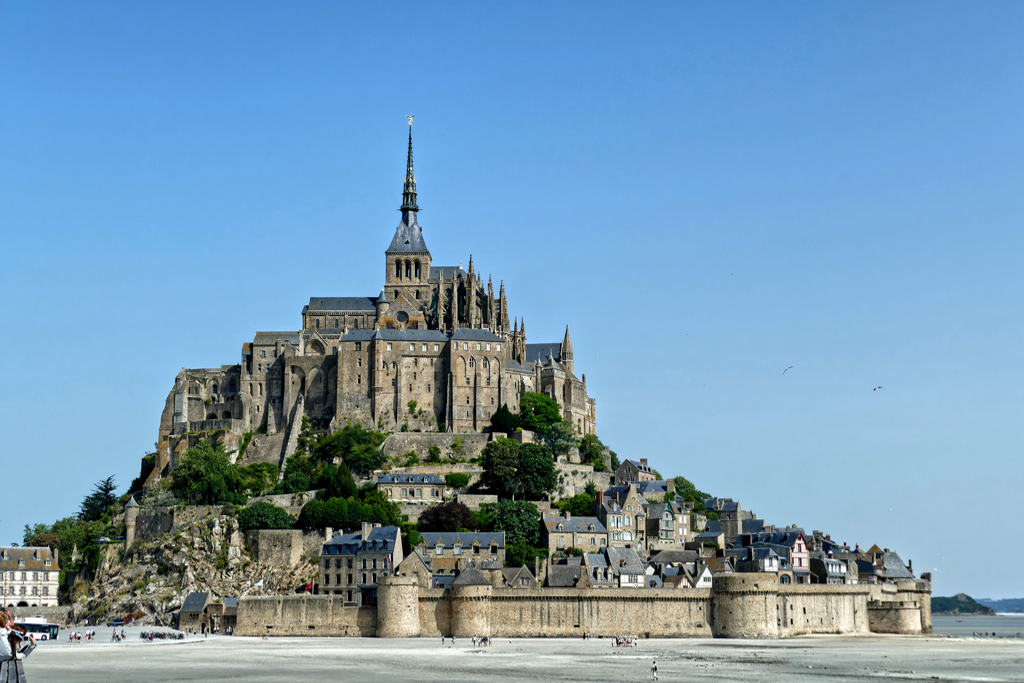
Mont Saint-Michel is one of the most impressive sights in France, perhaps even in all of Europe. The famous abbey rises on a small, rocky island off the coast of Normandy and looks like a ghost village emerging from the tidal flats.
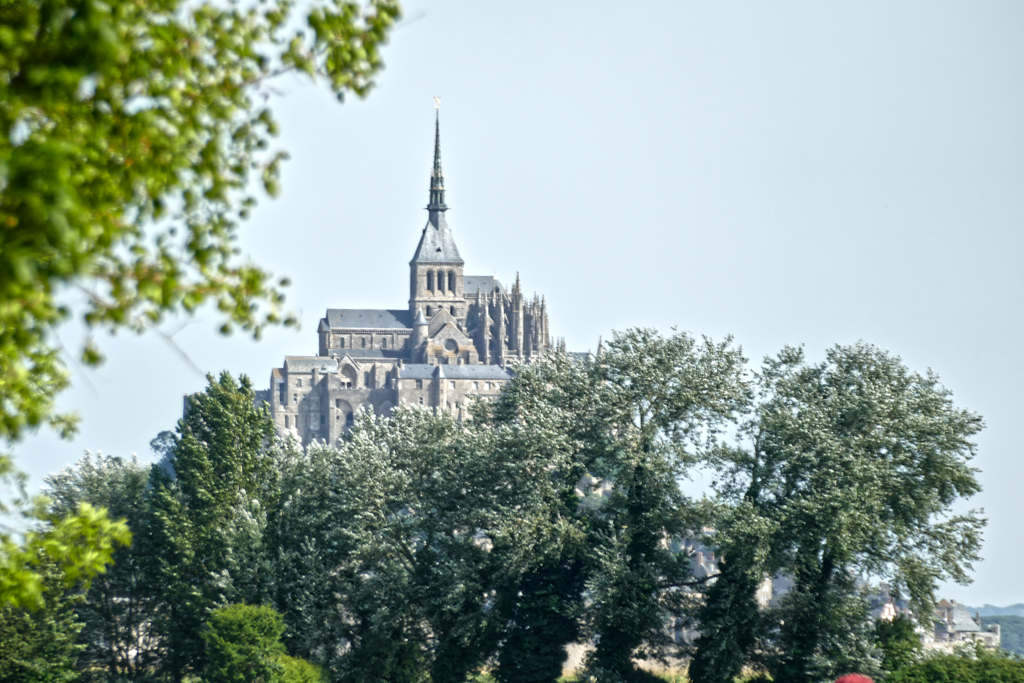
The history of Mont Saint-Michel dates back to the early Middle Ages. Legend has it that in 708, the Archangel Michael appeared to Bishop Aubert of Avranches and urged him to build a chapel on the rock. After Aubert initially hesitated, the archangel finally convinced him by touching his head. To me, that sounds like he gave him a little headbutt, but anyway. In any case, a first sanctuary was built on the rock shortly thereafter.
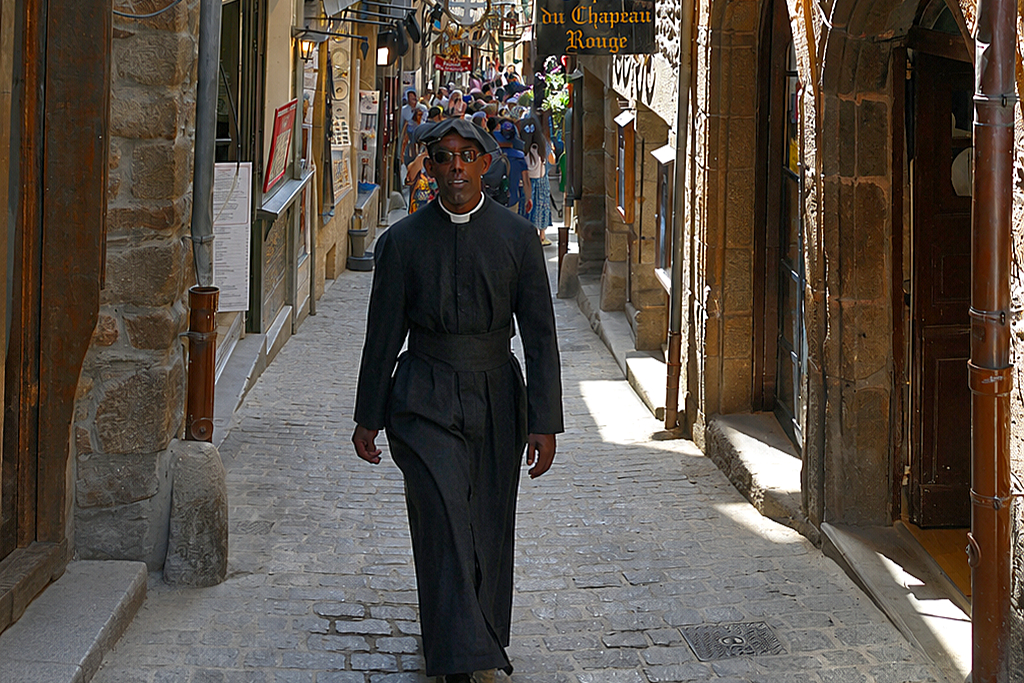
In 966, Duke Richard I of Normandy founded a Benedictine monastery on Mont Saint-Michel. This marked the beginning of a significant religious center. Pilgrims came from many parts of Europe to venerate the Archangel Michael.
Expansion
Over the centuries, the complex was continually expanded. Churches, monastic buildings, and residences were built on the steep rock. The unique location presented the builders with significant challenges time and again. The abbey church, whose construction began in the 11th century, is particularly impressive. It was built on a platform that was partly placed on the rock and partly carved into the mountain. Rooms were created below the church and monastery, including cloisters, halls, and storerooms.
A small town developed around the abbey. Narrow, steep streets still wind their way up between historic houses. Today, merchants, innkeepers, and pilgrims shape daily life on Mont Saint-Michel.
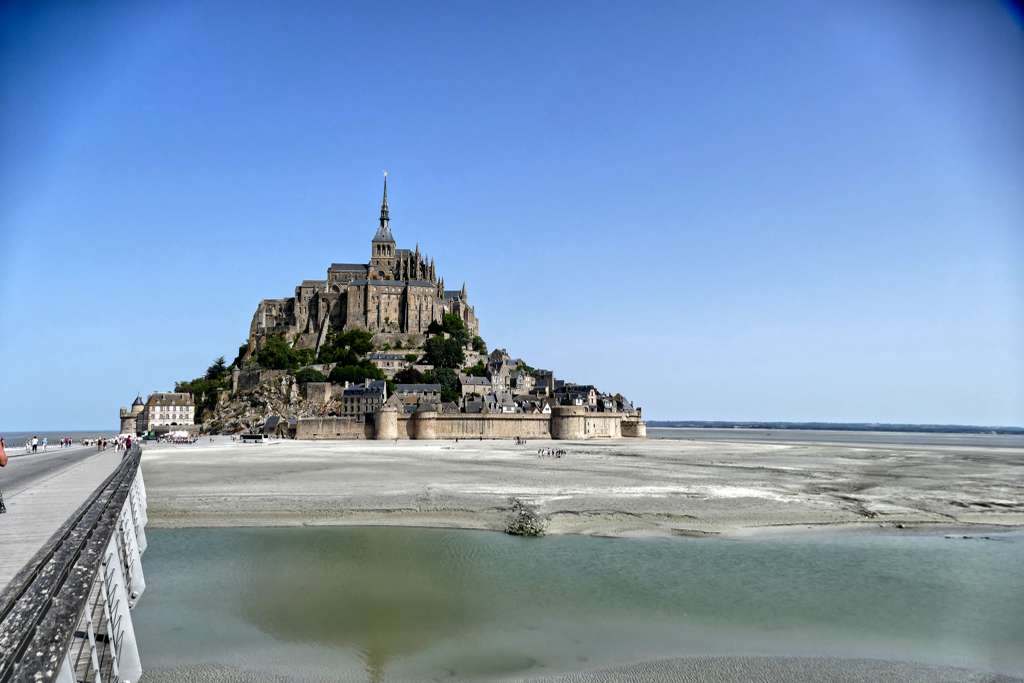
Besides its religious significance, Mont Saint-Michel also became an important fortress. During the Hundred Years’ War between England and France, the Mount was attacked several times. However, its location and strong fortifications protected it from capture. Mont Saint-Michel thus also became a symbol of French resistance.
From Monastery to Prison
After the French Revolution, the function of Mont Saint-Michel changed fundamentally. The monastery was dissolved in 1790, and from 1793 onward, the buildings served as a prison. Due to its remote location and the difficulty of escape, Mont Saint-Michel was a particularly secure prison site, obviously. The prisoners included political opponents of the regime, as well as ordinary convicts. Yet, its use as a prison damaged many of the historic buildings significantly. The prison operated until 1863.
In the 19th century, interest in medieval architecture and France’s cultural heritage grew. Artists and writers such as Victor Hugo discovered Mont Saint-Michel and emphasized its historical value. Extensive restoration work has brought Mont Saint-Michel closer to its former medieval character.
Already in 1874, the abbey was placed under state protection as a historical monument. Then, in 1979, UNESCO declared Mont Saint-Michel, together with its bay, a World Heritage Site.
The Wadden Sea
The most striking feature of Mont Saint-Michel is its appearance, which depends on the tides. The tidal range in the bay is among the largest in Europe. At low tide, vast expanses of sand and mudflats are exposed around the island. At high tide, the Atlantic Ocean almost surrounds it.
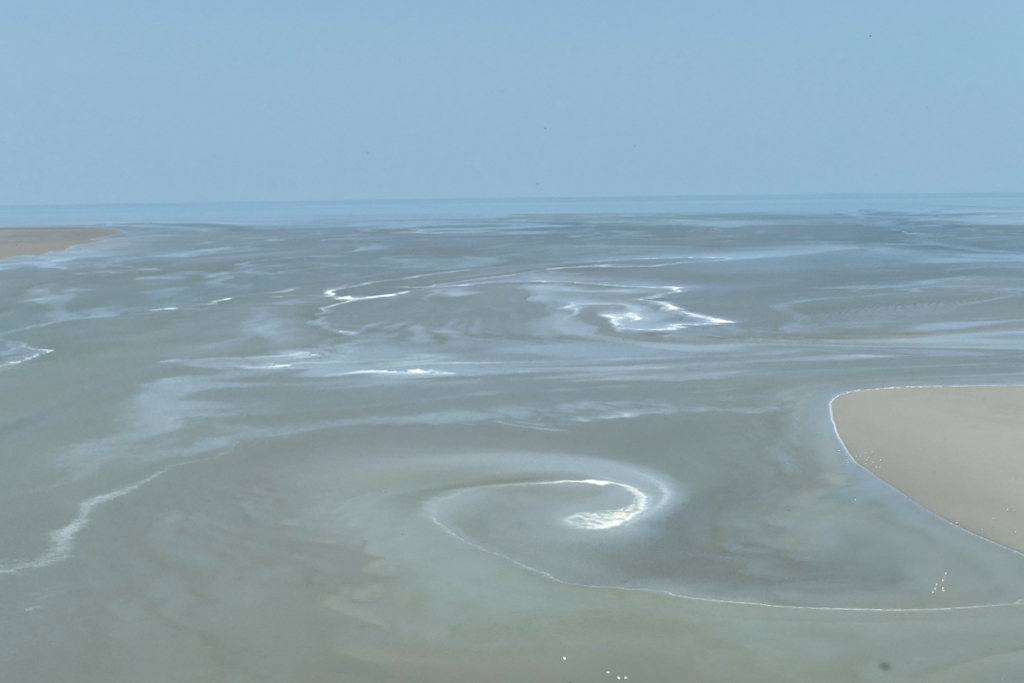
In the past, the rapid tides could be life-threatening for pilgrims and travelers. Anyone crossing the bay had to know the tides precisely. Even today, one should never venture onto the mudflats without expert guidance, as quicksand and rapidly rising water can be dangerous.
A particular challenge today is protecting the bay from silting up. Due to natural changes and human intervention, increasing amounts of sand had accumulated around the island over time. This threatened to cause Mont Saint-Michel to lose its island character.
Extensive construction and restoration measures were therefore undertaken to strengthen the natural tidal currents. Among other things, a newly built causeway supports the water flow and reduces silting.
Mont Saint-Michel
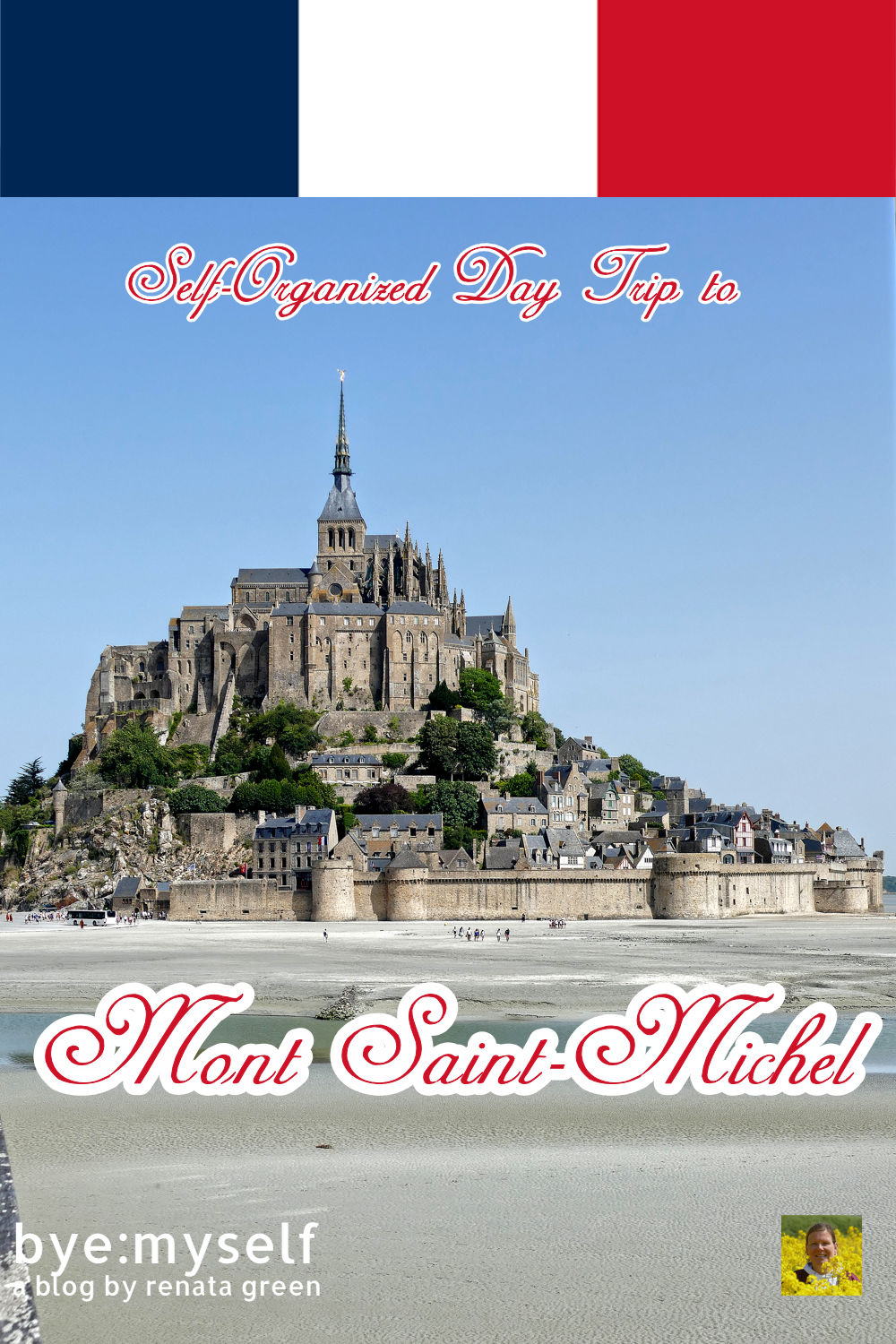
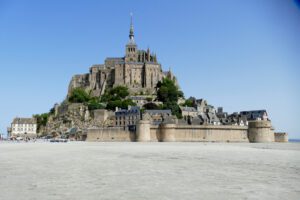
When it’s finally my turn to board the waiting shuttle bus, it’s a relief, but the ordeal isn’t really over. There is no air conditioning, and we drive for what feels like hours, but realistically it’s probably only about 15 minutes. Then the sweltering bus spits us out into the summer heat, about 75 meters from the main entrance to Mont Saint-Michel. Incidentally, this is the very best place to photograph the marvelous mountain in all its glory!
Right behind the entrance is a small fountain, where a long line has already formed. Those whose turn it is fill their water bottles, dampen their sweaty temples a little – and then, what the heck – just hold their entire heads under the stream of water.
I turn right, go through the Porte et Logis du Roi, and find myself on the Grande Rue. The Rue is not actually that Grande, but it’s absolutely packed with people. It’s like a shopping street on Black Friday. I generally avoid shopping streets, particularly on Black Friday. Therefore, I’m relieved when, after a few steps, I spot a staircase leading up to the Ramparts, the city wall. It’s not completely deserted up there, but it’s nothing compared to the pushing and shoving down on the street below. However, it’s even hotter, as there’s absolutely no shade.
You know that feeling when you walk in sweltering heat almost as if in a trance? Well, that’s exactly how I felt.
It Takes A Village
You’ll immediately realize that Mont Saint-Michel is much more than just an abbey perched on a rock. It’s primarily a walled village, and you don’t need a ticket or reservation to visit. If you take your time and ignore the crowds, you can discover magnificent medieval architecture, stroll along the ancient ramparts, visit museums, observe the tides, or even explore the bay a bit.
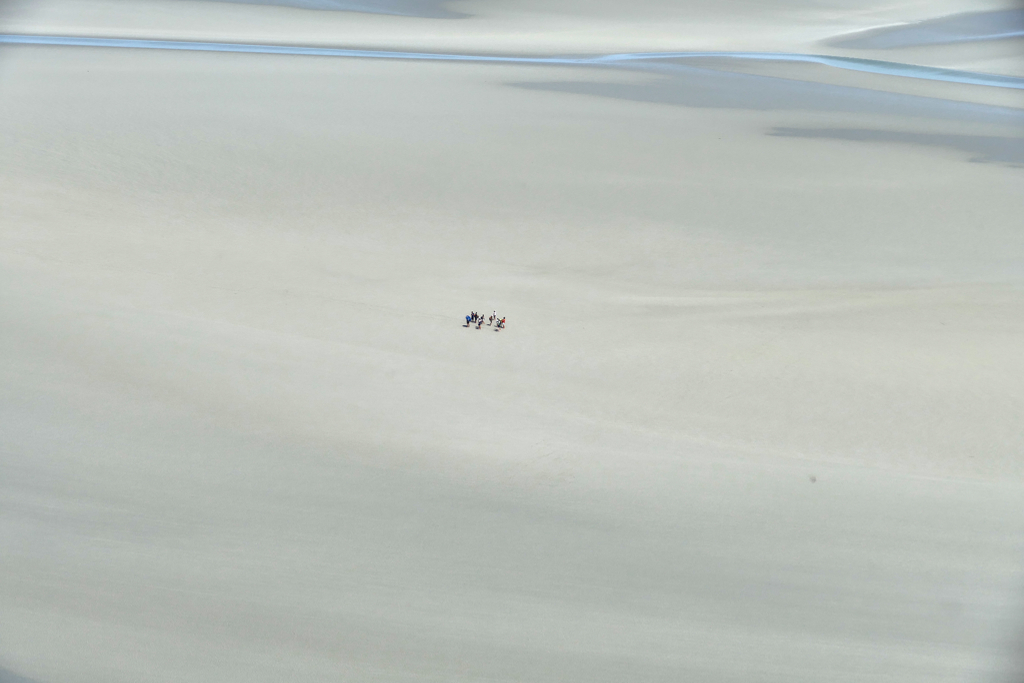
However, you should absolutely not attempt a self-guided tour across the mudflats. But if you’d like, you can join a guided tour, where you’ll learn a great deal about the tides, the fascinating flora and fauna, and the history of the bay. As a matter of fact, I’ve always been a big fan of the Wadden Sea and wrote about an extraordinary mudflat hike from the German mainland to an offshore island in my post CUXHAVEN – walking on water.
Grande Rue cleaves the historic town center. Restaurants and souvenir shops line it all the way up. And thankfully, the crowds thin out a bit as you climb uphill. Some are grabbing a bite to eat, others are browsing the shops, so you get to see more of this actually very pretty street the higher you go. And yes, it does climb quite steeply, as Grande Rue ascends towards the abbey.
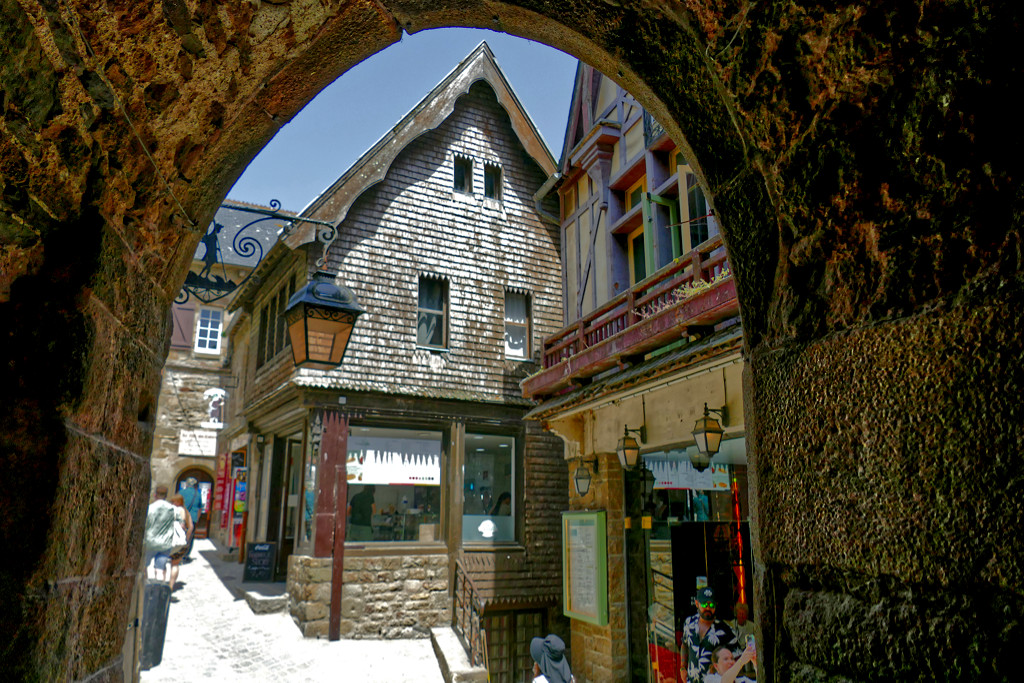
You should definitely leave Grande Rue now and then to explore the small side streets and staircases. You’ll discover small courtyards and narrow alleyways with historic doors and facades, and many unexpected viewpoints. Fortunately, you can always enjoy quieter spots off the main street.
The Only Way is Up
Despite the heat, I really enjoyed walking along the ramparts, the medieval fortifications. From the walls, I constantly had different perspectives of the bay, the roofs of the village, and the abbey above.
During the walk, the individual towers, such as the Tour du Nord, Tour Gabriel, and Tour de la Liberté, as well as the defensive parts, also caught the eye. Here it becomes clear once again that Mont Saint-Michel was not only a monastery but also a fortress for centuries.
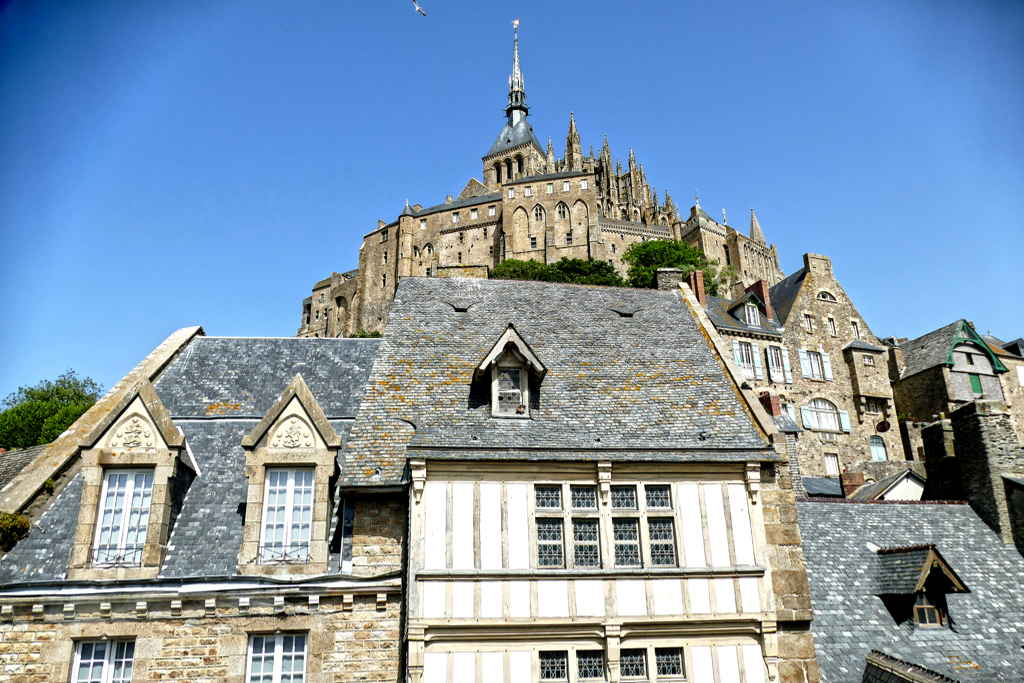
The village also boasts four museums, each exploring different aspects of the site’s history. The Musée Historique, or Historical Museum, delves into the 1,300-year history of Mont Saint-Michel. Alongside historical artifacts, weapons, sculptures, paintings, and depictions of life on the rock in earlier times, it also covers the period when the Mont served as a prison. For those who prefer an audiovisual presentation on the history and development of Mont Saint-Michel, the Archéoscope is the perfect choice.
There’s More
Somewhat removed from the main tourist crowds lies the small Chapelle Saint-Aubert. Located at the foot of the rock, it is dedicated to Saint Aubert, who, according to legend, commissioned the first chapel on Mont Saint-Michel. Its smaller size, less spectacular scale, and consequently less crowded vibe compared to the large abbey make it well worth a visit.
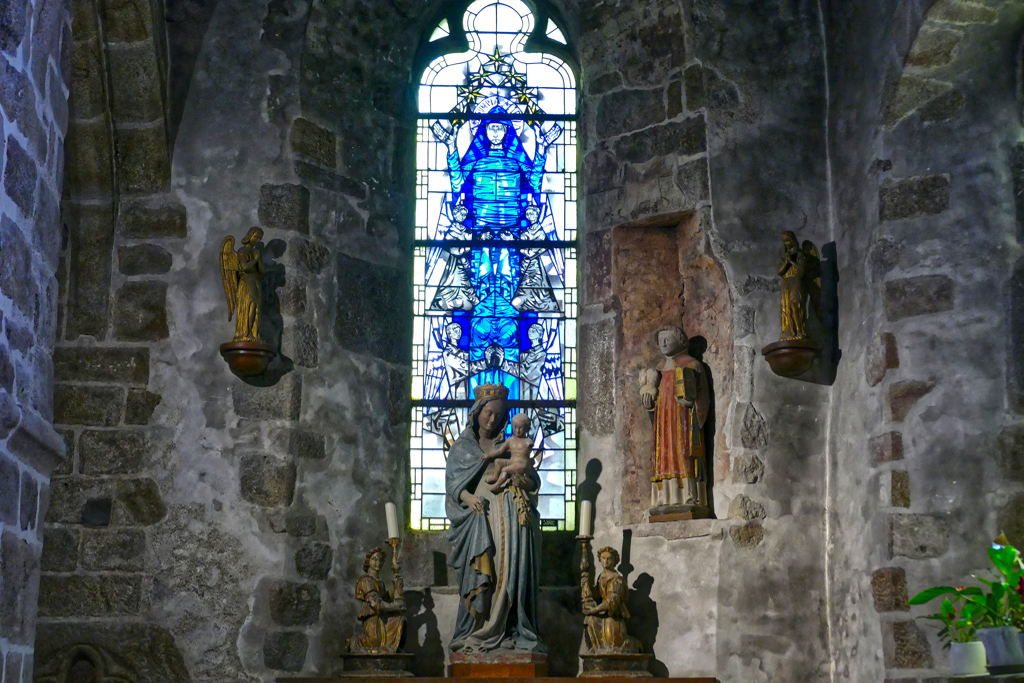
Finally, the Maritime Museum explores the bay and its dramatic tides. In any case, Mont Saint-Michel is not a place you should visit with a checklist. Up the stairs, down again, through a side street, peeking into a small church, up onto the wall and back down to the village – it is precisely some aimless exploring that will enable you to acknowledge and enjoy the charm of the site.
Lunch is Served
Of course, such a tour of discovery makes you hungry, and it won’t surprise you that the village is awaiting peckish visitors with wonderful local specialties. Especially along Grande Rue, you’ll find many eateries that suit all budgets.
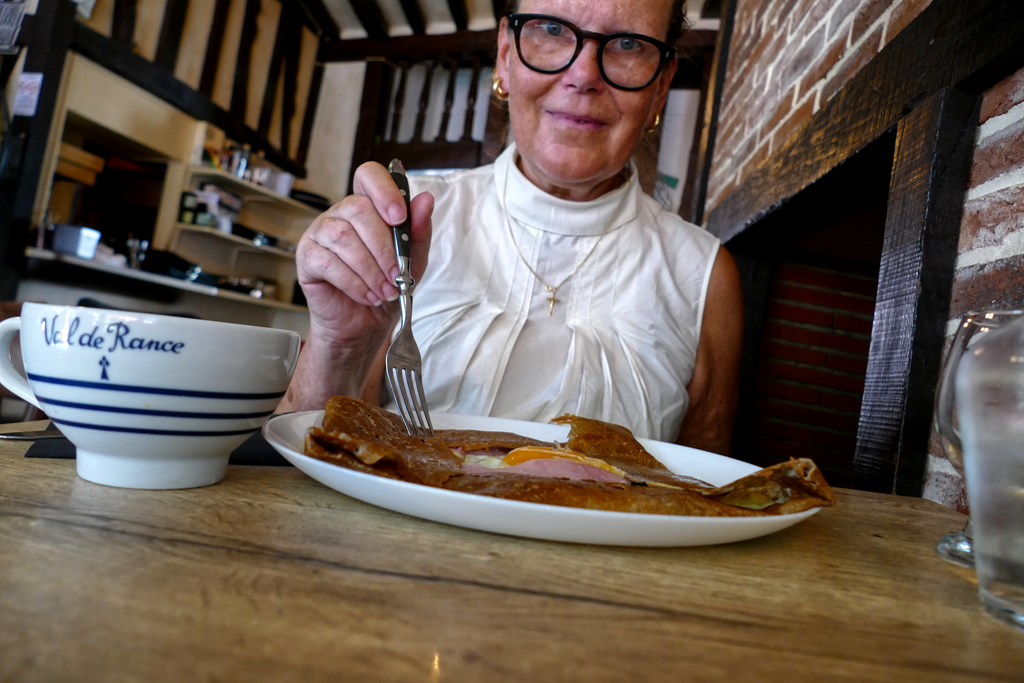
The Omelette de la Mère Poulard is famous. It dates back to Annette Poulard, who ran an inn on Mont Saint-Michel in the 19th century. The omelette is made with a very light and airy batter and cooked in a special mold. I opted for another classic: a galette. This is a paper-thin buckwheat pancake, traditionally filled with cheese and ham and topped with a fried egg. Add a cup – yes, a cup, not a glass – of cider, and life is good in northern France.
Plan Your Visit
For anyone wanting to visit Mont Saint-Michel, the journey begins at the Centre d’Information Touristique, the official visitor center. Here you’ll find a large parking lot for those arriving by car, and it’s also the final stop for the public bus. If needed, you can get information and buy tickets at the visitor center before taking off to the Mont.
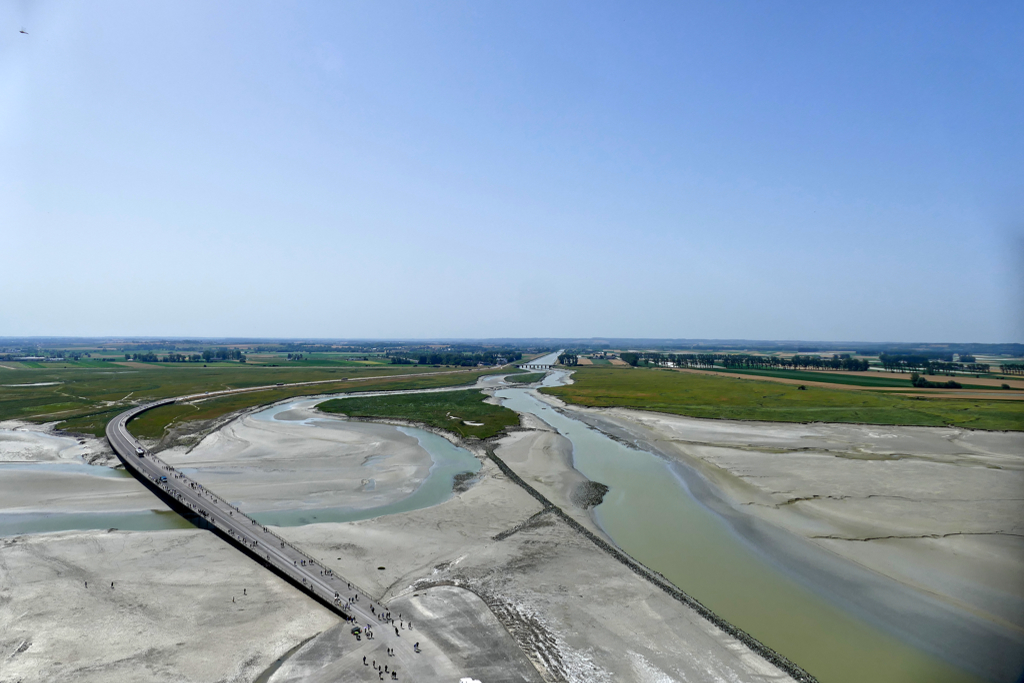
From the center, you can walk the 3 kilometers to the Mont Saint-Michel, which takes about 45 minutes and can be very strenuous in rain or heat. Fortunately, there’s a free shuttle bus. However, be sure to allow for a long wait of at least half an hour. The coach then first travels through the small hotel and tourist district of La Caserne and eventually onto the Pont-Passerelle bridge. It stops about 75 meters from the foot of the mountain. The rest of the way, you’ll have to walk, obviously. However, before you set off, take some first pictures, as the view of the mountain from here is absolutely fantastic!
Also, at the end of your visit, be sure to allow plenty of time in case you miss the first or second shuttle bus – especially if you need to catch a specific bus, for example, to Rennes.
The Tide is High
Perhaps you’ve seen pictures of Mont Saint-Michel surrounded by the sea. In fact, the mountain is regularly engulfed by seawater and becomes an island. However, this doesn’t happen at every normal high tide, but only on a few days each month during a so-called spring tide.
When this happens, the water rises so high that even the lower-lying plain at the foot of the mountain floods. In this case, access to the mountain is cut off for one to two hours. During this time, neither shuttle buses nor pedestrian access are permitted. The stilt bridge remains above the water; only the very last flat section before the main gate disappears into the sea.
Many visitors come specifically to witness this phenomenon. They enter the mountain before high tide and watch the incoming tide from the historic fortress walls, basically locked in.
The Abbey
Like most visitors, for me, visiting the abbey is the true highlight. It sits atop the highest point of the rock and is the architectural pinnacle of Mont Saint-Michel. It’s not simply a medieval monastery, but the culmination of nearly a thousand years of construction. Romanesque and Gothic architecture, religious history, and medieval fortification are all interwoven here.
The abbey was continually expanded between the 11th and 16th centuries. During this time, the medieval builders had to adapt the architecture to the rock. But it is precisely this connection between rock and structure that gives it its unique character. The abbey literally grows out of the rock.
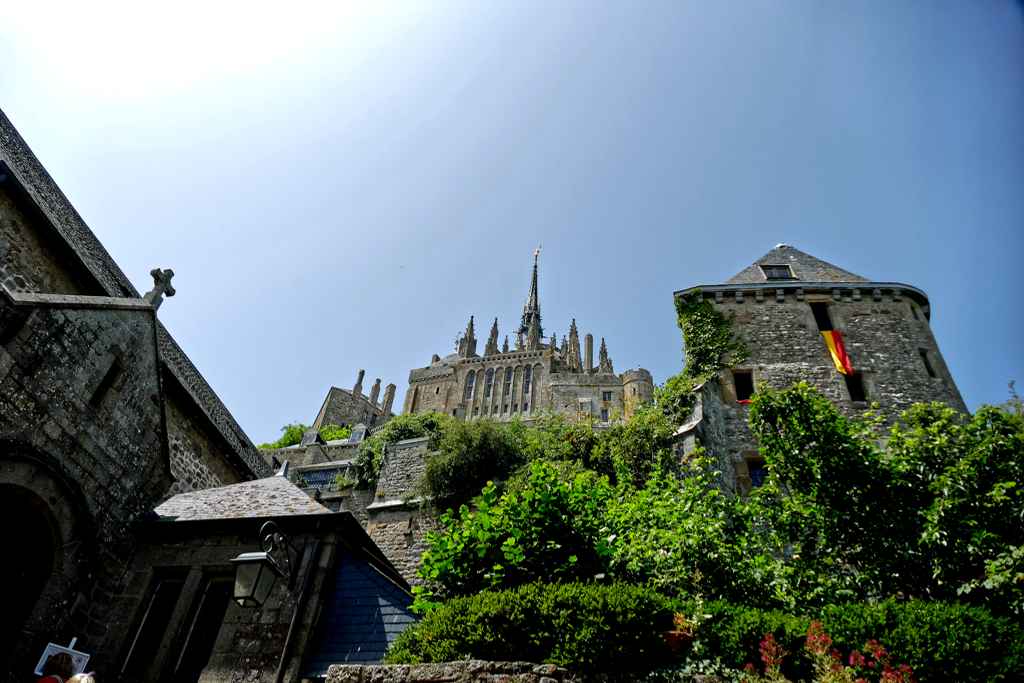
Part of the buildings sits directly on the highest point, while other spaces are located below and simultaneously serve as supporting structures for the buildings above. In this quasi-vertical construction concept, the support and service areas are located at the bottom. Above them are the monastic and ceremonial spaces, crowned at the very top by the church and the cloister. This layout also explains why you constantly have to climb stairs when visiting.
The Church
The church is, of course, the spiritual heart of the entire complex. Construction of the present church began in the 11th century. You can still see the Romanesque architecture from that period today. The church was built directly on the highest part of the rock. Therefore, the builders faced considerable structural challenges. Part of the church is supported by the natural rock formations, while other sections rest on massive underground buttresses.
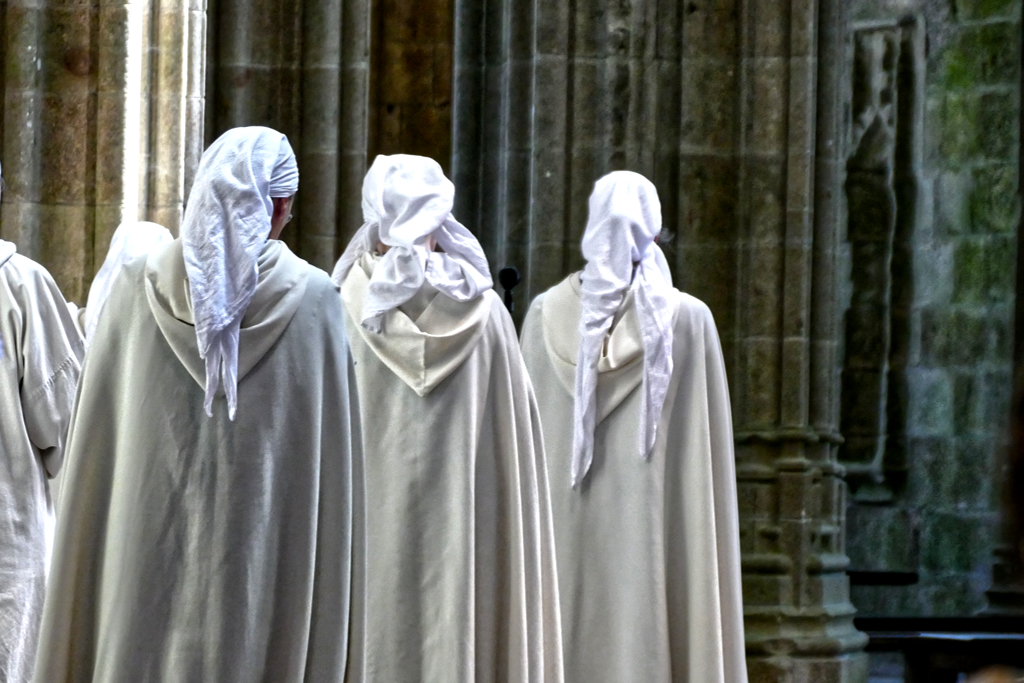
A dramatic event was the collapse of the Romanesque chancel in the 15th century. The late Gothic chancel visible today was later built in its place.
The abbey is particularly interesting as it doesn’t originate from a single construction period and tells virtually the entire story of medieval building. While the Romanesque sections seem massive and enclosed, high vaults, slender columns, large windows, and vertical lines characterize the Gothic parts. It is precisely this contrast between the massive rock and the seemingly weightless Gothic architecture that makes the abbey so alluring.
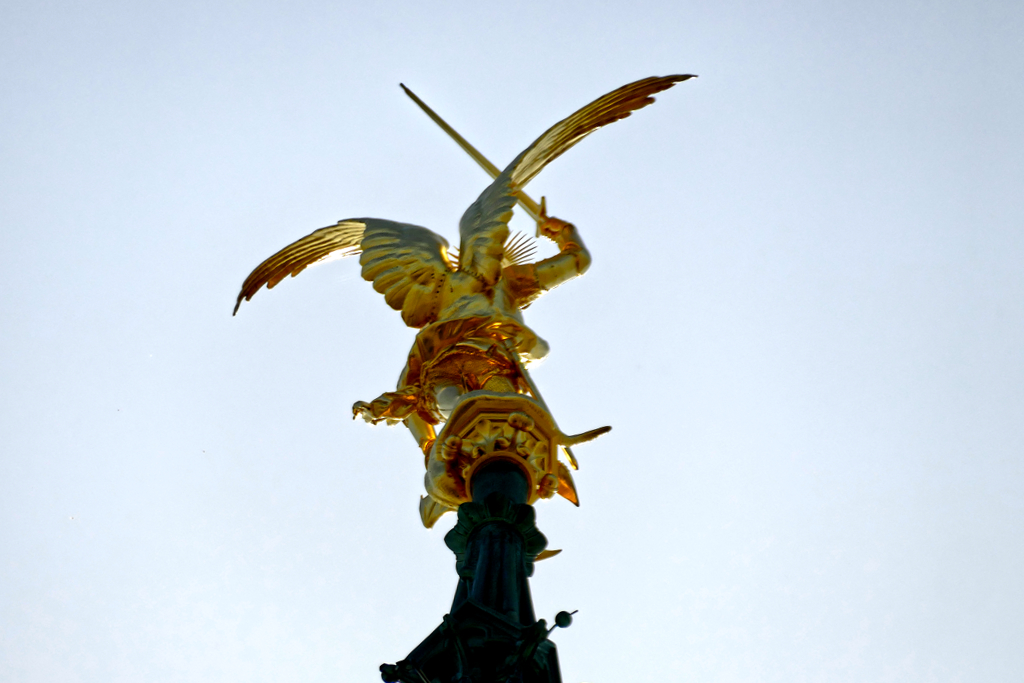
The large Gothic building complex on the north side is called La Merveille, hence the wonder. From the early 13th century onward, a multi-story complex was built here in a very confined space, one that is both functionally and architecturally extremely sophisticated. La Merveille consists of several levels. The lower levels housed, among other things, rooms for provisions and guests. Above them were rooms for monastic life, while at the very top were the large refectory and the cloister. This vertical organization was an ingenious solution for the extremely limited space. UNESCO also highlights this very construction as an outstanding example of medieval architecture.
The Cloister, the Refectory, and Other Glories
The cloister is one of the absolute highlights of the visit. The view between the columns toward the bay is particularly beautiful.
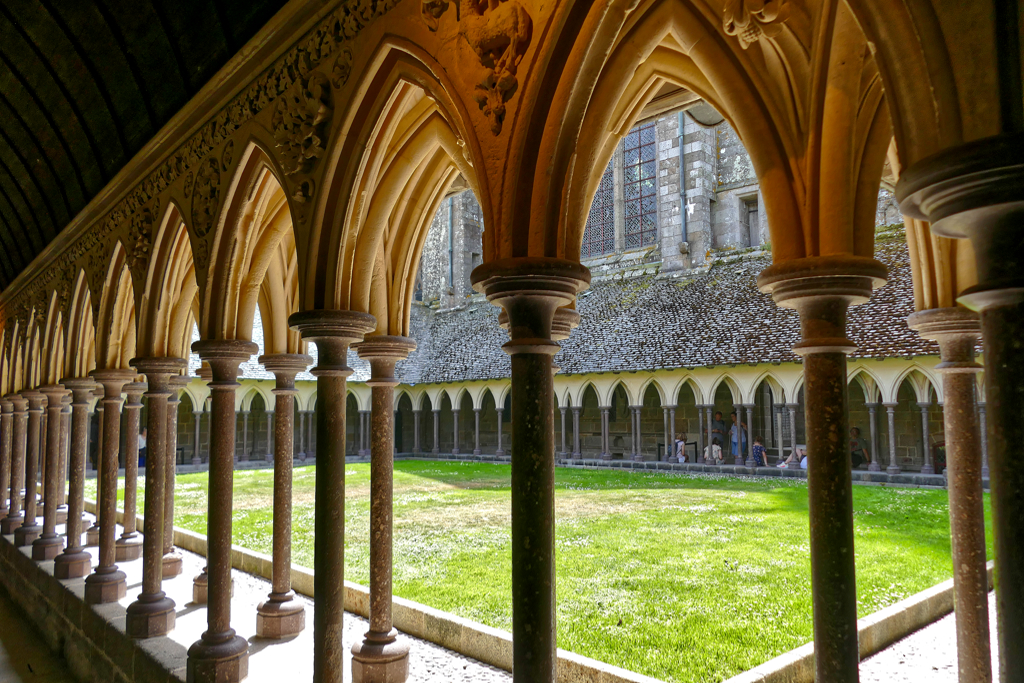
For the monks, the cloister was a central part of monastic life. Here they could pray, reflect, and move between the different areas of the monastery.
The monks’ refectory is located in the upper part of La Merveille. Even during meals, there was a reverent atmosphere, as meals were a vital part of the monastic routine. I found it very charming to see visitors enjoying their packed lunches at the long tables. This took the edge off the museum-like atmosphere, and I was a little sad that I hadn’t brought a snack.
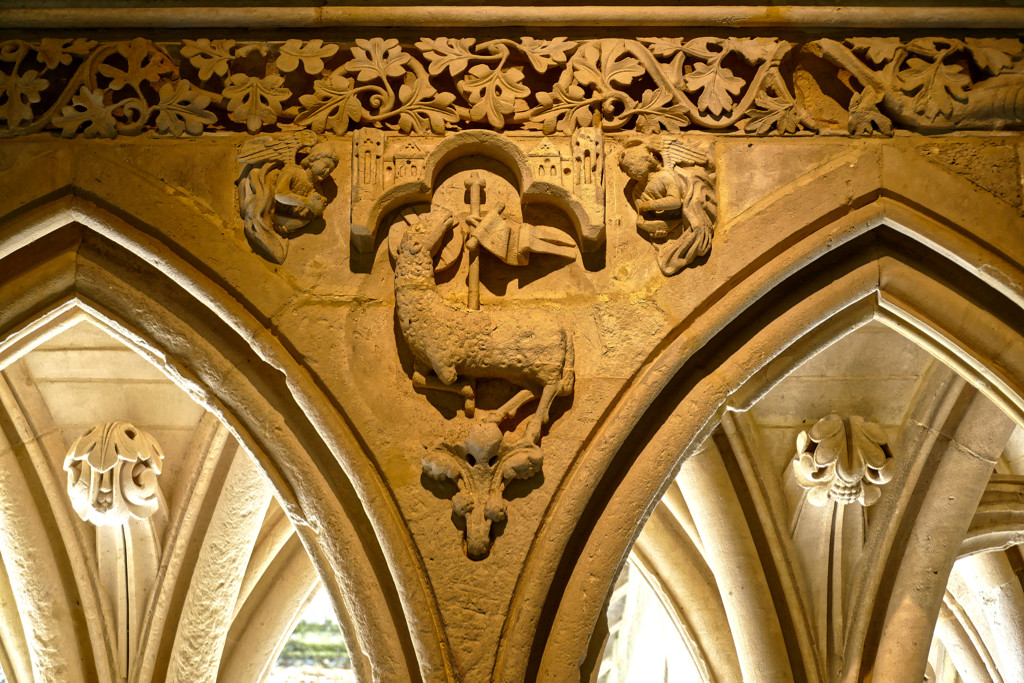
The work and storage rooms located beneath La Merveille also served as the foundation for the sections above. Here, the Benedictines transformed Mont Saint-Michel from a religious center into a place of knowledge, dialogue, and book printing. In addition to theology, they studied philosophy, history, literature, and sciences. The monks wrote and copied books and manuscripts, making Mont Saint-Michel a significant center of European scholarship. To learn more about it, you should definitely visit the Scriptorial d’Avranches. There, the history of the Mont’s manuscripts is presented in more detail.
A final highlight awaits you when you step out of the awe-inspiring structure and onto the large terrace. It’s not only architecturally interesting but also one of the best viewpoints in the entire complex. From here, you can gaze far across the bay, seeing the seemingly endless mudflats at low tide and the Atlantic waves at high tide.
Plan Your Visit
The abbey is open from 9 a.m. to 7 p.m. from May to August, and from 9:30 a.m. to 6 p.m. from September to April. General admission is 13 €uro from October to March and 16 €uro from April to September – don’t ask me why. You can buy your ticket right here*.
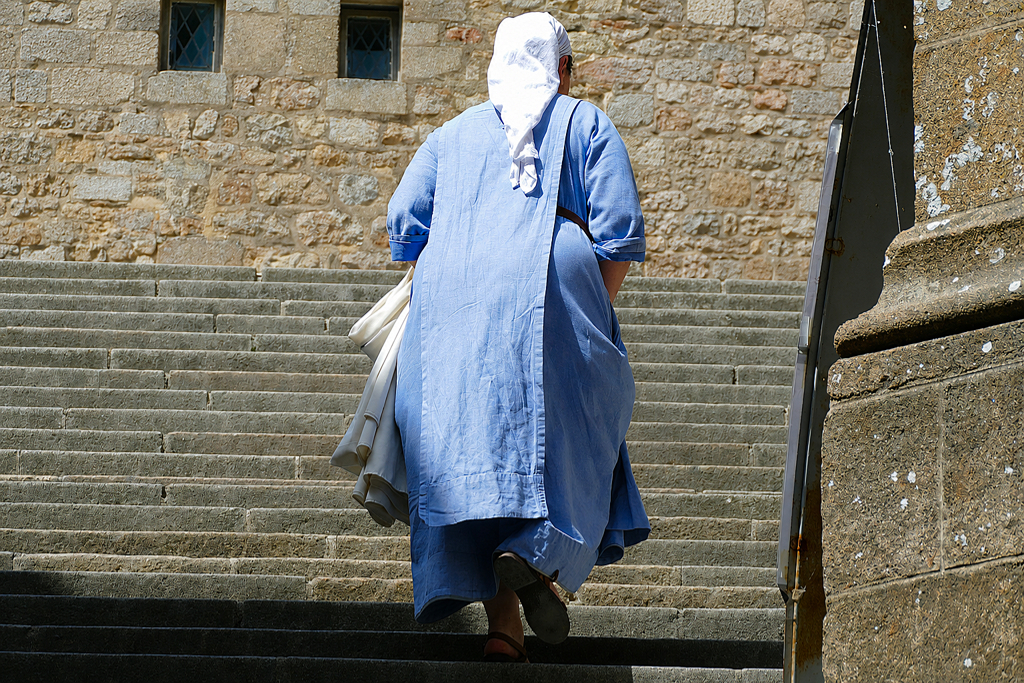
I highly recommend booking your ticket online as early as possible, especially during peak season, to avoid disappointment. A typical tour takes approximately 60 to 90 minutes. If you like, you can rent a multimedia tablet with various language options for 6 €uro.
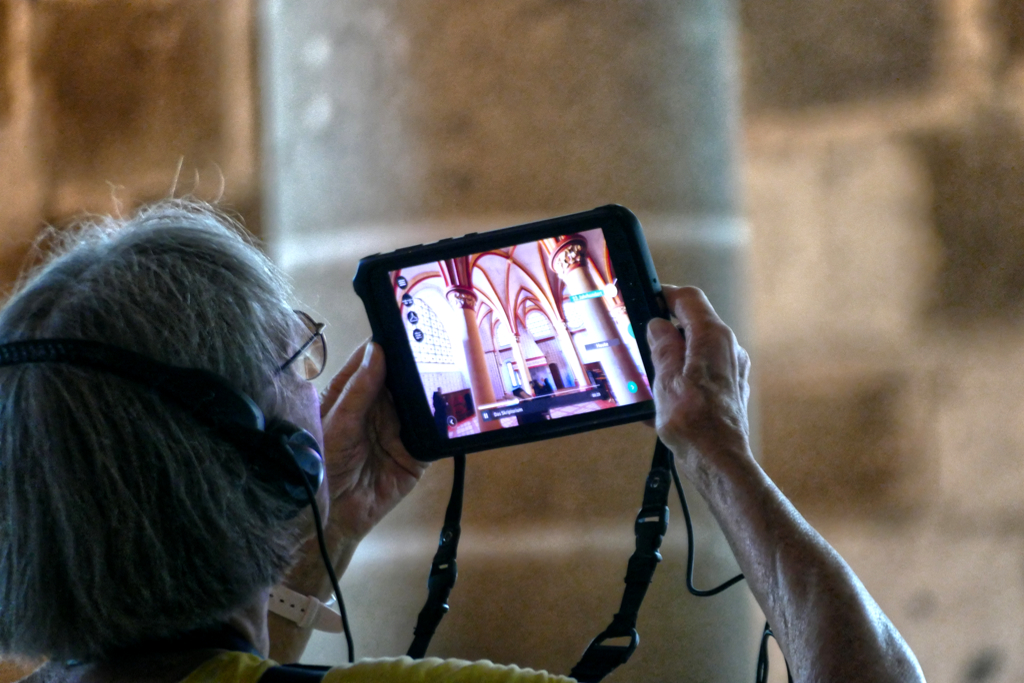
You can also join a free 45-minute guided tour in French or English. Please inquire about times on site.
In addition, they offer so-called visites conferences. These are considerably more detailed, last approximately two hours, and cost just over 20 €uro.
To Mont Saint-Michel from Paris via Rennes
You can easily visit Mont Saint-Michel on a day trip. I came from Rennes myself, but getting there from Paris is also very convenient. You need to take the TGV from Paris-Montparnasse station to Rennes. While there are also trains from the Austerlitz station in Paris, they take at least three times as long. Therefore, I wouldn’t recommend them for a day trip.
The fastest connections from Montparnasse to Rennes take approximately 90 to 120 minutes. There are numerous connections throughout the day, but for a day trip, you should obviously get up as early as possible. The onward journey from Rennes is then very easy.
From Rennes to Mont Saint-Michel
The TGV arrives at Rennes station, and the Gare Routière bus station is right in front of it. From there, you can take one of the hourly Keolis Armor buses. The bus takes just over an hour to reach Mont Saint-Michel. You should definitely buy your tickets on their website well in advance for both the outbound and return journeys. Keep in mind that the bus driver doesn’t sell tickets. A round trip costs 25 €uro, and includes a small discount on the Abbey entrance ticket*. However, you should also book your Abbey entrance* well in advance, especially during peak season and on weekends.
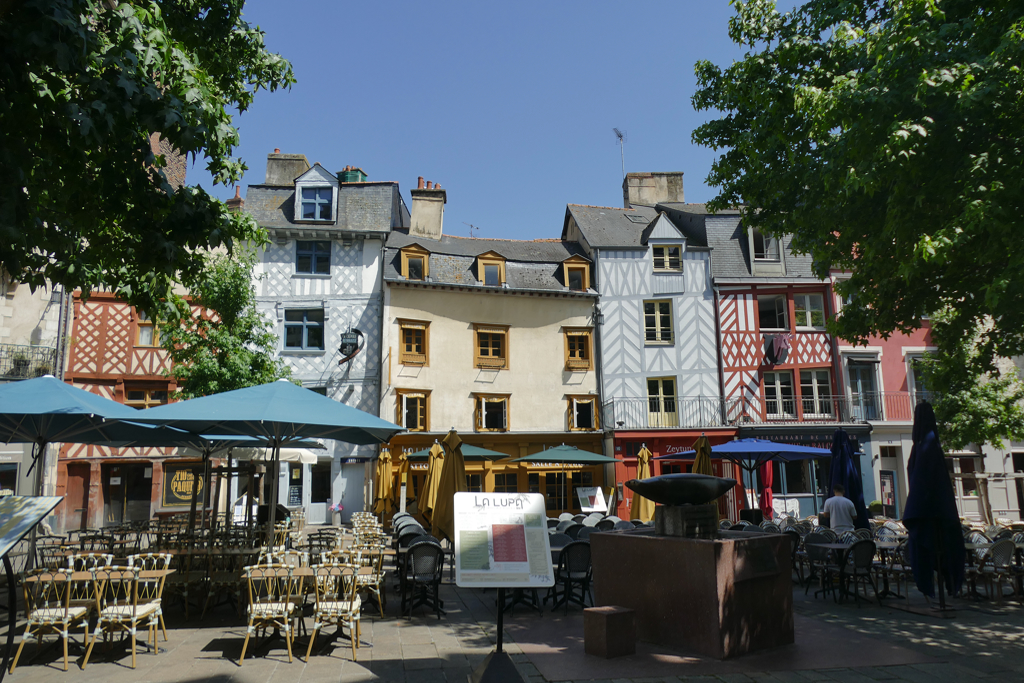
Since Mont Saint-Michel really deserves leisurely exploration, an overnight trip is obviously more relaxed. However, a day trip is perfectly feasible. Just be sure to foresee some buffer time in case there are any delays with the connections. For example, I would book your Abbey visit* at least two hours after the scheduled bus arrival. If the train has a slight delay and you have to take a later bus than planned, you’ll still have plenty of time to get to the Abbey. You should also plan generously for the return journey: Allow enough time for the shuttle ride to the information center or bus stop, and don’t book the very last train back to Paris. While Keolis coordinates their coaches with the TGV connections, heavy traffic and delays can still occur. Transfer times should ideally be half an hour to be on the safe side.
Where to Stay
If you have the chance, I would definitely recommend spending a night at Mont Saint-Michel or in the immediate vicinity. This will turn a tiring day trip into a truly wonderful excursion.
I came from La Rochelle and therefore stopped and stayed overnight in Rennes. In my opinion, the city is nothing to write home about. However, it was very convenient for the excursion: After breakfast, I took the Keolis Armor bus at 8:45 a.m. and returned around 6 p.m.
Of course, you can also stay closer to the Mont or even right in the village. In that case, you should only take a small suitcase or backpack. Mont Saint-Michel is steep, and you have to manage stairs and some narrow paths.
If you stay in the village, you practically have the Mont to yourself in the evenings and early mornings. You can then wander through the streets without constantly bumping into tourist crowds. The abbey is illuminated, and the narrow streets appear completely different.
Here are some options for where you can stay according to your needs and budget*:
Visiting Organized
In this post, I’ll show you how you can easily visit Mont Saint-Michel on your own even if you’re coming all the way from Paris. If that still sounds too complicated and time-consuming for you, or if you simply prefer to leave the organization to others, there’s nothing wrong with booking an organized tour that practically carries you there*:
Pinnable Pictures
If you choose to pin this post for later, please use one of these pictures:
Did You Enjoy This Post? Then You Might Also Like These:

BORDEAUX: Best Street Art on the Left Bank of the Garonne
What Not to Miss in PARIS: 20 Must-Dos, Not Only for First-Timers
Self-Planned Day Trip to MONT SAINT-MICHEL – Easily Organized Even from Paris via Rennes

24 hours in PARIS
Two Days in MARSEILLE – What Not to Miss in the Belly of France

Cheesy Flight: Never Put Cream Cheese In Your Hand Luggage
Best Things to Do in AIX-EN-PROVENCE in One Day

One Day in NÎMES – What Not to Miss in the Most Roman City of France
*This is an affiliate link. Hence, if you book through this page, you not only get the best deal. I also get a small commission that helps me run this blog. Thank you so much for supporting me.