Need a break from the hustle and bustle of the big city?
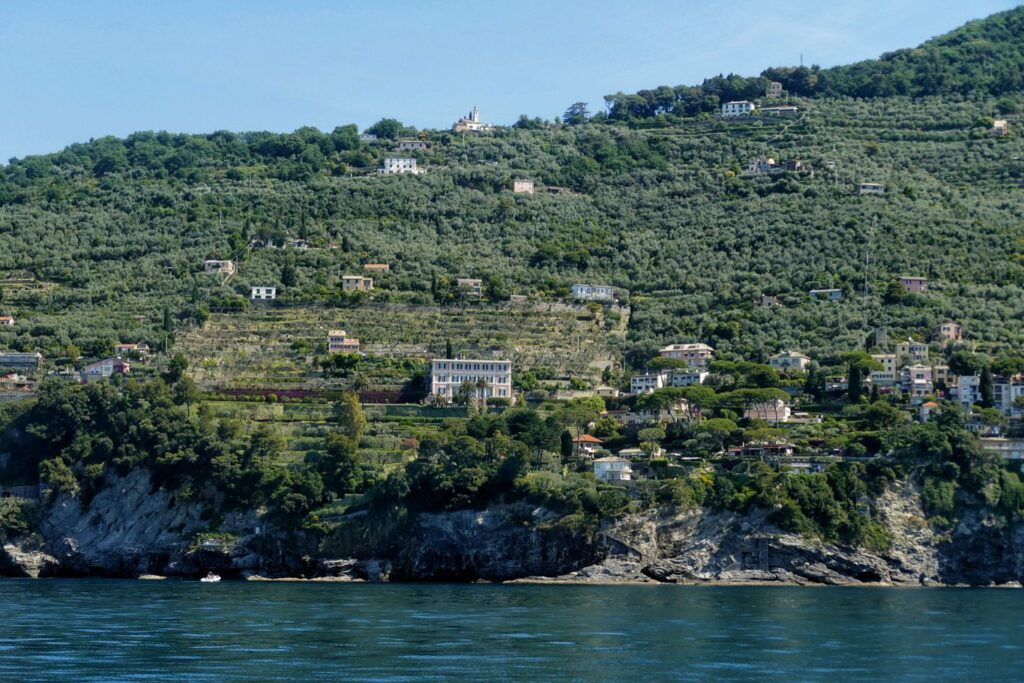
On a day trip from Genoa, you can visit three very different gems of the Ligurian coast by excursion boat. The cruise takes past rugged cliffs and pastel-colored villages to charming Camogli with its colorful houses and relaxed beach atmosphere. Nestled in a secluded cove, the medieval Benedictine monastery of San Fruttuoso is a sight to behold, before you end the day with an aperitivo in the luxurious haven of Portofino.
Sounds like we’re in for an absolutely memorable trip, am I right?
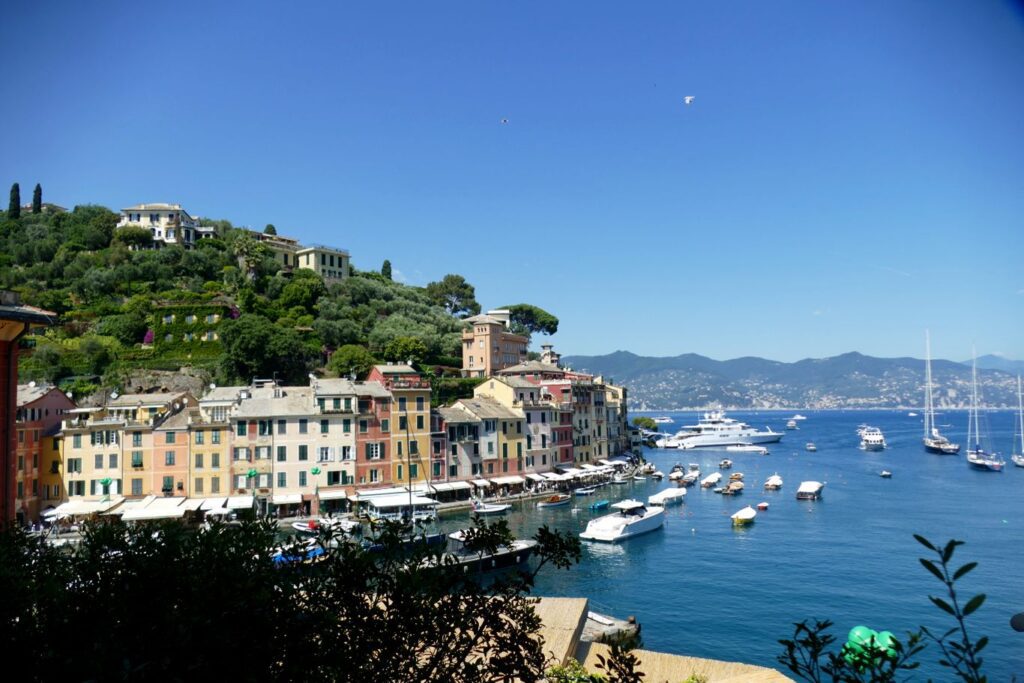
Out of Genoa: A Nautical Day Trip Along the Ligurian Coast
I’ve been in Genoa for three days now. I’ve visited the magnificent palaces from the city’s golden era, both inside and out. Cable cars took me up to wonderful viewpoints above the city. I sampled focaccia and other delicacies. And all that has constantly taken place against the backdrop of the sprawling harbor and the open Mediterranean sea. Genoa is such an iconic port city! Therefore, I feel that exploring it also from the water is simply a must. Of course, I could just use my day pass to take the navebus, hence, the water shuttle, which is just a general means of the city’s public transportation system.
But I want more.
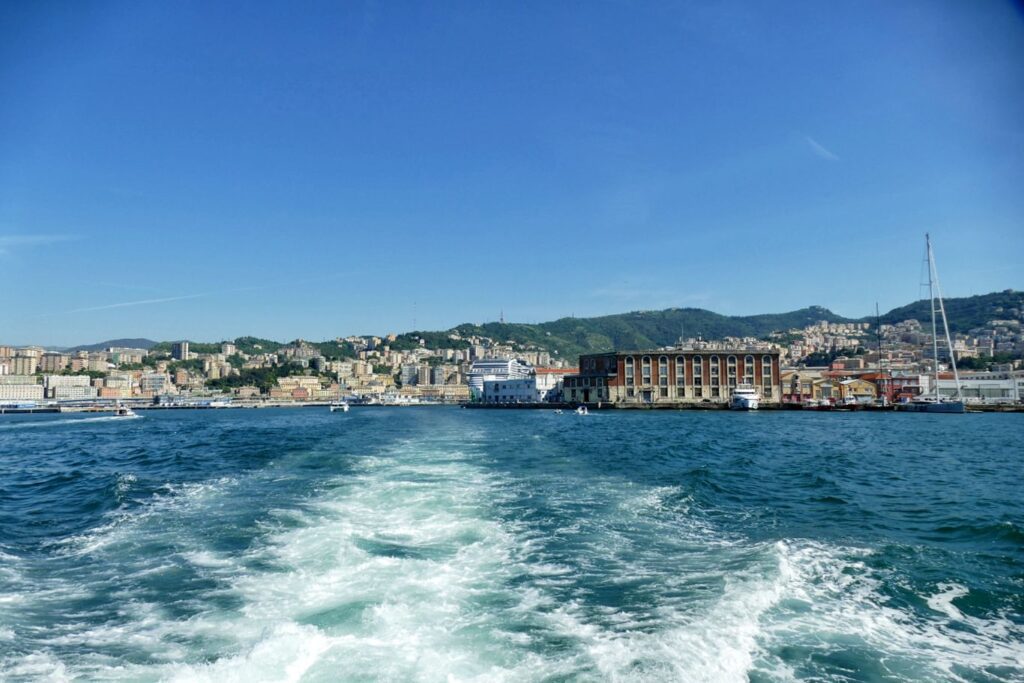
Since I’m already in Liguria’s capital, I want to explore other iconic places along the coast. Luckily, there’s a kind of hop-on, hop-off cruise by boat. It takes passengers to three very different locations on the Mediterranean coast throughout the day.
Sounds great, right?
So what are you waiting for, let’s set sail!
Camogli
I get to the Porto Vecchio, Genoa’s old port, more than half an hour ahead of time for the sole reason that I want to take some pictures before we set sail. Yet, as I approach the jetty, the departure is announced over a speaker and the boat is actually already half-ful. And I thought that I’m the one suffering from OCD. However, since I’m already at the jetty, I can as well take the chance to pick one of the remaining good spots – outside, yet in the shade. Once the boat is full – and by full I mean packed to the rim – we set sail for our cruise alongside the picturesque Ligurian coast.
The first stop on our cruise is Camogli. At first glance, this small town seems like a quieter neighbor of the more famous resorts on the Ligurian coast. Here, too, tall, narrow houses stand close to the water, their facades painted in warm colors, their shutters often half-closed against the light. But unlike some of the more staged perfection found elsewhere, Camogli feels less artificially polished.
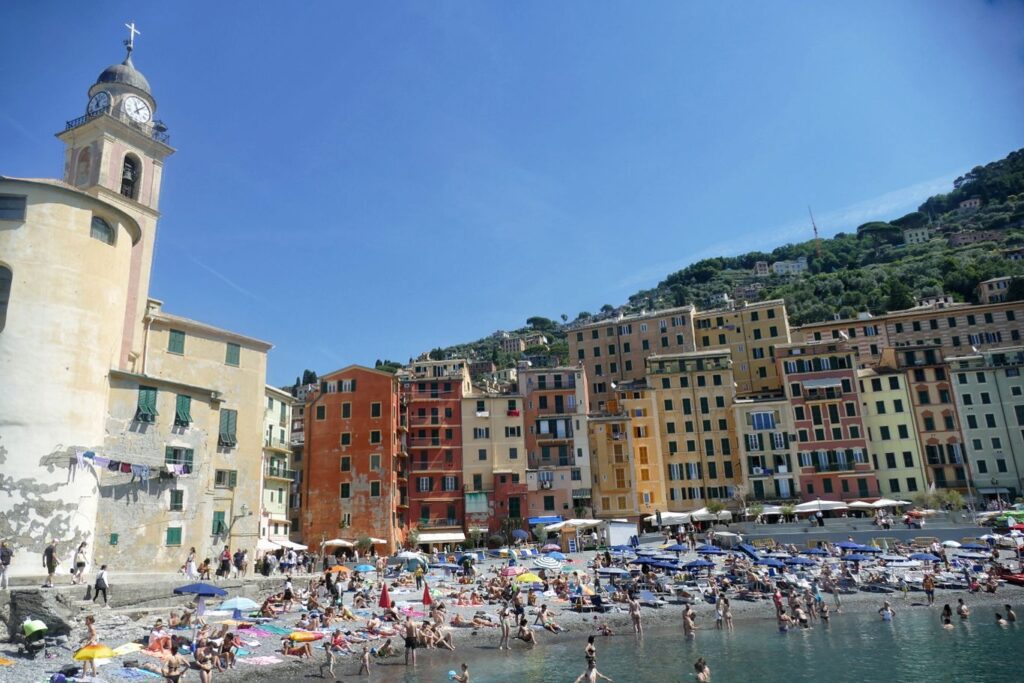
As a matter of fact, the town has a rich maritime past. In the 18th and 19th centuries, Camogli was an important seafaring center, at times boasting one of the largest merchant fleets in Italy! Many of the captains came from here, and wealth flowed back into the town via the port. The unusually tall houses along the waterfront are therefore no coincidence. They were built so that as many families as possible could live with a sea view. Perhaps also to signal their return from afar.
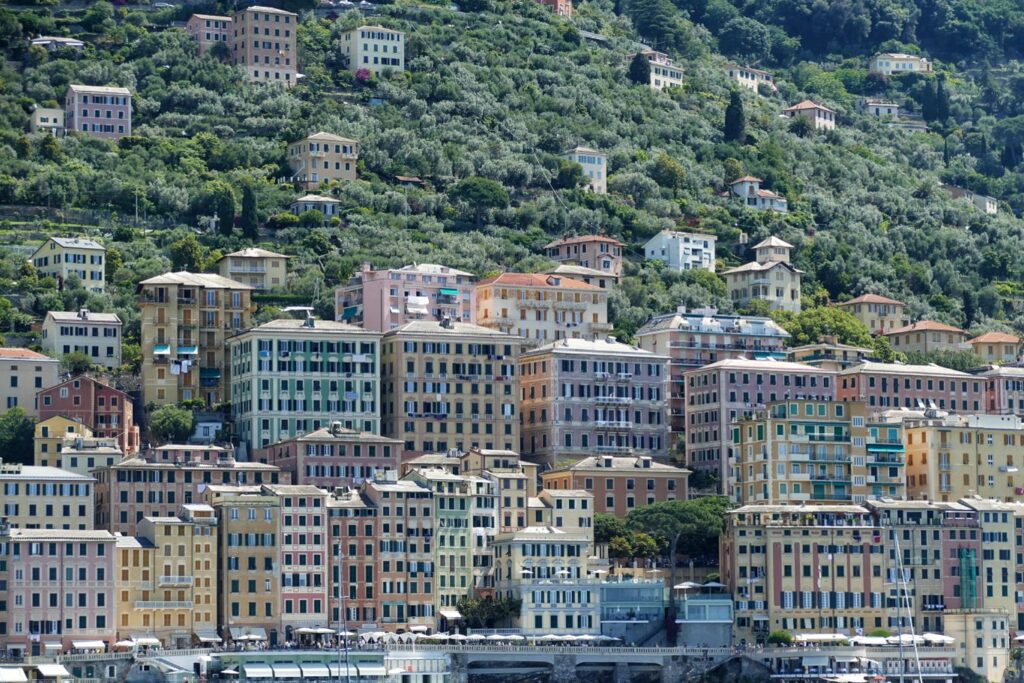
This close connection to the sea is still palpable today. Fishing boats still moor in the small harbor, even though tourism has long since become a major industry. Unlike in other Ligurian coastal towns, the transition here is less abrupt. There’s no clear separation between everyday life and tourism. Both coexist harmoniously.
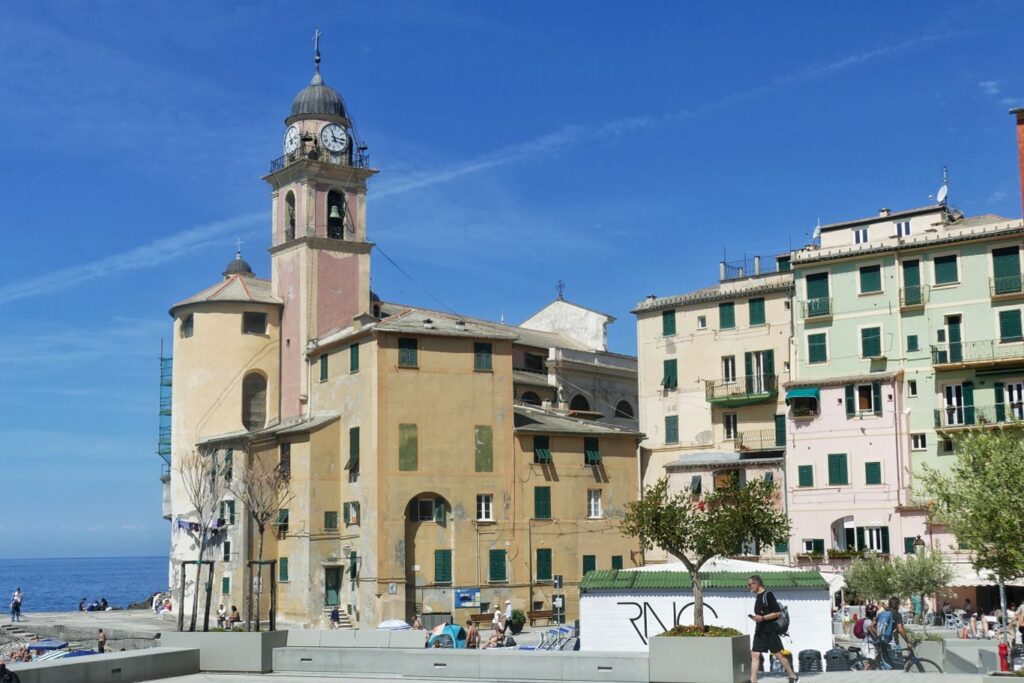
A central building in Camogli is the Basilica di Santa Maria Assunta, which stands directly on the waterfront. Its Baroque facade and location on the edge of the harbor make it a prominent landmark. Right behind the Basilica is the medieval fortress Castello della Dragonara, a castle that was built to protect the village and the coast.
From here, the promenade stretches along the beach.
Out of Camogli
Camogli has retained its unique character, partly due to its location on the edge of the Portofino Regional Natural Park. The paths into the hills begin almost immediately behind the last houses. A short walk uphill quickly leaves the town behind and offers a view of the coast.
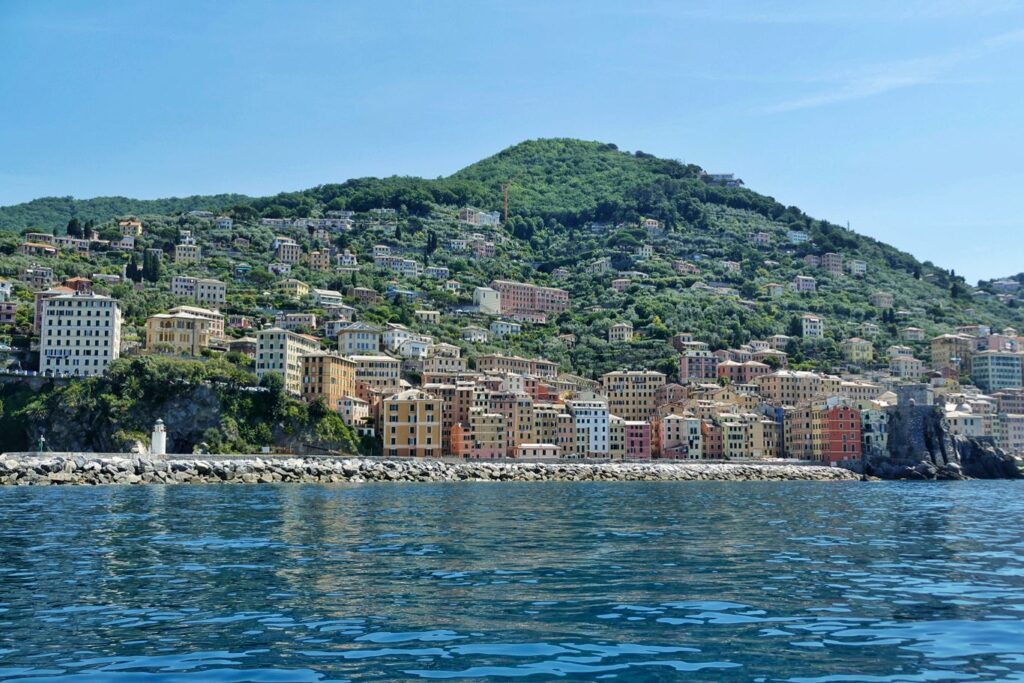
It’s striking how much Camogli lives according to the rhythm of the year. In summer, the beach and streets fill up; in autumn, it becomes quieter; and in winter, the town belongs exclusively to its residents. Then it becomes clear that Camogli has never been merely a backdrop, but has always remained a vibrant and functioning community.
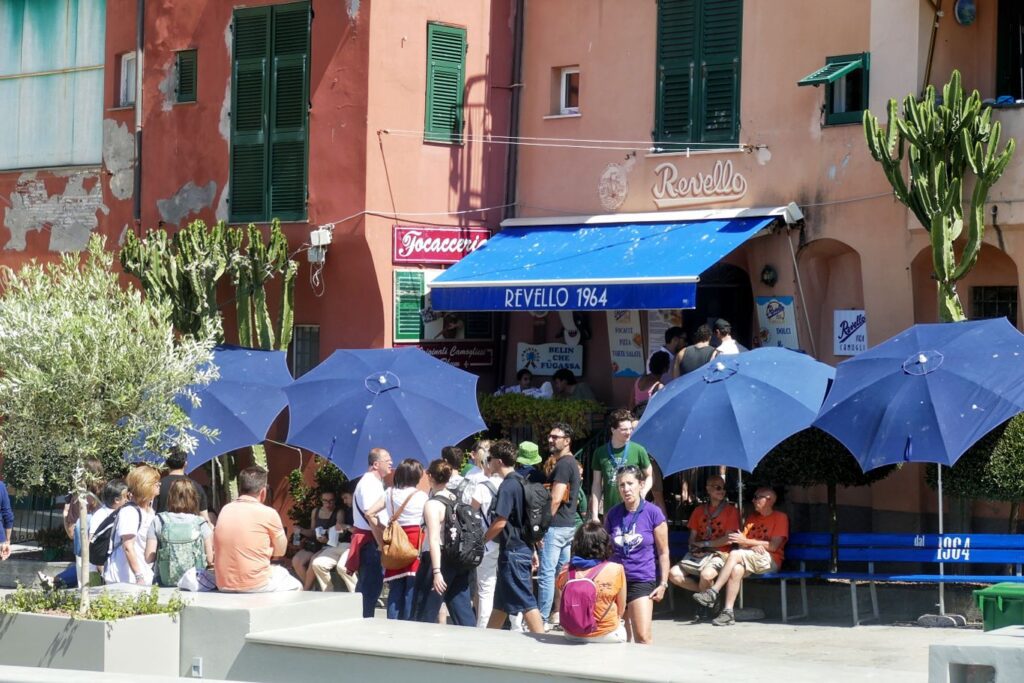
Perhaps it’s precisely this balance that makes the place interesting: not spectacular, not completely undiscovered, but somewhere in between.
You can find detailed information about Camogli in my post Day Trip to CAMOGLI – The Most Colorful Beach Town East Of Genoa.
San Fruttuoso
At Camogli, we can decide at what time we take the next boat to San Fruttuoso. Since the village is the only destination on this trip that I visited before, I decide with a heavy heart to leave after only one hour. I want to make sure to have enough time to spend at that secluded, somewhat mystical bay. After all, this stop is the main reason for my participation in this day trip.
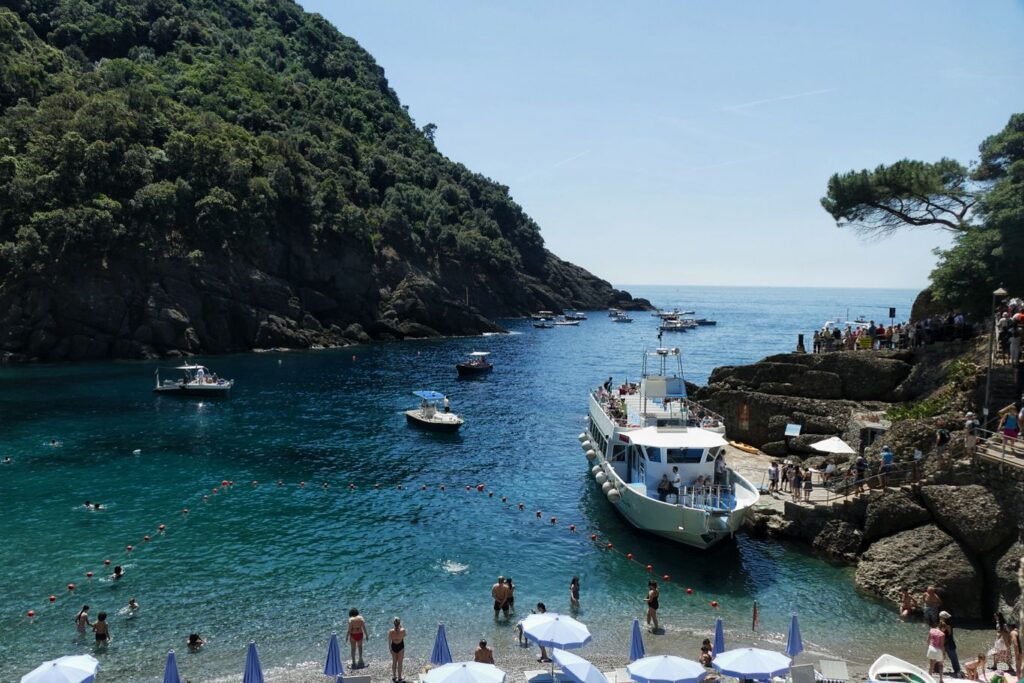
San Fruttuoso is less a town in the traditional sense than a small break in the landscape. There’s no road leading here. You arrive on foot via the trails of the Parco Naturale Regionale di Portofino or by boat along the coast. Even the journey itself is discerning: those who arrive here have made a conscious decision to do so.
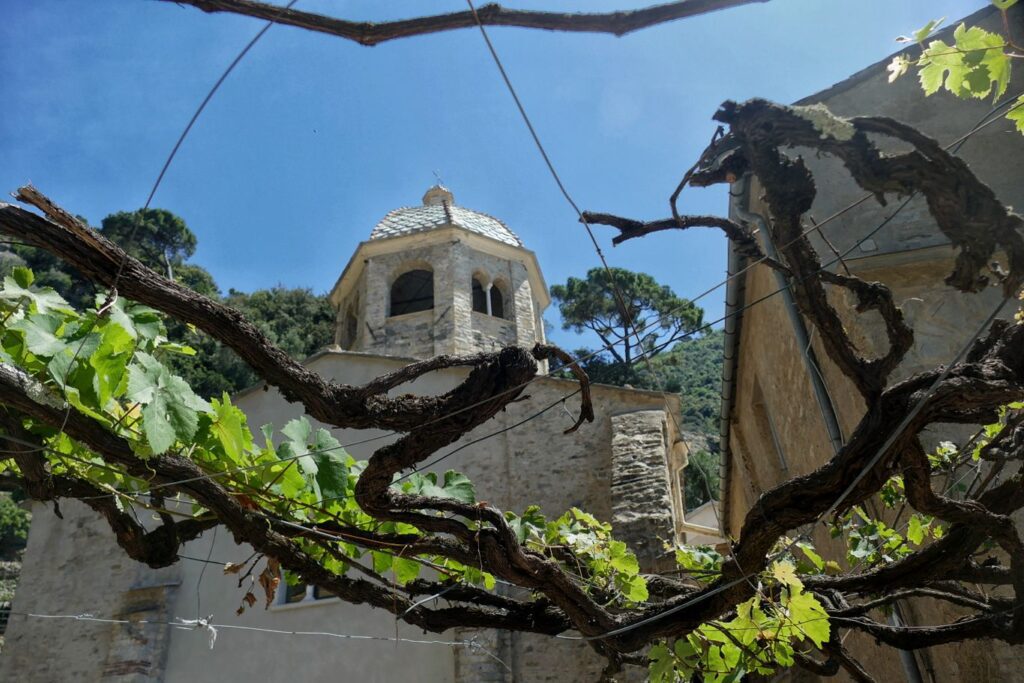
At the heart of the town stands the Abbazia di San Fruttuoso, built right on a narrow bay. Its origins date back to the early Middle Ages. Legend has it that relics of Saint Fructuosus were kept here. In fact, its history is a complex tapestry of monastic life, shifts in power, and later, aristocratic use. For centuries, the abbey served as both a refuge and a border point, situated between land and sea, and between seclusion and influence.
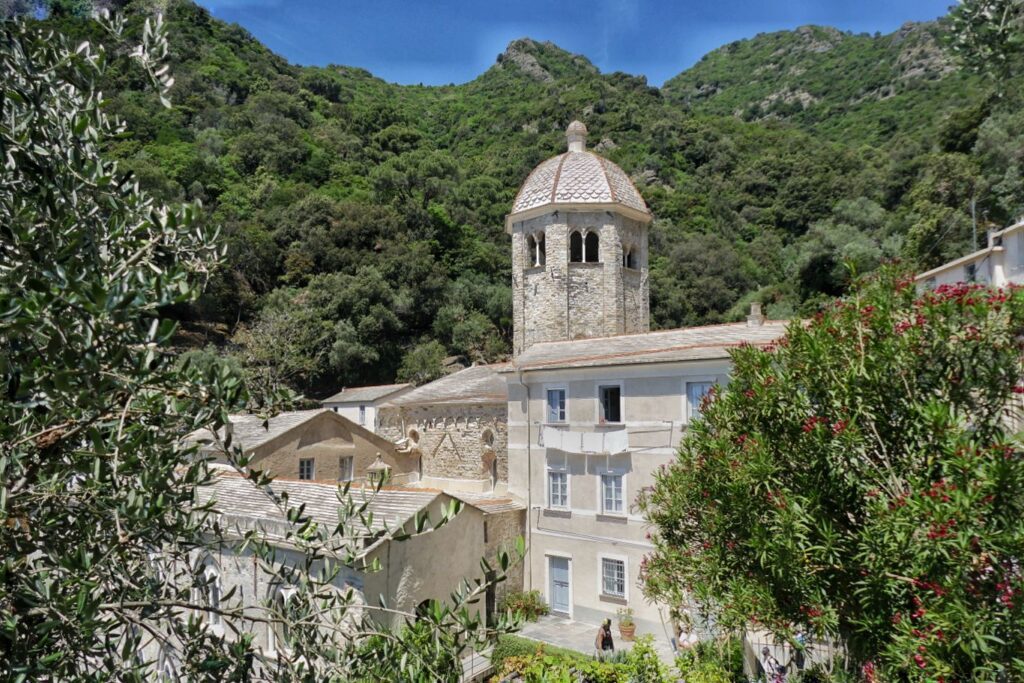
Later, the complex came into the possession of the Doria family, whose influence is still felt today. The family’s tombs are still located within the complex. This proves that even this remote place was part of a larger political and economic context.
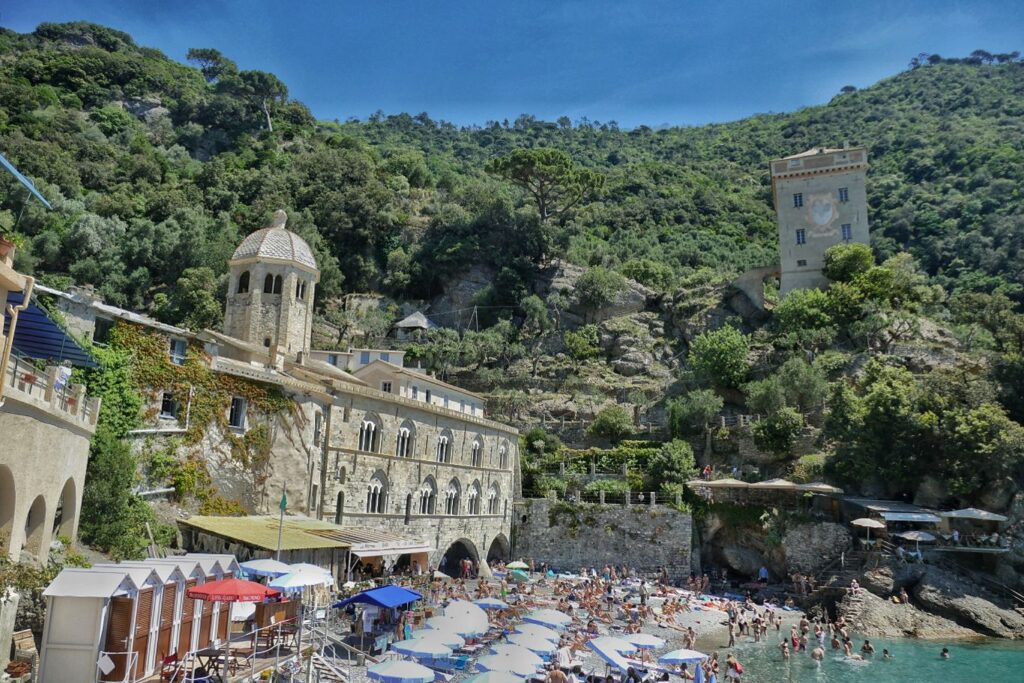
Today, San Fruttuoso appears remarkably compact. The abbey doesn’t simply stand by the sea; it seems to grow almost out of it. A narrow pebble beach, a few buildings, the clear waters of the bay. Behind them, the wooded slopes rise immediately. Here, the relationship between architecture and nature defines the atmosphere.
Under the Surface
Off the coast, at a depth of about 15 meters, lies the bronze statue Cristo degli Abissi, hence, Christ of the Abyss, created in 1954 by the Italian sculptor Guido Galletti. The figure depicts Christ with his arms raised to heaven and was originally sunk as a memorial to those who died at sea and for peace in general. Today, it is a popular destination for divers and snorkelers and has been restored several times, most recently after damage from corrosion and anchors.
On a Final Note
To be honest, San Fruttuoso did not live up to my expectations, which has nothing to do with the place as such but with the main problem of our time: over-tourism. As a matter of fact, the place and most of all the narrow landing are simply not fit for the amount of people that visits on a sunny Sunday afternoon.
The boat disgorges huge groups of visitors—one fellow passenger said the number of people getting off reminded her of a clown car—who then, completely disoriented, block the very narrow entrance. No one knows where to go, yet everyone pushes and shoves mindlessly. This chaos dissipates after a few minutes, and the place no longer feels bursting at the seams. But Serenity is something else entirely.
I don’t really have a good idea how you could improve your experience. If you’re a very skilled hiker, you could cross the hills by scrambling over rocks and scree and reach San Fruttuoso by land. Or you could dig deep into your pockets and get a private boat there on a weekday. Or you could simply grit your teeth, enjoy the beauty and uniqueness of the place, and ignore the crowds.
Portofino
Funnily, in contrast to San Fruttuoso, Portofino was far better than expected. That is because I expected a ridiculously overrun’n’overpriced place, and in the end it was not as bad. Maybe one should simply hold expectations very low. This way, you leave enough room to be positively surprised. Howsoever, Portofino was the final stop on our little cruise, and it is probably the most famous of the three towns. It lies like a small stage set on the edge of the Ligurian coast.
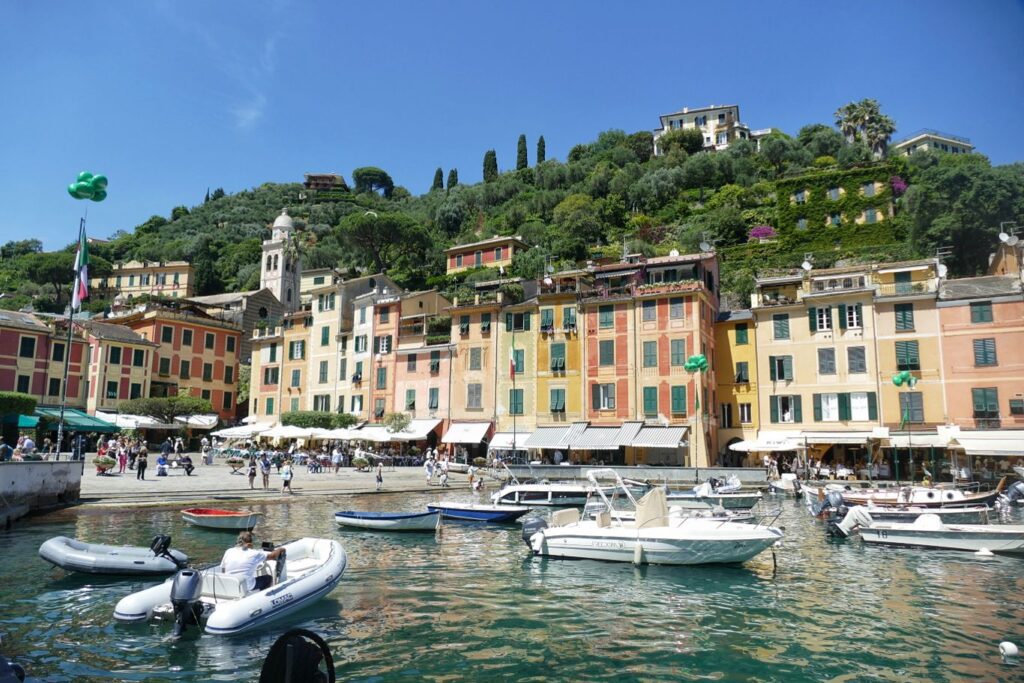
Historically, Portofino wasn’t a place of longing for travelers, but rather a functioning fishing village. The natural harbor was already in use during Roman times. They called it Portus Delphini, presumably because of the dolphins in the bay. For centuries, the people here lived off the sea, and later also from trade. It wasn’t until the 19th century that this began to change, when artists, writers, and wealthy travelers discovered the town. With them came a new role: no longer just a place of work, but a projection screen for a certain lifestyle.
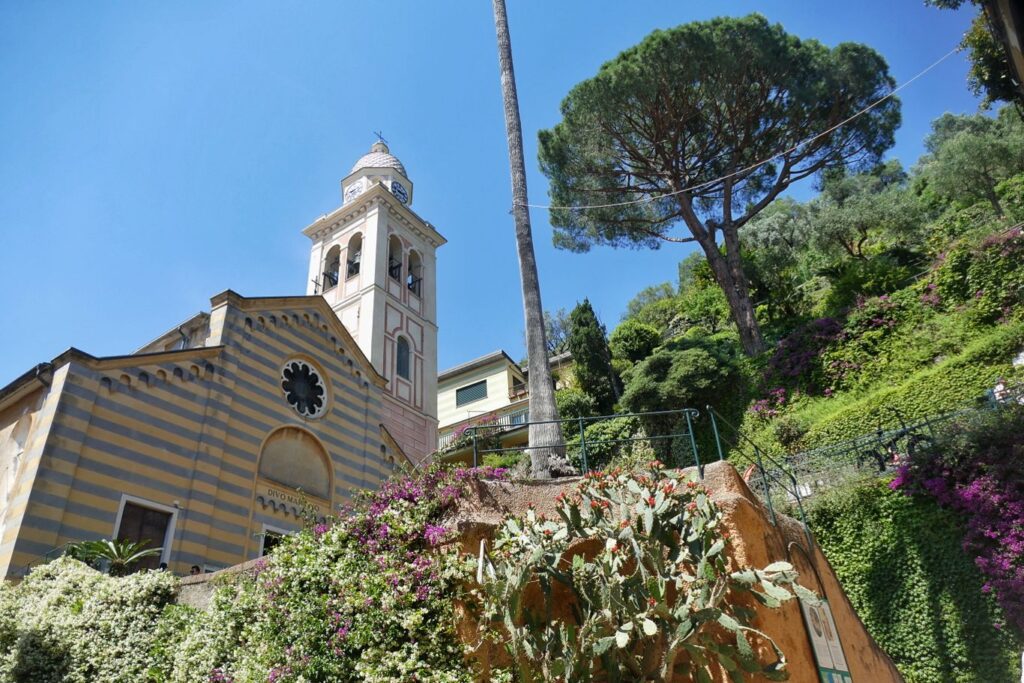
In the 20th century, Portofino finally became a destination for the international jet set. Names like Elizabeth Taylor and Richard Burton appear in anecdotes about summer stays, as do European aristocratic families and industrialists. At the same time, the core of the town remained remarkably stable. The structure of the village hardly changed; large hotel complexes never materialized. Instead, smaller, often discreet accommodations sprang up, blending seamlessly into the existing architecture. To this day, the town remains manageable: a harbor, a few narrow streets, pastel-colored houses arranged in a semicircle around the water.
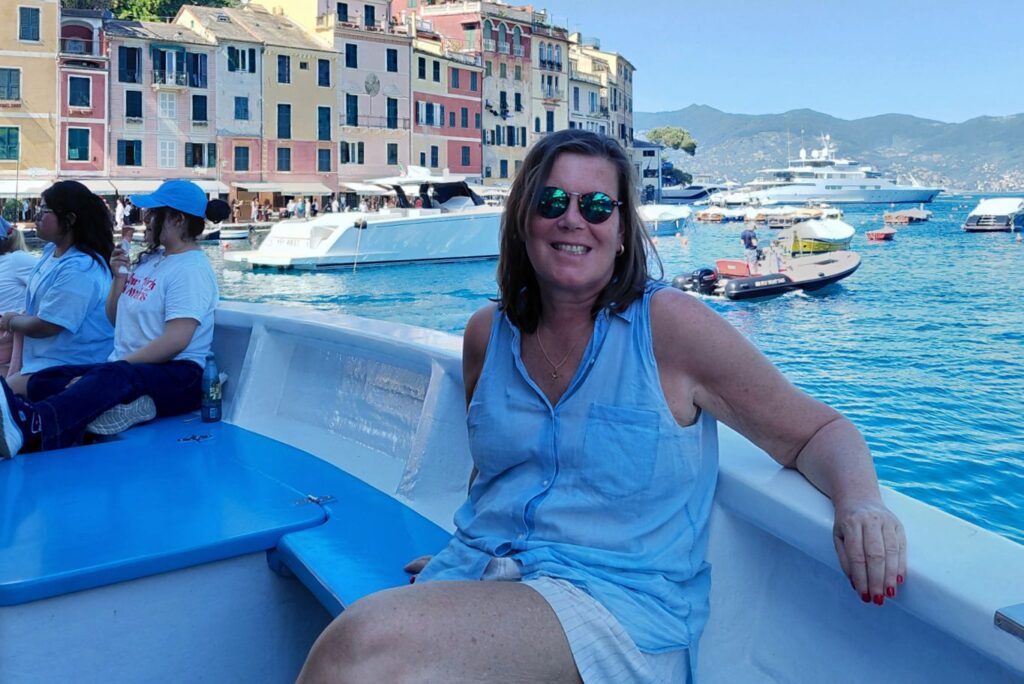
Yet Portofino exists within a dichotomy. On the one hand, it has become a symbol of upscale tourism. Yachts in the harbor and ridiculously expensive designer boutiques lining the narrow streets are proof of that.
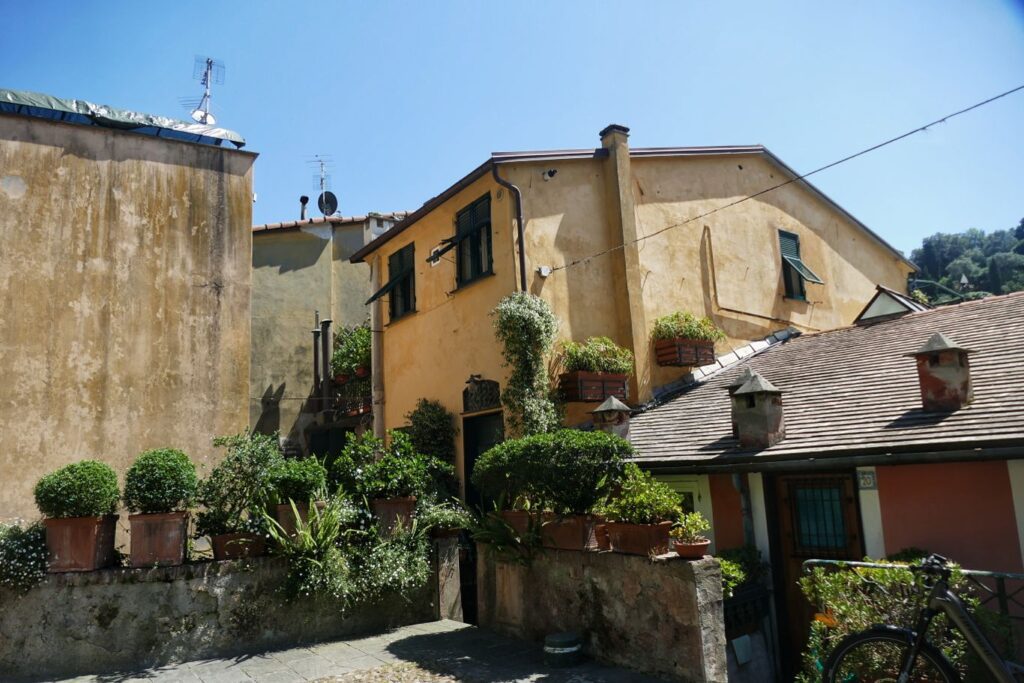
But on the other hand, the original character is still discernible, especially early in the morning or outside of peak season. Then, one can once again hear the clatter of dishes from kitchens and the gentle creaking of boats on the water.
Looking at Portofino
Those who wish to understand the town should not merely view it as an ever-Italian picture postcard. A short walk takes you to the Castello Brown church or further into the nature park surrounding the peninsula. From up there, you can see just how cozy’n’cute Portofino truly is.
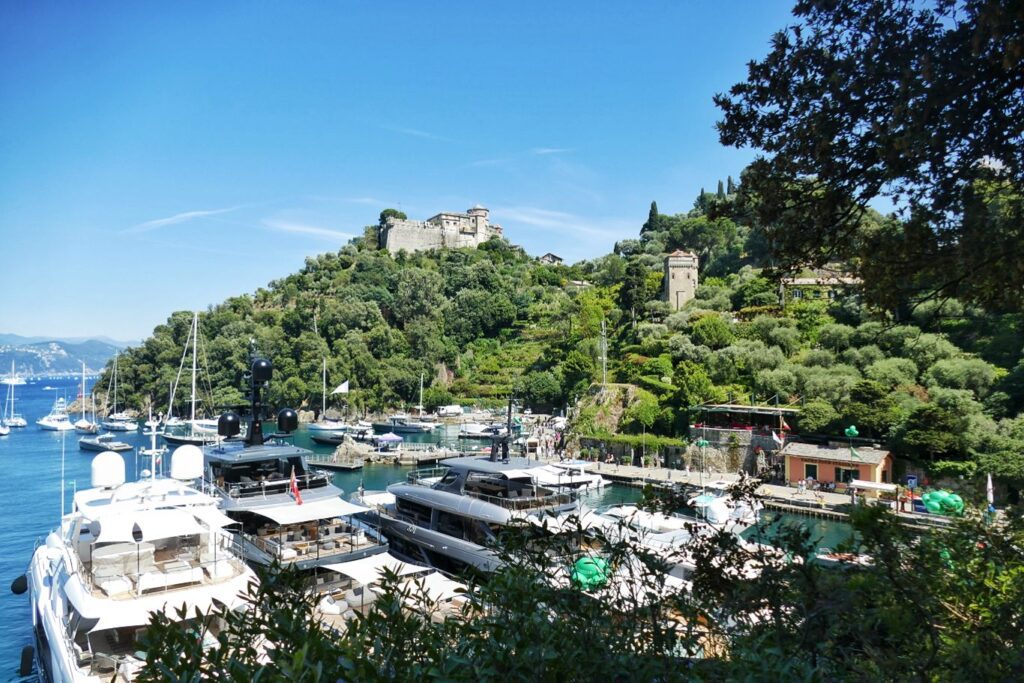
Portofino is not a place for grand discoveries. Neither should you waste your time with mindless people-watching. Portofino is more of a place for observation: facades take on different colors throughout the day, light changes in the air and in the water, waves come and go. Because that’s precisely where Portofino’s enduring appeal lies.
Visiting Organized
As I said, I thoroughly enjoyed the meticulously planned day trip. My only responsibility was to be enchanted, have an amazing time, and be at the jetties on time. I could happily leave everything else to others. For someone who is otherwise constantly busy preparing, organizing, and planning trips and excursions, it was simply a dream come true!
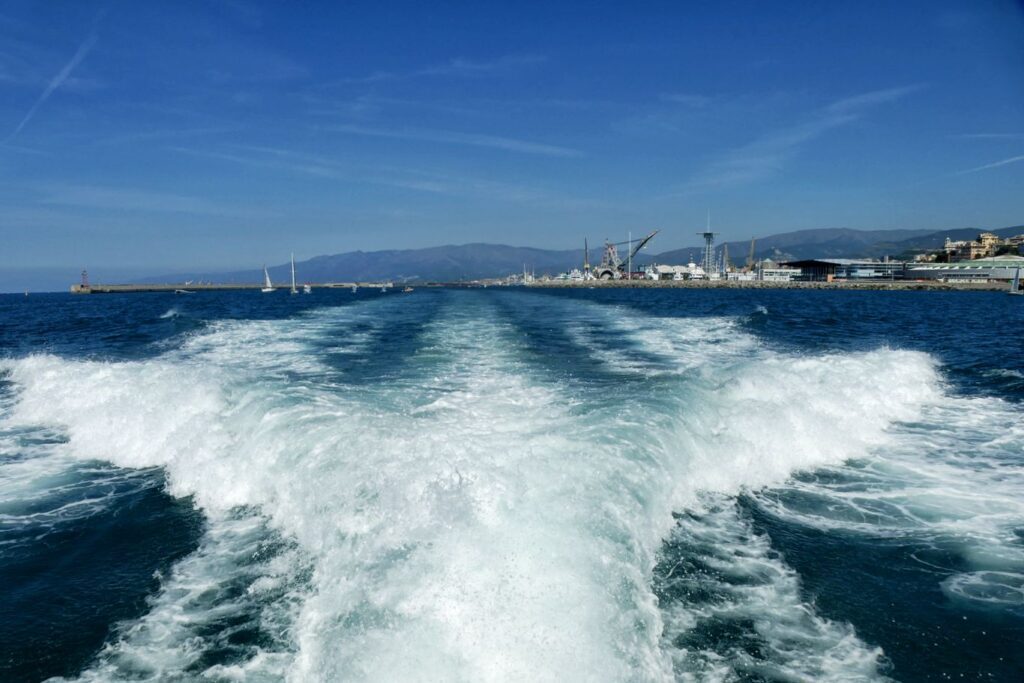
So, if you also want to leisurely drift from exceptional spot to exceptional spot, then I highly recommend booking this tour*:
However, there is so much more to discover along the Ligurian coast! You’re sure to find some activities here that you absolutely won’t want to miss*:
Visiting Self-Organized
Yes, you can organize this day trip yourself. Trains from Genova-Brignole station to Camogli run every few minutes. Be sure to take the regional train, which only costs 3.50 €uro. Taking the Intercity train saves you 10 minutes but costs 8.50 €uro.
From Camogli, you can take a bus part of the way, but then you’ll have to walk about 6 kilometers to the Abbey of San Fruttuoso. Unless you’re a passionate hiker, it’s far better to continue by boat. Boats run approximately hourly between 9 a.m. and 3 p.m. However, service may be canceled in rough seas. The journey takes about 30 minutes and costs 11 €uro one way and 17 €uro round trip.
For another 11 €uro, you can then travel from San Fruttuoso to Portofino. During the high season, there are several boats daily, about every two hours, usually between late morning and late afternoon.
To return from Portofino, you can take a bus to Santa Margherita Ligure, where you catch the train back to Genoa. Boats from Portofino to Genoa only run as part of organized excursions, see the Visiting Organized section above, not as a regular service.
This post is simply to recommend a great day trip from Genoa. If you’re looking for information about the city itself, rush over to my post An Audience With GENOA – What Not to Miss When Visiting the Queen of Liguria. There, you’ll also find info on Italy in general, which will make your own trip smoother and much more fun. Then, in my post BOCCADASSE, NERVI, CAMOGLI: Perfect Escapes from Genoa along the Ligurian Coast, I also explain how you can quickly, easily, and very cheaply visit three outstanding destinations just outside the city limits.
Did You Enjoy This Post? Then You Might Also Like These:
Back to School: Italian Classes at the Scuola Leonardo da Vinci
An Audience With GENOA – What Not to Miss When Visiting the Queen of Liguria
One Day in CATANIA, Sicily’s Building Ground of Grand Palaces
LA SPEZIA and PORTO VENERE – Precious Gems on the Ligurian Coast
A Day Trip to Isola delle Femmine: Coastal Trails And Crystal Waters
United Colors of Biennale – Visiting the Biennale di Arte in 2017

Language Learning in Rome

Best Things to Do on a Long Weekend in Milan
Pinnable Pictures
If you choose to pin this post for later, please use one of these pictures:
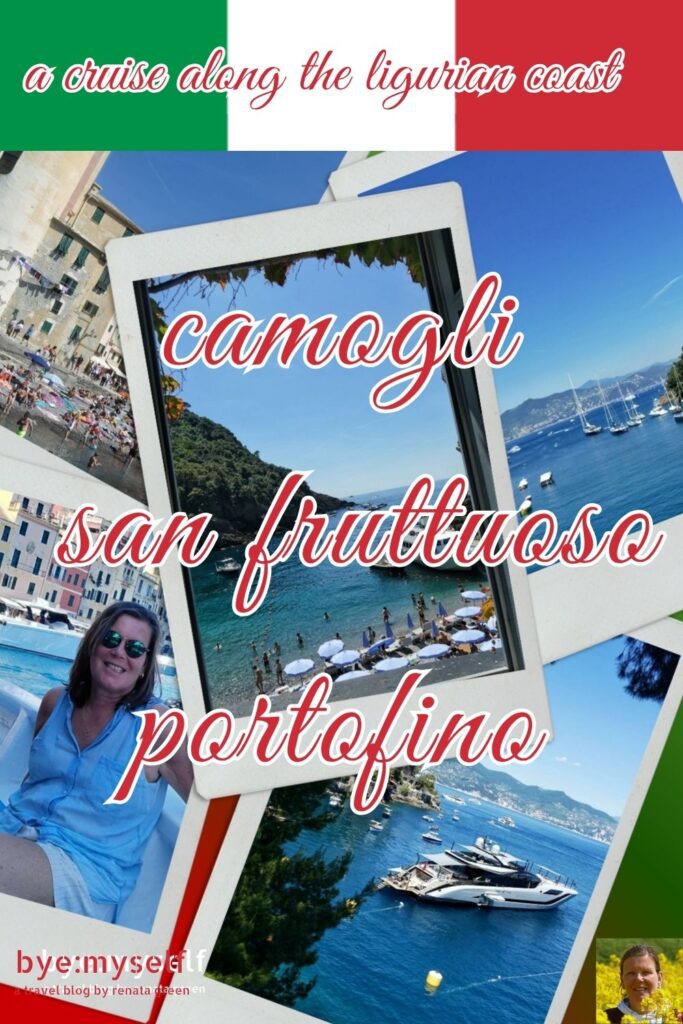
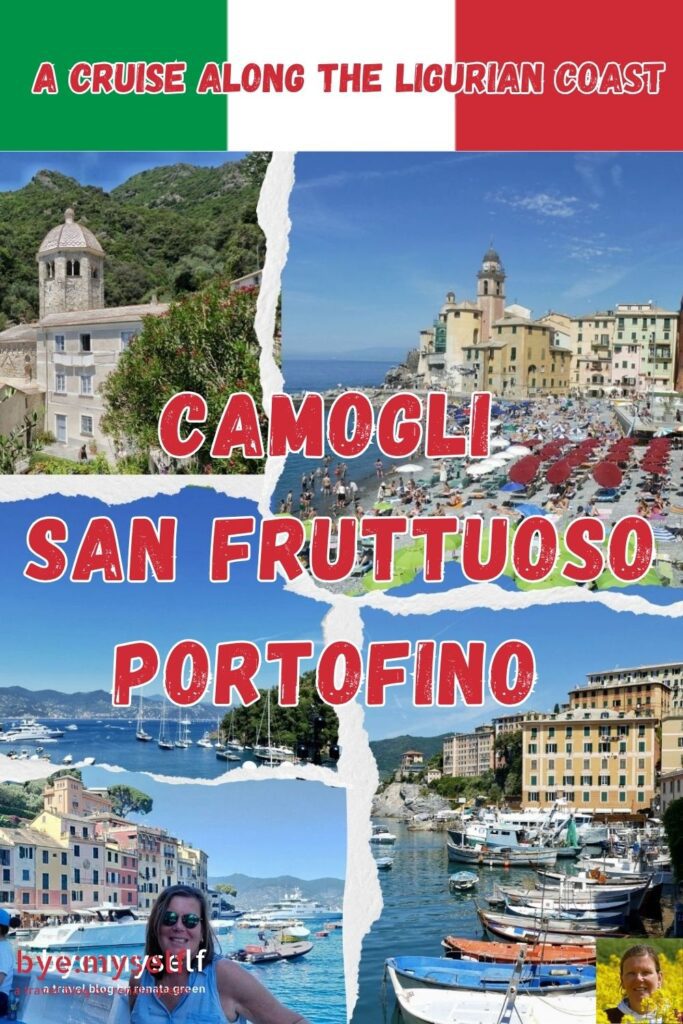
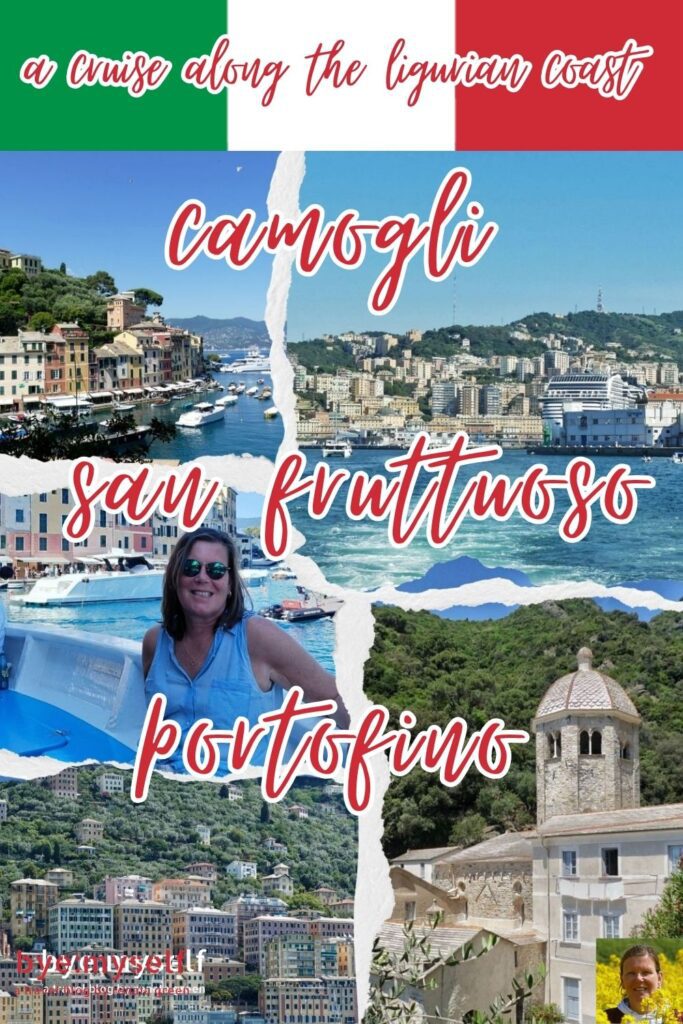
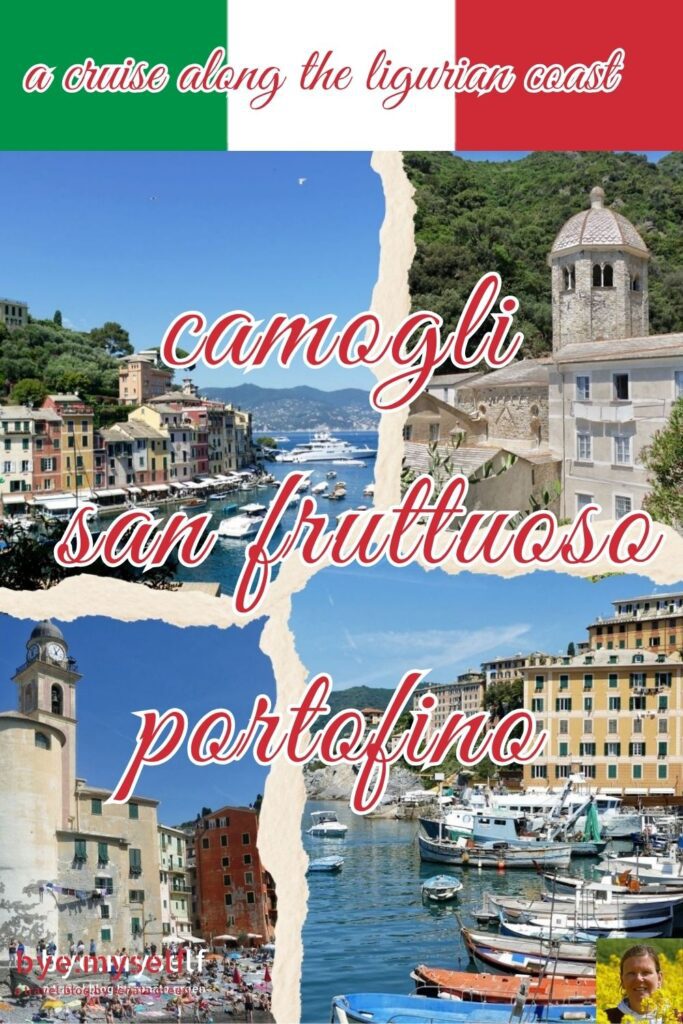
* This is an affiliate link. Hence, If you book through this page, not only do you get the best deal. I also get a small commission that helps me run this blog. Thank you so much for supporting me!