Paris is the city of lights and love. Bordeaux is renowned for its wine. Lavender blooms in Provence, and the rich and famous flock to the Côte d’Azur. So why on earth did I make my way to Boulogne-sur-Mer? To a city many haven’t even heard of, and which, at first glance, isn’t even very alluring.
Well, typically I go to a place for its attractions, and basically as a by-catch, I sometimes also discover its urban art. In Boulogne-sur-Mer, the street art was the main attraction and actually the sole reason I even ventured to this city located way up in northwestern France.
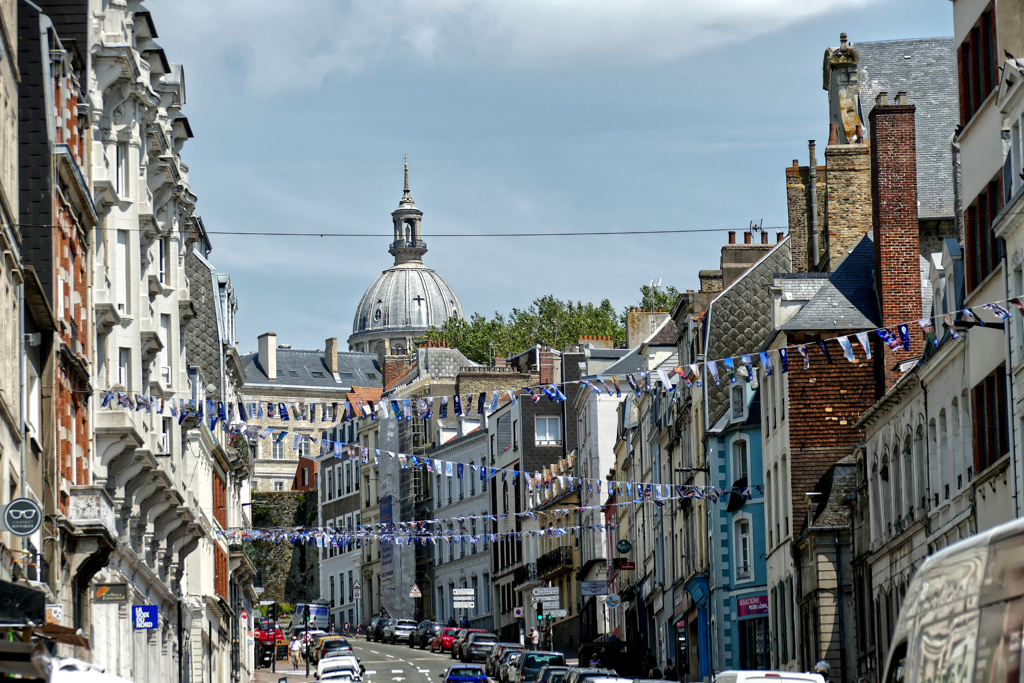
And while the murals there are truly stunning, the rest of the city gradually won me over as well. With its relaxed, unpretentious vibe, its almost Nordic, understated ambience, its maritime aura, and its noticeable British flair.
It can be exciting when a part of France is decidedly un-French.
It can be very inspiring when a place defies expectations.
Bienvenue à Boulogne-sur-Mer
I had no idea what to expect in Boulogne-sur-Mer. I only knew that the city boasted an incredible amount of outstanding street art. Therefore, there had to be buildings. Or at least walls. And it was unlikely that these buildings were of historical value, otherwise, even the most talented artists would not be allowed to leave their mark on them.
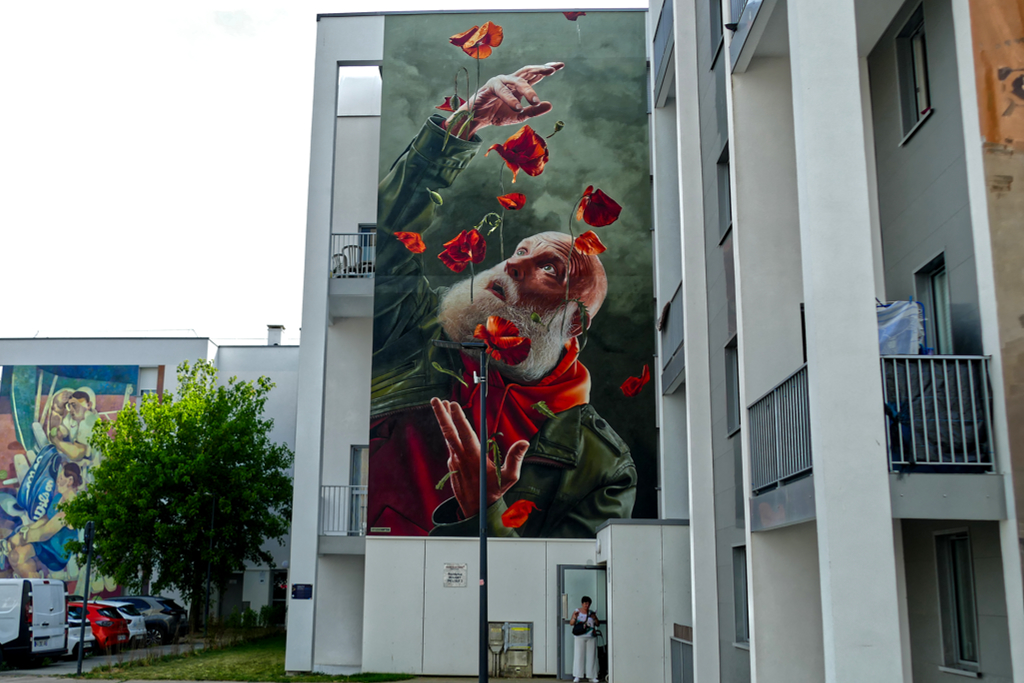
Like every visitor to Boulogne-sur-Mer, I arrived in the so-called lower town. And indeed – right across from the main train station was a rather unappealing high-rise complex. But that didn’t matter, because each of these not-so-attractive apartment towers was decorated with an oversized mural.
Directly opposite the station was the work of Studio Giftig, which I already knew from photographs. This very work was named the world’s second-best mural by the renowned Street Art Cities platform and the third-best fresco in all of France at the national Golden Street Art competition. My heart almost stopped. I could hardly contain myself from immediately digging out my camera. My bus would arrive in two minutes, and buses don’t run very often in Boulogne. I was here for three days and would still have plenty of time to capture all this splendor on ugly facades. Hence, I was reasonable, and the camera stayed where it was. But it wasn’t easy to control myself.
History in a Nutshell
Boulogne-sur-Mer, on the so-called Opal Coast of northern France, has been one of the most important ports on the English Channel for centuries. Even in antiquity, it was a significant Roman port, serving as a starting point for voyages to Britain. In 43 AD, Emperor Claudius used this base as the starting point for the historic invasion of Britain. Throughout the Middle Ages, the city remained an important trading and defensive center due to its strategic location.
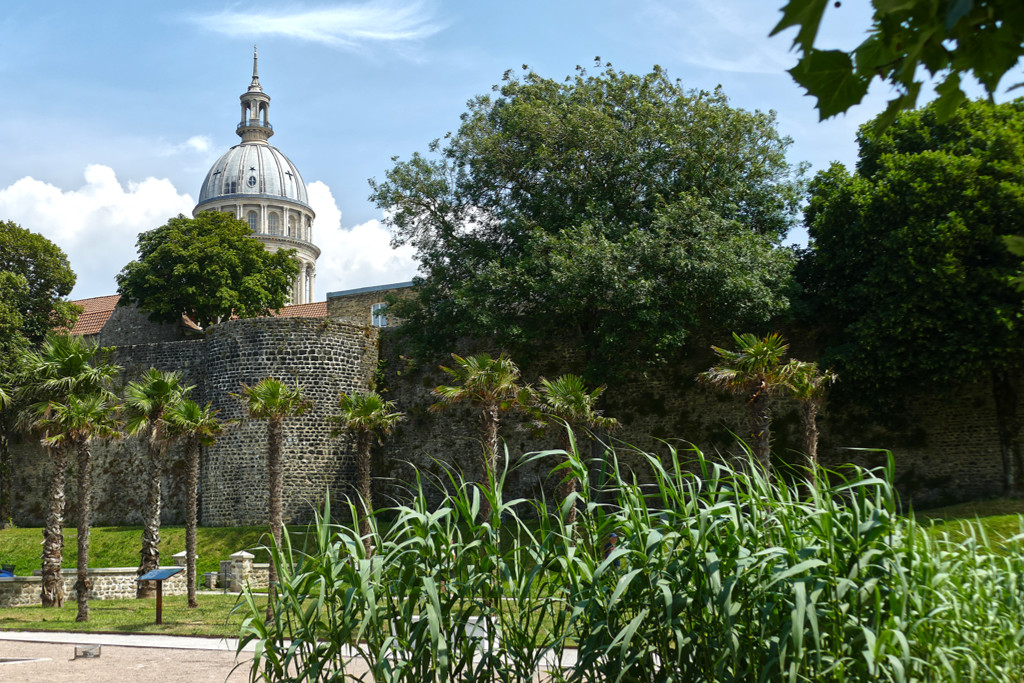
During the Middle Ages, Boulogne-sur-Mer developed into a heavily fortified city center, whose topographical division into two parts significantly shapes the cityscape to this day. The upper town, completely enclosed by a massive 13th-century ring wall, forms the historical center. Here you will find striking architectural monuments such as the medieval castle museum, a UNESCO-protected belfry, and the imposing Notre-Dame Basilica. A Marian legend in the 7th century also elevated the upper town to one of the most important pilgrimage sites in Europe.
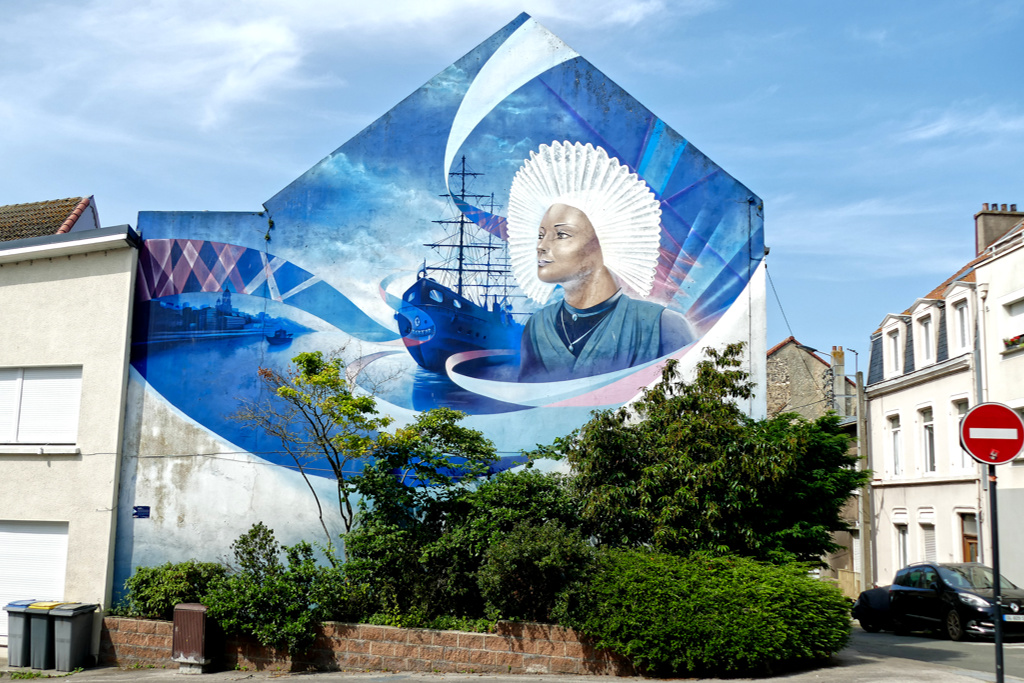
The most devastating turning point in the city’s history occurred during the Second World War. After the occupation by the German Wehrmacht, the city, due to its strategic location on the English Channel, became a target of relentless Allied air raids. By the time of its liberation in the autumn of 1944, over 80% of the lower town had been completely destroyed.
Grand Tour of Boulogne-sur-Mer
The fact that everyone arrives in the lower town first makes it difficult for Boulogne-sur-Mer to win the traveler’s heart. While the upper town was spared from Allied attacks, the lower town was gradually reduced to rubble by air raids. Although the city was rebuilt, little emphasis was placed on beauty or originality. A large part of Boulogne today consists of soulless apartment blocks.
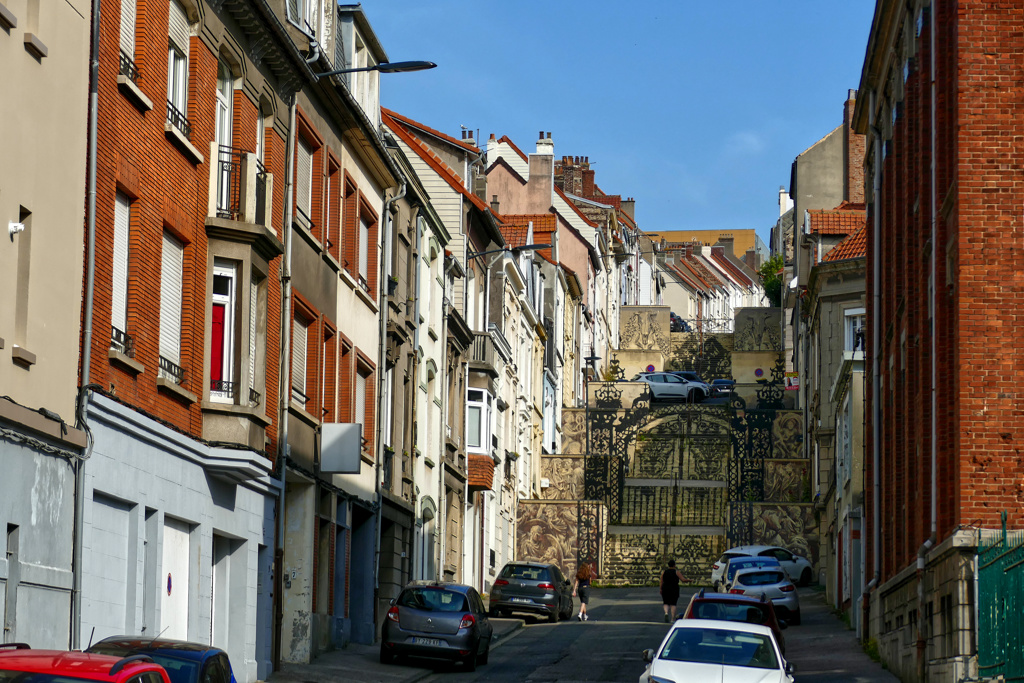
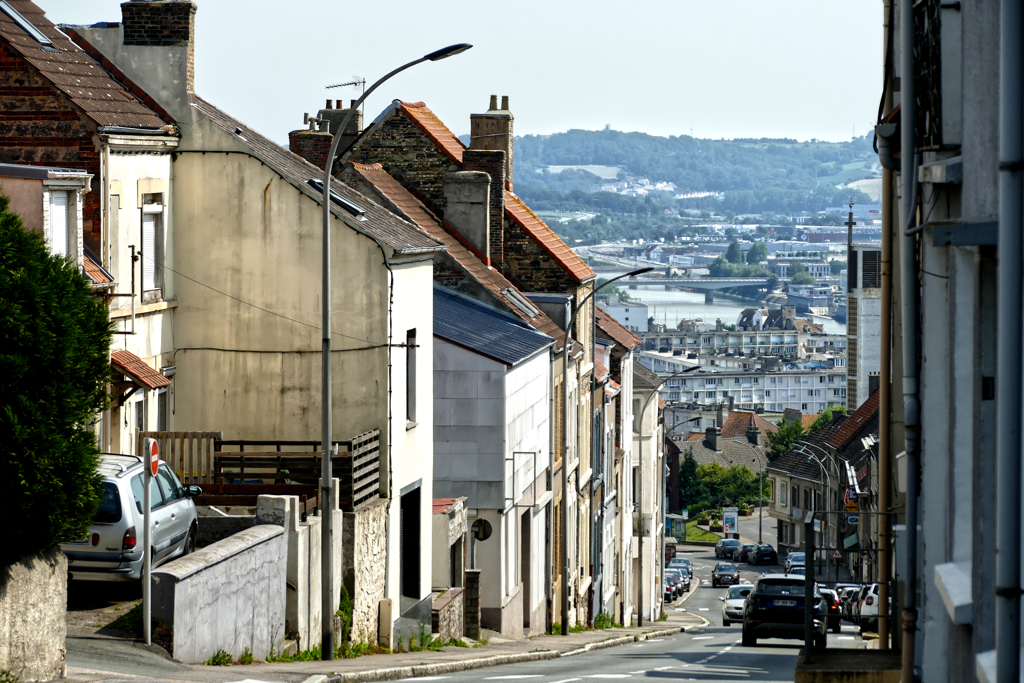
But it can be different. As I climbed the sometimes steep streets in search of murals and looked towards the center, the view seemed somehow familiar. Those terraced houses, those chimneys. This wasn’t French. This was British! Through my camera lens, entire streets looked like Bristol or Bath. How could that be?
Very British
Well, the geographical proximity to Great Britain, as well as economic connections, impacted Boulogne-sur-Mer for centuries. The intensive trade and regular ferry service led to a strong British influence. Furthermore, with the rise of seaside tourism, the city became a popular destination for wealthy British visitors, which spurred the development of hotels, promenades, and prestigious British-style residences.
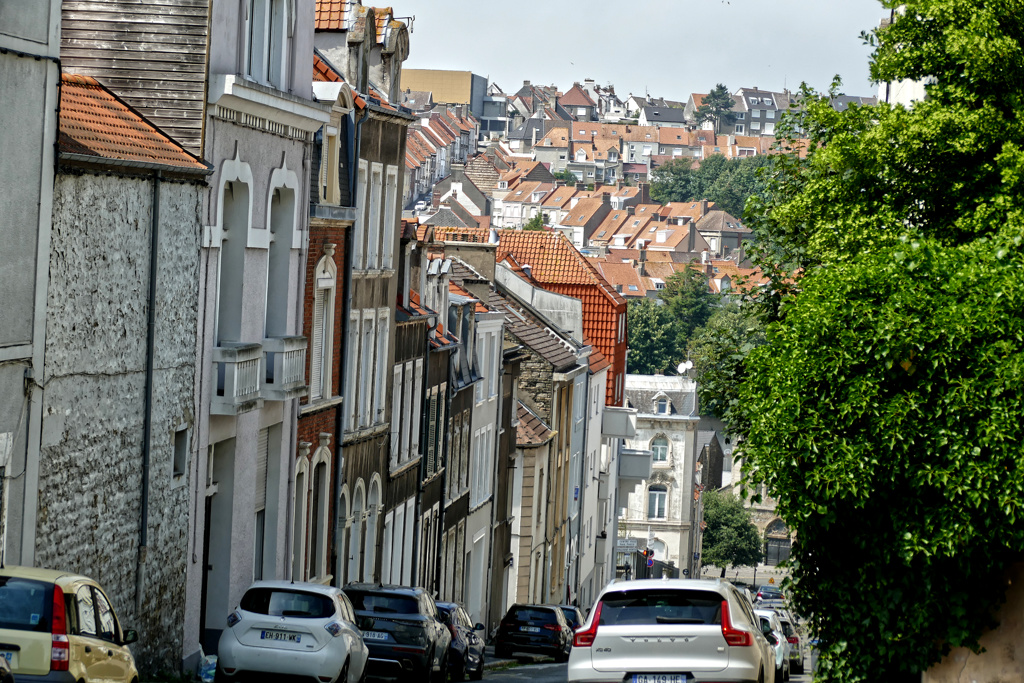
The Victorian and Georgian influence is particularly evident in the bourgeois residential areas outside the old upper town. In the 19th century, relatively narrow streets were closely lined with row houses. These terraced homes are often two or three stories high, with regular facades, narrow plots, and sometimes small front gardens, strongly reminiscent of English terraced houses.
And this also explains why Boulogne seems so un-French: In the 19th century, the city was indeed much more oriented towards England than one might expect.
The Upper Town
While I encountered hardly any tourists during my mural search in the lower town, several noisy groups of schoolchildren crossed my path in the upper town. Interestingly, they were all from England. So the old connections still exist somehow. I wasn’t the only foreigner in the cafés and landmarks either.
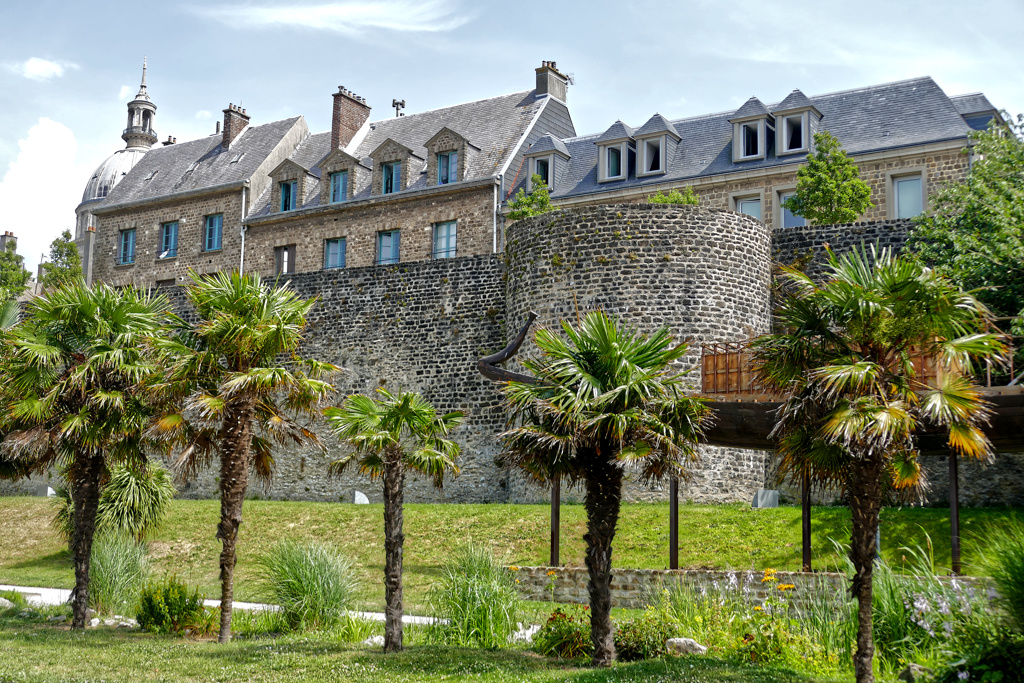
The historic upper town, the so-called Haute Ville, is undoubtedly the jewel of Boulogne-sur-Mer. It is the oldest part and sits on a hill above the harbor. It is surrounded by a roughly 1,500-meter-long city wall dating from the 13th century, which is among the best-preserved medieval fortifications in northern France. From the accessible ramparts and bastions, there are views of the harbor, the lower town, and, on a clear day, even as far as the English coast.
The street layout of this medieval fortified county town has been largely preserved to this day. Narrow streets, small squares, and buildings constructed primarily of natural stone give the impression that time has stood still here. Many of the historic houses date from the 17th and 18th centuries and lend the upper town its cohesive appearance.
Magnificent Structures
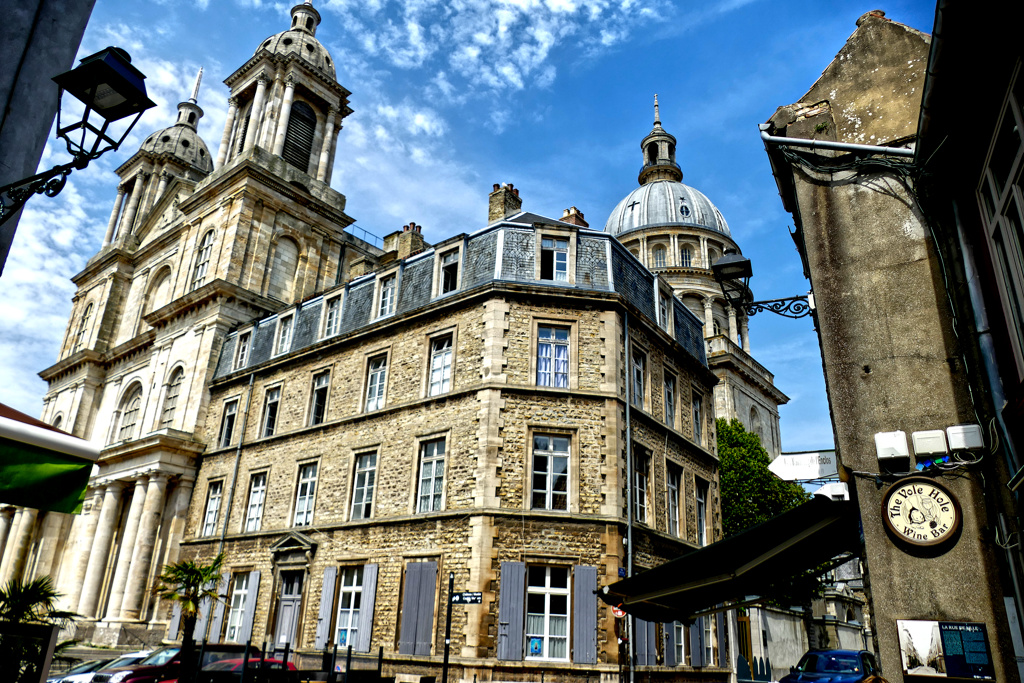
At the heart of the upper city stands the Basilica of Notre-Dame de l’Immaculée Conception, whose current structure was completed in 1875 according to plans by the priest and architect Abbé Benoît-Agathon Haffreingue. It replaced the medieval cathedral destroyed during the French Revolution. Its imposing 101-meter-high dome dominates the cityscape and is among the tallest church domes in France.
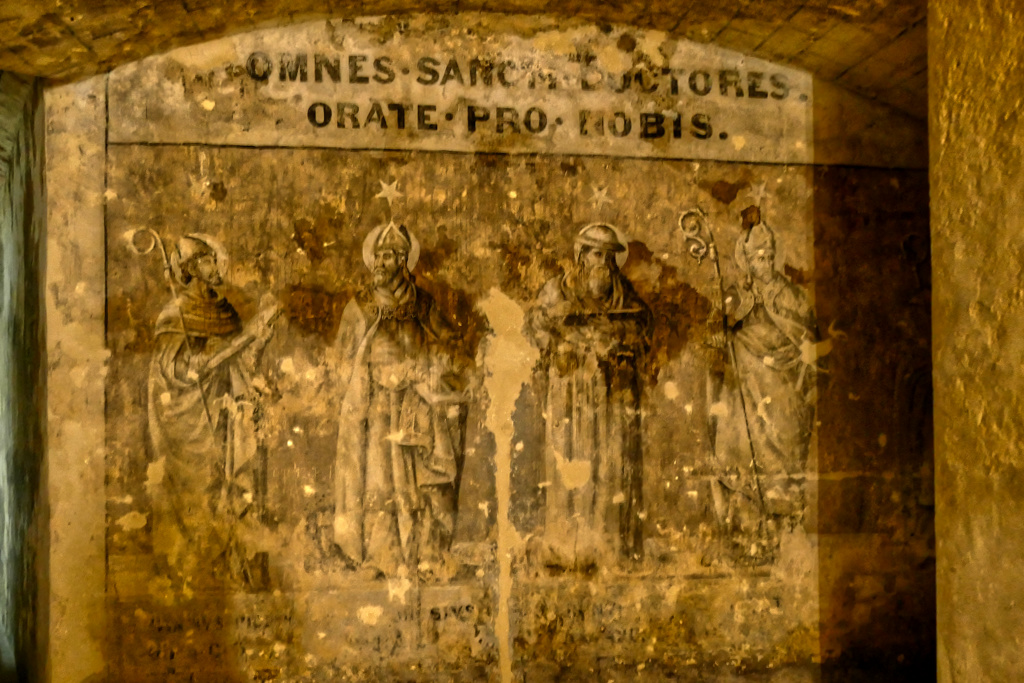
A visit to the crypt is highly recommended. And I don’t just say that because it offered a welcome respite from the heat during my visit on the hottest summer day in ages. Although that was one of the glories, I won’t lie.
Nevertheless, the remains of the Roman and medieval predecessor buildings, including foundations, wall paintings, and archaeological finds from various periods, are truly fascinating.
Not far from the basilica lies the Château Comtal, a castle built in the 13th century by Count Philipp Hurepel. It was partially built on the foundations of a Roman fort and served both as a residence and for the city’s defense. Today, the castle houses the Musée de Boulogne-sur-Mer, with collections on regional history, archaeology, and art and ethnography. The Egyptian collection is particularly noteworthy. I’ll reveal who’s responsible for it in the next chapter, so bear with me.
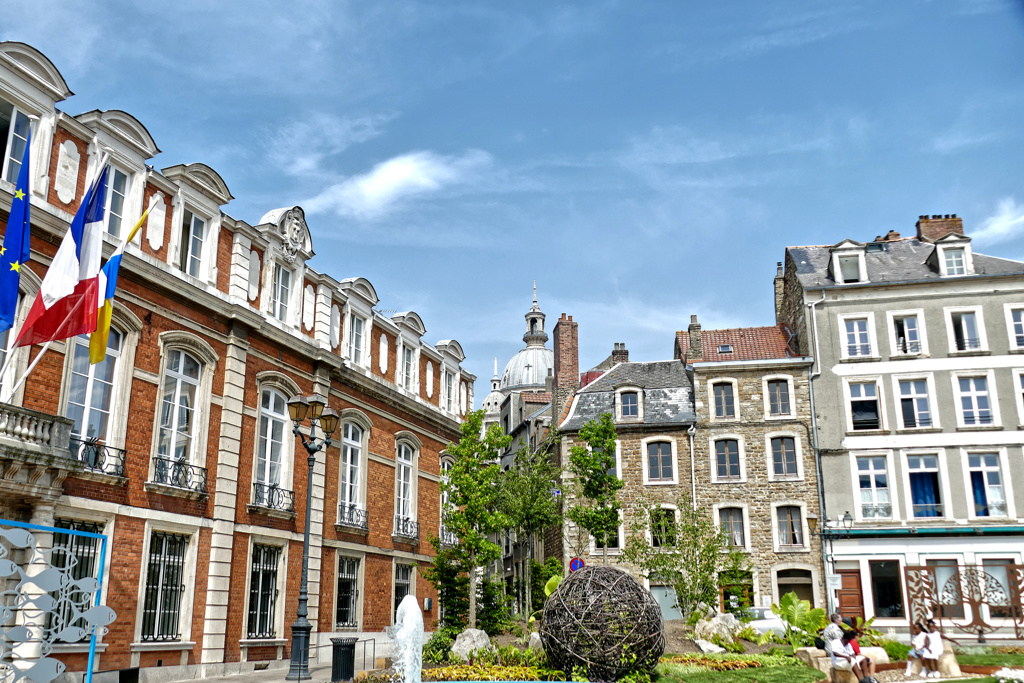
Another of the most important historical structures is the Beffroi, the belfry. Originally the bell tower of a 12th-century medieval castle, it was later converted into the city’s bell tower. As part of the Belfries of Belgium and France, it has been a UNESCO World Heritage Site since 2005.
Famous Men
Yeah, okay, a few streets strongly reminiscent of English high streets, a port on the Atlantic, apartment blocks decorated with murals. What’s the big deal? Well, Boulogne might not have one big deal, but it has many small ones. The city is more of a place you discover with a sense for its own unique character. As I said, I was by no means captivated from the first minute, but quickly immersed in its very own vibe.
And I’m not the only one who’s been inspired by the city. I promised you an explanation of the Egyptian collection in Boulogne’s city museum.
Auguste Mariette
When the Boulogne-sur-Mer Museum was founded in 1825, Egyptian artifacts were among its holdings. The museum grew out of the collection of the naturalist painter Isidore Leroy de Barde. Egypt was particularly interesting at the time. Napoleon’s Egyptian expedition and Champollion’s deciphering of hieroglyphs had sparked a veritable craze for all things Egyptian in France.
In 1834, Rear Admiral Claude du Campe de Rosamel presented the museum with an Egyptian stele of Ptolemy IX. As an influential figure, Rosamel also ensured that the collection was further enriched by other sailors and travellers. In 1837, the city acquired a set of coffins and a mummy.
These pieces, and the mummy in particular, awakened a deep fascination for the realm of the pharaohs in Auguste Mariette, who was born in Boulogne in 1821. So much so that it led Mariette to self-teach hieroglyphs and the Coptic language.
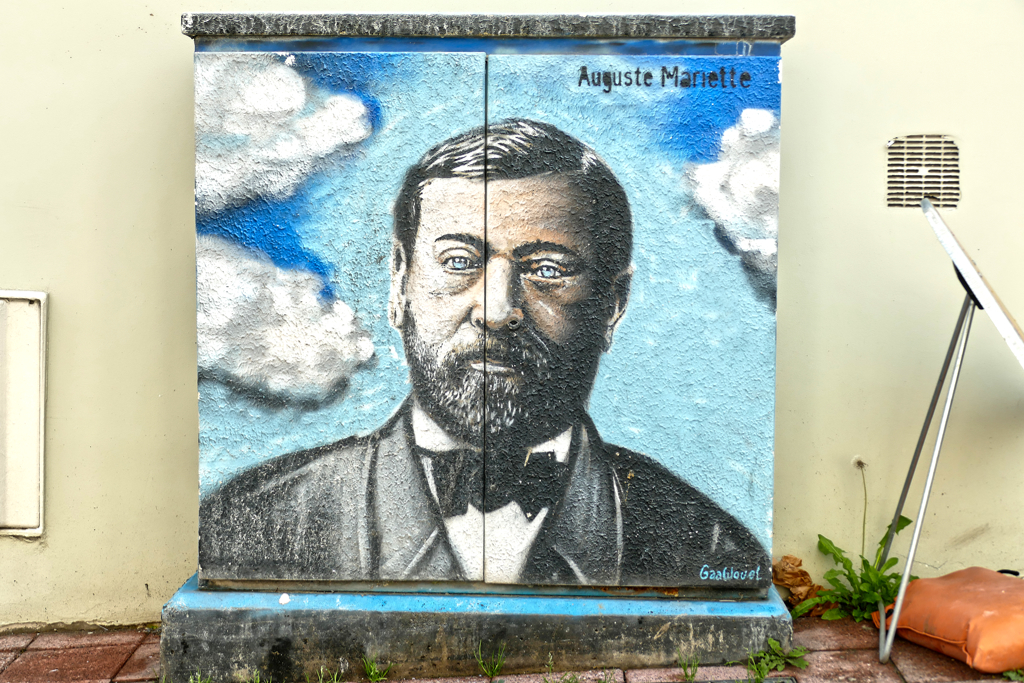
In 1850, Mariette finally received his first official commission from the Louvre to travel to Egypt. Instead of blindly plundering treasures for European museums, Mariette dedicated himself to the preservation of the local monuments. He founded the Egyptian Antiquities Service and established the world-famous Egyptian Museum in Cairo. In this way, he wanted to combat the smuggling of ancient artifacts. His achievements were so great that the Viceroy bestowed upon him the honorary title of Pasha. After his death, he was buried in a sarcophagus in the garden of the Cairo Museum.
Mariette also left his mark beyond archaeology: he was responsible for the historical research and costume designs for Giuseppe Verdi’s world-famous opera Aida!
Walk Like an Egyptian
And so the circle closes back to Boulogne: Mariette never forgot his hometown. Over the course of his life, he donated around 150 Egyptian objects to the Boulogne Museum. The collection, which thus existed long before his career and which had inspired him to study Egyptology, was later significantly enriched by his own donations.
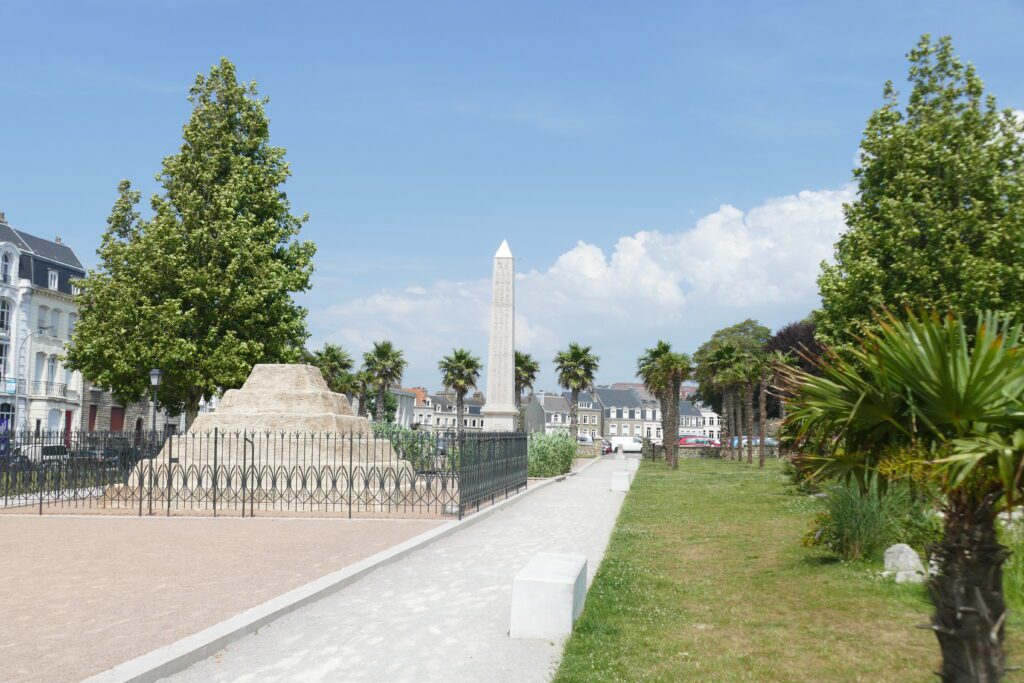
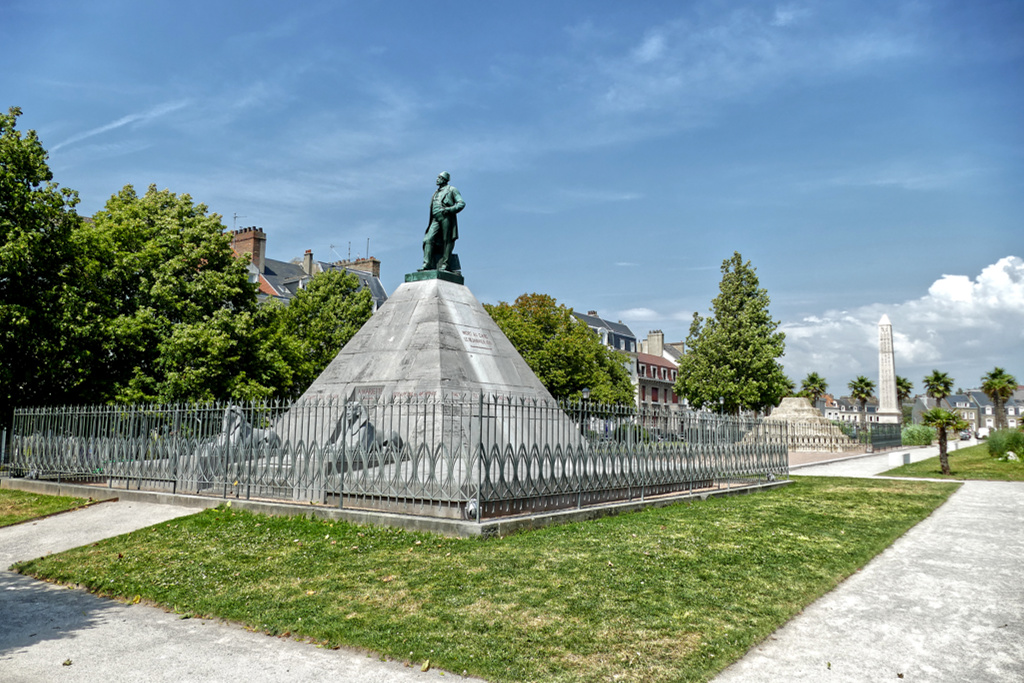
Anyone strolling through Boulogne-sur-Mer today encounters Mariette’s legacy at every turn, especially around the historic upper town. Directly below the old city walls lies the Square Mariette Pacha. This is an artfully landscaped park with palm trees, a replica of a sun barge, and a miniature pyramid, topped by a bronze statue of the master. The magnificent Château-Musée du Boulogne-sur-Mer also still houses one of the most important Egyptian collections in northern France. Many of the exhibits on display there are thanks to the finds and donations of the city’s famous son, thus wonderfully closing the circle between the waters of the Opal Coast and the sands of Egypt.
José de San Martín
Since Mariette was born in Boulogne, it’s not surprising that he’s now a prominent poster boy for the city. What is more surprising, however, is the connection between one of South America’s most important national heroes, José de San Martín, and the city.
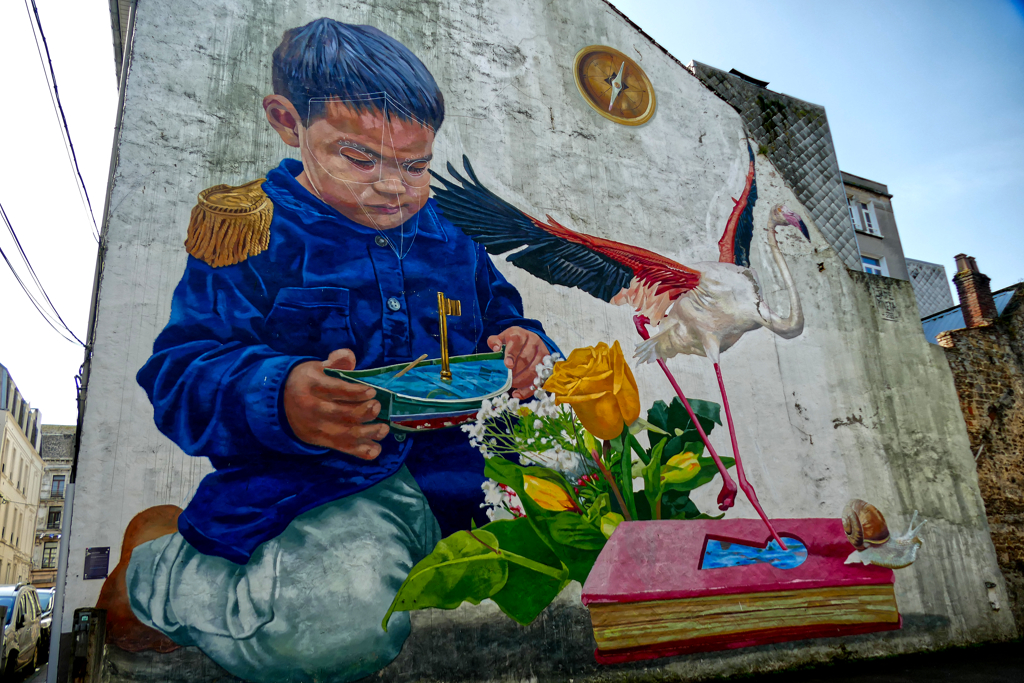
As a military leader and strategist, José de San Martín was the central figure in the liberation of Argentina, Chile, and Peru from Spanish colonial rule. To escape the subsequent internal political turmoil of the young South American nations, he chose voluntary exile in Europe starting in 1824. In the revolutionary year of 1848, he wanted to escape the unrest in Paris and intended to move to England. However, illness forced him to stop in Boulogne-sur-Mer.
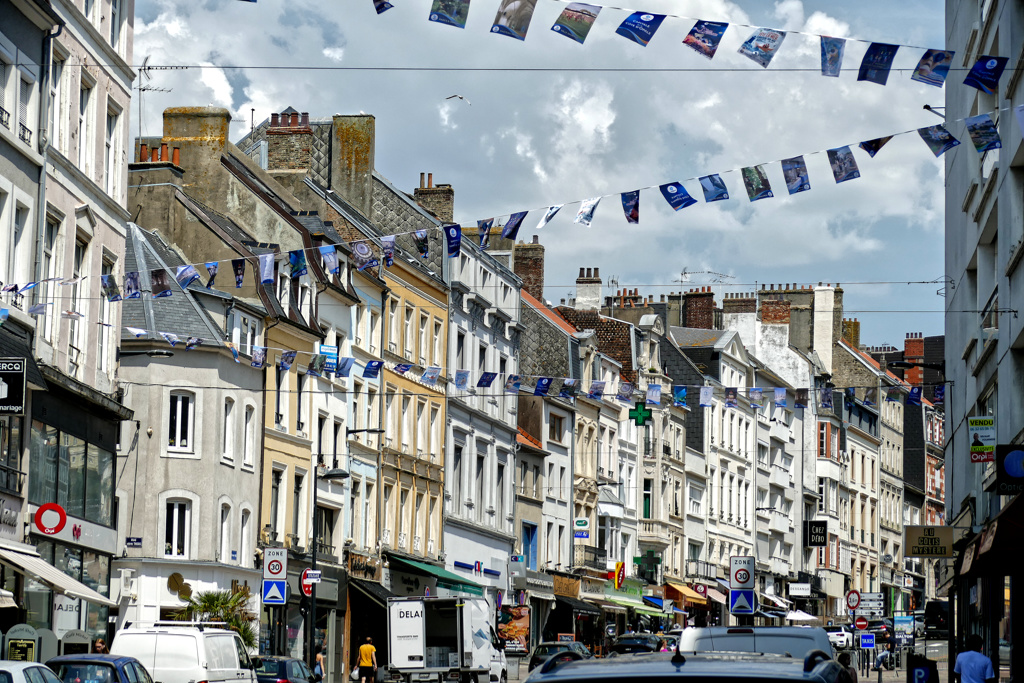
He fell in love with its charm and the sea air and took up residence at 113 Grand-Rue. And now let no one say again that Boulogne has nothing appealing!
Father of the Fatherland
José de San Martín, known today in Argentina as the Father of the Fatherland, died in this house in 1850. Although his remains were transferred to the Cathedral of Buenos Aires in 1880, Boulogne-sur-Mer remained a central memorial site for his legacy.
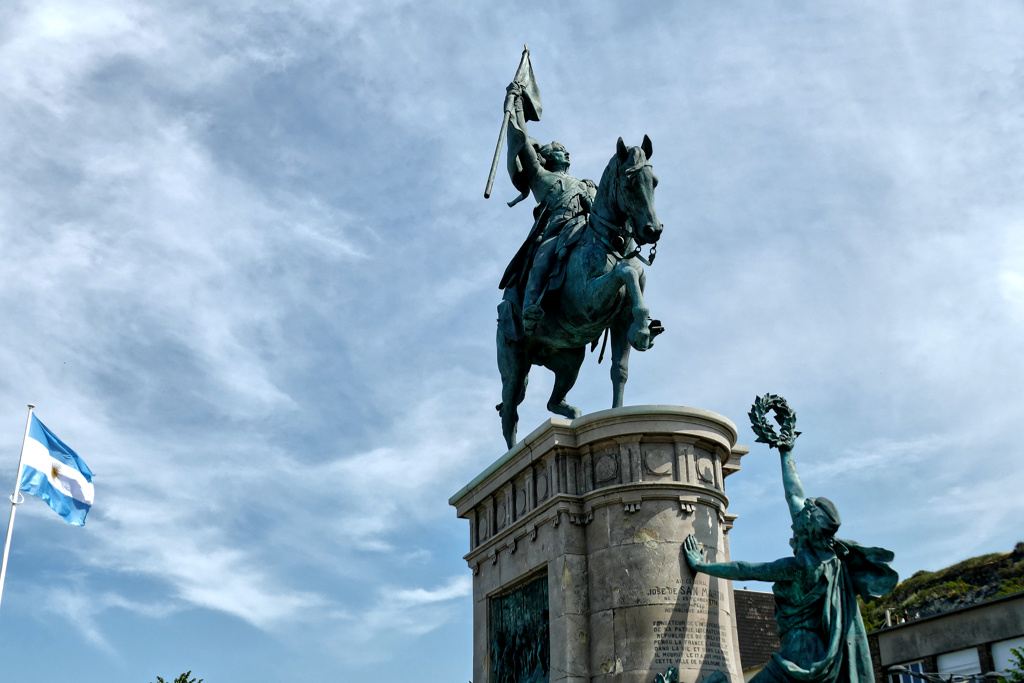
The former house of his death is now maintained by the Argentine government as the Casa San Martín Museum. Visitors can view historical military uniforms, contemporary weapons, paintings, and personal documents and items from San Martín’s estate, while the rear courtyard is adorned with numerous plaques from South American institutions. The museum is regularly open from Tuesday to Saturday, 10 a.m. to 12 p.m. and 2 p.m. to 6 p.m.
On the Waterfront
And that brings us to Boulogne’s waterfront. The part of the city that gives Boulogne its suffix sur Mer, which translates to by the sea, and is its vibrant heart. The port is far more than just a backdrop for romantic strolls. It impresses above all with its raw, unvarnished authenticity. As France’s most important fishing port, you won’t find an artificially staged tourist attraction here, but rather genuine, everyday maritime life. The lively activity of the incoming fishing boats, the cries of the seagulls, and the scent of salt and fresh catch define the atmosphere along the quays.
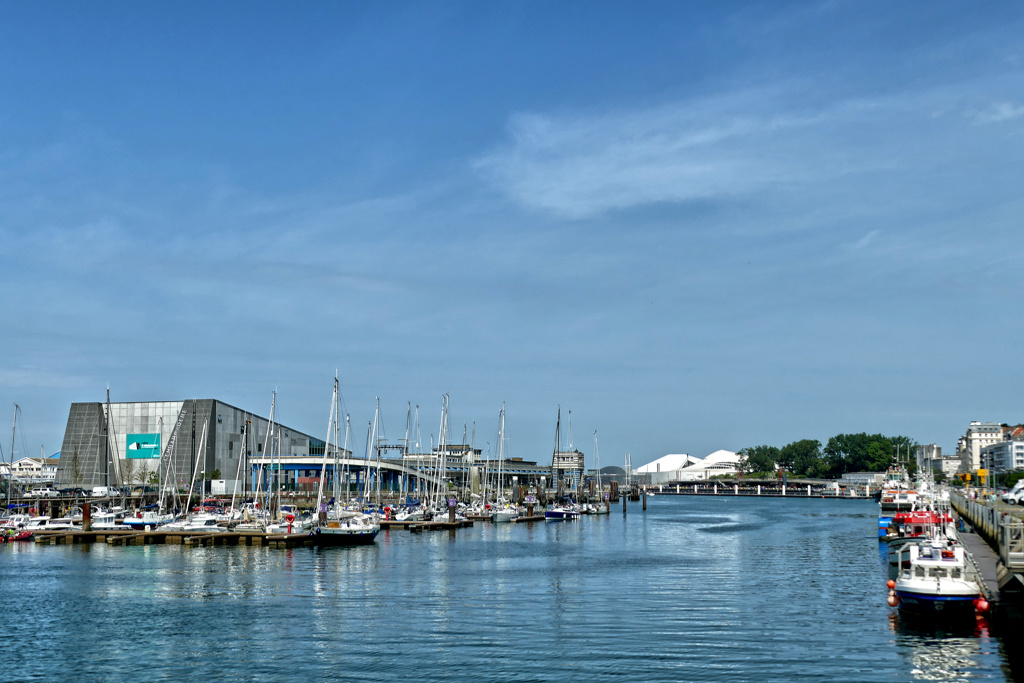
An absolute highlight for gourmets and amateur ethnographers is the daily fish market right on the quays. At the traditional stalls, the fishermen’s families sell the previous night’s catch directly from their boats. This lively spectacle can be perfectly combined with culinary discoveries. The area around the port is famous for its excellent seafood restaurants and quaint sailors’ pubs.
Maison de la Beurière
The Maison de la Beurière Museum documents the historical everyday life of local fishing families in the 19th and early 20th centuries. Built in 1870 on Rue du Mâchicoulis, the building is one of the few remaining fishermen’s houses in the former historic port district of La Beurière, which was almost completely destroyed in WWII.
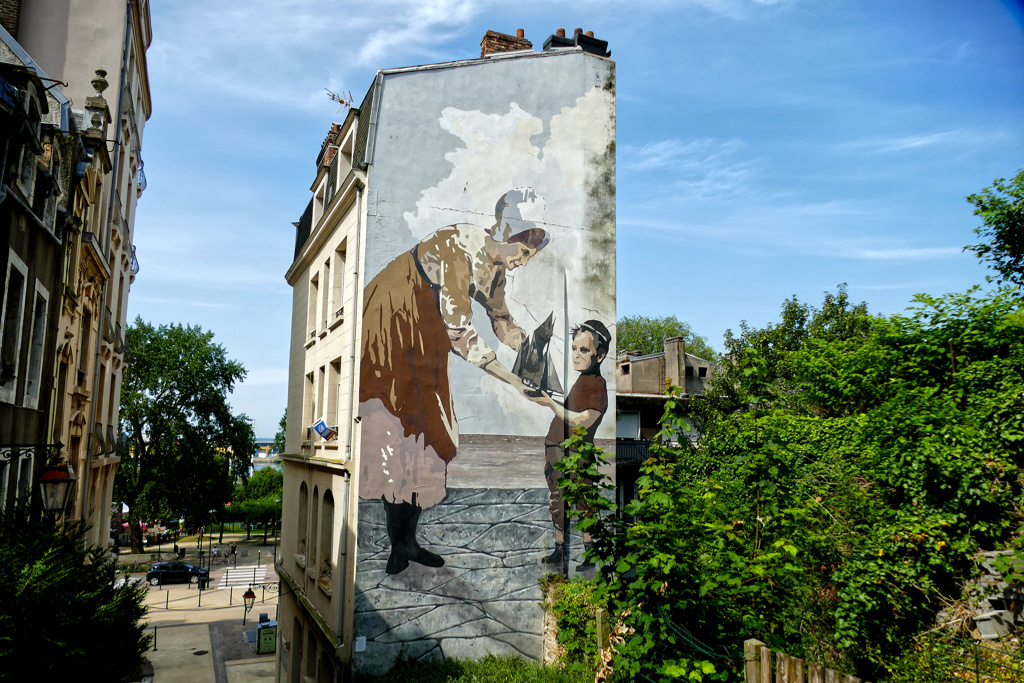
To reach the museum, visitors must climb the approximately 80 steps of the staircase street. Within a living space of only about 30 square meters, the small museum conveys an impression of the cramped and simple living conditions of the seafaring communities, where up to 15 or 20 people often lived together in close quarters!
The interior of the house is divided into two themed levels, which can be visited as part of a guided tour lasting approximately 45 minutes. The ground floor reconstructs the original living and working areas of a fishing family around 1900, furnished with Flemish furniture, a historic kitchen stove, period linens, religious objects, and authentic fishing gear. The upper floor houses a complementary exhibition on the social history of the neighborhood, featuring historical documents, engravings, photographs, old magazines, and traditional Boulogne costumes and headwear.
During the high season from June to September, the museum is open Tuesday to Sunday from 10 a.m. to 1 p.m. Except on Sundays, they are then open again from 3 p.m. to 6 p.m. The regular admission is 4 €uro.
Nausicaá
Located practically at the foot of the La Beurière district, the Nausicaá National Centre de la Mer is the largest aquarium in Europe and serves as France’s national marine center. The sprawling complex houses approximately 58,000 marine creatures from around 1,600 different species in its various tanks. In addition to being a major tourist attraction, the center is deeply committed to conservation, research into marine ecosystems, and raising public awareness of the ecological fragility of the world’s oceans.
The museum is essentially divided into two large, interactive exhibits. The About Coasts and People section focuses on nearby coastal areas, the Wadden Sea, tropical lagoons, and the interaction between human use and marine habitats. An architectural milestone was reached in 2018 with the opening of the Journey to the High Seas extension, whose striking building is designed to resemble a ray. The centerpiece of this expansion is a huge main tank, modeled after the ecosystem surrounding the Colombian island of Malpelo. Visitors can view the large fish living there, such as hammerhead sharks and giant manta rays, either through an 18-meter-long glass underwater tunnel or in front of a monumental panoramic glass panel.
Nausicaá is open daily from 9:30 a.m. to 6:30 p.m. Tickets cost 30 €uro for those 12 years and older. Children from 3 to 12 years old pay 23 €uro, and those under 3 years old visit for free.
Life is a Beach
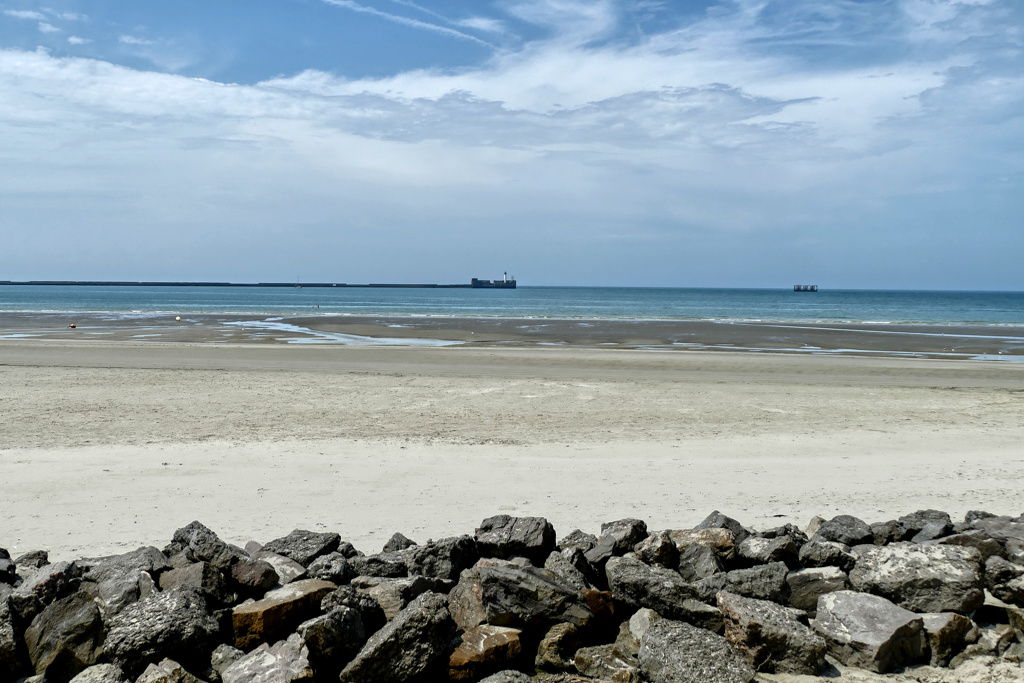
Right next to Nausicaá, you can indulge in lazy idleness on the beach. The beach on the so-called Opal Coast is characterized by its fine sand, its expansive area, and its direct connection to the city’s infrastructure.
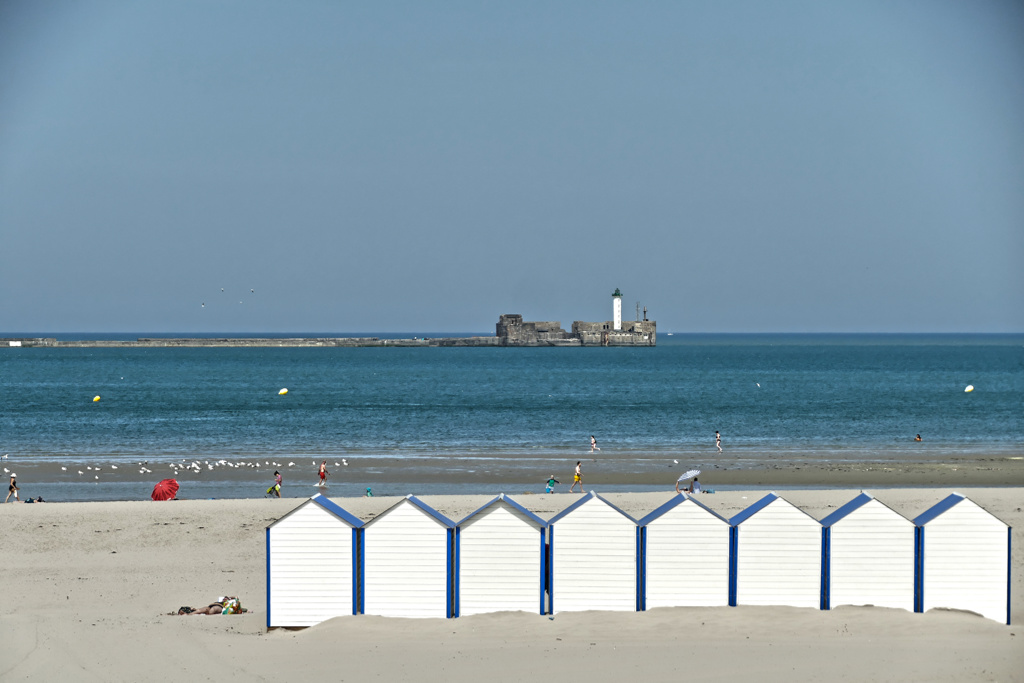
The changing tides are both interesting and annoying. Twice, I arrived at the beach drenched in sweat, eagerly anticipating a refreshing swim after my street art hunt. And what happened? Nothing. At least, no water. As wild and picturesque as the Wadden Sea is, when all you want is to dive headfirst into the cool water, I can do without it. So, on the third day, I actually checked the tide tables online and just barely managed to get to the beach in time to plunge into the waves.
By the way, weather permitting, I would always recommend reserving a few hours for the beach. You should definitely take advantage of Boulogne-sur-Mer’s location.
Street Art
You’ve probably noticed that I had a mural to illustrate almost every topic in this post. Honestly, it wasn’t particularly difficult to find the right images. Boulogne-sur-Mer is brimming with wonderful murals. The best street artists from all over the world have graced its walls and left their mark here. They very often chose motifs related to the city’s history and its status as a maritime hub in France. Whether sailors, fishermen, or the historically significant residents mentioned above – they’ve all been immortalized on the city’s houses, walls, and electrical boxes.
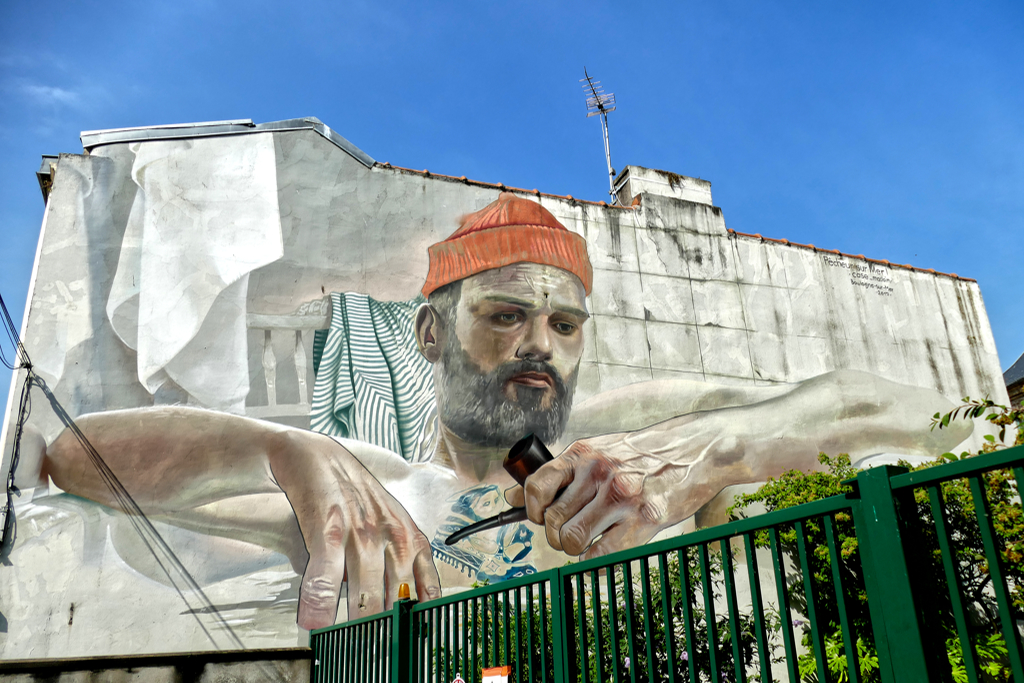
Although I’ve used quite a few of these works to illustrate this post, it would be far too much to present them all here. In fact, I haven’t even managed to fit them all into a single post! Therefore, you’ll find all these magnificent works geographically divided in my posts Best Street Art in BOULOGNE sur MER – Part 1: North of Rue Faidherbe and Best Street Art in BOULOGNE sur MER – Part 2: South of Rue Faidherbe.
I’m sure you’ll be as thrilled by them as much as I was!
Practical Information
How to Get There
By Air
Boulogne-sur-Mer does not have its own airport. The nearest major international air hub with scheduled flights is Lille Airport. The journey there takes approximately 1.5 hours. Alternatively, you can fly via Paris, but the onward journey then takes at least 3.5 hours.
By Land
Boulogne-Ville central train station is well connected to the French rail network. The main hub for travelers from the north and east is the city of Lille. From there, regional trains take about one to one and a half hours. Visitors arriving from the south via Paris can take the direct connections from Paris’s Gare du Nord station. The journey takes approximately two to two and a half hours. Travellers from Great Britain can also take the Eurostar to the nearby Calais-Fréthun station and from there reach Boulogne-sur-Mer in just twenty minutes by regional train.
In contrast, traveling by long-distance bus is somewhat more complicated. Boulogne-sur-Mer is rarely a direct destination on international long-distance bus routes.
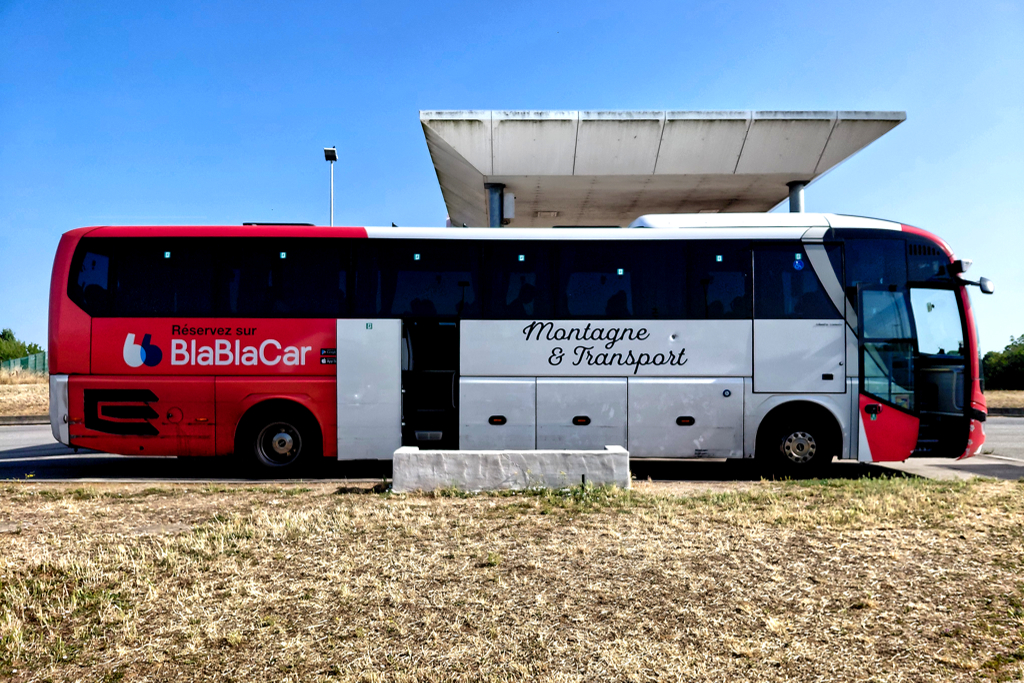
Large providers such as the German company FlixBus or the French BlaBlaCar Bus usually stop in the larger neighboring cities of Calais or Lille. From these cities, continuing the journey on the regional TER trains proves to be the fastest and most comfortable option for the final leg. Although there are some national long-distance bus lines that connect Boulogne-sur-Mer directly with other French cities such as Paris, these involve a significantly longer journey time compared to the train.
My Tip
Boulogne-sur-Mer has two train stations: Boulogne Ville and Boulogne-Tintelleries. The first is the main one, where all trains stop. However, some trains also halt at Tintelleries, which, for example, was much closer to my accommodation. So it might be worth checking if your train stops there as well. This being said, keep in mind that Tintelleries is an unmanned station. You have to find all the information online, and there are, of course, display boards.
But if you have specific questions or need assistance, you’ll have to go to Boulogne-Ville station.
By Sea
There is no regular ferry service from Boulogne-sur-Mer to Great Britain. The large car ferries depart from the neighboring town of Calais. However, SailLink operates a small, special sailing ferry for passengers going to Dover. Obviously, you cannot take your car, but bicycles are perfectly fine. Also, smaller cruise ships and expedition cruises occasionally call at the port of Boulogne-sur-Mer.
How to Get Around
Especially the part of Boulogne-sur-Mer that’s interesting for tourists isn’t very large. If you’re comfortable walking, you can easily visit the city center on foot.
However, Boulogne-sur-Mer also has a more or less comprehensive network of buses. They run at very different intervals, depending on the line and day of the week, obviously. The main lines serve the city center and key hubs from Monday to Saturday with service every 10 to 20 minutes. On Sundays and public holidays, service is significantly reduced to hourly or two-hourly. In any case, you should plan your journey using the Marinéo app or directly via Google Maps.
Various ticket options are available for visitors. A single ticket costs as little as 1 €uro and is valid for one hour after the first validation, including transfers. You must board at the front and validate your ticket. Also, for 3 €uro, a day ticket allows unlimited travel on the entire network. Both types can be purchased directly from the bus driver. However, they take only cash. If you travel frequently but don’t need a day ticket, there’s also the so-called Pass’ multi-voyages with 10 trips for 8 €uro. You can also purchase tickets using the Marineo app or the tixiPASS system on your smartphone.
Visiting Organized
Although I’m an avid solo-travelling woman, I sometimes like to join organized tours. This way, I get extended info about a place, and it’s fun to visit landmarks in the company of like-minded fellow travellers. Here are some ideas for activities to choose from*:
Where to Stay
If you’ve been reading my blog for a while and know me a bit, you know I’m always on the lookout for great yet affordable accommodations. I had a particularly lucky find in Boulogne-sur-Mer when I discovered the holiday apartment Appartement Comme a la Maison Refait a Neuf*. Admittedly, the name is a bit clunky and could probably use some improvement. But there’s really nothing to improve about the apartment itself. It’s located right in the heart of Boulogne-sur-Mer, a stone’s throw from the Boulogne-Tintelleries train station. All the places of interest introduced in this post are easily accessible on foot.
The apartment is very sleek and modern, and spotlessly clean. If you need anything, you can always contact the owner, who runs a pharmacy on the ground floor of the building. It simply couldn’t be better, especially since you get it all for a really fair price.
If the Appartement Comme a la Maison Refait a Neuf*—man, that name really needs at least an abbreviation—is fully booked, you’re sure to find another nice place to stay on this map that suits your needs and budget*:
What to Eat
While Boulogne-sur-Mer has a bit of an un-French feel at first, it becomes highly French when it comes to the quality of food. The sea inherently dominates its cuisine. As France’s most important fishing port, it receives a steady stream of seafood, including numerous types of fish, as well as mussels, oysters, and scallops.
A classic dish is gainée boulonnaise, a combination of various fish, vegetables, and a creamy sauce. It’s basically Boulogne’s answer to bouillabaisse. La Poissonnerie Gourmande functions as a fishmonger, caterer, and restaurant, and brings culinary delights straight from the fishing port to your plate.
But of course, Boulogne’s cuisine isn’t limited to fish. The hinterland provides vegetables, fruit, meat, and a wide variety of regional cheeses.
The culinary influence of England is also noteworthy. Welsh, a type of bread topped with cheese, beer, and other ingredients, is a local classic. At Chez Débo, locals and tourists alike enjoy it at reasonable prices.
Cash’n’Cards
Until now, 21 European countries replaced their former local currency with the €uro starting in 2002. Obviously, France is one of them. The exchange rate is 1 US$ = 0.84 EUR as of October 2026. However, you can check today’s conversion rate on this page.
Credit cards and contactless payments are accepted almost everywhere. However, you have to pay cash for bus tickets.
Connection and Communication
Since June 2017, no roaming charges have been applied within the EU with a European mobile phone contract. This applies in all 27 countries of the European Union as well as in Iceland, Liechtenstein, and Norway and to all contracts.
In case European roaming is unavailable, you can connect to the internet without any issue at basically every museum, eatery, café, and, of course, hotel.
If you insist on being online 24/7, you can get a SIM card, obviously. There are prepaid SIM cards from many companies. At 2.99 €uros, Orange France distributes the cheapest one. Other brands are SFR France, Bouygues Telecom, and Free Mobile. They cost 10 €uros. Keep in mind that some companies might also charge an activation fee.
In France, they use plug types C and E. Their voltage is 230 V and the frequency is 50 Hz. Whereby, as nowadays, all these chargers have integrated adapters, in general, the voltage and frequency don’t really matter.
By the way, you’ll find this information and many more comprehensive travel tips in my post World’s Most Complete Travel Information – an indispensable globetrotter-classic.
Language
The French are famous for many great things. Presumably, speaking foreign languages isn’t one of them. Despite the geographic and even cultural proximity to Great Britain, people have rudimentary knowledge of English at most. And while they still might understand more or less what you are saying, they might not be able or willing to answer in English. Therefore, already out of respect, it won’t hurt to learn at least some polite phrases with the help of babbel or Lingohut, for example.
Map
On this map, you’ll find all the wonderful places I’m introducing in this post.
Clicking on the slider symbol at the top left or the full-screen icon at the top right will display the whole map including the legend.
Pinnable Pictures
If you choose to pin this post for later, please make sure to use one of these pictures:
Did You Enjoy This Post? Then You Might Also Like These:
GUADELOUPE: Complete Guide And Perfect Itineraries (also for travels by public bus)

Two Days in MARSEILLE – What Not to Miss in the Belly of France
Cheesy Flight: Never Put Cream Cheese In Your Hand Luggage
What Not to Miss in PARIS: 20 Must-Dos, Not Only for First-Timers
Guadeloupe: What Not to Miss on a Visit to the Island of Marie Galante
What Not to Miss in BORDEAUX, the Charming Wine Capital of France
Best Places to Visit in Basse Terre, the Western Wing of GUADELOUPE (also by public bus)
Pickled: Easy Recipes to Store the Mediterranean Sun in Your Pantry

* There are affiliate links in this article. By purchasing items through my affiliate links at no extra cost to you, I will receive a small commission. This helps me to run this site. Thank you so much for supporting me!