Hals, Hofjes, and Heritage — all this and so much more makes Haarlem a highly interesting and pretty exciting destination. Continuously in the shadow of Amsterdam, this city, located around 30 kilometers from the Dutch capital, is far too often overlooked. So, if you’re not keen on the hustle and bustle of a big’n’busy metropolis but still want to enjoy an inspiring, authentically Dutch city packed with mysteries and miracles, Haarlem is the perfect place for you!
In this post, I’m taking you to the best spots you absolutely should not miss when visiting Haarlem.

Why Haarlem Might Become Your Favorite Dutch Destination
Haarlem lies only about 30 kilometers west of Amsterdam, yet feels pleasantly untouched’n’unbothered. Over the centuries, the city has evolved from a medieval settlement into a cultural center with its very own character and laid-back vibe.
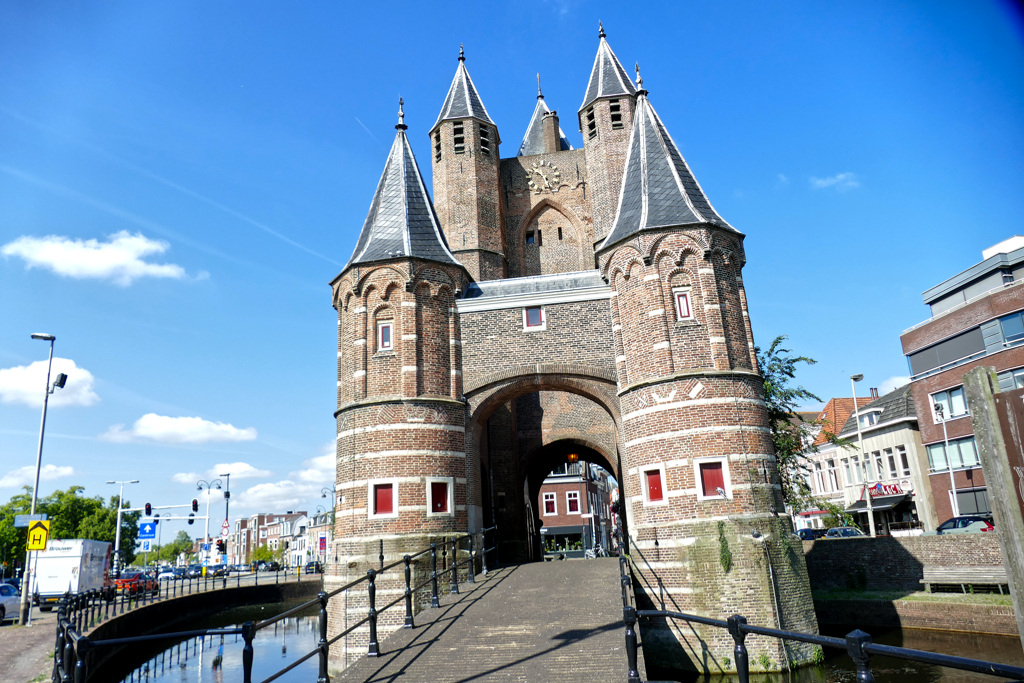
Its origins date back to the 10th century, when the first settlers put down roots on a sand ridge. In the 12th century, Haarlem received its city charter. Thanks to its location between the North Sea and the hinterland, it quickly developed into a trading center. In the Late Middle Ages, the city profited from its textile trade and its connection to important waterways.
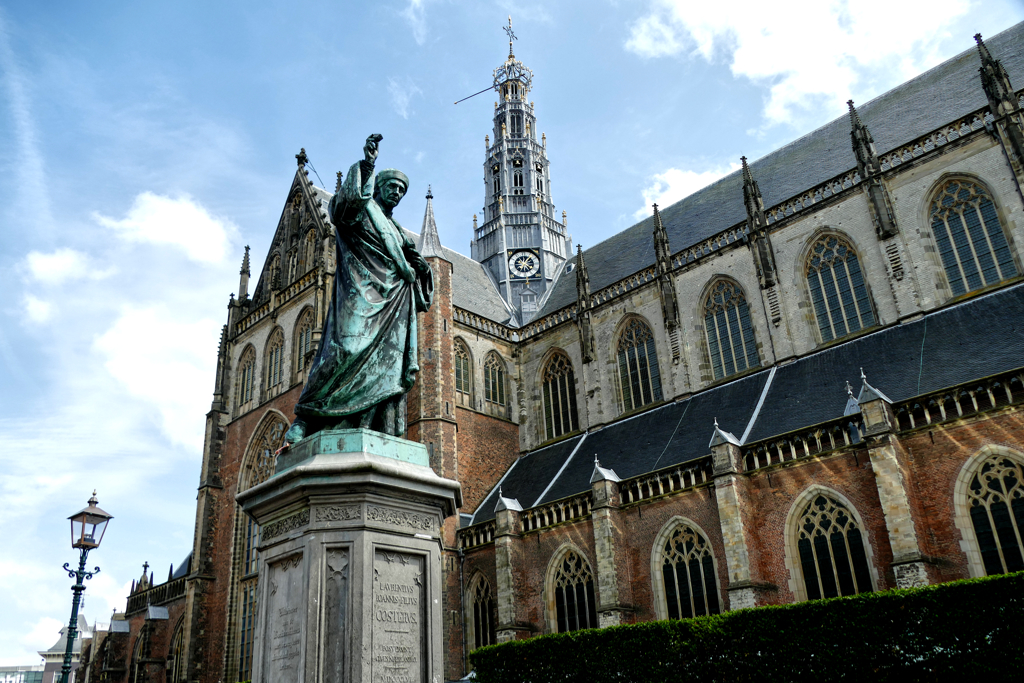
During the Eighty Years’ War, the city played a crucial strategic role and was therefore besieged. This defining event remains part of the local identity to this day.
Then, in the 16th and 17th centuries, Haarlem experienced its so-called Gilded Age, a time of flourishing prosperity, art, and crafts. Artists such as Frans Hals left a lasting impression on the city.
Back on Track – Literally
Development stagnated in the 18th century before new impetus arrived in the 19th century. In fact, in 1839, Haarlem became one of the first cities in the Netherlands to be connected to the railway network. This strengthened its link to Amsterdam and ushered in industrialization. Nevertheless, the historic cityscape remained largely untouched.
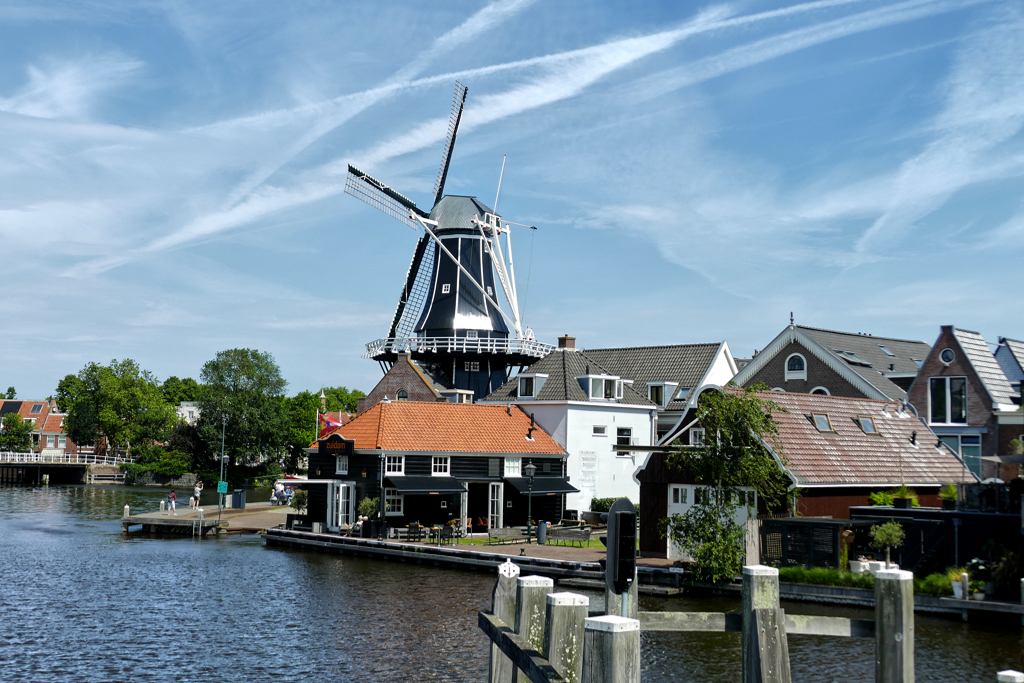
And today? Well, Haarlem pleasantly blends past and present. The old town, with its narrow cobblestone streets, imposing churches, and hidden courtyards known as hofjes, bears witness to its social and architectural heritage. Alongside this, a vibrant scene has developed, featuring cafes, small shops, and cultural venues. It is precisely this mix of history and urban life that makes Haarlem a more relaxed alternative to nearby…you know where.
Mansions and Almshouses
The field of tension between wealth and poverty shaped not only social life in Haarlem’s olden days, but also the city’s architecture.
While trade, shipping, and the textile industry led to enormous prosperity in the 17th century, social inequality simultaneously grew. Merchants, brewery owners, and textile entrepreneurs shaped the cityscape with their magnificent canal houses and town palaces. At the same time, however, the elderly, widowed, and impoverished relied on support.
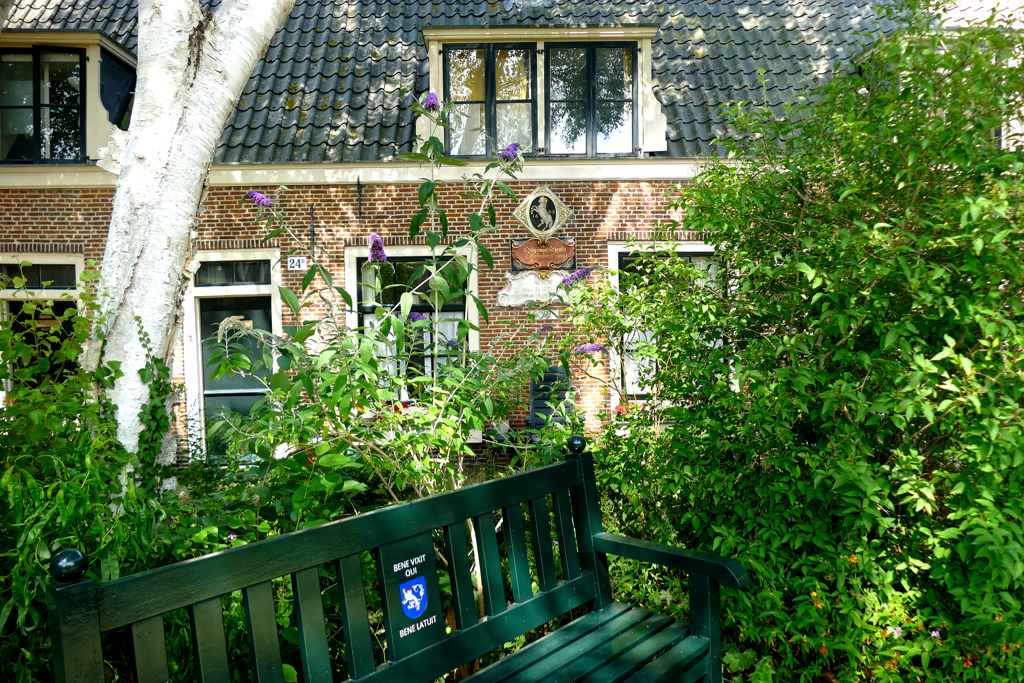
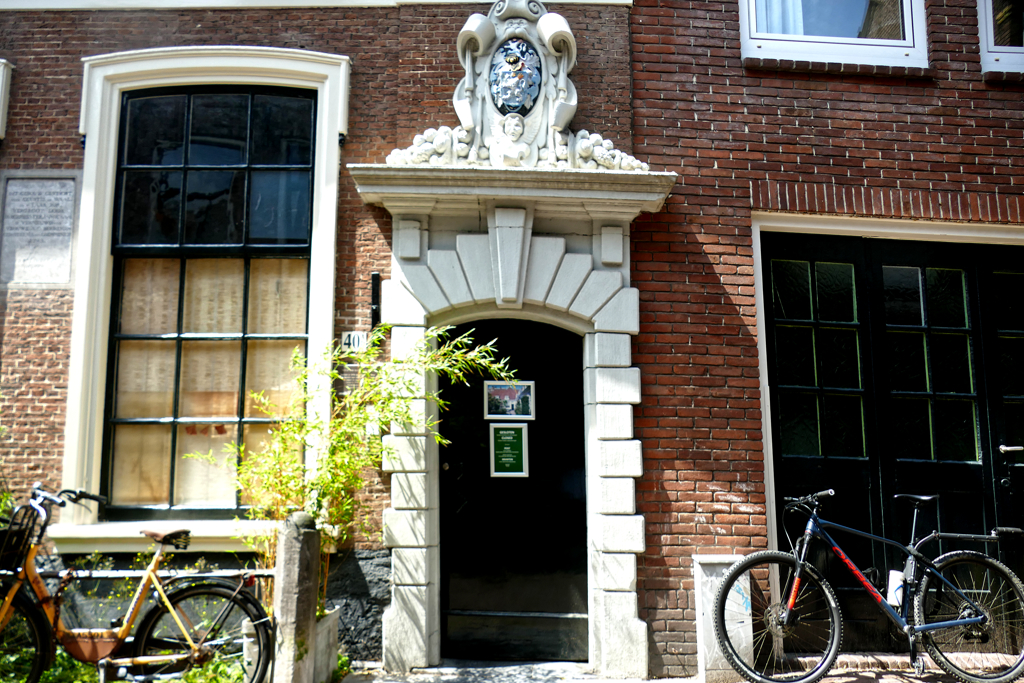
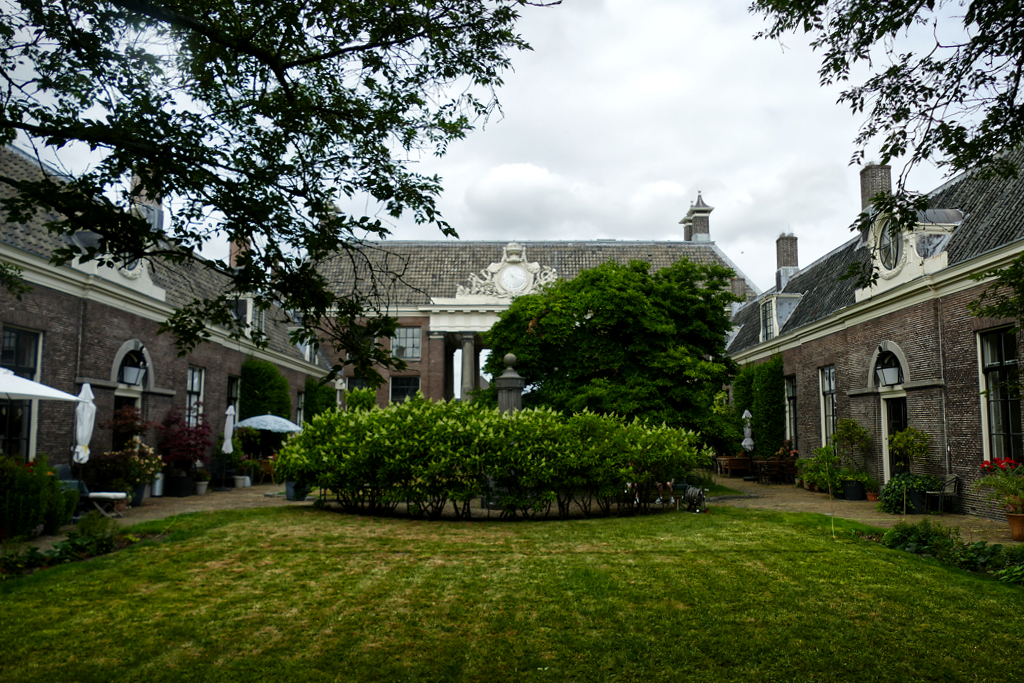
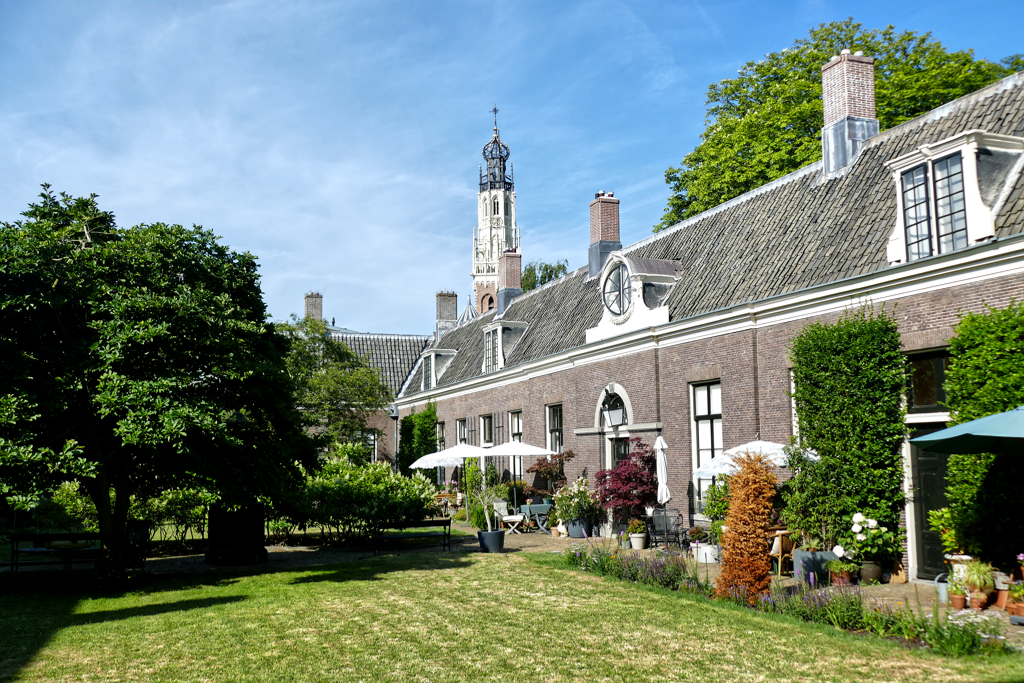
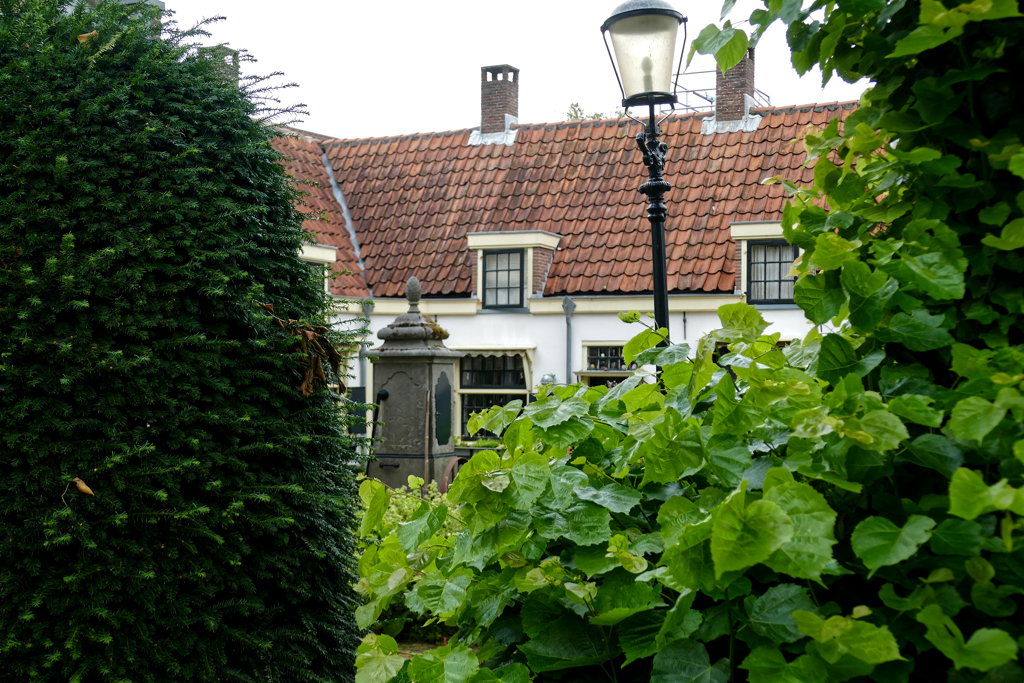
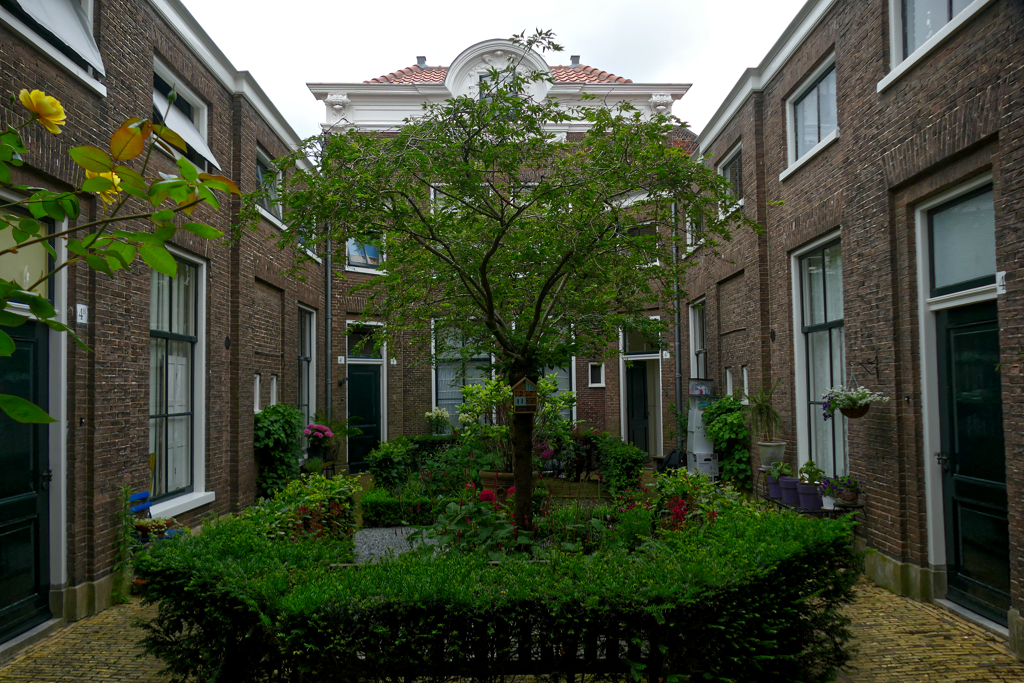
It was within this contrast that the so-called hofjes were constructed. They are small residential complexes, usually built around a green courtyard, that offered a safe home to people in need, mostly women. They were primarily financed by wealthy citizens.
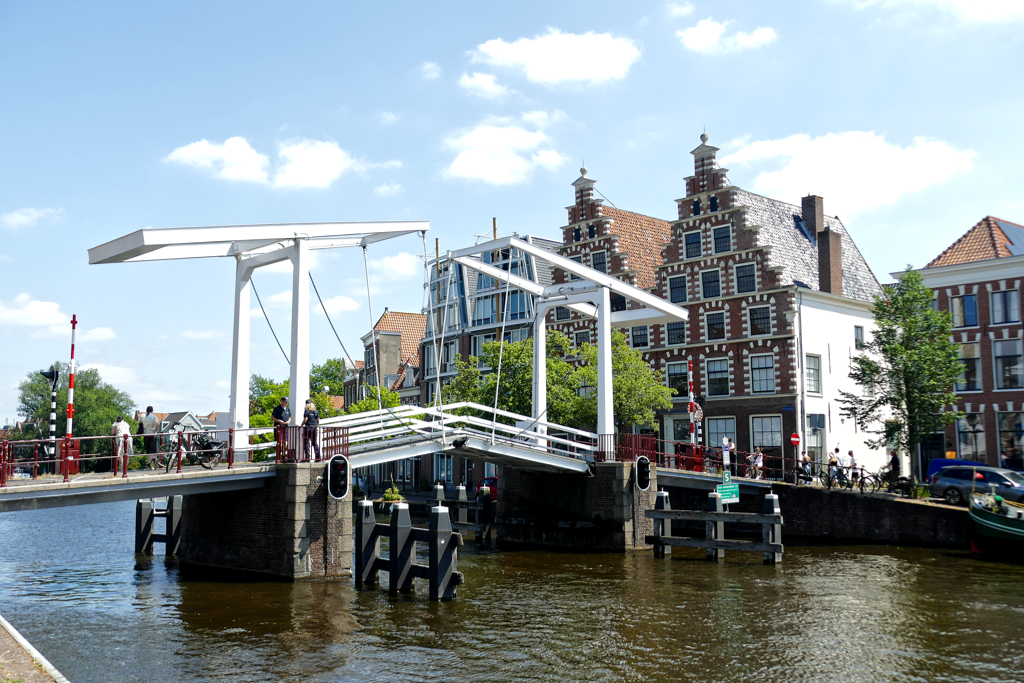
This was inspired by various rationales. Sometimes it was Christian charity. But personal salvation also played an important role. After the Reformation, salvation could no longer simply be purchased. Nevertheless, charity was considered an expression of a God-pleasing life. Beneficence was particularly valued among the Mennonites. For many wealthy entrepreneurs, philanthropic engagement was practically the ideal of a respected citizen. A hofje was therefore not only a social institution but often also a deliberate status symbol. It is no coincidence that many hofjes bear the names of their founders to this day.
Not Just out of Good Heart
Unlike modern social housing, hofjes were not open to everyone. Many housed only women—often unmarried or widowed and always with an impeccable reputation. Aid was thus frequently tied to moral expectations. Others were aimed at members of specific religious denominations or professional groups. Residents usually paid only a small rent but had to adhere to strict rules, which were monitored by the respective foundations.
Another aspect was social stability. A city benefited when elderly or impoverished citizens were not homeless or begging in the streets. Charity was consequently also an investment in public order.
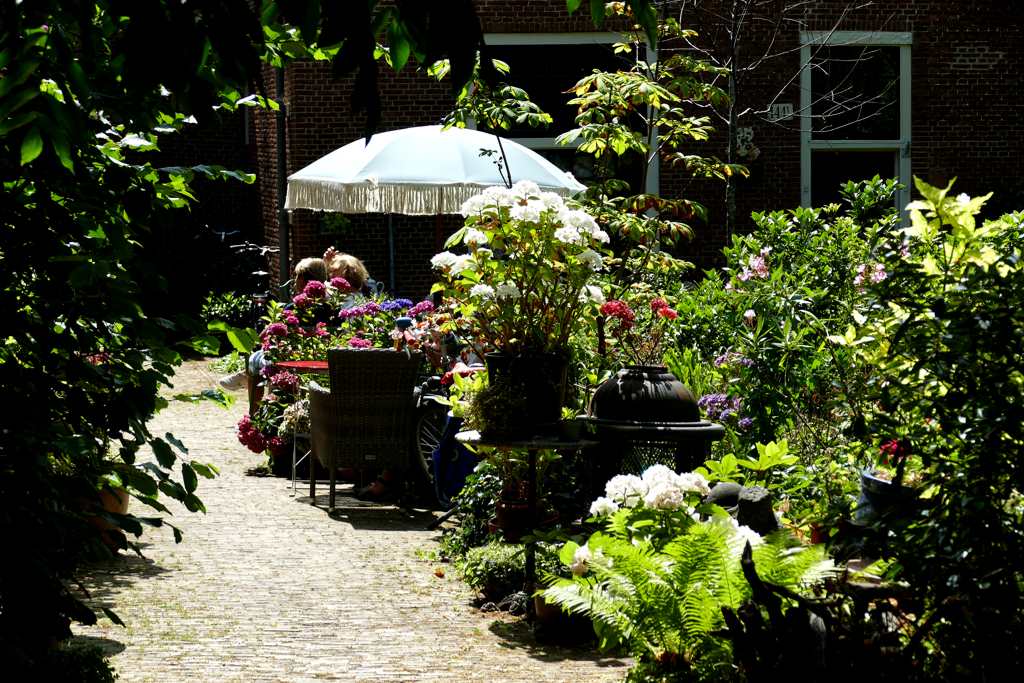
Today, hofjes are considered oases of tranquility in the heart of the city. Behind often inconspicuous entrance gates lie green courtyards, historic houses, and an enchanting atmosphere.
Hofjes – Haarlem’s Captivating Courtyards
The hofjes are among the most beautiful and impressive examples of Dutch social history, and Haarlem is one of the most important hofje cities in the Netherlands.
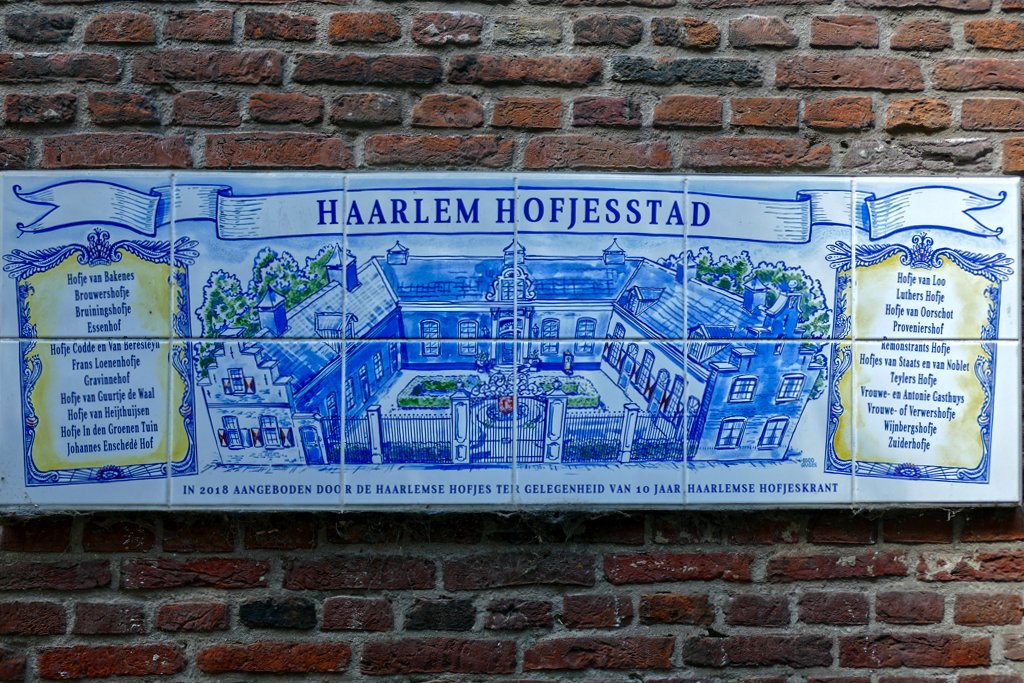
Once there were over 40 of these complexes, of which just over 20 remain today. Many are listed as historical monuments but continue to be used as homes. Visitors are welcome in numerous hofjes.

It should go without saying that the unique atmosphere and, above all, the privacy of the residents should be respected. These idyllic courtyards are not open-air museums, but rather remain the homes of their inhabitants.
Ten Hofjes Not to Miss
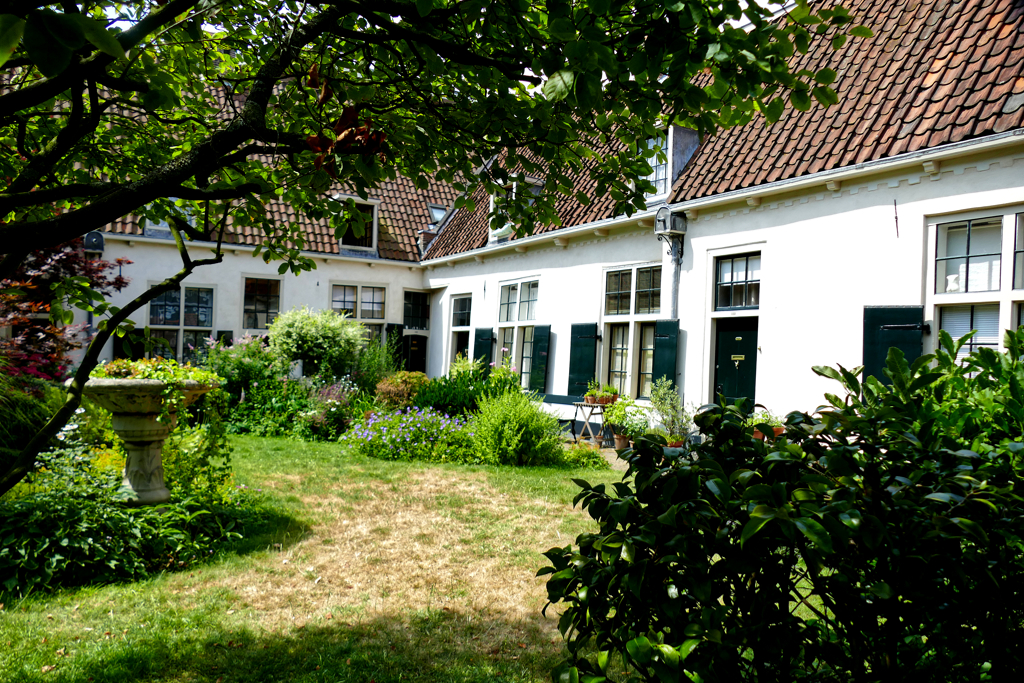
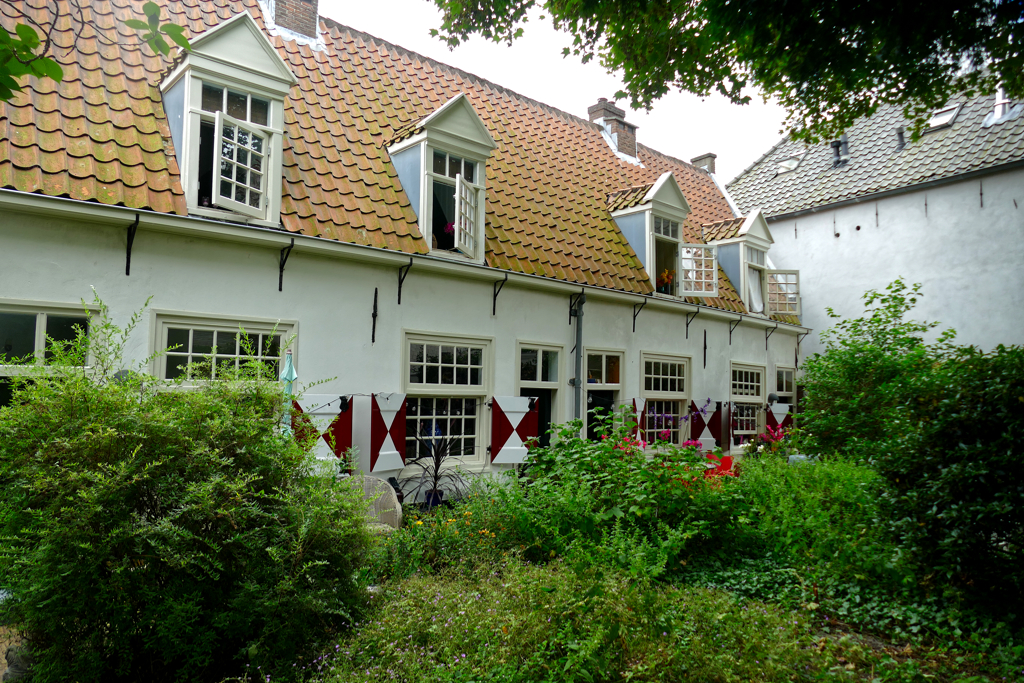
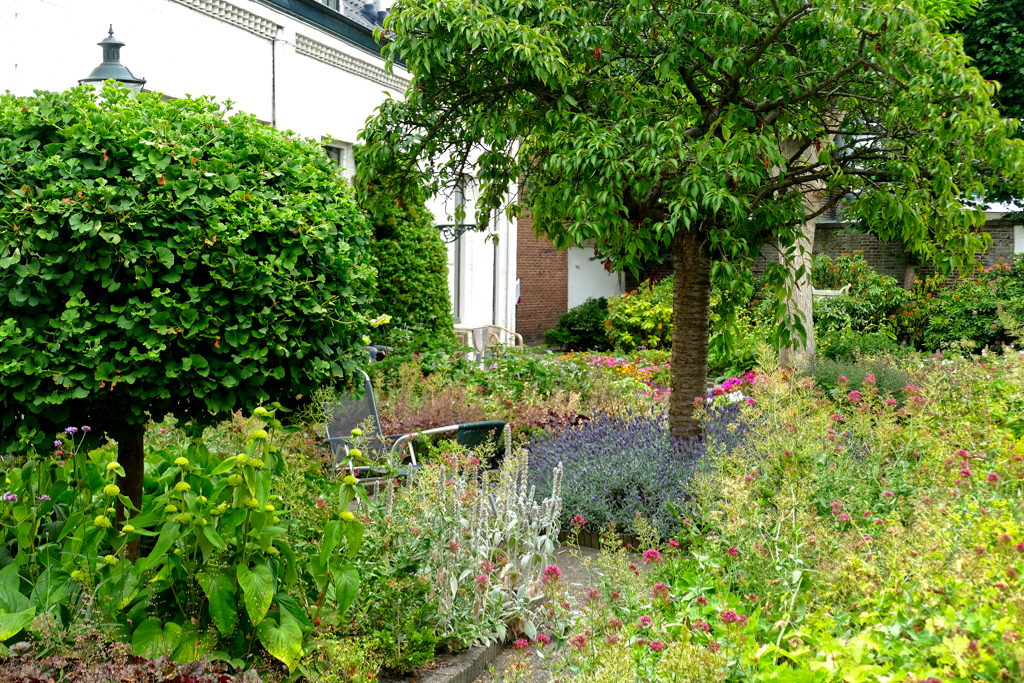
Begijnhof
Just as there are hofjes in other Dutch cities, there are also beguinages throughout the Netherlands.
The beguine movement originated in the 13th century in the Netherlands and Flanders. From there, it spread, albeit to a lesser extent, to neighboring regions. Historically, the beguine community consisted of women who led a religious life without taking monastic vows. They could own property, leave the community at any time, and were not bound by lifelong religious vows.
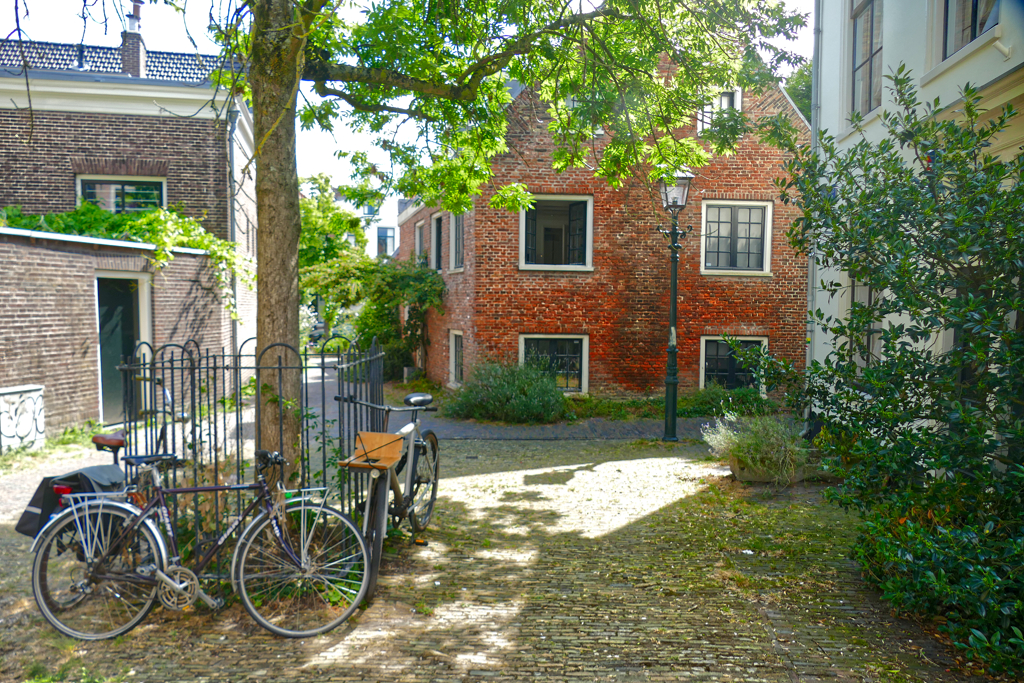
The Haarlem beguinage was founded around 1262 when the priest Arent van Sassenheim donated a plot of land behind the Grote Kerk to the community. Over the centuries, it developed into a walled precinct with its own church, residences, and gardens. It was a small, largely self-sufficient world within the city.
With the Reformation, the situation changed fundamentally. After Haarlem became Protestant in 1581, the church’s property was confiscated. The Begijnhof was dissolved, and the houses gradually became city property. Remarkably, the beguines didn’t disappear. Over time, they bought individual houses in the surrounding area and formed their own small community. The last Haarlem Beguine died in 1824, bringing the community’s centuries-long history to an end.
Same Same But Different
If you visit the Begijnhof in Haarlem, it’s worth paying attention to a few special details. It’s significantly smaller and less enclosed than the famous Begijnhof in Amsterdam, but equally charming. The Waalse Kerk is the complex’s most striking building. Historic houses surround the church. While the actual Beguine life has long since vanished, you can still clearly trace the layout of the former courtyard.
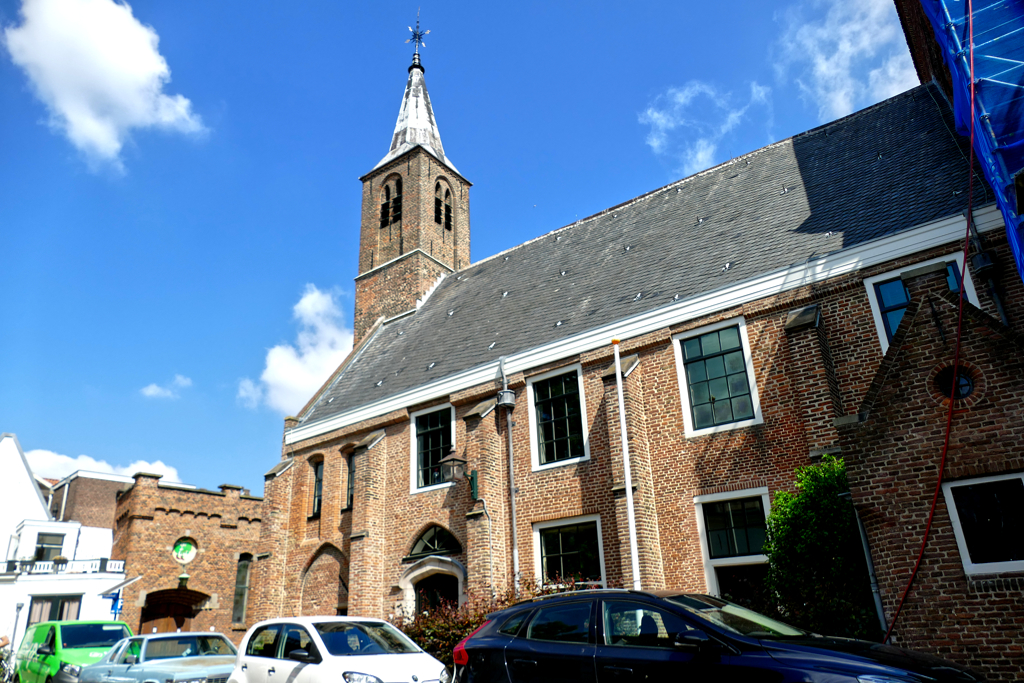
The small alleyway Donkere Begijnhof consists of some of Haarlem’s oldest houses. Particularly interesting is house number 8, a listed building that was part of the beguinage in the Middle Ages and later served as the goldsmiths’ guildhall.
Pieter Teyler – the Legacy of a Visionary Founder
Before I introduce you to more fascinating aspects of Haarlem, I’d like to focus on the founder of one of the most impressive and best-preserved historic hofjes, Mijnheer Pieter Teyler.
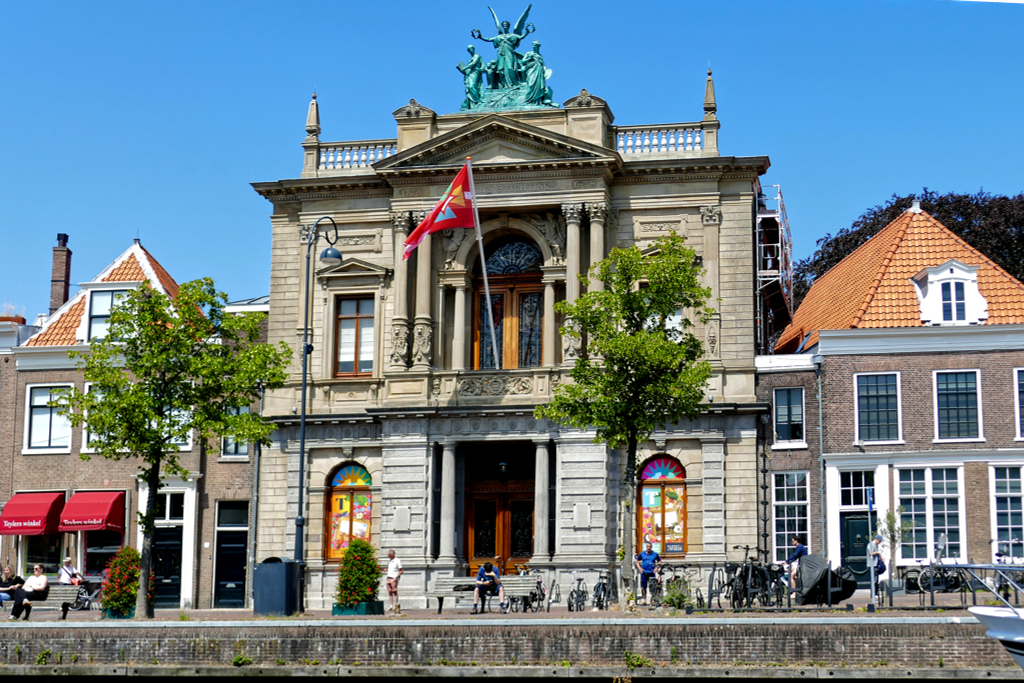
Pieter Teyler van der Hulst was born in Haarlem in 1702. He came from a Mennonite family whose ancestors had emigrated to the Netherlands from Scotland. During his life, Teyler amassed a large fortune through the production and trade of silk and wool fabrics, and later through his work as a banker. Pieter Teyler was a proponent of the Enlightenment and convinced that education, scientific research, and art contributed significantly to a better society.
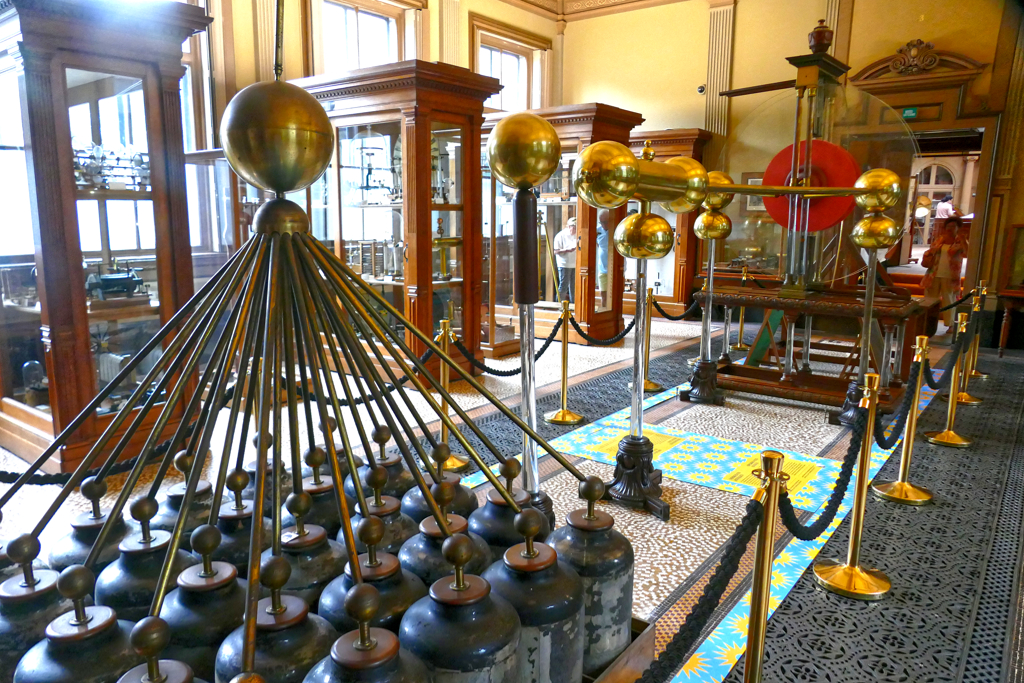
He was interested in philosophy and theology and collected everything that wasn’t nailed down: books, coins, drawings, natural history specimens, and scientific instruments. Since his marriage remained childless, his fortune was placed in a foundation after his death to carry on his ideals.
A Magnificent Collection
Thus, the oldest museum in the Netherlands was established in Haarlem. In 1784, the building, with its famous Oval Hall, opened its doors to the public for the first time.
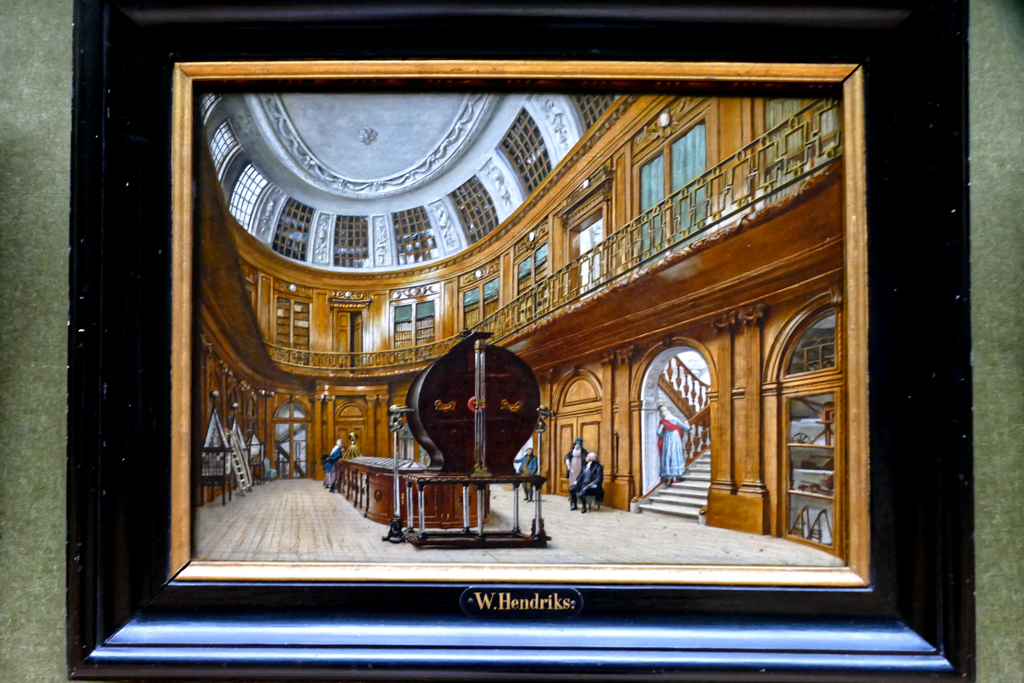
Many exhibition rooms have been preserved in their historical style, conveying the impression of a museum from the 18th and 19th centuries.
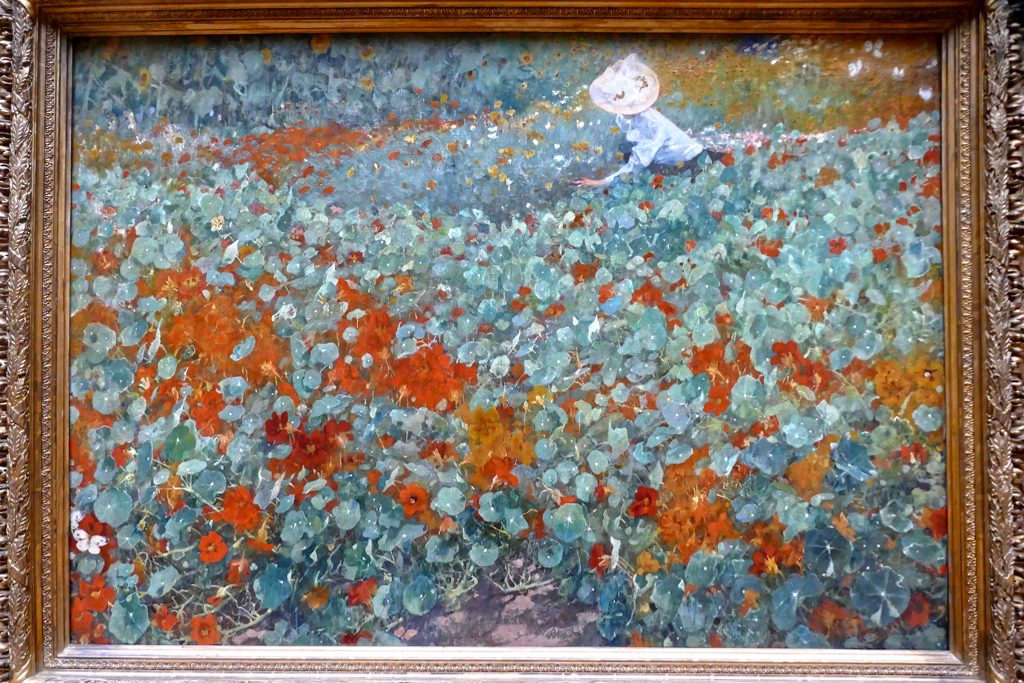
As a result, the building itself is considered a significant cultural monument and offers visitors a unique journey back to the Age of Enlightenment.
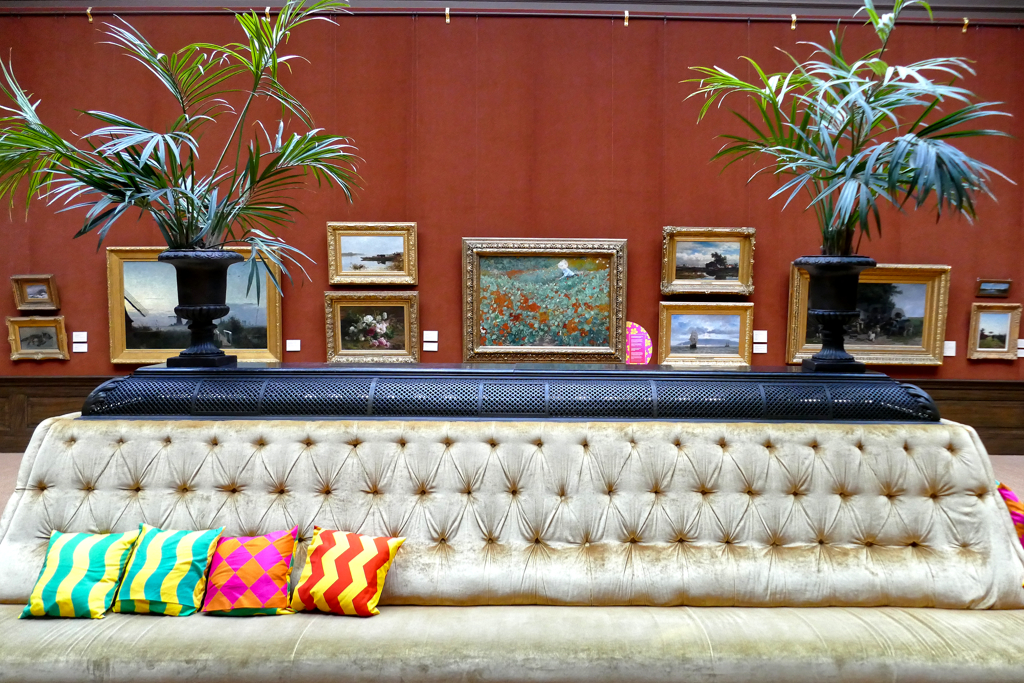
The museum is open from Tuesday to Sunday between 10 a.m. and 5 p.m., and general admission is 18.50 €uro.
Frans Hals – the Man Who Gave Haarlem a Face
A good 100 years before Pieter Teyler, another man drew the world’s attention to Haarlem. I am, of course, speaking of none other than Frans Hals. No other artist is as closely associated with a city as he is. Although Hals was born in Antwerp probably around 1582, his family moved to Haarlem in 1585. Hence, he spent almost his entire life there, capturing the city’s people for posterity.
His group portraits of the Haarlem militia became particularly famous. Unlike many of his contemporaries, he didn’t depict the members neatly lined up next to each other, but rather showed them interacting. This makes the paintings remarkably lifelike, almost like a snapshot of a convivial evening.
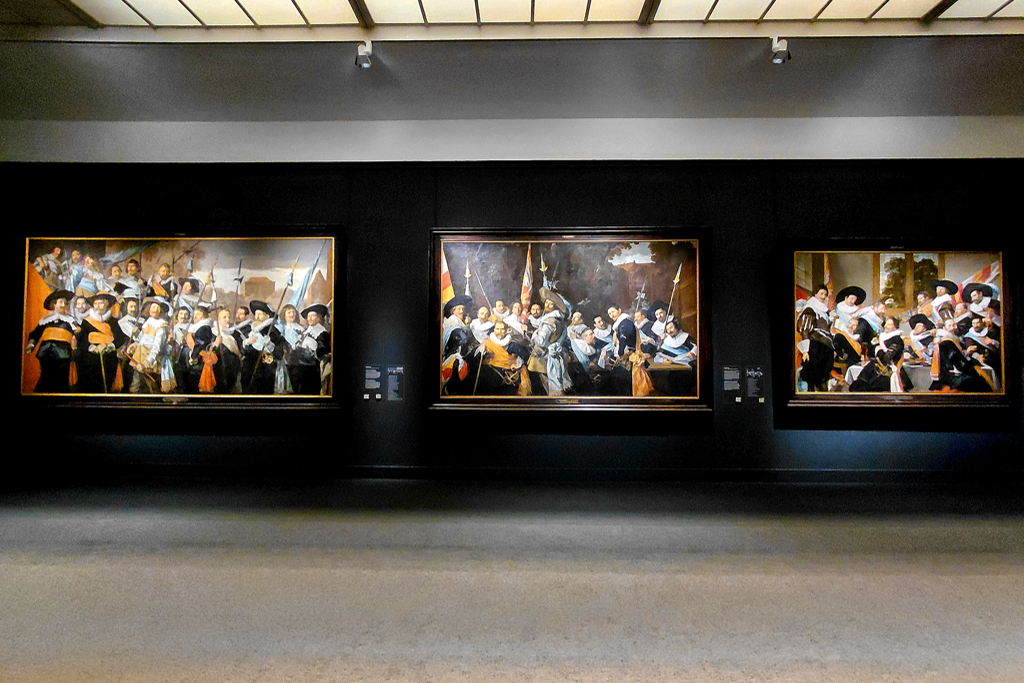
In the museum, you can use the signage to see exactly who is depicted.
But Frans Hals didn’t just paint wealthy merchants or respected citizens. His best-known works also include portraits of musicians, children, tavern patrons, and the legendary Malle Babbe, a woman from Haarlem known for her eccentric behavior.
Hals was interested in people regardless of their social standing. This was anything but common in the early 17th century. Many portraits of that time appear stiff and ceremonial. Hals, on the other hand, captured the fleeting moment. His loose, rapid brushstrokes were so modern that later artists like Édouard Manet and Vincent van Gogh admired him. Some art historians even call him a precursor of Impressionism – although more than 200 years separate Hals and the Impressionists!
The Painter of the Human Face
Anyone walking through Haarlem today is practically walking through the backdrop of his life. Many of the people he portrayed lived just a few streets apart. Frans Hals was a member of the Haarlem Guild of Saint Luke, worked almost exclusively in the city, and found his final resting place in the Grote Kerk.
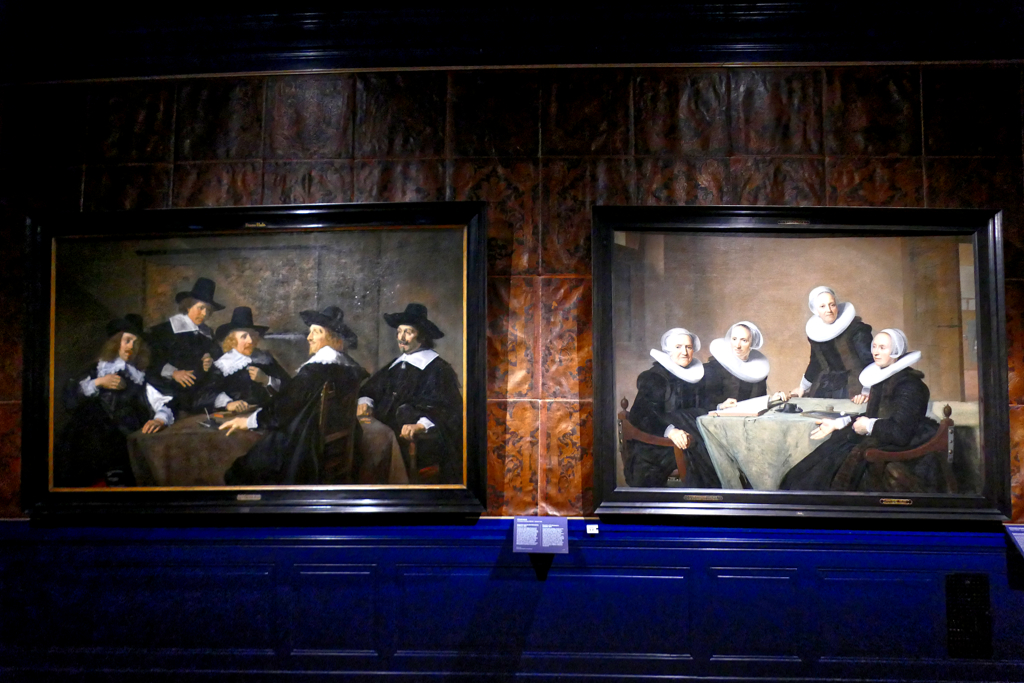
St Elisabeth’s Hospital was a charity run by so-called regents and regentesses. The hospital was located at Groot Heiligland, opposite today’s Frans Hals Museum. Both group portraits were created in 1641.
Numerous stories about Frans Hals still circulate today. One of the most persistent tells of a perpetually drunk painter who preferred to pay his bills at the tavern rather than the baker’s. In fact, Hals repeatedly struggled financially. Creditors sued him several times, and once he even had to sell furniture to settle his debts.
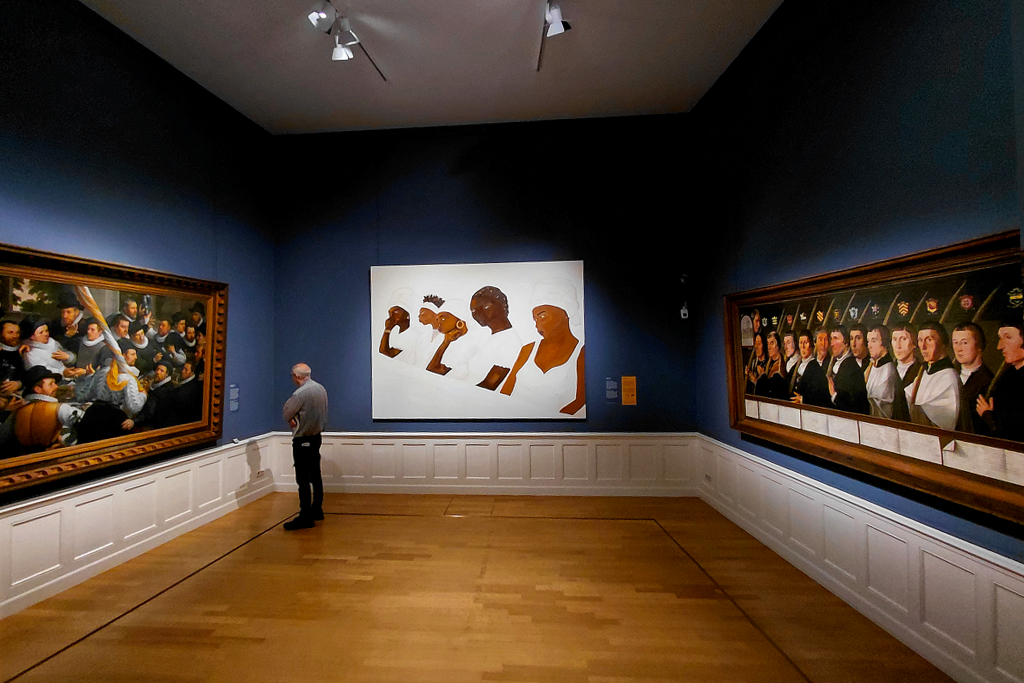
To the right, one of the earliest group portraits in the Northern Netherlands: Twelve Members of the Haarlem Brotherhood of Jerusalem Pilgrims by Jan van Scorel from 1528.
In the center, in stark contrast in gender and skin color, a portrait of five women of color by Iriée Zamblé. The artist from Amsterdam painted Wishing on a Star in 2024.
His personal life was also marked by tragedy. His first wife died young, leaving him with two small children. He later remarried and had eight more children.
Fun Fact
Several of Hals’ sons also became painters, so that for a time the Hals family functioned almost like a small art business.
In the Footsteps of Frans Hals
To this date, you’ll find traces of Hals’ whereabouts in many spots around the city. As he died in Haarlem in 1666, he was buried in the Great St. Bavo Church on the Grote Markt. However, his grave, as with many graves from this period, has no elaborate tombstone.
The church can be visited from Monday to Saturday between 10 a.m. and 5 p.m. for an admission fee of 4 €uros.
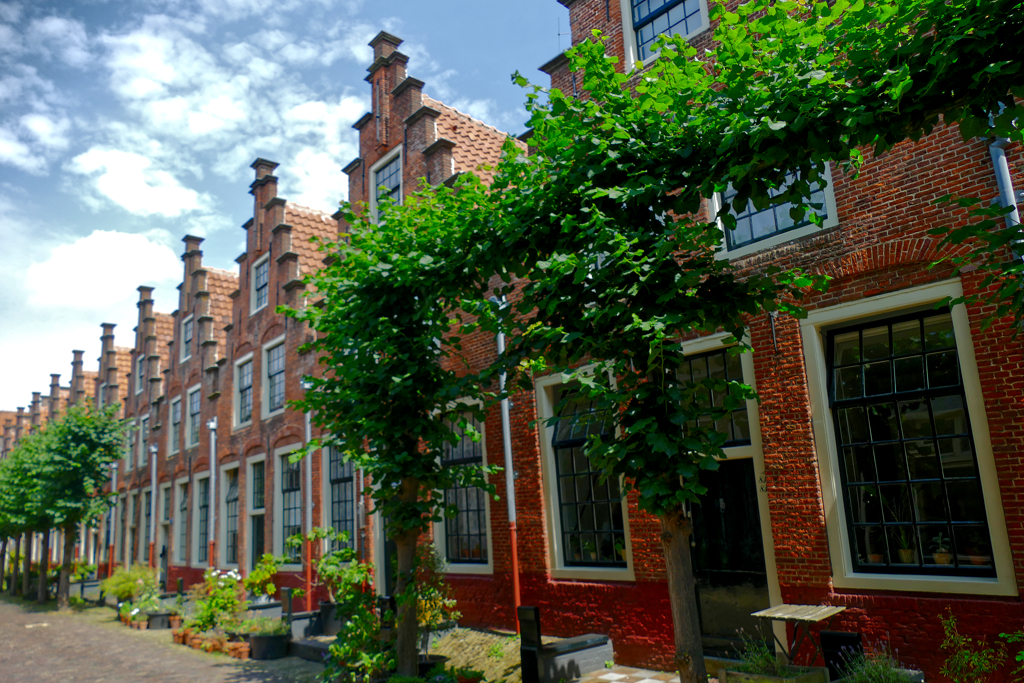
Obviously, a visit to the Frans Hals Museum is an absolute must. The museum building, dating from the early 17th century and located on the charming alley Groot Heiligland, was originally an almshouse. It only became a museum centuries after Hals’ death. Alongside his masterpieces, the museum displays portraits by other artists in dialogue with Hals’s. In addition, a very well-made film provides information about the life and work of this exceptional artist.
The museum is open from Tuesday to Sunday between 11:00 am and 5:00 pm., and general admission is 18.50 €uro.
Courageous Women
As significant as the men presented so far have been, it is equally important to me to introduce two women who, each in her own way and with her own means, demonstrated decency and courage. Unfortunately, they rose to fame in very tragic circumstances, but I believe that their indomitable bravery must be highlighted and that they should be included in every introduction of Haarlem.
Corrie ten Boom
On Barteljorisstraat, in the heart of a bustling shopping street in Haarlem’s historic old town, stands an unassuming corner building. Its poignant history is not immediately apparent. It is the former home and business of the ten Boom family.
The family ran a watchmaking business, and Corrie ten Boom, born in Haarlem in 1892, was the first officially trained and licensed female watchmaker in the Netherlands.
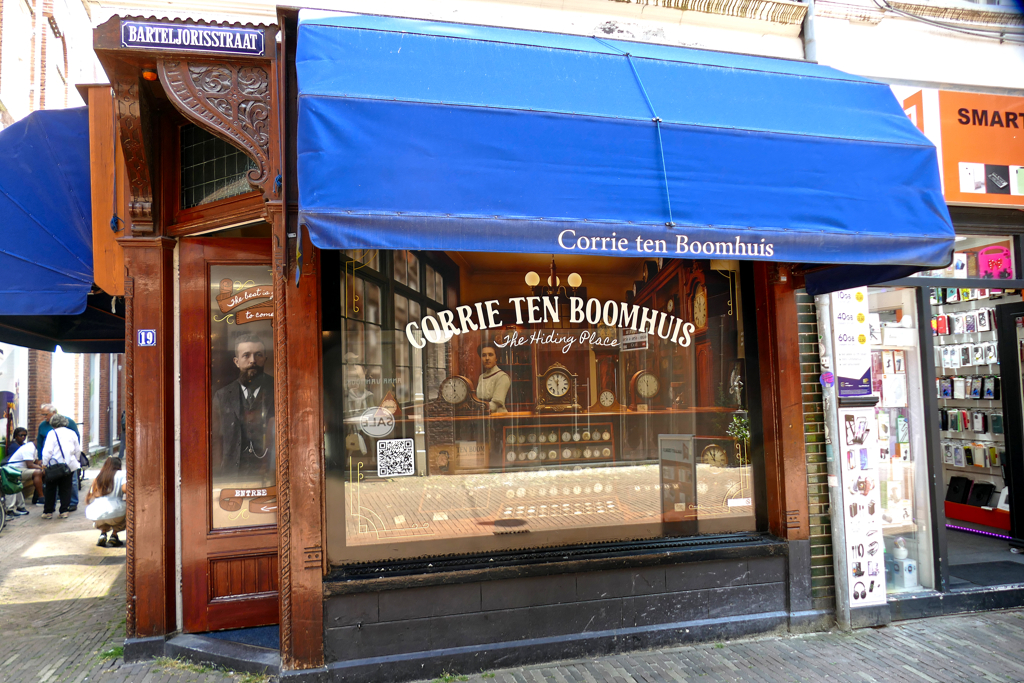
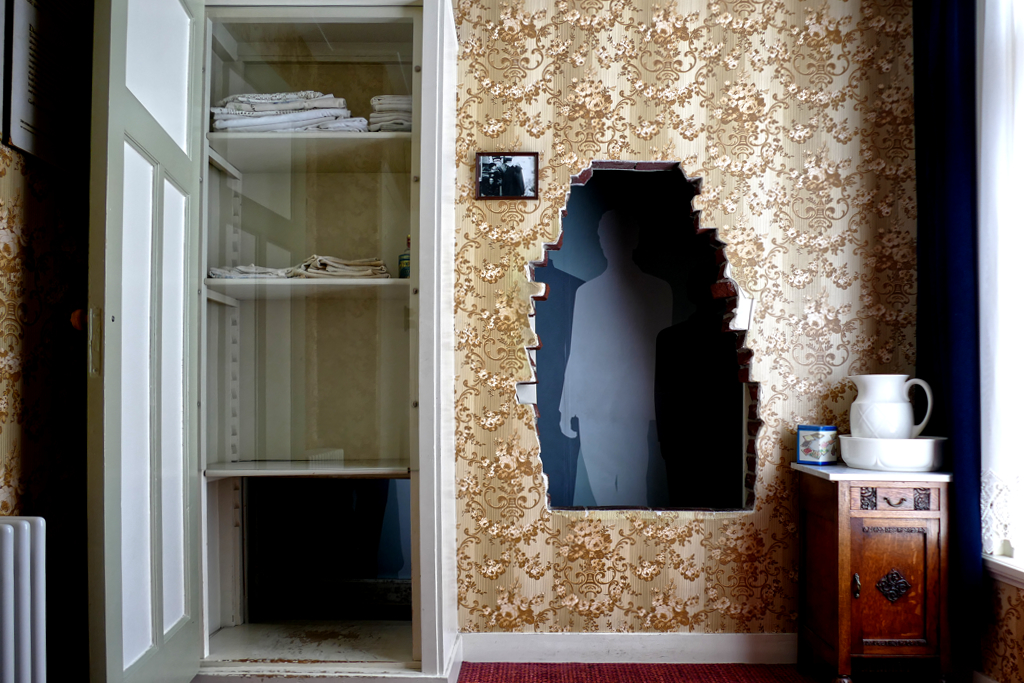
During the German occupation, the deeply religious family decided to grant Jewish citizens and members of the Dutch resistance refuge. In addition to connecting them with other helpful people, they had a tiny secret room built behind a false wall on the upper floor of the house.
Tragically, the family was arrested by the Gestapo after being betrayed in February 1944. Corrie’s father died shortly after his arrest. Corrie and her sister Betsie were deported to the Ravensbrück concentration camp. Betsie did not survive her imprisonment, but Corrie returned to the Netherlands after the war. She dedicated the rest of her life to her faith and to telling her moving story.
Plan Your Visit
Today, the Corrie ten Boom House is a museum that immerses visitors in this story in a truly powerful way. The former watch shop, the living quarters, and especially the original secret room convey a sense of the conditions under which the family risked their own lives to save others.
The visit was one of my most moving experiences in Haarlem, thanks in large part to the insightful, 90-minute guided tour. The museum can be visited free of charge from Tuesday to Saturday, 10:00 a.m. to 3:30 p.m., but exclusively on a guided tour. Tours take place hourly, alternating between Dutch and English. If you are interested, you should register on their website as early as possible.
Hannie Schaft
Hannie Schaft chose a completely different path of resistance. Born Jannetje Johanna Schaft in Haarlem in 1920, she later studied law. During the German occupation, she refused to accept Nazi regulations. Driven by her sense of justice, she joined the Dutch resistance. She helped hide Jewish citizens, procured forged identity papers, delivered secret messages, and participated in sabotage operations.
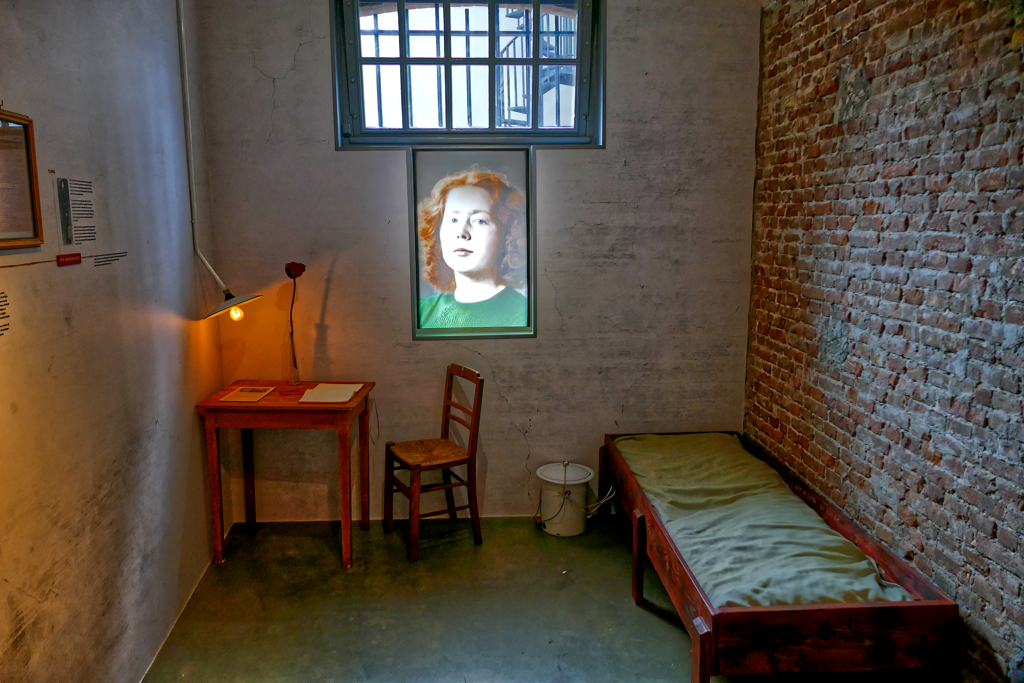
Because of her striking red hair, she was later nicknamed The Girl with the Red Hair. To remain undetected, she sometimes dyed her hair dark. But despite all her precautions, she was arrested just a few weeks before the end of the war. On April 17, 1945, only days before the liberation of large parts of the Netherlands, the Nazis executed Hannie Schaft in the dunes of Bloemendaal, west of Haarlem. She was only 24 years old.
In the former prison called De Koepel, now converted into a hotel, cinema, startups, and other businesses, one of the former cells is dedicated to the memory of Hannie Schaft. Unfortunately, all the text is in Dutch, but a QR code will take you to an English website with extensive information about this remarkable woman. Also, for more detailed information, I recommend searching for Hannie Schaft on YouTube. There are many well-made videos about her.
City of Mysteries’N’Miracles
What? A former prison that’s now used for a variety of purposes? Oh yes, and that’s not the only mystery Haarlem has to offer. The city is full of unique little facets waiting to be discovered!
De Koepel
But let’s start with De Koepel. Officially the Koepelgevangenis Haarlem, it’s one of the city’s most striking buildings. The circular structure was completed in 1901 according to plans by the judicial architect Willem Cornelis Metzelaar, who drew on designs by his father, Johan Frederik. Together, they created the three famous Dutch domed prisons in Arnhem, Breda, and Haarlem.
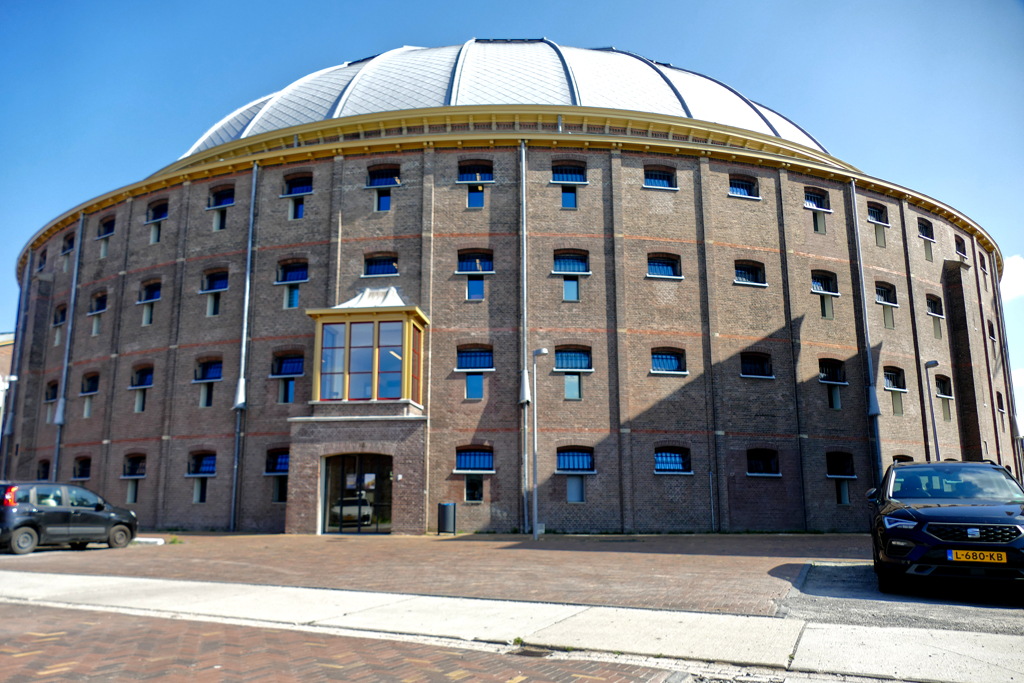
The building is based on the so-called panopticon principle. The idea behind it was to be able to monitor all prisoners from a central point. The cells are arranged in a ring along the outer wall, while the guardroom was originally located in the center.
For more than a century, De Koepel served as a prison. It was only closed in 2016 because the building no longer met the requirements of a modern correctional system. It was then used briefly as accommodation for refugees before a comprehensive renovation began.
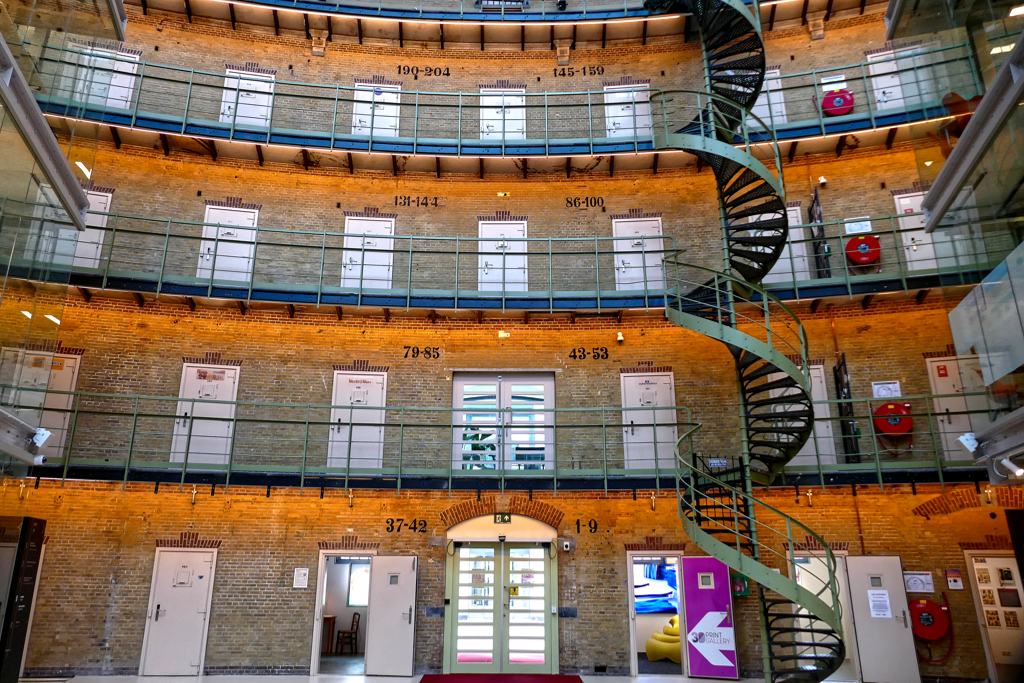
Since its reopening in 2022, the former prison has transformed into a vibrant center for education, culture, and entrepreneurship. Today, the Koepel houses university and office space, event venues, restaurants, and the underground Filmkoepel, a modern cinema. Thus, what was once an isolated place has become an open meeting point for residents and visitors of the city.
Architecturally, the Koepel is particularly impressive due to its nearly 38-meter-high dome, which floods the interior with natural light and makes the building a striking landmark, visible from afar.
My Tip
A hotel called Metzlr House* – I wonder how they came up with that name, wink wink – is part of the historic Koepelcomplex. However, the guest rooms are not inside the circular cell block itself but in the former administration building and newer additions. Nevertheless, the hotel has preserved many historic features. Original architectural elements have been retained and combined with modern design. Some rooms in the former administration building even still have bars on the windows. So if you want to claim having spent a night in a prison – be my her majesty’s guest!
Jopenkerk
After spending the night in a one-time prison, I actually quenched my thirst in a former church. Don’t we live in a quirky little world?
The Jopenkerk, as it’s known today, is one of Haarlem’s most unusual sites and rightfully deserves a spot in my listing of mysteries. Where beer is now brewed’n’served, there was originally the Jacobskerk. This Catholic church was completed in 1908 according to plans by architect Jos Cuypers. And yes, he is the son of the famous Rijksmuseum architect Pierre Cuypers. With its neo-Gothic architecture, high vaults, and stained-glass windows, it is one of the city’s most impressive sacred buildings.
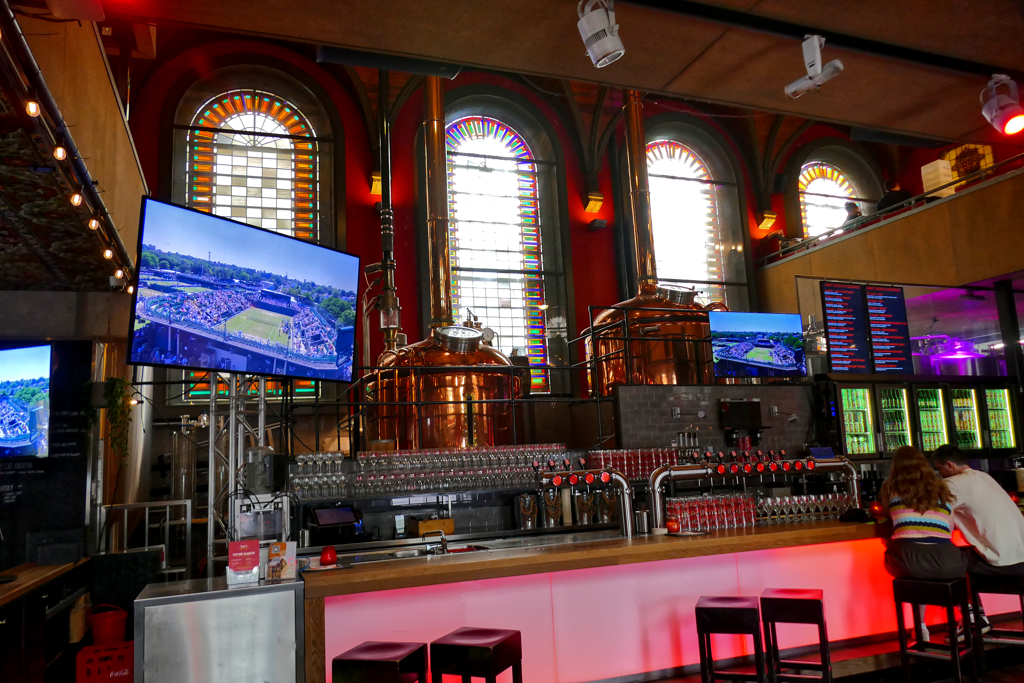
However, after the number of parishioners declined sharply during the 20th century, the church was deconsecrated in 1998 and stood empty for several years. In 2010, the building was given a somewhat different purpose: After extensive renovations, the Jopen brewery moved in. Hence, the church became a brewery with an adjacent restaurant. The dining area is in the nave, while the copper brewing kettles have been harmoniously integrated into the interior. The high vaults, columns, and stained-glass windows still give the building its unique atmosphere.
And at the end of the day, it all fits perfectly with the city’s history. After all, Haarlem was one of the most important brewing hubs in the Netherlands during the Middle Ages. Back then, beer was transported in wooden barrels called jopen. As part of the celebrations for Haarlem’s 750th city charter anniversary, the Jopen brewery rediscovered and recreated historical beer recipes from the city archives in the early 1990s, which they are serving today.
Haarlem Station
I’m one of those people who always get to the departure point obsessively early.
Three hours at the airport? For me, that’s more the rule than the exception.
An hour before my train departs on the platform? I’ll be there!
The planners of Haarlem station must have had people like me in mind when they designed the building. Where other stations have a dreary kiosk and a dingy pub, in Haarlem you’ll find a fantastic museum to pass the time, and if you need a refreshment afterward, a very chic eatery.
As a matter of fact, Haarlem station is one of the most beautiful and historically significant train stations in all of the Netherlands. Completed in 1908 according to plans by the architect Dirk A.N. Margadant, it is considered the only major Dutch train station in the Art Nouveau style. Luckily, the station has been preserved as a largely intact architectural ensemble. Particularly impressive are the monumental entrance hall with its large semicircular window, the elaborately crafted woodwork, and the magnificent Art Nouveau tiles with railway motifs and historical inscriptions.
Fun Fact
There used to be a special waiting room for travelers with mental health issues, as there were several such facilities in the Haarlem area.
StationsHuiskamer
A visit to the station restaurant is a must. Not just for the snacks and drinks, but mainly for the beautiful decor and pleasant atmosphere.

The station originally had separate waiting rooms and dining areas for the different classes of carriages. Actually, that was a typical concept of upscale railway architecture around 1900. In the heyday of the railways, it was customary to eat in the restaurant before continuing your journey. The restaurant was located directly on the platform island under the large roof. Recently, the large dining room was extensively restored. Historical elements such as the wooden beam ceiling, the herringbone parquet flooring, and the light fixtures were uncovered. Today, the space serves as a stylish combination of café, lounge, and workspace for travelers.
It is open weekdays from 6:00 a.m. to 8:00 p.m. On Saturdays, it opens at 8:00 a.m., and on Sundays at 9:00 a.m.
MUTEK – Museum voor Toegepaste Europese Kunst
Even more unusual is the fact that there’s a museum right inside the train station.
The Museum of Applied European Art, in short MUTEK, is the only art museum in the Netherlands located within an active train station, in addition, behind the platform barriers. In fact, MUTEK is housed in the former second-class waiting room, which still retains many original Art Nouveau elements from the station’s construction between 1906 and 1908. The space itself is already worth a visit. However, the combination of historic architecture and an accordingly themed museum is particularly appealing.
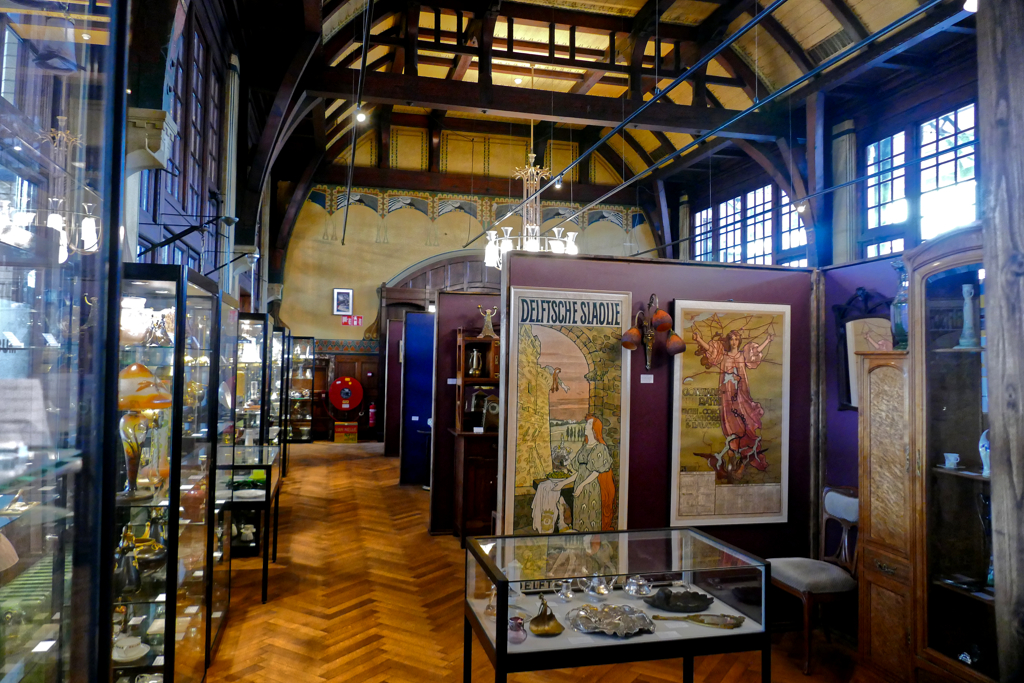
The venue is dedicated to approximately 150 years of European design history with a focus on how style and craftsmanship have evolved in everyday life. Visitors can trace the development from Art Nouveau through Art Deco to modern industrial design.
The entrances are located on platforms 3 and 6. Nonetheless, to reach the museum, you must first check in – contactless with your card or phone – at one of the station’s access gates. Eventually, you can check out right at the museum, so there are no additional travel costs if you’re not taking the train, anyway.
They are open from Wednesday to Sunday between 11 a.m. and 5 p.m., and the general admission is 12.50 €uro.
KoepelKathedraal – Haarlem’s Newest Landmark With the Largest Dome
Anyone standing before the KoepelKathedraal Basiliek Sint Bavo for the first time often rubs their eyes in disbelief. Is this really the same St. Bavo’s Church everyone talks about? Actually, no. Haarlem has two significant churches with this name – and this regularly causes confusion, obviously.

The famous Grote Kerk has stood majestically above the Grote Markt since the Middle Ages. The KoepelKathedraal, on the other hand, was only completed at the beginning of the 20th century, after the Catholic Church in the Netherlands was once again permitted to build representative places of worship following centuries of restrictions. Like Haarlem’s train station, it was built according to the plans of the architect Joseph Cuypers.
What makes the KoepelKathedraal special is its unusual style. Cuypers traveled extensively and studied historic churches in Germany, France, and, of course, Italy. His goal was not to copy a Gothic cathedral, but to create a modern Catholic cathedral that reflects the entire history of Christian architecture. Joseph Cuypers combined elements of Neo-Gothic, Neo-Romanesque, and even Byzantine influences to create a building that defies easy categorization.
The nearly 65-meter-high copper dome, in particular, lends the church a southern European-Oriental feel. This impression is achieved through various factors, including the dominant central dome, the use of polychrome materials, decorative arcades, and Oriental-inspired ornamentation and mosaics in Mediterranean hues. In fact, some motifs originated in late antique and Byzantine architecture and were used in both Christian and later in Islamic architecture.
The Sky’s the Limit
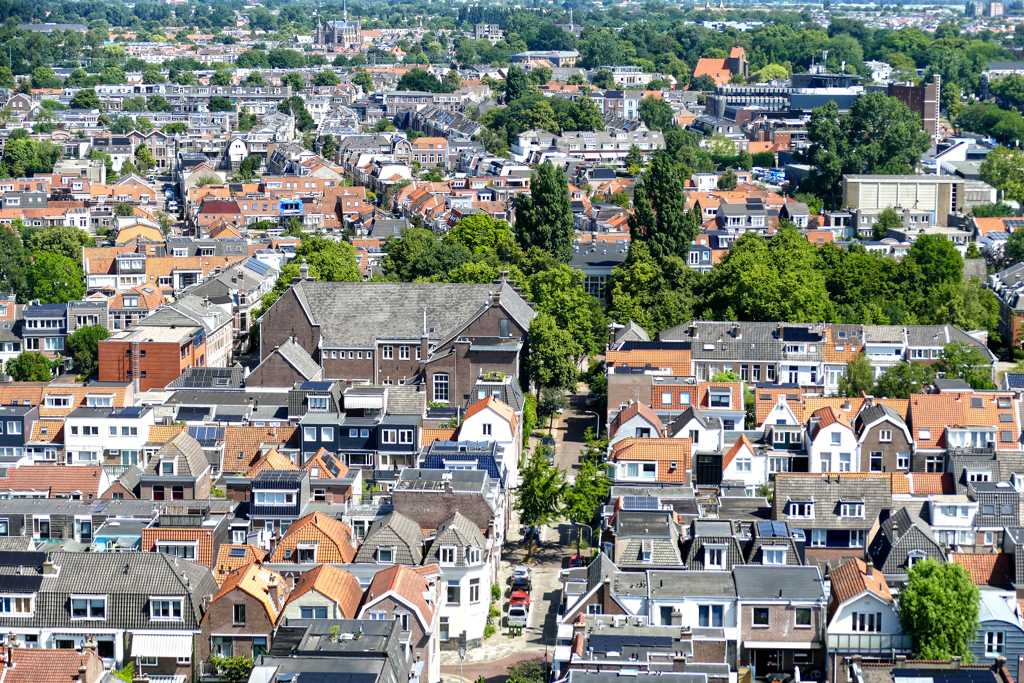
While the colorful mosaics and ornate vaults inside the church are sure to impress, don’t be deterred by the approximately 250 steps leading up to one of the towers. After you’ve climbed the extremely narrow spiral staircase, you’ll instantly forget your troubles at the breathtaking view over Haarlem—I promise! To the east you can see all the way to Amsterdam, while to the west the sea seems almost within reach. An absolute highlight – in the truest sense of the word – of any visit to Haarlem!
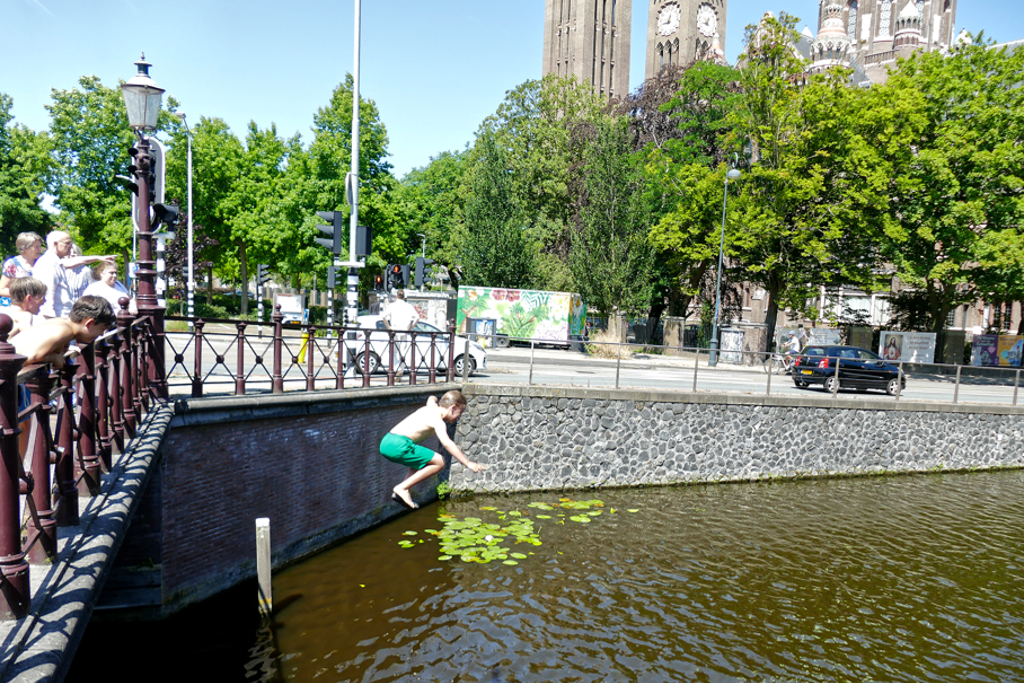
The Koepel Cathedral can be visited from Wednesday to Sunday between 1 p.m. and 5 p.m. The last tower climb starts at 4 p.m. and at 3 p.m. on Saturdays. A general ticket for the cathedral, museum, and an audio guide costs 5 €uro, if you add the tower, you pay 8.50 €uro.
Practical Information
How to Get There
Haarlem certainly has some disadvantages due to its proximity to Amsterdam. However, an advantage that should not be underestimated is its easy accessibility. Direct trains run between Amsterdam Centraal and Haarlem approximately every ten minutes during the day. The journey takes only about 15 to 20 minutes, and a single ticket starts at 5.50 €uro.
And in terms of trains, Amsterdam Centraal is a gateway to basically the whole of Europe. Obviously, mainly the neighboring countries like Germany and Belgium. But even from Paris, you get to Amsterdam in only a bit over three hours. However, there are even train connections to London by the Eurostar. You can check connections and buy tickets at the online shop of Nederlandse Spoorwegen, the Dutch rail company.
My Tip
Although you can buy paper tickets from machines at the stations, it’s recommended to buy your trip online or pay contactless at the turnstile. If you buy a paper ticket, they charge an extra 1.60 €uros.
If you are flying in, you don’t necessarily have to go to the city center of Amsterdam before making it to Haarlem. Instead, you can catch bus #300, which takes you straight to the city in about 40 minutes.
If you’ve inherited a goldmine, you can obviously also grab a cab, which will set you back around 50 Euros.
How to Get Around
Cycling
It would have been a big blunder if I had answered this question by any other means of transportation than the legendary fiets, which translates to bicycle, obviously.
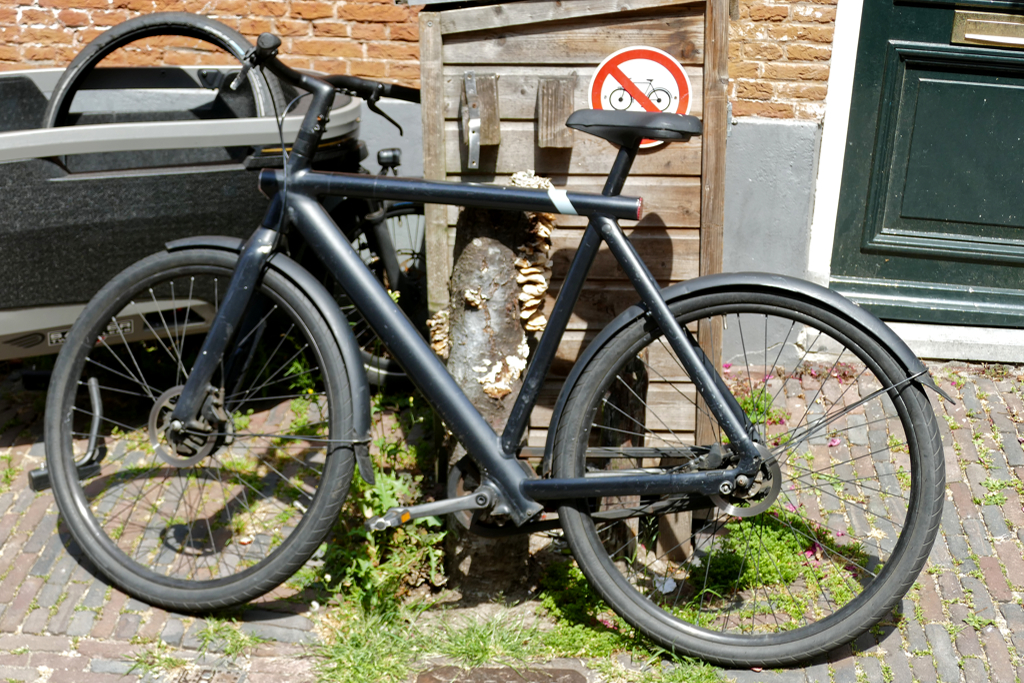
Nevertheless, I need to point out that riding a bike is not considered a kid’s game but a valid means of transportation. Therefore, locals get extremely annoyed by tourists meandering on the designated bike lanes, which they express by extensive ringing and loud swearing. Hence, do yourself a favor by walking only on the sidewalks for pedestrians, and don’t watch out only for cars when crossing the streets since those Dutch cyclists are hellishly fast.
I assume you won’t bring your own bike. Obviously, this is not a problem since there are many places where you can rent your personal fiets.
Walking
I’d argue that the best way to explore Haarlem’s center is by walking. This being said, ladies, make sure to wear flat, comfortable shoes. Many of the alluring alleys are paved with cobblestones. Hence, there go your heels. Good sneakers or even light hiking shoes will make your exploration of Haarlem safe and enjoyable.
As for public transport, there are buses, but during my three-day stay, I never needed to take one.
Where to Stay
Despite the fact that Haarlem is far less overrun by tourists, there is a good choice of accommodation. And although they’re more affordable than accommodations in Amsterdam, don’t think they’re ridiculously cheap. However, you get a good standard for your money, and that’s worth something, too. During my stay in Haarlem, I spent the nights at the Metzlr House* that I’ve already introduced above. I’d argue it’s the most unique place to stay during your city trip.
Nevertheless, on this map, you can choose suitable lodging options in Haarlem according to your personal preferences and budget, obviously*:
What to Eat
You’re in luck since I was recently invited by Amsterdam&Partners on a food trip through the Amsterdam Area. This way, I was able to put together an entire post on food and culinary culture in the region: Where Holland Tastes Best: Discovering the Flavors of the Amsterdam Area, so you might want to check it out.
There, I’ve introduced, for instance, the unique restaurant DeDakkas, located on the roof of a parking garage.

It’s one of Haarlem’s most extraordinary culinary destinations, where gastronomy, sustainability, and urban life come together in a particularly harmonious way.


Besides such fine, healthy cuisine, you’ll of course find delicious, hearty, and guaranteed vitamin-free snacks like frikandel and bitterballen everywhere in Haarlem, accompanied by huge piles of crispy fries. My favorite deep fryer in Haarlem stands in the snack bar aptly named Frietkamer. It is located on Zijlstraat behind the town hall. Obviously, I’ve marked it on the map at the end of this post.
My Tip
Once upon a time, the Dutch set out to conquer distant lands. This inglorious legacy has resulted in a reciprocal influx of people from former colonies as well as the nations that are still under Dutch hegemony, such as the ABC Islands and Sint Maarten. Graciously, these people bring their delicious, flavourful cuisine with them.
My favorite eatery in Haarlem is Toko Nina. Toko means shop in Bahasa, the language spoken in Indonesia and Malaysia, and Nina’s business is in fact primarily a store. Nevertheless, she also has a counter where you can create your own perfect lunch from a fantastic selection of Indonesian snacks as well as meat and vegetable dishes. Complete meals start at just around 10 €uro which is an excellent price. And with the lunch money you save, you can then perhaps buy a pretty ceramic bowl or another stylish Asian souvenir at Nina’s Toko.
Cash, Cards, and Deals
Since 2001, 21 European countries have been paying with €uros, and the Netherlands is, obviously, one of them. The exchange rate is 1 US$ = 0,85 EUR as of August 2026, but you can check the conversion on this page.
Also, you can pay with credit cards basically everywhere.
One tip if you are visiting Haarlem on a day trip from Amsterdam: The Iamsterdam City Card* also includes several attractions and museums outside the city in the Amsterdam region. For example, you get free entry to Haarlem’s famous Frans Hals Museum. You should therefore factor that in if you are considering buying the Iamsterdam City Card*.
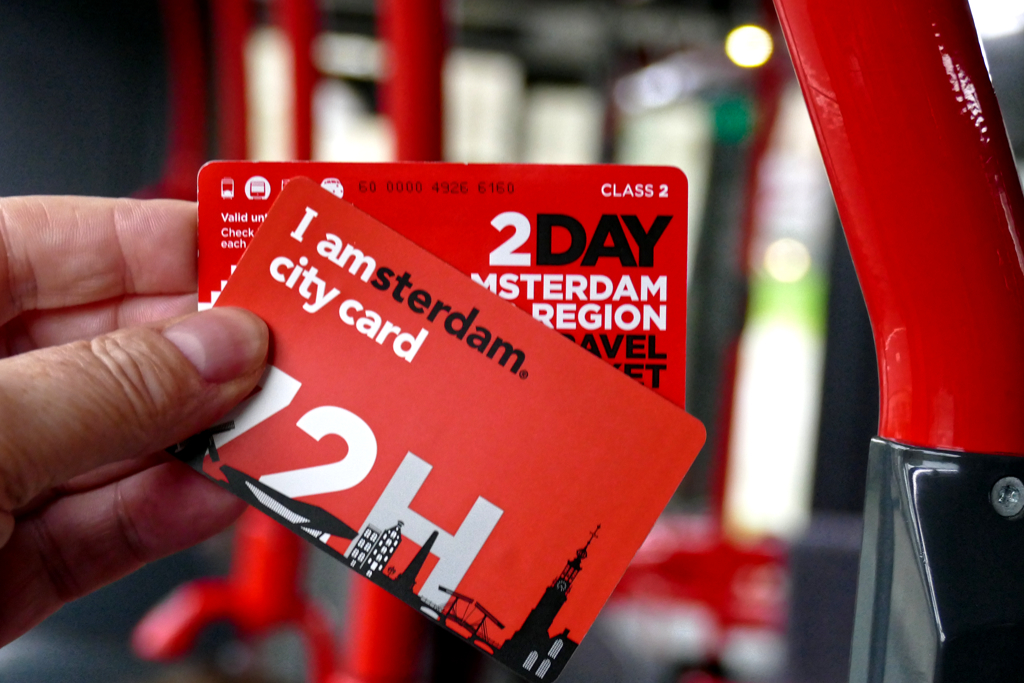
However, the Iamsterdam City Card* does not cover travel outside the city limits. You’ll need a separate ticket for trains and buses, or you can opt for the Amsterdam & Region Travel Ticket. You will find all the information about the Iamsterdam City Card* — and of course a comprehensive travel guide to the city — in my post Four Days in AMSTERDAM – Unique Things To See on a Long Weekend.
Visiting Organized
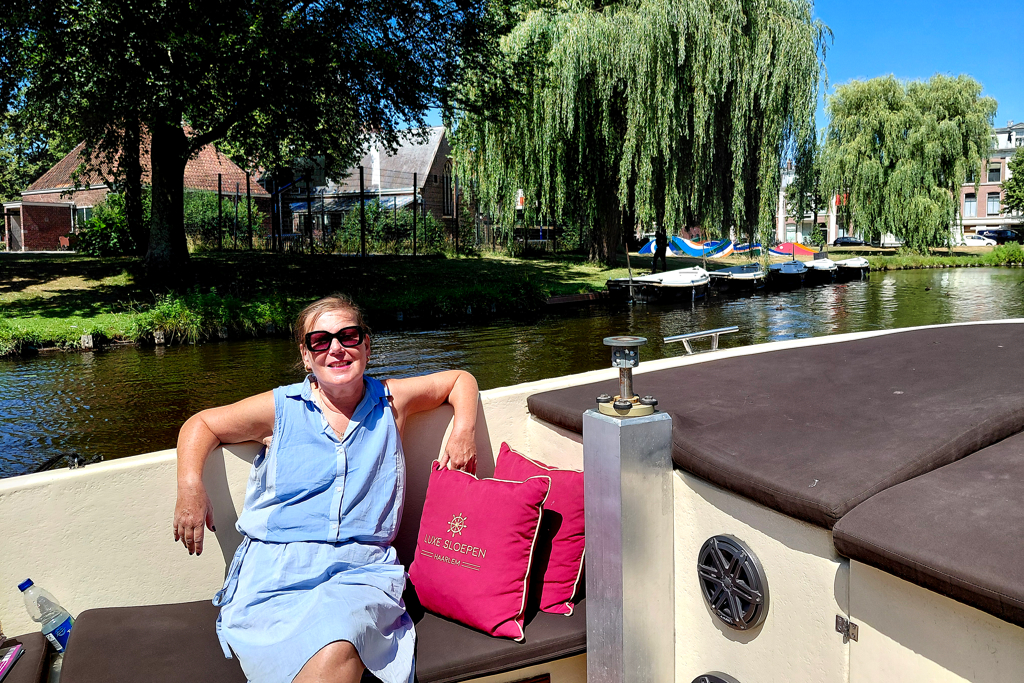
Although I’m an avid solo-travelling woman, I sometimes like to join organized tours. This way, I get extended info about a place, and it’s fun to visit landmarks in the company of like-minded fellow travellers.
(Photo: Cécilia Ouali)
Also, since Haarlem should also be explored from the water, you might want to check out some of the best tours right here*:
Connection and Communication
Since June 2017, no roaming charges apply within the EU with a European mobile phone contract. This applies in all 27 countries of the European Union as well as in Great Britain, Iceland, Liechtenstein, and Norway and to all contracts.
In case European roaming is not available, you can connect to the internet without any issue at basically every museum, eatery, or café, and, of course, hotel.
If you insist on being online 24/7, you can get a SIM card, obviously. KPN has the widest coverage.
In the Netherlands, they use plug types C and F. Their voltage is 230 V and the frequency 50 Hz. Whereby, as nowadays, all these chargers have integrated adapters, in general, the voltage and frequency don’t really matter.
By the way, you’ll find this information and many more comprehensive travel tips in my post World’s Most Complete Travel Information – an indispensable globetrotter classic.
Language
In the Netherlands, most people speak decent English, to say the least. Many Dutch also speak at least one more foreign language such as German, French, or Spanish. However, it is always a friendly gesture to be able to greet and say thanks in the local language. As I thanked with a humble Dankjewel, pronounced dank-ye-vell, people were beaming, and this appreciation was coming from people who speak a handful of foreign languages!
Therefore, you might want to learn some basic Dutch vocabulary on babbel.
Map
This map should help you find all the wonderful places I’m introducing in this post. This way, you can plan your itinerary accordingly. Clicking on the slider symbol at the top left or the full-screen icon at the top right will display the whole map, including the legend.
Pinnable Pictures
If you choose to pin this post for later, please use one of these pictures:
Did You Enjoy This Post? Then You Might Also Like These:
Carnival 2025: Floats’N’Festivities on ARUBA, BONAIRE, and CURACAO

ARUBA: The Powerful Murals of San Nicolas

Four Days in AMSTERDAM – Unique Things To See on a Long Weekend
IF WALLS COULD SPEAK: The Best Street Art Project in Amsterdam

One Week in BONAIRE: The Best Activities Beyond Diving

A Self-Organized Day Trip Around Saint Martin by Public Bus
KINDERDIJK – a Day Trip into Authentic Dutch Heritage

The Best Spots in HAARLEM You Should Not Miss
Disclaimer: This post is partly inspired by a press trip to which I was invited by amsterdam & partners International Press Office. Nevertheless, the description of those activities and all opinions on their services are mine and were in no way influenced by my cooperation partners.
* This is an affiliate link. Hence, if you book through this page, you not only get the best deal. I also get a small commission that helps me run this blog. Thank you so much for supporting me!