The number of amazing murals in Rotterdam is so overwhelming that it was simply impossible to squeeze it all into one single post. Therefore, after having guided you through the best street art that you’ll find in the northern part of the city in my post Best Street Art in ROTTERDAM, Part 1: North of the Nieuwe Maas, here comes what Rotterdam has to offer in the calmer, more residential neighborhoods south of the Nieuwe Maas River.

Around Rijnhaven
Before heading into the housing projects outside the city center, which are teeming with street art, here are some outstanding works in the area around Rijnhaven, Rotterdam’s port area, which has undergone an incredible urban renaissance.
Judith de Leeuw aka JDL
Judith de Leeuw aka JDL from Amsterdam is one of the most prominent figures in contemporary urban art. She is famed for her monumental, photorealistic murals that adorn building facades worldwide. Her work focuses on expressive portraits and socially relevant topics.
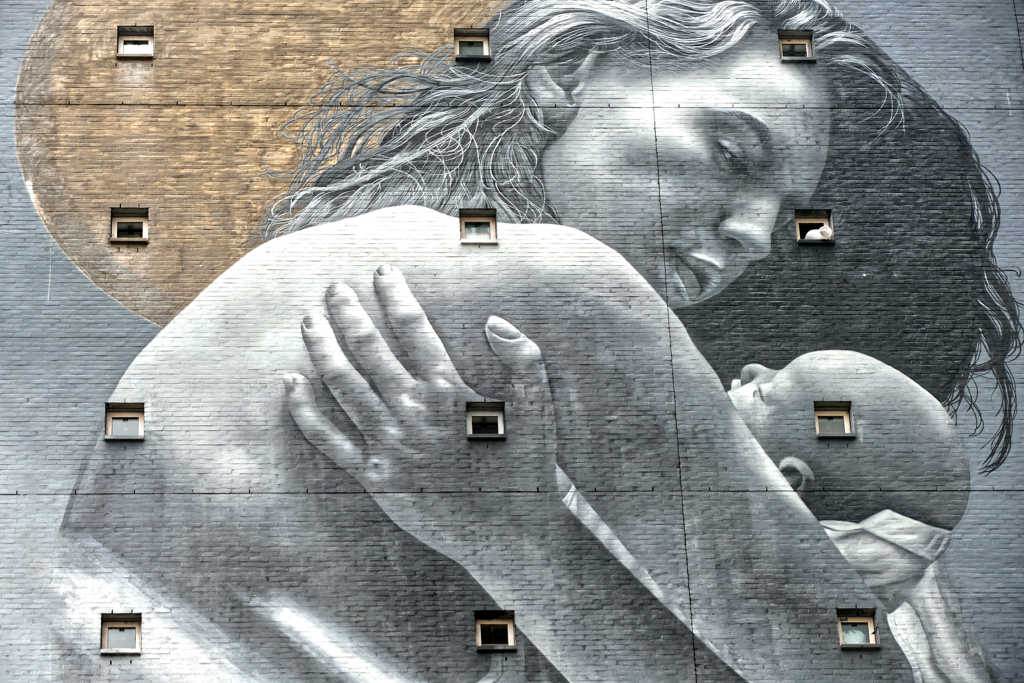
Her motifs are typically rendered in black and white, often complemented by a few splashes of color. Shaped by her own difficult childhood experiences, JDL sees street art as a way to give a voice to those who are often overlooked. Many of her murals are created in close collaboration with the local community and tell stories from the lives of the people there.
You’ll find more of JDL’s works in my post IF WALLS COULD SPEAK: The Best Street Art Project in Amsterdam.
JanIsDeMan
Jan Heinsbroek, also known as JanIsDeMan, is an internationally renowned Dutch muralist and graffiti artist from Utrecht.
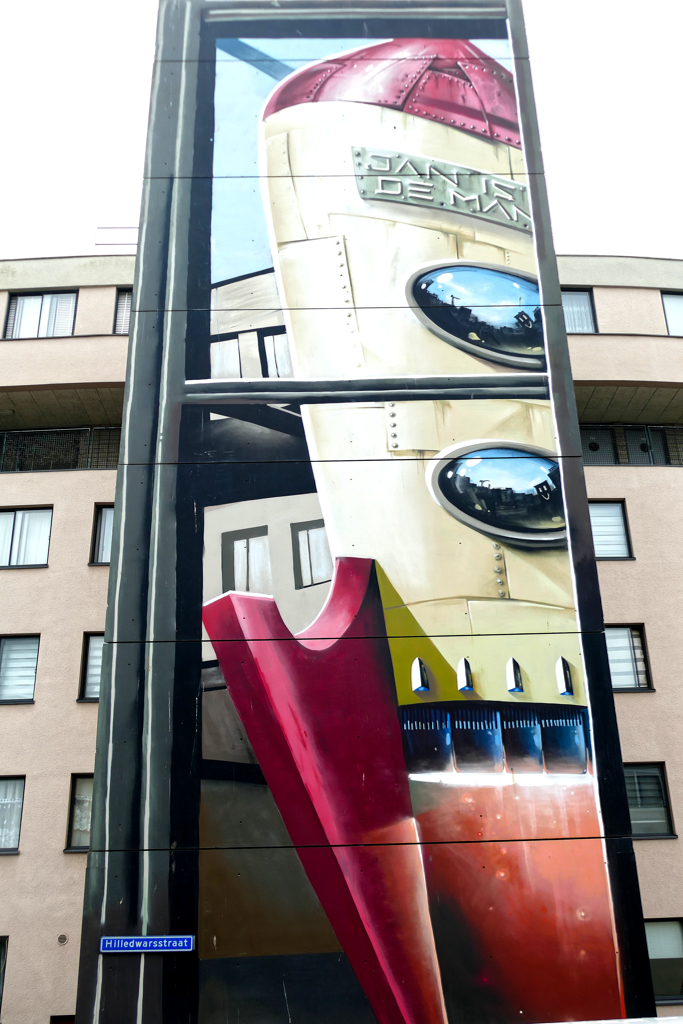
His artistic career began in 1997 with classic graffiti pieces, which evolved over the years into large-scale, professional murals in public spaces. Today, he runs the art and tattoo studio Blackbook Tattoos in his hometown of Utrecht together with the artist Deef Feed.
A vibrant combination of realism, surrealism, and optical illusions characterizes his distinctive style.
JanIsDeMan works closely with specific sites, utilizing existing architectural features such as windows, corners, and projections to harmoniously integrate them into his three-dimensional artworks.
He gained worldwide recognition for his gigantic bookshelf mural on an apartment building in Utrecht, for which he painted the residents’ favorite books in giant format onto the facade. Equally iconic are his humorous building facades with lively googly eyes, in which he gives windows and doors a face.
I’ve also introduced JanIsDeMan in my post Best Street Art in BOULOGNE sur MER – Part 1: North of Rue Faidherbe.
Tymon de Laat
Tymon de Laat is a Dutch street artist whose large-scale murals can now be found on several continents. As a matter of fact, I saw his portraits for the first time on the island of Bonaire.
After studying at the Willem de Kooning Academy, he traveled extensively on a shoestring budget, financing his journeys in part by creating murals. These encounters with people from diverse cultures continue to shape his art to this date.
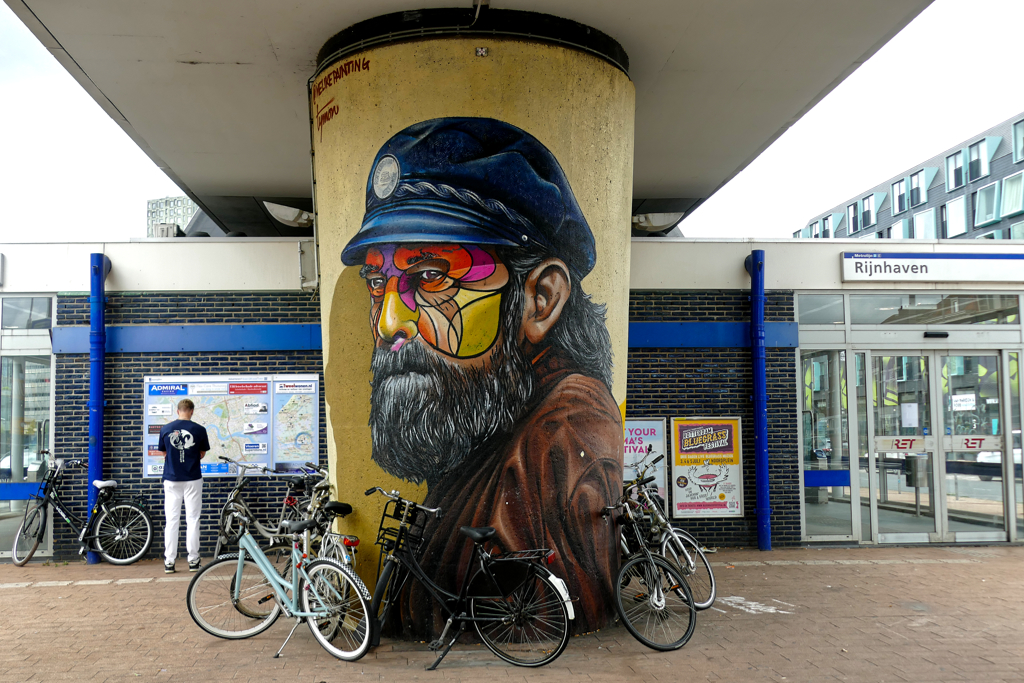
De Laat’s work is characterized by expressive portraits that combine realism with vibrant colors and graphic elements. Tymon de Laat gained international recognition with his mural Leilana on Bonaire, as it was chosen the most popular mural of the month in 2021 by the street art platform Street Art Cities.
His works are also among the most famous murals in his hometown of Rotterdam. Regardless of where they were created, they all share the same beautiful message: openness to other cultures and the conviction that personal encounters can connect people.
I have already featured works by Tymon de Laat in my post BONAIRE Totally Unexpected: Street Food And Urban Art Tour, and you’ll also find more of his murals in the post Best Street Art in ROTTERDAM, Part 1: North of the Nieuwe Maas.
Smug One
Sam Bates, aka Smug One, is a globally acclaimed contemporary Australian muralist and graffiti artist known for his monumental, photorealistic murals. Born in a small town near Sydney, his artistic journey began after high school in the classic, rebellious graffiti scene, influenced by skateboard culture and hip-hop. From initially spraying walls and street signs, he developed a deep passion for large-scale works. Today, he lives and works in Glasgow, Scotland.
His distinctive style is hyperrealistic. He possesses the rare ability to project highly complex, lifelike portraits and figures onto towering facades entirely freehand, using only spray paint.
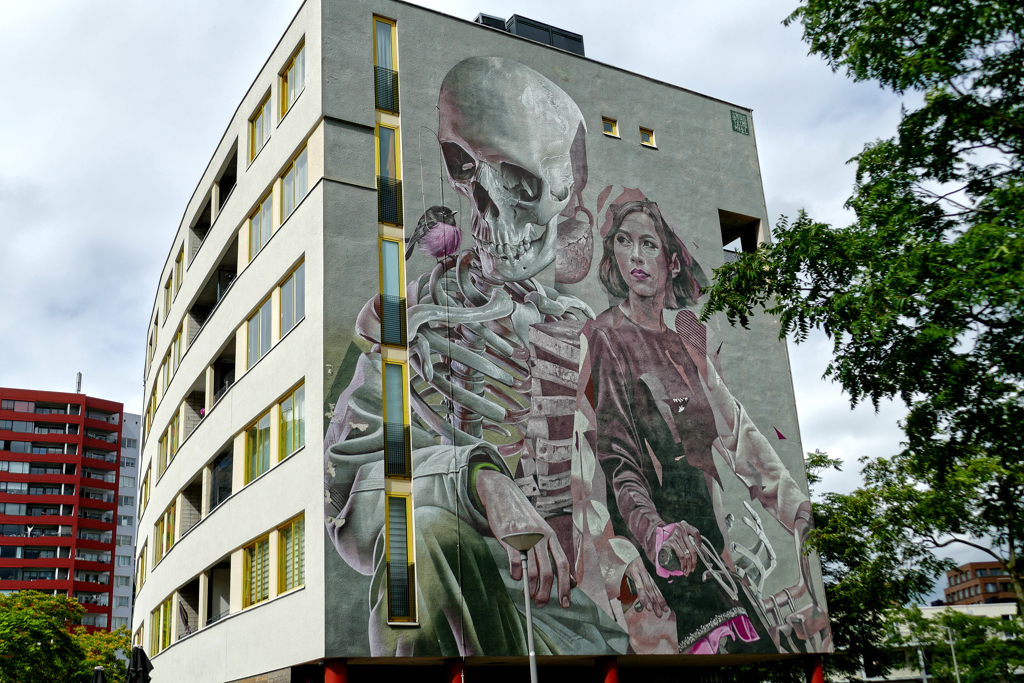
His works transform entire cityscapes, creating an immediate connection to the neighborhood and elevating street art to the level of classical fine art.
I have also introduced Smug One in my posts IF WALLS COULD SPEAK: The Best Street Art Project in Amsterdam as well as Best Street Art in BOULOGNE sur MER – Part 1: North of Rue Faidherbe.
TelmoMiel
TelmoMiel is the artistic duo of Dutch muralists Telmo Pieper and Miel Krutzmann. The two met while studying at the Willem de Kooning Academy in Rotterdam and have been working together since 2012. With their large-scale murals, they have made a name for themselves far beyond the Netherlands and are now among the most renowned figures in contemporary street art.
Characteristic of their work is the combination of photorealistic painting with surreal and dreamlike elements. Objects often appear to merge into one another or dissolve, creating fascinating optical illusions. This way, their works combine technical perfection with great imagination. They impressively show how street art can blur the boundaries between reality and imagination.
TelmoMiel’s murals can be found on several continents, and the duo regularly participates in international urban art festivals. Despite their global success, the two artists feel a strong connection to their hometown.
I’ve already introduced TelmoMiel in my posts Best Street Art in VILNIUS, The Best Spots in HAARLEM You Should Not Miss, Best Street Art in ROTTERDAM, Part 1: North of the Nieuwe Maas, and Best Street Art in GHENT.
Ricardo van Zwol
You’d have to walk through Rotterdam blindfolded not to encounter works by Ricardo van Zwol at every turn! Van Zwol is a local street artist. He became known for his large-scale, photorealistic murals, in which he combines portraits with graphic elements, vibrant colors, and symbolic details. His works exist in the space between classical portraiture and contemporary urban art.
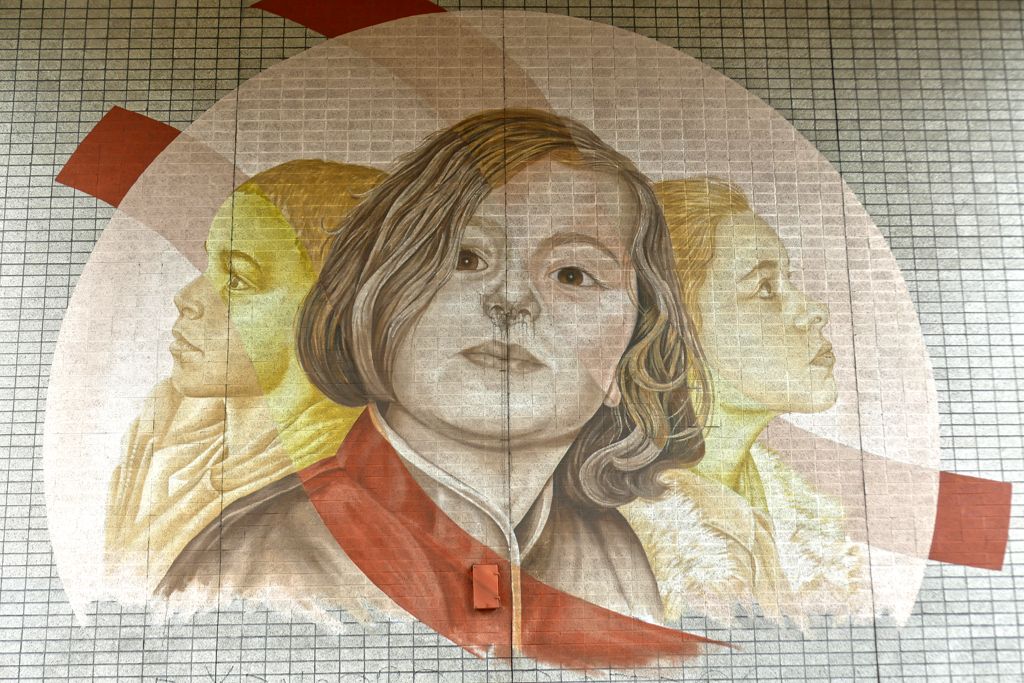
After training as a graphic designer, Van Zwol initially worked as an illustrator and designer before dedicating himself entirely to mural painting. Today, he creates murals in public spaces as well as commissioned works for companies, cultural institutions, and housing associations. He has created numerous projects in housing developments that have significantly shaped the cityscape.
His works often focus on people and their stories. They are created in close relation to the specific location and reflect its history or identity. Depending on the commission, he has portrayed historical figures as well as local residents or individuals who hold special significance for a particular project. Ricardo van Zwol understands street art not only as art in public spaces, but also as a means of identity formation. His murals invite viewers to take a closer look – both at the artworks themselves and at the places where they were created.
In my post Best Street Art in ROTTERDAM, Part 1: North of the Nieuwe Maas, you will find, among many other artists, another work by Ricardo van Zwol.
From the gentrified, chic area around the Rijnhaven basin, I’m now taking you to three completely untouristy neighborhoods. Although those typical post-war housing developments originate from different eras of Rotterdam’s urban expansion, they share the common feature of outstanding murals.
Around Pendrecht
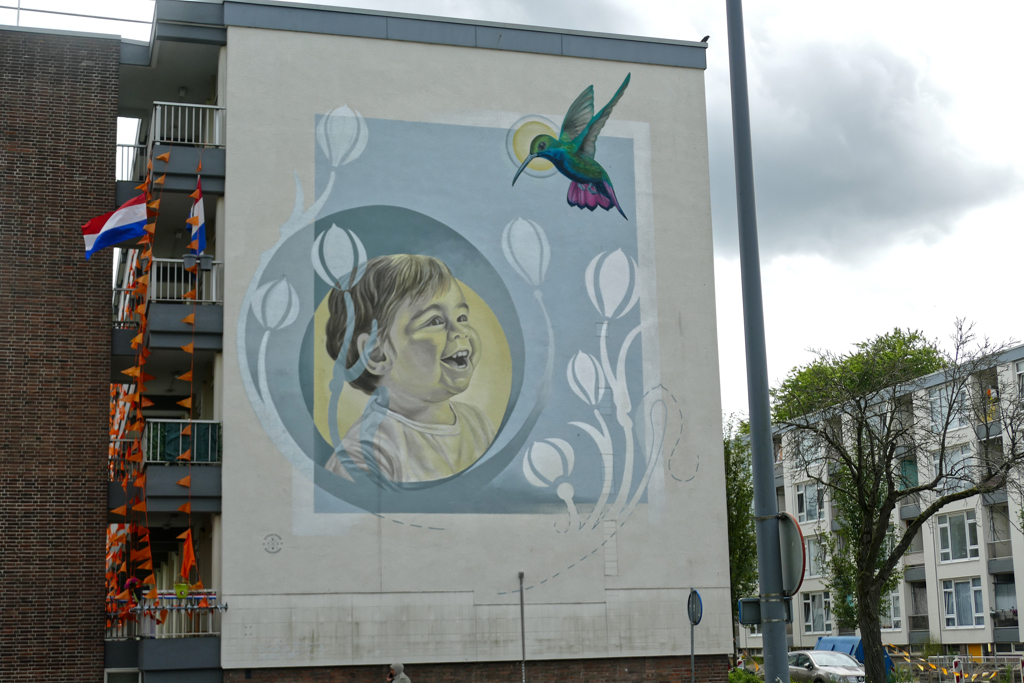
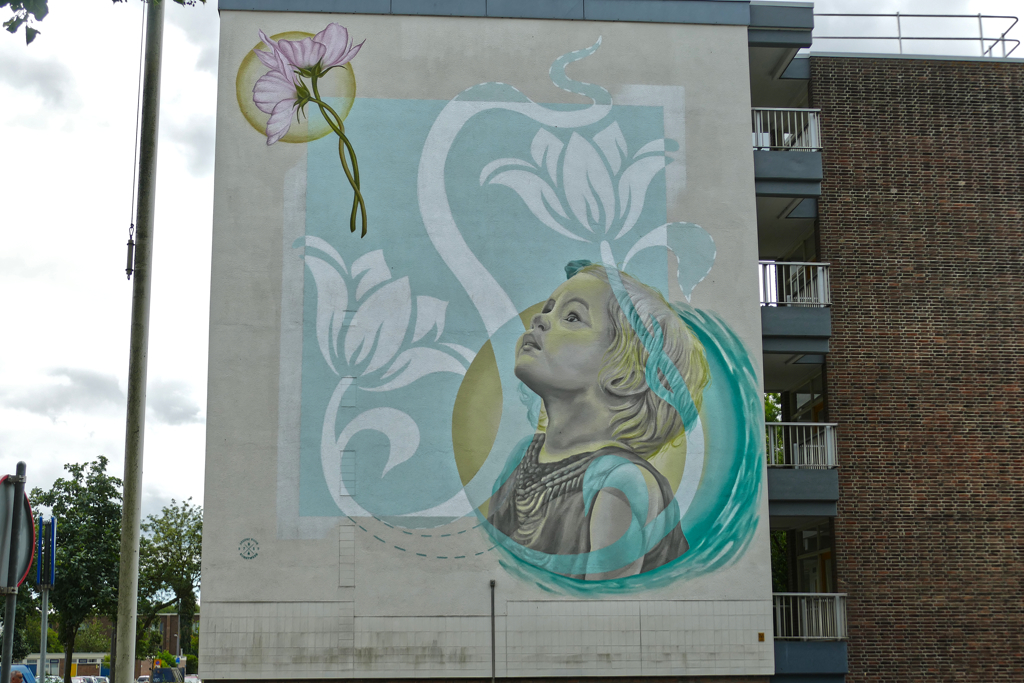
Pendrecht was developed in the 1950s, which makes it the oldest of the three southern districts I am presenting in this post. When the housing association Vestia planned a comprehensive renovation of the Slinge 1 and Slinge 2 apartment blocks in 2020, they commissioned Ricardo van Zwol to beautify the drab concrete facades. The aim was to bring more color to the neighborhood and reflect the identity of its residents.
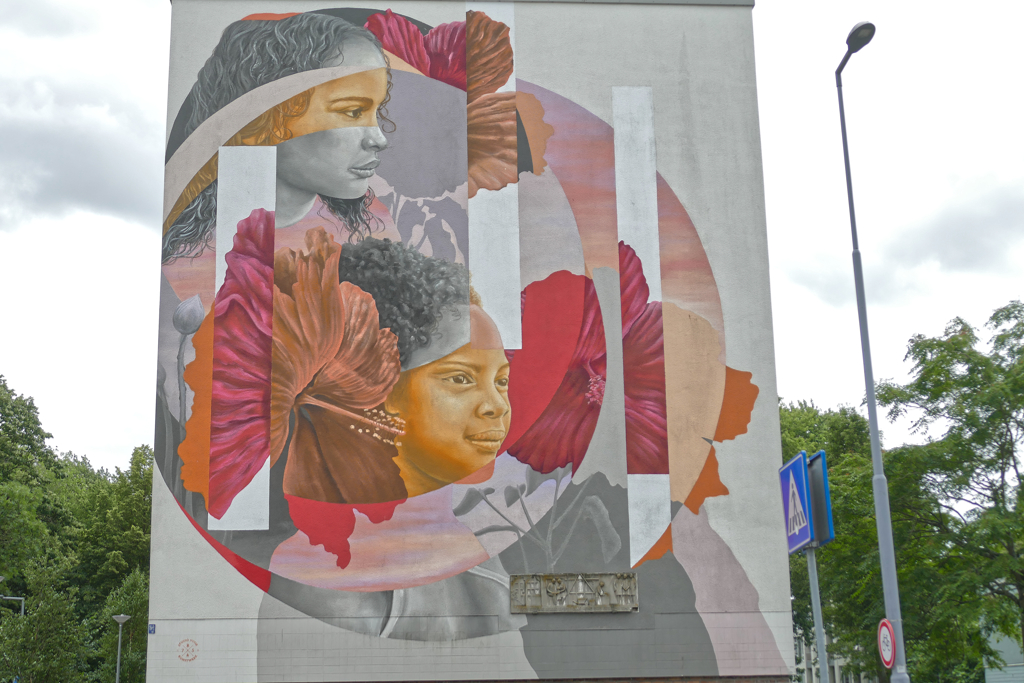
Van Zwol’s impressive, 14-meter-high murals are now a tribute to the local community. Instead of anonymous models, the artist portrayed children from the neighborhood.
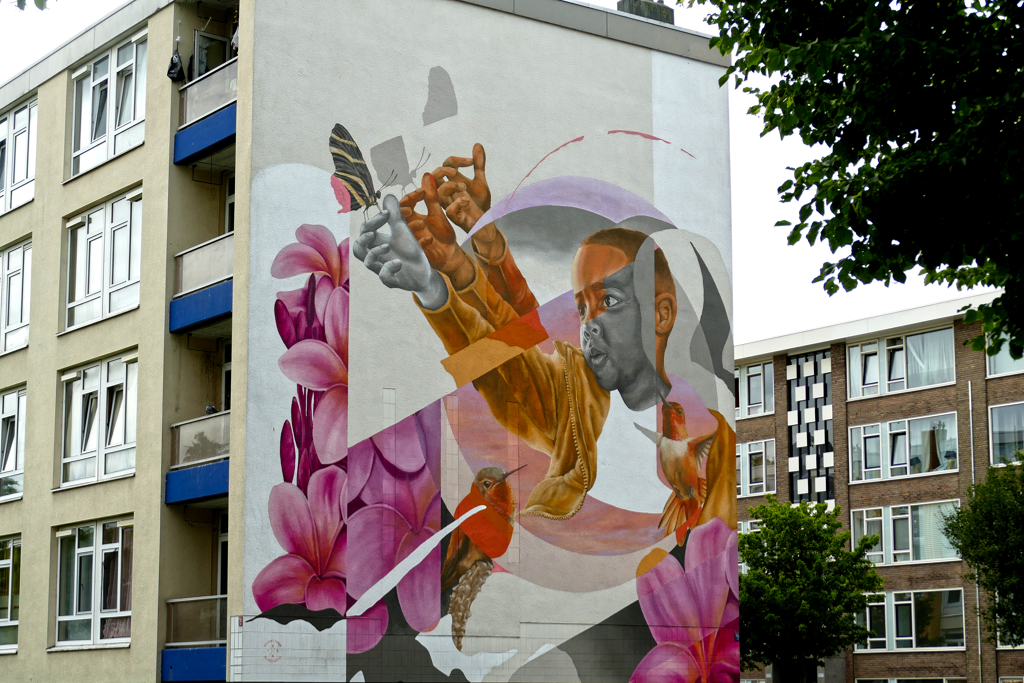
These children’s portraits are highly symbolic for Pendrecht, a district often stigmatized as a social hotspot. They highlight the future of the neighborhood and foster a strong sense of community, as residents can directly identify with the art on their own buildings.
Gomad
In a neighborhood further east of Slinge Street, Marcus Debie aka Gomad created a portrait of filmmaker Reggery Gravenbeek. Gomad is a renowned Dutch street artist and one of the pioneers of the graffiti movement in the southern Netherlands. Growing up in Sittard, he was significantly influenced by the hip-hop culture in the early 1980s. He studied art and worked as a graphic designer. Then, after 25 years, he took the plunge into full-time self-employment. Ever since, he has worked as an internationally successful urban artist.
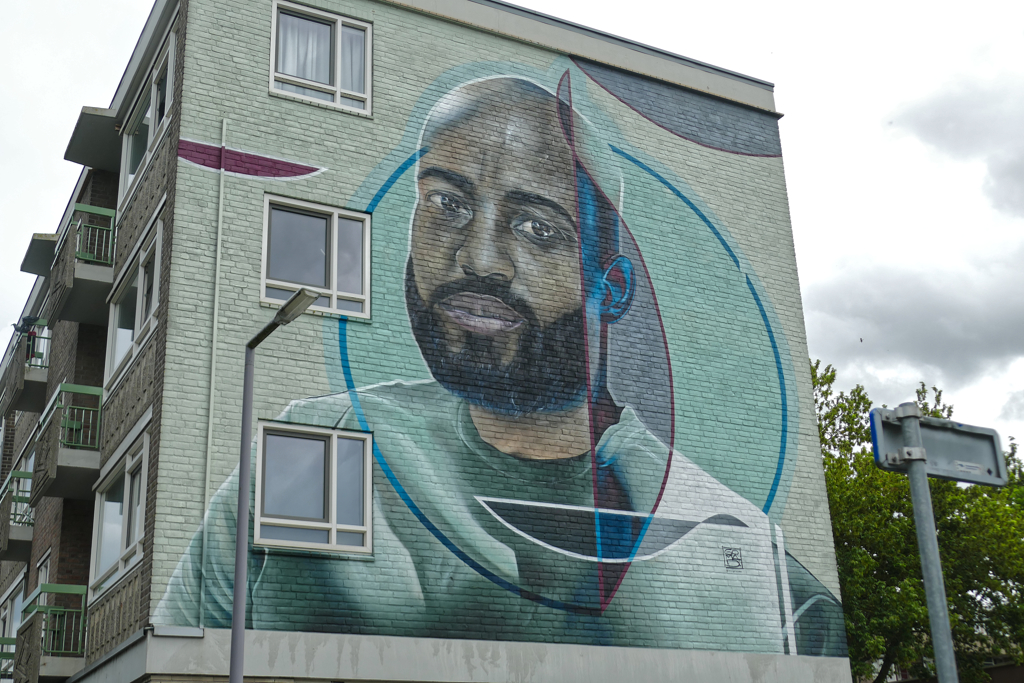
True story: Gravenbeek was surprised with the mural when he returned from vacation!
The most extraordinary feature of his work is his colorblindness. Gomad confuses various shades of blue, violet, and other colors. Yet, he skillfully compensates for this by relying on the color codes of spray cans or with the help of his wife. His style combines photorealistic elements with surreal compositions as well as cubist and organic forms. You can spot his murals in Belgium, Germany, France, the UK, and Italy.
I’ve also introduced Gomad in my post Best Street Art in ANTWERP – From Merksem to the City Center.
Around Lombardijen
Lombardijen was built as an independent district in the early 1960s. It belongs to the so-called southern garden cities, planned after the Second World War to address the acute housing shortage.
The planners placed great emphasis on plenty of green spaces and parks, a separation of residential and traffic areas, a good mix of single-family homes and apartment blocks,
and its own shopping and service center.
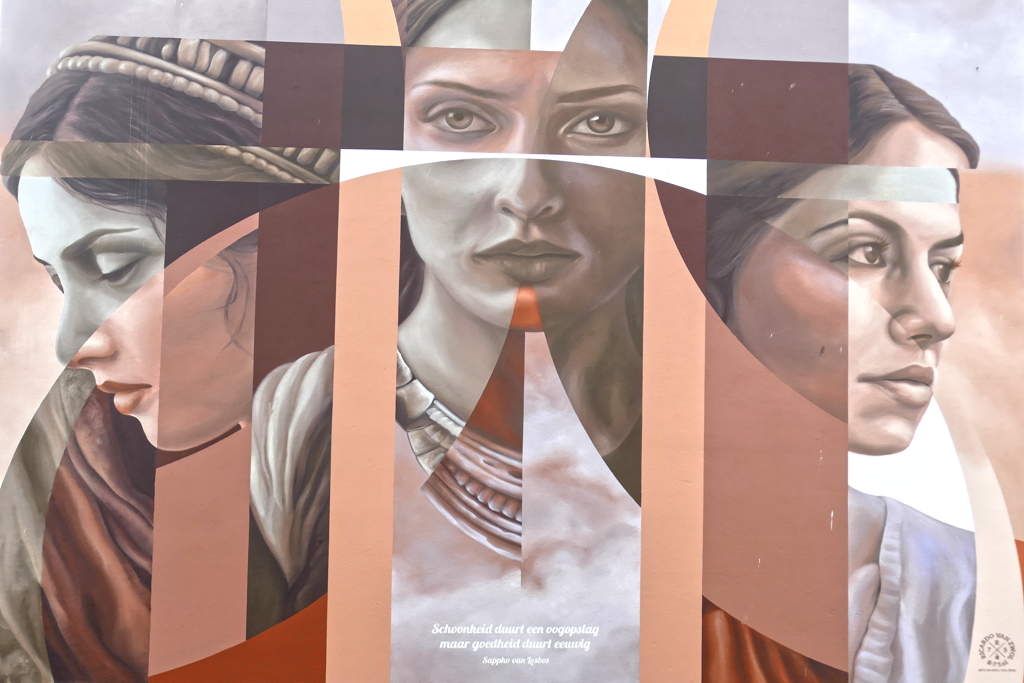
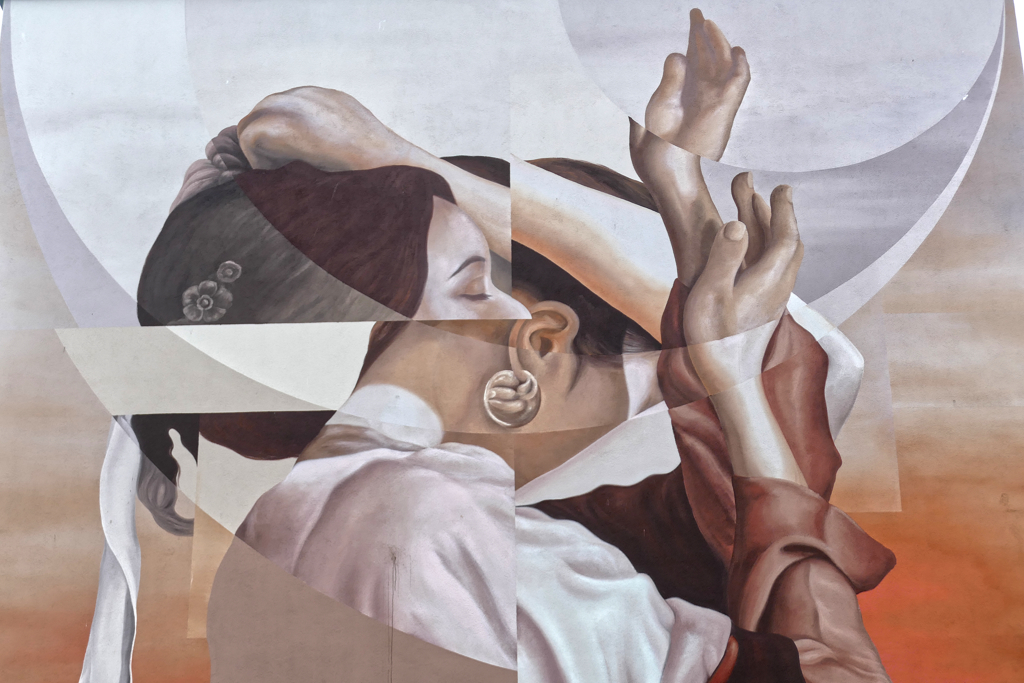
However, the architecture is typical of Dutch urban planning of the 1960s: functional, spacious, and characterized by expansive green areas.
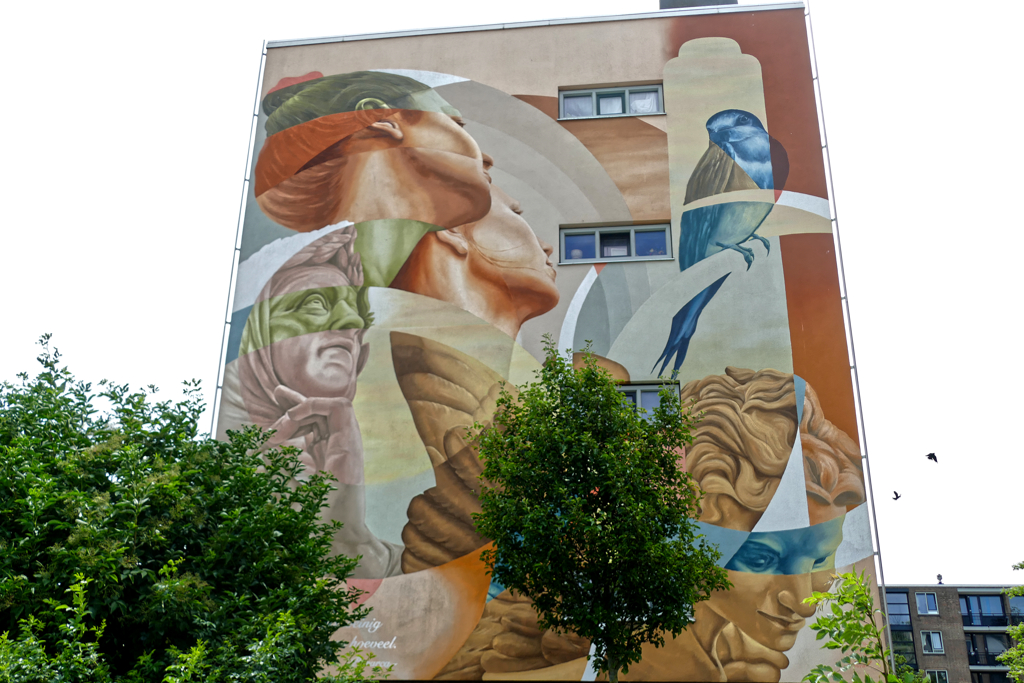
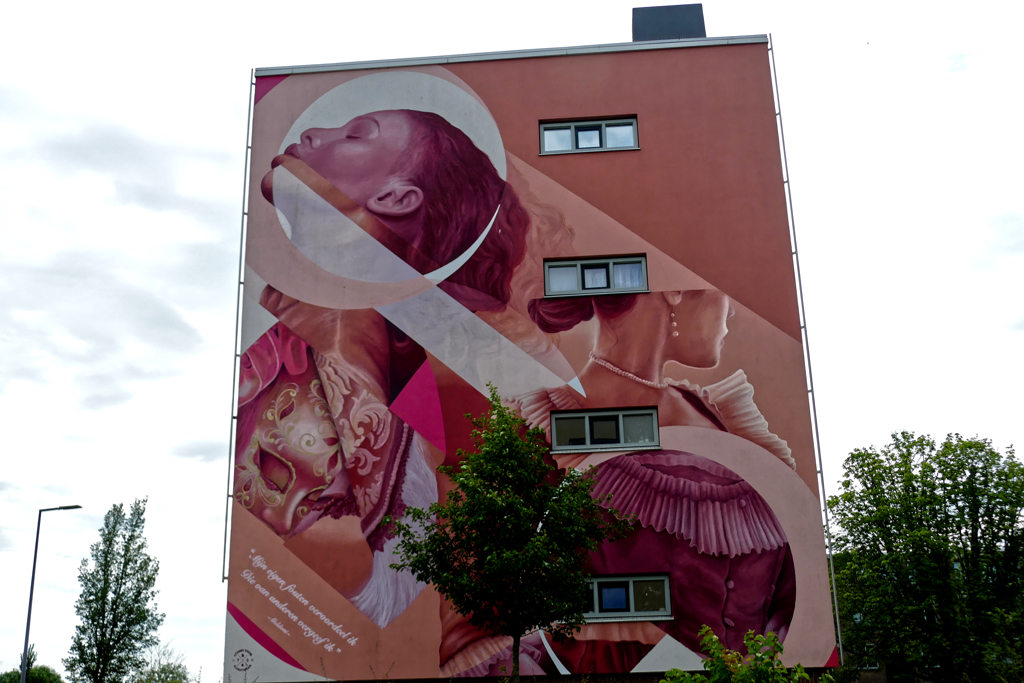
The city planners gave the streets a humanistic theme. The district was divided into quarters, whose streets were systematically named after historical thinkers, philosophers, and writers.
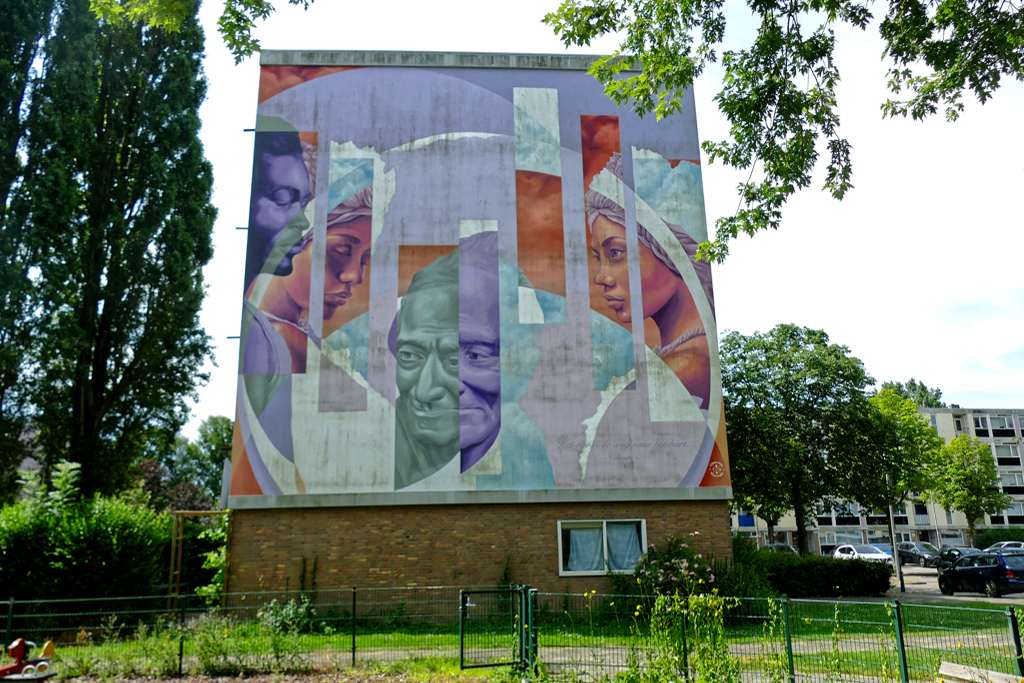
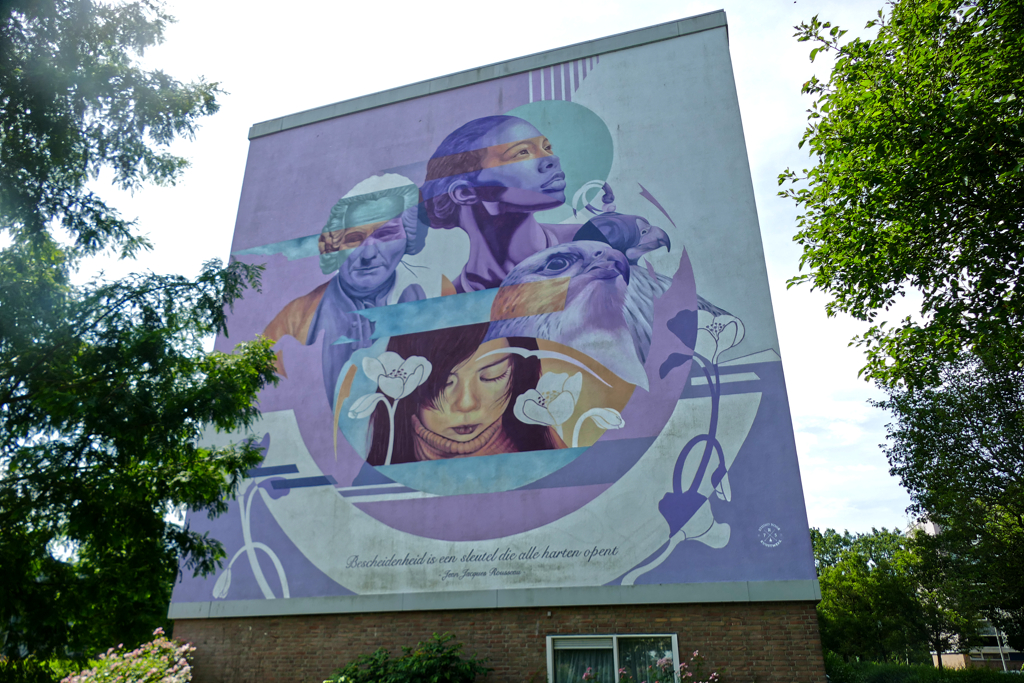
Notable Neighbors
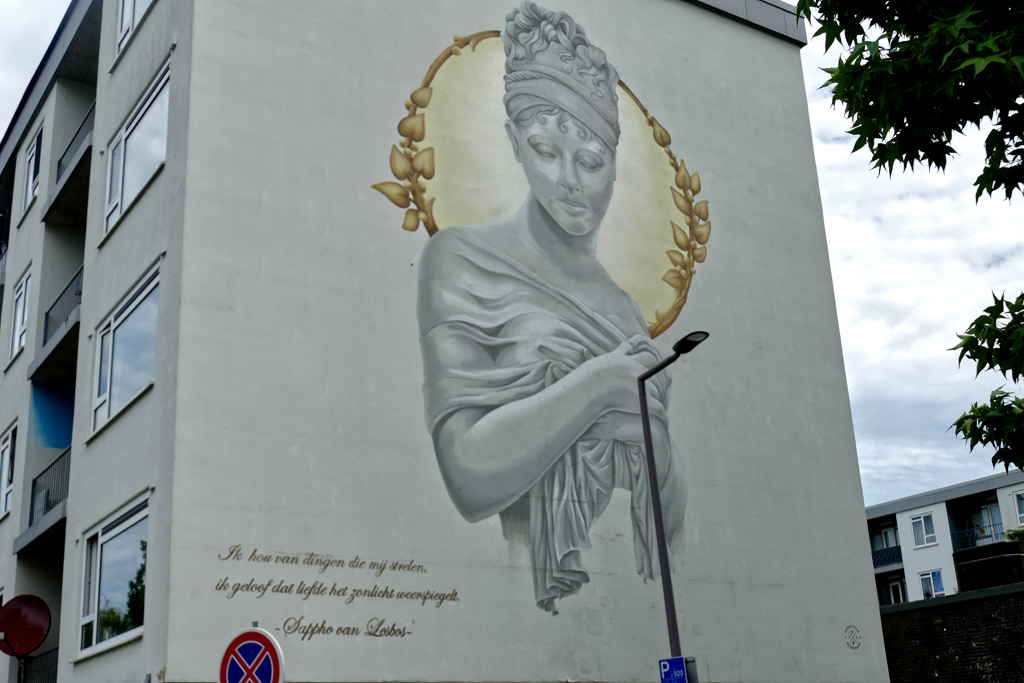
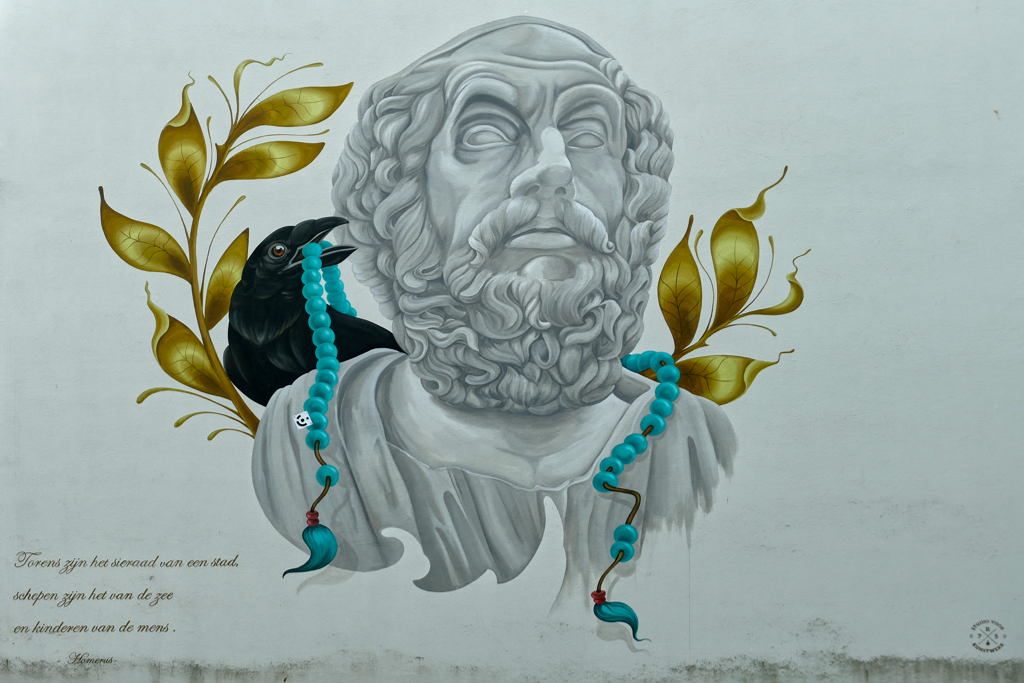
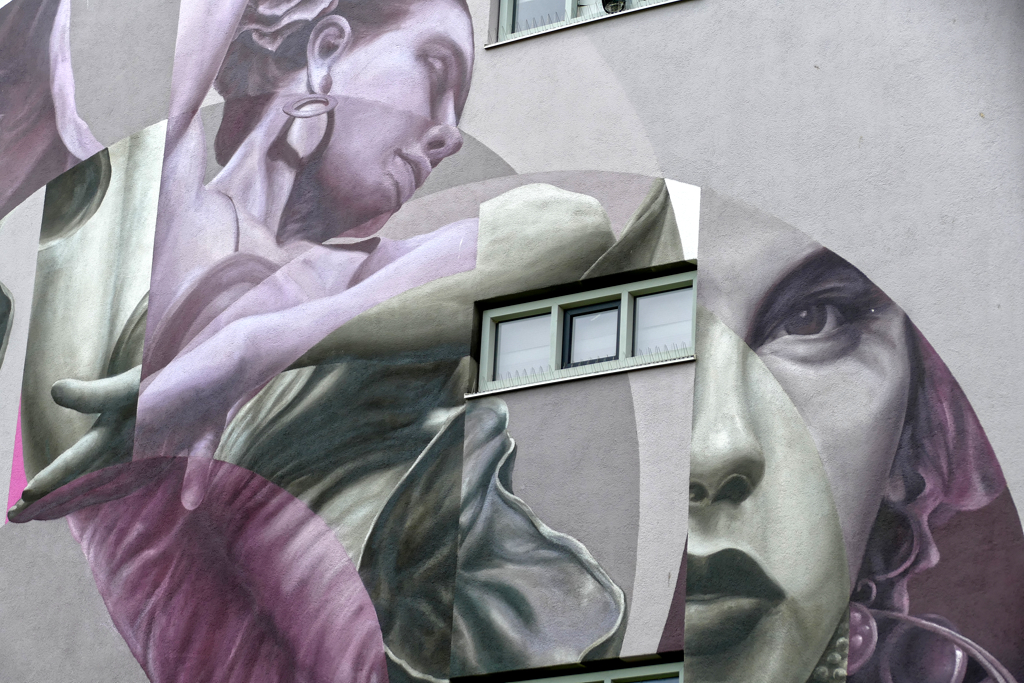
There is the Quarter of Ancient Thinkers, the Quarter of Classical Poets like Sappho, and the Streets of More Recent Playwrights like Lorca or Molière. This is precisely where Van Zwol picks up the thread, visually resurrecting the namesakes in the very places that bear their names.
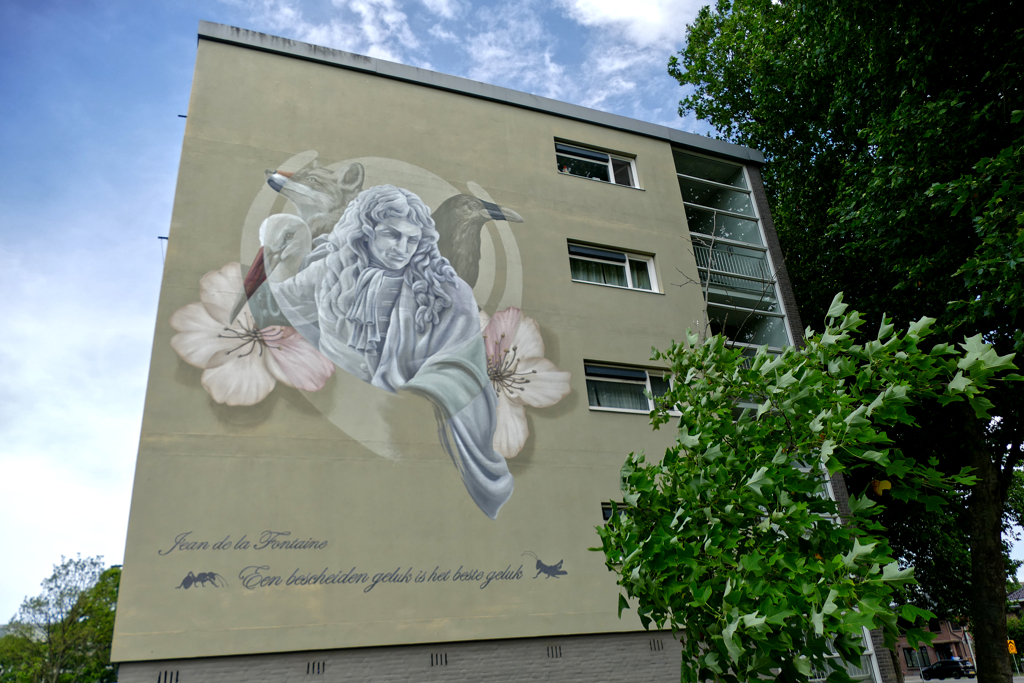
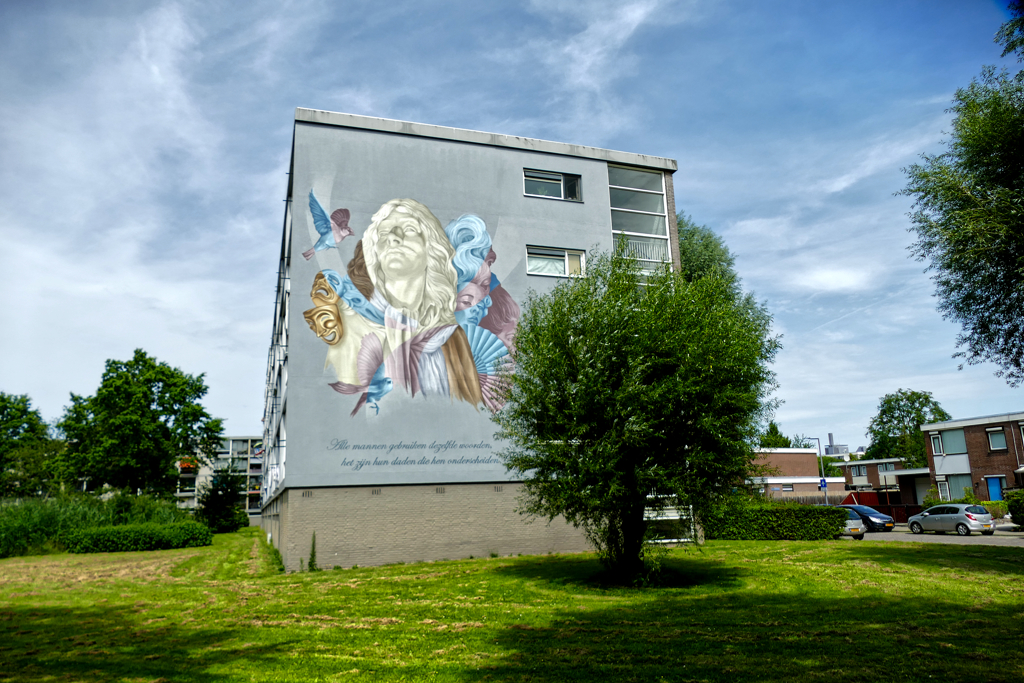
His detailed, photorealistic portraits merge with concise quotations, thus gradually forming the so-called Quotation Route.
Around Beverwaard
Beverwaard is the youngest of the three districts, having been developed only in the late 1970s and mid-1980s. The district was built almost entirely according to a unified master plan within about ten years. Characteristic features include traffic-calmed residential courtyards and numerous terraced houses, with a high proportion of social housing. Waterways and green spaces along the former polder ditches make the district attractive and livable. Another typical characteristic is the so-called cauliflower structure: numerous small residential streets and cul-de-sacs branch off from a few main roads, creating a quiet, almost village-like living environment.
In 2024 and 2025, a street art scene developed rapidly in Beverwaard. This was thanks to the renowned street art festival ALL CAPS, which focused entirely on this district. The festival transformed the otherwise rather tranquil, leafy district into a vibrant open-air museum. National and international artists used the brick facades and apartment blocks to tell stories closely intertwined with the district’s identity and current social issues.
Aches
Aches is a Dublin-based artist who specializes in large-scale murals and lettering in a distinctive style. He drew and painted from a young age. At the age of 15, he took his art onto the streets. He graduated from the National College of Art and Design in Dublin with a degree in visual communications. This allowed Aches to incorporate his academic skills and theoretical knowledge of graphic design into his murals with a unique RGB aesthetic.
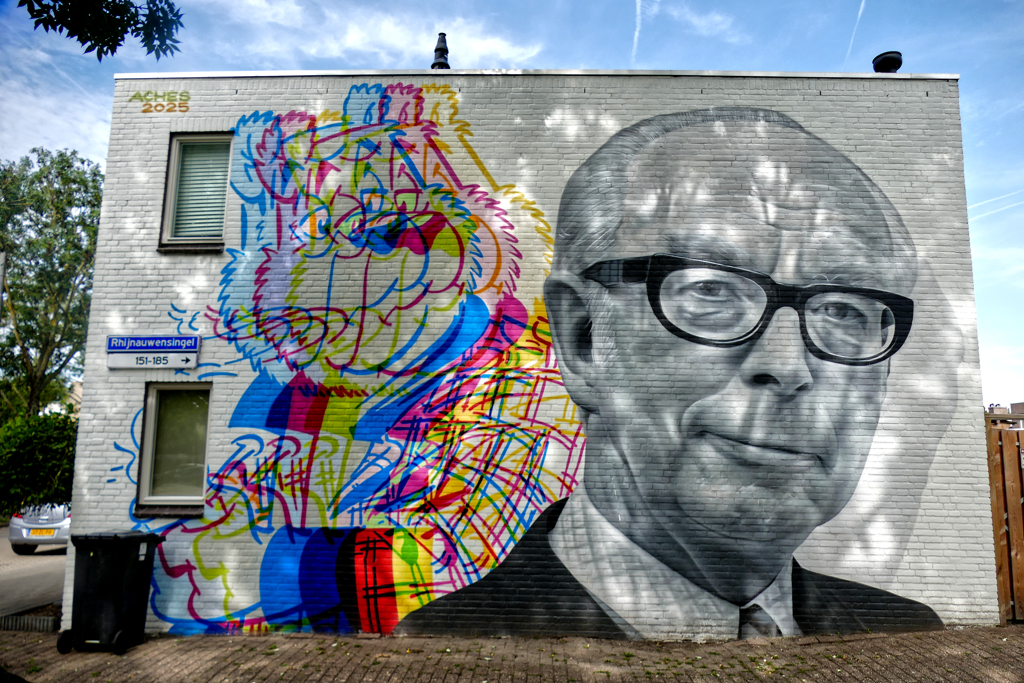
Aches has undertaken commissioned work on projects around the world. You can see his work today in Austria, Denmark, Great Britain, Spain, Sweden, and Switzerland, to name just a few. You will immediately identify them as real Aches.
After a decade of painting in public spaces, Aches now divides his work equally between murals and studio pieces.
I’ve already introduced Aches’ murals in my former post Best Street Art in BRISTOL – Part II: North Street.
Mark Bodé
Mark Bodé was born in New York in 1963 and is an American comic book artist, graffiti muralist, and tattoo artist. He gained international recognition by continuing the visual legacy of his legendary father, Vaughn Bodé, the co-founder of modern graffiti and underground comic book culture, and adapting it to the street art scene. After studying art in Oakland, New York, and San Francisco, he achieved his own success.
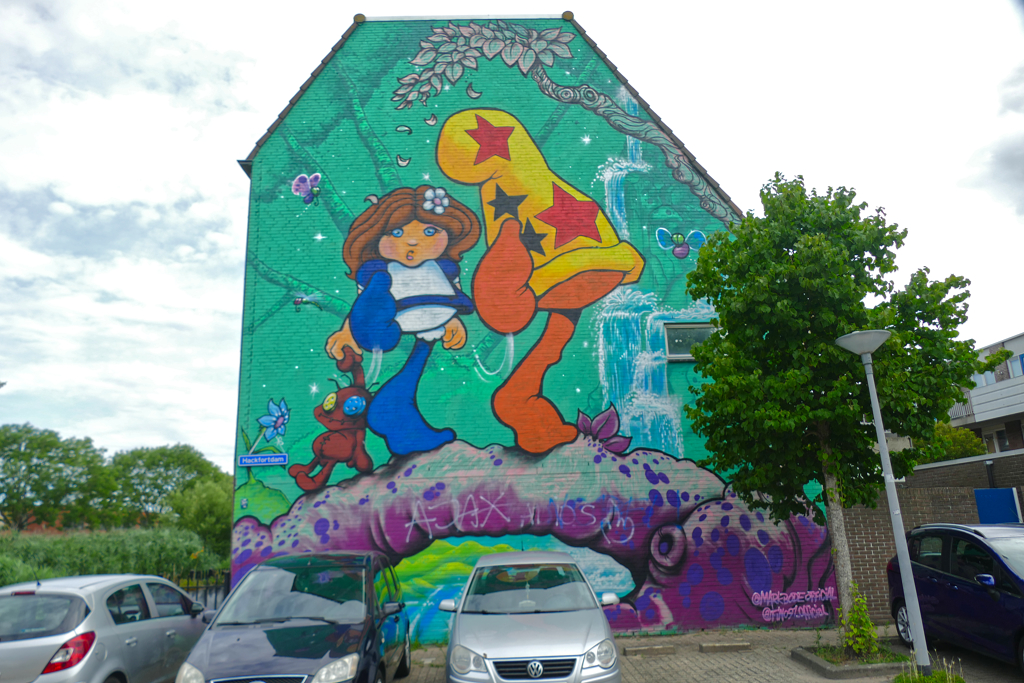
His distinctive style is characterized by psychedelic comic book characters, organic curves, and iconic figures such as the Cheech Wizard and the well-known Bodé Lizards. His work has brought classic cartoons from the page to gigantic building facades worldwide. In addition to international collaborations—including one for the renowned Urban Nation street art museum in Berlin—he has created popular designs for fashion brands such as Puma.
FINO
FINO, also known as FINO91, is a German graffiti and urban art artist from Berlin. He began his career in the graffiti scene, working on railway infrastructure and trains. He is a member of established graffiti crews such as QB and TCR, as well as the artist collective Never Grow Up. Together with fellow sprayer HOT 91, he also forms the urban duo CANION.
His artistic style combines classic graffiti writing and dynamic throw-ups with large-scale, legal murals and spatial installations. In addition to abstract lettering, FINO uses pop culture references to subvert the classic street art aesthetic. A focus of his current work is the museum-based presentation of graffiti culture. He translates the aesthetics of urban space into galleries through painted canvases, sculptures, and miniatures.
His work can be found in public spaces and abandoned places, as well as through collaborations with manufacturers such as Molotow.
Daniel Rozenberg aka Dadara
Daniel Rozenberg aka Dadara is an internationally renowned, multidisciplinary Polish-Dutch artist who lives and works in Amsterdam. After studying at the Willem de Kooning Academy in Rotterdam, he first gained recognition in the 1990s for designing hundreds of flyers and record covers, thus shaping the visual identity of early European techno and house culture.
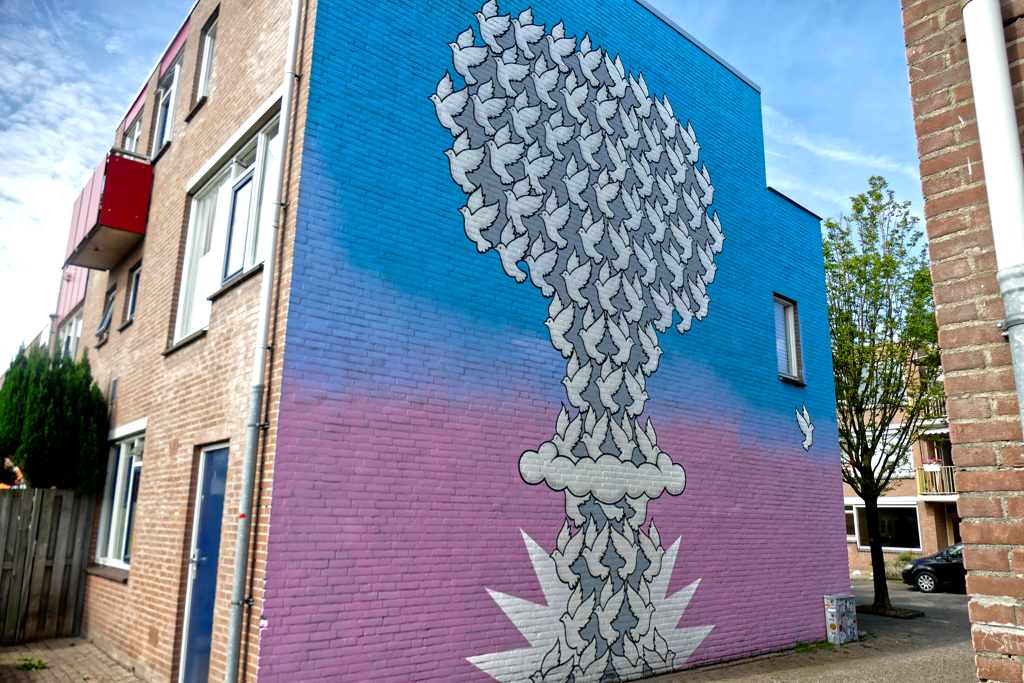
His distinctive style combines pop, psychedelic comic aesthetics with sharp social commentary. Dadara’s works humorously yet profoundly explore themes such as capitalism, social media addiction, and the true value of money and art. He garnered international attention as the first European artist to create monumental sculptures for the legendary Burning Man festival in Nevada, as well as for his provocative performance piece, an Exchange Bank.
Although deeply rooted in performance and conceptual art, he is increasingly leaving a lasting mark on public spaces.
Daniel Saptenno aka da.mi.za
Daniel-Michel Saptenno, also known as da.mi.za, is a contemporary, multidisciplinary, and conceptual street and graffiti artist from Rotterdam. His work lies at the intersection of urban art and contemporary fine art. In public spaces, he creates monumental murals, while in his studio he works with screen printing, sculpture, and acrylic on canvas. Visually, his style is characterized by a masterful combination of botanical motifs and abstract graphic patterns.
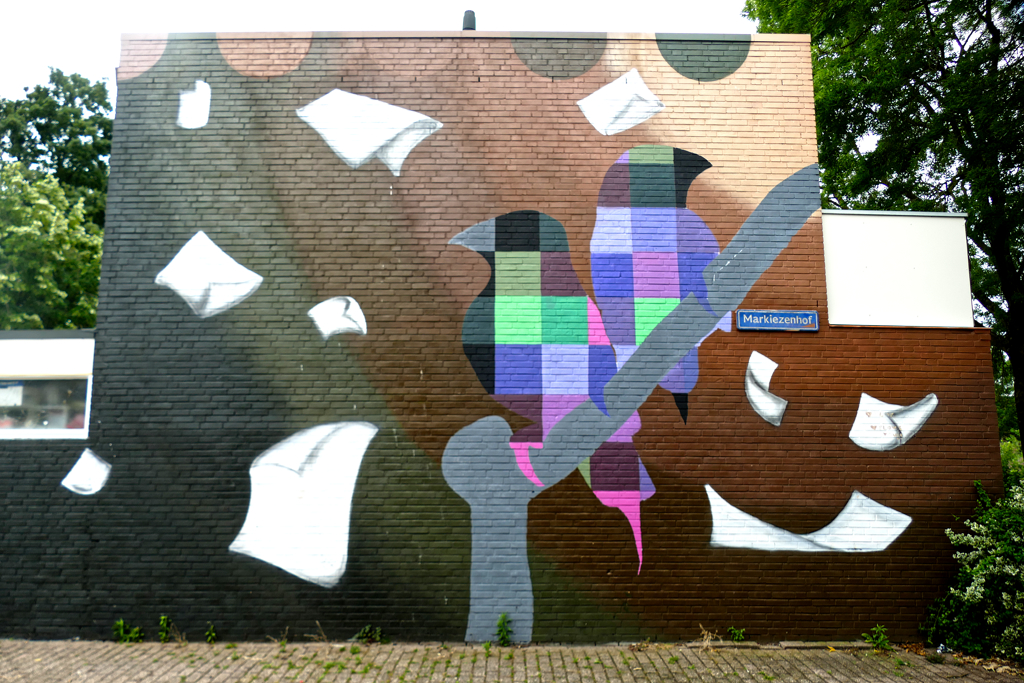
Thematically, his art is deeply rooted in his personal identity and family history. A central theme of his work is the exploration of his Moluccan roots and the colonial legacy between Indonesia and the Netherlands. Saptenno uses his art as a voice for historical narratives that have often remained hidden in official historiography.
Feros & Dilkone
Feros & Dilkone is an internationally active Ukrainian street art and artist duo, consisting of twin brothers Serhii (aka Feros) and Vitalii (aka Dilkone) Hrekh. Born in Lviv, Ukraine, the two artists began their careers as self-taught graffiti artists. In 2012, they founded the collective Kickit Art Studio to combine street art, graphic design, and event organization, promoting urban art culture in Ukraine.
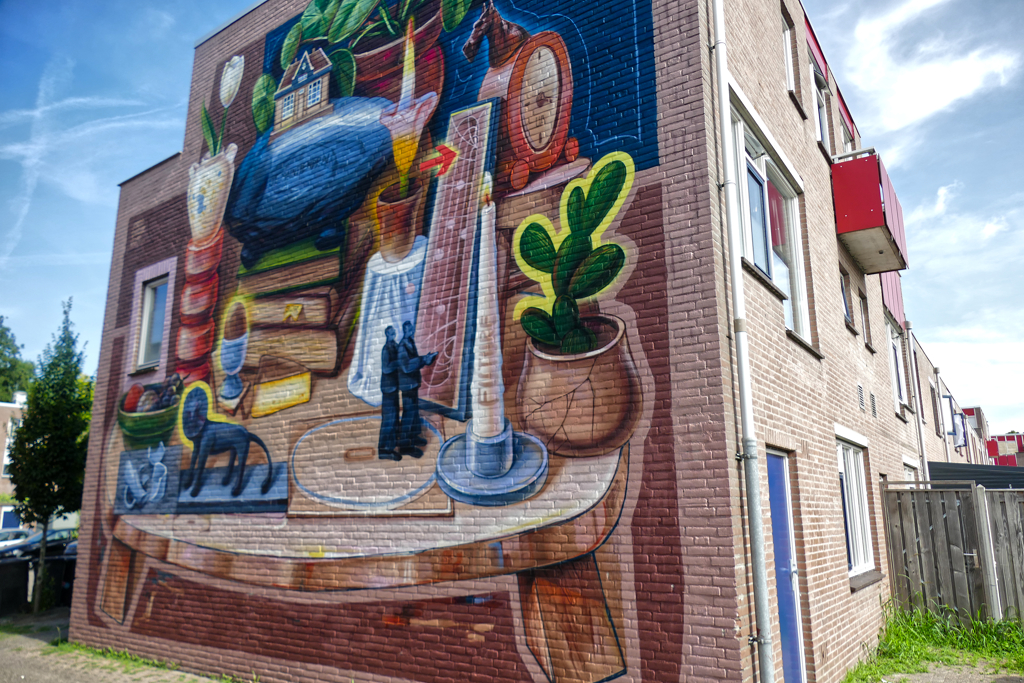
Their artistic style blends the dynamic roots of classic graffiti with contemporary painting. In their large-scale murals, they combine portraits with abstract, cubist forms, geometric patterns, and multifaceted metaphors. Since the outbreak of war in their homeland, socio-political themes such as loss, destruction, identity, and the hope for peace have increasingly found their way into their work.
The duo now exhibits at renowned street art festivals throughout Europe. In addition to their work in public spaces, the brothers also regularly exhibit their works and paintings in galleries.
HERA of Herakut
Hera is one of the very few female muralists who gained international fame in the world of urban art. Born Jasmin Siddiqui in Frankfurt to a Pakistani father and a German mother in 1981, she had to cope with prejudice. As an outlet for her frustration with this narrow-mindedness, she began to create her own universe by painting on drab walls.
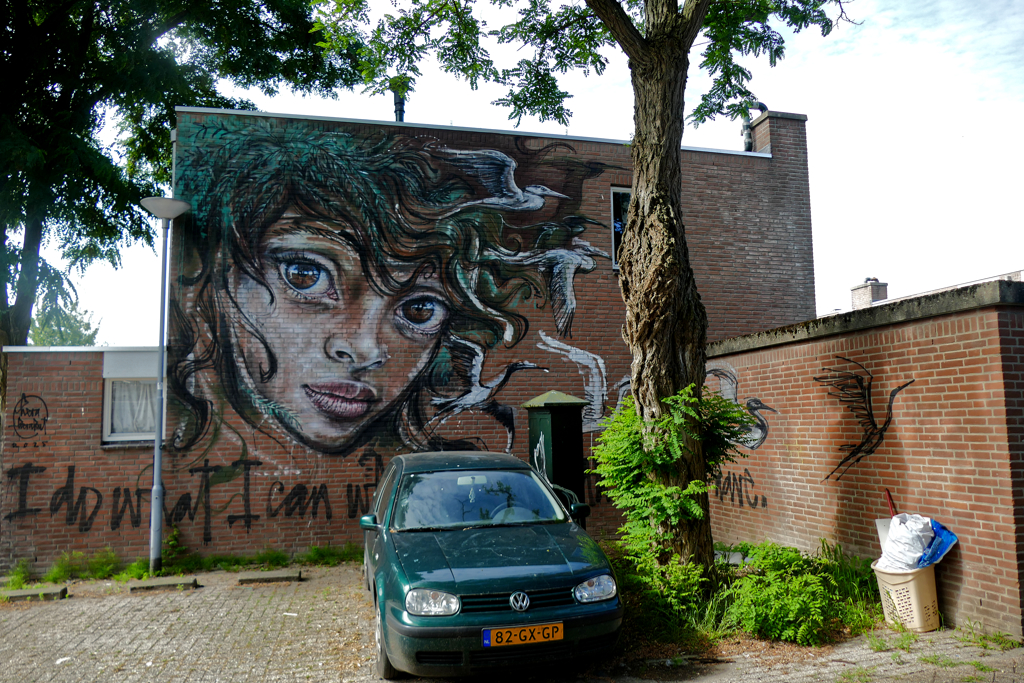
She chose her nom de plume paintbrush Hera, the name of the Greek goddess, to underline her affiliation with her then-boyfriend, who sprayed under the pseudonym Zeus. However, today, this pseudonym stands for a confident female artist in a still male-dominated art genre.
In 2014, she merged her alias with artist Akut into Herakut. Akut is the German urban artist Falk Lehmann. Their art is based on social and humanitarian ideas’n’ideals. Therefore, about half of their creations are committed to charitable causes such as shelters for abused children and refugee camps, to name just two.
I’ve introduced Hera as a solo artist as well as the duo Herakut already in my former posts IF WALLS COULD SPEAK: The Best Street Art Project in Amsterdam, Best Street Art in BERLIN, and Best Street Art in HAMBURG.
Kristopher Ho
Kristopher Ho was born in Hong Kong in 1986. At the age of 12, he moved to Blackpool, England. He received his formal artistic training at the prestigious Central Saint Martins College of Art and Design in London, graduating in 2009 with a Bachelor of Arts in Graphic Design, specializing in Illustration. After returning to Hong Kong in 2012, he quickly established a successful career as an independent freelance artist. Since 2015, he has been a prominent figure in the international street art scene and regularly participates in major street art festivals.
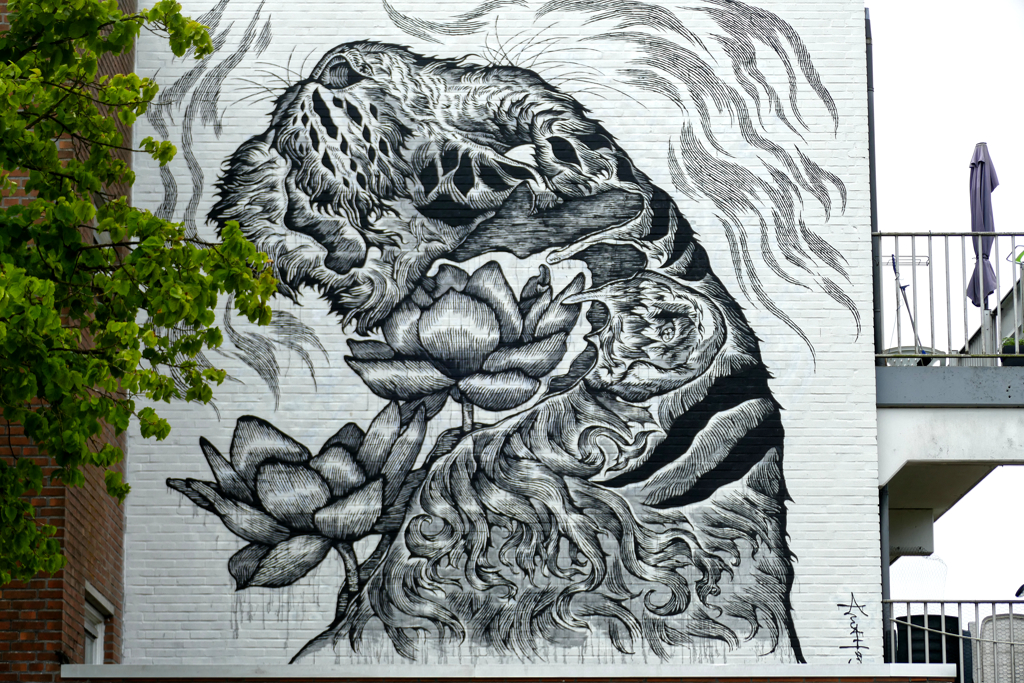
The most striking characteristic of Kristopher Ho’s art is his extremely detailed, often purely monochromatic style. His complex, intricate compositions captivate with powerful brushstrokes and delicate lines. He traditionally uses markers and acrylic pens as his preferred tools for his monumental murals and fine studio illustrations. His imagery is strongly inspired by films, Japanese animation, and his personal philosophies. His exceptional precision also made him highly attractive to commercial pop culture, leading to much-discussed major projects and collaborations with world-renowned brands such as Nike, Facebook, Audi, Starbucks Reserve and Vans.
Lauren YS
Lauren YS, artist name Squid Licker, is a non-binary American street artist and illustrator from Los Angeles. After graduating with degrees in literature and fine arts from Stanford University, Lauren is part of the California urban art scene and also participates in major festivals worldwide.
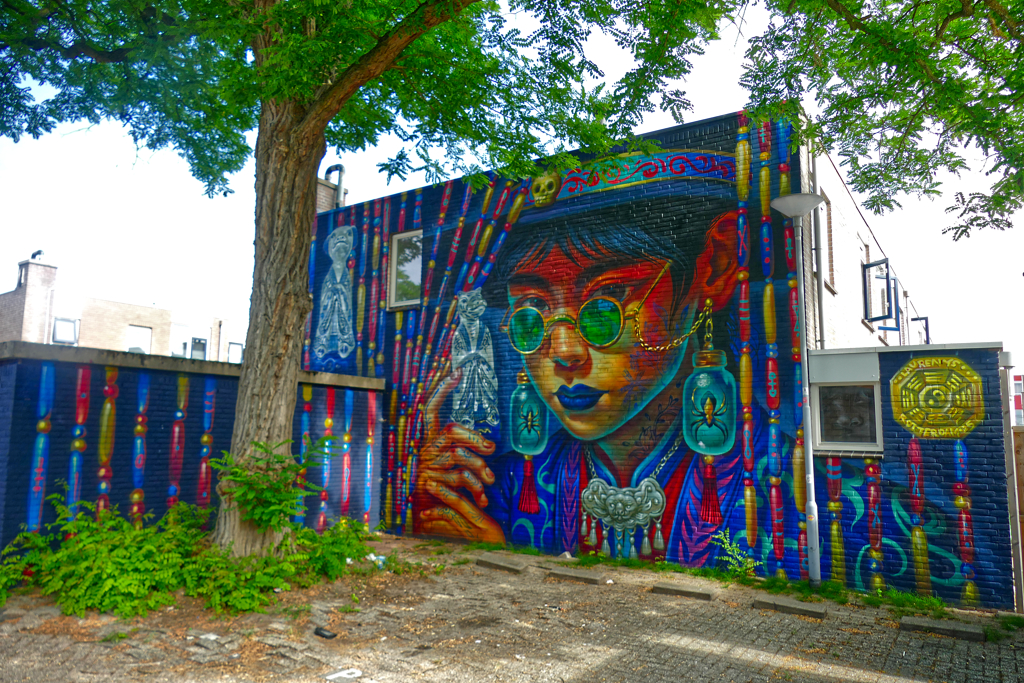
Highly saturated neon colors, psychedelic aesthetics, and dreamlike compositions characterize Lauren’s work. However, portraits are heavily influenced by Chinese mythology, comics, science fiction, and queer and Asian-American identity. Lauren uses large-scale art as a form of activism to increase the visibility of BIPOC and LGBTQ+ communities in public spaces.
Monumental murals by Lauren YS can be found in prominent locations such as the Wynwood Walls in Miami and the World Trade Center in New York, as well as in a permanent installation at the Meow Wolf Museum. Furthermore, Lauren’s visual imagery served as inspiration for the Oscar-winning film Everything Everywhere All at Once.
Garrick Marchena
Garrick Marchena was born in Aruba in 1966. Based in Curaçao, he is one of the most skilled mural artists on the islands.
Although he had shown great artistic talent already as a child, he first studied civil engineering at the University of Pittsburgh on his father’s advice. After his bachelor’s degree, he actually began working as an engineer but quickly resigned. Marchena preferred working as a freelance graphic designer in his younger brother’s company.
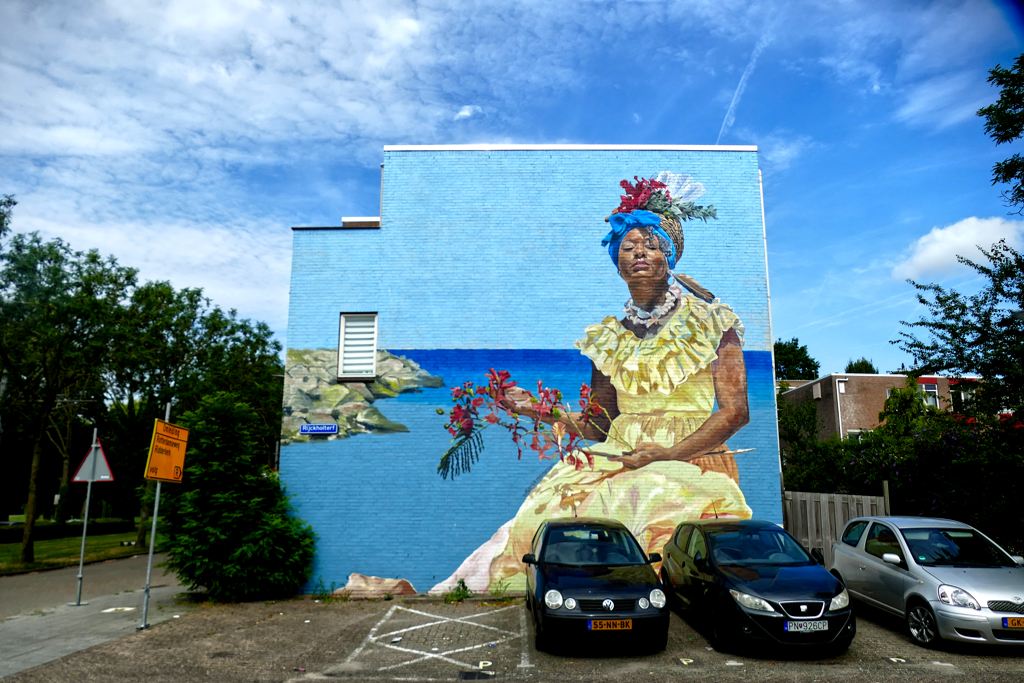
In 2009, he created his first mural Urban Angel in Willemstad. This work is actually said to be Curaçao’s very first large-scale mural. Since then, he has created many wonderful portraits, mainly in Curaçao but also in Aruba and Bonaire.
While technically speaking, Marchena’s first works were illegal, he is now regularly commissioned to create murals. His favorite subjects are children and animals.
I also introduced Garrick Marchena’s murals in my posts ARUBA: The Powerful Murals of San Nicolas, BONAIRE totally unexpected: Street Food And Urban Art Tour, as well as Murals in CURACAO: The Best Street Art Projects in Willemstad.
Satoshi Nakamoto
Satoshi Nakamoto is a Dutch urban artist from Rotterdam. His creative journey began in the classic graffiti and sticker scene before he rediscovered and revolutionized an old passion over ten years ago. He creates urban pixel art from miniature building blocks and mosaic tiles. Obviously, he chose his pseudonym in homage to the Bitcoin inventor to remain anonymous.
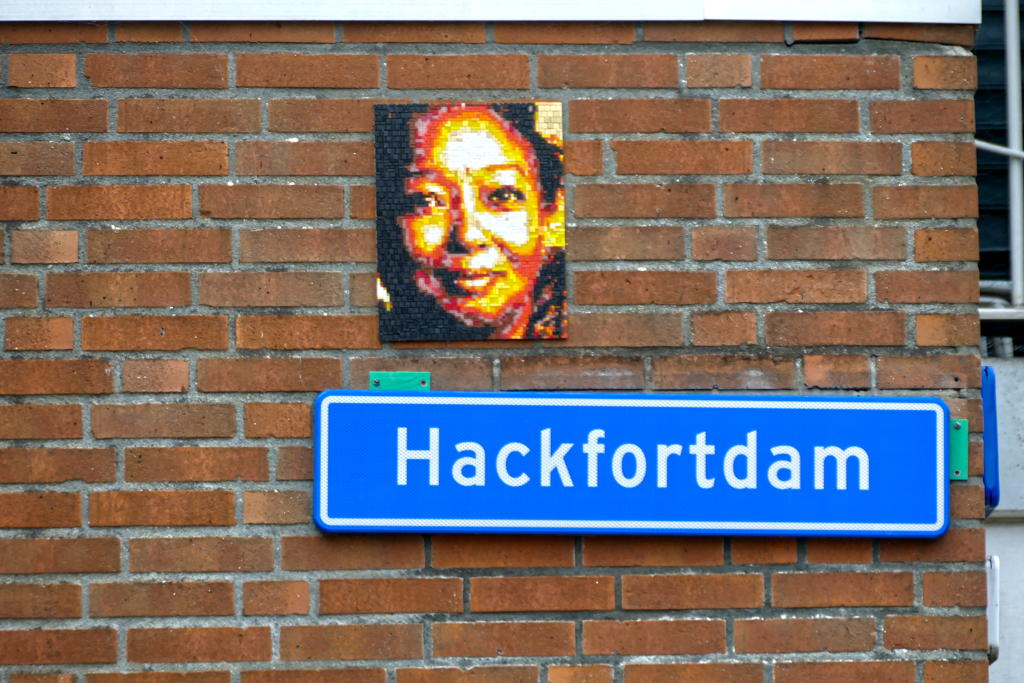
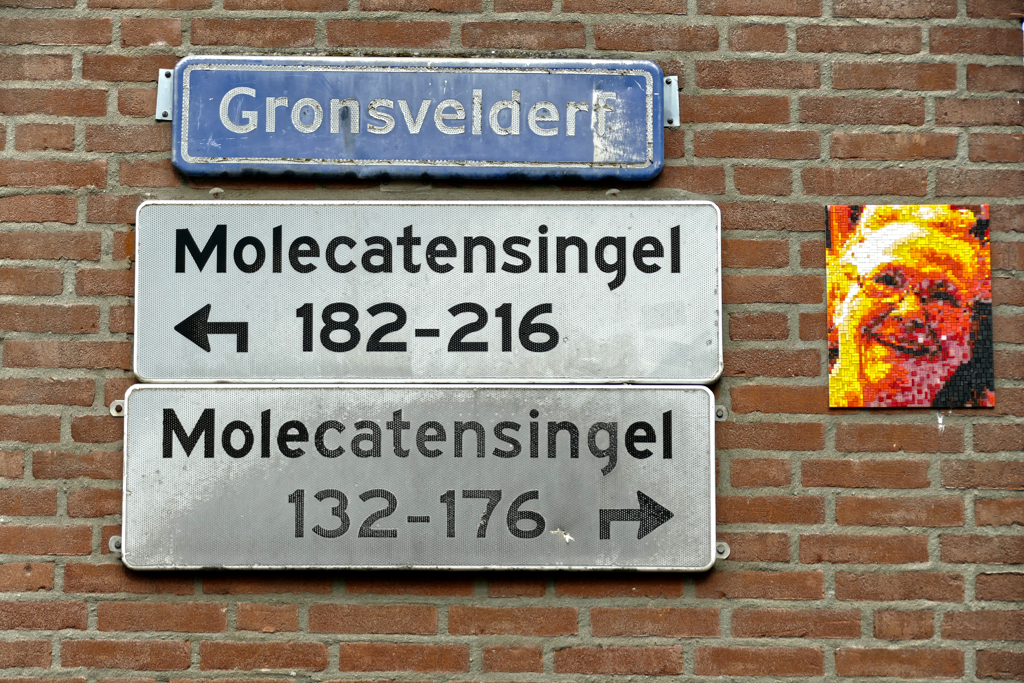
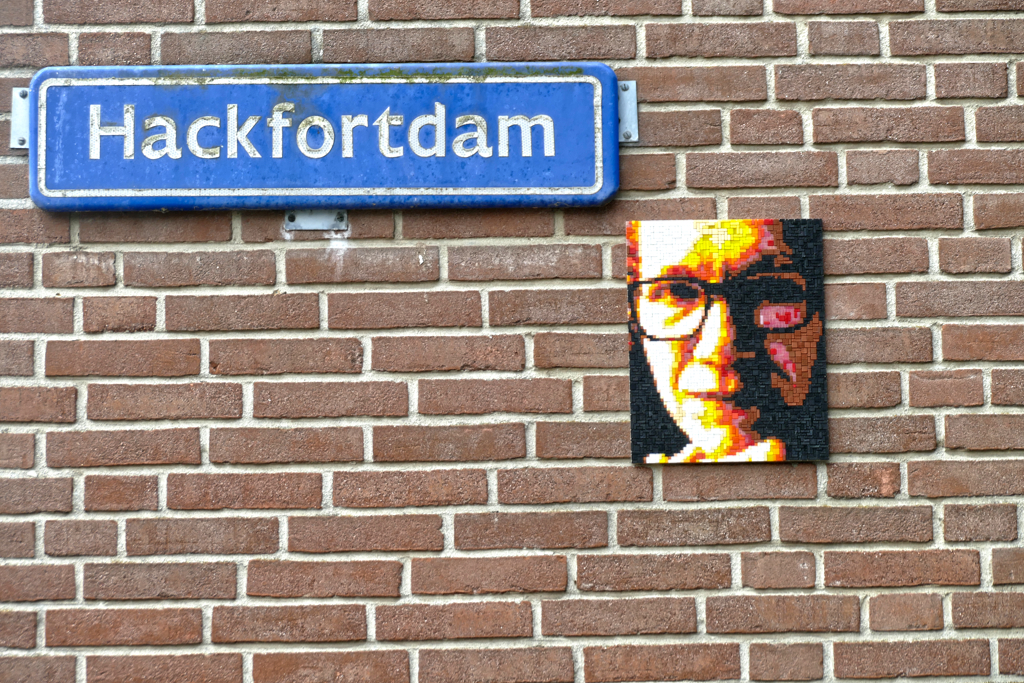
Thematically, his style is rooted in global hip-hop and street culture. Satoshi Nakamoto spends days meticulously crafting detailed pixel portraits of music and cultural icons, as well as comic and pop culture characters. He then affixes the finished mosaic tiles to public spaces. This way, he transforms gray urban surfaces into freely accessible open-air galleries.
For a much-acclaimed project in the Beverwaard neighborhood, he portrayed 50 outstanding yet not famous females in his characteristic mosaic style.
SWED ONER
Mathieu Taupenas, also known as Swed Oner, is an internationally active French street artist from Nîmes. After working as an optician, he quit his former profession to travel the world for two years. He collected portrait photographs and dedicated himself entirely to urban art. The subjects for his large-scale works are based on chance encounters. He takes pictures of his protagonists to later depict them on walls.
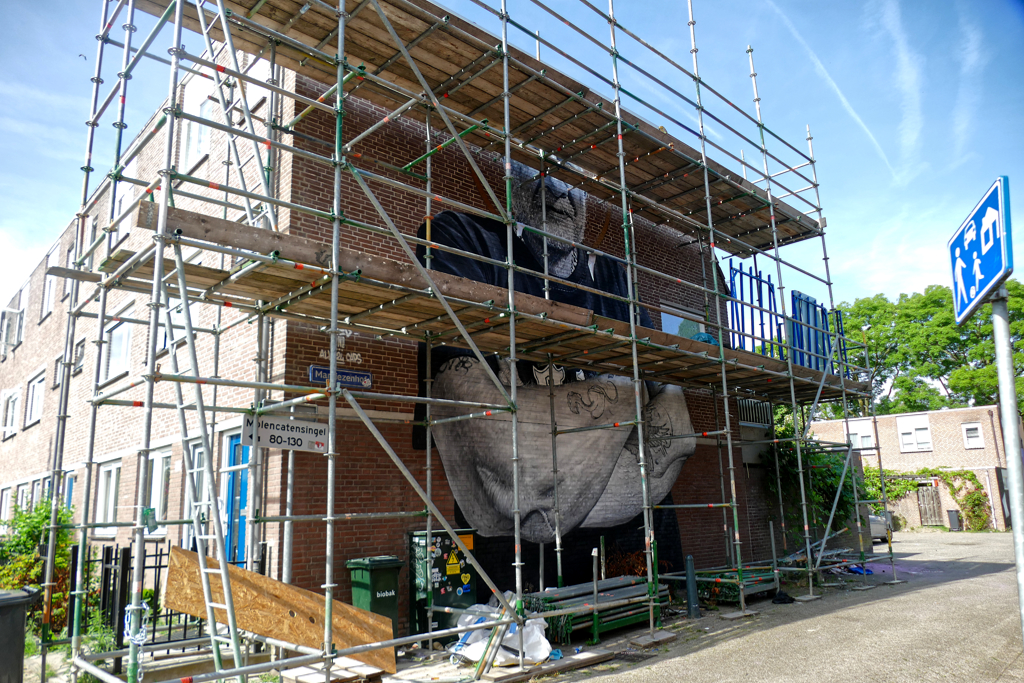
Hyperrealism in black and white became his iconic style. As a recurring, striking trademark, he adds a halo to almost all of his portraits, symbolizing spirituality and equality and intended to protect the subject.
His monumental murals can be found in metropolises like Paris and New York, as well as in the French Alps. There he created his largest mural so far. It’s a 25-meter-high work at the National School of Skiing and Mountaineering in Chamonix.
SWED ONER lives in Uzès in the south of France.
I also introduced SWED ONER’s murals in my posts The Best Street Art in MARSEILLE and Best Street Art in NÎMES, obviously.
Alex Hornest aka Onesto
Alex Hornest, also known as Onesto, was born in São Paulo in 1972. He is one of the pioneering figures of the South American graffiti movement and began spraying the walls of his hometown under his street name as early as 1984. After his first gallery exhibitions in the early 1990s, he developed into a multidisciplinary multimedia artist.
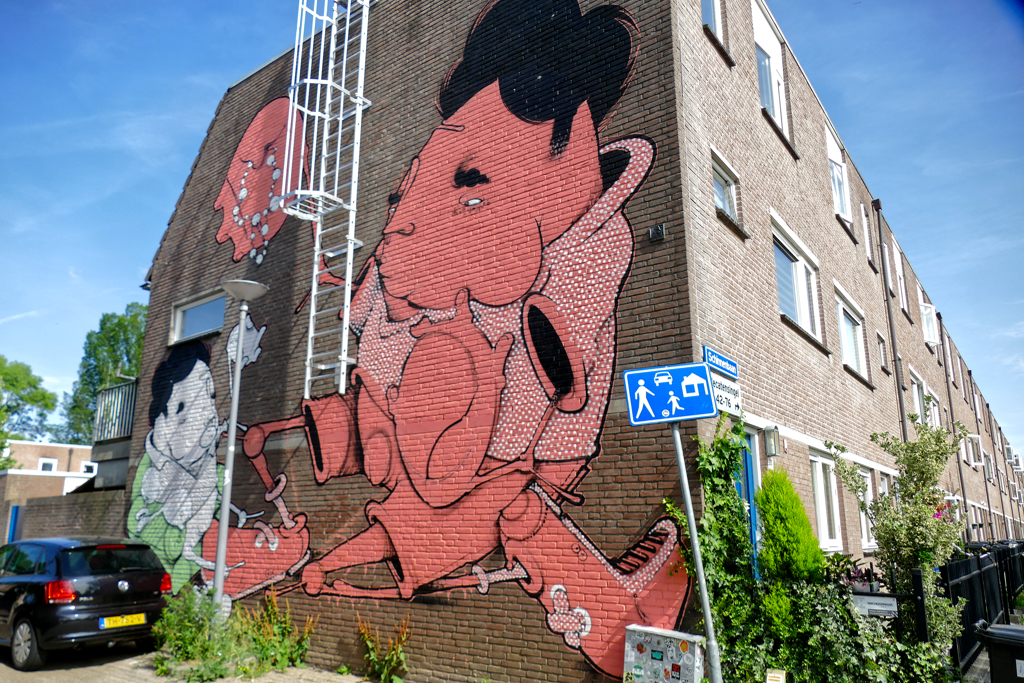
His style is inextricably linked to his iconic, often ironic characters. A distinctive technical feature of Onesto’s work is his avoidance of preparatory sketches. He creates his large-scale murals ad hoc and purely intuitively.
His murals and installations can be found in public spaces across Europe as well as in the renowned Victoria and Albert Museum in London.
SATR
SATR is an internationally renowned Chinese muralist and graffiti artist who lives and works in Guangzhou. Her artistic career began during her high school years before she entered the street art scene professionally in 2013. Today, she is represented in European countries such as France and Italy and participates in major street art festivals worldwide.
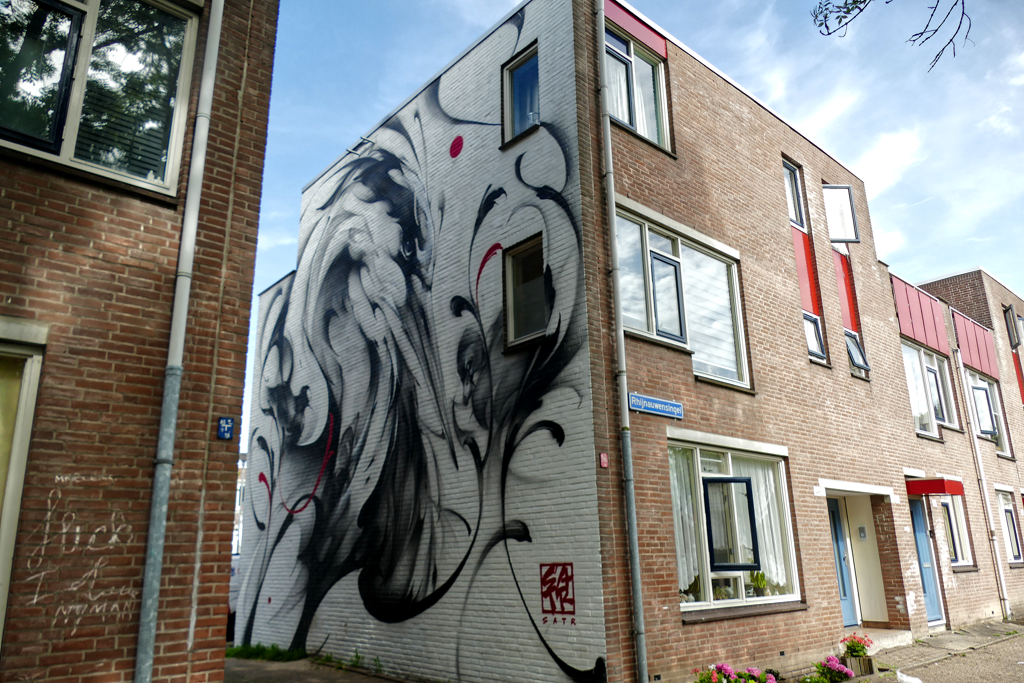
The most distinctive feature of her style is the fusion of Western graffiti techniques and traditional East Asian ink painting. Using a spray-can atomization technique she developed, she creates semi-transparent, smoky outlines that give her works a dynamic, hazy aesthetic. She traditionally emphasizes her Asian heritage by completing her large-scale murals with a classic signature engraved in the style of an ancient seal.
In addition to monumental murals in public spaces, SATR is continuously expanding her work into contemporary conceptual art, creating 3D canvases, paper sculptures, digital animations, and live performances.
Peter Skensved
Peter Skensved is a Danish graffiti and urban art artist from Copenhagen. He is considered one of the most prominent figures in his country’s professional graffiti scene. In addition to his own artistic work, he significantly shapes the Danish art landscape as head of department and project manager at the renowned Institute for Urban Art (IfUK) in Copenhagen.
His creative focus is on monumental murals, ranging from classic, intricately detailed characters to complex, narrative large-scale projects. A central aspect of his philosophy is to enliven drab urban spaces through color and depth, while establishing a direct connection to local cultural history.
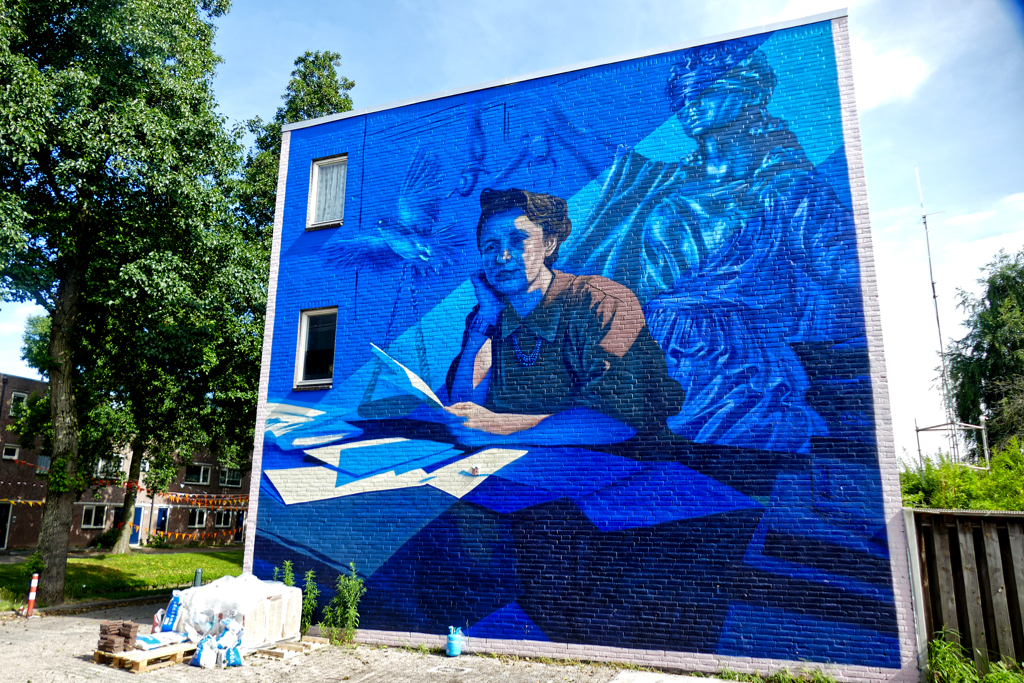
Skensved’s works and collaborations have an international presence, spanning from Denmark and the Netherlands to Georgia. Among his most recent, highly acclaimed works is the monumental piece Roots of Resilience in Copenhagen, commissioned by the UNHCR, which thematically explores new beginnings and emotional strength after loss.
SNIK
SNIK is a male-female artist duo from the English city of Stamford who specialize in stencil art. Despite today’s digital possibilities, SNIK has remained true to the origins of their craft with complex, hand-cut stencils. This makes their work distinctive. With the help of precisely cut stencils, they create moments of stillness.
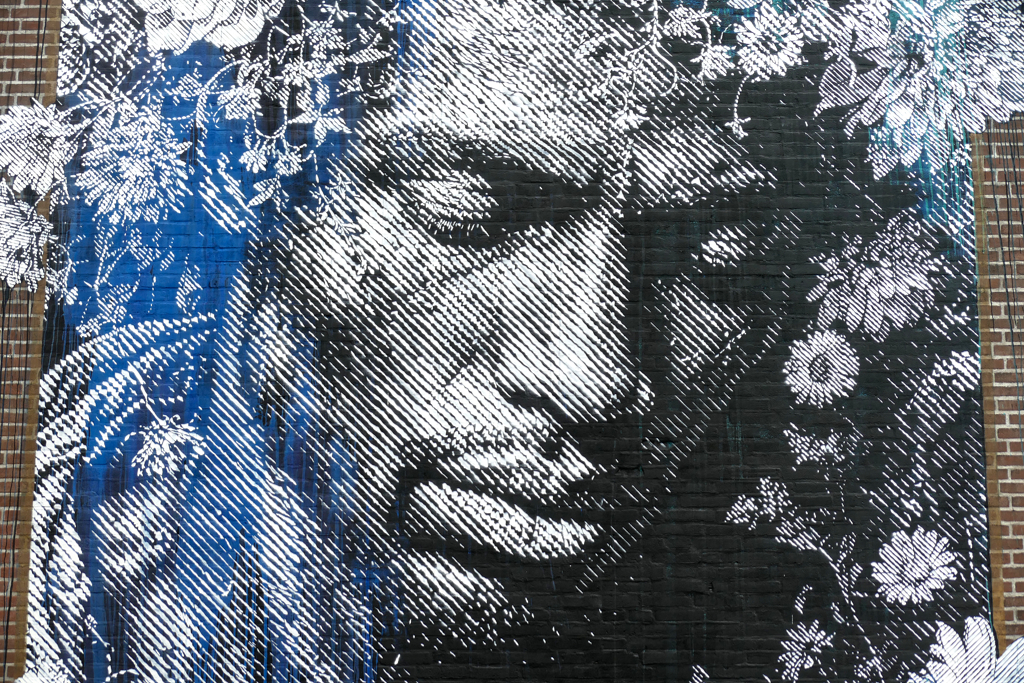
In their choice of motifs, they focus on the everyday. Their figures remain in mid-motion, still and steady. Each work is a collaboration between two individuals who share trust in each other and a love of detail. They don’t strive for perfection, as small errors are what give their works a fascinating vibrancy.
I also introduced a mural by SNIK in my post Best Street Art in CHELTENHAM.
Towpy
Towpy is a renowned French graffiti artist and illustrator, best known for his humorous urban interventions. After starting out in the classic graffiti scene, he honed his passion at the prestigious Panthéon-Sorbonne University in Paris, graduating with a degree in Fine Arts in 2000.
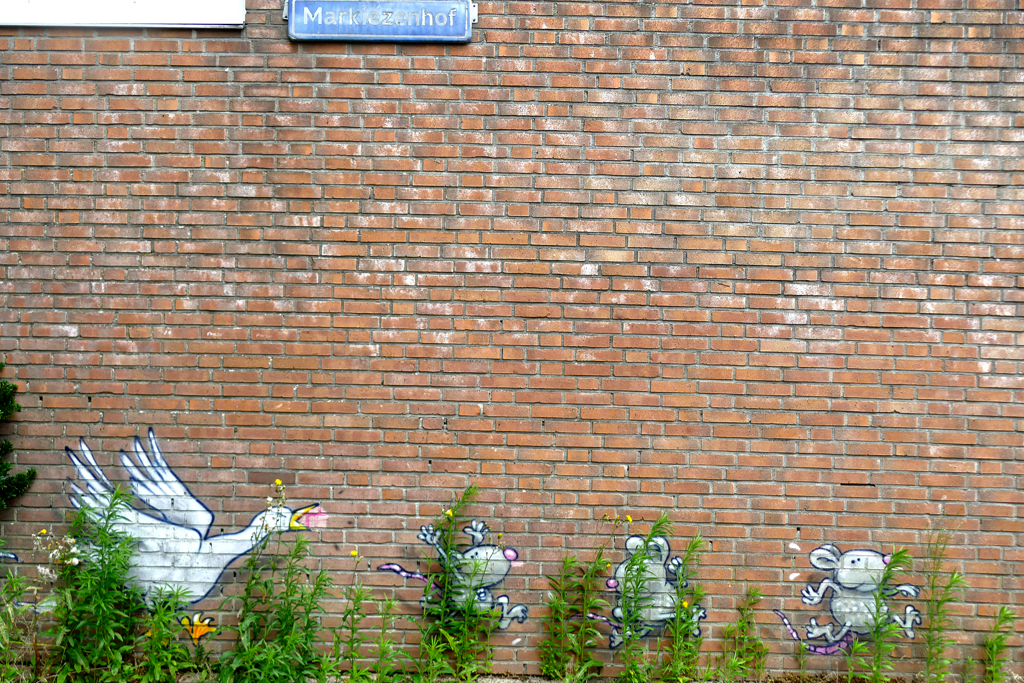
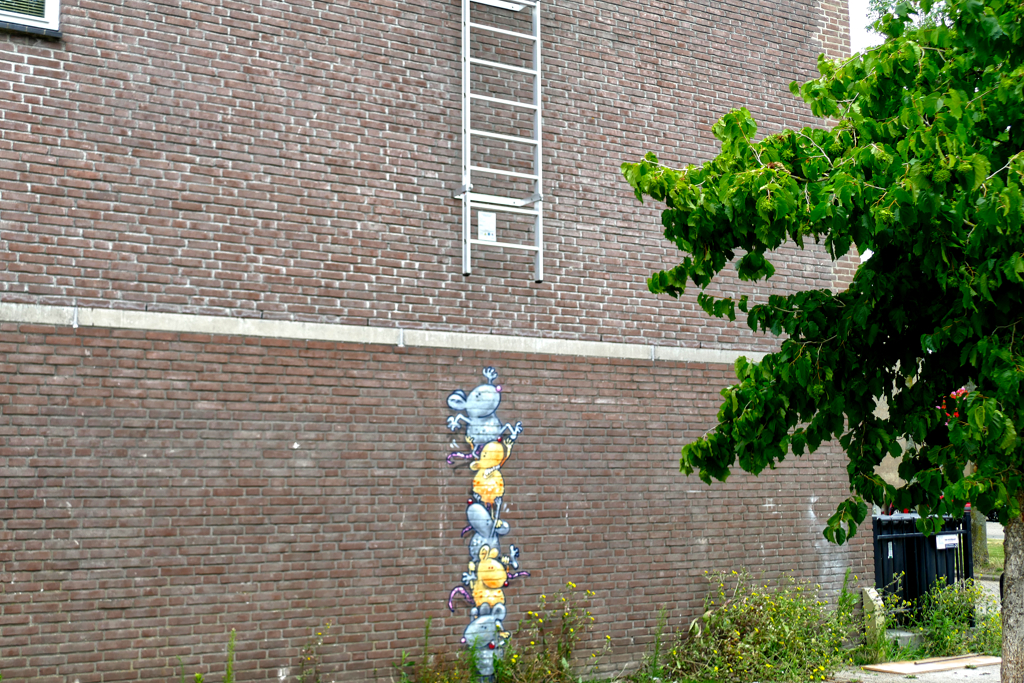
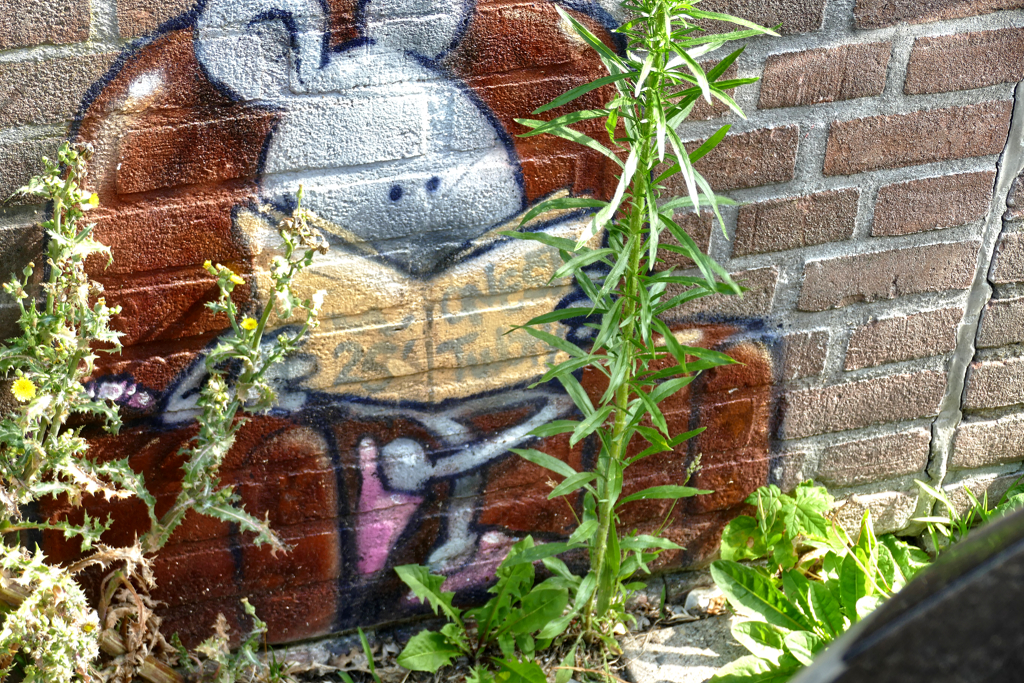
The Paris-based artist’s visual trademark is his distinctive, agile illustrations of mice and rats. He cleverly places these in public spaces so that they interact with the existing architecture. In Beverwaard, instead of a single large mural, he distributed dozens of his iconic mice.
Nina Valkhoff
Nina Valkhoff is a Rotterdam-based mural artist and illustrator. For more than 20 years, she has been creating large-scale murals in Europe, North and South America, and the Caribbean. Today, she is one of the Netherlands’ most renowned street artists. Her work has been selected for international festivals and is also represented at the STRAAT Street Art Museum in Amsterdam.
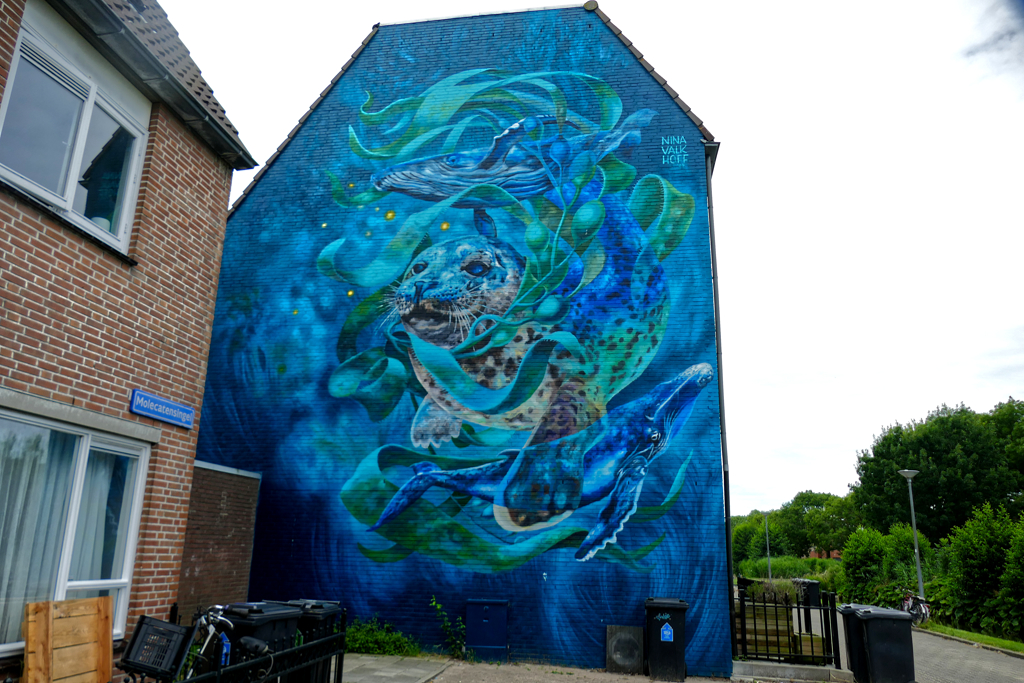
Characteristic of Valkhoff’s style are detailed depictions of animals, plants, and lush vegetation, which she puts into an almost fairytale-like context. She often focuses on endangered species, which she deliberately places in urban spaces. She sees her murals as a form of subtle artivism, hence, a quiet, unobtrusive way to raise awareness of the beauty and vulnerability of nature.
I’ve already introduced Nina Valkhoff in my posts Murals in CURACAO: The Best Street Art Projects in Willemstad as well as Best Street Art in ROTTERDAM, Part 1: North of the Nieuwe Maas.
On Instagram
To dig deeper into the subject and see more of the amazing art the above-featured artists have created, you can just check out their Instagram accounts:
Aches
Mark Bodé
Daniel Rozenberg aka Dadara
Daniel Saptenno aka da.mi.za
Dilkone
Feros
FINO
Gomad
HERA
Kristopher Ho
JDL
JanIsDeMan
KOE ONE
Tymon de Laat
Lauren YS
Garick Marchena
Satoshi Nakamoto
SMUG ONE
SWED ONER
Alex Hornest aka Onesto
SATR
Peter Skensved
SNIK
Towpy
Nina Valkhoff
Ricardo van Zwol
How to Get Around
While the murals in the first part, Best Street Art in ROTTERDAM, Part 1: North of the Nieuwe Maas, can for the most part be visited by walking, the neighborhoods that I’m introducing in this post are too far. Nevertheless, you can easily get there by public transport and then walk your way around.
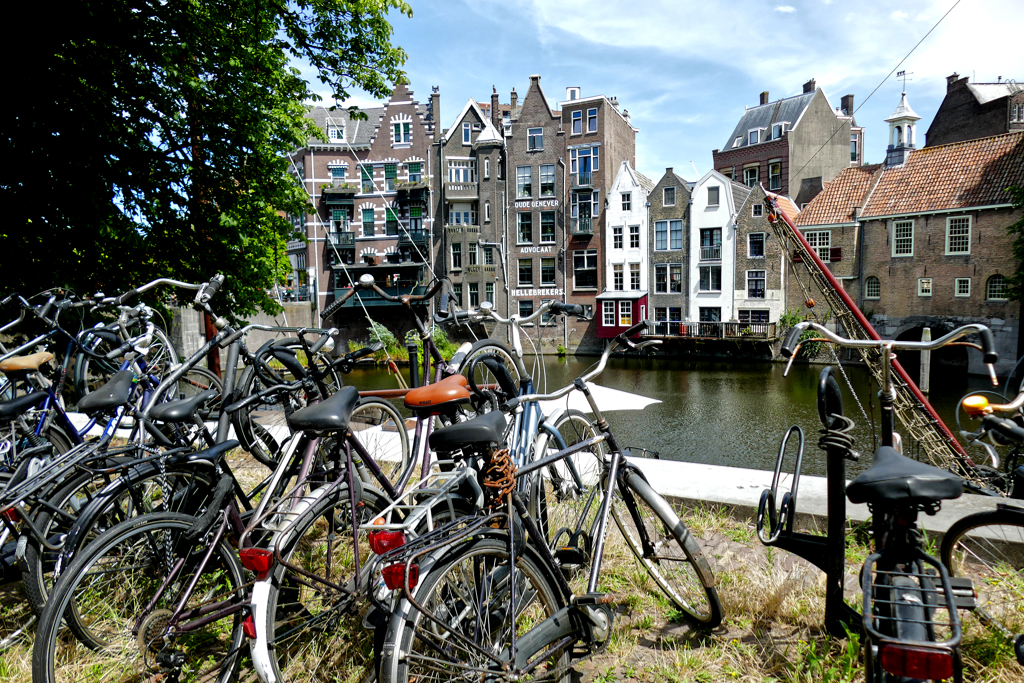
Luckily, Rotterdam has a comprehensive network of public transportation consisting of buses, trams, and a metro. You can pay your fare by checking in and out contactless with your card or your phone. Most trips within the city limits cost about 2 €uro. You can save some money by getting a day pass for 12 €uro. A Rotterdam City Card for 17.50 €uro grants you not only unlimited use of public transport but also discounts at popular attractions.
You’ll find more details on the city card as well as comprehensive info on Rotterdam in my post Why ROTTERDAM Is Worth Visiting: A Complete Guide to the Urban Heart of the Netherlands.
Map
This map should help you to find the murals I’m introducing in this post. However, I split it into two layers, one for the northern part of the city, and one for the southern areas. This way, you can open them separately.
Clicking on the slider symbol at the top left or the full-screen icon at the top right will display the whole map, including the two layers of the legend.
Pinnable Pictures
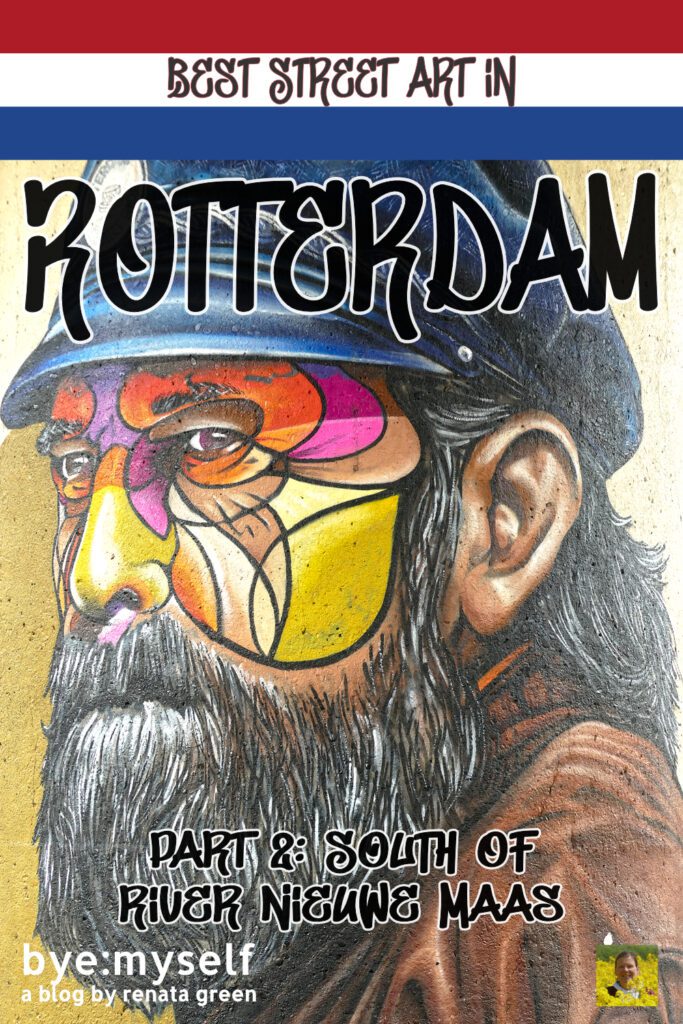
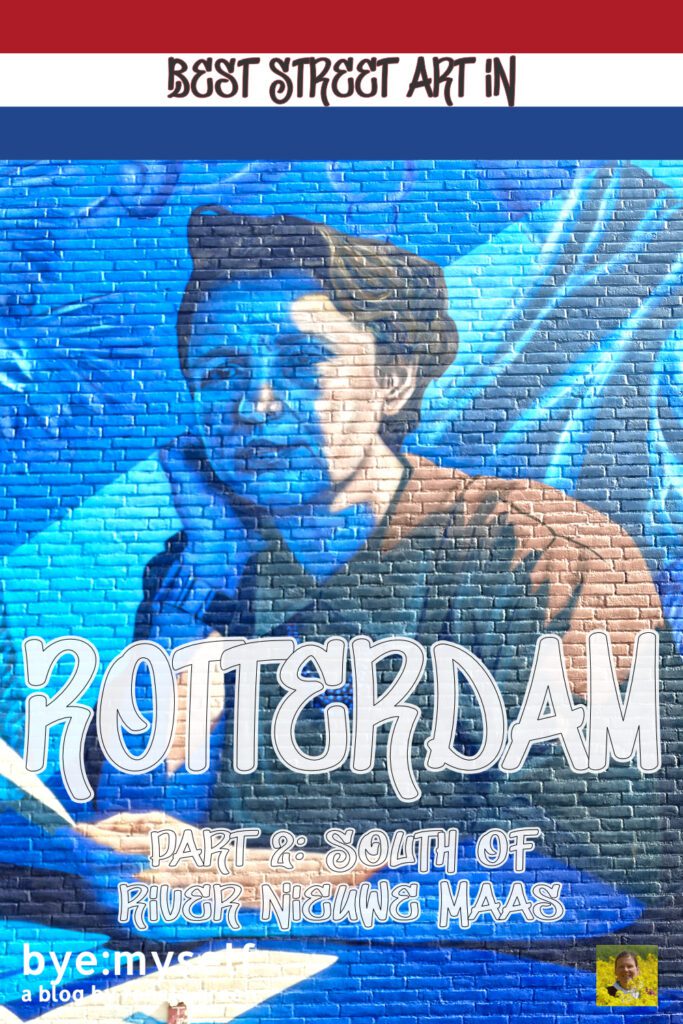
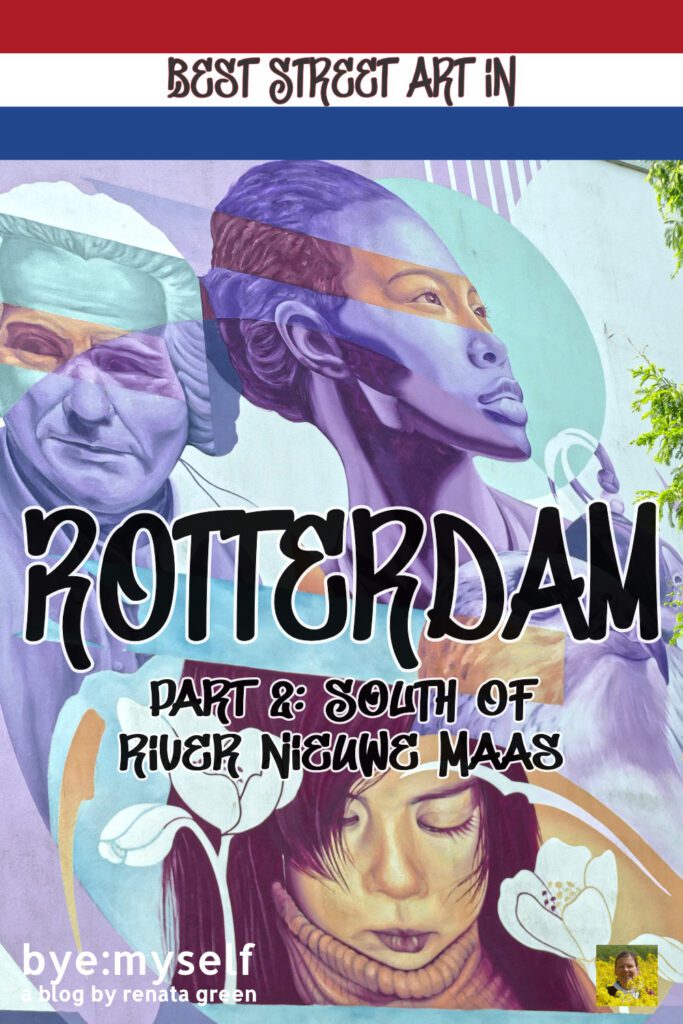
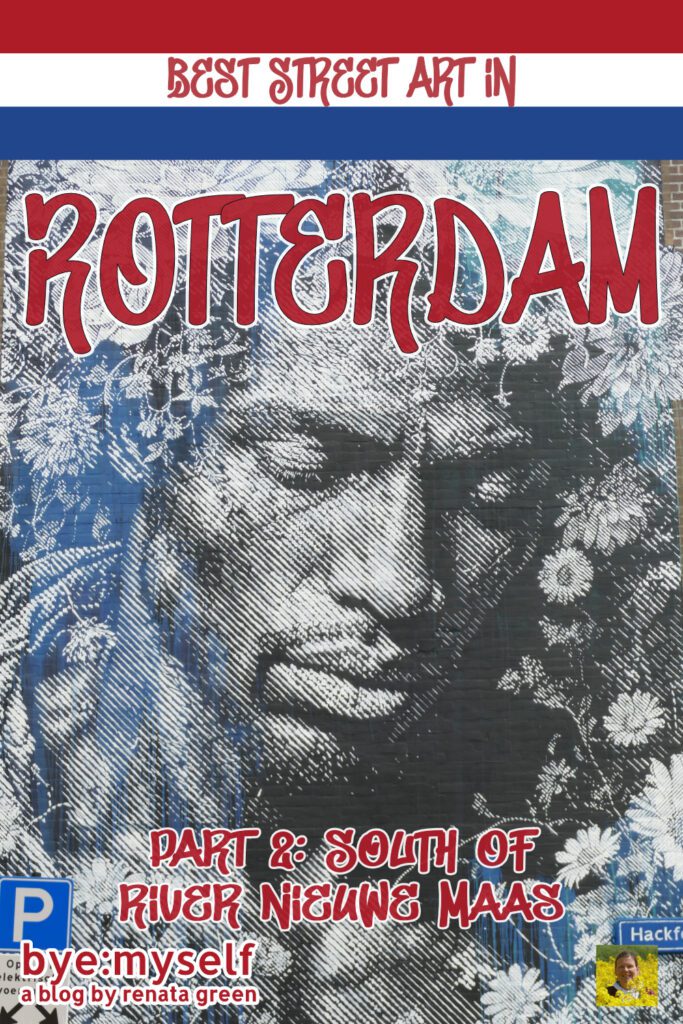
If you choose to pin this post for later, please use one of these pictures:
Did You Enjoy This Post? Then You Might Also Like These:
Best Street Art in LISBON – Part II: Marvila

The World’s Largest Mural in Incheon
Street Art in SEVILLE: Arte Para Todos in the San Pablo District
Best Street Art in SINT MAARTEN
Best Street Art in LONDON – Part I: Camden
Best Street Art in MALAGA
Murals in CURACAO: The Best Street Art Projects in Willemstad
JIDAR Street Art Festival – How Rabat Celebrates International Urban Art
Disclaimer: I am very appreciative that Rotterdam Partners supplied my research stay in Rotterdam with a complimentary Rotterdam City Card. Nevertheless, this post was in no way influenced by my cooperation partners.