In my post Why ROTTERDAM Is Worth Visiting: A Complete Guide to the Urban Heart of the Netherlands, I raved about the trendy, dynamic, and multicultural vibe of Holland’s second-largest city. Although I fell in love with Rotterdam instantly, there were moments when I missed the cutesy, traditional side of the Netherlands. Luckily, I found exactly that just about half an hour east of the city. In Kinderdijk, nineteen historic windmills rise along the waterways and make a day trip from Rotterdam a truly authentic experience.

For centuries, they have shaped a landscape that is not only picturesque but, above all, functional. Here, it becomes clear how closely the country’s history is intertwined with the constant struggle against the elements. However, it’s the authenticity that makes Kinderdijk so very special. Those mills are not merely an attraction for visitors, but part of a historic water management system that has been used for centuries and remains largely intact to this day. In 1997, UNESCO honored Kinderdijk as an exceptional testament to Dutch engineering by recognizing it as a World Heritage Site.
Kinderdijk – How it All Began
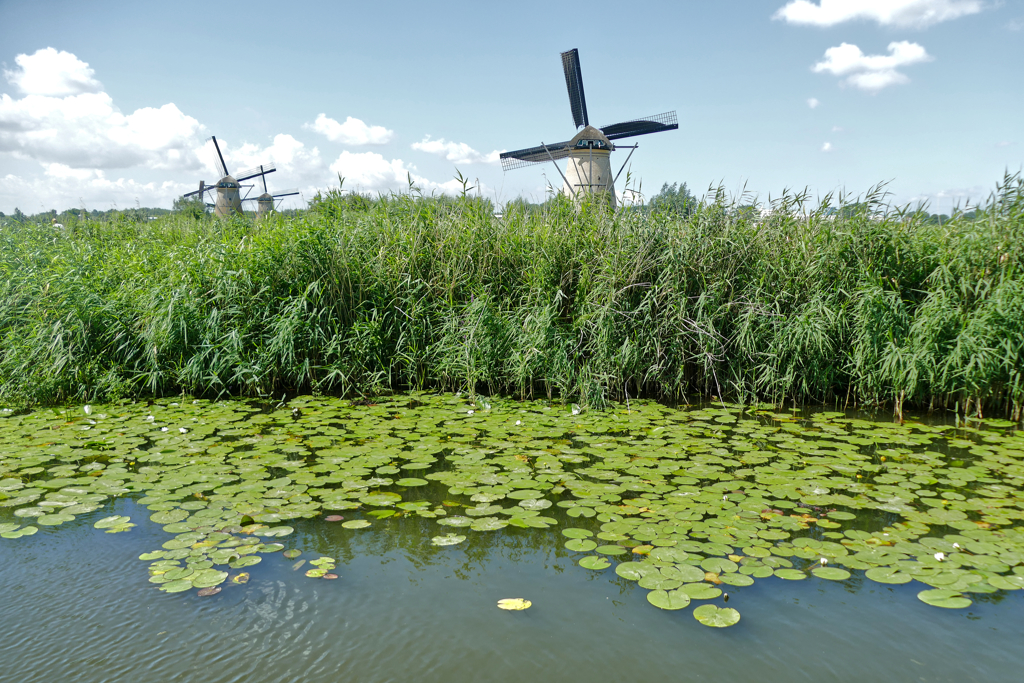
The village of Kinderdijk lies approximately 25 kilometers east of Rotterdam. With its 19 historic windmills dating back to the 18th century, it is home to one of the most fascinating and best-preserved ensembles of traditional engineering.
Yet, the history of this unique cultural landscape began around 1,000 years ago, when the Alblasserwaard area was still an impassable peat bog. During the settlement and dike construction in the 13th century, the inhabitants formed dike associations to drain the land and make it usable for agriculture. However, over the centuries, this drainage led to a massive subsidence of the soft peat soil. Soon, the polder land lay lower than the adjacent rivers, so that rainwater and groundwater could no longer drain away naturally. Floods were a constant threat.
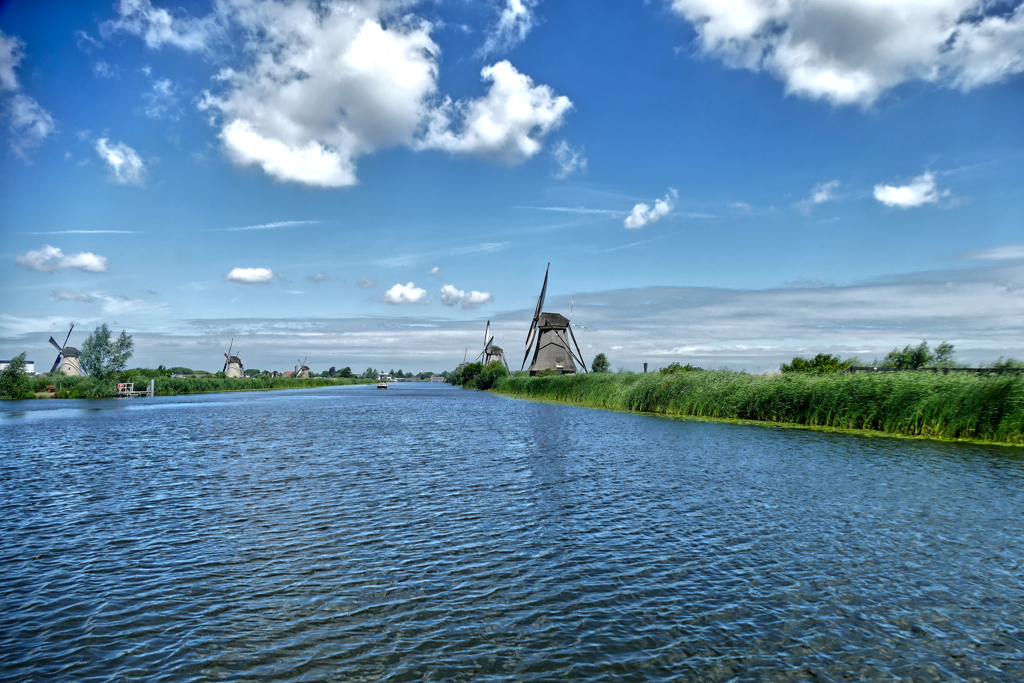
To counteract the subsidence of the land and keep it permanently dry, 20 powerful windmills were built between 1738 and 1740, 19 of which still stand today. These mills functioned as a sophisticated, multi-stage pumping system. They used scoop wheels and Archimedes’ screws to transport water from the low-lying polders to higher-lying reservoirs, known as boezems. From there, the water could be released into the rivers in a controlled manner at low tide.
Tables Turn
The Industrial Revolution in the late 19th century brought technological change. The Wisboom steam pumping station, built in 1868, supplemented wind power and initiated the transition to modern, mechanical drainage methods. Over the course of the 20th century, these systems were gradually converted to diesel and electric power.
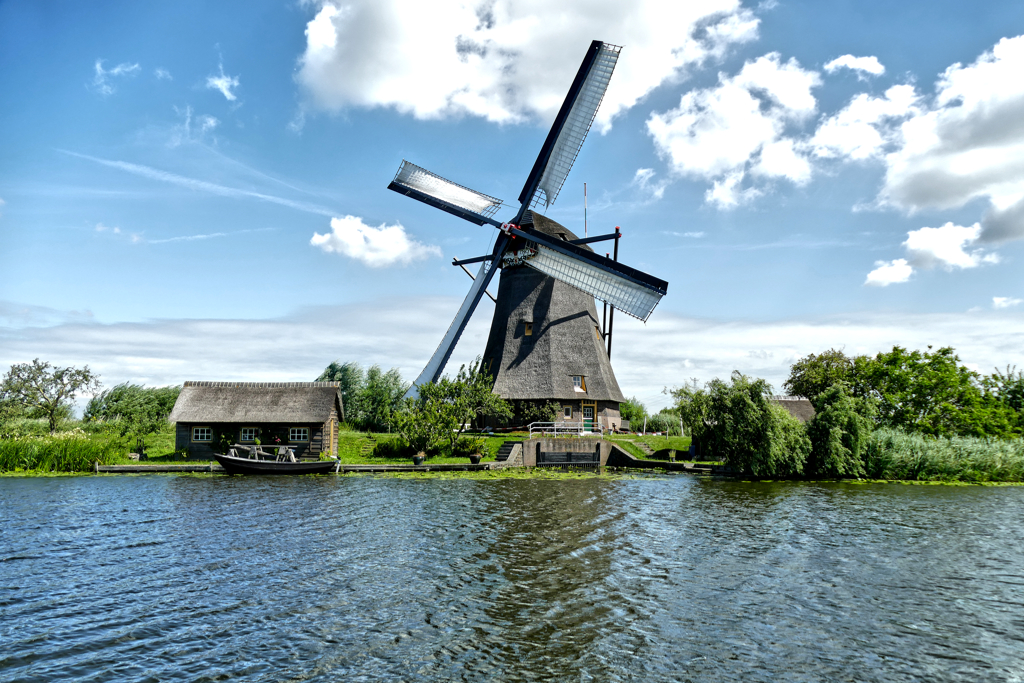
A historically significant exception occurred during WWII. As the country’s fuel supply collapsed, the old windmills were reactivated and once again saved the area from flooding.
Today, Kinderdijk presents itself as a living monument and one of the most alluring tourist attractions in the Netherlands. Due to its outstanding combination of human ingenuity and landscape architecture, the windmill network was officially designated a UNESCO World Heritage Site in 1997.
The Real Deal: Inhabited Mills
I take authenticity over polished cutesy anytime! That’s why I particularly liked that Kinderdijk isn’t a curated open-air museum. In fact, of the 19 windmills, 16 are still leased as homes to professional millers and their families, who keep the traditional craft alive. Living in the mills isn’t a romantic relic from bygone days. It is an integral part of the World Heritage concept.
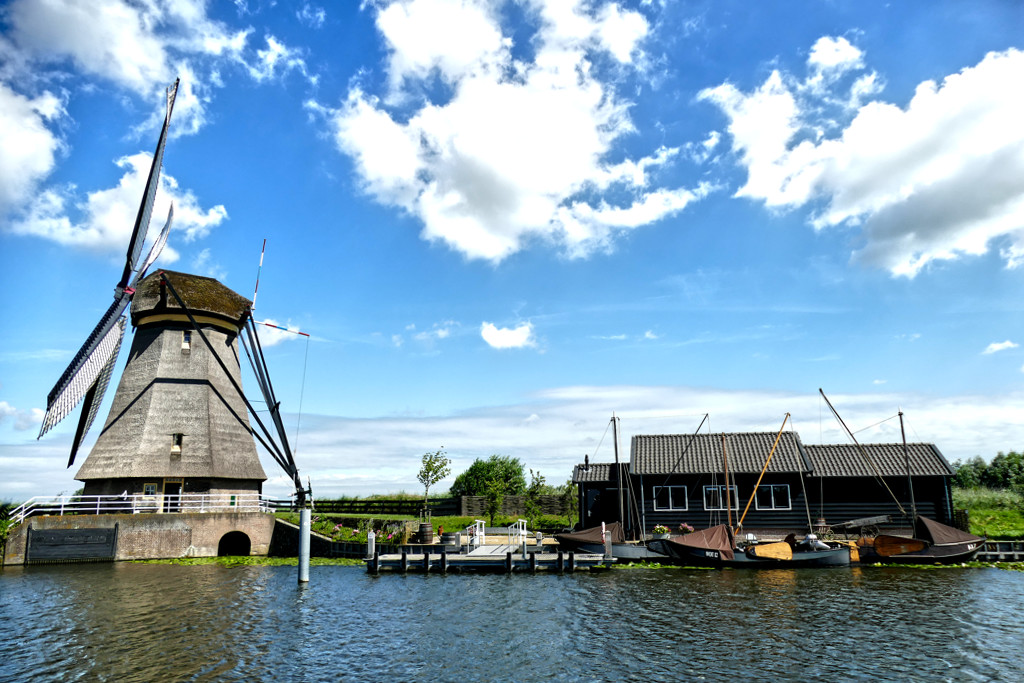
The basic requirement is that the residents possess the necessary professional knowledge and experience to actually operate and maintain their mill. Mind you, the miller’s profession is very demanding. They must be able to assess wind and weather conditions and then adjust the sails accordingly. In addition, the tenants are also expected to lecture visitors about life and work in a mill when needed.
Come on in: Museum Mills
As explained above, 16 of the 19 mills are inhabited. The remaining three are museum mills and can be visited. It’s important to note that Nederwaard and Blokweer are part of the regular visitor program, while Overwaard is open for exclusive group visits.
The Nederwaard mill dates back to 1738 and is a classic drainage mill.
Its function is to pump water from the lower-lying polder to the higher-lying Boezem. The large wooden gears and powerful mechanics will impress you. When the mill is in operation, you can feel the sheer power and energy contained within this structure.
Inside, you’ll gain a fascinating glimps into the life of the miller’s family. You’ll see a kitchen, traditional bedrooms, and the miller’s workspace. The well-maintained garden, with its colorful flowers and fruit trees, animals, and outbuildings, illustrates how the land once provided for the miller’s family.
Milling Around
Built in 1630, the Blokweer Mill is significantly older than the other mills in Kinderdijk. It is a post mill, meaning the entire upper section rotates to turn the sails into the wind.
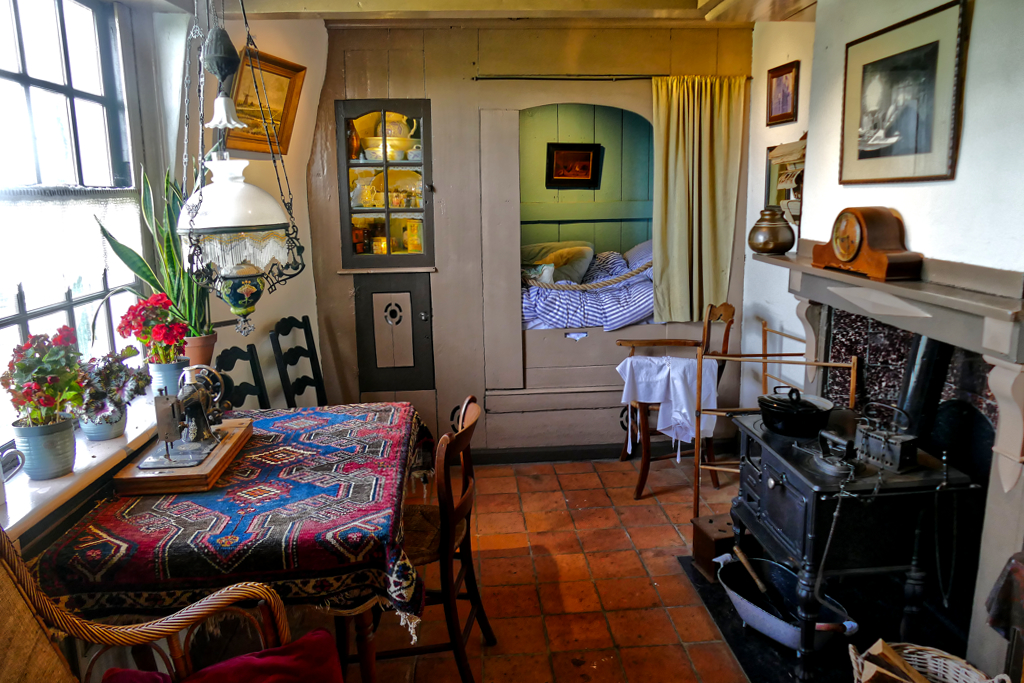
What makes Blokweer particularly interesting is the entire historic site.
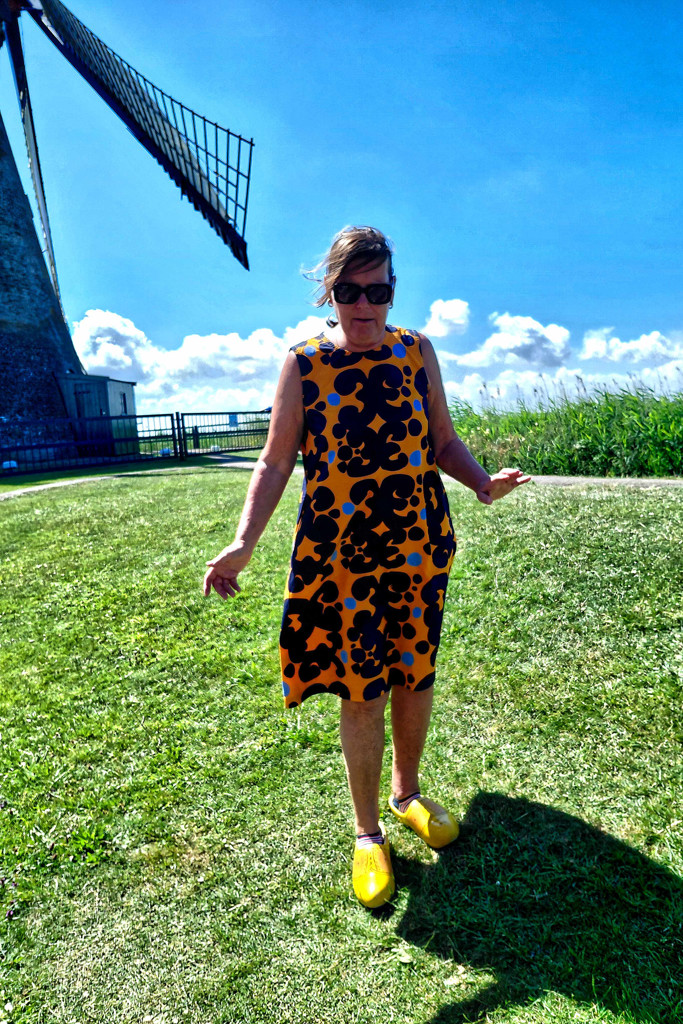
The mill has been furnished to depict the life of a miller’s family in the 1950s. The grounds include a vegetable garden, a hayloft, and farm animals. The family had to be largely self-sufficient while simultaneously performing technically demanding and responsible work.
Last but not least, the Overwaard Mill differs from the other mills in that it could pump water in both directions. This allowed it to be flexibly integrated into the drainage system. The mill also has a historic workshop with tools, some dating back to the 18th century. Currently, however, the Overwaard Mill can only be visited as part of an exclusively reserved group tour.
Legend Has It: How Kinderdijk Got Its Name
The name Kinderdijk, which translates to Children’s Dike in English, commemorates the historic St. Elizabeth’s Flood of 1421. Legend has it that after the flood, a cradle was discovered floating in the inundated area. Inside lay a baby, apparently named Beatrijs de Rijke, who had survived the disaster. A cat sat on the edge of the cradle, constantly jumping back and forth to keep it balanced and prevent it from tipping over. The child was saved – and the place was subsequently named Kinderdijk.
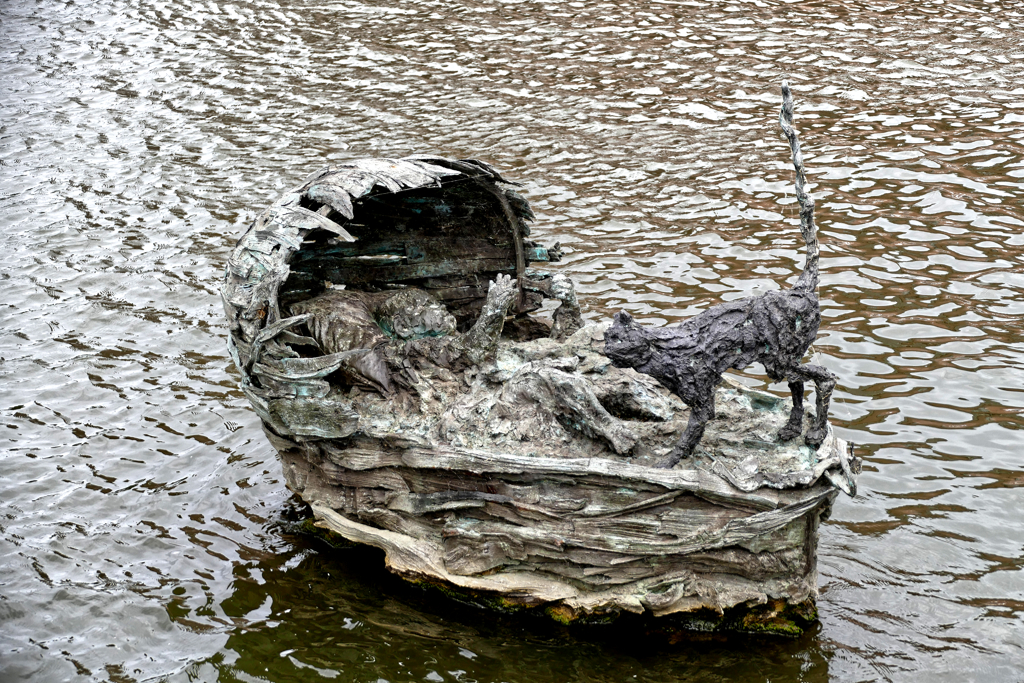
To be honest, I think they rather should have called it Cat Dike, since it was the clever mouser who performed the rescue!
Plan Your Visit
How to Get There
First things first: I would advise against traveling by car. Parking near the windmills is limited and subject to a fee. Also, travelling by public transport from Rotterdam is quick and easy. The most convenient means is the WaterShuttle, which runs directly from the Erasmus Bridge stop and takes about 30 minutes. A one-way trip costs 9.75 €uro, and a return trip costs twice as much, obviously. However, your bicycle travels with you for free!
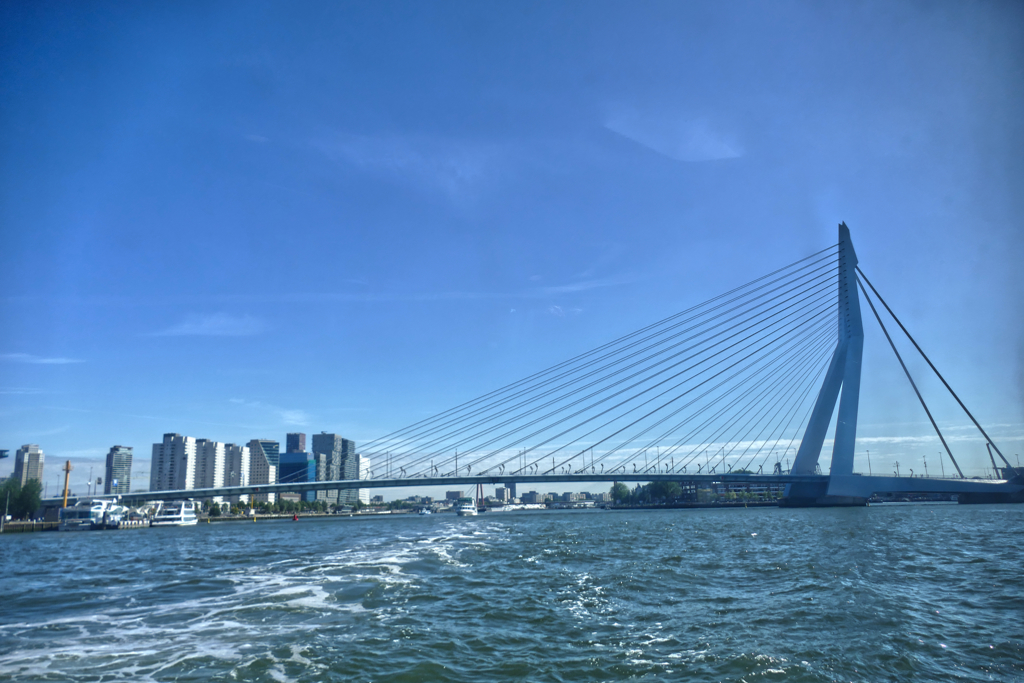
As it only operates on Fridays and weekends, you can take the Waterbus line 20 from Rotterdam to Ridderkerk and transfer there to the Driehoeksveer ferry to Kinderdijk on all other days. The crossing takes about ten minutes and costs 2.35 €uro each way. Alternatively, you can take the Waterbus to Alblasserdam and continue by bicycle from there. The ride to Kinderdijk should take about 15 minutes.
If you’re not set on taking a boat trip at all, it’s even easier, as there are regular bus connections. Bus #489 takes you from Kralingse Zoom to Kinderdijk Molenkade every half hour in about 35 minutes. You can pay for your tickets directly on the bus with a credit card or contactless payment.
What to Visit
It would be a good idea to think about what you actually want to see and do before your visit. Access to the regular pedestrian and cycle path through the windmill area is free. However, if you want to visit the museum windmills, see the multimedia exhibition in the visitor center, or take one of the two boat trips, you will need a ticket. Since capacity is limited for each time slot, you should book it online in advance on their website. This way, you’ll also receive a 10 percent discount!
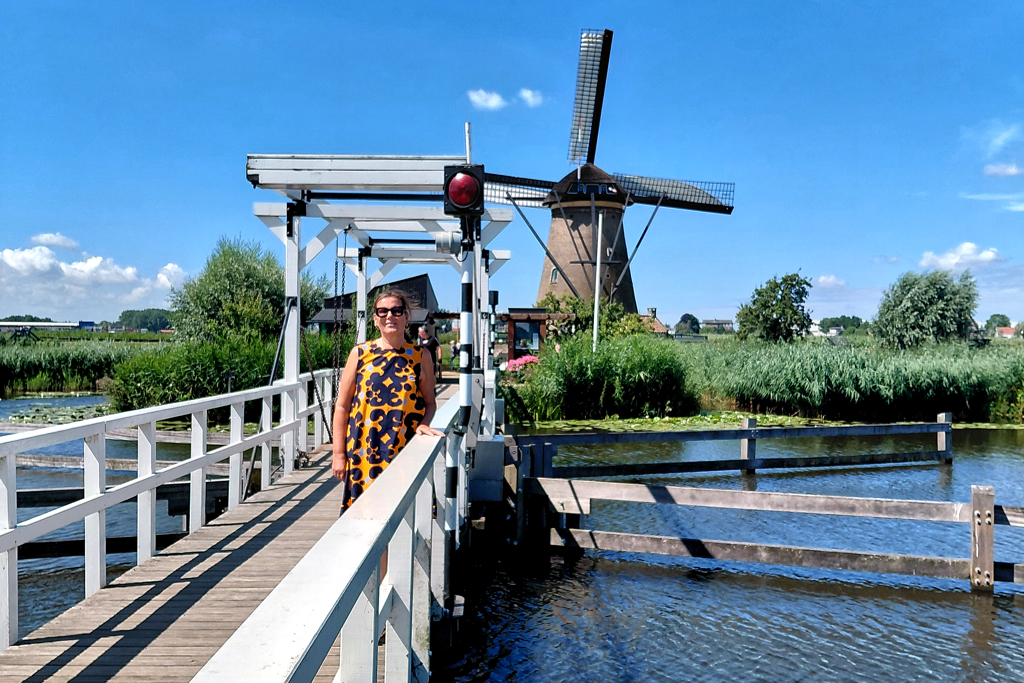
The combination ticket, which covers all attractions on the site, costs 23.50 €uro for adults aged 13 and over, or 21 €uro when booked on their website. In addition, there is the option of taking a guided tour. It lasts 90 minutes and costs 25.90 €uro, which also includes all the activities mentioned in the combination ticket above.
My Tip
The visitor center has a lovely gift shop with lots of typical Dutch-themed knick-knacks and souvenirs. I bought a cheese-shaped bicycle bell, for example. Bicycles and cheese—it doesn’t get more Dutch than that!
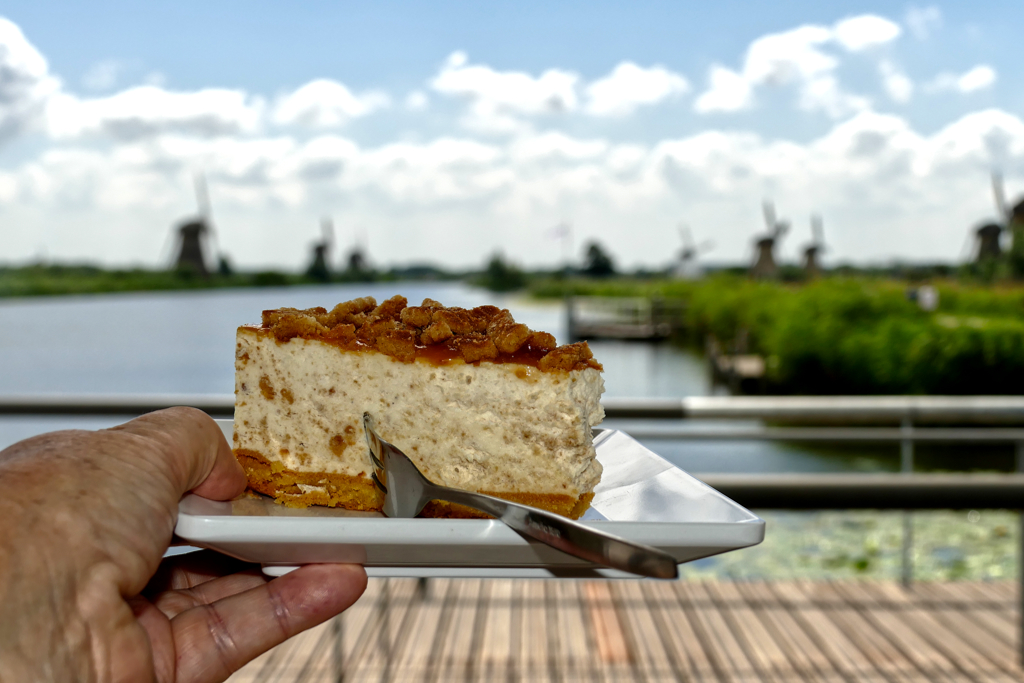
Right next door, you can refuel at the Visitor Center Cafe with snacks and drinks after your hike or bike ride. The Million Dollar View from their terrace comes free of charge with your meal!
How to Get Around
As I have repeatedly emphasized, contrary to, for instance, the Zaanse Schans, Kinderdijk is not an open-air museum, but a real village. Therefore, neither will you be greeted by a cliché Dutch theme park character nor will you be chauffeured around in a silly tourist train. Instead, you’ll have to figure out how to get around on your own. There are basically three ways: on foot, by bicycle, or by boat. You don’t have to organize the third option yourself, obviously, but it’s the only one of the three that requires tickets.
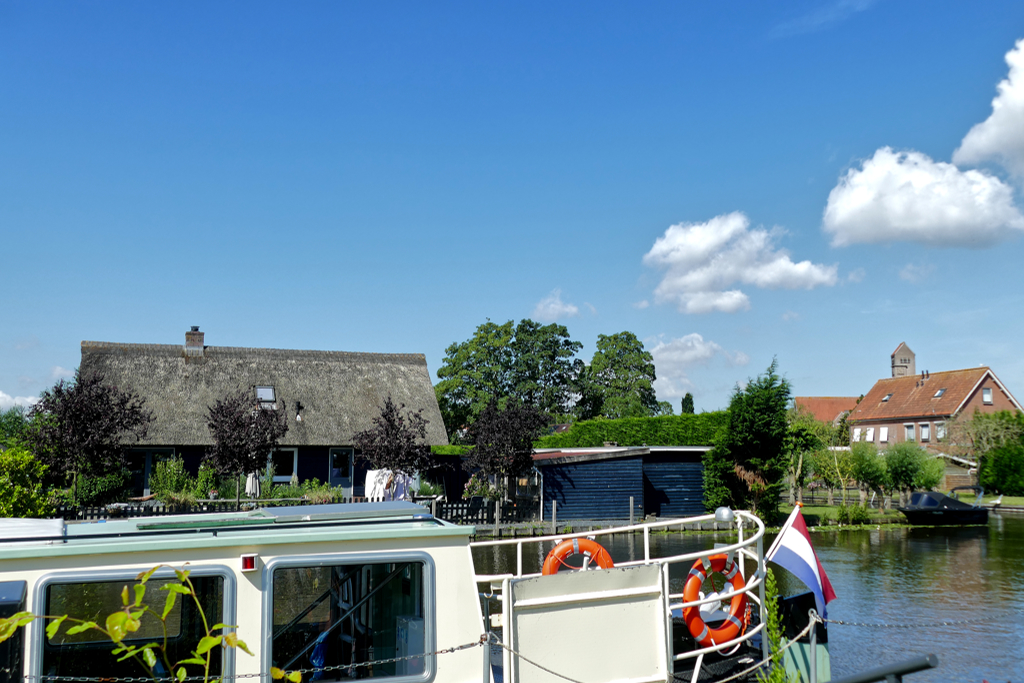
There are two different boat trips. The so-called Hopper is a kind of hop-on-hop-off boat. It travels along the windmills, and you can get on and off at several stops. This makes it perfect to combine the boat trip with a visit to the museum windmills.
The Cruiser, on the other hand, is a classic circular tour and travels a longer route through the windmill area, passing many sights. However, you can’t get off the Cruiser during the approximately one-hour trip. That being said, I must say that I loved the cruise. Gliding quietly along the waterway between those captivating buildings, the view changing at every bend, giving way to amazing views of the lush scenery. I definitely recommend taking this very relaxed cruise. And the best thing is that with your combo ticket, you can take both boat rides!
Landtravel
During my visit, the distances in Kinderdijk seemed incredibly long, even though the main path is less than two kilometers from the entrance to the last windmill. I think that impression is deceptive because it’s so flat, giving you the feeling of walking towards infinity. However, the windmills are spread across an extensive polder landscape. A complete visit therefore involves considerably more walking than the roughly two kilometers the concentrated windmill rows might suggest.
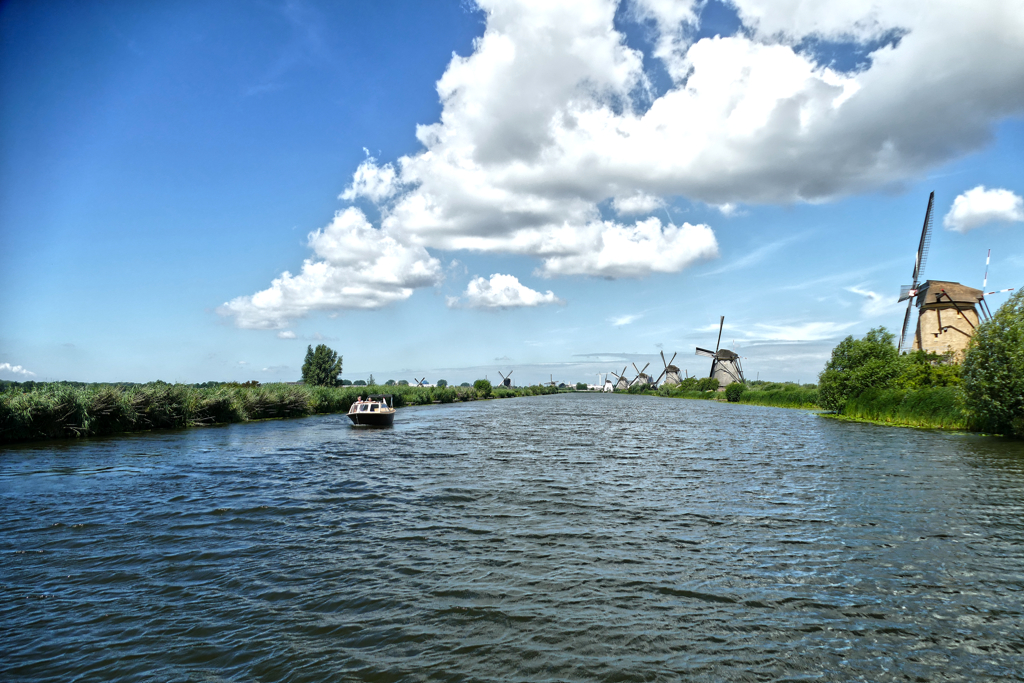
That being said, although it’s not as incredibly far as it seems, it’s obviously much faster and more comfortable to explore the area the classic Dutch way, namely cycling.
If you cannot bring your own bicycle, there are several rental options near Kinderdijk. Just 500 metres from the entrance to the windmill area, Partycentrum De Klok rents sturdy bicycles for 10 €uro per day, with no time limit. However, booking in advance is not possible.
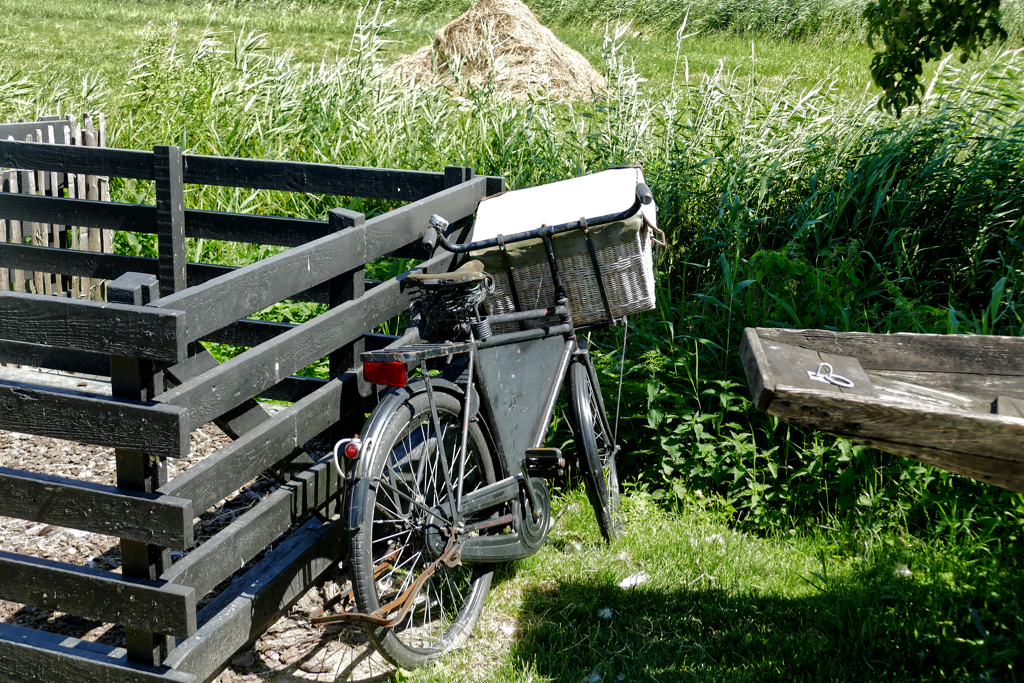
Another option is Tourist Info Alblasserdam, about 5 kilometers from Kinderdijk. This is particularly convenient if you arrive by Waterbus or by car, as the Tourist Info is located near the harbour and offers free parking. From here, you can cycle to the windmills along the dike.
Best Cycling Routes
There are several cycling routes around Kinderdijk, ranging from short outings to longer tours through the surrounding polder landscape. For a relaxed outing, where you can cycle along at a leisurely pace and make plenty of stops for photos, the classic windmill route is highly recommended. However, you can combine the ride with a loop through the nearby villages. One popular option takes you from Kinderdijk through the surrounding polder landscape and back via Oud-Alblas, where you’ll encounter thatched farmhouses, well-tended front gardens and tranquil canals. Depending on the route chosen, a leisurely tour can easily be extended to 15 kilometres or more.
For those who want to explore the wider Alblasserwaard, longer routes of around 35 to 45 kilometres take you deep into the open polder landscape. These tours lead along narrow waterways, dikes and meadows, through small villages and past numerous historic windmills. The landscape is particularly characteristic of the Alblasserwaard, with its long, narrow fields, drainage ditches and grazing cattle. Along the way, keep an eye out for the unmanned stalls where you can buy fresh polder cheese.
Visiting Organized
In this post, I’ve shown you how you can easily visit Kinderdijk on your own. If that still sounds too complicated or time-consuming for you, you can, of course, also book organized tours covering the Rotterdam region**:
Pinnable Pictures
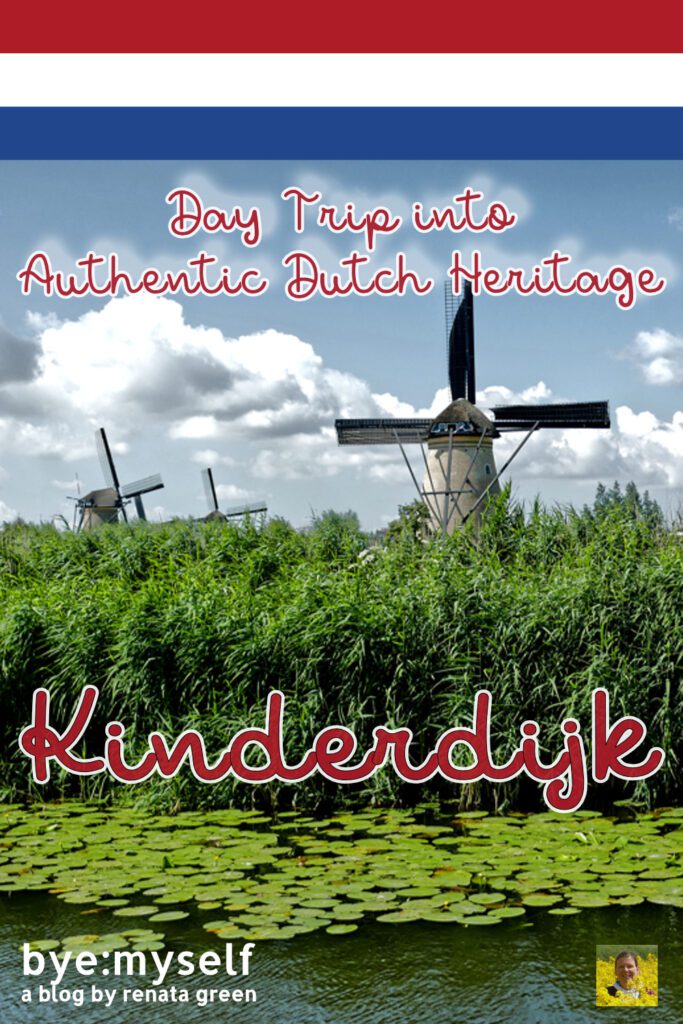
If you choose to pin this post for later, please use one of these pictures:
Did You Enjoy This Post? Then You Might Also Like These:
The Best Spots in HAARLEM You Should Not Miss
ARUBA: The Powerful Murals of San Nicolas

Where Holland Tastes Best: Discovering the Flavors of the Amsterdam Area

IF WALLS COULD SPEAK: The Best Street Art Project in Amsterdam

Four Days in AMSTERDAM – Unique Things To See on a Long Weekend
24 hours in AMSTERDAM
What Not to Miss in ARUBA, the Caribbean A-Lister
KINDERDIJK – a Day Trip into Authentic Dutch Heritage
*Disclaimer: I’m very appreciative of Stichting Werelderfgoed Kinderdijk and Aqualiner Group B.V. for inviting me on a day trip to Kinderdijk. However, all descriptions of the services are mine and were by no means influenced by my cooperation partners.
**This is an affiliate link. Hence, if you book through this page, you not only get the best deal. I also get a small commission that helps me run this blog. Thank you so much for supporting me!