Bruges is without a doubt one of Europe’s most captivating cities, and due to its central location, it is easily accessible from many spots in Belgium and the Netherlands. This makes Bruges an ideal day trip destination. With its picturesque canals and romantic bridges, idyllic alleys and squares, magnificent historic townhouses, and the impressive Grote Markt Square, you might think you have stumbled into a medieval knight’s tale.
In this post, I show you what to do on a day trip to Bruges.

Bruges
Bruges is one of the best-preserved historic cities in Europe. Its history dates back to the early Middle Ages. The city developed along the Reie River and, through its connection to the North Sea, participated in international trade. In the 12th and 13th centuries, Bruges became a major trading center for textiles, wool, spices, and other goods.
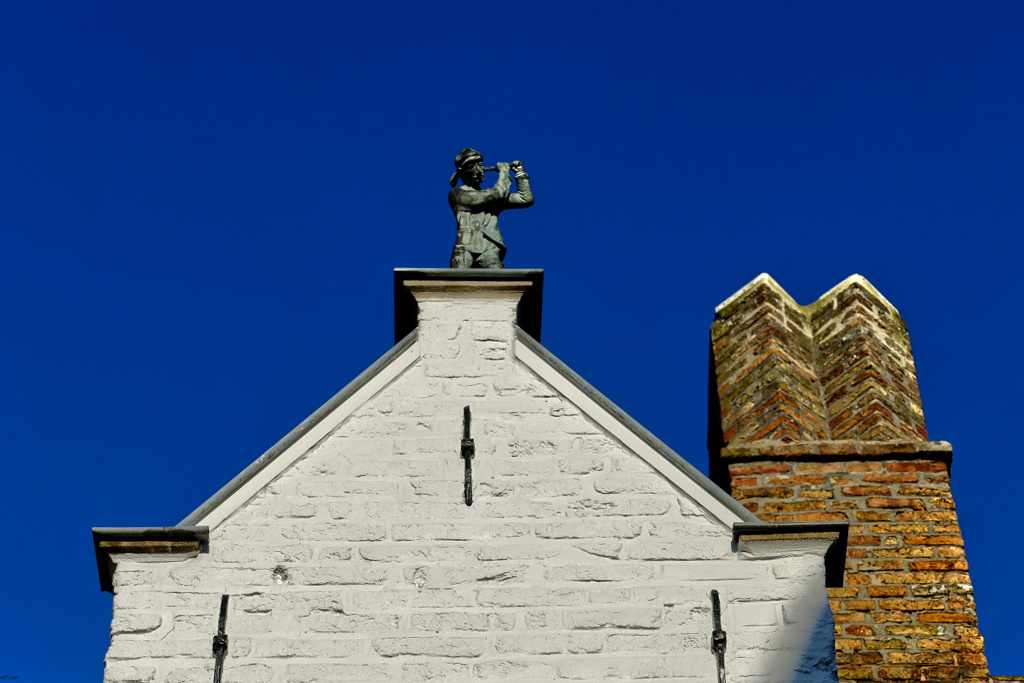
Bruges reached its zenith primarily in the 13th and 14th centuries. The city was a center of international trade and finance. This led to the construction of numerous impressive buildings, churches, and townhouses. Flemish painting also developed significantly. Artists like Jan van Eyck and Hans Memling worked in Bruges and contributed to the city’s cultural reputation.
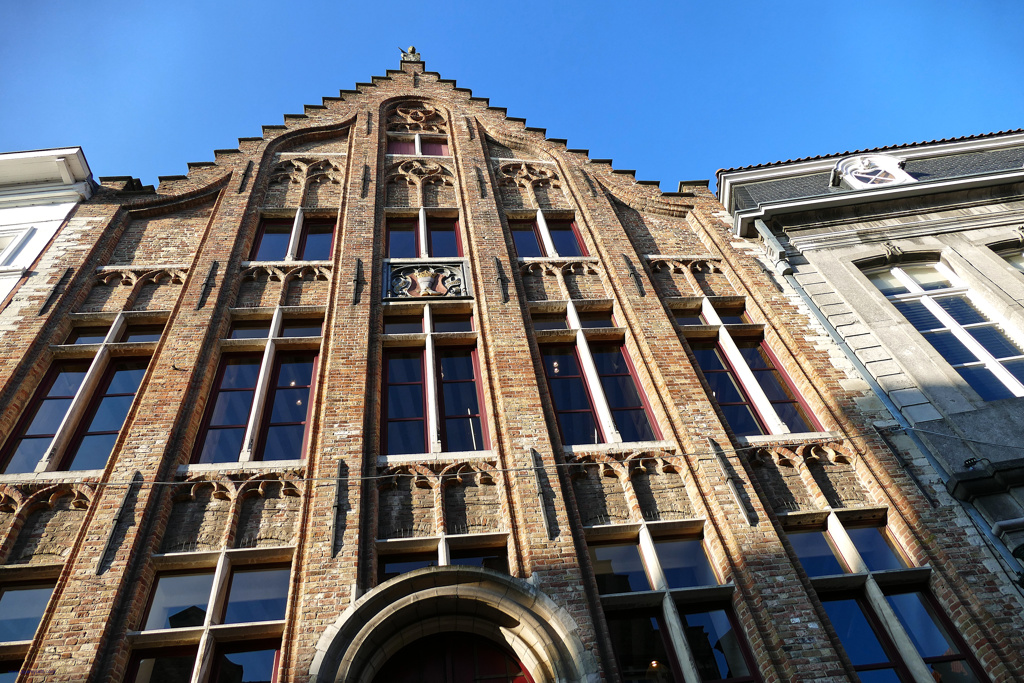
From the 15th century onward, Bruges gradually lost its economic importance. The connection to the North Sea increasingly silted up, while Antwerp gained prominence as a trading center. Bruges became economically marginalized and remained comparatively insignificant for centuries. This very development, however, contributed to the preservation of large parts of the medieval city structure and historic buildings.
In the 19th and early 20th centuries, visitors increasingly discovered Bruges as a romantic destination. Its historic center has been a UNESCO World Heritage Site since 2000.
Grand Tour of a Small Gem
It’s only half an hour from Brussels to Bruges, and trains are frequent and reliable. But that is certainly only one reason why Bruges is one of the most popular places for a day trip. Like many other merchant cities, Bruges had to trade for tourism, and its 120,000 inhabitants currently welcome over 8 million visitors per year. Yes, that’s the price for having one of Europe’s most beautiful and best-preserved historic old towns. Neither wars nor other powers destroyed Bruges. Therefore, the medieval cityscape and historic buildings are very well preserved. In addition, there are dozens of fascinating museums and landmarks to visit.
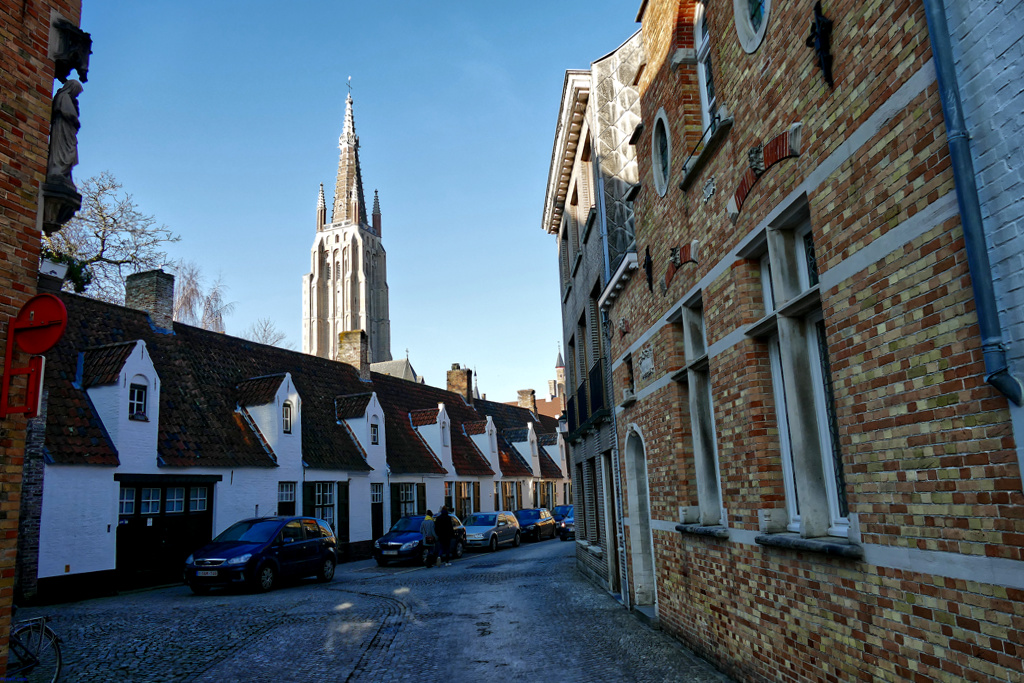
Bruges Sint-Pieters train station is a short walk southwest of the historic city center. If you walk across the fields from there towards the historic center, you’ll reach one of Flanders’ typical sites in just a few minutes, namely the Ten Wijngaarde Beguinage.
Ten Wijngaarde Beguinage
The Ten Wijngaarde Beguinage is one of the most atmospheric places in the center. Unlike many of the city’s landmarks, this is less about a single spectacular building and more about the ensemble of white houses, courtyard, and garden with a history typical of the region.
Beguines were women who led a religiously influenced, yet relatively independent life. They did not take perpetual vows and could therefore live differently than nuns in a traditional convent. The beguinage offered them their own community as well as protection and financial security.
The Ten Wijngaarde Beguinage was founded around 1245. Nevertheless, the white houses surrounding the large courtyard date from different centuries. The complex also includes the Beguinage Church, dedicated to Saint Elizabeth of Thuringia. The original early Gothic church dates from the 13th century. It was partially rebuilt after a fire in the 16th century. When visiting, keep in mind that the beguinage is not a tourist attraction. Single women and Benedictine nuns still live around the expansive garden with its magnificent old trees. Hence, while you are allowed to visit the grounds, follow some rules of conduct: Make sure to keep your voice down and show respect for this exceptional place.
Godshuizen
And speaking of special housing projects, I’d like to point out the so-called Godshuizen. Godshuizen are historic foundation houses in Bruges, essentially comparable to the Dutch hofjes I featured in my post about Haarlem.
These small residential complexes originated in the Middle Ages through private foundations established by wealthy citizens, craftsmen, merchants, and fraternities. The founders financed houses where poor or elderly people could live. The idea behind it was social welfare, but also religious ideals. Those who established or financed such a foundation could simultaneously contribute to their own community and, last but not least, to their own spiritual well-being.
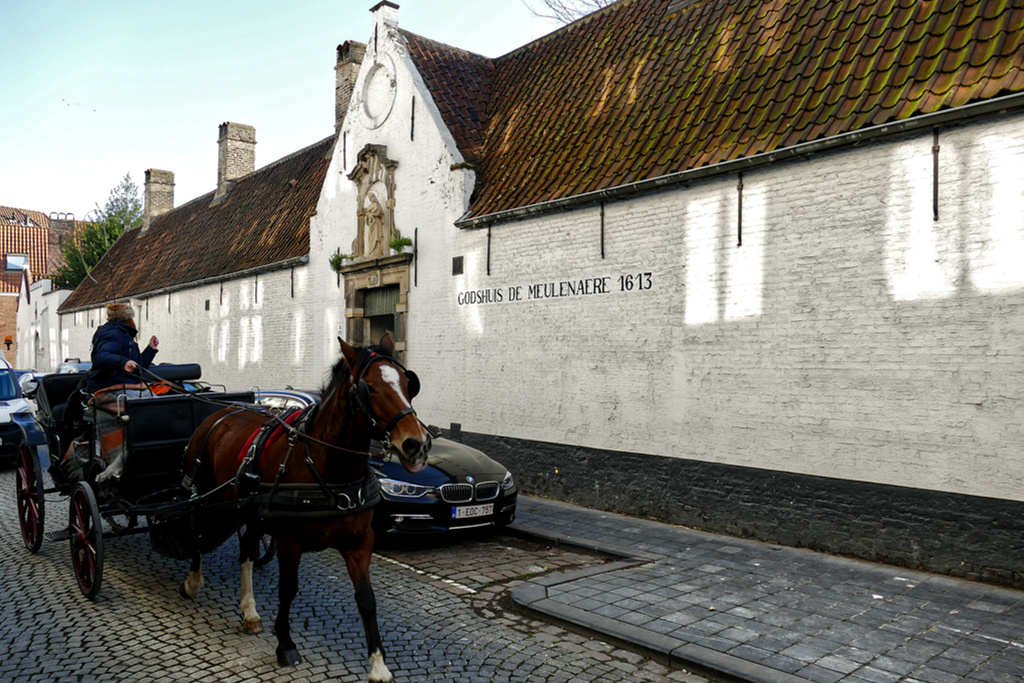
Architecturally, the Godshuizen are usually far less spectacular than the grand patrician houses on the market square. But that’s precisely what makes them so alluring. They often consist of a row of small, whitewashed houses surrounding a communal courtyard. They offer a glimpse into how people lived in Bruges away from the large trading houses.
Today, many of the Godshuizen are open to the public. But here too, it is important to respect the peace and privacy of the residents.
Godshuis De Meulenaere
The Godshuis De Meulenaere originated from a charitable foundation established in 1613 by Johanna de Meulenaere. She dedicated her assets to providing a home for elderly women in need. Following her death in 1615, her administrators established a foundation.
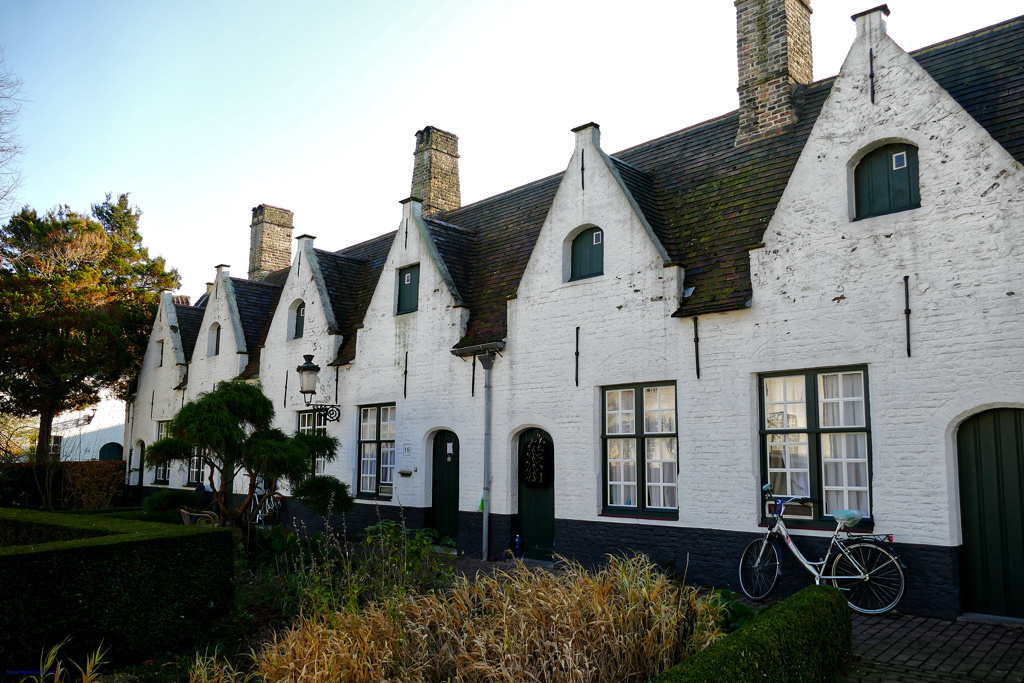
However, the original almshouse was not located on the current site but was moved there at a later date. It was designed to accommodate 24 impoverished women or widows.
Viewed from the street, the almshouse initially appears far less impressive than it actually is. The street-facing side presents a solid, unbroken white brick façade, with entry provided through a remarkable Baroque portal. Beyond this portal lies the complex’s true treasure: a tranquil inner courtyard lined with small houses.
It is interesting to note that the original layout remains clearly visible today. Each of the small houses is only about the width of a door and a window. The distinctive double chimneys resulted from the open fireplaces of adjacent houses being positioned back-to-back. Some of the historic fireplaces and wooden spiral staircases have been preserved.
In the past, the courtyard was far more than a mere decorative feature; it was a shared living space. Here, residents would hang laundry to dry, lay it out on the grass to bleach, or work on bobbin lace in a shady spot.
The Godshuis Sint-Jozef is located right next door. While the two complexes were once separated by a wall, they now form a unified historic complex.
Sint-Janshospitaal
And now we come to my favorite place in Bruges, the Sint-Janshospitaal, St. John’s Hospital in English. No, I didn’t get sick on the trip, and even if I had, the Sint-Janshospitaal, founded in 1150, wouldn’t be a good place to go, as it ceased functioning as the city’s medical center back in 1977. Nevertheless, it’s one of the oldest surviving hospital buildings in Europe. For centuries, it cared for the sick, the poor, pilgrims, and travellers.
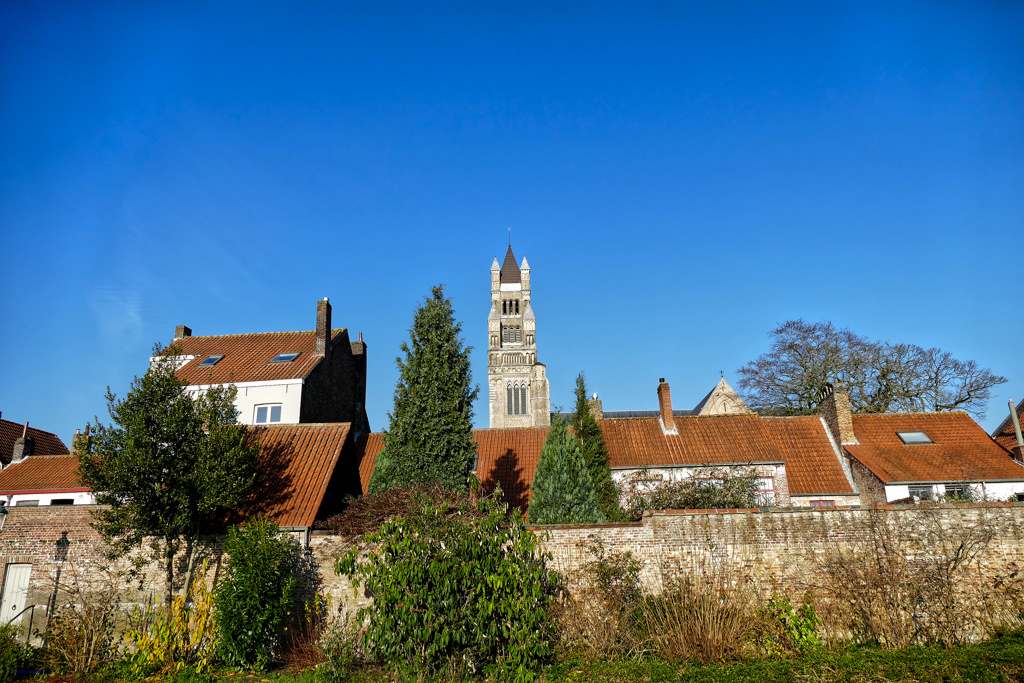
Today, however, it’s one of Bruges’ most important museums. The large medieval infirmary with its high roof structure, which houses valuable paintings, is particularly impressive. The most famous works are by Hans Memling, who worked in Bruges in the 15th century. The hospital owns several of his works, including the famous Shrine of Saint Ursula. This shrine, created in the late 15th century, depicts the legend of Saint Ursula in numerous small scenes. Memling’s ability to portray complex stories in tiny, intricately detailed pictorial spaces is simply mind-blowing.
More Than Decoration
Other works illustrate the importance of art and religious endowments for medieval hospitals. Paintings, sculptures, and liturgical objects were not merely decorative, but integral to the institution’s religious and social function. Also on display are antique furniture and medical objects that show the daily lives of patients and clergy over the centuries. The former 17th-century pharmacy is particularly beautiful.
Also, the herbs that are still growing in the courtyard fill this peaceful place with a wonderful fragrance.
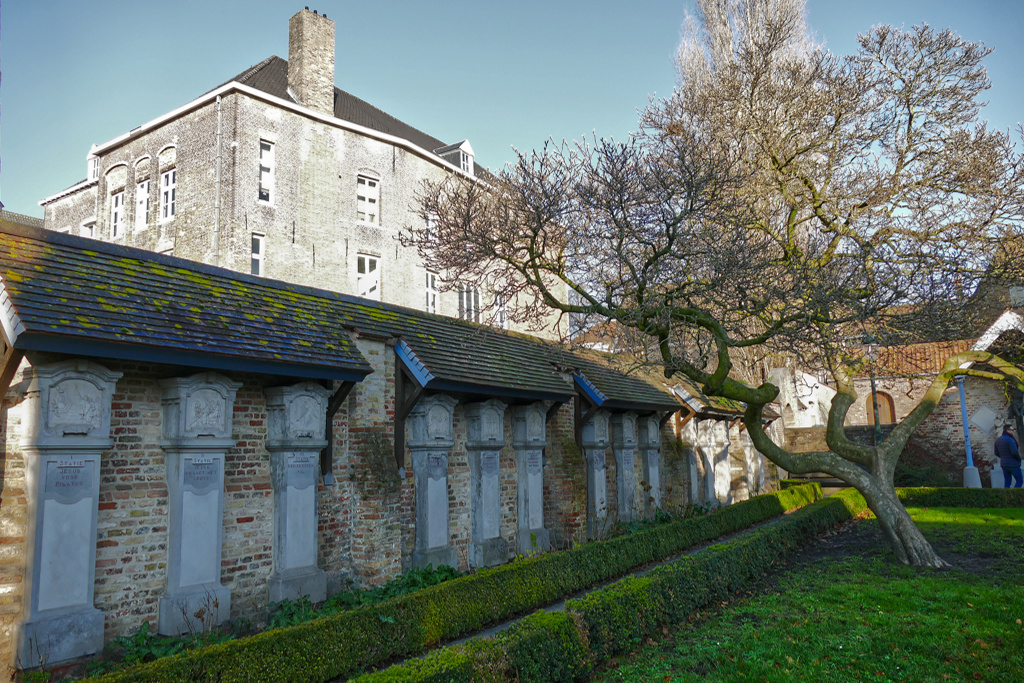
The combination of architecture, history, and art makes the former hospital one of the city’s most interesting museums. It complements the Groeningemuseum, which presents art history in a more traditional museum setting.
The museum is open from Tuesday to Sunday between 9:30 a.m. and 5 p.m., and general admission is 15 €uros. Note that the Musea Brugge Card* also includes the visit to the Sint-Janshospitaal. With this card, you get free admission to 11 of the city’s museums for 72 hours.
Onze-Lieve-Vrouwekerk – Church of Our Lady
An underpass leads from St. John’s Hospital to the famous Church of Our Lady. This imposing Gothic church was founded in the 13th century and is one of the oldest brick buildings in Flanders. Its tower is the second tallest brick tower in the world. The generous use of brick in Flemish architecture is, of course, due to its widespread regional availability. Inside the church, one finds numerous works of art and tombs.
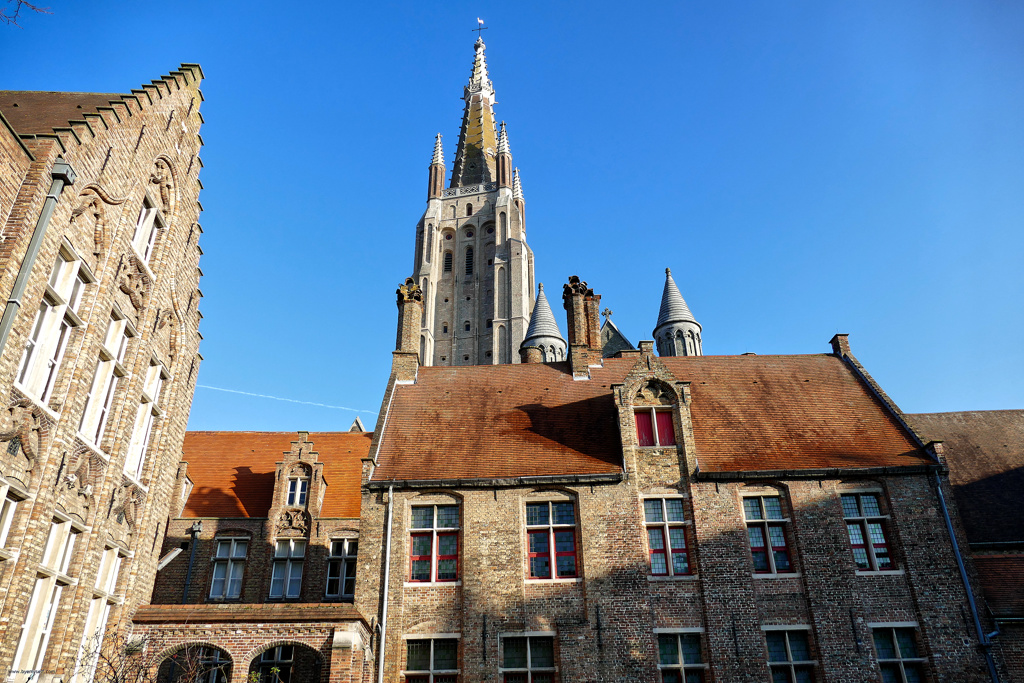
The most important work is undoubtedly Michelangelo’s Madonna and Child. Bruges cloth merchants Jan and Alexander Mouscron acquired the sculpture in 1506. They donated it to the Church of Our Lady in 1514. For a long time, it was assumed that Michelangelo had simply sold the Madonna, which was originally intended for a commission in Siena, to the Mouscrons willy-nilly. Today, however, it is said that the Mouscron brothers commissioned the work directly from the artist.
Either way, it is the only work by Michelangelo that left Italy during his lifetime.
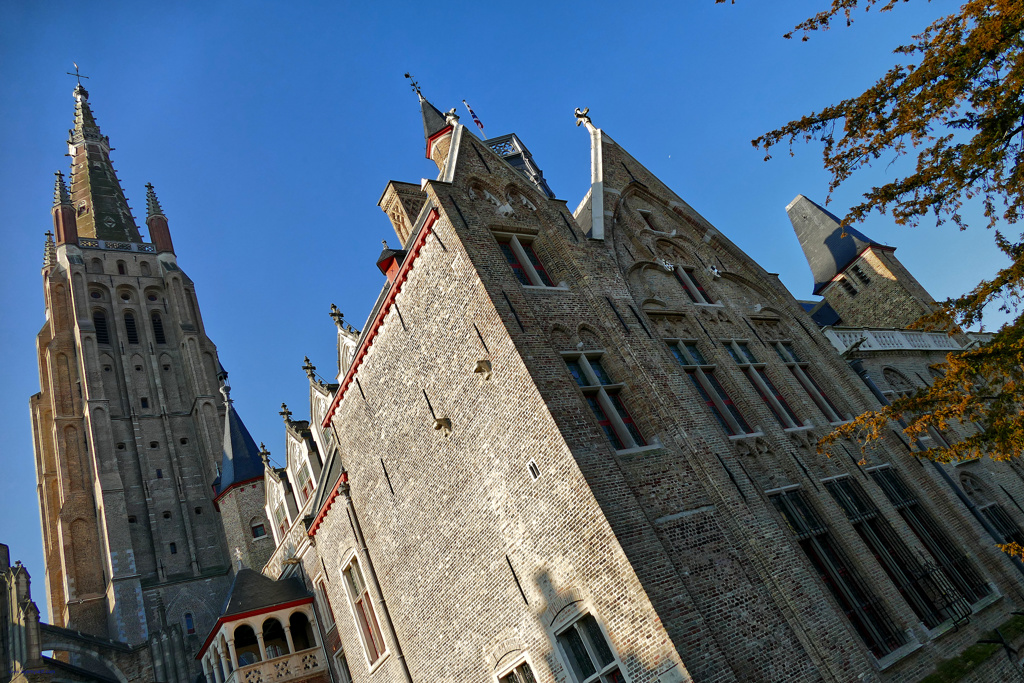
Opening hours are Monday to Saturday from 9:30 a.m. to 5:00 p.m., and on Sundays from 1:30 p.m. Entry to the church itself is free. For the museum area, which houses, among other things, the Michelangelo Madonna, you have to pay a general entrance fee of 10 €uro. Note that the museum area is included in the Musea Brugge Card*.
Fun Fact:
The church has a special passageway to the neighboring Gruuthuse Palace. A private chapel leads directly from the palace into the church. This connection vividly illustrates the wealth and, above all, the social influence of the Gruuthuse family.
Groeningemuseum
Another wonderful place for culture vultures like myself is the Groeningemuseum. It showcases works from six centuries of Belgian art history, focusing on a group of painters who were primarily active in Flemish cities during the 15th and early 16th centuries and are known as the Flemish Primitives. Bruges was one of their most important centers during its economic heyday.
Among the most famous artists are Jan van Eyck and Hans Memling. Their works are characterized by exceptional attention to detail, intense colors, and a new form of naturalism.
The museum is open from April to October, Tuesday to Sunday, from 10:00 AM to 6:00 PM. From November to March, it’s open from 9:30 AM to 5:00 PM. General admission is €15. Note that the Groeningemuseum is included in the Musea Brugge Card*. With this card, you get free admission to 11 of the city’s museums for 72 hours.
My Tip:
Not in the mood for a museum? No problem, as interestingly, numerous works by the Flemish masters are still located in their original or historical places, such as in churches in Bruges. These works are therefore not simply a collection of famous paintings, but part of the history of a city that was one of the most important trading and cultural centers in Europe during the 15th century.
The Canals
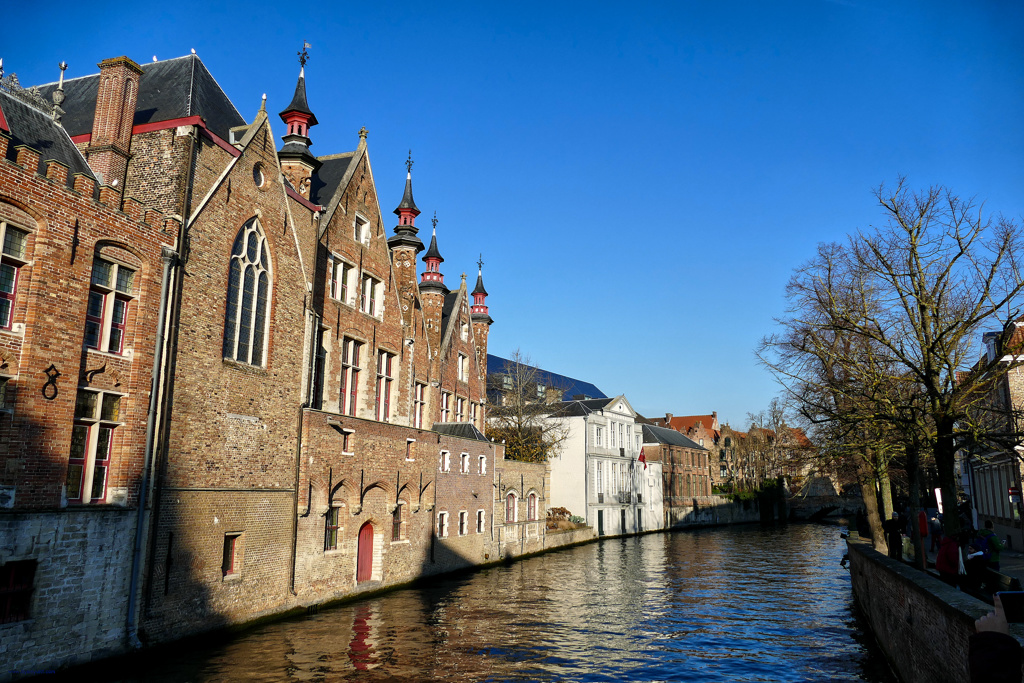
Practically located in the backyard of the Onze-Lieve-Vrouwekerk lies one of Bruges’ most popular photo spots – today, you’d call it a most Instagrammable place. From the Boniface Bridge, you have the most picturesque views of the quaint canals and the surrounding old buildings.
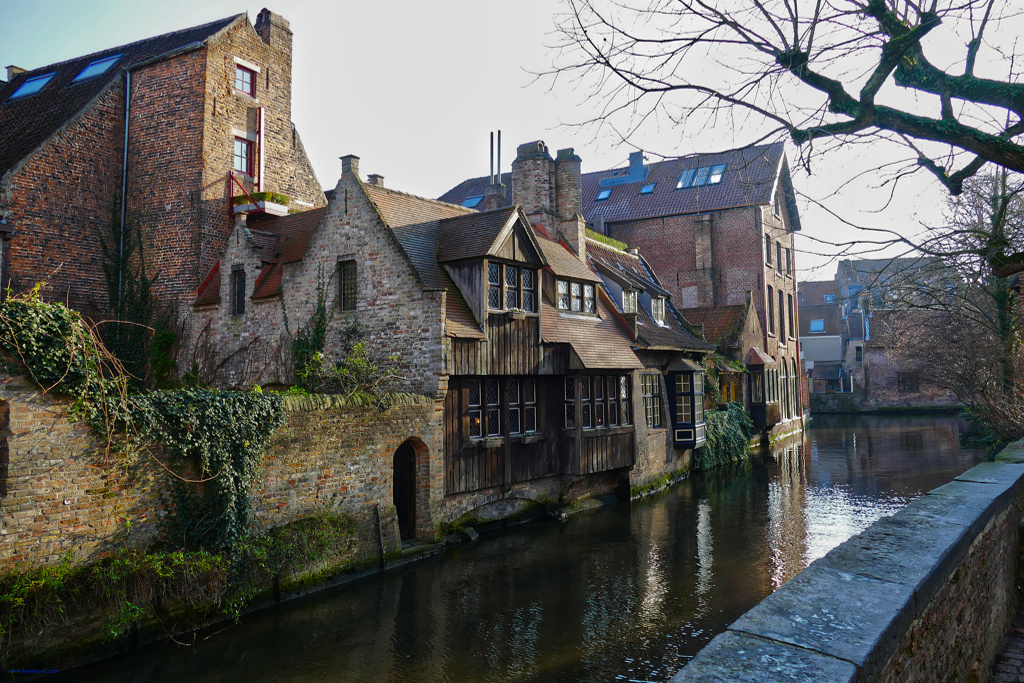
Just like in Amsterdam, the canals are among Bruges’ most distinctive features. The water was by no means merely a decorative backdrop. For centuries, the canals were vital transport and trade routes, fostering the city’s development and prosperity.
Today, the canals are above all one of the best ways to experience the city from a different perspective. A boat trip takes you under low bridges and past medieval houses, former trading houses, churches, and verdant banks. Many buildings appear particularly impressive from the water because their facades are seen from an unusual angle. It’s also interesting that the canals don’t look the same everywhere. Some sections are lined with densely packed rows of historic houses, while others appear surprisingly green and tranquil.
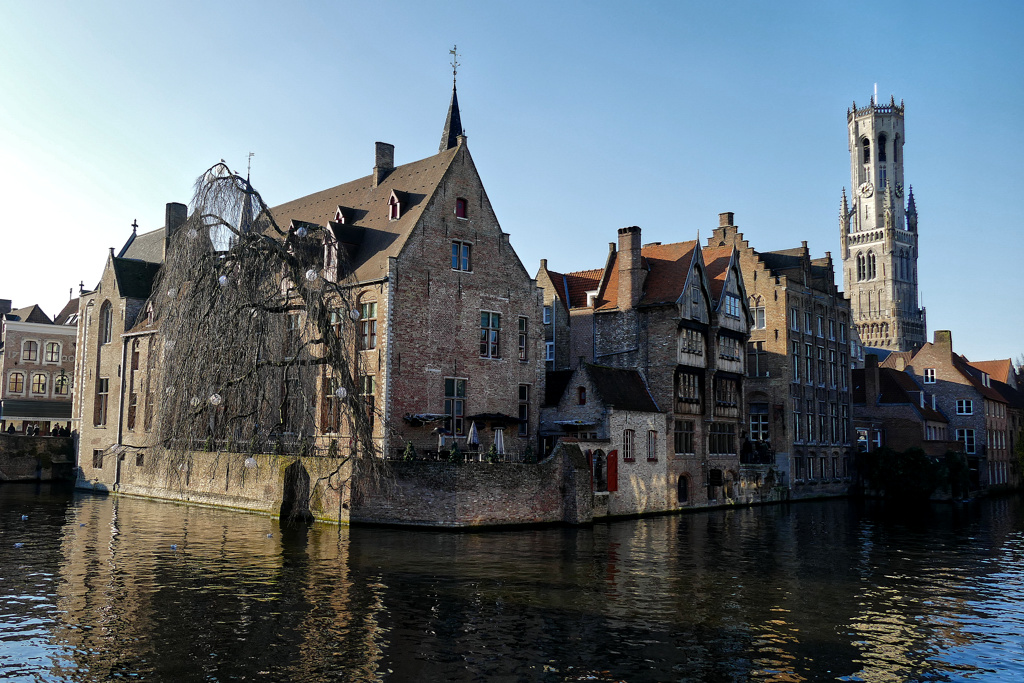
One of the most famous viewpoints is Rozenhoedkaai. It is considered the most photographed spot in the city. It owes its name to the trade in rosaries that were once sold here.
The Medieval Core
We’re approaching the medieval center of Bruges. A little further upstream lies the Vismarkt, a square surrounded by covered arcades, built in 1821 for selling fish. And that’s exactly what still happens here every morning, though only from Wednesday to Saturday. Until the 18th century, fish was sold in the open air on the Grote Markt. In 1745, however, the fish trade was moved to its current location due to the unpleasant smell.
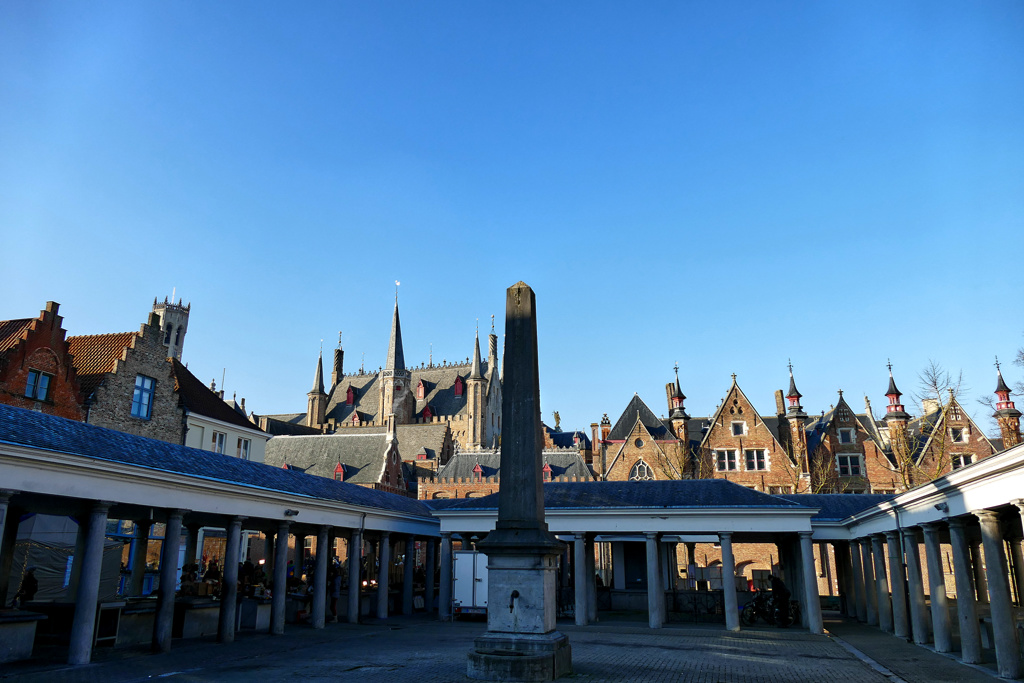
The striking neoclassical colonnade was completed in 1821 according to a design by the city architect Jean-Robert Calloigne. It consists of 126 Tuscan columns and is considered the oldest surviving fish market in Belgium. In the courtyard, there’s also an imposing water pump topped with an Egyptian-style obelisk. It’s incredible that so much grandeur was invested in a fish market.
I imagine you’ve worked up quite an appetite after all this sightseeing. That’s good, because right next to the Vismarkt is the Hollandse Vismijn, a restaurant that’s clearly frequented more by locals than tourists. This is reflected not only in the traditional menu, but especially in the reasonable prices. Otherwise, Bruges is quite expensive when it comes to dining.
With a full stomach, you can now cross the Blinde-Ezelbrug to immerse yourself in Bruges’ magnificent past this afternoon.
Fun Fact:
Blind Donkey Bridge? What a peculiar name!
Well, back in the 15th century, a well-known inn called Den Blinden Ezel, hence, The Blind Donkey, stood in this spot. The inn’s name wasn’t actually all that quirky at the time, as many pubs were linked to breweries. And breweries used donkeys or horses to turn the heavy millstones. To prevent the poor animals from getting dizzy from permanently walking in circles, they were blindfolded.
This gave rise to the name for the inn and, subsequently, for the bridge.
Town Hall
While the Market Square was primarily the economic heart of the medieval city, Burg Square was the political and administrative center. Here stood the residence of the Counts of Flanders, and from here the city was governed. The architecture surrounding the square reflects this grandeur to this day.
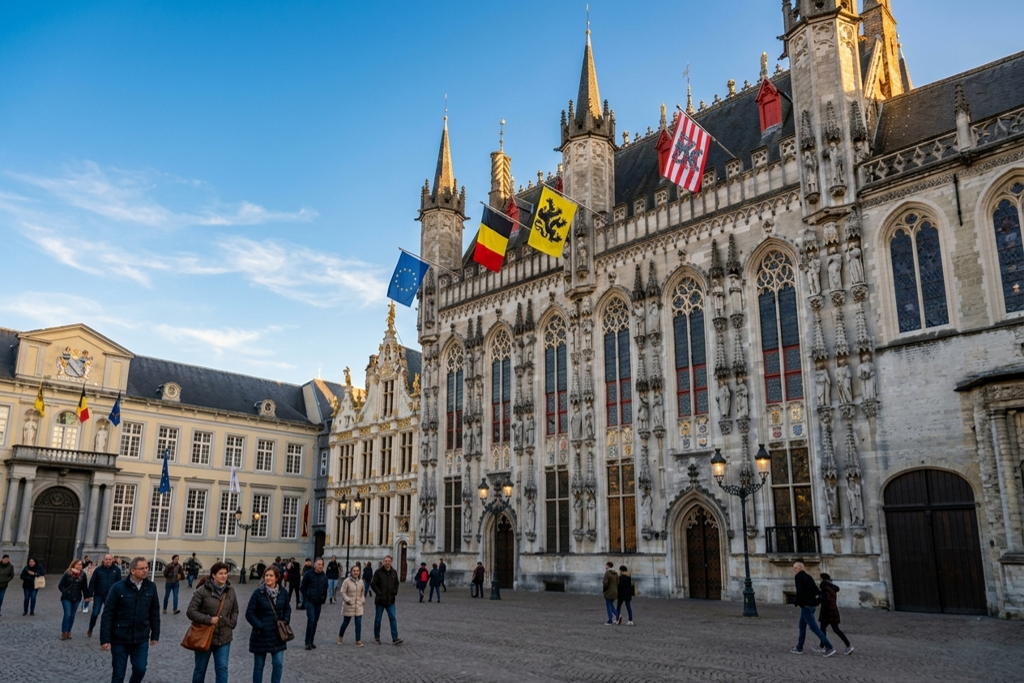
The most noteworthy building is the town hall, completed in 1421. It is one of the oldest city halls in the historical Netherlands and served as a blueprint for numerous other Gothic town halls. It has a richly decorated facade, and inside, you’ll find a stately Gothic Hall with a monumental mural depicting the history of Bruges. The town hall can be visited daily between 9:30 a.m. and 5 p.m. for a general admission fee of 8 €uro. The ticket also grants access to the Brugse Vrije. However, keep in mind that both venues are included in the Musea Brugge Card*.
The origins of the Brugse Vrije, loosely translated as Bruges Free Territory, date back to the 14th century. Its distinctive appearance facing the water took shape primarily during a construction phase between 1434 and 1440. Extensive expansions followed from 1520 onwards and included a large courtroom and a luxurious council chamber. This was designed to showcase the region’s immense wealth and administrative power.
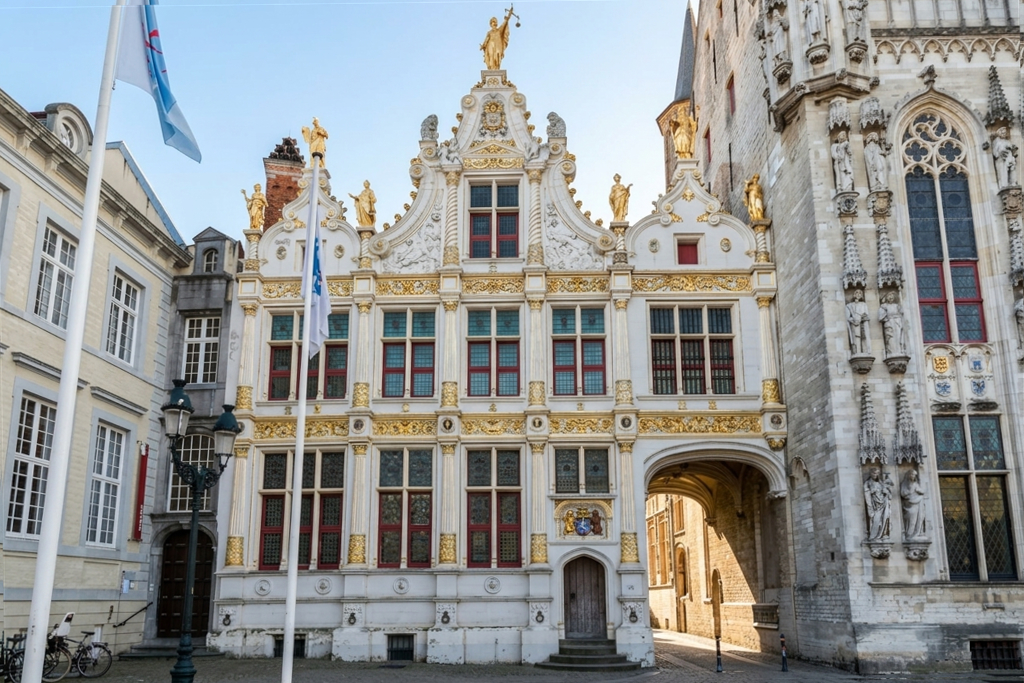
From the late 18th century until 1984, the complex served as the city’s courthouse. Today, it houses the Bruges City Archives. The historic state rooms, however, are open to visitors, albeit visiting hours are limited to Saturdays and Sundays from 9:30 a.m. to 5 p.m. The general admission is as little as 3 €uros.
Fun Fact:
The centerpiece of the Brugse Vrije is the monumental ceremonial fireplace in the Magistrates’ Hall. The citizens of Bruges actually deeply resented their new, young Emperor Charles V. However, because the city desperately needed his favor to secure tax benefits, the councilors devised what was arguably the Middle Ages’ most expensive attempt at flattery in 1528: they built a gigantic, incredibly costly ceremonial fireplace—featuring a life-sized statue of the Emperor—right in the middle of the courtroom. Whenever imperial inspectors came by, the councilors rubbed this exaggerated ‘loyalty’ right under their noses. Bribery disguised as art—and the tactic worked!
My Tip:
If you also intend to visit the adjacent Town Hall, you should first obtain the Town Hall ticket, as admission to the Brugse Vrije is included in the price.
Basilica of the Holy Blood
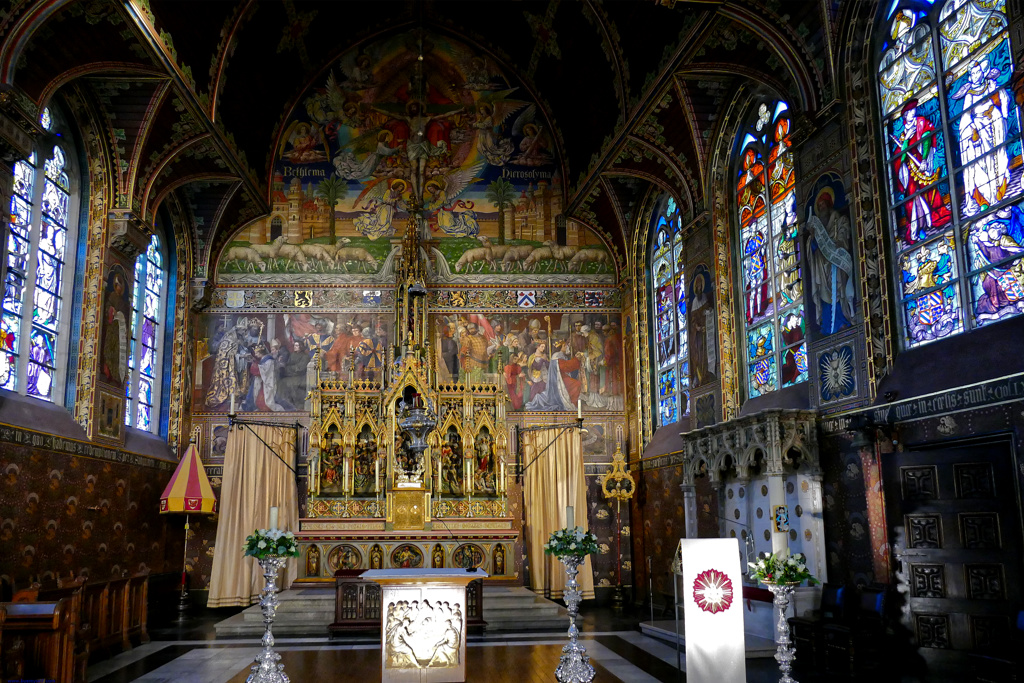
Right next to the Town Hall stands the Basilica of the Holy Blood, one of Bruges’ most unusual religious buildings. This uniqueness begins with the fact that it consists of two chapels that could hardly be more architecturally distinct from one another.
The lower Chapel is a well-preserved example of Romanesque architecture. The space is dark and comparatively simple, with heavy columns and stone rib vaults. A 12th-century relief depicting the Baptism of Christ is particularly noteworthy.
A staircase leads up to the ornate Chapel of the Holy Blood. It was rebuilt in the Gothic style during the 15th century and redesigned in the Neo-Gothic style in the 19th century. This is where the relic is kept. It’s supposedly the blood of Christ, which a Crusader brought to Bruges.
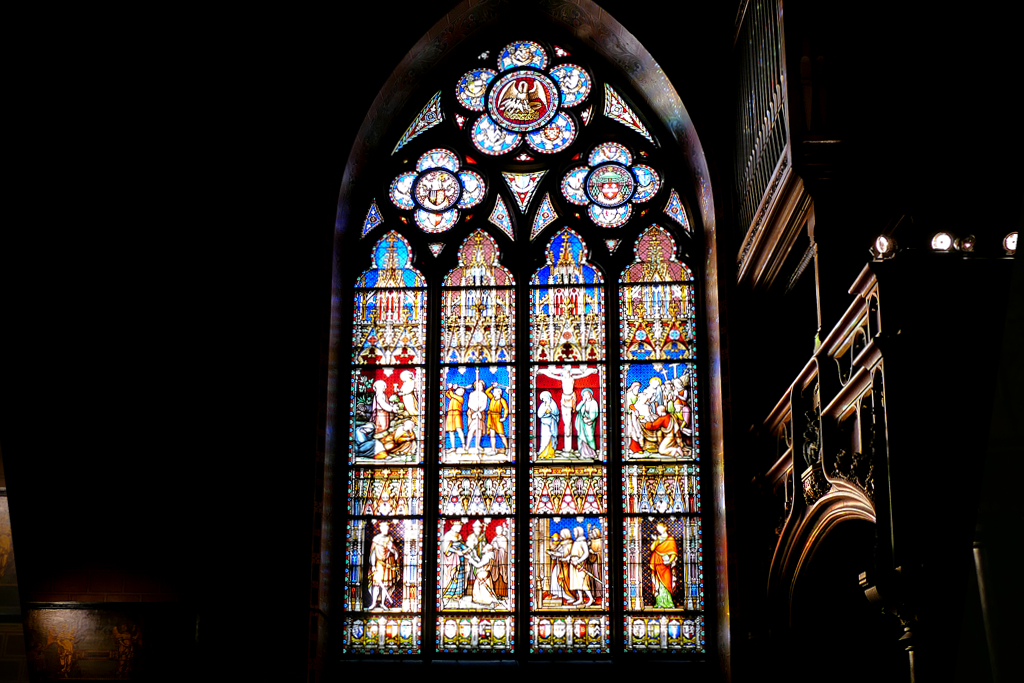
The basilica also houses a treasury with artworks associated with the veneration of the relic. Of particular value is the so-called Shrine of the Holy Blood, a work created by the goldsmith Jan Crabbe in 1614.
The basilica is open daily from 10 a.m. to 5:15 p.m. Veneration of the relic takes place daily from 2 p.m. to 4 p.m., with an additional session on Fridays from 10:15 a.m. to 11 a.m. Admission to the basilica is free, however, they charge 5 €uro for visits to the museum and the treasury.
Fun Fact
Every year on Ascension Day, the city center of Bruges transforms into a historical epic. During the Procession of the Holy Blood, around 1,800 participants dressed in authentic costumes parade through the streets. Through a series of scenes, they bring biblical stories from the Old and New Testaments to life, accompanied by choirs, musical groups, and dancers. The highlight of the procession depicts the solemn arrival of the Holy Blood relic in Bruges during the 12th century. As a grand finale, members of the Brotherhood of the Holy Blood carry the precious reliquary through the crowds, escorted by clergy and knights. This deeply rooted tradition dates back to the late Middle Ages and was inscribed on UNESCO’s Representative List of the Intangible Cultural Heritage of Humanity in 2009.
Breidelstraat
Although Breidelstraat is very short, it is one of the busiest and most important streets in Bruges’ Old Town. It serves as the direct link between the city’s two most famous squares: the Grote Markt and Burg Square. The street is named after Jan Breydel, a butcher from Bruges who led the uprising against the French occupation in 1302. Today, his statue—alongside that of Pieter de Coninck—stands right in the adjacent market square.
Breidelstraat is a street to be experienced with all the senses. Along its roughly 200-meter length, souvenir shops and—above all—chocolate shops line up one after another; the street is practically coated in chocolate and waffle batter. Even so, it is worth looking up to admire the historic facades.
Grote Markt
The Markt is the historic—and thus also the tourist—center of Bruges. It is hardly surprising, given that it is the city’s most impressive square. The square was already a key trading hub in the Middle Ages and evolved into the focal point of civic life.
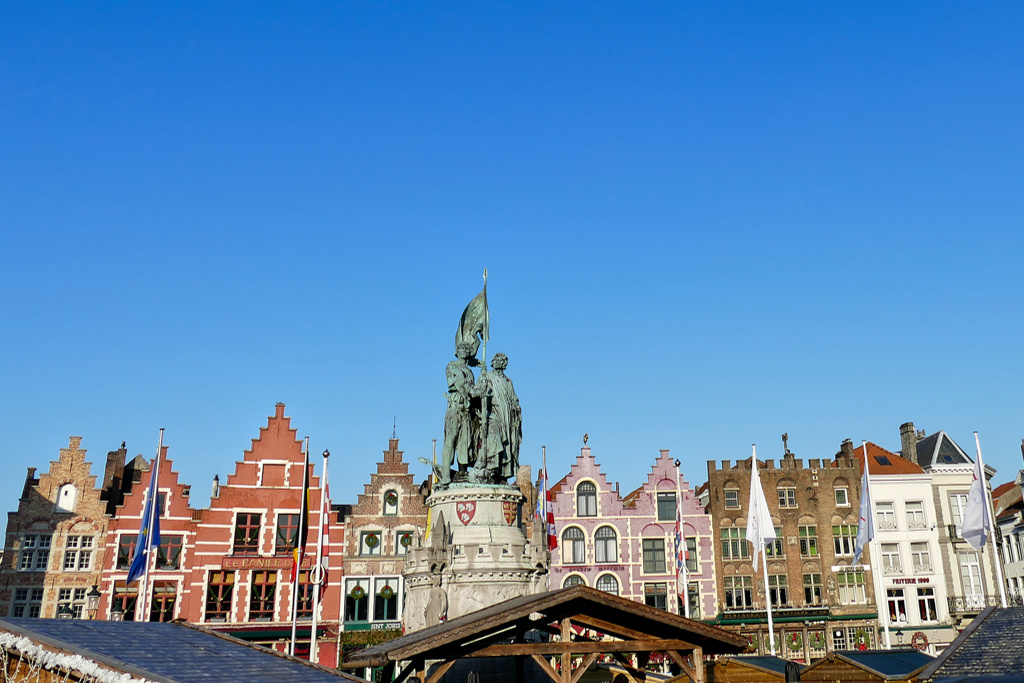
Today, it is lined with the colorful, largely historicist facades of former guildhalls and merchant houses, the Neo-Gothic Provincial Court, the market halls, and the 83-meter-tall Belfry. In the center, statues of Jan Breydel—whom I mentioned earlier in connection with the street named after him—and Pieter de Coninck commemorate the 1302 uprising against French rule.
Belfry
So yes, the most striking structure is definitely the Belfry. The building’s origins date back to 1240, when the city fathers decided to replace older wooden market halls with a massive stone complex featuring an integrated tower. Unlike most monumental towers of that era, the Belfry was built not by the church, but by the townspeople. It served as a proud symbol of prosperity, independence, and civic autonomy vis-à-vis the Counts of Flanders. Inside, it fulfilled vital functions, serving as a watchtower for the early detection of fires and approaching enemies. It also housed the municipal treasury and safeguarded precious city charters and seals within its document archives.
If you take on the physical challenge to climb the 366 steep, narrow steps of the spiral staircase, you’ll experience the tower’s history in stages. On the way up, you’ll see the ancient treasury, and you can admire the Belfry’s mechanical heart. Alongside the monumental tower clock, there is the famous carillon, consisting of 47 bronze bells, which is still played regularly to this day.
The ultimate reward for the climb, however, is an unobstructed panoramic view across the medieval center of Bruges and the adjacent Flemish countryside.
The historic nature of the building does not allow for elevators, and space on the extremely narrow staircases is very limited. You should therefore plan your visit in advance and book a time slot online*. Generally, the climb is possible daily from 9 a.m. to 8 p.m. between April and October; from November to March, the tower is open Sunday through Friday from 10 a.m. to 6 p.m., and on Saturdays and during the Christmas holidays from 9 a.m. to 8 p.m. The standard admission price is 16 €uro.
Context:
Thirty-three Belgian belfries, together with twenty-three others located in northern France, form a joint, transnational World Heritage site. In total, UNESCO protects these 56 historic bell towers under the official listing ‘Belfries of Belgium and France’.
Historium
I’m not usually the theme park type at all, but even I enjoyed the Historium. It is an experiential museum housed in a Neo-Gothic building right on the Grote Markt. The structure stands on historically significant ground, as this is where the so-called Waterhalle stood during the Middle Ages. It was a covered harbor where ships could unload their goods right in the city center.
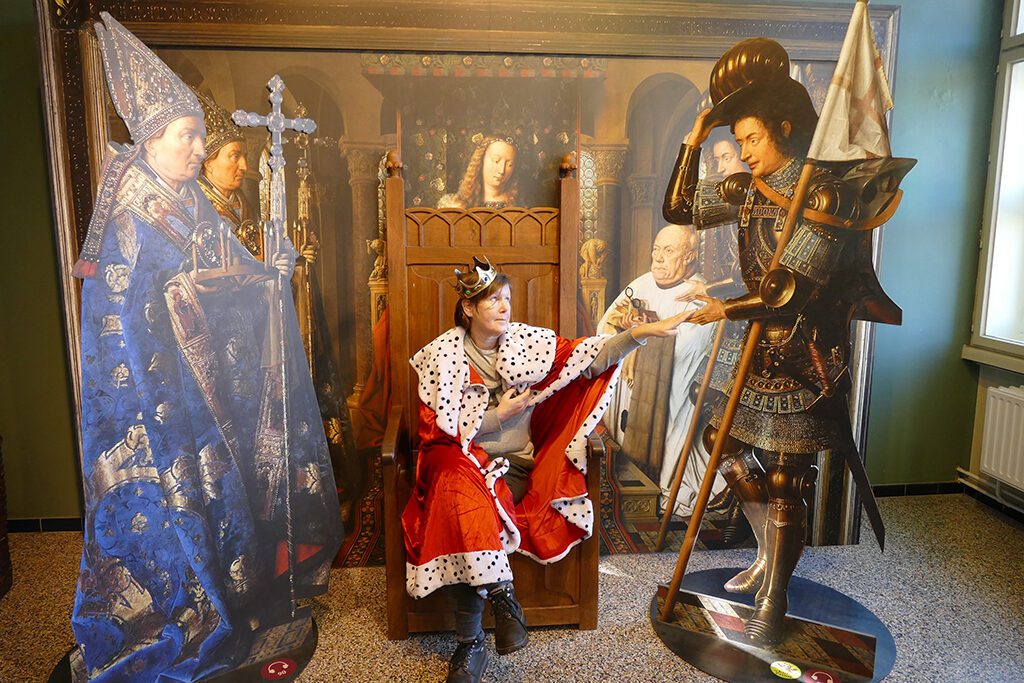
The Historium is informative yet far from a traditional exhibition. Instead, it offers an immersive experience that takes you on a journey back to the 15th-century gilded age of Bruges. The narrative thread is a fictional love story centered on Jacob, an apprentice to the Flemish painter Jan van Eyck. Following his story, you move through meticulously reconstructed settings of medieval Bruges. The experience is complemented by a Virtual Reality experience, where you use a VR headset to fly over the harbor and the historic city as they appeared back then.
If you prefer today’s scenery, you can climb the Historium Tower. From its top, you get a superb panoramic view of the Grote Markt. There is also no better spot to take pictures of the Belfry.
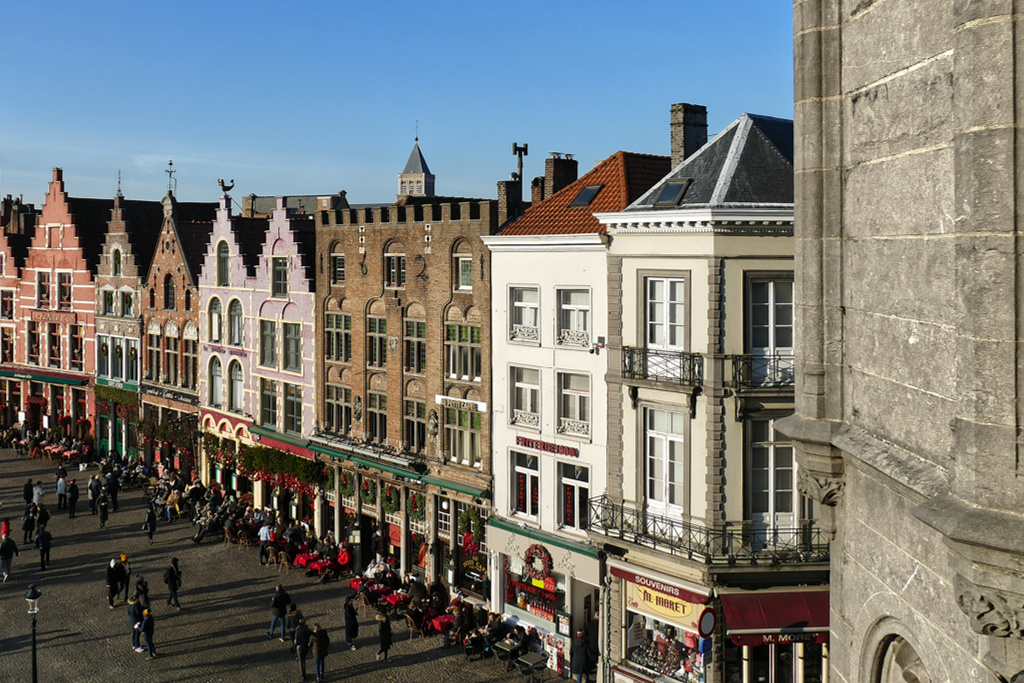
The perfect way to round off your visit is a break at the Duvelorium. In this bar, you can relax with a Duvel beer—and you don’t even need a museum ticket!
The Historium Story opens daily from 10:30 a.m. to 5 p.m. The Virtual Reality experience and the tower remain open until 5:30 p.m. On Saturdays, the entire venue closes only at 8 p.m. The standard ticket for the Historium Story costs 22 €uro, but there are all sorts of combos available—including virtual reality or the tower climb—so it’s best to check their website to see what suits you before your visit.
The Way to the Heart is Through the Stomach
Around Bruges, and especially in the area around the Grote Markt and the adjacent streets, you can enjoy numerous Belgian delicacies. A wonderful aroma fills the air, and pralines, truffles, and wafers in every imaginable shape and flavor tantalize the palates of hungry visitors. It’s no wonder, then, that some of these Belgian specialties have even found their way into museums.
Choco-Story Bruges is dedicated to the history of chocolate, tracing its development from the cacao drinks of the Maya and Aztecs to the chocolate we enjoy today. The interactive exhibition combines historical exhibits with multimedia presentations and, of course, offers ample opportunity to sample chocolate. The visit concludes with a demonstration of the production of traditional Belgian pralines. Choco-Story is open daily from 10 a.m. to 6 p.m., and general admission is 16 €uro.
While chocolate museums can be found in other cities, too, a museum dedicated to French fries is quite unique. The Frietmuseum focuses on the humble potato, another culinary icon of Belgium. It explores the history of potatoes and the role of fries in Belgian culture. The interactive concept makes the visit highly entertaining. Don’t miss out on rounding off your visit with a bag of freshly made fries at the chip shop in the basement. The museum is open daily from 10 a.m. to 5 p.m., and general admission is 9.50 €uro.
Last but not least, there’s the Bruges Beer Experience. This interactive museum explores the history of Belgian beer, its ingredients, brewing methods, and the enormous variety of beers produced in the country. Optionally, you can add a tasting of three beers to your museum ticket. The museum is open daily from 10 a.m. to 6 p.m., and general admission is 14 €uro, or 20 €uro including three tasting samples.
My Tip:
If you’re interested in Belgian beer, why not take it a step further and visit a real brewery? De Halve Maan is Bruges’ oldest active city brewery and has been a family business since 1856. The guided tour takes you through the historic brewery and explains its brewing traditions, while also offering a glimpse of the famous underground beer pipeline that has connected the brewery to its bottling plant outside the city centre since 2016. The regular guided tour lasts about 45 minutes and costs 16 €uro, including one beer. The XL tour lasts about 90 minutes, includes three beers, and costs 26 €uro. At the end, you even get a beautiful view over the rooftops of Bruges. Please note, however, that the tour involves climbing 220 steps, some of which are quite steep.
Another option is Bourgogne des Flandres. Here, the tour focuses on the brewing process and, in particular, on how the traditional beers blend into the brewery’s signature Bourgogne des Flandres. The visit also includes the distillery. There, two Bruges genevers are produced from beer. Also, there is a café and a pleasant waterside terrace where you can sample the beers afterwards.
Finally, Fort Lapin is a smaller, more artisanal brewery and another option for beer enthusiasts. It is located somewhat outside the immediate historic center.
Practical Information
How to Get There
Bruges does not have its own airport. The nearest and by far the most important international airport is Brussels Airport, about 110 kilometers from Bruges. There are direct train connections from Brussels Airport’s Zaventem station to Brugge-Sint-Pieters. The journey takes roughly 1.5 hours.
Generally, the train is the best way to reach Bruges, especially from Germany, the Netherlands, France, or even Great Britain. Bruges is well connected to the Belgian railway network, with direct trains from Brussels taking just over an hour. Travellers arriving on international high-speed trains can usually change to a train to Bruges in Brussels, depending on their point of origin. Bruges is also easily accessible by train from Amsterdam, although a change of trains may be required.
FlixBus also connects Bruges with several European destinations. The buses stop directly at Brugge-Sint-Pieters, making this a convenient option for travellers arriving by long-distance bus. There are also direct FlixBus connections between Brussels Airport and Bruges, although the number is limited to three coaches per day.
How to Get Around
You can easily visit Bruges’ center and even the immediate quarters by walking. Obviously, you can also rent a bike and cycle from landmark to landmark.
However, Bruges has a very comprehensive network of buses that carry you quickly across the city, especially between the main railway station and the historic center. Quickly, yes, but not exactly cheaply. A single journey costs 3 €uro and is valid for 60 minutes, including transfers. Note that there is no automatic fare cap. If you plan on taking several trips during your stay, you can save money with a 10-trip ticket for 22 €uro. Various passengers can even share this ticket. Alternatively, a day ticket is a good option at 9 €uro, which is valid for 24 hours from the time of first activation on all De Lijn vehicles throughout Flanders. The same applies to the 3-day ticket, which costs 18 €uro.
In general, contactless payment is the most convenient way to buy a ticket. Simply hold your bank card, smartphone, or smartwatch in front of the white reader on board the vehicle. Please keep in mind that you must check in with a physical ticket or a digital scan when boarding – regardless of whether it’s a single ticket, a multi-journey ticket, or a day ticket. Simply hold your ticket up to the reader on the bus. Checking out, as required in cities like Amsterdam or Rotterdam, is not necessary.
Visiting Organized
Although I’m an avid solo-travelling woman, I sometimes like to join organized tours. This way, I get extended info about a place, and it’s fun to visit landmarks in the company of like-minded fellow travellers.
In a historically rich city like Bruges, participating in some guided activities will supply you with a wealth of information and fascinating facts’n’stories. You can choose the perfect activities right here*:
Where to Stay
Bruges is undoubtedly one of Europe’s best destinations for a day trip. It is easily accessible from many spots and packed with incredible attractions within a compact area. However, this very fact leads to an influx of day-trippers that detracts from the city’s charm, especially on weekends and during peak season.
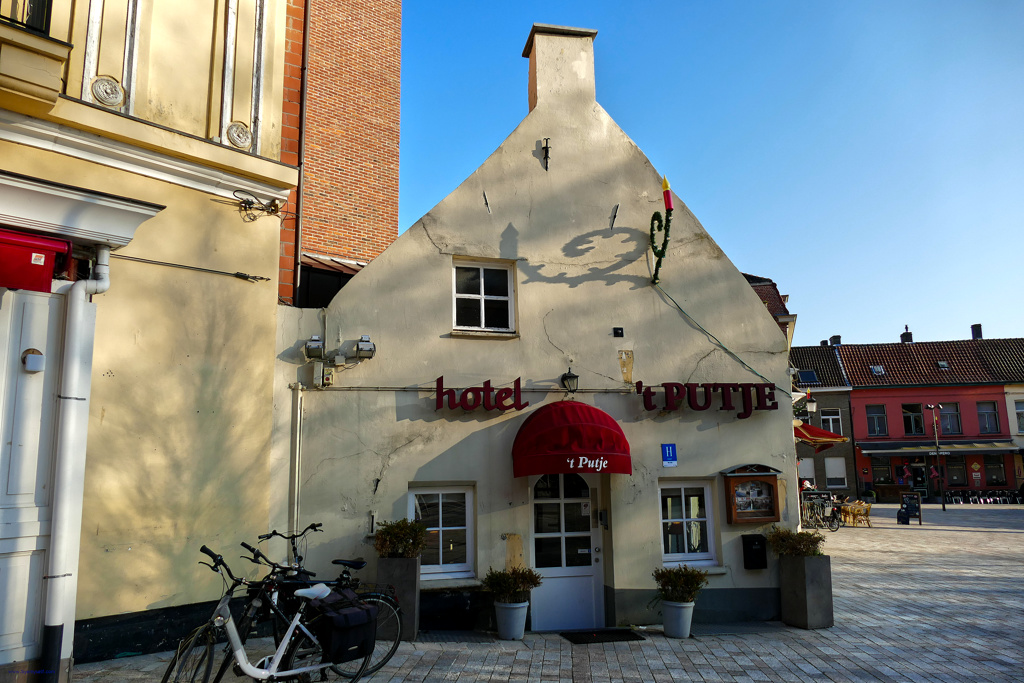
You can easily counter this by staying overnight in Bruges. This lets you soak up the city’s magic after the day-trippers leave in the evening and again early in the morning, before the tourist hordes arrive. And don’t forget: if you stay at certain hotels, you’ll receive a complimentary DiscoverBruges discount card!
Use this map to choose from a wide range of accommodation options that best suit your needs and budget*:
What to Eat
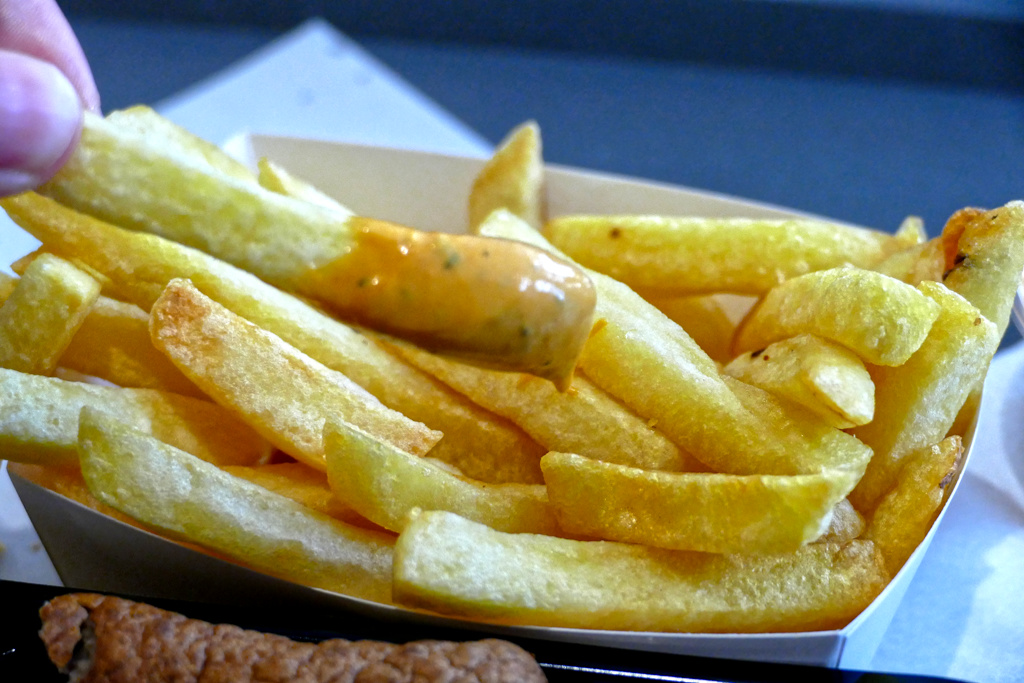
Culinary-wise, Bruges is deeply rooted in Flemish tradition, despite its restaurants and cafés reflecting often the city’s international appeal. Alongside classic Belgian dishes, you’ll find everything from cosy brasseries and traditional eateries to contemporary cuisine and fine dining. Among the specialties worth trying are stoofvlees, a slow-cooked beef stew traditionally prepared with dark Belgian beer, and vol-au-vent, puff pastry filled with a creamy chicken and mushroom ragout. Moules-frites, hence, mussels served with Belgian fries, are another Belgian staple. Obviously, fries deserve a special mention: Belgian fries are considered a culinary institution in their own right and are traditionally served with an impressive variety of sauces.
Bruges is also one of Belgium’s great chocolate destinations. The historic centre is dotted with chocolate shops and chocolatiers, ranging from long-established names to independent makers producing beautifully crafted pralines and other specialities. It is basically impossible to visit Bruges without sampling at least a few.
Another important part of the Bruges experience is beer. Belgium is renowned worldwide for its beer culture, with hundreds of varieties ranging from fruity lambics and robust trappist ales to distinctive regional brews. Bruges itself has a long brewing tradition, and several local beers are closely associated with the city. A beer in one of the city’s atmospheric pubs is therefore as much a part of the Bruges experience as wandering along its canals.
Cash, Cards, and Deals
In May 1998, the heads of the member states of the European Union agreed – nota bene in Brussels – on the implementation of the €uro.
Until now, 21 European countries replaced their former local currency with the €uro starting in 2002. Obviously, Belgium is one of them. The exchange rate is 1 US$ = 0.84 EUR as of September 2026. However, you can check today’s conversion rate on this page.
Credit cards are far more accepted than cash. Also, keep in mind that there are not as many ATMs as in other European countries. Therefore, as you finally come across an ATM, there might be a pretty long queue.
Just like Antwerp, Brussels, and Ghent, Bruges has a city pass that grants free entrance to various attractions. However, it does not include public transport. It is an E-pass, and it comes in three options: 1 day for 75 €uro, 2 days for 85 €uro, and 3 days for 95 €uro.
Keep in mind that if you don’t go to Bruges on a day trip but stay overnight, your hotel might supply you with the so-called DiscoverBruges discount card. This is a complimentary card you receive upon check-in at hotels, provided they are a member of Hotels Regio Brugge vzw. With this card, you’ll only enjoy discounts at some attractions and stores, no free access.
Also, there is the Musea Brugge Card* for 49 €uro. With this Musea Brugge Card*, you get free admission for 72 hours to all Musea Brugge sites and museums, as well as to the current exhibitions at BRUSK. I’d argue that this is by far the best deal.
Language
I always find it fascinating that some of the smallest European countries have several official languages. Switzerland leads the way with four, but Luxembourg and Belgium each boast three. Belgium’s three official languages, Dutch, French, and German, are the result of two historical events. First, there was a centuries-old ethnic border. Second, a border shift occurred after the First World War.
The French-speaking population in the south of the country, comprising about 39 percent of the population, arose because Wallonia had been under the influence of France and Roman culture for centuries. When Belgium seceded from the Netherlands in 1830, it was the French-speaking elite who led the revolution and established French as the official language of the state and the upper class. The 60 percent of the population in the north, however, retained their own language. The small German-speaking group in the east, which makes up just under one percent of the population, only became part of Belgium over a century later, in 1919, through the Treaty of Versailles. This treaty granted Belgian citizenship to the German minority virtually overnight.
On top of that, most Belgians also speak English quite well.
Since it’s always nice to be able to say at least a few polite things in the local language, you could learn some Dutch words online with Babbel. The first lesson, which already covers all the greetings and expressions of thanks, is even free. However, you’ll also find French and German courses there.
Map
On this map, you’ll find all the wonderful places I’m introducing in this post.
Clicking on the slider symbol at the top left or the full-screen icon at the top right will display the whole map, including the legend.
Pinnable Pictures
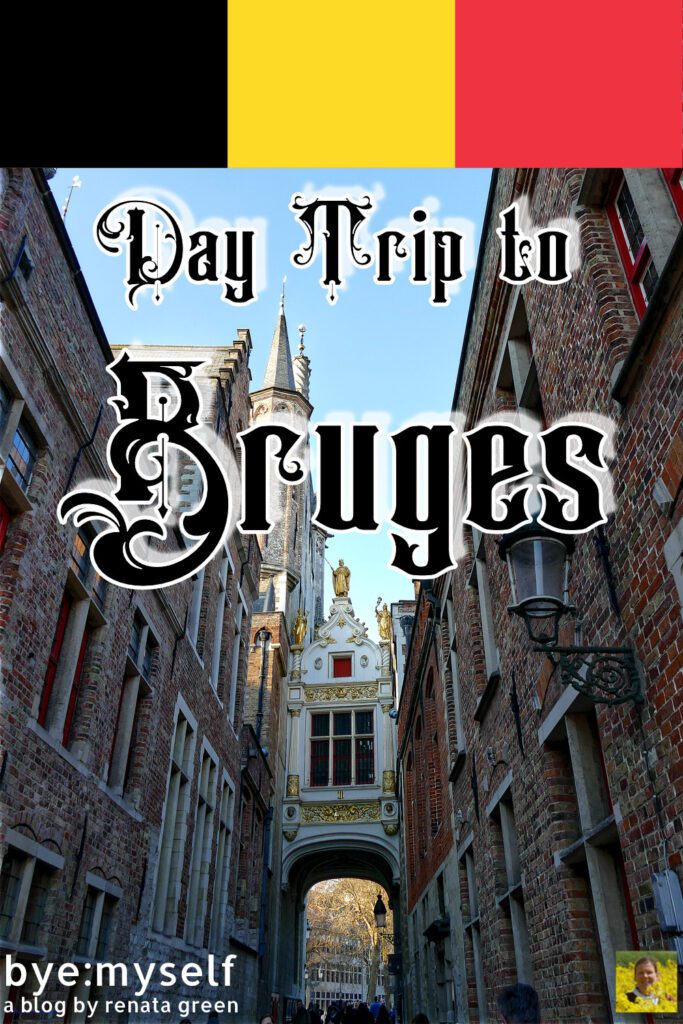
If you choose to pin this post for later, please make sure to use one of these pictures:
Did You Enjoy This Post? Then You Might Also Like These:
What to Do in ANTWERP in Three Days – The Obvious and the Unexpected
Best Street Art in ANTWERP – Fresh Murals at Zomerfabriek
24 hours in BRUSSELS
Best Things to Do in BRUSSELS, the Capital of Europe
Best Street Art in ANTWERP – From Merksem to the City Center
The Best Murals Along Brussels’ Comic Book Route
Best Street Art in BRUSSELS
Best Street Art in GHENT
* This is an affiliate link. If you book a service through the affiliate links on my site, there will be no extra cost for you. However, I will receive a small commission that helps me to run my blog. Thank you for your support!