Zurich was one of the very first cities for which I compiled an itinerary in my 24 Hours in… series. This is because the series was born out of necessity, due to the long hours I had to waste unproductively at layover airports on flights. So why not transform them into a short mini-vacation?
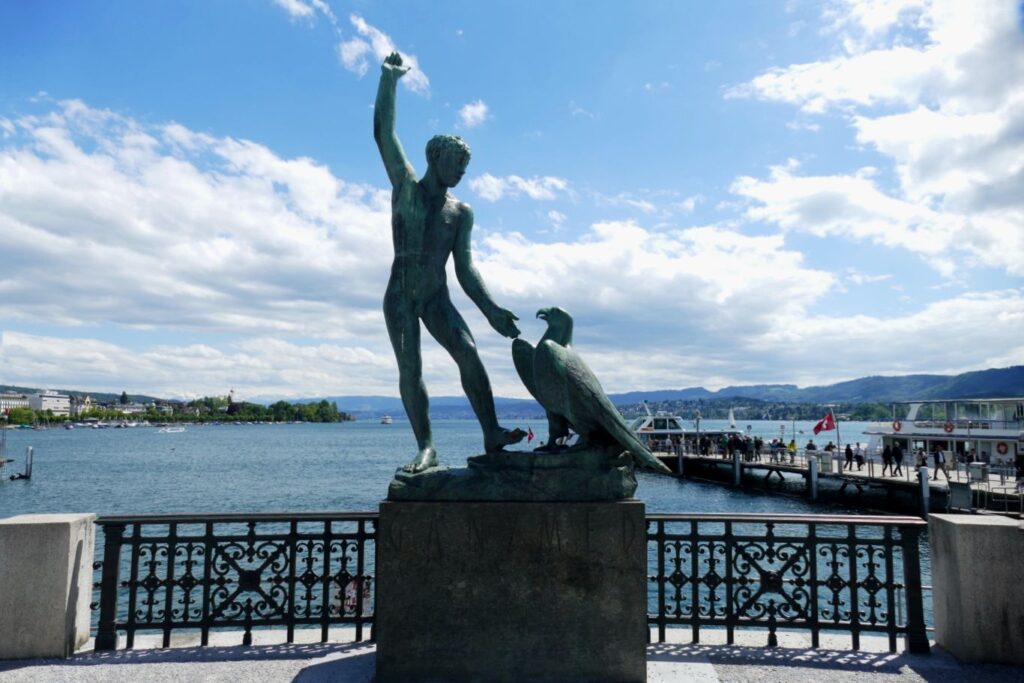
Zurich, along with cities like Amsterdam, Paris, and Lisbon, is one of the airports where I most frequently change planes. Consequently, it immediately made the list.
Zurich is Switzerland’s largest city. Located in the German-speaking part of Switzerland, it is mainly known as a rich, expensive financial center. But the river Limmat, the Zurich lake, and of course the circumjacent mountains make Zurich one of the cities with the highest quality of life. Albeit, at the same time, the highest cost of living.
Nevertheless, despite Switzerland’s squeaky-clean reputation, the country has a long history of unusual, quirky artist personalities. Already a hundred years ago, the Dada movement started at Zurich’s Cabaret Voltaire. Today, there are free spirits like the conceptual artist and musician Dieter Meier, ingenious video artist Pipilotti Rist, or the hysterical projects by Peter Fischli and David Weiss.
So Zurich, with its large number of museums and galleries, is a pleasant destination to be explored on a day trip or for a couple of hours during a layover.
 Local Currency
 Local Currency
Swiss Franc (CHF) / 1 CHF = 1.25 US$ as of July 2026. However, make sure to check the current rate.
Emergency Contacts
 Emergency Contacts
Police 117
Fire Department 118
National Airline
 National Airline
 Airports
 Airports
Zurich Airport / IATA-Code: ZRH
Tourist Info Online and Onsite
 Tourist Info Online and Onsite
Tourist Information
Zurich Main Station
Phone: + 41 – 44 – 215 40 00
Email: info@zuerich.com
Getting Downtown and Back
 Getting Downtown and Back
Either by train, by streetcar, or by bus, you get from the airport to the main station in less than 30 minutes. So even when your stopover is just a couple of hours, it’s worth it to spend them downtown rather than waiting at the airport. To store your luggage, you’ll find enough lockers of different sizes at the station.
Before you leave the airport, I highly recommend you get a Zurich Card* – the 24-hour version costs 29 CHF. Just so you know, there’s also a 72-hour version for 56 CHF.
With this card, you can use all public transport as often as you please, you get discounts on the Limmat cruise, on a city tour, and more, and you have free or discounted entrance at most of Zurich’s museums.
Since Zurich is a very pricey city, I’d argue that this card pays off whatever activities you’re planning.
Morning Activities
 Morning Activities
Sunny day in a city with a river and a lake – you know the drill: a boat ride!

To take a long look at the city from the water, a Limmat cruise is the most relaxing activity.
From the main train station SBB, take the tram #11 towards Rehalp and get off at Bürkliplatz. This is where boat tours and scheduled ferries depart. A short boat trip reveals how quickly the urban space transitions into an almost rural landscape with vineyards and small townlets.
Once you’re back ashore, don’t run off right away since right next to the Bürkliplatz is the Bürkli Terrace. This tranquil viewpoint located under lush trees offers an unobstructed view across the water to the Alps – weather permitting.
After the cruise, it’s time to explore some of Zurich’s amazing landmarks. Tram #11 takes you in the opposite direction to the stop Rennweg. A short walk up Kuttelgasse takes you to the famous outlook Lindenhof. From here you have a close view of Zurich’s attractions like the Limmat River, the Grossmünster church, and more.
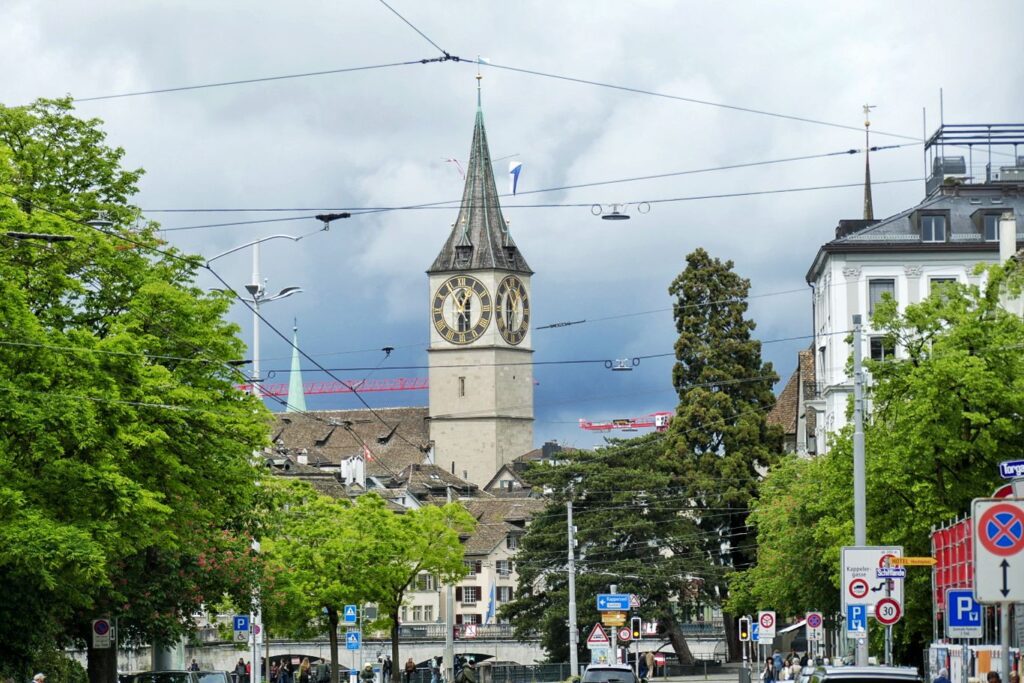
As you stroll further south, take a look at St. Peter’s church. It was Zurich’s first protestant sacred building after the Reformation. Its pride, however, is Europe’s largest clock face with an outer diameter of 8,64 meters! Mind you, we’re in Switzerland, home of clocks’n’watches!
After a short walk, you reach the Fraumünster. This church is famous for the magnificent windows created by Marc Chagall. These windows alone make at least a short visit a must.
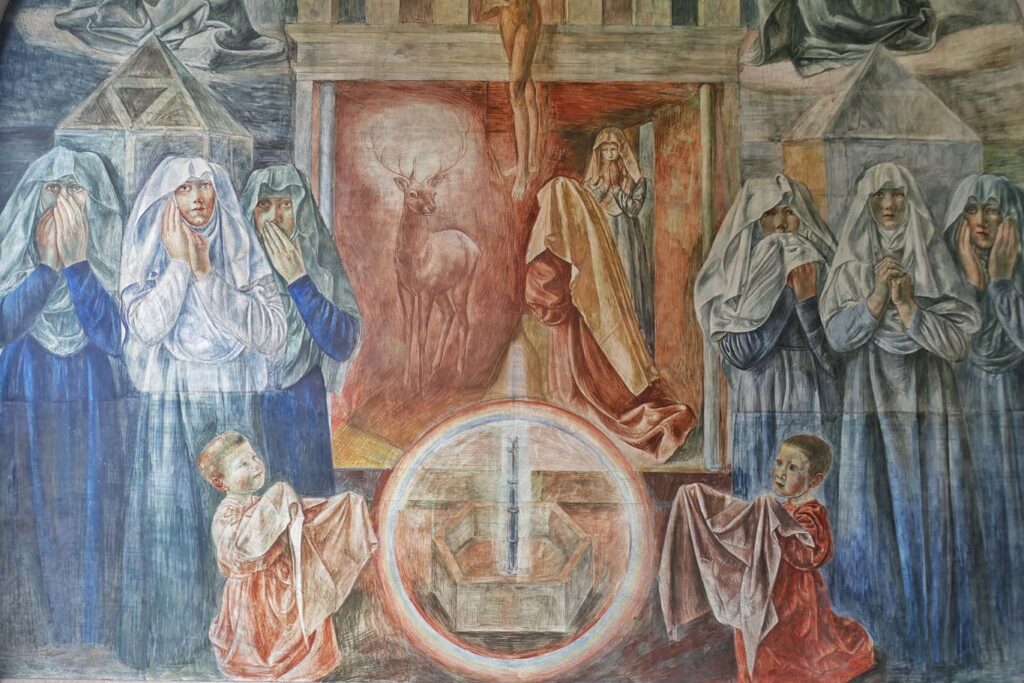
Despite all your admiration for Chagall, you shouldn’t miss the fantastic frescoes in the cloister of the Fraumünster. Created by the Swiss artist Paul Bodmer, they tell the founding story of the Fraumünster as well as legends from Zurich’s early history.
While the Chagall windows are indisputably the most famous sacred art, they are not Zurich’s only outstanding craft in church buildings. You only have to cross the Münsterbrücke to get to the Grossmünster, Zurich’s most iconic double-towered landmark.
The Grossmünster is decorated with windows designed by Augusto Giacometti in 1933. Also, since 2009, there are seven windows by German postmodern artist Sigmar Polke. Besides these permanent attractions, there are temporary exhibitions taking place.
Morning Activities
 Morning Activities
Is it raining? That happens quite regularly in this city. But it shouldn’t be a problem. Just cross the street to the tram stop Bahnhofsquai and take either tram #7, #11, or #13 to the stop Paradeplatz. From there, you quickly walk to the Fraumünster to admire Chagall’s windows and Bodmer’s frescoes, which I’ve described above.
Once you’re done gawking at this really sophisticated art, you just have to cross the Münsterbrücke to find shelter from the rain at the majestic Grossmünster with its windows by Giacometti and Polke, which I also mentioned in the sunny activities section above.
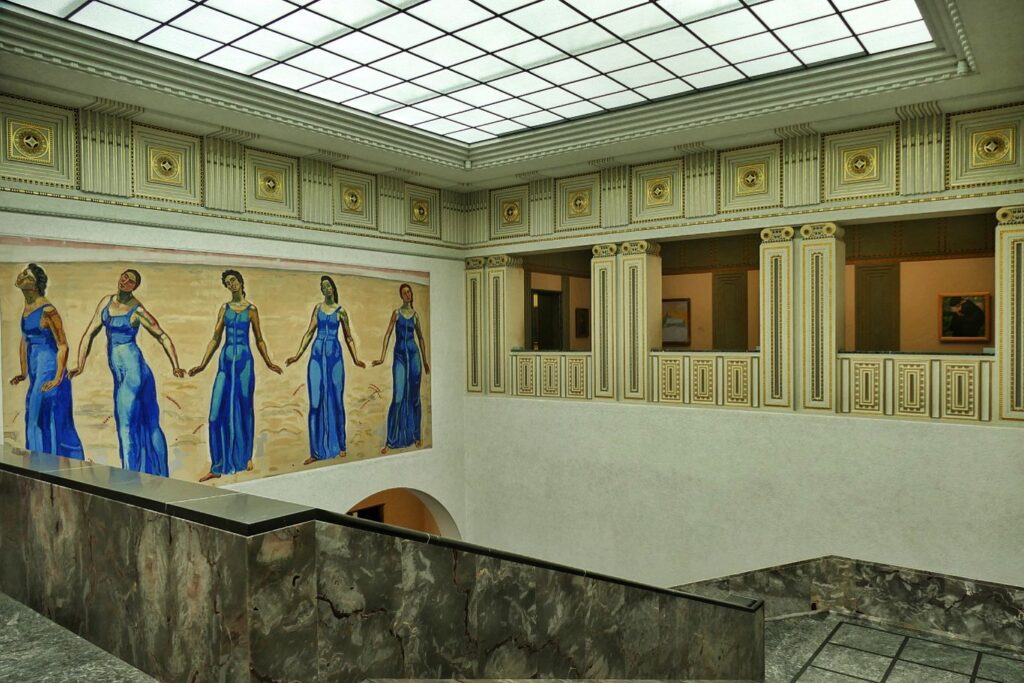
I hope it’s not raining too hard, since now you have to walk for about ten minutes to get to one of Zurich’s best museums, the Kunsthaus. This venue houses a wonderful collection from all epochs, focusing mainly on Swiss artists like the Giacomettis, Böcklin, Füssli, and my personal darlings Ferdinand Hodler and Giovanni Segantini. The contemporary section presents, next to American and German artists, Urs Fischer and Franz Gertsch. Of course, there are special exhibitions along with the permanent collection.
The Kunsthaus is open Tuesday through Sunday from 10 a.m. to 6 p.m., and until 8 p.m. on Thursdays.
The standard admission fee, which includes access to all special exhibitions, is CHF 36. This shows you that the Zurich Card* should be a no-brainer.
Lunch
 Lunch
LunchWhile according to the sunny day itinerary, you have to walk from the Grossmünster to the Bellevue Square, you can take tram #8 or #9 to get there from the Kunsthaus.
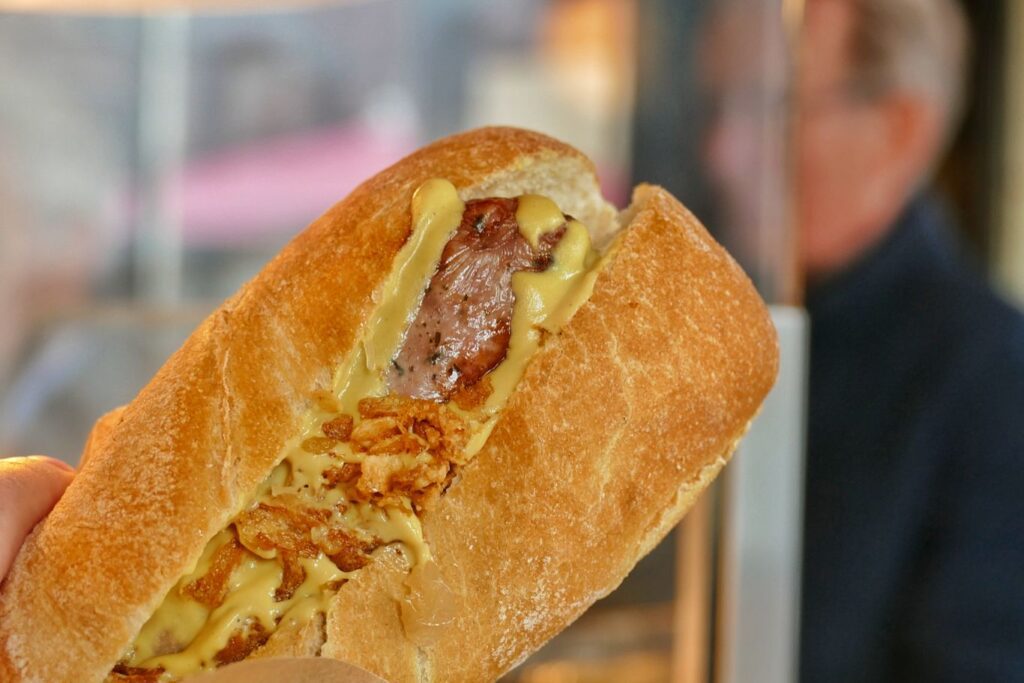
When in Switzerland, do as the Swiss do. This also includes a quick lunch at the popular sausage snackbar Sternen Grill. The Sternen Grill has been a Zurich institution since its opening in 1963. It is especially famed for its St. Gallen bratwurst with ultra-hot mustard in a crispy bread roll. This is where locals and tourists rub shoulders. However simple the cuisine may be, this snack bar is one of the city’s most famous culinary landmarks!
The eatery is open every day from 10.30 a.m. to midnight. Sundays and Mondays, they are already closing at 11 p.m.
Afternoon Activities
While the morning was all about Zurich being a destination by the water, the afternoon will be Zurich being a city in a valley between Swiss mountains.
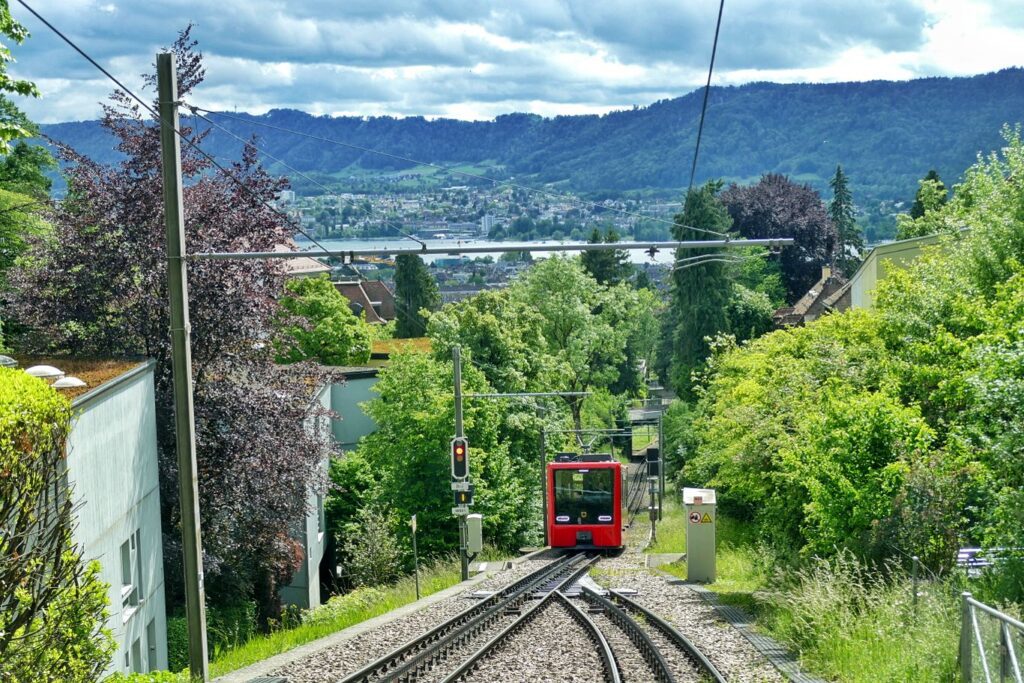
Zürichberg is one of the most exclusive and serene residential and recreational areas overlooking the city. Just minutes from the center, it offers a completely different perspective of Zurich: lush greenery, expansive forests, and breathtaking panoramic views of the city, Lake Zurich, and the Alps in the background.
A particular highlight of Zürichberg is the legendary luxury hotel The Dolder Grand*. This historic grand hotel originally opened at the end of the 19th century and is now one of Switzerland’s most renowned five-star establishments. The hotel’s terrace is especially popular, offering one of the most spectacular views of Zurich.
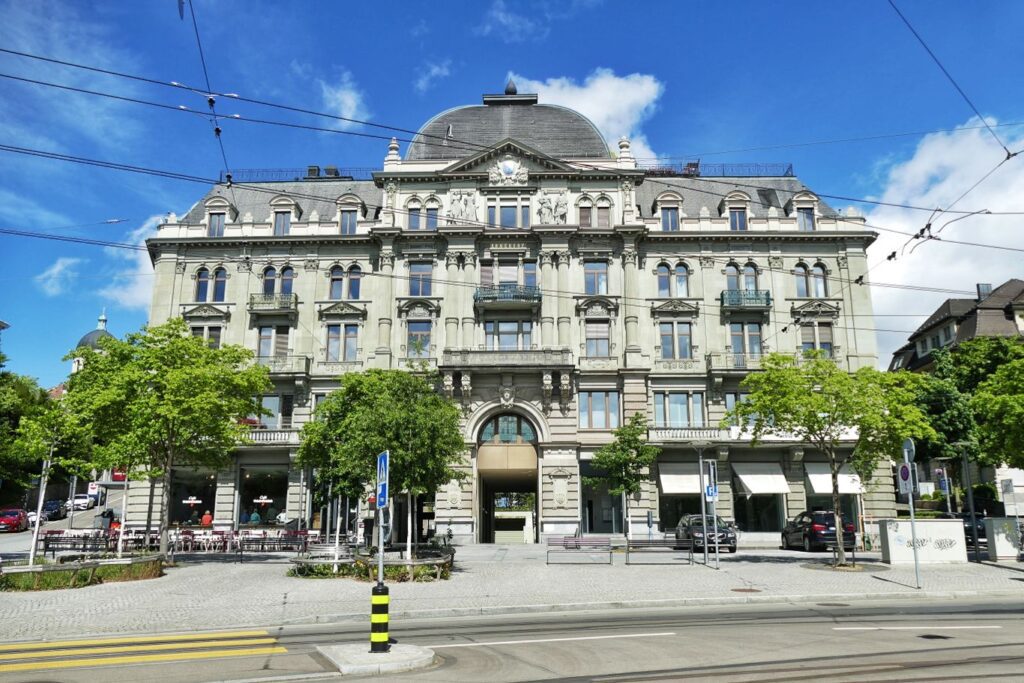
Just a few meters away from The Dolder Grand*, there are viewpoints and forest paths offering similar views, often in a more peaceful setting and without the hotel’s activity in the background.
To get to the Dolder, just take tram #2 from the Bellevue stop to the stop Römerhof. From here, the historic Dolderbahn will take you uphill in about five minutes!
Afternoon Activities
After lunch, hop on tram #8 towards Hardturm at the Bellevue Square. Get off at Escher-Wyss-Platz, and you are a stone’s throw from the hip, contemporary side of Zurich.
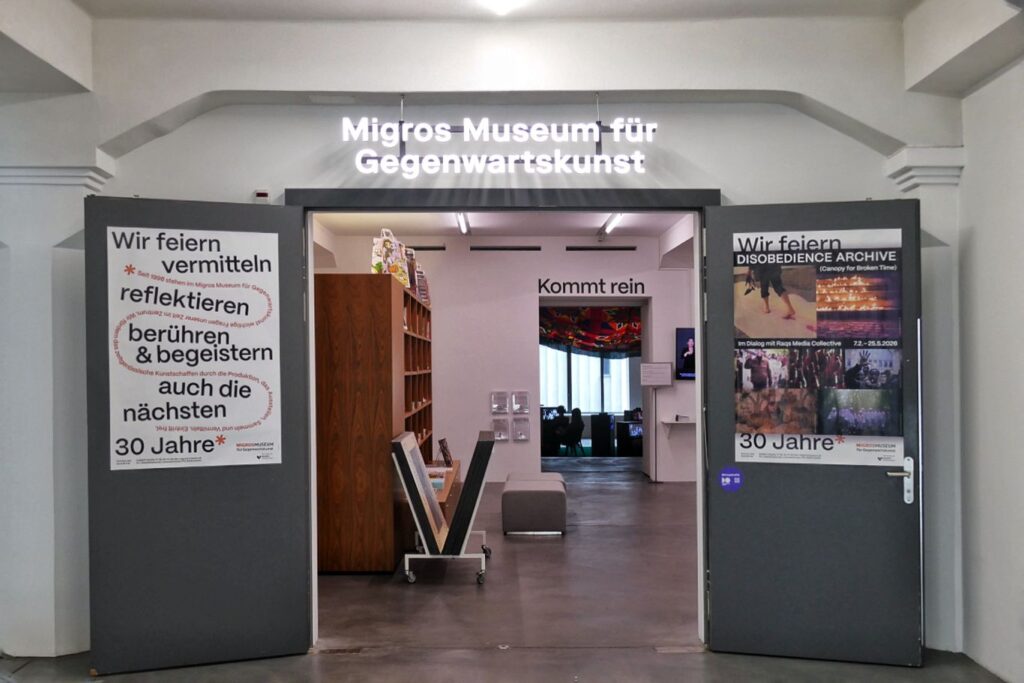
Where beer was once brewed in the Löwenbräukunst complex, there is now one of the most exciting centers for contemporary art in Switzerland. Among the institutions that have found a home within these historic brick buildings is the Kunsthalle Zürich.
Unlike the Kunsthaus, the Kunsthalle Zürich is not a traditional collecting museum, but rather a venue for changing exhibitions of contemporary art. Its focus lies on the production, presentation, and mediation of current artistic positions, often with an international scope.
Galleries, project spaces, and cultural institutions surround the Kunsthalle and have turned this district into a creative hotspot.
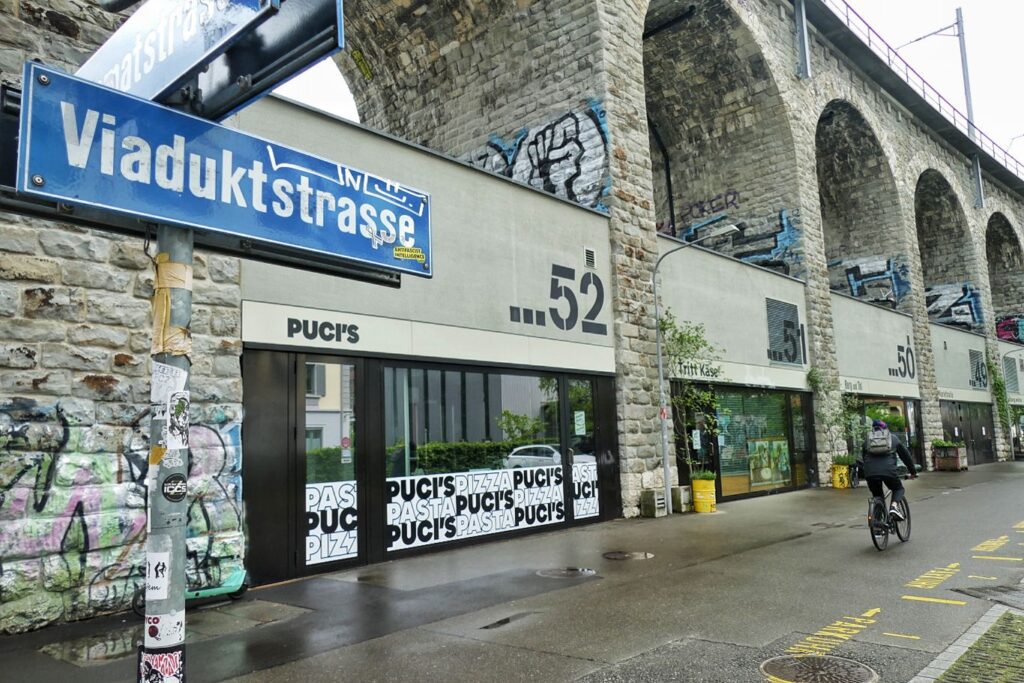
Just a few minutes’ walk away lies another alternative cultural space—one that feels much closer to everyday life—known as the Viadukt. Nestled beneath old railway arches, this area has evolved into a vibrant blend of market stalls, design shops, and dining establishments.
Together with the Löwenbräukunst complex, these two locations create a fascinating dynamic interplay between museum-based contemporary art and creative urban life.
Dinner and Nightcap
 Nightcap
You had a typical regional lunch, so at night you should go to a Zurich institution. Apperently, Hiltl is the oldest vegetarian restaurant in the world. It was founded in 1898 as a so-called vegetarian home and abstinence café.
For over 125 years, this family-run business has combined vegetarian and vegan cuisine with international influences, evolving from a niche establishment to one of Zurich’s most renowned culinary institutions. The extensive buffet features a wide selection of hot and cold dishes. You pay according to weight – not your weight, obviously, but according to the weight of the food you have chosen.
The restaurant is open weekdays from 7 a.m. to 10 p.m., Thursdays and Fridays to 11 p.m. Then, on Saturday, they only open from 8 a.m. to 11 p.m., and on Sundays from 10 a.m. to 10 p.m.
Accommodation
 Accommodation
Especially if you are on a layover and need to get back to the airport in the early morning, staying close to the main station is crucial. Therefore, check suitable accommodation on this map*:
Map
This map should help you to easily find all the wonderful places I’m introducing in this post. To switch between the itineraries for a sunny and a rainy day, just open the legend at the top left corner, and you can hide or unhide the respective layer as you wish. This way, the map will show only the section you really need and be clearer.
If you have more time to spare in the city, good for you! In my comprehensive post What not to Miss in ZURICH – A City of Undervalued Natural Wealth, you’ll find tons of places and activities to choose from.
Pinnable Pictures
If you choose to pin this post for later, please use one of these pictures:
Note: I’m completing, editing, and updating this post regularly – last in July 2026.
Did You Enjoy This Post? Then You Might Also Like These:
24 hours in PRAGUE

24 hours in COPENHAGEN
24 hours in ISTANBUL
24 hours in BORDEAUX
24 hours in PORTO
24 hours in VILNIUS
24 hours in BRUSSELS
24 hours in BASEL
* This is an affiliate link. If you book through this page, you not only get the best deal. I also get a small commission that helps me run this blog. Thank you so much for supporting me!
Icons: money bag by Roundicons from www.flaticon.com, police car, train, sun, glass, and bed by Freepik from www.flaticon.com, takeoff plane and board made by ultimatearm from www.flaticon.com, info made by Roundicons from www.flaticon.com, umbrella made by Kiranshastry from www.flaticon.com, food plate by Vectors Market from www.flaticon.com
We had a rainy few days in Zurich so much of what we did in the city could certainly be done on a short 24 hour stop. We did most of our exploring on foot but did use the trams when we ran out of steam. We would have loved to get out on the water and see some of the great sights along the river from a different perspective.
Great info, many thanks for sharing! Visited Switzerland in 2019 but not Zurich, hoping to be able to go there some time this year. Will save this one for later! Best regards, Elisa of flitterfever.com