I’m a street art truffle hound. My trained nose lured me to Rotterdam to see its amazing murals. To be honest, before my visit, I had no idea what an impressive city awaited me. And although Rotterdam repeatedly tried to distract me from my street art mission with breathtaking buildings, incredible sculptures, and its multicultural vibe, I stayed true to my task.
Therefore, in this post, I can introduce you to the best street art in Rotterdam. Due to the headspinning abundance of outstanding murals, I’ll focus on the works north of the Nieuwe Maas River. Then, in a second part, I’ll introduce you to the murals that beautify the residential neighborhoods in the southern part of the city.
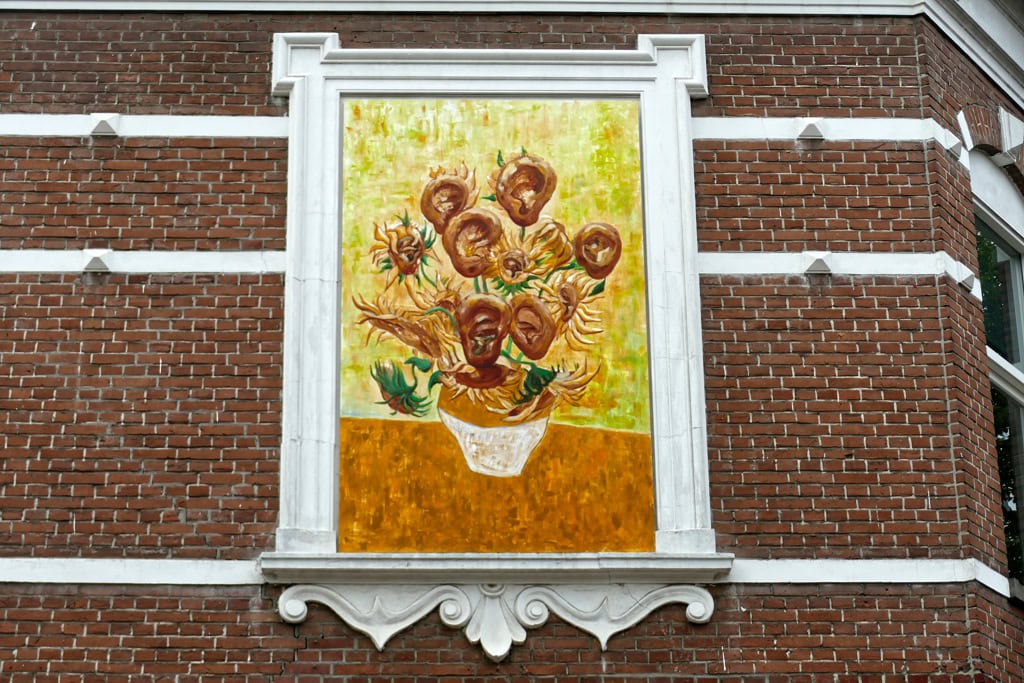
Of course, I’ve also put into writing what else there is to discover in this all-too-often overlooked city. My post Why ROTTERDAM Is Worth Visiting: A Complete Guide to the Urban Heart of the Netherlands is a complete guide to this fantastic city.
But now, with no further ado, let’s get to the murals in the so-called Chinatown, the Witte de Withkwartier, and beyond.
Street Art in Rotterdam
Rotterdam is considered one of the most important cities for street art in the Netherlands. This urban art form is closely linked to the city’s modern, creative identity. Especially after its reconstruction following WWII, Rotterdam developed into a place where new architectural and artistic forms of expression found space.
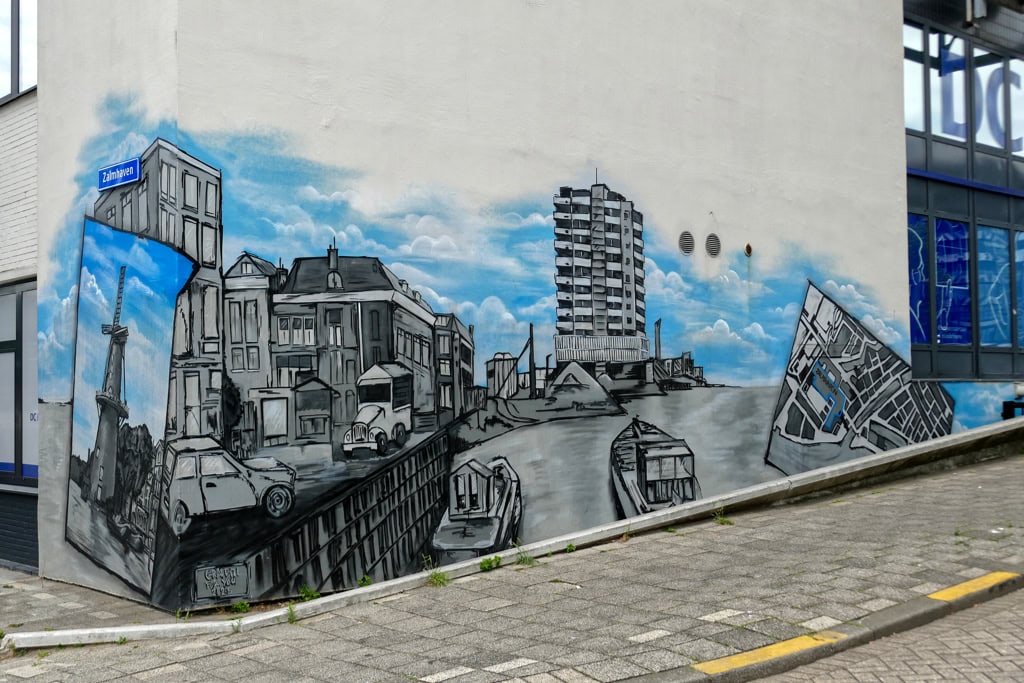
Today, the works range from large-scale murals on building facades to smaller graffiti, stencil work, and installations in public spaces. Street art not only beautifies the cityscape but also frequently addresses social, cultural, or historical themes. Many artworks are created as part of festivals or are supported by the city and local initiatives, transforming Rotterdam into a vibrant open-air gallery. The diversity of styles and artists makes street art an integral part of urban culture and a key element of Rotterdam’s appeal.
Around West Kruiskade
Rotterdam’s so-called Chinatown is located around the West Kruiskade, just a short walk from the central train station. It is considered the oldest and largest Chinatown in the Netherlands. Asian restaurants, supermarkets, bakeries, and shops prevail, and there is an extraordinary cultural diversity in general.
The history of the Chinese community in Rotterdam dates back to 1911. During a dockworkers’ strike, Chinese sailors from Great Britain were recruited as laborers. Most of them settled in the Katendrecht docklands. From the 1980s onward, however, the center of the community increasingly shifted from Katendrecht to West Kruiskade. Its proximity to the central train station and the city center boosted business for shops and restaurants. At the same time, the street developed into one of Rotterdam’s most multicultural hubs.
The cultural diversity is also reflected in the neighborhood’s street art. In fact, West Kruiskade is one of Rotterdam’s most exciting streets for urban art. Unlike neighborhoods such as Beverwaard or Lombardijen, however, there is no overarching mural project with a unified theme.
Even in the early years of the ALL CAPS Street Art Festival, numerous works by Dutch and international artists were created in West Kruiskade. Furthermore, many more murals were created independently of the festival. Many artists address cultural identity, migration, and the coexistence of different communities in their works—in other words, themes that perfectly reflect the character of this neighborhood. Thus, the area has evolved from a mecca for foodies also into a popular destination for street art enthusiasts.
For the sake of structure, I’m introducing the artists who have left their mark in alphabetical order. In the map at the end of this post, you can then see where exactly their works are to be found.
Grégory Teboul aka Astro
Grégory Teboul aka Astro was born in the French city of Sarcelles in 1981. However, he grew up in the northern suburbs of Paris. He began spraying graffiti around the year 2000, before evolving from classic wildstyle graffiti to his now distinctive style featuring geometric forms and optical illusions. Today, he is considered one of the most important representatives of so-called Optical Street Art.
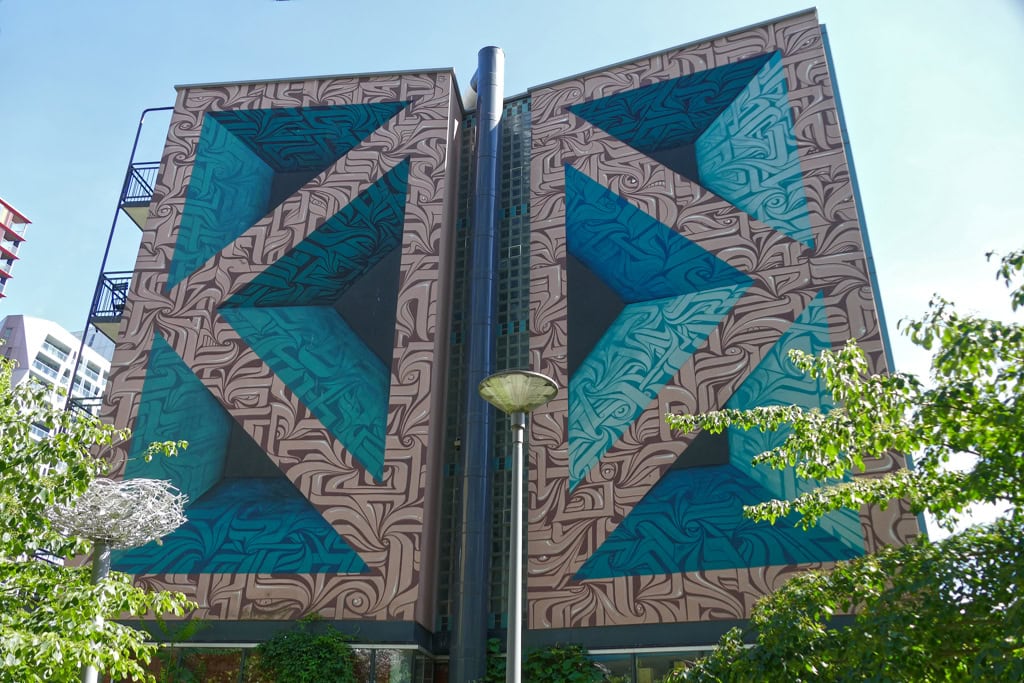
Astro’s work is characterized by precise lines, black and white contrasts, and dynamic color gradients that create the impression of movement and spatial depth. Depending on the viewing angle, his murals appear to float, morph, or emerge from the wall. In this way, he combines classic graffiti elements with mathematical precision and abstract art.
His works can be found in public spaces worldwide and have been featured at numerous international street art festivals. Despite their abstract design, they often reference the architecture of the respective building, thus altering the perception of the space. Astro’s murals impressively demonstrate how street art can not only decorate walls, but also visually reinterpret entire façades.
Bel Bob
Bel Bob is a Rotterdam-based street artist about whom little is publicly known. His work often addresses social and political issues. Unlike many mural artists who mainly create decorative or photorealistic facades, Bel Bob uses street art as a direct medium for criticism and expression of opinion.
Among his best-known works is a large-scale mural addressing rising rents and housing speculation. Created many years ago, the mural denounces the increasing pressure on the housing market and draws attention to the consequences of displacement and gentrification.
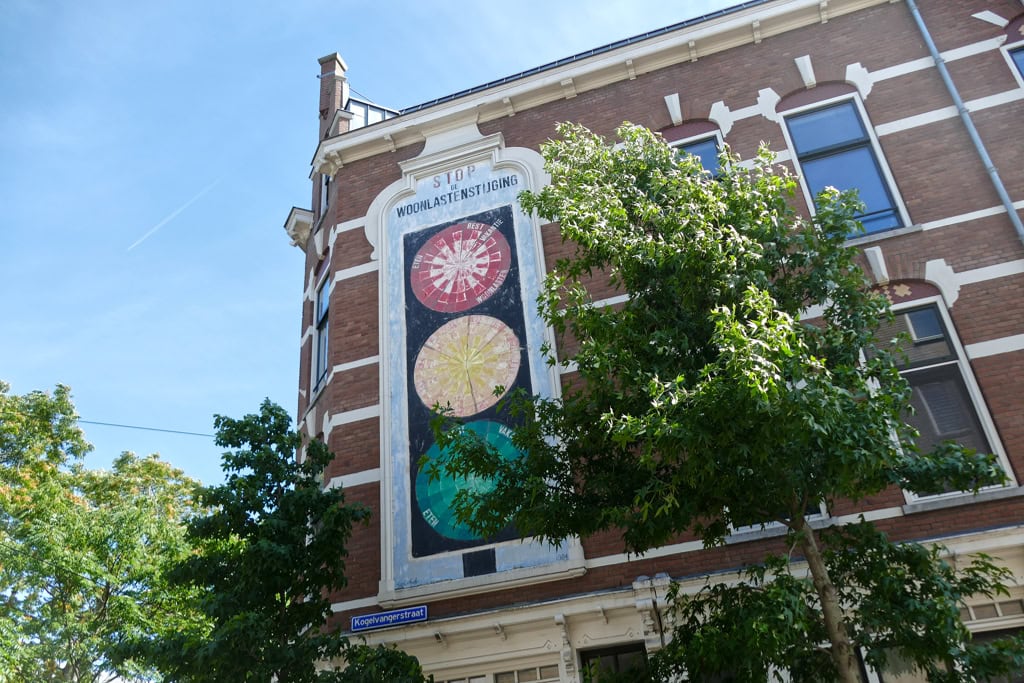
Bel Bob’s work exemplifies a side of street art that has its roots in social protest. Instead of merely beautifying public spaces, his works encourage reflection on social injustices and engagement with the changes taking place in the city.
Sharon van Dams
I’m always happy to introduce female street artists, since this genre is still so very male-dominated. Born in 1998, Sharon van Dams discovered her exceptional drawing talent during her school years at Auris College. Since 2017, she has worked at Atelier Herenplaats, a renowned Rotterdam studio for outsider art, where she continues to develop her distinctive style.
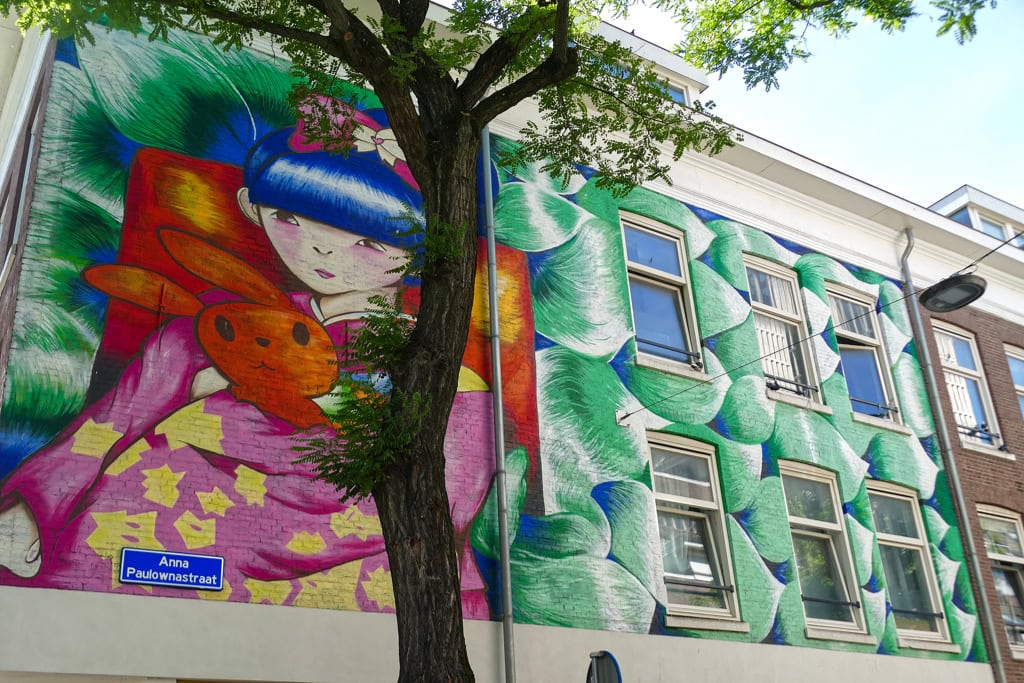
Characteristic of her work are detailed portraits of girls and young women with large, expressive eyes. Inspired by manga and the Japanese artist Yayoi Kusama, she combines vibrant colors, clean lines, and an intense visual language that is both captivating and subtly mysterious. Her works are mostly created with colored pencils and are distinguished by exceptional precision.
Noël Deelen
Noël Deelen, who was born in 1984, is a multidisciplinary artist from Rotterdam. After studying at the Willem de Kooning Academy, he initially worked as a graphic designer and illustrator before increasingly dedicating himself to public art. Today, he creates large-scale murals as well as paintings, installations, and audiovisual projects.
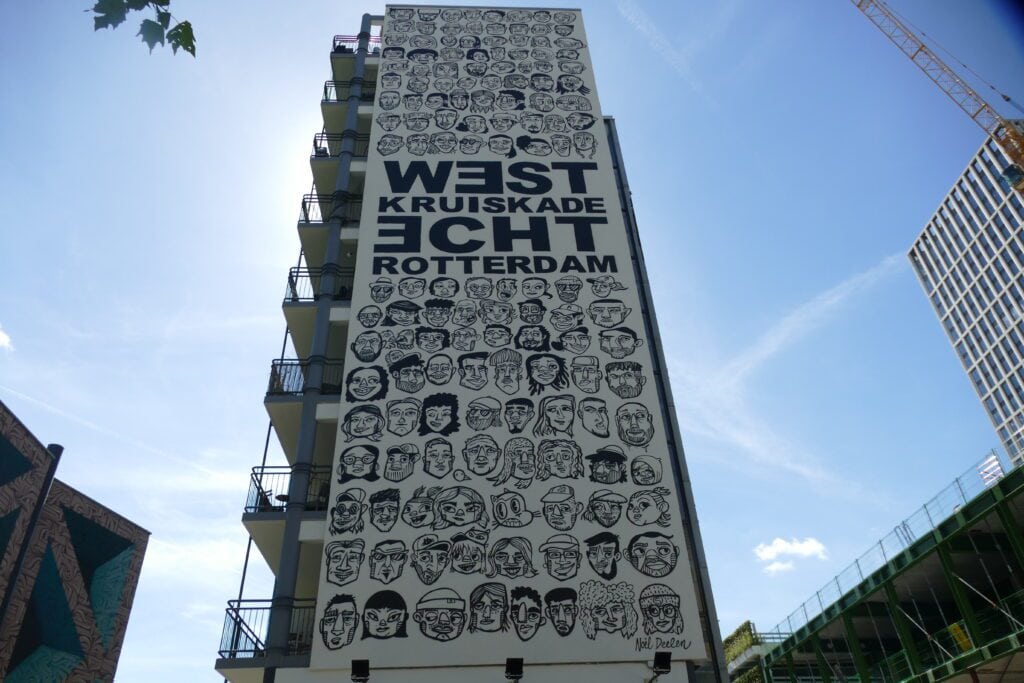
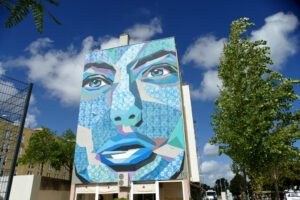
His work is characterized by expressive portraits, clean lines, and a reduced color palette. The focus is less on a perfect likeness and more on the personality of the people depicted. Many of his works are created in close relation to their location and capture the identity of a neighborhood or its inhabitants.
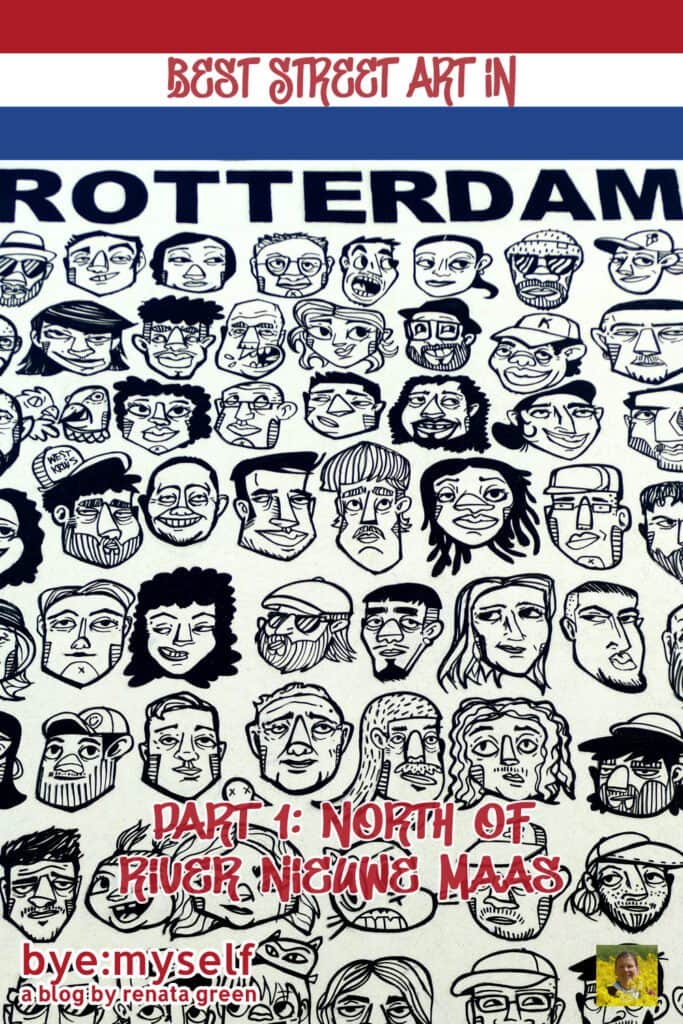
A well-known example is this large-scale mural where Deelen portrayed numerous residents and business owners, creating a symbol of the neighborhood’s cultural diversity. After the original mural was lost during building renovations, a new version with a total of 144 portraits was created in 2025.
I AM EELCO
Eelco van den Berg aka I AM EELCO is an artist and illustrator whose vibrant murals combine graphic structure with playful illustrations. He takes inspiration from Pop Art, comics, and the visual culture of the 1980s and 1990s.
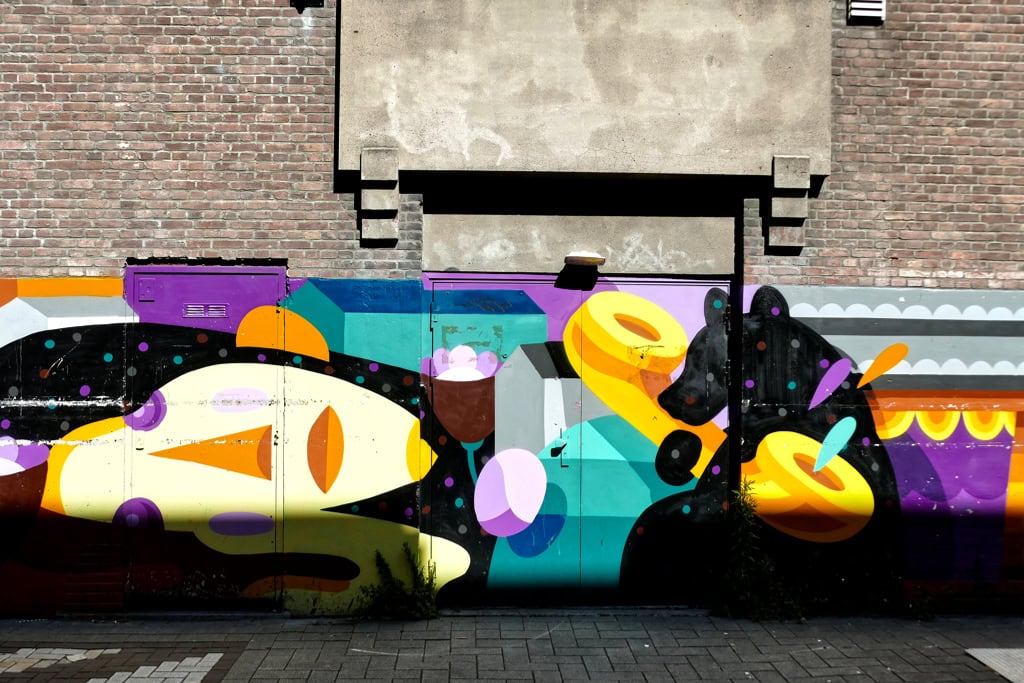
Characteristic of his style are bold colors, striking outlines, and imaginative figures, often depicting animals, nature, or everyday situations. His works appear light and humorous at first glance, but frequently contain subtle messages about the relationship between humanity and the environment. He succeeds in translating complex themes into an accessible and optimistic visual language.
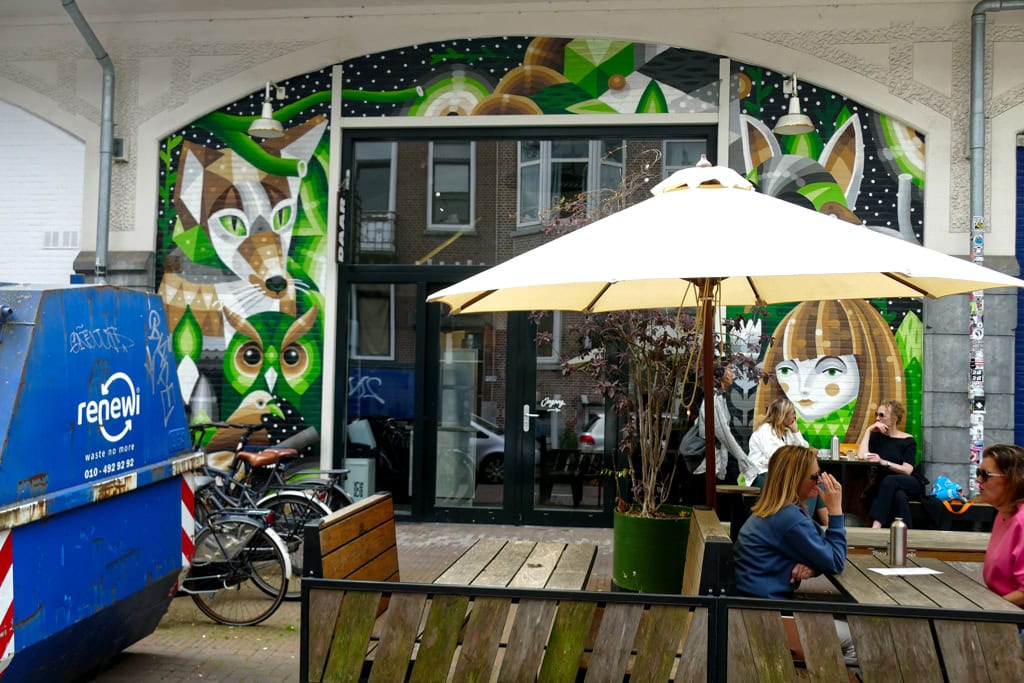
In addition to large-scale murals, I AM EELCO creates illustrations, wall art, and design projects for companies, cultural institutions, and festivals. His work can be found in public spaces in the Netherlands and beyond.
I’ve also introduced I AM EELCO in my posts Best Street Art in GHENT and Best Street Art in LISBON – Part III: Moscavide.
Insane51
Insane51 is the pseudonym of a Greek street artist internationally renowned for his spectacular 3D murals. His trademark is the so-called anaglyph technique: two different motifs are painted on top of each other in red and cyan, and only merge into a three-dimensional image when viewed through red-cyan 3D glasses. Depending on which colored lens is used, a different motif appears. This effect makes his works unique worldwide.
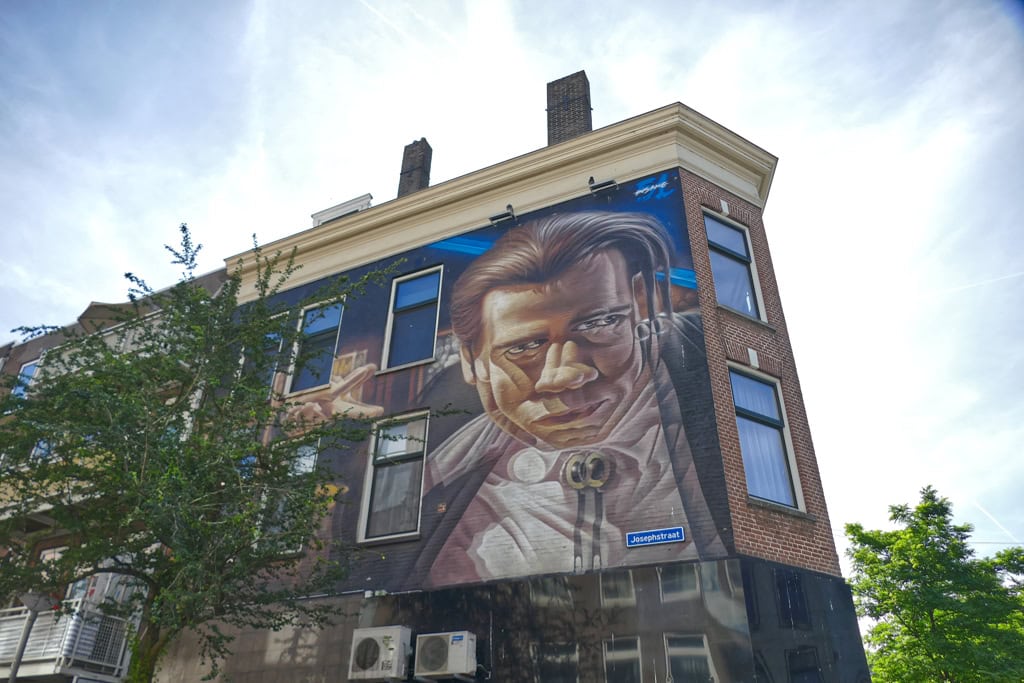
The artist began his career as a graffiti sprayer in Athens and developed his distinctive technique over many years. Today, his large-scale murals are among the highlights of numerous international street art festivals and can be found in Europe, North and South America, and the Caribbean.
Besides the sophisticated optical effect, Insane51’s works impress with their technical precision and expressive motifs. He often combines human or animal portraits with symbolic elements, playing with the themes of perception, reality, and illusion. His murals prove that street art can fascinate not only through its size but also through innovative ideas.
I have already featured works by Insane51 in my post ARUBA: The Powerful Murals of San Nicolas.
Roy Valk aka Karski
Roy Valk aka Karski is a street artist and illustrator famed for his richly detailed, imaginative visual worlds. His work blends elements of comics, pop culture, and surrealism with a distinctive, humorous visual language. Whimsical figures, animals, and playful details appear repeatedly, inviting the viewer to discover something new with each glance.
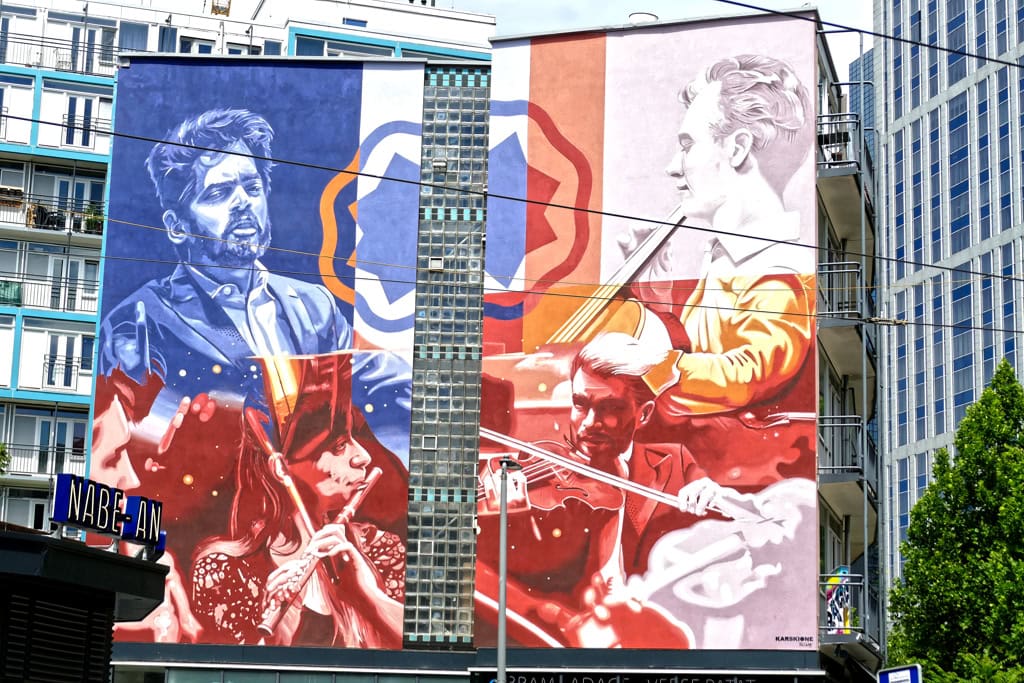
In addition to his own projects, Karski regularly collaborates with other artists such as Tim Rodermans. However, his long-standing partnership with Paul Watty is particularly well-known. Karski develops the imaginative figures and narrative elements. Then, Watty complements the works with his characteristic geometric forms and bold color fields. This combination results in dynamic murals that are both playful and precise.
I’ve introduced a mural by Karski and Rodermans in my post IF WALLS COULD SPEAK: The Best Street Art Project in Amsterdam.
Tymon de Laat
Tymon de Laat is a Dutch street artist whose large-scale murals can now be found on several continents. As a matter of fact, I saw his portraits for the first time on the island of Bonaire.
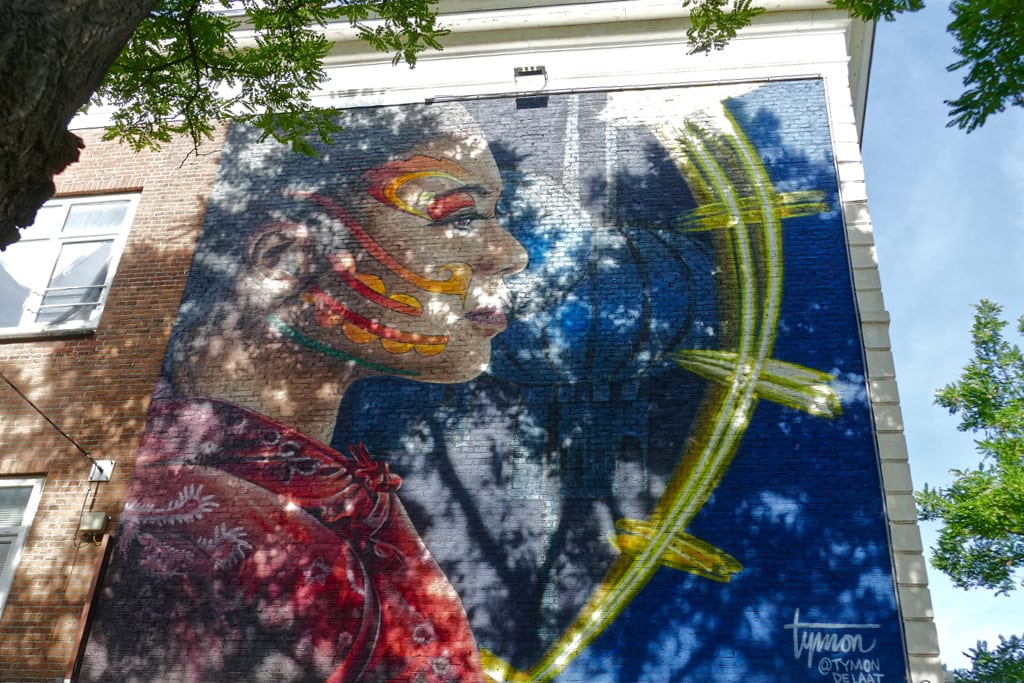
After studying at the Willem de Kooning Academy, he traveled extensively on a shoestring budget, financing his journeys in part by creating murals. These encounters with people from diverse cultures continue to shape his art to this date.
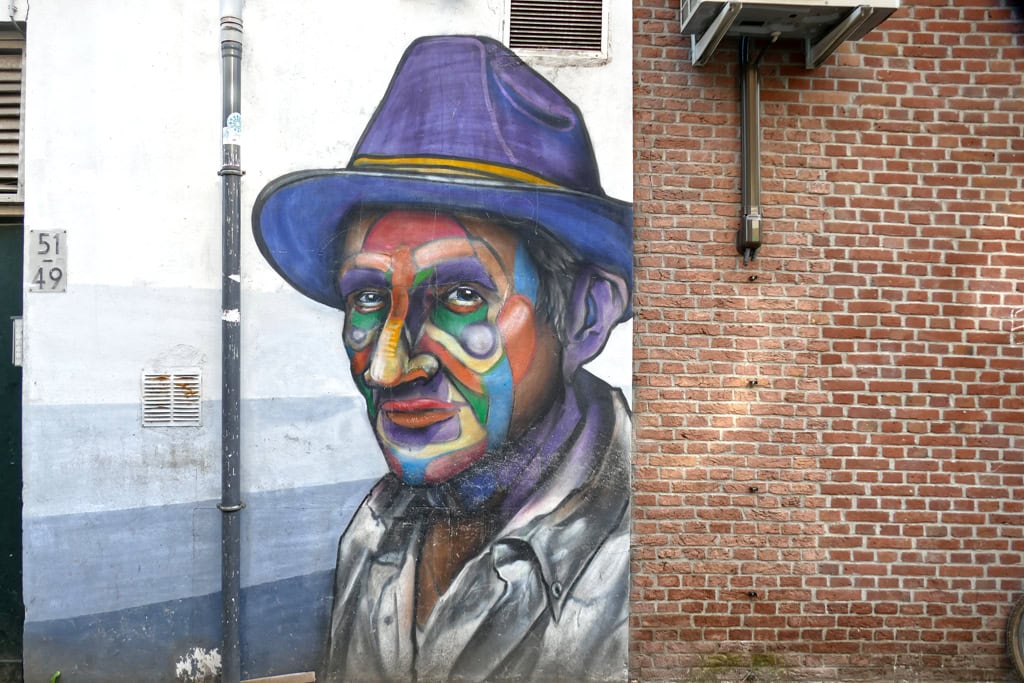
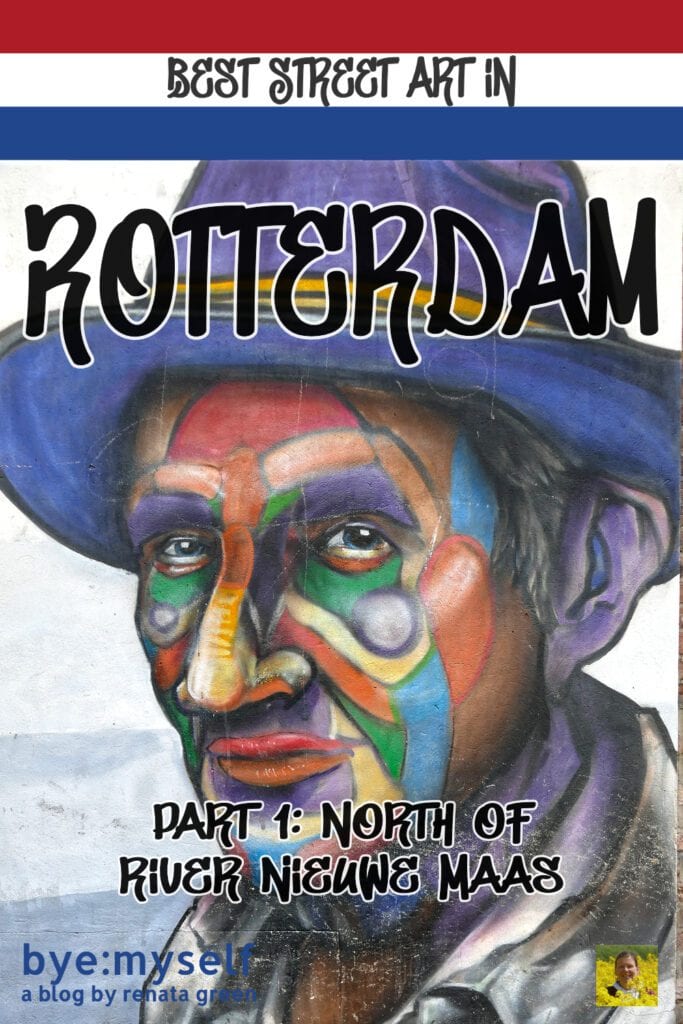
De Laat’s work is characterized by expressive portraits that combine realism with vibrant colors and graphic elements. Tymon de Laat gained international recognition with his mural Leilana on Bonaire, as it was chosen as the most popular mural of the month in 2021 by the street art platform Street Art Cities.
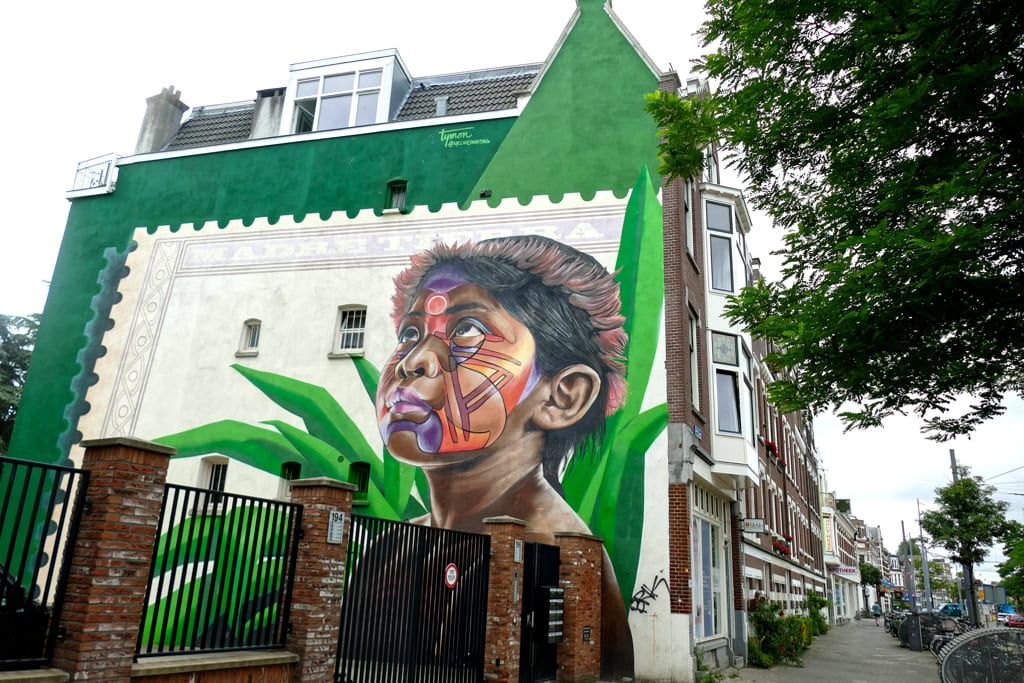
His works are also among the most famous murals in his hometown of Rotterdam. Regardless of where they were created, they all share the same beautiful message: openness to other cultures and the conviction that personal encounters can connect people.
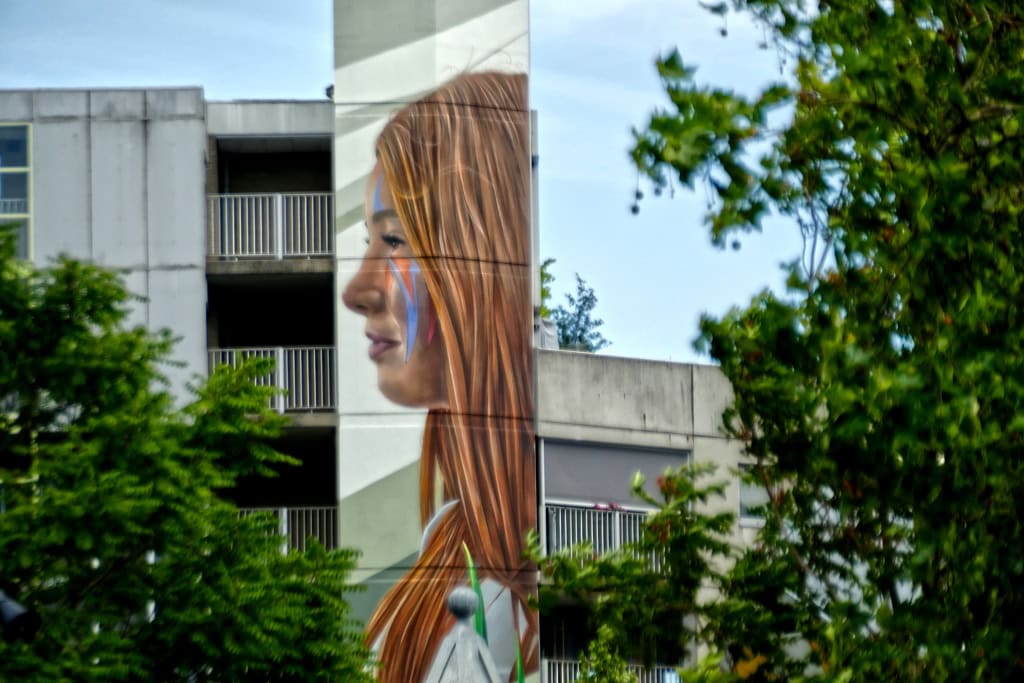
I have already featured works by Tymon de Laat in my post BONAIRE Totally Unexpected: Street Food And Urban Art Tour, and you’ll also find more of his murals in the second part on urban art in Rotterdam
Anne-Mercedes Langhorst
Anne-Mercedes Langhorst is a multidisciplinary artist born in Peru‘s capital Lima in 1975. However, she has lived in the Netherlands since early childhood. She studied at the art academies in Antwerp and Rotterdam, as well as at the Utrecht School of the Arts. In addition to painting and illustration, she works with poetry, performance art, and public art. Questions of identity, origin, and cultural connection are central to her work.
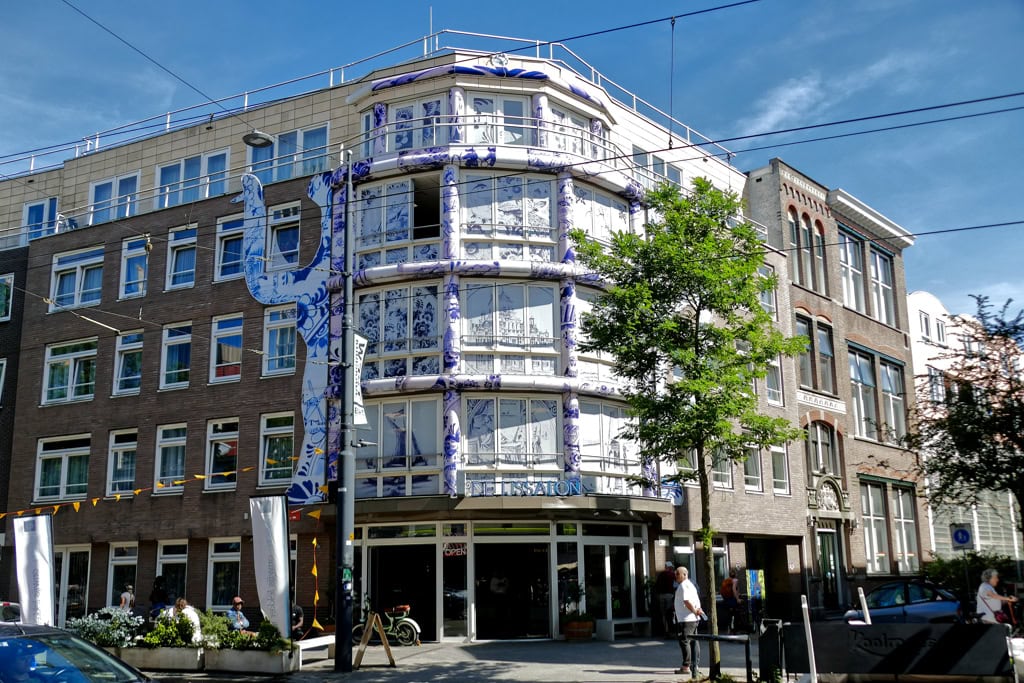
Langhorst gained particular renown in Rotterdam with her monumental Theepot on West-Kruiskade. The artist deliberately chose a Delft Blue-painted teapot. While Delftware is considered typically Dutch, its origins lie in Chinese porcelain. At the same time, sharing tea is a sign of hospitality and encounter in many cultures. The teapot thus becomes a metaphor for the peaceful coexistence of different cultures in Rotterdam’s Chinatown without either losing its own identity.
Dalal Mitwally
And yet another female urban artist! Dalal Mitwally is a Jordanian-Dutch artist and illustrator who lives and works in Rotterdam. Her work spans street art, illustration, and fine art, often exploring themes such as identity, migration, memory, and cultural belonging. She incorporates both personal experiences and societal issues into her art.
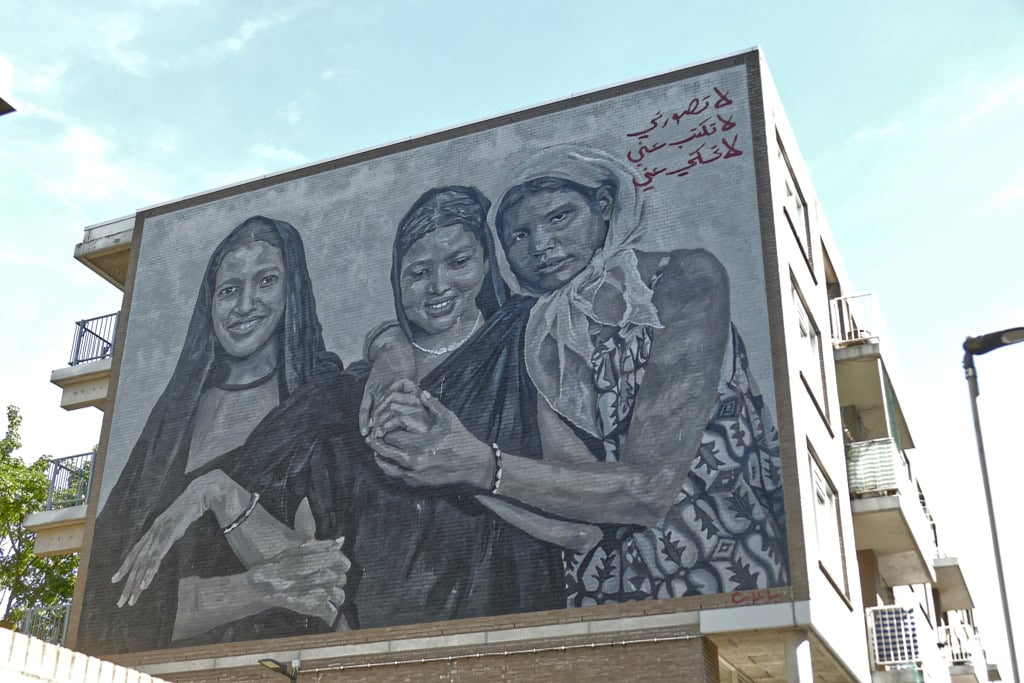
Mitwally’s style is characterized by expressive figures. She often combines floral ornaments and symbolic elements with portraits, creating multifaceted visual worlds. Her work bridges different cultures and tells stories of origin, transformation, and coexistence.
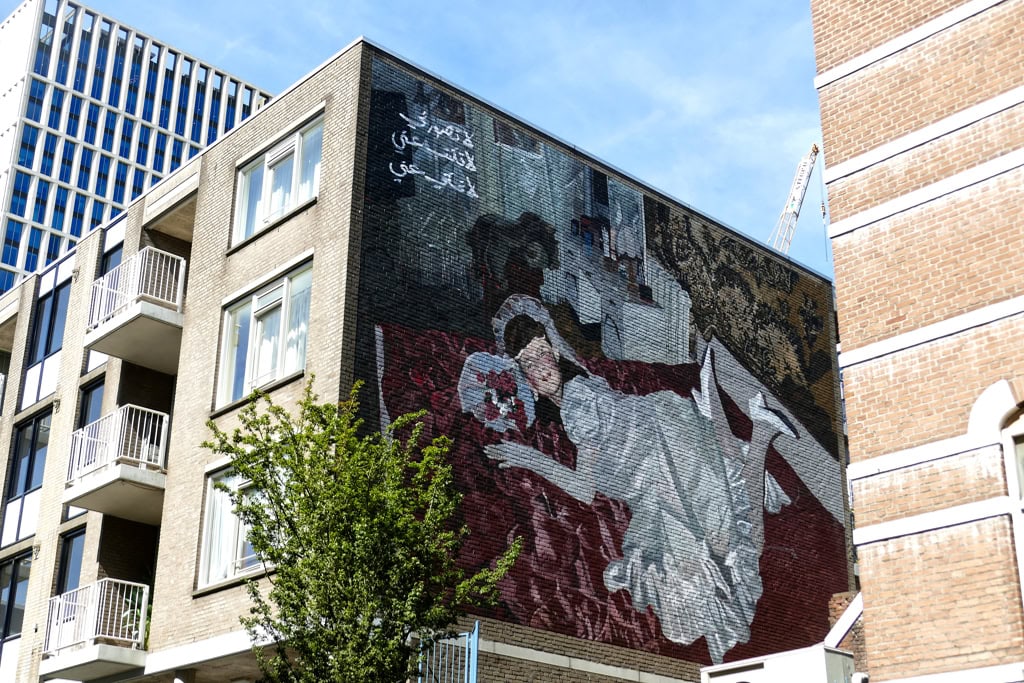
In addition to large-scale murals, Dalal Mitwally creates illustrations, exhibitions, and participatory art projects. Many of her works are developed in close collaboration with local residents and reflect the history or identity of a neighborhood. With her poetic visual language, she demonstrates how street art can not only beautify public spaces but also stimulate reflection and dialogue about cultural diversity.
Antoine Monod de Froideville
Antoine Monod de Froideville is a Dutch artist born in 1976. His work lies at the convergence of outsider art and street art.
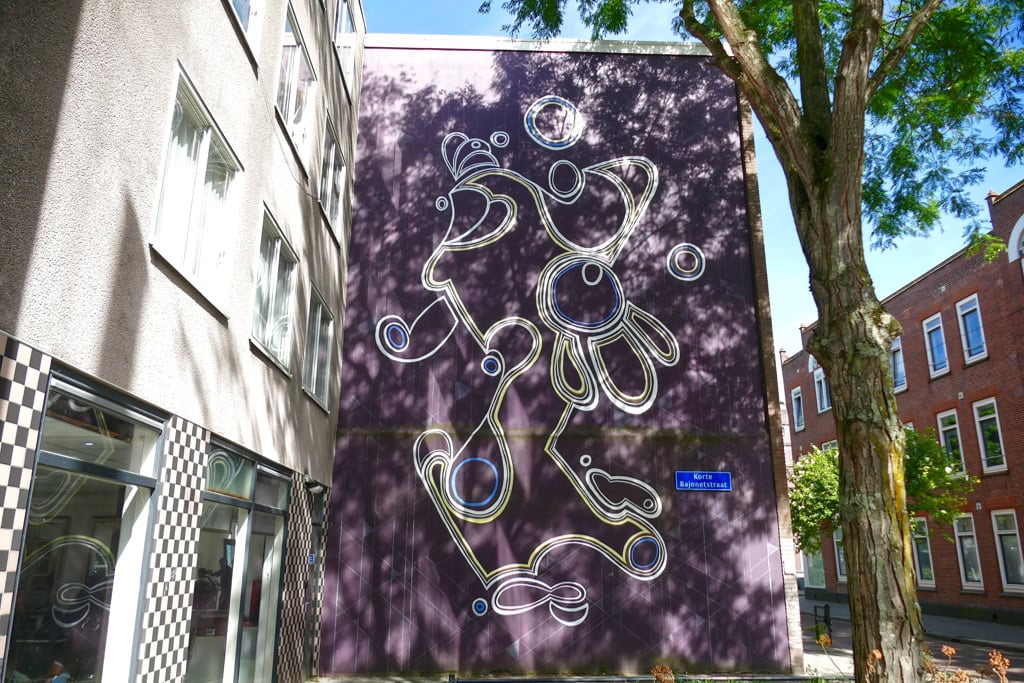
Since 2013, he has worked at Atelier Herenplaats in Rotterdam, a renowned institution that supports artists with intellectual disabilities or mental health challenges. His drawings have been adapted into large-scale murals in public spaces, making his unique visual language accessible to a wide audience.
Adriano Cinelli aka Onio
Onio is a street artist, illustrator, and visual artist from Brazil’s capital Brasília. He became interested in graffiti at the age of 13 and was among the first graffiti artists in his hometown. His work straddles the line between urban art, illustration, and abstract painting.
Onio’s style is characterized by dense, organic-looking compositions of lines, dots, and ornamental forms. His images typically forgo a complex web in which figures, architecture, and abstract elements intertwine. He himself describes his work as an expression of urban chaos—a cityscape where people, buildings, and streets are inextricably interwoven.
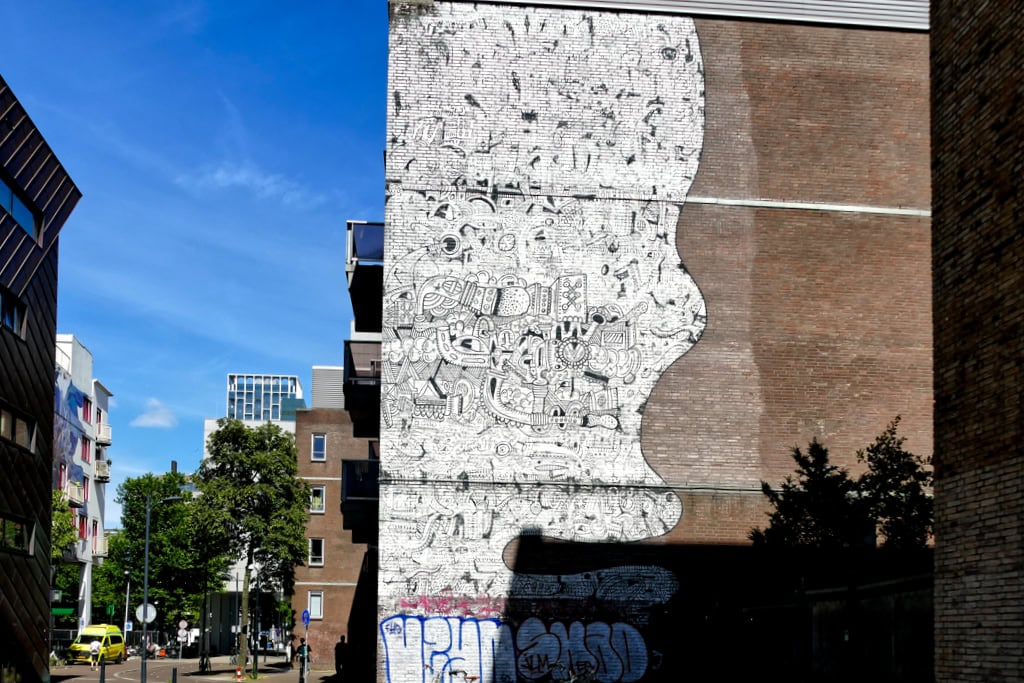
Onio gained international attention in 2009 when he was invited to the Brazilian street art festival R.U.A. – Reflexo on Urban Art in Rotterdam. As part of this project, he created several murals in public spaces, introducing his distinctive visual language to the Netherlands for the first time. Some of these works have survived to this day and are among the early examples of the international street art movement in Rotterdam.
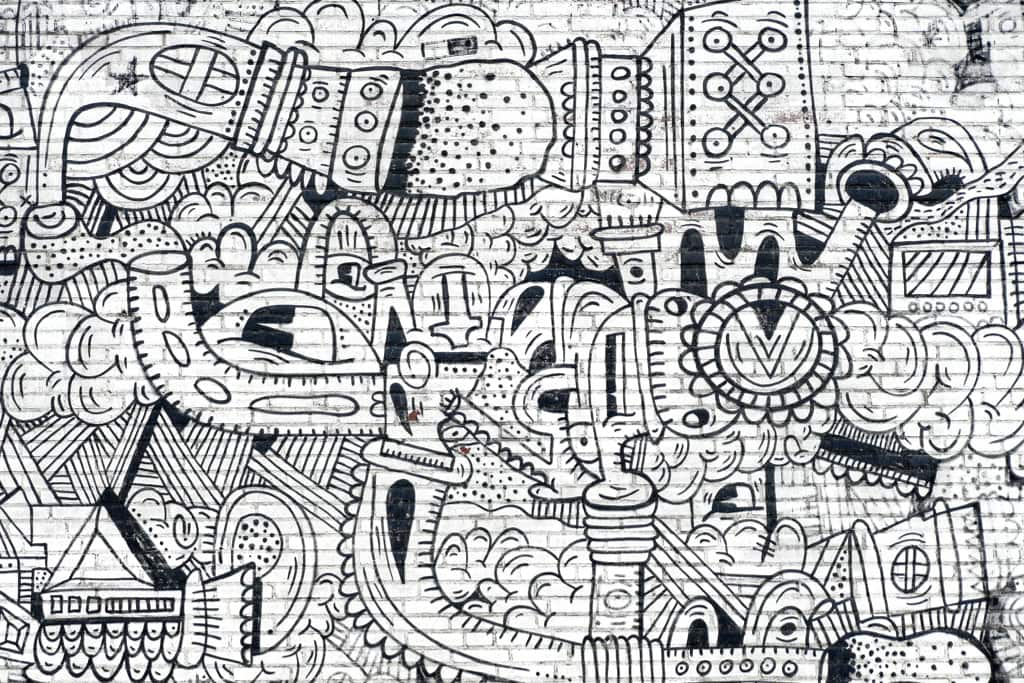
The black and white mural next to Pauluskerk is one of his best-known works in Rotterdam. With its labyrinthine network of lines and forms, it alludes to the complexity of urban life and is often interpreted as a symbol of societal challenges.
Peeta
Manuel Di Rita aka Peeta is an Italian street artist born in 1980. He began as a graffiti sprayer in the 1990s and developed a distinctive style that brought him international acclaim. Today, he is considered one of the most important figures in three-dimensional urban art.
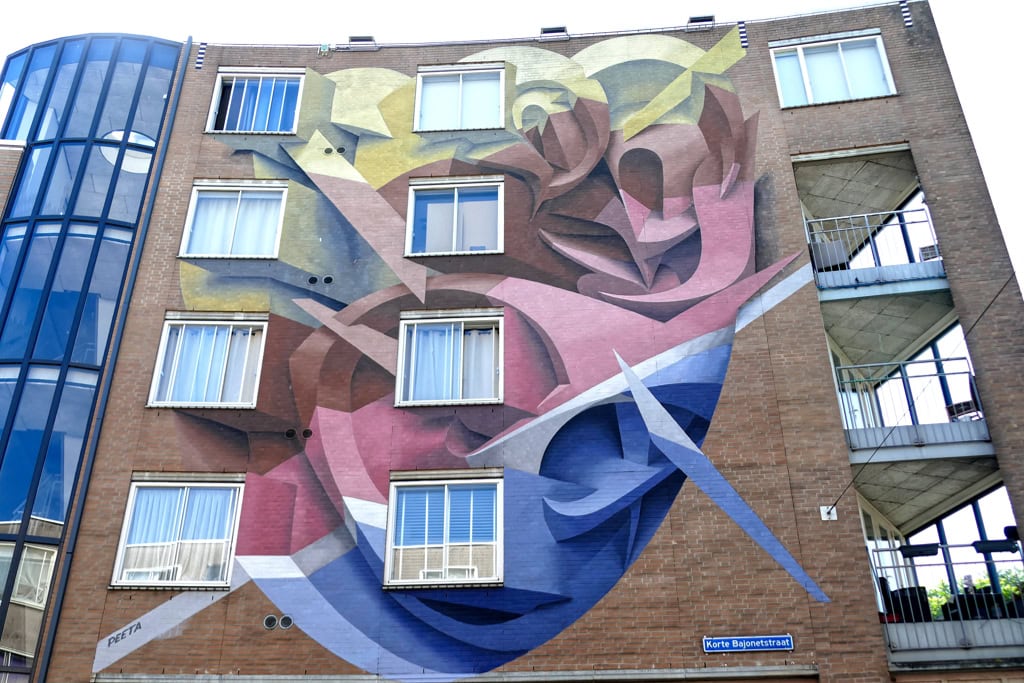
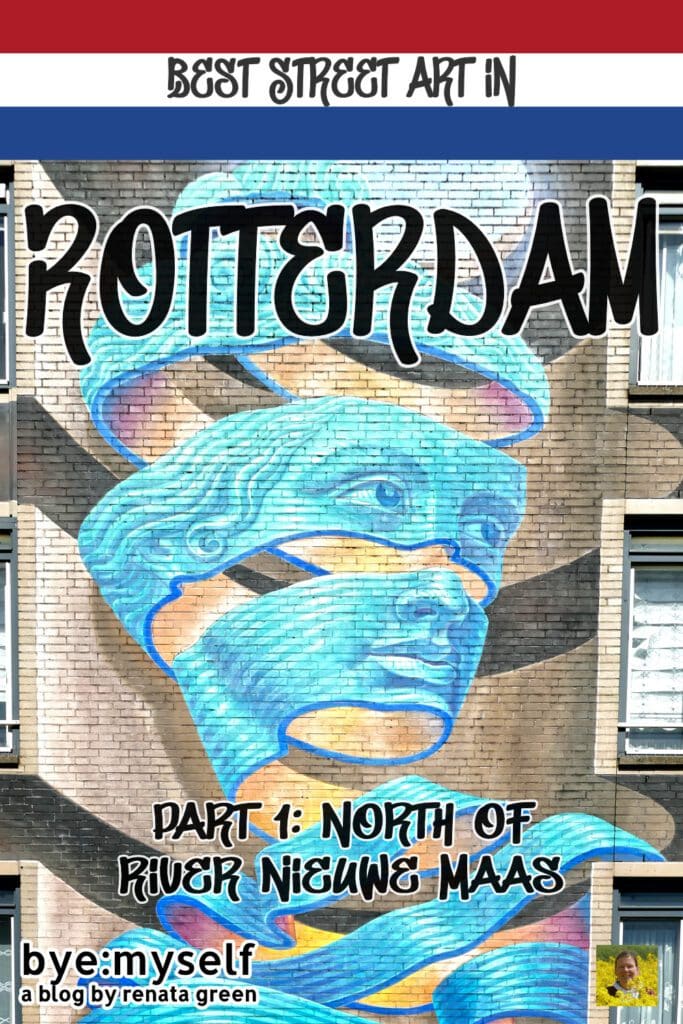
Characteristic of Peeta’s work are abstract, sculptural forms that appear to emerge from or disappear into the wall. Through precise light and shadow effects, he creates fascinating optical illusions that convey a sense of depth and movement. His murals exist at the intersection of graffiti, painting, and architecture, consciously incorporating the form of the respective building into their design.
In addition to facades, Peeta also creates canvases, sculptures, and installations, exhibiting his work worldwide. His murals can be found in numerous countries across Europe, as well as in North and South America, and are regularly featured at international street art festivals. With its extraordinary combination of technical precision and spatial illusion, Peeta shows how street art can change the perception of architecture in surprising ways.
Tim Rodermans
Tim Rodermans is a graphic designer and muralist from Rotterdam. After studying at the Willem de Kooning Academy, he initially worked as an illustrator before increasingly dedicating himself to large-scale murals and public art. His works can now be found in the Netherlands and beyond.
Rodermans’ work is characterized by clear graphic forms, vibrant colors, and a narrative visual language. He often combines figures, architecture, and nature into dynamic compositions that invite the viewer to continually discover new details. Many of his murals are created specifically for their location, reflecting the history, identity, or unique features of a neighborhood.
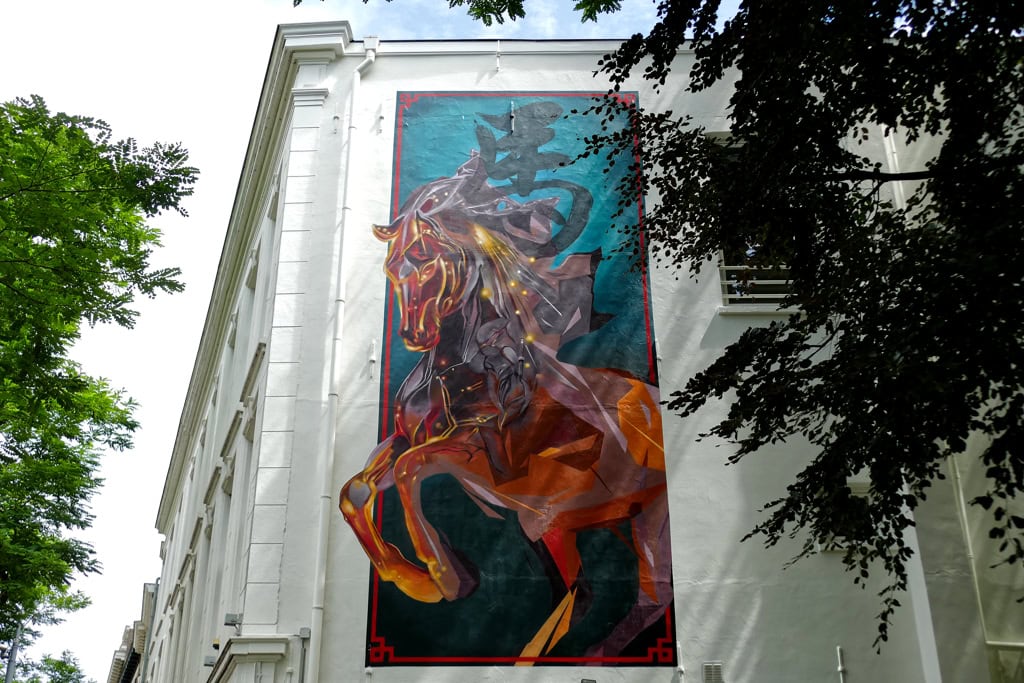
In addition to murals, Tim Rodermans creates illustrations, posters, and design projects for cultural institutions and businesses. His work is distinguished by a successful fusion of illustration and street art, demonstrating how large-scale murals can be far more than mere facade decoration. They tell stories and give a place its own distinct identity.
Tim Rodermans frequently collaborates with Karski, and I’ve introduced a mural by those two in my post IF WALLS COULD SPEAK: The Best Street Art Project in Amsterdam.
Royyal Dog
Chris Chanyang Shim aka Royyal Dog is a street artist hailing from South Korea. After studying cartoon animation, he initially turned to the graffiti scene and later became one of South Korea’s most internationally renowned mural artists. Today, he lives and works primarily in the USA, but his large-scale murals can be found worldwide.
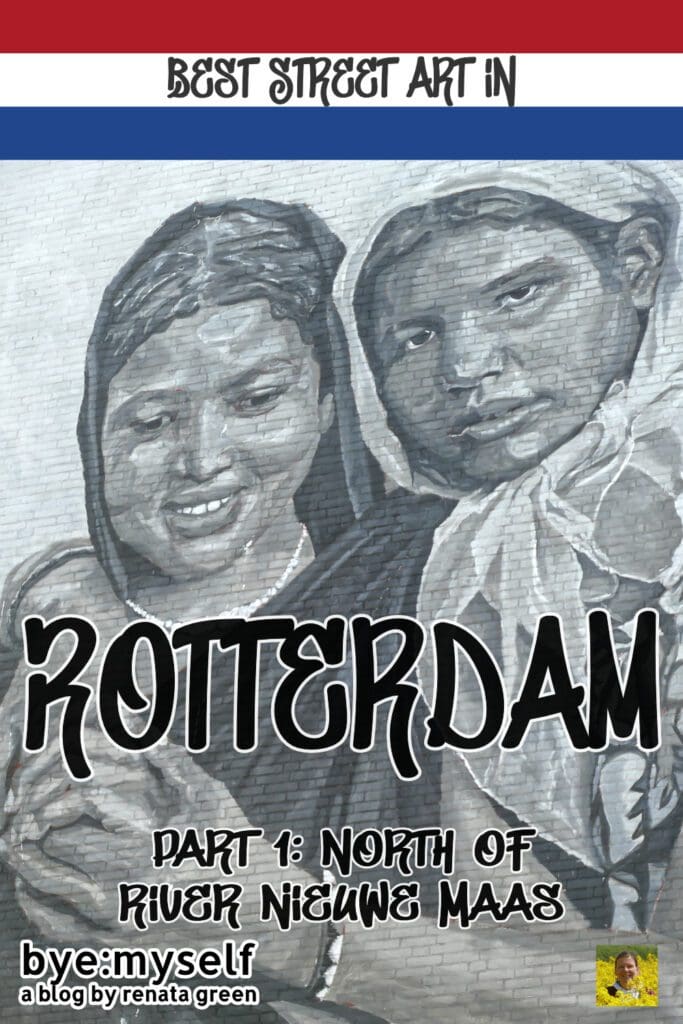
Royyal Dog’s work is characterized by photorealistic portraits that blend different cultures. He became particularly well-known for his depictions of African-American women in traditional Korean hanbok garments. With this unusual combination, he makes a statement about cultural diversity, mutual respect, and the unifying power of art. Hip-hop culture, which has inspired him since his youth, plays just as important a role in his work as his Korean roots.
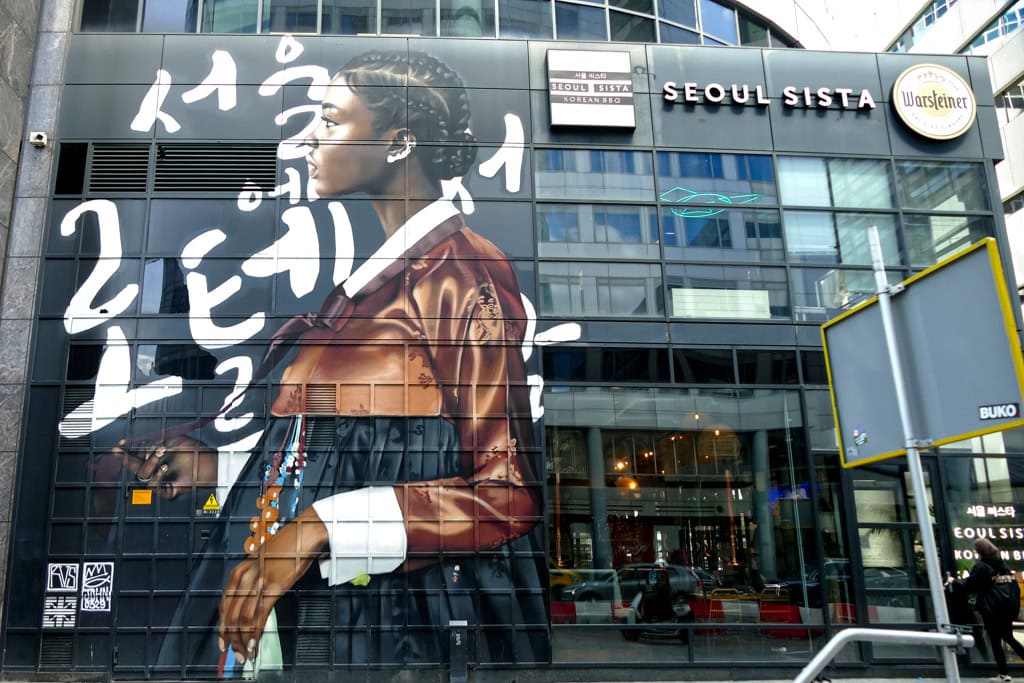
His murals are regularly created as part of international street art festivals and are distinguished by exceptional technical precision and a powerful emotional impact. Despite their photorealistic style, they always convey a clear message: differences between people should not divide, but rather be understood as enriching. With this combination of masterful portraiture and a plea for multiculturalism, Royyal Dog has secured a firm place in the international street art scene.
Danny Rumbl
Danny Rumbl, also known by the pseudonym Ready2Rumbl, is an influential Dutch street artist, illustrator, and sculptor. He has been a major force in shaping the urban art scene of his hometown of Rotterdam since 2003. His distinctive style is characterized by a dynamic fusion of traditional graffiti culture and the aesthetics of classic Saturday morning cartoons from the 80s and 90s.
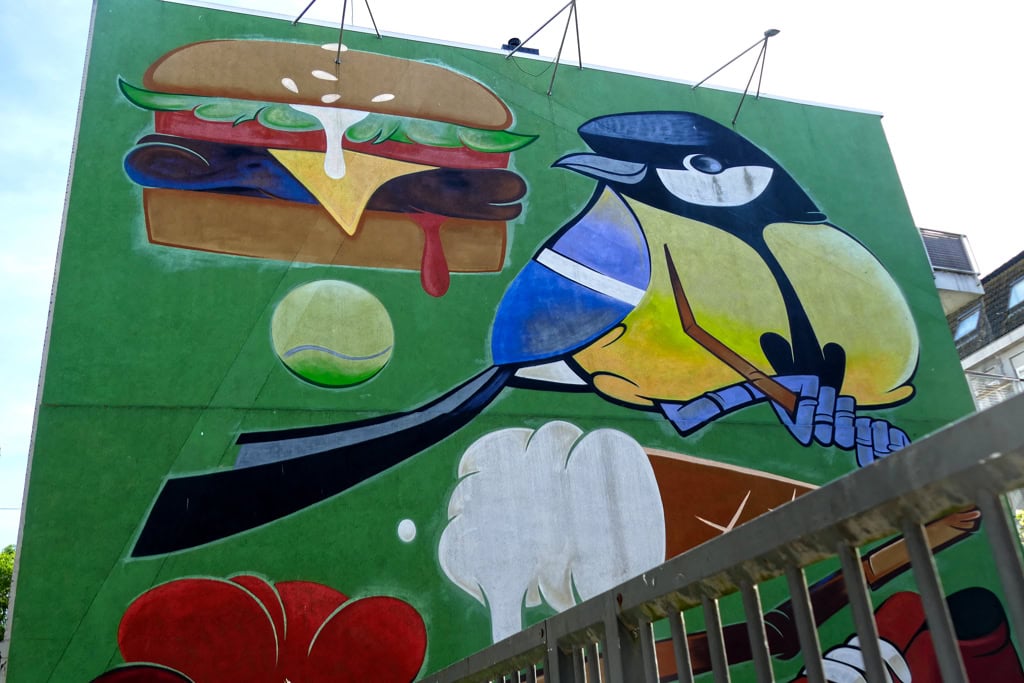
With thick, precise outlines, vibrant color contrasts, and expressive, often whimsical characters, he breathes lively humor into the gray concrete of public spaces. His large-scale murals can be found throughout Rotterdam and are firmly embedded in the cityscape. Yet, his art isn’t limited to building facades, but extends to electrical boxes, stairwells, and temporary installations throughout the city.
Away from the streets, Danny Rumbl demonstrates enormous artistic versatility. He successfully translates his iconic characters onto canvases, limited-edition art prints, and three-dimensional, handcrafted vinyl sculptures. At the end of 2024, he expanded his creative scope with a particularly personal project: the illustrated hardcover cookbook Buku Danny Gemuruh. It is a tribute to his Indonesian roots that combines traditional family recipes with his vibrant artwork.
TelmoMiel
TelmoMiel is the artistic duo of Dutch muralists Telmo Pieper and Miel Krutzmann. The two met while studying at the Willem de Kooning Academy in Rotterdam and have been working together since 2012. With their large-scale murals, they have made a name for themselves far beyond the Netherlands and are now among the most renowned figures in contemporary street art.
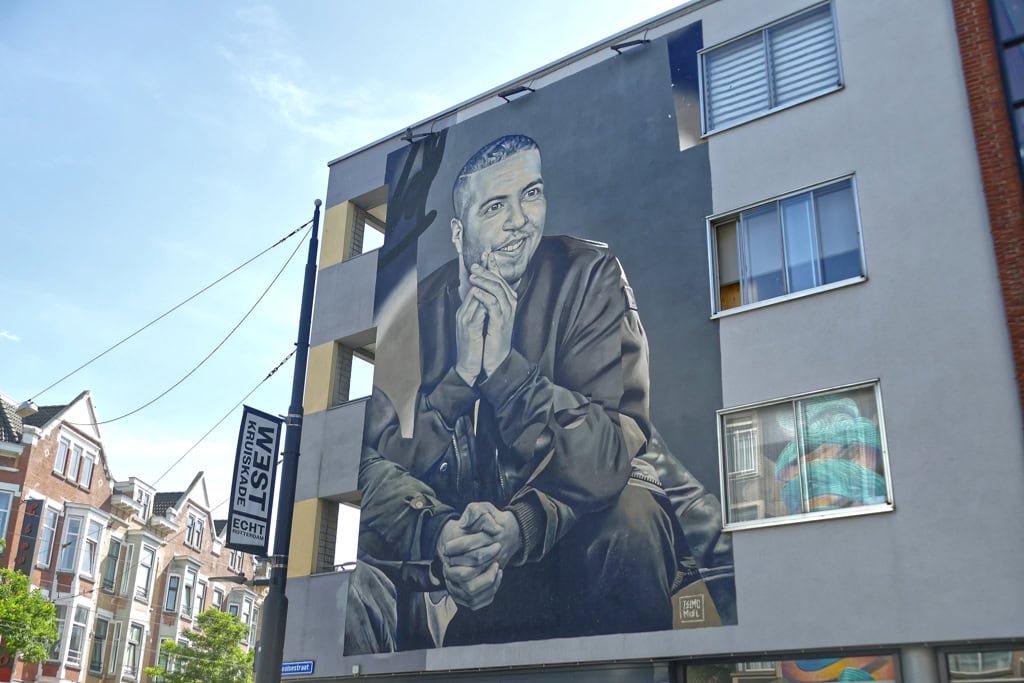
Characteristic of their work is the combination of photorealistic painting with surreal and dreamlike elements. Objects often appear to merge into one another or dissolve, creating fascinating optical illusions. This way, their works combine technical perfection with great imagination. They impressively show how street art can blur the boundaries between reality and imagination.
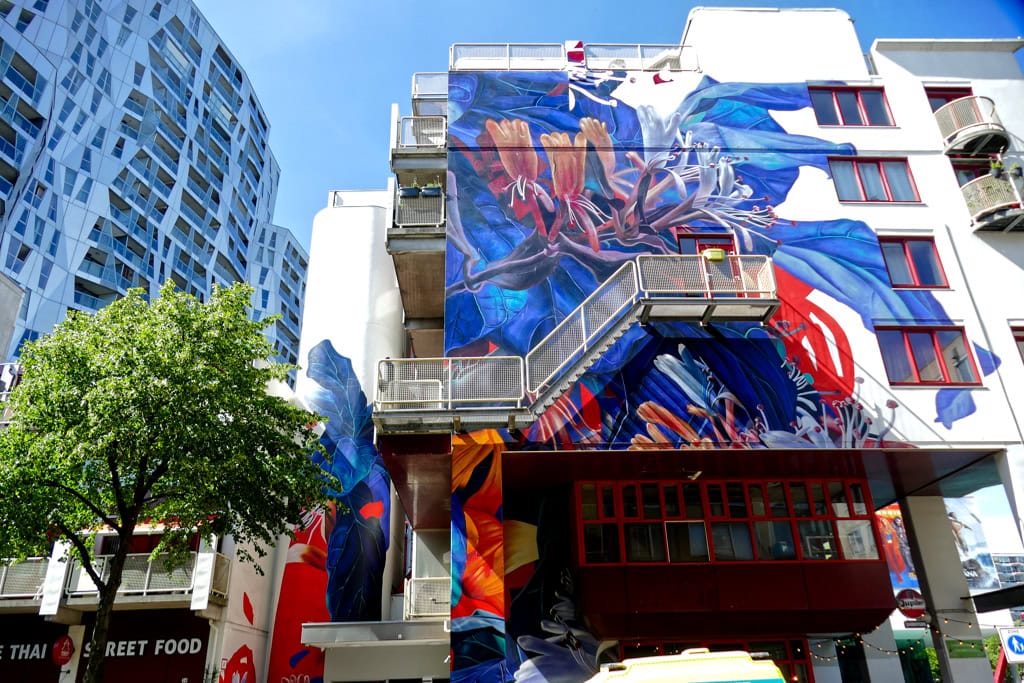
TelmoMiel’s murals can be found on several continents, and the duo regularly participates in international urban art festivals. Despite their global success, the two artists feel a strong connection to their hometown.
I’ve also introduced TelmoMiel in my posts Best Street Art in VILNIUS, the second part of the best street art in Rotterdam, The Best Spots in HAARLEM You Should Not Miss, and Best Street Art in GHENT.
Paul Watty
Paul Watty is a Dutch urban artist and graphic designer whose trademarks are bold colors, geometric patterns, and abstract forms. His work lies at the intersection of street art, graphic design, and modern painting.
Watty frequently collaborates with Karski. While Watty develops the colored surfaces, patterns, and graphic structures, Karski contributes the narrative figures and illustrations. Their murals impressively demonstrate how two independent artistic approaches can create a harmonious whole. A great example is certainly their mural commissioned by the Philharmonic Orchestra of Rotterdam. You can see it in the section about Karski above.
WD Wild Drawing
WD, also known as Wild Drawing, is a street artist born in Bali. However, he has lived and worked in Athens for many years. He initially studied fine and applied arts in Indonesia before dedicating himself entirely to urban art. Today, his large-scale murals are among the most renowned works in the European street art scene.
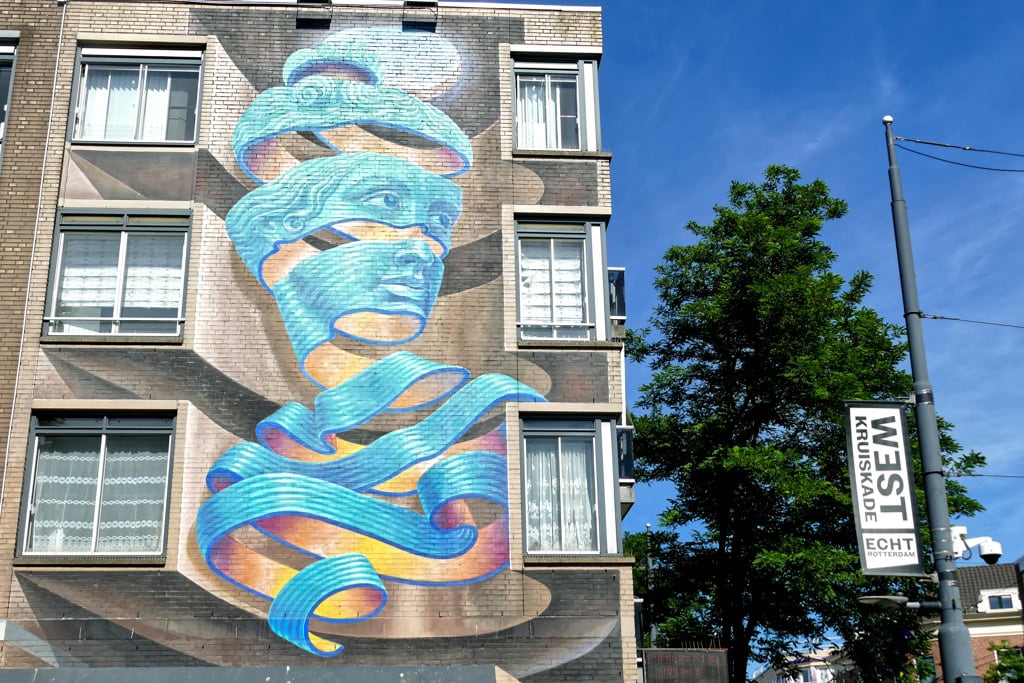
WD combines photorealistic depictions with surreal, futuristic elements. Humans, animals, and machines merge into richly detailed compositions that address various important topics. Despite their complexity, his murals appear harmonious and make viewers continually discover new details.
His work can be found in numerous countries across Europe and beyond. Also, he frequently participates in international street art festivals. WD skillfully integrates the architecture of the respective building into his designs. This way, his murals appear as a natural part of their surroundings. With his exceptional combination of technical skill, imagination, and narrative depth, WD is one of the most important international representatives of contemporary street art.
I’ve already introduced WD in my posts The Amazing Murals of the Hotel Ruins of Alyko and ARUBA: The Powerful Murals of San Nicolas.
Around Witte de Withstraat
East of the Westersingel lies the hip Witte de Withkwartier. Named after the decidedly unhip Rotterdam admiral Witte Corneliszoon de With, the area initially developed into a media hub after WWII. However, in the 1970s and 80s, the district lost its appeal. Vacant storefronts, illegal gambling dens, and a rather seedy nightlife characterized the area. This prompted the city to undertake a comprehensive revitalization project in the 1990s.
Buildings were purchased and strategically leased to galleries, cultural institutions, and creative businesses. The goal was to develop the street as a cultural link between Museum Park and the Maritime Museum. Today, the district is Rotterdam’s main cultural hub with a good number of powerful and fun street art.
Jorge Kata Núñez aka Kata
Jorge Kata Núñez aka Kata is the artistic name of a Chilean muralist born in 1953. In his homeland, he was a member of the Brigada Ramona Parra, an artists’ group that created political murals in public spaces. After the military coup led by Augusto Pinochet, Kata was arrested and imprisoned. In 1977, under an international agreement, he went into exile in the Netherlands, where he continued his artistic work and significantly shaped Rotterdam’s cityscape for decades.
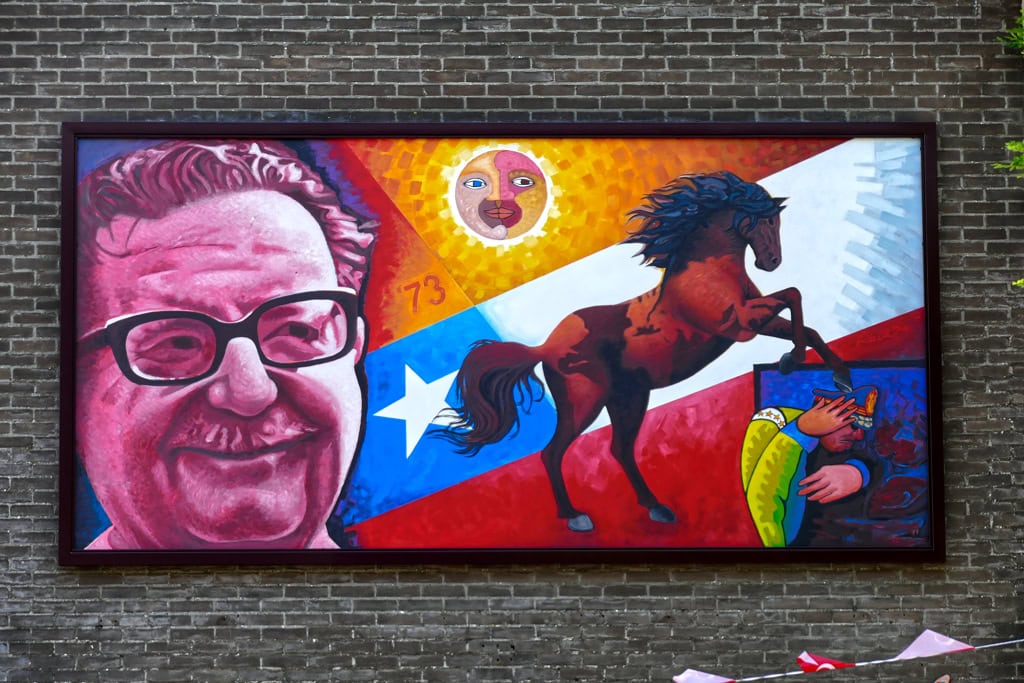
His murals are characterized by vibrant colors and rich symbolic imagery. His works often address topics like freedom, solidarity, peace, and international understanding. Those motifs are obviously closely linked to his own life story.
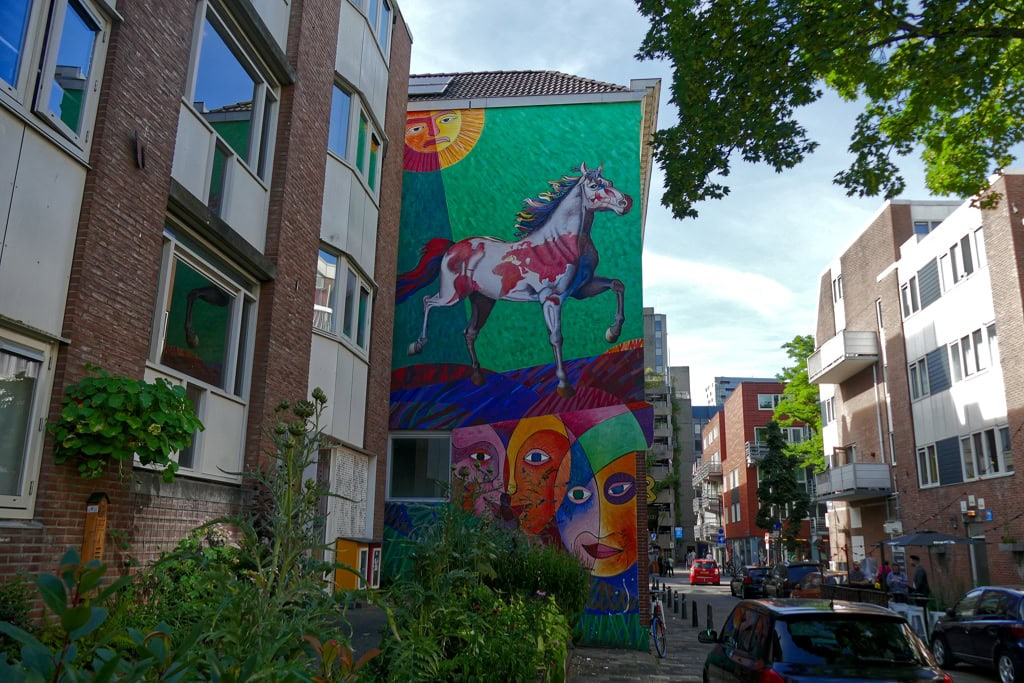
With more than 60 murals in the Netherlands and Chile, Kata is a pioneer of modern mural painting. His work impressively demonstrates how street art can convey social messages while simultaneously shaping the identity of a neighborhood.
Anuli Croon
Many years after Kata painted The World Traveller, Dutch artist Anuli Croon created a kind of response to Kata’s work at the opposite corner. This artistic dialogue is particularly compelling. Anuli Croon studied at the Willem de Kooning Academy and is now working in illustration, graphic design, and public art. Her works are characterized by a clear visual language, vibrant colors, and a playful use of symbolism.
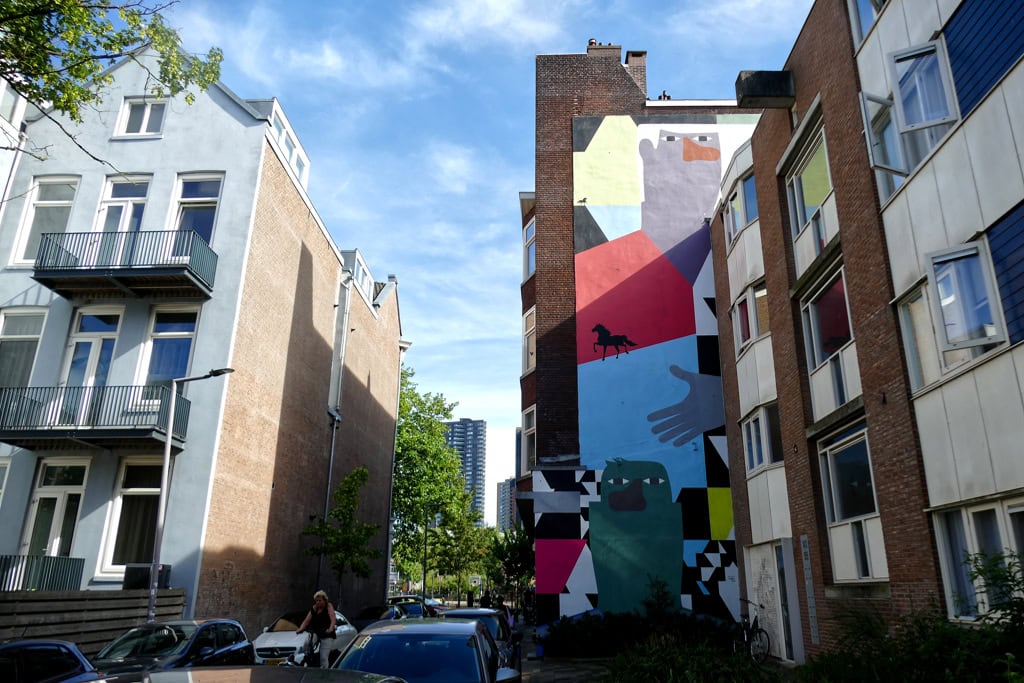
Croon combines narrative elements with graphic patterns, creating visual worlds that are both imaginative and easily accessible. Many of her projects are created in close collaboration with local residents and explore the history or identity of a place.
With her murals, Anuli Croon demonstrates how public art can not only shape facades but also continue to tell stories and build bridges between the past and present.
Ox-Alien
Ox-Alien’s work stands out for its playful imagery and distinctive blend of fantasy, nature, and pop culture. His murals are characterized by vibrant colors, organic forms, and whimsical figures that often resemble plants, fungi, or extraterrestrial beings, an allusion also reflected in his artist name.
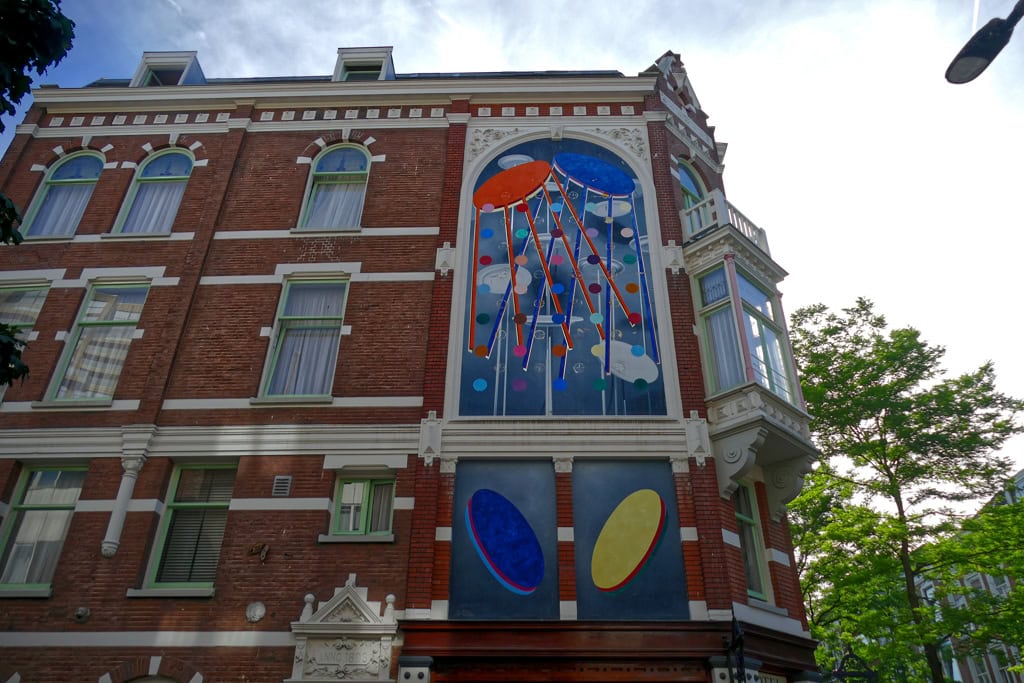
In addition to large-scale murals, Ox-Alien creates illustrations and fine art. His work is often intuitive, evolving from the architecture or atmosphere of a place. He combines humorous details with a positive, almost fairytale-like quality, inviting viewers to continually discover new characters and stories.
Ox-Alien regularly collaborates with other artists. Among his most important collaborators is the British muralist Mark Goss, known for his intricate depictions of plants, birds, and other natural elements.
Peter Pontiac
Peter J. G. Pollmann aka Peter Pontiac was one of the most influential icons of the Dutch underground comics scene and alternative art culture. The cartoonist and illustrator, who died in 2015, left behind a body of work characterized by a distinctive, visually rich, almost baroque style. His drawings, heavily influenced by American artists like Robert Crumb, created an enormous spatial density. Pontiac used this dense network of lines and shades not only for fictional stories but, above all, as an outlet for a radical, often unflinching autobiographical exploration of his own reality. He openly addressed his periods of heroin addiction, his life in the squatting scene, and his constant struggle with personal demons.
He designed legendary album covers, concert posters, and illustrations for the leading music magazine OOR.
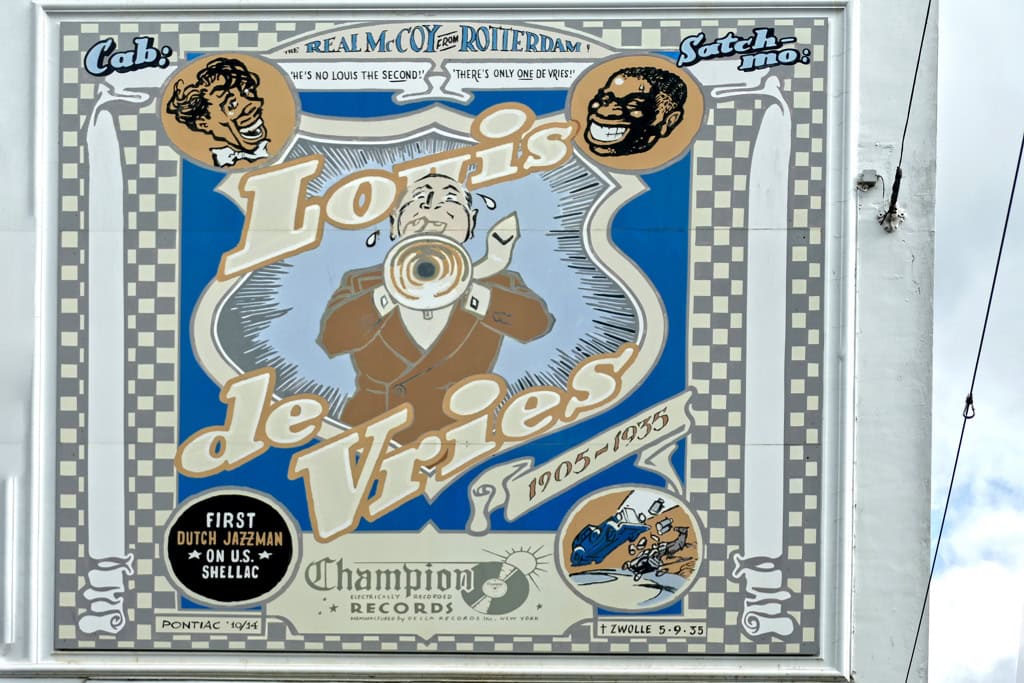
His undisputed masterpiece is the graphic novel Kraut, in which he explored his father’s collaboration with the SS as a war correspondent during WWII and his subsequent mysterious disappearance at sea. This documentary-style exploration of family history is considered a milestone in European comics. For his influential body of work, Peter Pontiac was awarded the prestigious Stripschapprijs in 1997.
Robert Rost
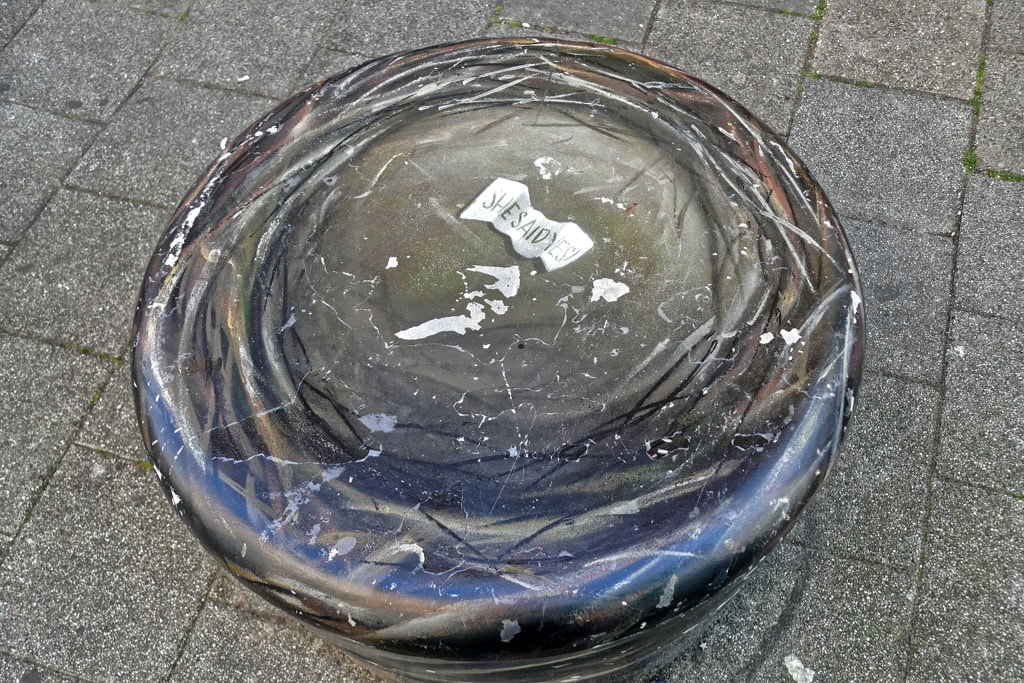
We now come to another extraordinary work in the Withkwartier. Robert Rost, together with Tymon de Laat, created the mural Love Birds. Not only is it utterly enchanting, but it also tells a very personal story. During its creation, Tymon de Laat proposed to his partner, and she accepted. Her answer is inscribed on a stone bollard in front of the mural, which is shaped like a bird’s nest: She said yes!
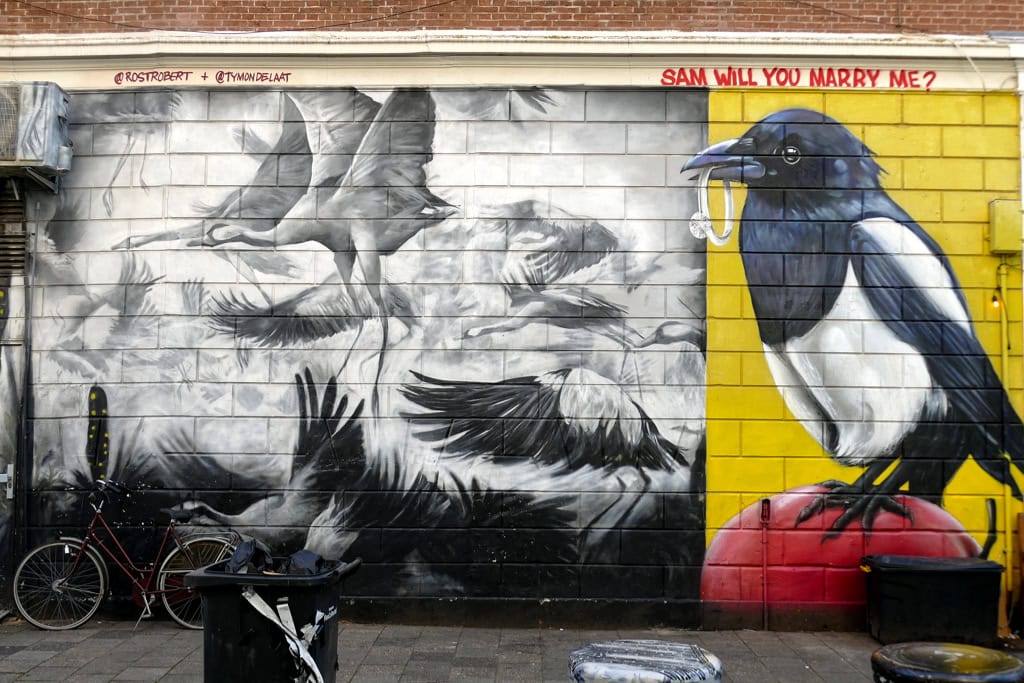
Rotterdam-based artist Robert Rost studied illustration at the Willem de Kooning Academy. He has then worked for many years in fine art, illustration, and street art. Therefore, his works can be found in galleries as well as in public spaces.
Rost’s work is characterized by the combination of realistic painting with a narrative visual language. Animals, nature, and human relationships are often central to his art. The resulting murals impress not only with their technical precision but also with their warm, emotional appeal.
Together with Lennaert Koorman, Robert Rost forms the artist duo Mondikoe, known for their large-scale murals and portraits in public spaces.
Around the Liskwartier
The Liskwartier is one of Rotterdam’s neighborhoods that has retained its unique character, far removed from the classic tourist attractions. Between Bergweg and Noordsingel, wide streets, turn-of-the-century apartment buildings, small shops, and cafés define the area. In recent years, the district has transformed into a creative hub where art seamlessly integrates into everyday life. This blend of historic architecture, urban life, and a vibrant street art scene makes the Liskwartier an exciting destination for anyone wanting to discover Rotterdam beyond the well-known highlights.
Stephan Bontje
Stephan Bontje, who also works under the name SBontje, is a Rotterdam-based artist, illustrator, and muralist. After studying at the Willem de Kooning Academy, he initially worked for international creative agencies, developing campaigns for brands such as Adidas, Red Bull, and Cirque du Soleil. Subsequently, he increasingly dedicated himself to his independent artistic work and, for a time, ran his own gallery in Rotterdam.
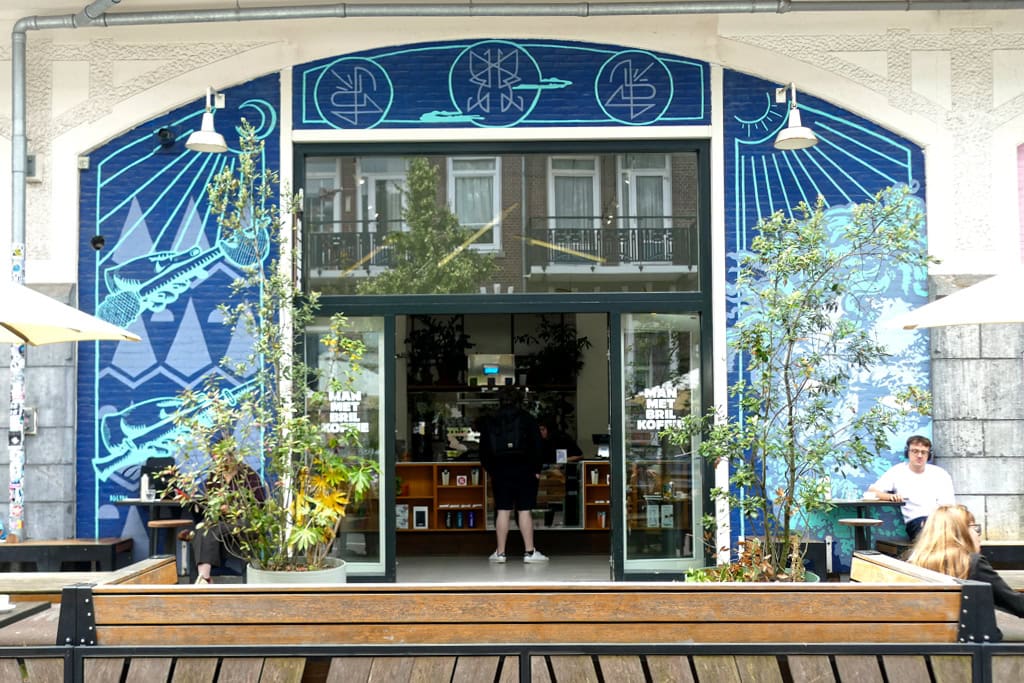
His fascination with the cultural diversity of his hometown also characterizes his work. Bontje finds inspiration in ornaments, architecture, religious symbols, and traditional imagery from a wide range of cultures. He combines these influences into richly detailed illustrations, murals, and sculptures that blend past and present.
In addition to his work in Rotterdam, Stephan Bontje has realized projects in several European cities. Many of his murals connect closely with their respective locations, reflecting the history and identity of a particular neighborhood. With his distinctive visual language, SBontje is one of the most influential artists in Rotterdam’s contemporary street art scene.
Ro Heilbron
Ronald Ro Heilbron was born in Paramaribo in 1938 and came to the Netherlands in 1970. He was an influential pioneer of the Surinamese art scene. Heilbron worked with both oil paint and printmaking ink on canvas. He painted figuratively, and his work was strongly influenced by the colorful, often described as primitive style of Haitian naive art.
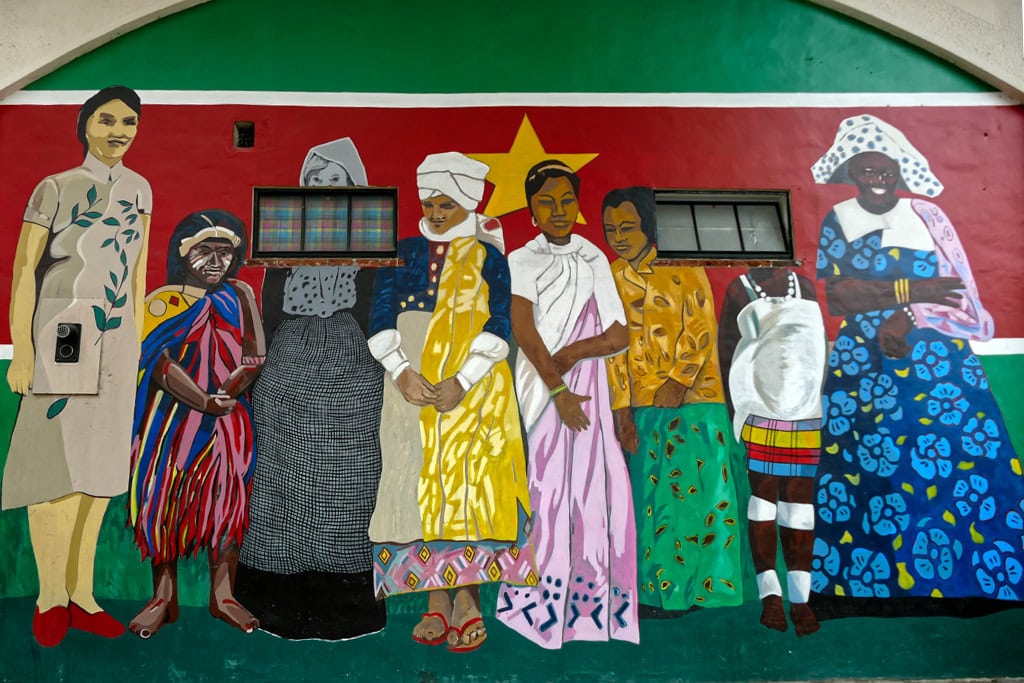
Initially, Heilbron focused primarily on socio-political themes such as poverty, hunger, and oppression. In the 1970s, women frequently became the central figures in his work.
Influenced by the 1980 coup in Suriname, he turned to themes of Latin American history. In 1987, he created the mural Geef kras geen kans, which translates to Give racism no chance in Delfshaven.
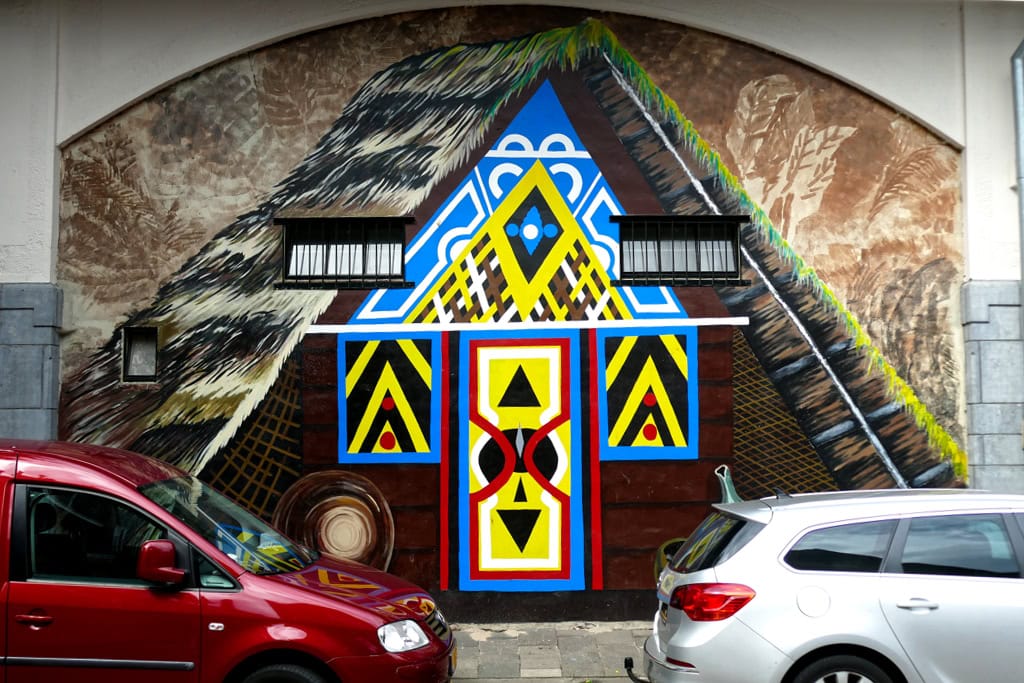
From the late 1990s onwards, he regularly stayed in the Leeward Islands, where he worked, taught, and exhibited his art. Sadly, Ro Heilbron passed away in 2014.
Ferida Sedoc
Another artist of Surinamese descent is Ferida Sedoc. Born in the Dutch city of Ermelo in 1987, she now lives and works in Amsterdam. Her work spans street art, textile art, graphic design, and installation, engaging deeply with themes such as identity, colonial history, equality, and cultural diversity.
Sedoc employs vibrant colors, graphic patterns, and recurring symbols inspired by African and Surinamese textiles as well as urban culture and Pop Art. Her work combines social messages with a powerful, decorative visual language, inviting reflection on belonging and diversity.
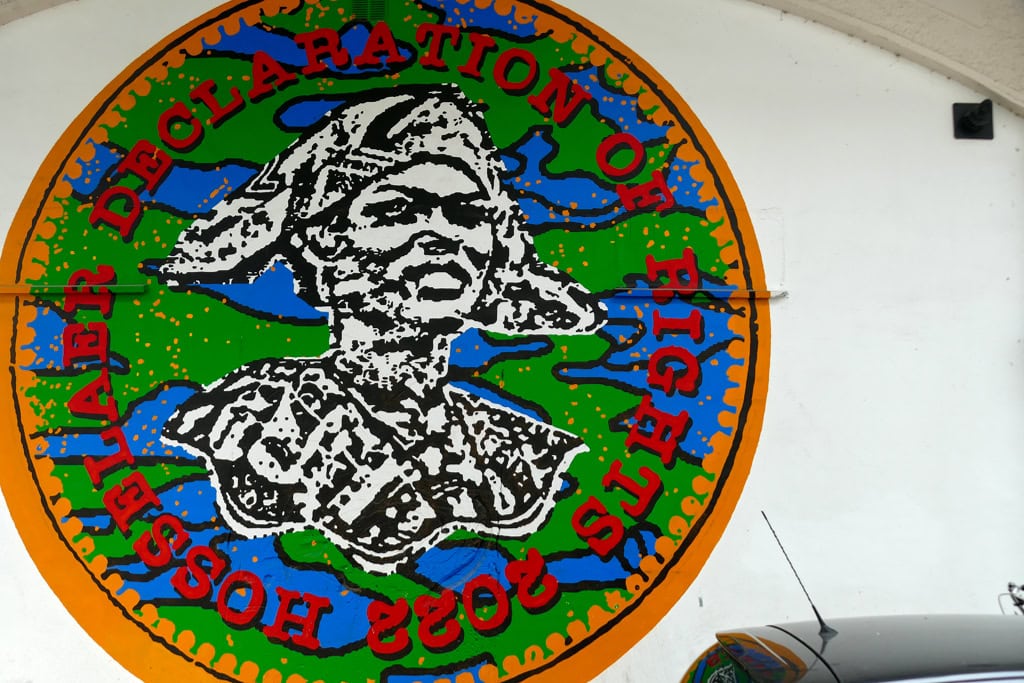
The painting is designed as a coin, a recurring motif in Sedoc’s work. At its center is Marie de Man-Venloo, the woman featured on the former 2½-guilder note of Suriname.
In addition to large-scale murals, Ferida Sedoc creates installations and exhibitions in public spaces and museums. She sees her art as an invitation to dialogue and a plea for openness, equal opportunities, and respectful coexistence. With her distinctive visual language, she is one of the most influential contemporary artists in the Dutch urban art scene.
Facade Panels in the Hofplein Viaduct
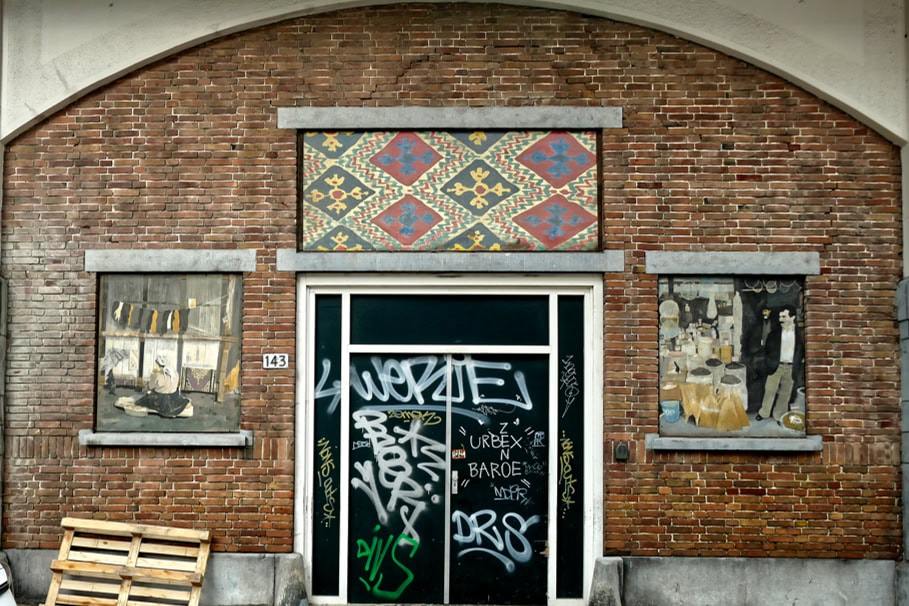
Besides the large-scale works by Ro Heilbron and Ferida Sedoc, small painted panels can be found in the arches of the Hofplein Viaduct. Although they don’t seem to belong to any street art project, and the artists remain unidentified, I present them in this line-up since they truly touched me.
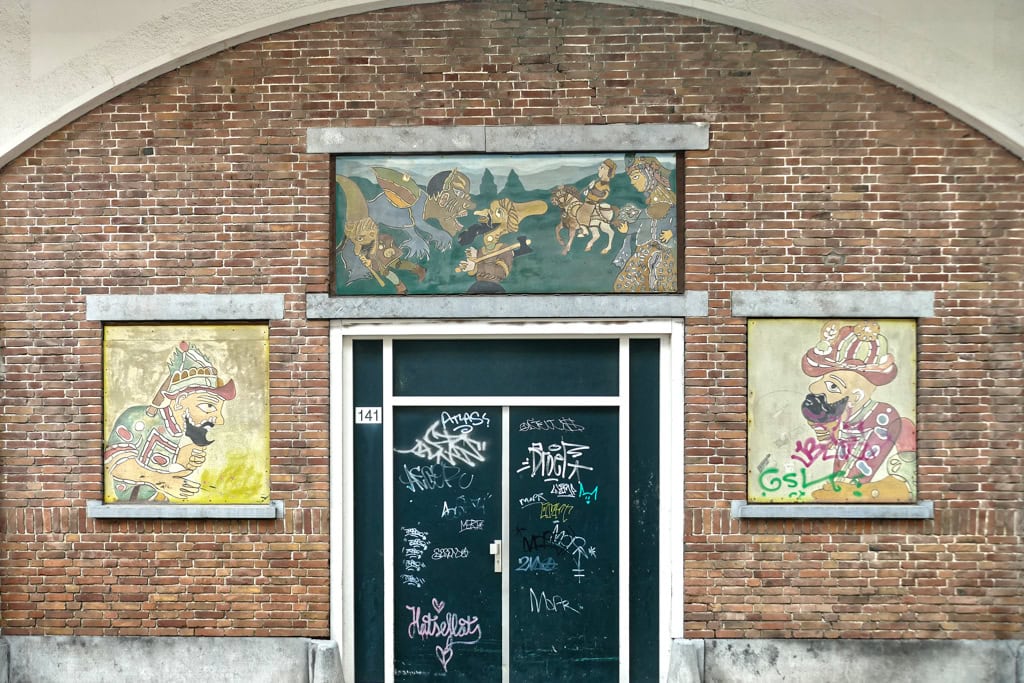
The depiction of stylized figures in oriental clothing at Voorburgstraat 141 is strongly reminiscent of Persian or Central Asian miniature painting. This was likely a deliberate choice, given that the neighborhood has been shaped by migrants from many different countries for decades.
The market scenes with an ornamental panel at Voorburgstraat 143 originate from the same town painting period. The two side scenes resemble depictions of a bazaar, while the ornamental band above incorporates textile patterns.
Eveline Schram
Eveline Schram completed her artistic training at the renowned Willem de Kooning Academy, graduating in 2013 with a degree in illustration. After graduating, she founded her own studio in Rotterdam and quickly established herself as a versatile freelance artist. Inspired by modern architecture, 20th-century graphic design, and the vibrant city life, she developed her distinctive geometric-abstract style early on.
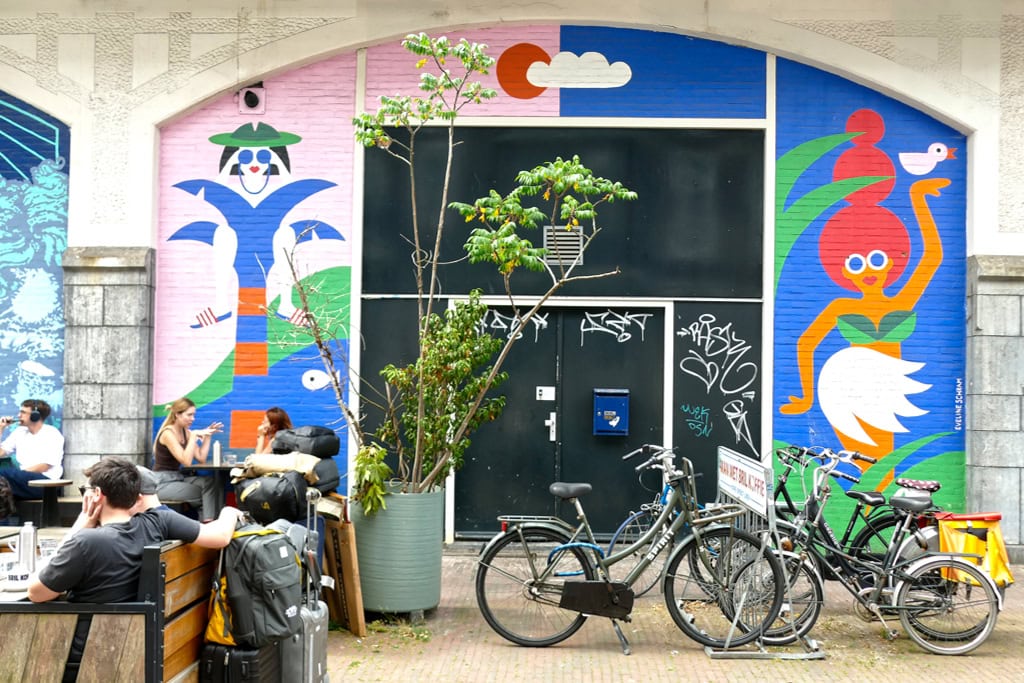
By combining commercial illustration commissions for magazines with large-scale street art projects in public spaces, she gained considerable recognition both within the local art scene and nationally. Today, Schram continues to live and work in Rotterdam, from where she brings her colorful visions to life on canvases, paper, and urban concrete facades.
Erico Smit
Erico Smit is a contemporary visual and street artist with Surinamese roots. His work is characterized by a narrative, almost journalistic style.
True to his motto we are all storytellers, Smit captures life on the streets. His portraits and large-format works captivate with their organic, sketch-like lines. Although they are always preceded by an in-depth research process, they radiate a raw spontaneity.
A milestone in Smit’s career was 2020, when the Rotterdam City Archives appointed him the official Stadstekenaar, hence, city sketcher. His task was to visually document urban life and social changes during the pandemic.
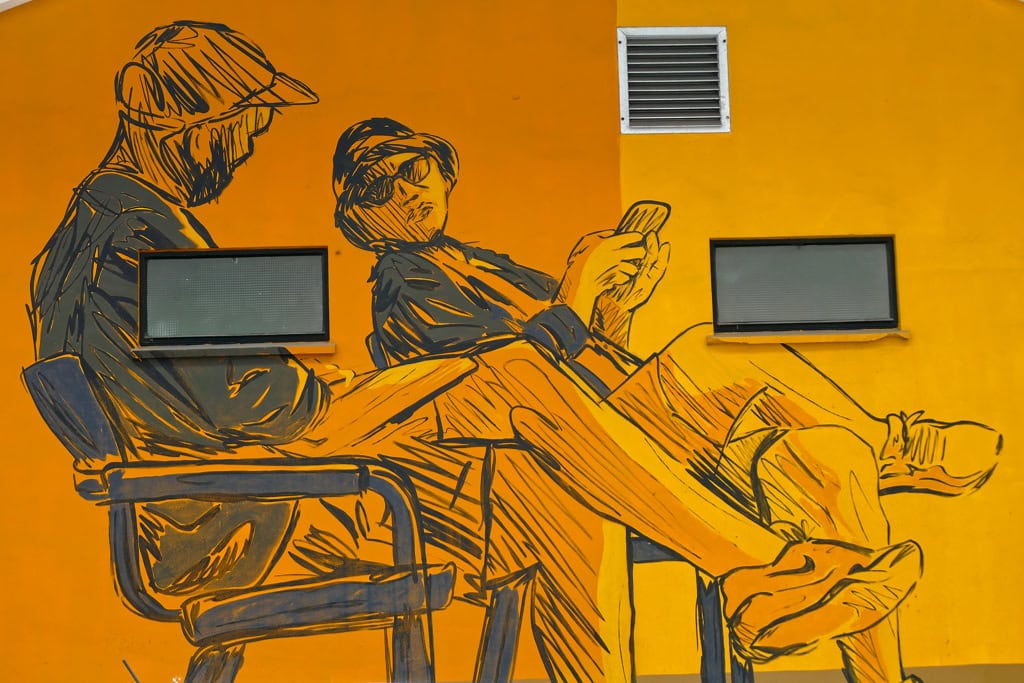
Smit, who is also active in cultural management alongside his art, repeatedly proves that street art is not merely a decorative element for him. His works are a social necessity for building bridges within the urban community.
Hedy Tjin
Hedy Tjin is a renowned Dutch illustrator and visual artist. She lives and works in Amsterdam, but received her academic training at the Utrecht School of the Arts, where she earned her Bachelor’s degree in Illustration in 2009. Since then, Tjin has developed a distinctive artistic style. Her work is characterized by a powerful, vibrant color palette and dynamic compositions. She developed this expressive use of color particularly during her time in Suriname, her father’s homeland.
Hedy Tjin’s portfolio includes monumental murals in public spaces as well as textile designs, book illustrations, and front pages for major newspapers. She uses visual art deliberately as a tool to make complex social issues such as cultural identity, diversity, inclusion, and collective solidarity more accessible.
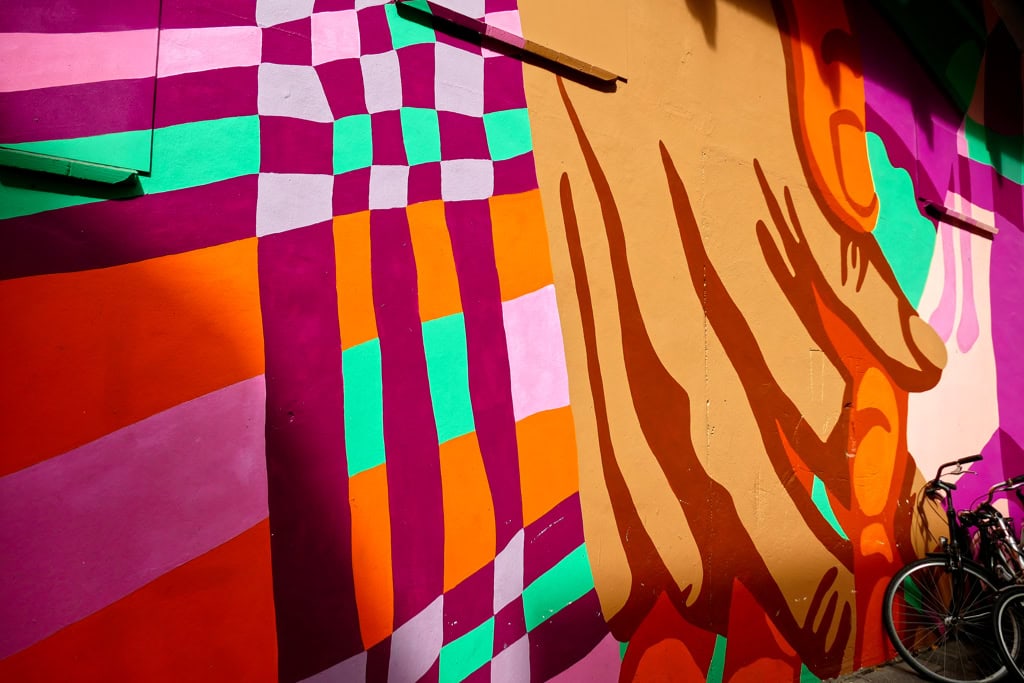
Her work has been exhibited at prestigious institutions such as the Amsterdam Museum, the Rembrandt House Museum, and as part of the Children’s Biennial at the Groninger Museum. She has received the prestigious Prize Zilveren Penseel several times for her outstanding children’s book illustrations. The renowned Stedelijk Museum in Amsterdam also dedicated a prominent platform to her work with the large-scale installation Universal Color, part of the Post/No/Bills series.
Nina Valkhoff
Nina Valkhoff is a Rotterdam-based mural artist and illustrator. For more than 20 years, she has been creating large-scale murals in Europe, North and South America, and the Caribbean. Today, she is one of the Netherlands’ most renowned street artists. Her work has been selected for international festivals and is also represented at the STRAAT Street Art Museum in Amsterdam.
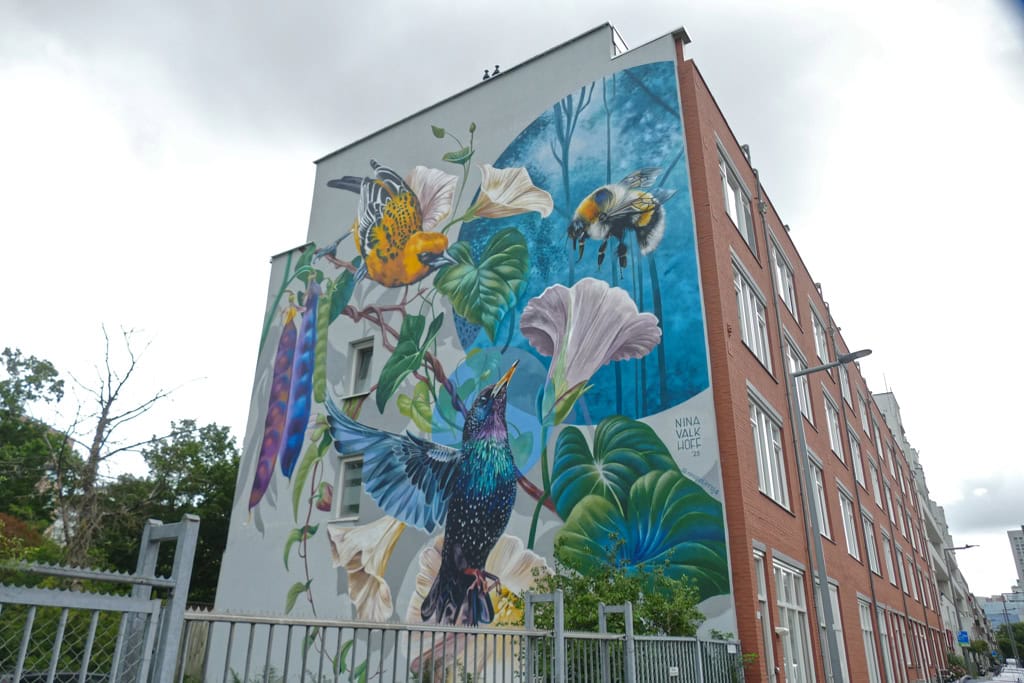
Characteristic of Valkhoff’s style are detailed depictions of animals, plants, and lush vegetation, which she puts into an almost fairytale-like context. She often focuses on endangered species, which she deliberately places in urban spaces. She sees her murals as a form of subtle artivism, hence, a quiet, unobtrusive way to raise awareness of the beauty and vulnerability of nature.
I’ve already introduced Nina Valkhoff in my posts Best Street Art in ROTTERDAM, Part 2: South of the Nieuwe Maas and Murals in CURACAO: The Best Street Art Projects in Willemstad.
Ricardo van Zwol
It’s only his surname that keeps Ricardo van Zwol last in this line-up. If it were based on the number of works he created within the city limits of Rotterdam, he would be at the top, and there would be a long gap after him.
Ricardo van Zwol became known for his large-scale, photorealistic murals, in which he combines portraits with graphic elements, vibrant colors, and symbolic details. After training as a graphic designer, Van Zwol initially worked as an illustrator and designer before dedicating himself entirely to mural painting. Today, he creates murals in public spaces as well as commissioned works for companies, cultural institutions, and housing associations. Particularly in Rotterdam, he has significantly shaped the cityscape.
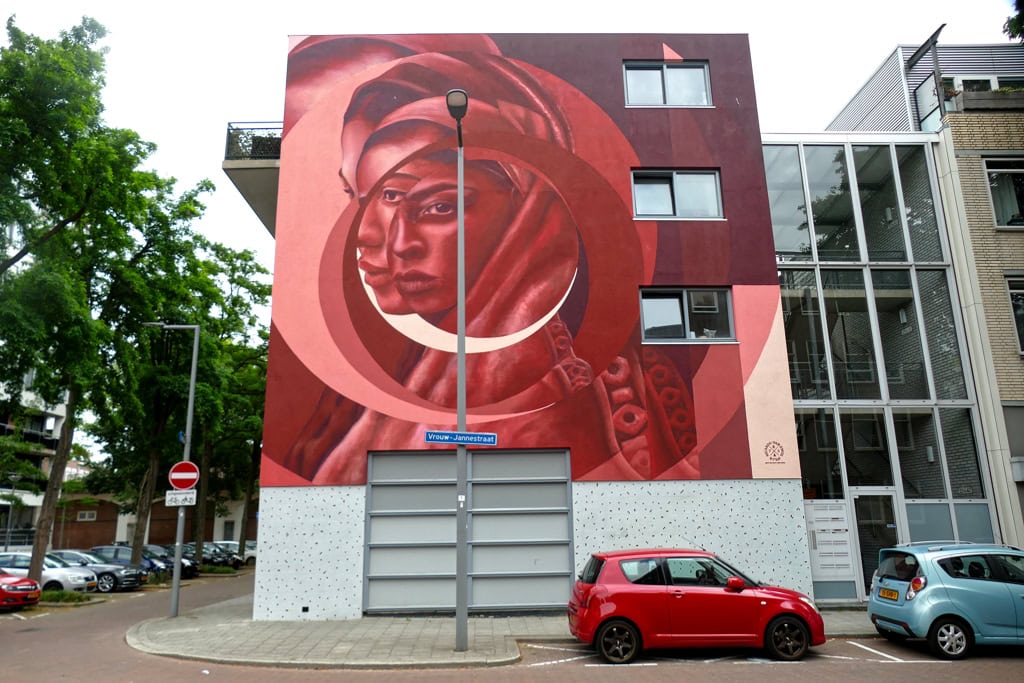
His work often focuses on people and their stories. He portrays historical figures as well as local residents or individuals who hold special significance for a particular project. His murals are often created in close connection with the specific location and reflect its history or identity. A well-known example of this is the Citatenroute, hence, the Citations Route, in Rotterdam’s Lombardijen district, which you’ll find in the second blog post about street art in Rotterdam.
Ricardo van Zwol understands street art not only as art in public spaces, but also as a means of creating identity and telling stories. His murals blend harmoniously into their surroundings and invite viewers to take a closer look, actually both at the artworks themselves as well as at the places where he created them.
As I mentioned, you’ll find many more of Ricardo van Zwol’s murals in my post Best Street Art in ROTTERDAM, Part 2: South of the Nieuwe Maas.
On Instagram
To dig deeper into the subject and see more of the amazing art the above-featured artists have created, you can just check out their Instagram accounts. Nevertheless, despite thorough research, not all artists seem to be on the platform.
Astro
Stephan Bontje
Anuli Croon
Noël Deelen
I AM EELCO
INSANE51
Karski
Tymon de Laat
Anne Mercedes Langhorst
Dalal Mitwally
Onio
Ox-Alien
Peeta
Peter Pontiac
Tim Rodermans
Robert Rost
Royyal Dog
Danny Rumble
Eveline Schram
Erico Smit
TelmoMiel
Hedy Tjin
Nina Valkhoff
Paul Watty
WD aka Wild Drawing
Ricardo van Zwol
How to Get Around
You can easily see all the murals around West Kruiskade by walking. Also, you can just stroll down the Westersingel to get to the trendy Witte de Withstraat. To see the murals located around the northern Liskwartier, you need to take the tram from the city center and get off at Schieweg. To see the murals in the Provenierswijk neighborhood, alight at Walenburgerweg.
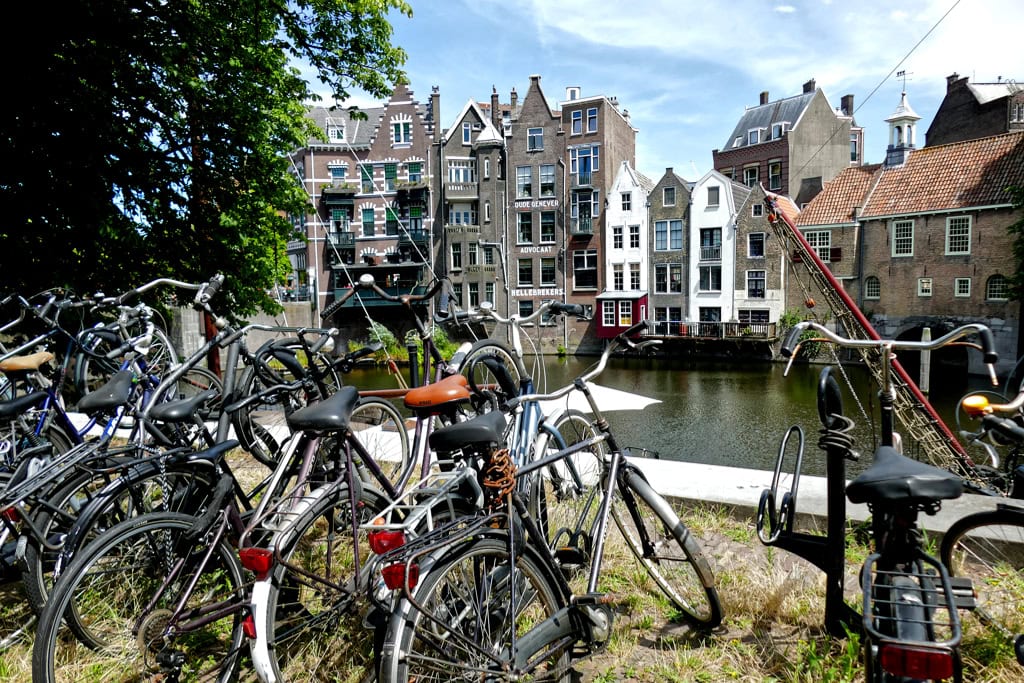
Rotterdam has a comprehensive network of public transportation consisting of buses, trams, and a metro. You can pay your fare by checking in and out contactless with your card or your phone. Most trips within the city limits cost about 2 €uro. You can save some money by getting a day pass for 12 €uro. A Rotterdam City Card for 17.50 €uro grants you not only unlimited use of public transport but also discounts at popular attractions. You’ll find more details on the city card as well as comprehensive info on Rotterdam in my post Why ROTTERDAM Is Worth Visiting: A Complete Guide to the Urban Heart of the Netherlands.
Map
This map should help you find the murals I’m introducing in my posts on Street Art in Rotterdam. However, I split it into two layers, one for the areas north of the river Maas, and the other for the neighborhoods south of the river. This way, you can open them separately.
Clicking on the slider symbol at the top left or the full-screen icon at the top right will display the whole map, including the legend.
Pinnable Pictures
If you choose to pin this post for later, please use one of these pictures:
Did You Enjoy This Post? Then You Might Also Like These:
Four Days in AMSTERDAM – Unique Things To See on a Long Weekend
BONAIRE Totally Unexpected: Street Food And Urban Art Tour

IF WALLS COULD SPEAK: The Best Street Art Project in Amsterdam
Best Street Art in BRUSSELS

The Best Street Art in MARTINIQUE
Best Street Art in LONDON – Part II: Shoreditch

Best Street Art in LISBON – Part I: Graça And Beyond
Best Street Art in LISBON – Part II: Marvila
I am very appreciative that Rotterdam Partners supplied my research stay in Rotterdam with a complimentary Rotterdam City Card. Nevertheless, this post was in no way influenced by my cooperation partners.