Two for the price of one – that also could have been the headline of this travel guide. Given the proximity of the two cities, Bayonne and Biarritz, and the excellent connections, even by public transport, it would be foolish to visit only one of these exquisite places in the heart of the French Basque Country.
Borderline Basque
The Basques are considered one of Europe’s oldest peoples. And although the region even bears the word country in its name, they do not have their own state. The Basque Country is neatly divided between France and Spain. However, not equally: the Spanish part is far larger than the French part. The border between the two countries runs right through the Basque Country.
This division was imposed on the Basques without their consent. It is the result of centuries of wars and colonial power politics between the kingdoms of Spain and France. The border line, as we know it today, was only defined in the 19th century by the Treaties of Bayonne.
This border led to completely different political developments in the two parts. While the Spanish Basque Country enjoys strong administrative autonomy today, the French part is fully integrated into the French departmental system. It is part of the Pyrénées-Atlantiques department. Nevertheless, even in France, there is pride in Basque heritage and culture, albeit less prone to violence than in France’s western neighbor. In the French Basque Country, Iparralde in Basque, customs, sports, and festivals continue to thrive in towns and villages. Furthermore, around 25% of French Basques speak Euskara, a language unrelated to any other known lingo. Also, the Fête de Bayonne is one of the largest summer festivals in France.
Ongi etorri Iparraldera! Bienvenue au Pays Basque!
Best of Both Worlds
I’m fairly certain that tourists almost exclusively visit Bayonne for a day trip during their beach holiday in Biarritz. Or they use it as a relaxing stopover on their way to or from Spain. The latter was the case for me. On my way back from Bilbao and San Sebastián, I spontaneously decided to spend two days in Bayonne. Why two days? Well, I also wanted to experience a bit of beach life between my city breaks.
You can visit Bayonne and Biarritz in a single day due to their proximity and excellent transport links. However, you won’t be able to fully immerse yourself in the Basque vibe of one and the sophisticated summer resort atmosphere of the other on such a whirlwind tour. So, I dedicated one day to the attractions Bayonne has to offer. The next day, I simply wandered through the world-famous, stately coastal town.
Beautiful Bayonne
Bayonne lies in the heart of the French Basque Country at the confluence of the Adour and Nive rivers. The city originated as a Roman settlement and became a major trading and port city during the Middle Ages. This development is still evident in the city’s structure. There is the center, Grand Bayonne, with its cathedral and narrow streets. On the opposite bank of the Nive River is Petit Bayonne, and the Saint-Esprit district lies north of the River Adour.
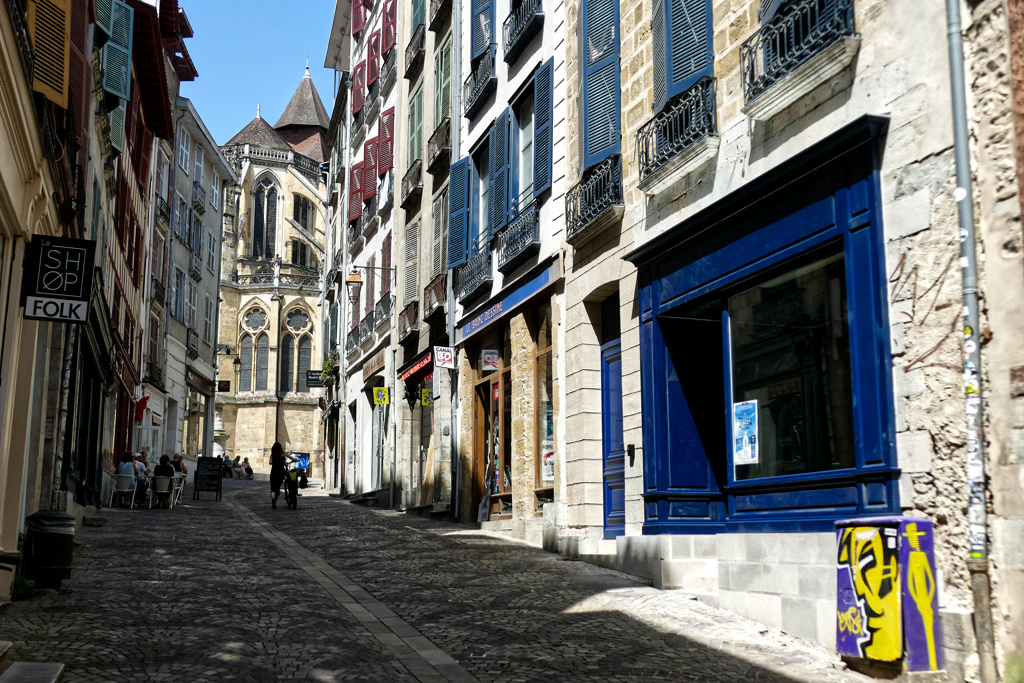
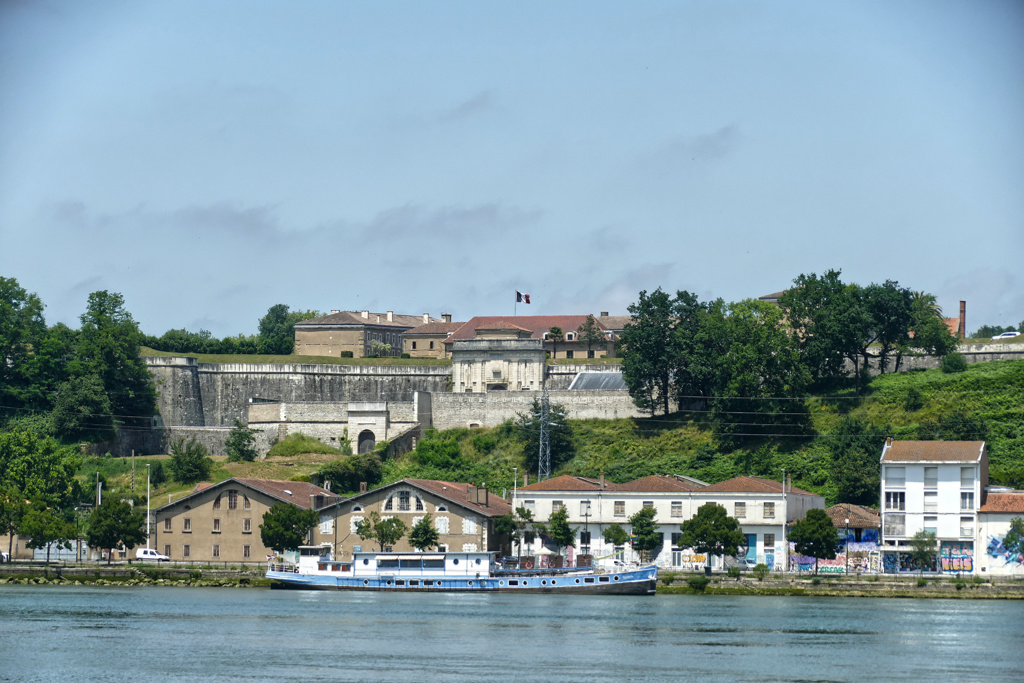
Bayonne was also a fortified city. The medieval fortifications were expanded over the centuries. In the 17th century, the famous fortress architect Sébastien Le Prestre de Vauban transformed them into a comprehensive defensive system. Sections of the city walls, bastions, and other military installations are still part of the cityscape today.
Bayonne is particularly renowned for its culinary scene. Jambon de Bayonne ham has a long tradition and has been recognized as a protected geographical indication since 1998. The history of chocolate making is also remarkable, as cocoa, as is well known, does not grow in France. This chocolate arrived in Bayonne from Spain’s colonies in the 17th century. The city’s Jewish community played a crucial role in both trade and production. This has led to the establishment of chocolate-making. This tradition continues to this day, and many a chocolate lover returns home from Bayonne with full bags – and a full mouth.
This blend of medieval city center, fortress architecture, riverside landscape, and culinary tradition makes the city an absolutely worthwhile destination.
Saint-Esprit
If you’re not travelling to Bayonne by car, you’ll likely arrive at the, at first glance, unattractive banks of the Adour River. It’s the Saint-Esprit district, where the train station is also located. The long-distance bus stop is just a ten-minute walk west.
The Saint-Esprit district is historically quite different from the other parts of the city. After all, districts directly adjacent to the main train station are rarely considered upscale. Saint-Esprit was an independent municipality outside Bayonne’s city walls for centuries. Today, however, it’s a place of contrasts, a blend of industrial heritage, multicultural life, and gentrification.
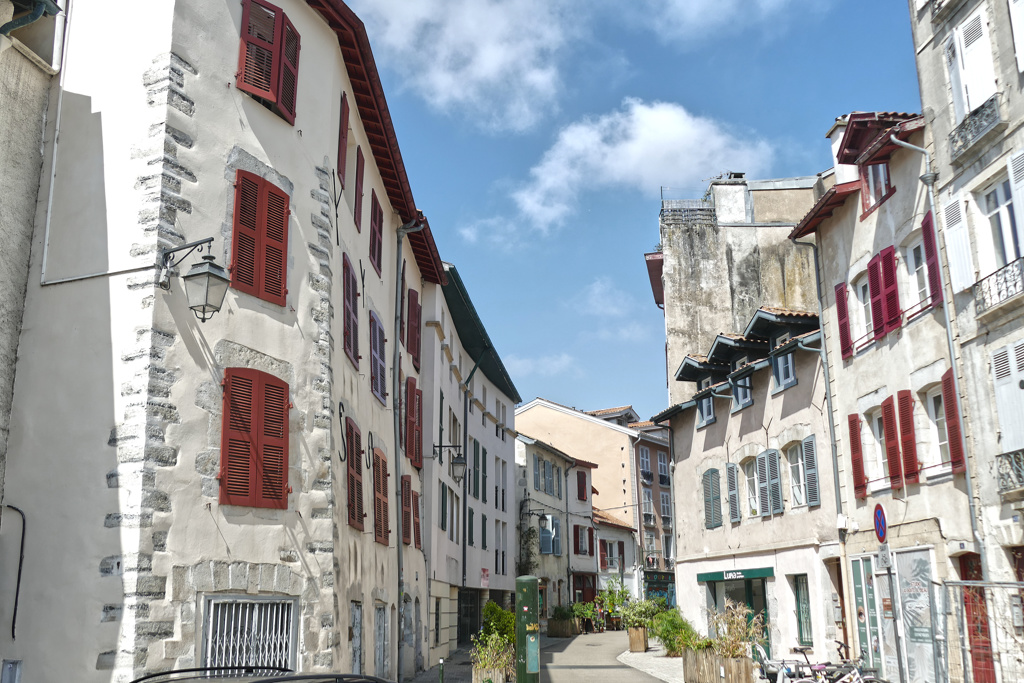
Saint-Esprit’s history is closely intertwined with migration and religious refuge. In the twelfth century, monks settled here to establish a hospital for pilgrims on the Camino de Santiago. This is, incidentally, where the district’s name originates.
Emigrants
The area experienced a decisive turning point in the 16th and 17th centuries when Sephardic Jews fled the Inquisition in Spain and Portugal. Since they were forbidden from residing within the city limits of Bayonne, they settled in Saint-Esprit. Interestingly, they were the ones who brought the knowledge of cocoa bean processing to the region. Indeed, they made Bayonne the first chocolate capital of France! Finally, in 1857, the district was incorporated into the city of Bayonne. With the construction of the train station, the working class increasingly shaped the neighborhood.
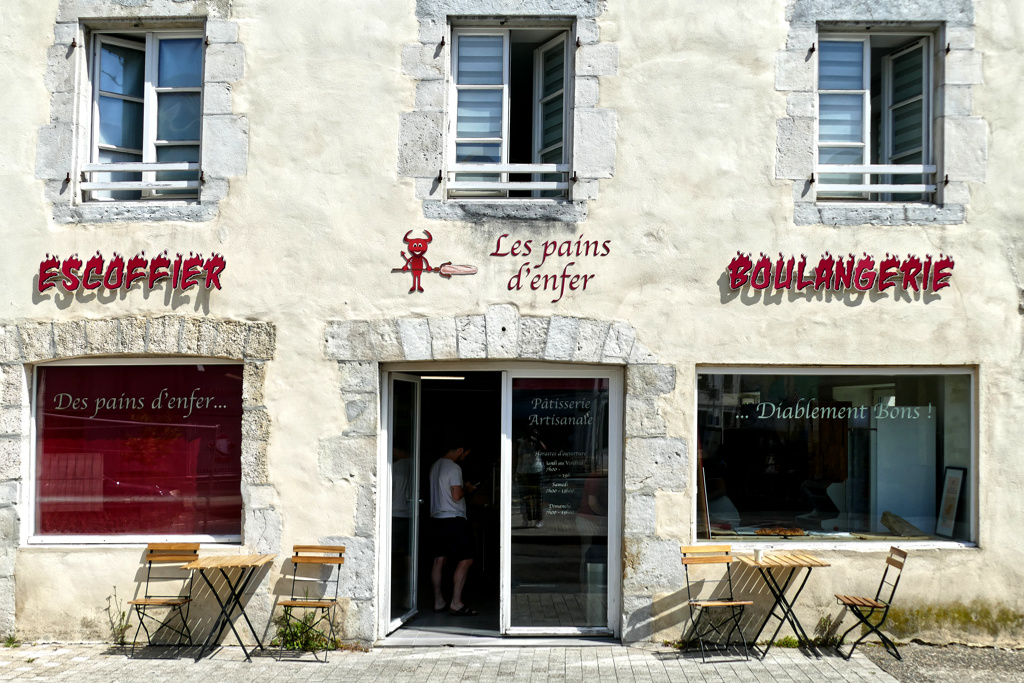
In recent decades, Saint-Esprit has undergone a noticeable structural transformation, exhibiting characteristics of classic gentrification. Due to the comparatively low property prices and its central location near the train station, the district initially attracted a diverse, lower-income population as well as numerous immigrant families. This multicultural character and historical charm subsequently attracted artists, cultural workers, and student initiatives, contributing to an improved image. That sounds great. However, I don’t want to hide the fact that this development is also viewed with concern by the local population. They fear that rising living costs will gradually push the established, lower-income residents to the outskirts of the city, and that the neighborhood risks losing its social diversity.
Rue Sainte-Catherine
A prime example of the development of recent years is Rue Sainte-Catherine, which leads almost directly from the train station.
Originally, the street was largely shaped by the Sephardic Jewish community. Although the street experienced flourishing periods of trade in earlier centuries, it got into a downward spiral in the 20th century. Finally, it became a social hotspot avoided by both locals and tourists. For decades, the neighborhood was characterized by structural neglect, crime, prostitution, and high vacancy rates. The remaining businesses were primarily limited to niche offerings such as African grocery stores.
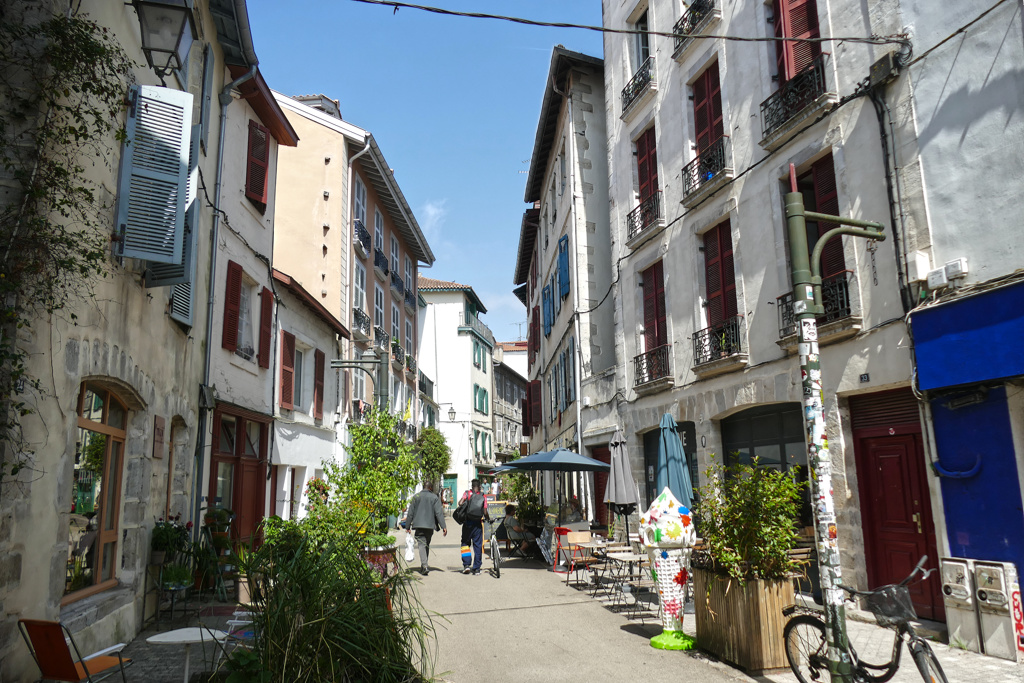
Through targeted economic development initiatives, the vacant stores were filled with an appealing mix of art galleries, vintage stores, antique shops, and eateries. Also, residents and business owners joined forces to visually enhance the streetscape with art and landscaping. The city of Bayonne accompanied this gentrification process with building renovations and improvements to infrastructure and security. Today, Rue Sainte-Catherine exudes a vibrant atmosphere, almost like a miniature Greenwich Village or Camden.
Saint-Esprit Church
While the city’s bourgeoisie might scoff at the somewhat run-down neighborhood, they often overlook the fact that the Church of Saint-Esprit, like few other buildings, embodies the historical cosmopolitanism, the history of migration, and the culinary heritage of present-day Bayonne. Founded in the 12th century by the Knights Hospitaller as part of a priory, the church, along with its attached hospital, served as a refuge for pilgrims on the Way of St. James.
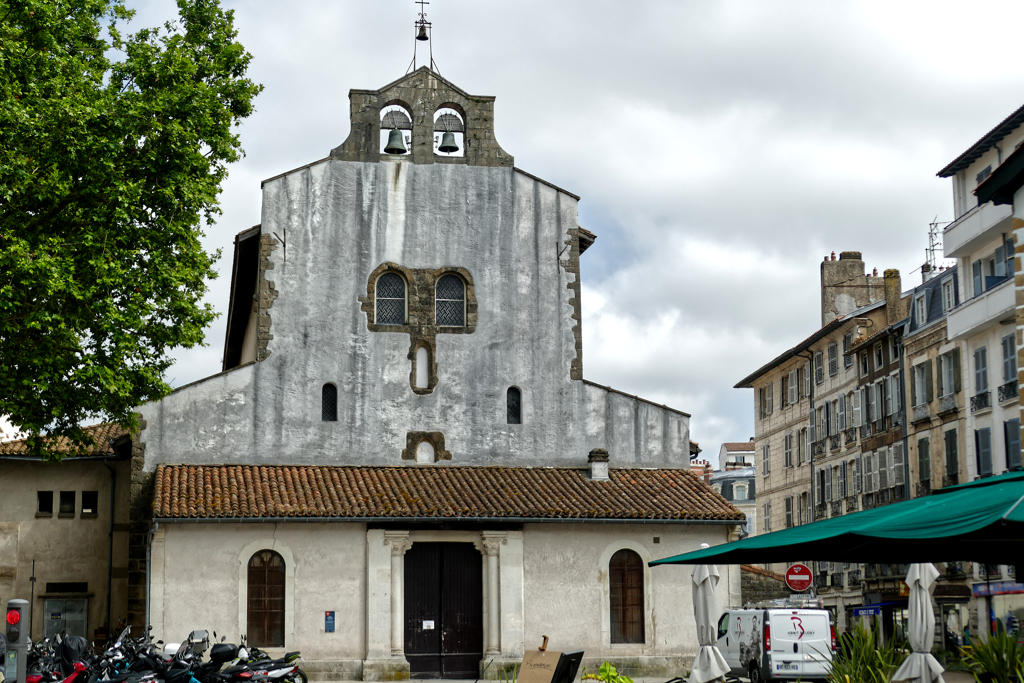
The current architecture is a blend of Romanesque elements, the late Gothic Flamboyant style, and 19th-century Neo-Gothic additions and alterations. Inside the church are treasured relics, including a significant 15th-century polychrome wooden relief depicting the Flight into Egypt and historic stained-glass windows. The historic church is open continuously from 7:30 a.m. to 6:30 p.m. from Wednesday to Saturday.
Street Art
You know me: I never leave a city without first checking out its street art. And thankfully, Bayonne made it especially easy. Even on my way from the bus station, I had to put my suitcase down several times to photograph the magnificent murals lining my way.
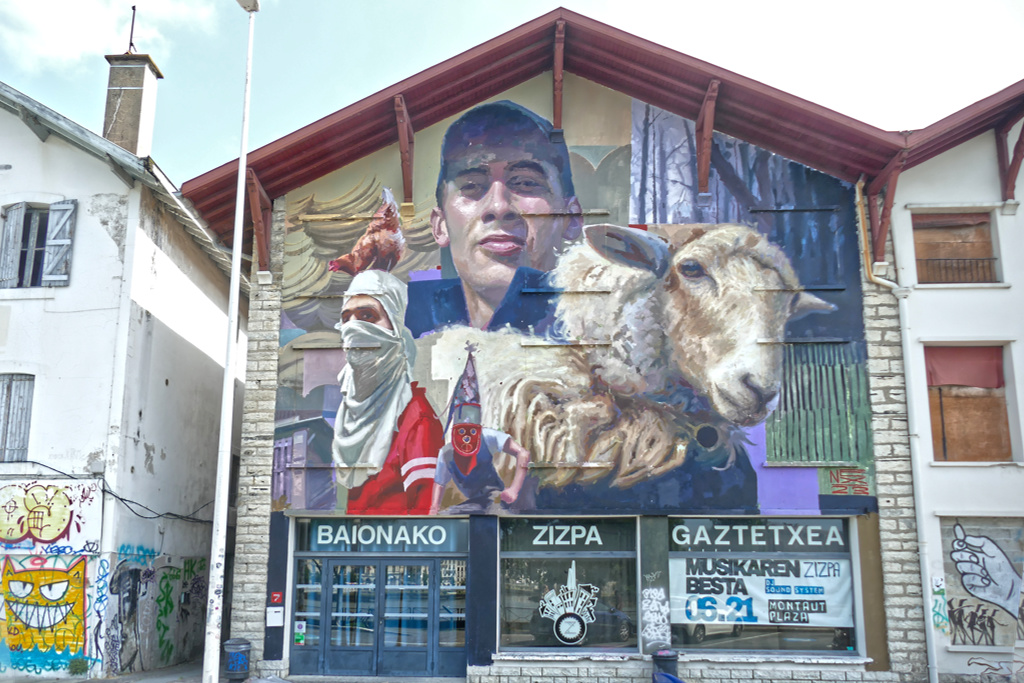
Indeed, Bayonne has quietly become another French city that promotes and celebrates street art. Its rise to a colorful open-air gallery is largely due to the international Points de Vue festival. Since 2017, the local Kaxu Galerie has been inviting renowned artists to transform building facades into stunning works of art.
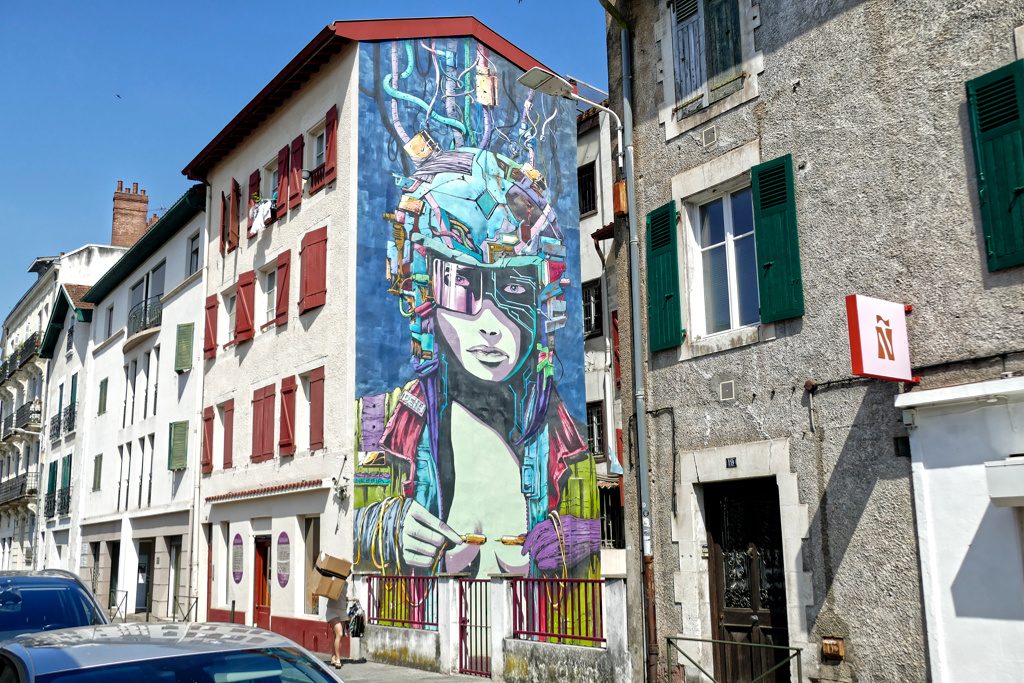
Saint-Esprit, unlike the historic old town, is not subject to strict architectural preservation regulations. Therefore, it has been able to develop into a true epicenter of urban art.
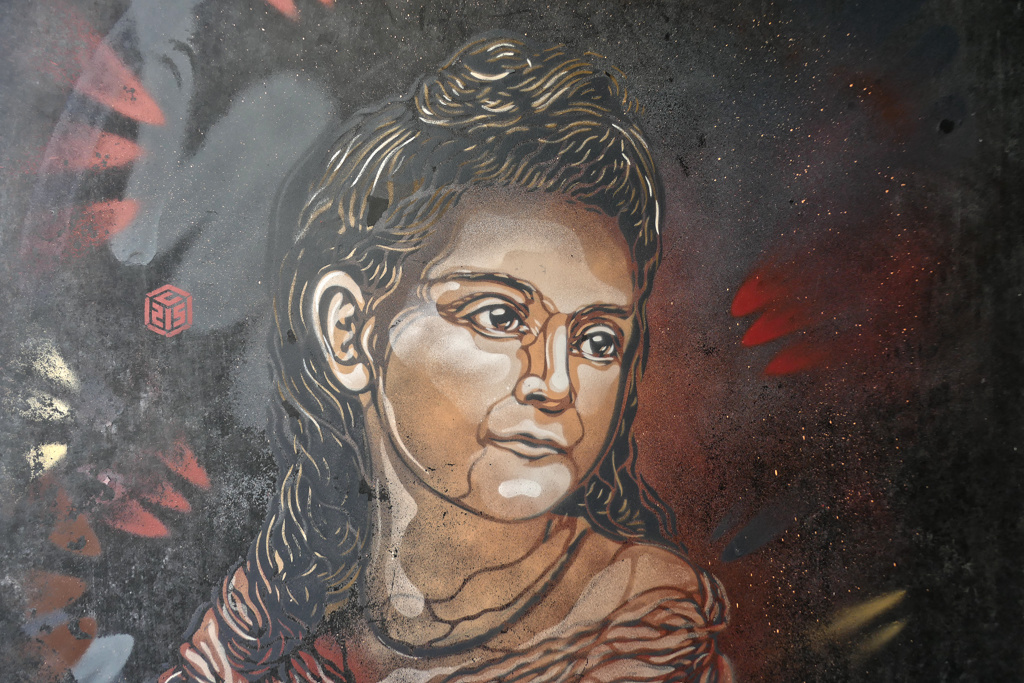
In the past, while searching for the best street art in cities like Boulogne-sur-Mer, Lisbon, London, and Rotterdam, I came across so many fantastic works of art that I had to spread them across multiple posts. That’s not the case with Bayonne. Nevertheless, I found so many amazing murals that it would be beyond the scope of this general travel guide to present them all here. So, I’m introducing them to you now in my post Best Street Art in BAYONNE.
Grand Bayonne
It is almost symbolic that you have to cross a long bridge to get from Saint-Esprit to Grand Bayonne. It is the oldest and most representative part of the city, around the cathedral and the Château-Vieux.
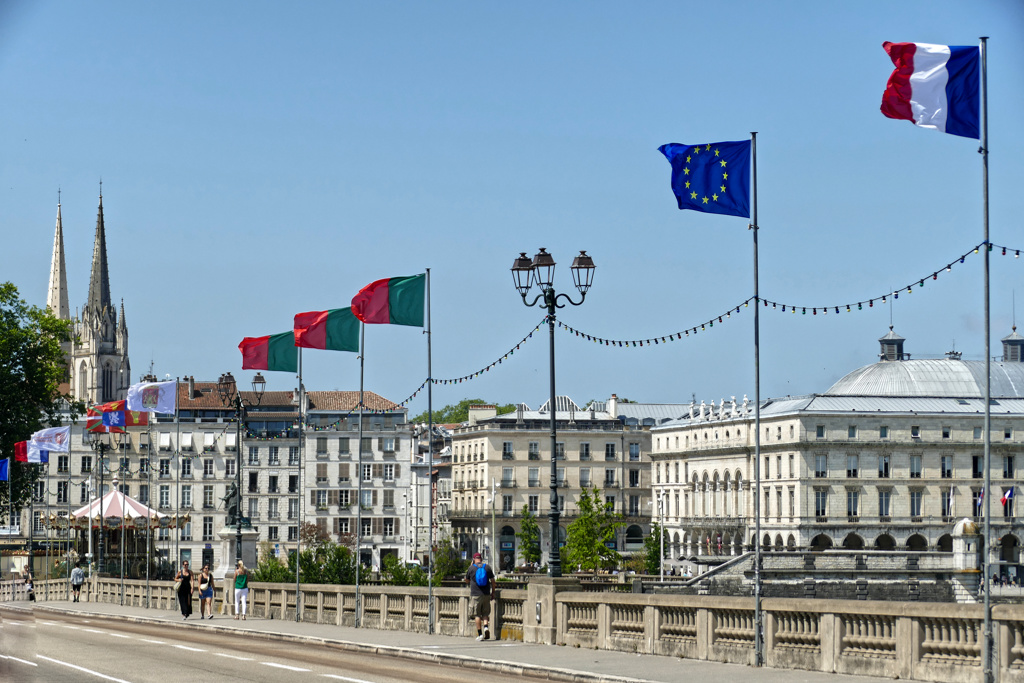
Where the Nive and Adour rivers meet, the monumental combined town hall and theater now stands on the Place de la Liberté. It forms the administrative and cultural heart of Bayonne and the main hub connecting the historic districts of Grand Bayonne, Petit Bayonne, and the Saint-Esprit district, accessible via the bridge. The lively square is lined with neoclassical facades and serves as a central venue for the city’s major public events.
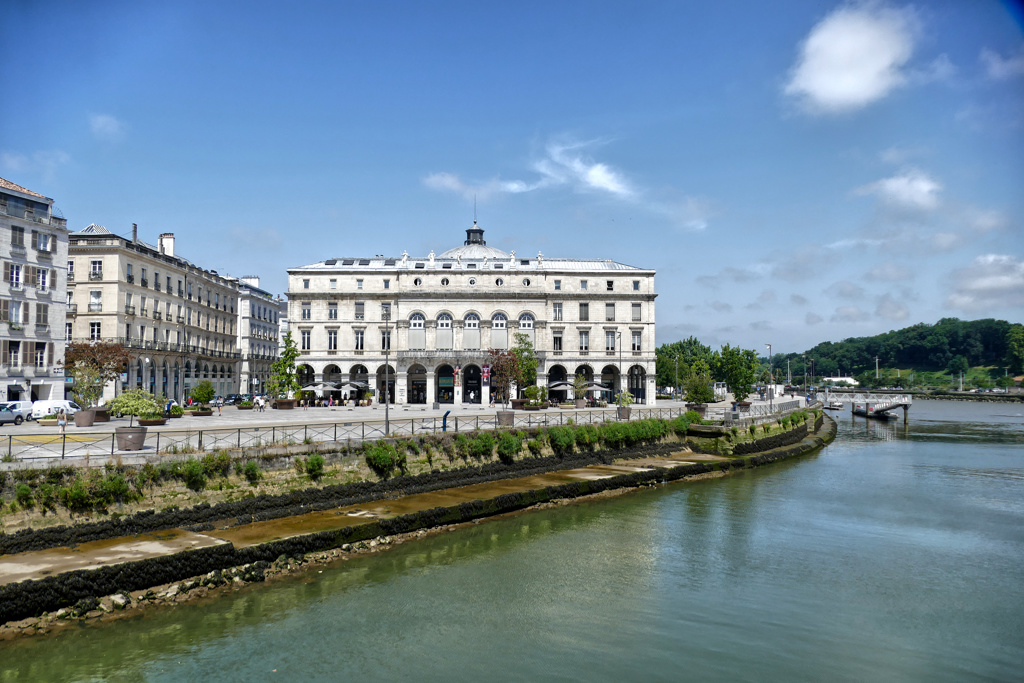
A defining feature of the façade is the six large statues at the roof’s center, above the monumental arcades. These statues symbolize the historical pillars and defining characteristics of the city of Bayonne: navigation, industry, art, commerce, astronomy, and agriculture. As early as 1844, Franz Liszt, among others, gave highly acclaimed piano concerts in the municipal theater in the southeastern part of the complex. Today, the theater bears the name of the Bayonne-born composer and musician Michel Portal.
Streets and Alleys
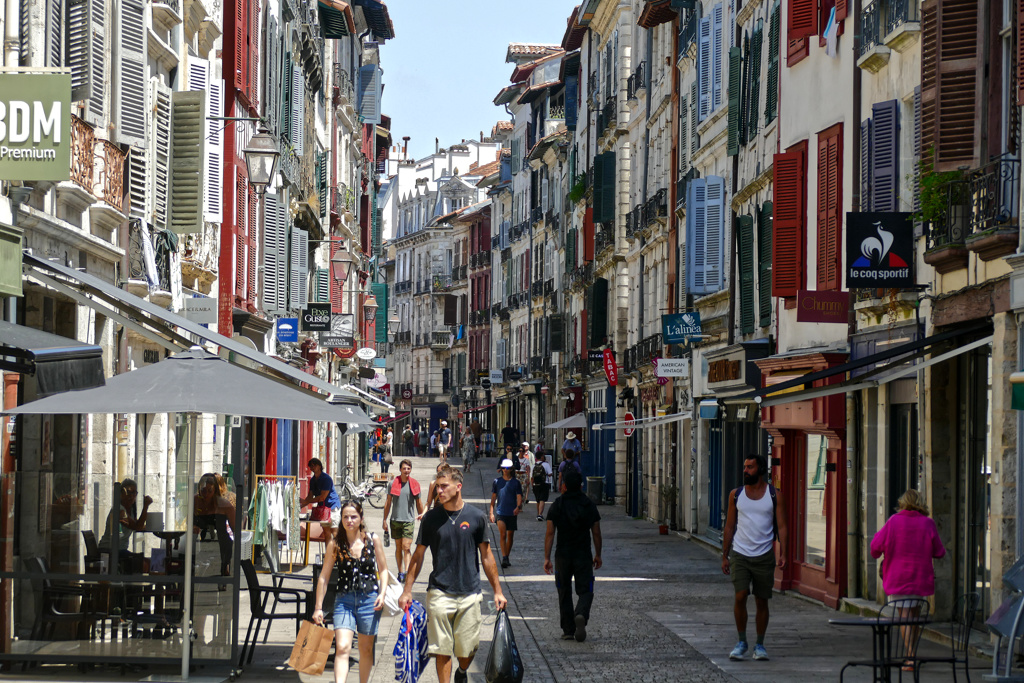
A stroll through Bayonne’s city center is enough to fall in love with the city. Its urban structure dates back to the Middle Ages, resulting in narrow, often shady alleyways. Four- to five-story apartment buildings in typical Basque style flank these streets, giving the center a cozy, almost village-like charm. The most striking feature of these buildings, known as Maisons Bayonnaises, is the exposed timber framing on their facades.
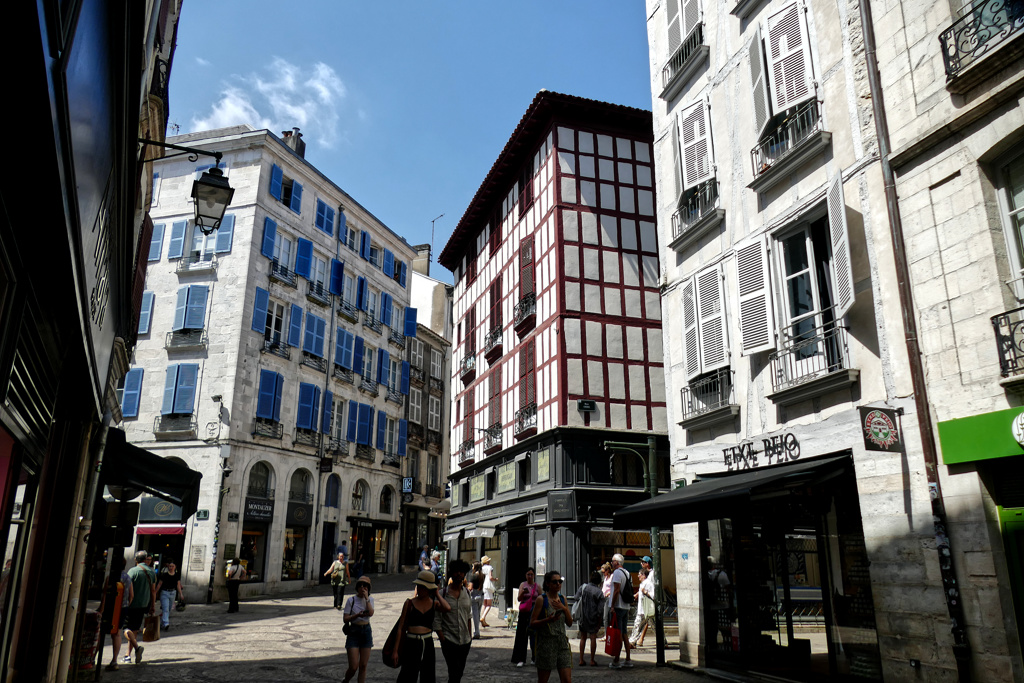
Their wooden beams are traditionally painted in vibrant colors. In earlier times, oxblood was used as a protective coating for the characteristic deep, dark red. Today, however, the shutters, balconies, and wooden beams gleam in a beautiful palette of rich bottle green, deep navy blue, and subtle grays. They create a stunning contrast with the light limestone and stucco facades and the artfully wrought iron balconies.
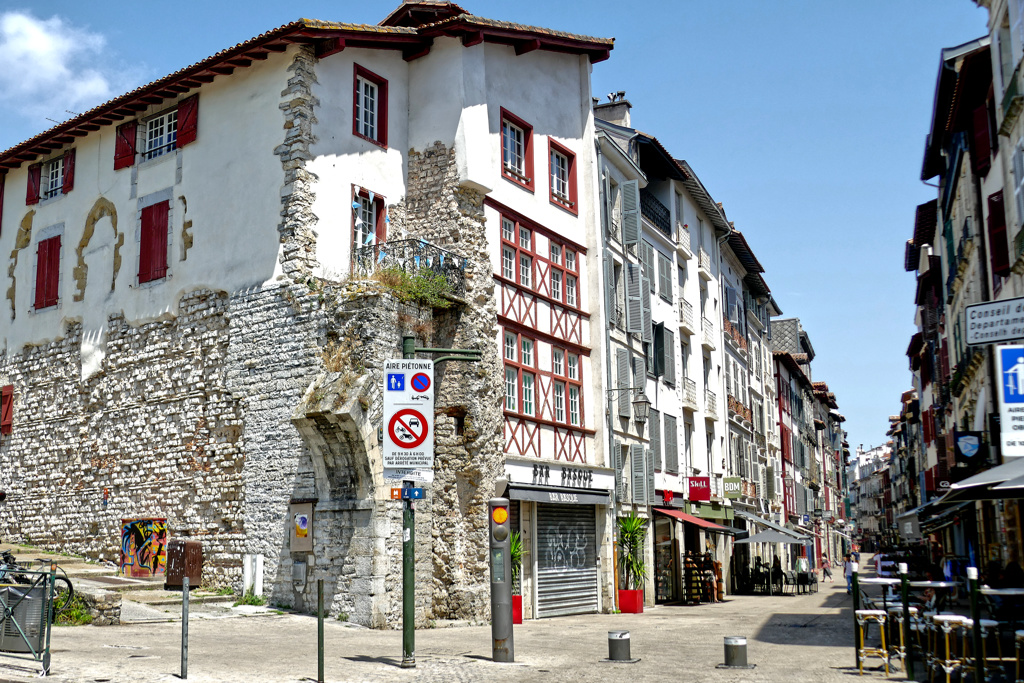
In many of the cobblestone pedestrian streets, you can walk through arcades. They historically offered merchants and, of course, their customers protection from the rain. Today, these arcades house small independent shops, traditional craft workshops, and, to the delight of many visitors, several of the city’s best chocolate shops. I must confess, though, that sweets leave me cold. For me, Jambon de Bayonne and hearty Basque cuisine are more of an – oxymoronic – honey trap.
Cathédrale Notre-Dame de Bayonne
The undisputed centerpiece of the historic Grand Bayonne district is the Sainte-Marie Cathedral of Bayonne. It is not only the spiritual but also the architectural heart of the city. Construction of this monumental church began in 1213 after a major fire destroyed its Romanesque predecessor. Over time, it was completed in the North French Gothic style, distinguished by its delicate height and striking contrast to the fortified churches typical of southern France. The three-aisled structure is crowned by two prominent, nearly 85-meter-high neo-Gothic spires, which were added in the 19th century.
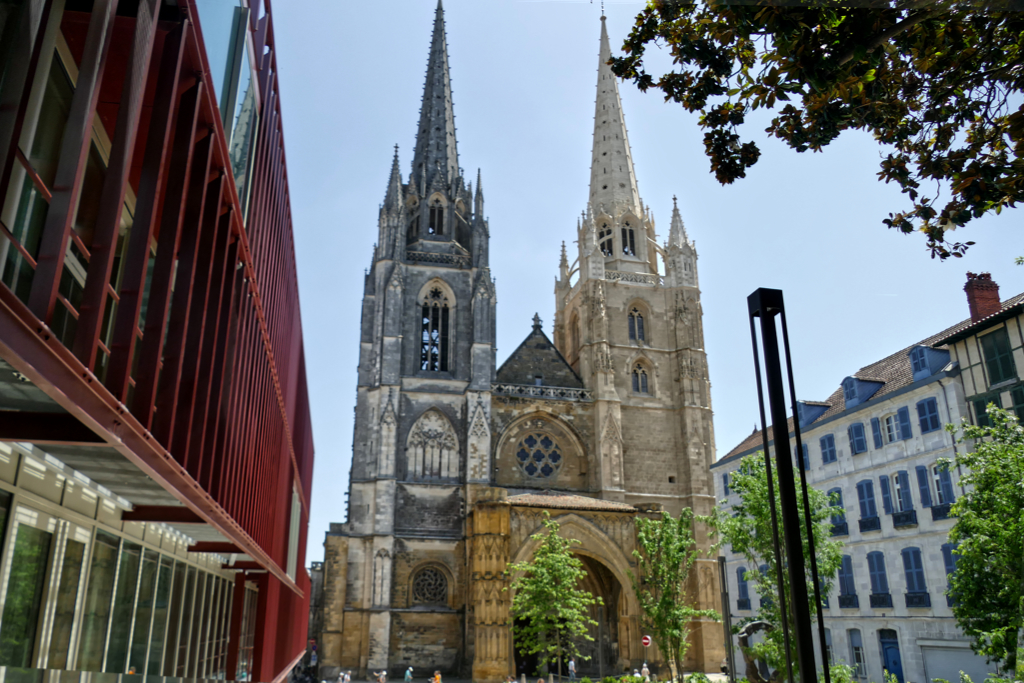
Adjoining the southern side of the cathedral is the Flamboyant cloister, built in the 14th century. With its wide arcades and intricate stone carvings, it is one of the largest surviving Gothic cloisters in all of France.
You can also admire several ornately decorated side chapels and the tombs of the bishops of Bayonne. Due to its immense cultural and historical significance, Sainte-Marie Cathedral has been a UNESCO World Heritage Site since 1998. It is located on the French part of the Way of St. James to Santiago de Compostela.
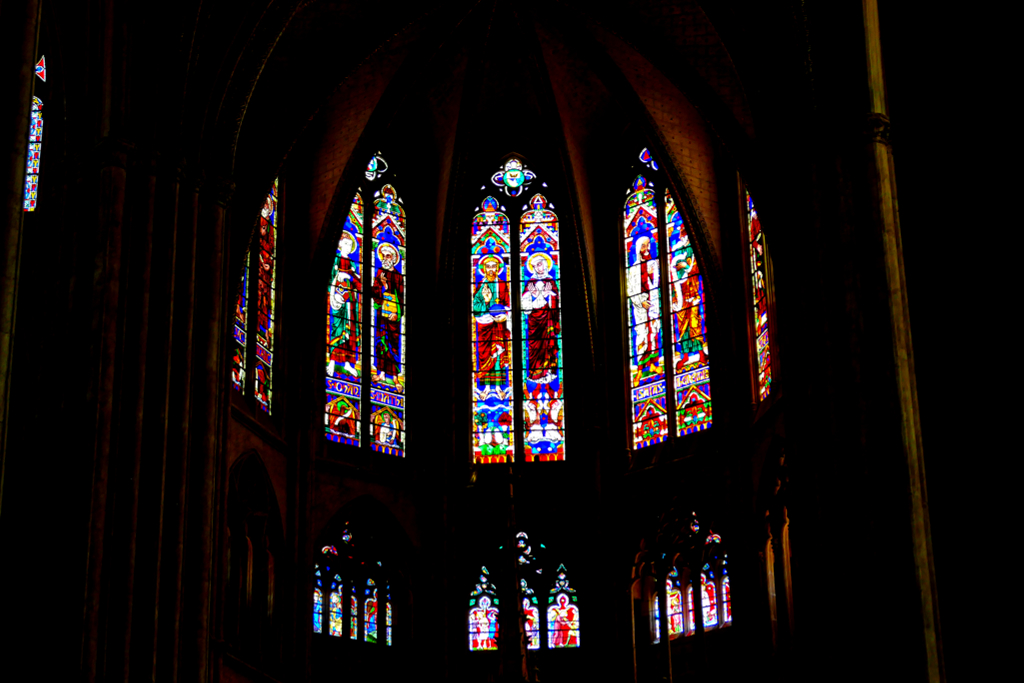
Sainte-Marie Cathedral is open to visitors from 9:30 a.m. to 1 p.m. and again from 3 p.m. to 7 p.m., Monday through Saturday. On Sundays, the opening hours are 8:15 a.m. to 12:15 p.m. and from 3 p.m. to 7 p.m. The Gothic cloister, however, is open daily. During the summer season, you can visit it free of charge from 9 a.m. to 12:30 p.m. and from 2 p.m. to 6 p.m.
The Citadel and the Château Vieux
Other structures you absolutely shouldn’t miss when visiting Bayonne – and, given their omnipresence, you practically can’t skip them – are the fortifications and city walls. They were redesigned by the famous royal military engineer Sébastien Le Prestre de Vauban in the late 17th century. Clever Vauban, whose other works I introduced in my post Glamping on the ÎLE de RÉ, used the existing Roman and medieval fortifications as a foundation. He expanded them according to his strategic principles of Baroque fortification. A deeply layered system of massive bastions, outworks, ditches, and outer ramparts made the city virtually impregnable.
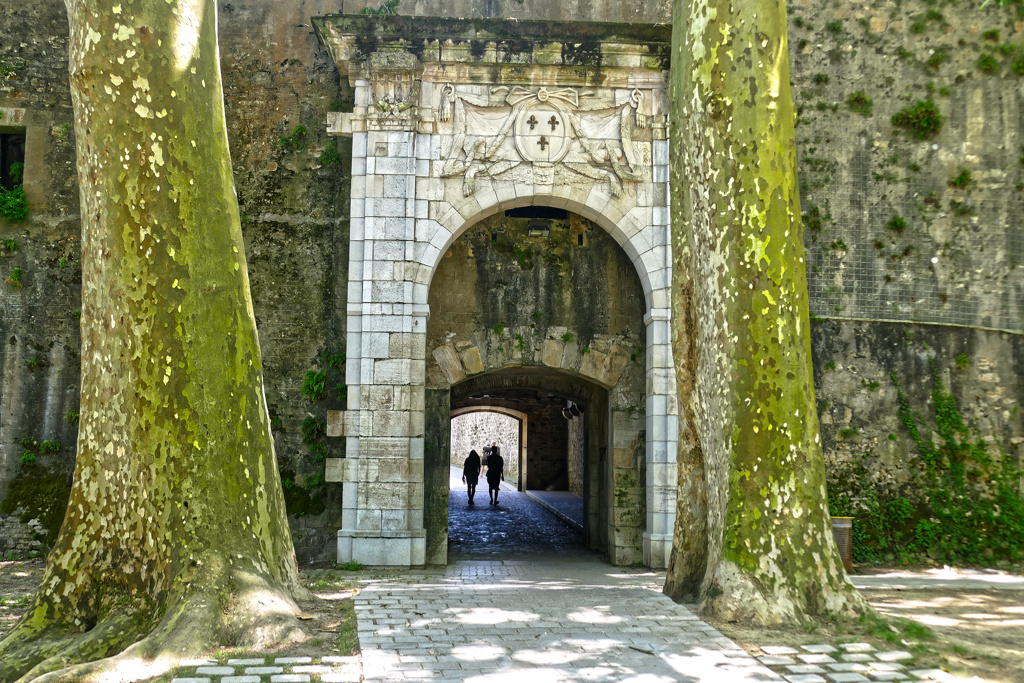
The most striking element of this entire complex is the citadel, perched atop the northern hill overlooking the Adour River. In the southern and western parts of the old town, however, the extensive city walls are remarkably well preserved. They form one of the most important national monuments of military history in the French Basque Country.
Take a Break
Since the walls have largely been transformed into parks and promenades, a stroll along them offers you more than just historical paths. You’ll also find plenty of serene, shady spots to take a well-deserved break during your sightseeing.
In the late 17th century, Vauban also modernized the Château-Vieux. This late medieval fortress stands on the foundations of a 4th-century Roman fort. For centuries, the complex served as the main residence of the governors of Bayonne. It hosted historical figures such as King Louis XIV at his 1660 wedding to Maria Theresa of Spain in neighboring Saint-Jean-de-Luz.
Today, the French military uses the complex as the headquarters of the 1st Marine Infantry Parachute Regiment. An interior visit is therefore obviously not possible.
Tour Saint-Simon and Passage des Cacolets
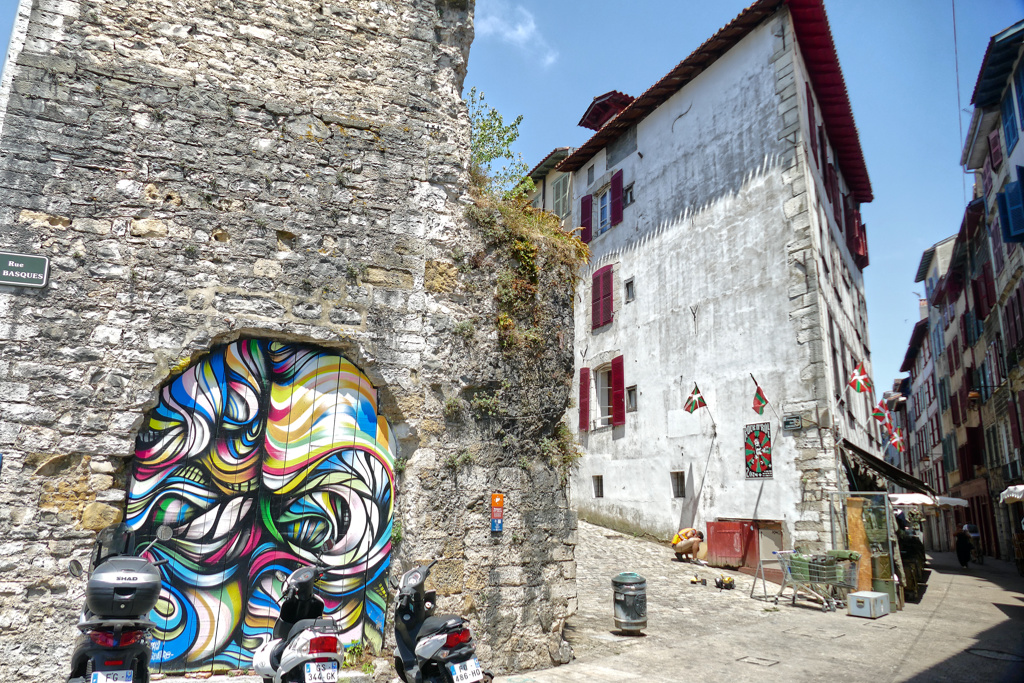
One of my favorite spots in Bayonne is the Tour Saint-Simon. Together with the adjacent Passage des Cacolets, it forms a hidden historical ensemble in the heart of the old town. It exemplifies the city’s medieval defensive and residential architecture.
The Tour Saint-Simon is a round defensive tower. Its origins date back to the medieval city fortifications of the 13th century. In later periods, it was seamlessly integrated into the surrounding residential buildings and converted into living quarters. It owes its name to the famous French writer and chronicler Louis de Rouvroy, Duke of Saint-Simon, who is said to have stayed here during his travels.
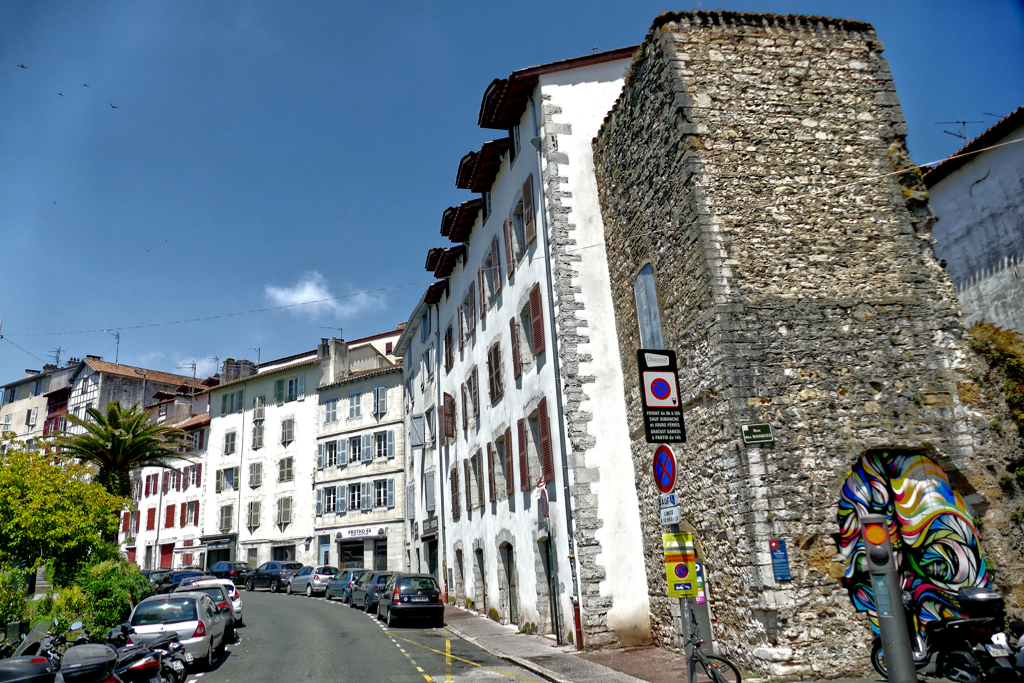
Immediately at the foot of this tower runs the narrow, cobbled, and partially covered Passage des Cacolets. Its name derives from a traditional Basque carrying device. Two side baskets were attached to the backs of donkeys or mules to transport goods across the challenging terrain of the region. This tightly built and carefully restored passageway, away from the main shopping streets, gives an authentic impression of the extremely dense urban structure of old Bayonne, where fortifications, transport routes and living space merged in a very small area.
Fun Fact
Before railways and roads opened up the Basque coast, wealthy travelers, including prominent figures like the writer Victor Hugo and Empress Eugénie, hired these cacolets for the arduous journey from Bayonne to Biarritz. The passenger sat in one basket, while the driver, the cacoletière, sat in the opposite basket to balance the weight and guide the animal through the narrow streets.
Victor Hugo described this mode of travel in his 1843 travelogue as a mixture of adventure and constant conversation, as the cacoletières were known for their quick wit, independence, and profound knowledge of local myths. If a passenger was significantly heavier than the driver, the imbalance was pragmatically corrected by adding heavy stones to the woman’s basket.
Victor Hugo described this mode of travel in his 1843 travelogue as a mixture of adventure and constant conversation, as the cacoletières were known for their quick wit, independence, and profound knowledge of local myths. With the advent of the first horse-drawn trams and carriages around 1860, the cacolets gradually disappeared, and with them the iconic profession of the cacoletières.
Les Halles
The picturesque old town borders directly on the banks of the Nive River. A picturesque and, above all, incredibly delicious finale is the Les Halles market hall. Together with the adjacent Carreau des Halles square, it forms the culinary and thus also the social heart of Bayonne.
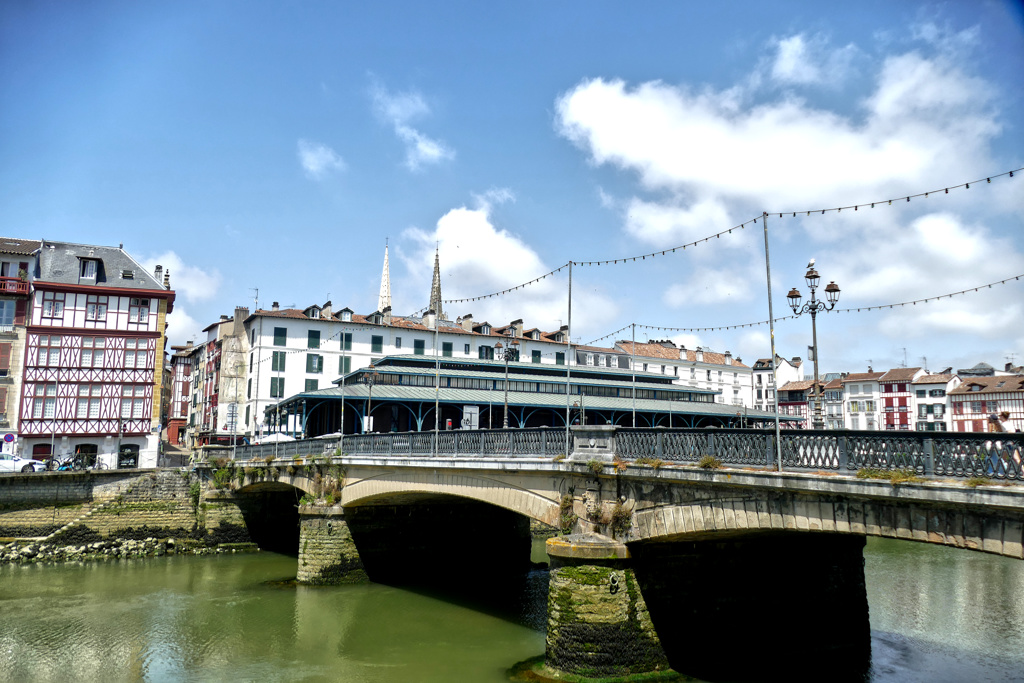
The current market hall was built on the site of earlier historical structures and serves as a central hub for regional Basque specialties such as the famous Bayonne ham, fresh fish from the Atlantic, and local sheep’s cheese.
The adjacent banks of the Nive are lined with typical Basque half-timbered houses with their brightly painted shutters. Several historic bridges connect this area to the Petit Bayonne district on the opposite bank. Especially on Saturdays, when the traditional weekly market expands the Carreau des Halles and the adjacent quays into an open-air oasis, the entire riverfront transforms into a lively pedestrian zone.
Petit Bayonne
On the other side of the Nive River lies the somewhat livelier Petit Bayonne district, more strongly influenced by Basque daily life. Its riverfront promenade, with its characteristic colorful facades, is one of Bayonne’s most picturesque spots.
At the entrance on the Place du Réduit stands the corner building, constructed in the Parisian Haussmann style, directly at the confluence of the Nive and Adour rivers. This stately 19th-century building, with its curved white limestone facade, artfully wrought-iron balcony railings, and characteristic Parisian mansard roof, dominates the architectural landscape at the approach to the Pont Mayou bridge.
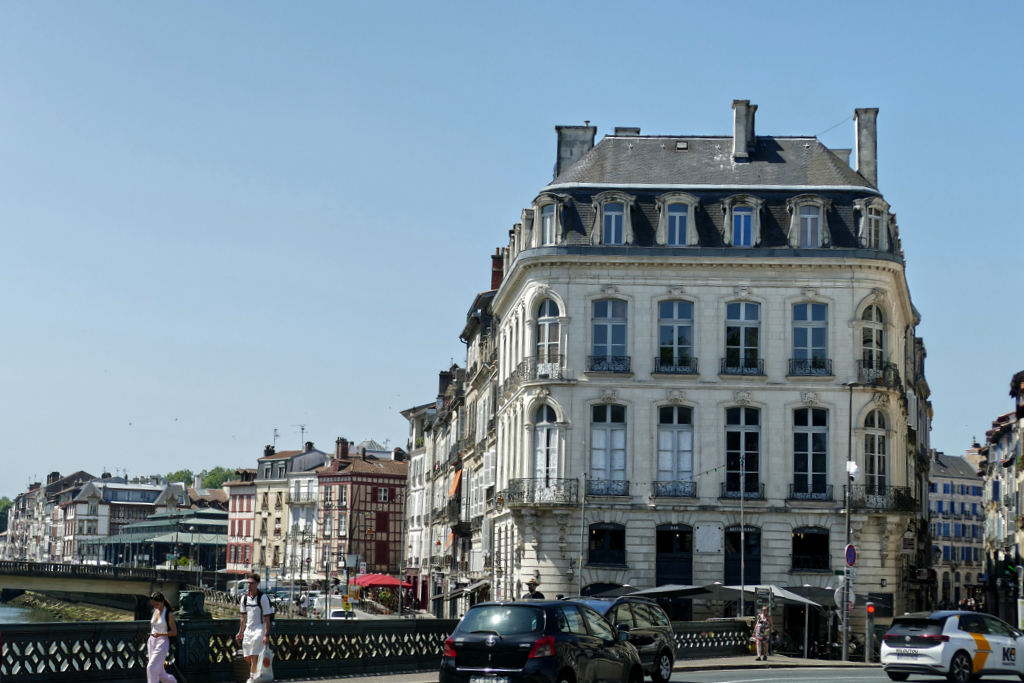
The building holds historical significance, as it was the home of the important French art collector, patron, and photography pioneer Antonin Personnaz. He was one of the first to use the Lumière brothers’ Autochrome color photography for his work. Today, restaurants occupy the striking arcades, which offer direct views of the picturesque riverbank.
Petit Bayonne is home to some of the city’s most important museums, as well as the Church of Saint-André.
Musée Bonnat-Helleu
To be honest, Bayonne isn’t exactly the cultural capital of France. This is partly due to French centralism, where almost all the truly great works are located in Paris. You’ll find the glorious exceptions, of course, in the posts on my blog.
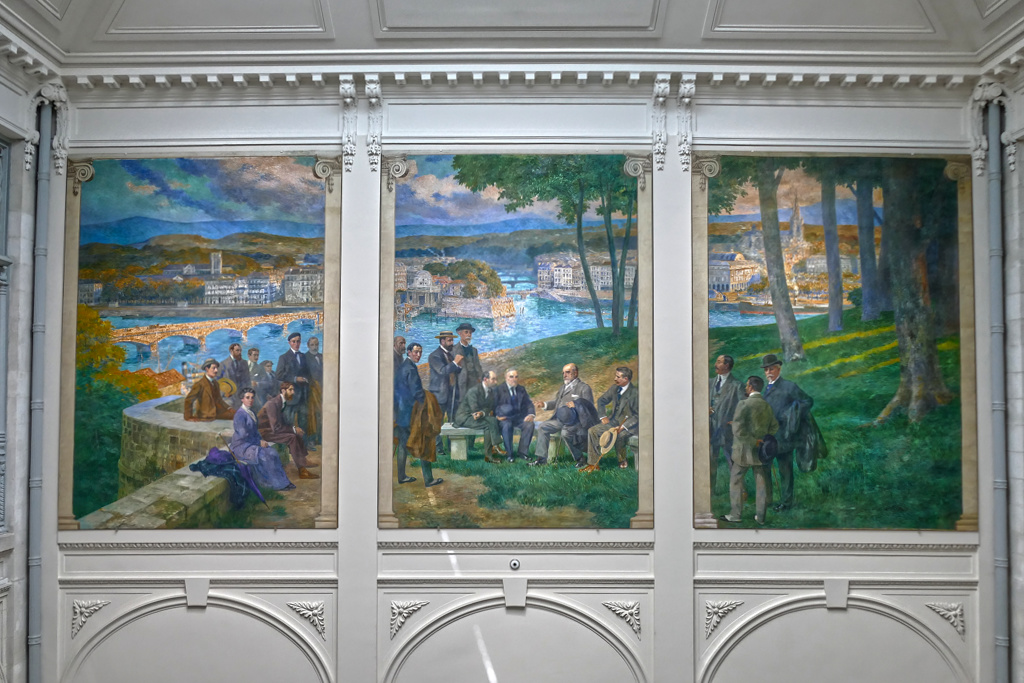
One of these exceptions is the Musée Bonnat-Helleu. It’s located not far from the entrance to the historic Petit Bayonne district. Its foundation is the generous donation of Léon Bonnat, the highly esteemed portrait painter and art collector born in Bayonne in 1901. Obviously, the museum now bears his name. The other name honors the artist Paul-César Helleu, whose later donation further enriched the collection.
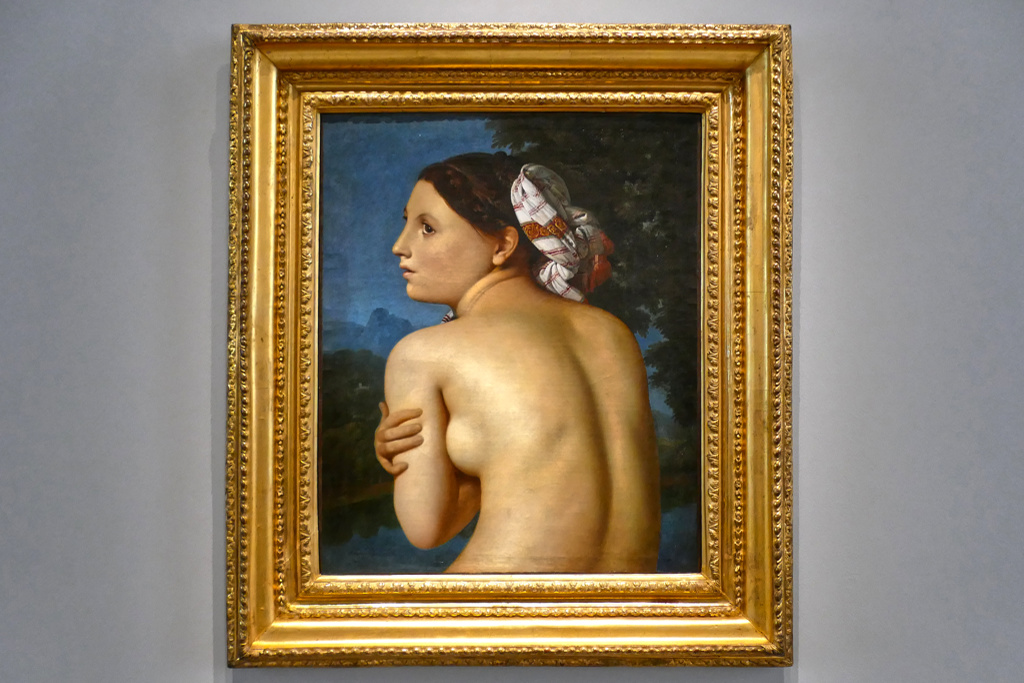
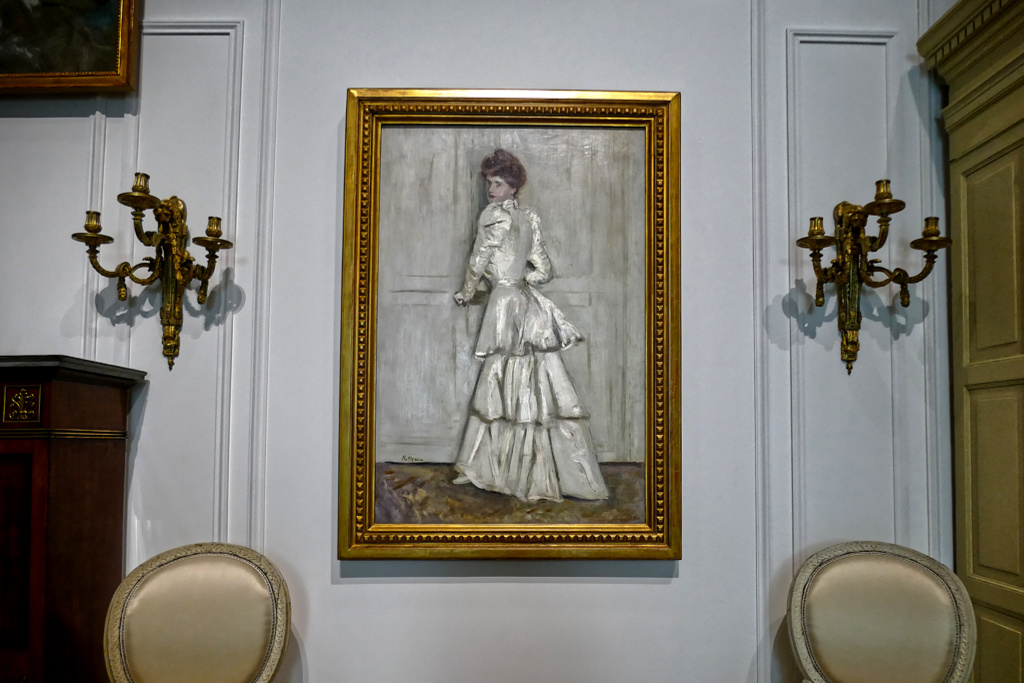
The monumental museum building was constructed specifically for this purpose in the late 19th century in the Neoclassical style. The collection comprises masterful paintings, sculptures, and drawings from the 14th to the 20th centuries. It includes works by world-renowned artists such as Peter Paul Rubens, Francisco de Goya, Rembrandt van Rijn, Edgar Degas, and Jean-Auguste-Dominique Ingres. Following several years of modernization and expansion, this contemporary cultural complex now combines the historical collection with modern exhibition space.
You can visit the Musée Bonnat-Helleu during the peak season from May to October, Wednesday to Monday, between 10 a.m. and 7 p.m. Otherwise, it closes at 6 p.m. Please note that on Fridays, it opens at noon and stays open until 9 p.m. during the peak season and until 8 p.m. during the off-season. The general admission is 11 €uro.
There’s More
There are three more museums in the city that I highly recommend based on their connection to Basque culture and identity.
The Musée Basque et de l’histoire de Bayonne is the largest ethnographic collection in the French Basque Country. Spread across three floors of the 16th-century merchant’s house, the Maison Dagourette, it displays a plethora of artifacts related to Basque culture. You’ll see traditional furniture, costumes, and pelota equipment. Also, you learn about traditional crafts and the maritime past, as well as the Jewish and Basque history of the region. It’s the ultimate resource for understanding the deep cultural roots, language, and identity of the Basque people.
The museum is open from Tuesday to Sunday, 10 a.m. to 6 p.m. On Thursdays, they close only at 8 p.m. The entrance fee is 8 €uro.
As I’ve mentioned several times, Bayonne is the historical chocolate capital of France. At L’Atelier du Chocolat – Musée du Chocolat, information and craftsmanship are combined directly with indulgence. After an interactive tour about the history of cocoa and insights into chocolate making through a glass wall, a delicious tasting awaits you.
The museum is open Monday to Saturday from 9:30 a.m. to 1 p.m. and from 2 p.m. to 6 p.m. Keep in mind that you can usually only watch the chocolatiers at work from Monday to Friday until about 4:30 p.m.
The general entrance fee here is also 8 €uro.
Last but not least, at the Musée du Jambon Aubard, you can visit a compact exhibition area in the back of the traditional Aubard family ham shop. Jambon de Bayonne is the city’s culinary staple. At the Aubards’ museum, you will find information about pig farming and ham curing, as well as historical equipment, right at the source in the old town. A visit to the museum is free. Its opening hours are the same as the shop’s, namely Monday to Saturday from 9:30 a.m. to 1 p.m. and again from 2:30 p.m. to 6:30 p.m.
Bedazzled Biarritz
Biarritz has a completely different history than Bayonne. Where elegant hotels, villas, and beaches now define the cityscape, there was originally a small fishing and whaling village. Its location on the Atlantic coast shaped the lives of the inhabitants for centuries; whaling remained an important source of income until the 17th century. The old fishing port and the traditional small harbor houses, among other things, bear witness to this maritime past.
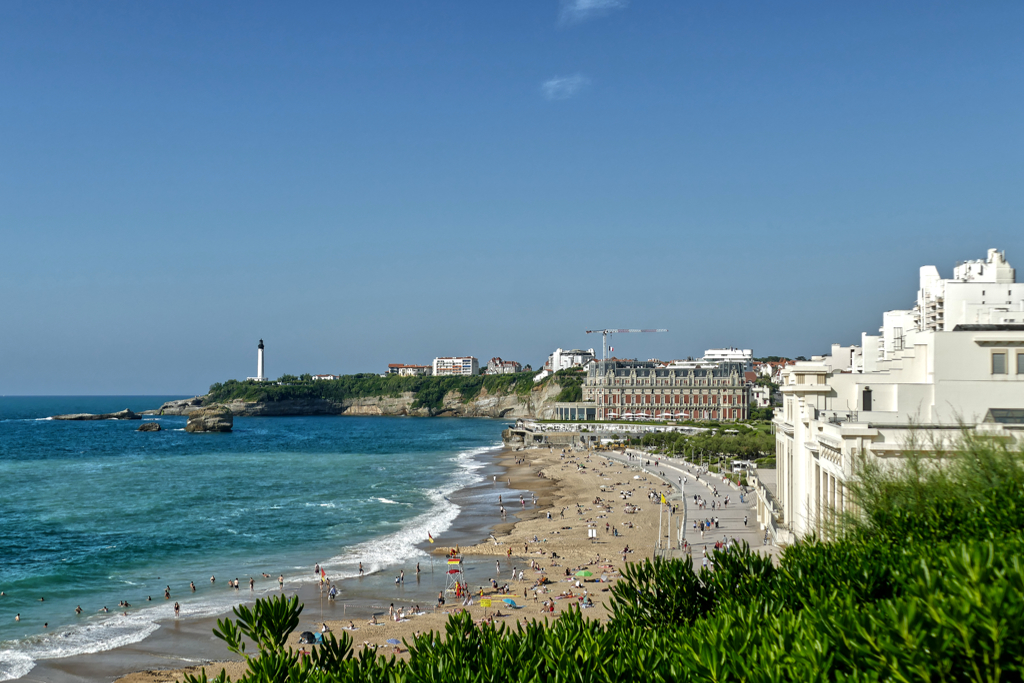
The decisive change came in the 19th century. Victor Hugo visited Biarritz as early as 1843. However, the city became an international seaside resort primarily thanks to Eugénie de Montijo and Napoleon III. From 1854 onward, the French imperial couple stayed here regularly. They commissioned the construction of the so-called Villa Eugénie, which later became the Hôtel du Palais*. Subsequently, numerous European aristocrats and wealthy travellers came to Biarritz. Hotels, villas, and other prestigious buildings fundamentally transformed the former fishing village.
Becoming the Most Fashionable Seaside Resort
The transformation of the once tranquil Basque fishing village of Biarritz into the most fashionable seaside resort of the 19th century is the result of Empress Eugénie de Montijo’s personal passion. Even as a child, the Spanish-born noblewoman spent her summers on the wild Bay of Biscay coast. She fell in love with the rugged beauty of the landscape, the cliffs, and the powerful Atlantic surf. Eugénie married the French Emperor Napoleon III in 1853 and became Empress. She used her newfound influence to convince her husband of the excellence of this unique location. Napoleon III relented and purchased a large plot right on the dunes of the Grande Plage. There, he commissioned a summer residence befitting his wife’s status.
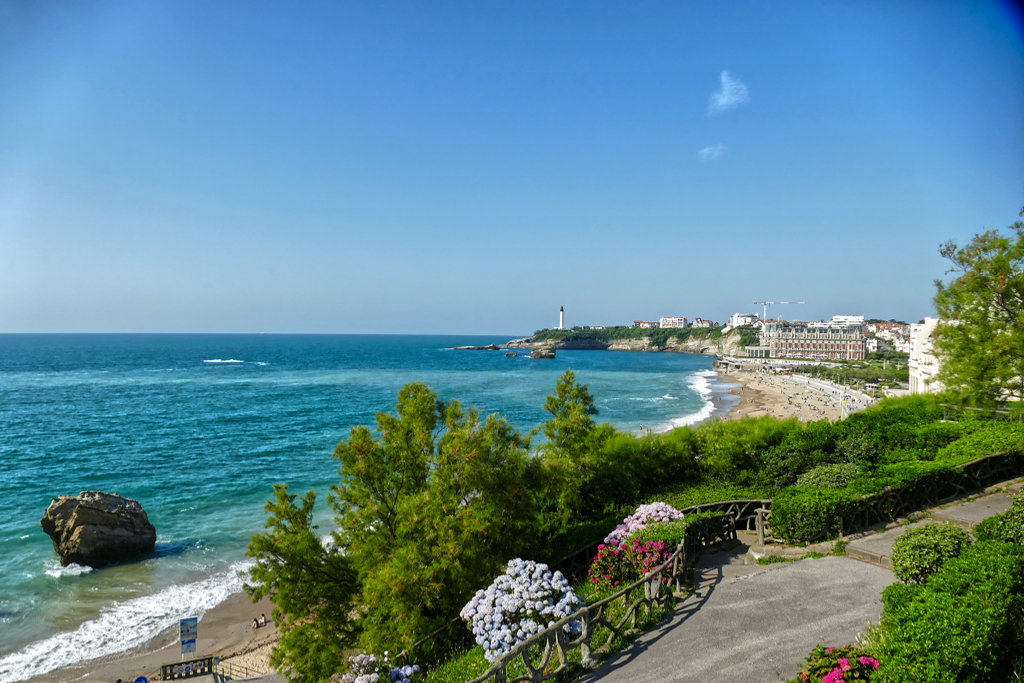
Construction of the magnificent Villa Eugénie began in 1854. The floor plan of this Second Empire-style residence was designed in the shape of the letter E as a tribute to the Empress. From 1855 onward, the imperial couple spent almost every late summer in Biarritz. This attracted Europe’s political and social elite to the Basque coast. Personalities such as Queen Victoria of Great Britain, Empress Elisabeth aka Sisi of Austria, King Alfonso XII of Spain, and statesmen like Otto von Bismarck were guests at Villa Eugénie. Biarritz became the scene of lavish balls and secret diplomatic meetings.
The imperial couple not only invested in their own residence but also modernized the town’s entire infrastructure. At the Empress’s instigation, parks, promenades, and the striking pier leading to the iconic Rocher de la Vierge were created. Eugénie also commissioned the construction of the Chapelle Impériale, which combines Romanesque-Byzantine with Hispano-Moorish elements. She also laid the foundation stone for the neo-Gothic church of Sainte-Eugénie.
Talking about Main Character Syndrome.
Hôtel du Palais
Even after the fall of the Empire in 1870 and her exile to England, Eugénie’s legacy remained alive in Biarritz. The Bank of Paris bought the villa in 1880 and converted it into a casino-hotel. It burned down in 1903 but was faithfully reconstructed and reopened as today’s legendary luxury Hôtel du Palais*.
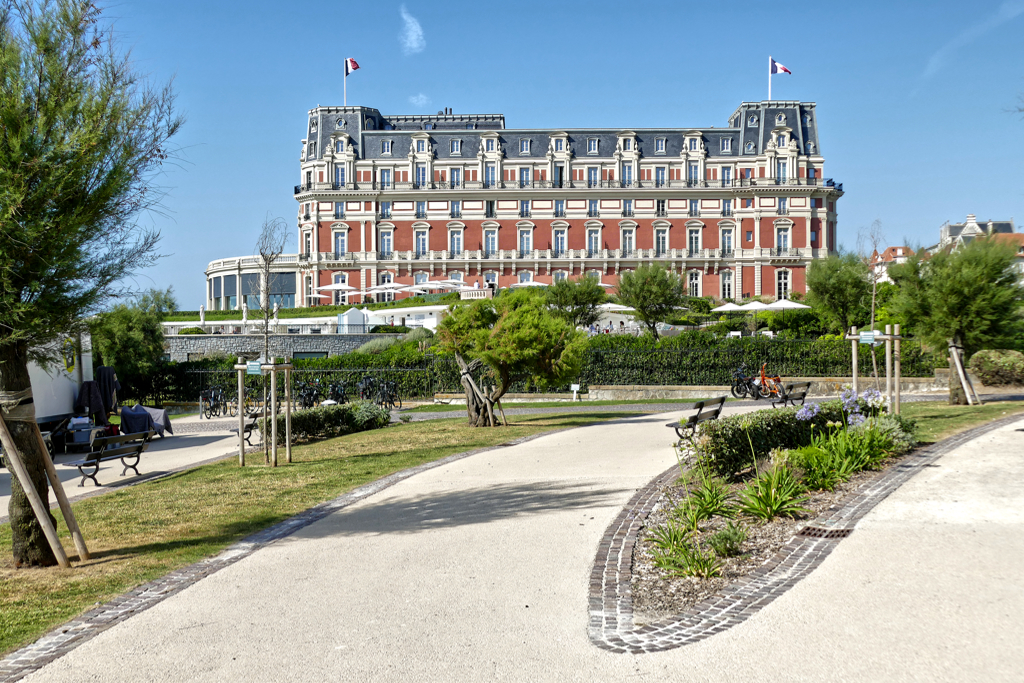
Today, the five-star hotel offers a successful blend of historical splendor and modern amenities. The 86 rooms and 56 elegant suites feature exquisite interiors with original tapestries, valuable works of art, Carrara marble, and fine woods. Thanks to its prime location, guests enjoy unobstructed panoramic views of the rugged Atlantic Ocean from almost every area. Among the outstanding amenities are a seawater outdoor pool and the Guerlain Imperial Spa.
Obviously, the Hôtel du Palais* also holds a leading position in the culinary world. Under the direction of renowned chefs, sophisticated French haute cuisine is served here in a hall that the Monégasque chef Alain Ducasse once described as the most beautiful hall in the world.
Making History
The hotel’s allure for the global elite has remained unbroken since its inception, and it has hosted numerous historical events. In the early 20th century, King Edward VII of Great Britain spent lengthy periods of time at the palace, seeking relief from his respiratory problems in the iodine-rich sea air. This brought him the moniker King of Biarritz. It was here, in April 1908, that a unique political curiosity unfolded: the designated British Prime Minister, H. H. Asquith, was summoned to the hotel room of the vacationing monarch to be officially sworn in. In fact, this was the only time in British history that a Prime Minister was appointed on foreign soil!
In the 1950s, the palace transformed into a glamorous retreat for Hollywood’s elite, attracting celebrity regulars such as Frank Sinatra and Ava Gardner, who hosted lavish parties there.
This tradition as a meeting place on the world stage continued into the recent past, when the hotel served as the exclusive venue for the G7 summit in 2019, welcoming heads of state from all over the world within its historic walls.
Église Orthodoxe de Biarritz – Protection de la Mère de Dieu et Saint Alexandre
Emperor Napoleon III and Empress Eugénie also attracted Russian nobility to Biarritz in the 19th century. The Prince of Oldenburg, a relative of the Romanovs, arrived in the late 1850s with a retinue of 50 people, initiating the Russian boom. From then on, the Russian imperial family regularly spent the summer months here during the so-called Russian Season.
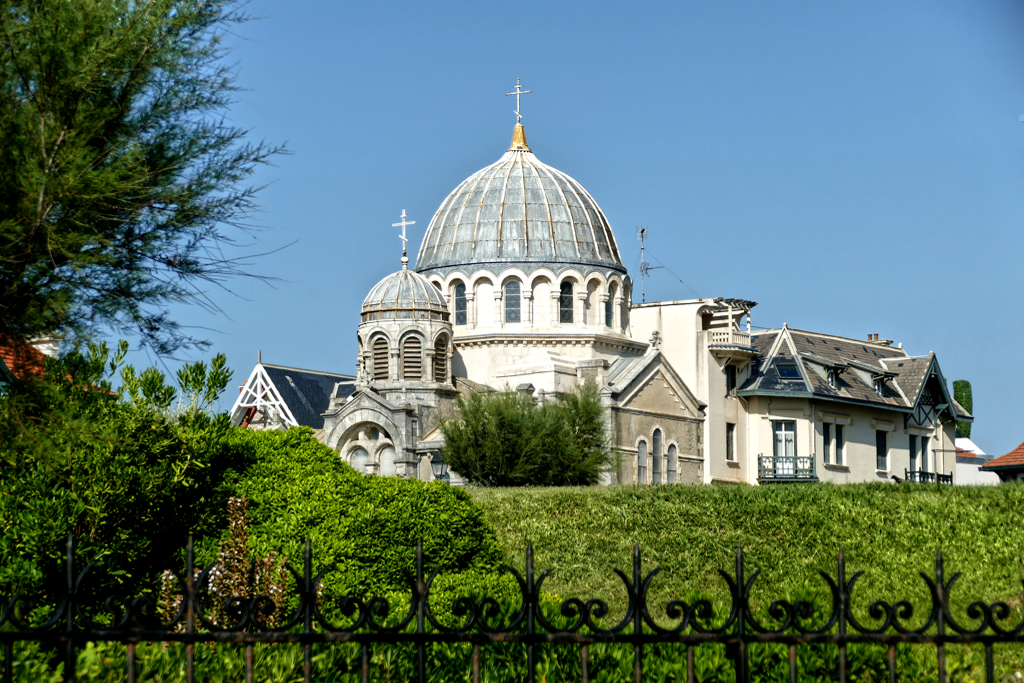
Before the Russian community had its own church, the nobility met for services in the salons of Villa Eugénie. The Russian Orthodox Church of Biarritz, officially dedicated to the Protection of the Mother of God and Saint Alexander of the Neva, was completed in the Miramar district in 1892. In this area near the sea, many Russian nobles built or rented opulent villas. For example, Grand Duke Alexander Mikhailovich, the brother-in-law of the last Tsar, lived with his family in a large villa in the Miramar district.
The building project was designed and implemented by the Russian architect Nikonoff and the Frenchman Tisnès. They created a harmonious blend of traditional Eastern Orthodox stylistic elements of the Byzantine Revival and French construction techniques. The listed brick building has a distinctive blue dome, while the magnificent interior, with its faded blue central dome and richly decorated iconostasis, transports visitors to the spiritual world of Russia. Since its consecration in 1892, the church has served continuously as a vibrant place of prayer. It is open to visitors on weekends from 3 p.m. to 5 p.m. On Sundays, confession is heard before visits starting at 9 a.m., followed by Mass at 10 a.m.
Tables Turn
After the Russian Revolution, another key meeting place for Russian exiles in the 1920s was Villa Belza. It sits dramatically on a cliff overlooking the sea. Grégoire Beliankine, the brother-in-law of the famous Russian composer Igor Stravinsky, rented the villa and transformed it into a high-class Russian restaurant and cabaret called Château Basque. Here, exiled Russian nobility celebrated lavish parties with Cossack songs and champagne alongside the European elite.
Those days are gone. While the building, spectacularly situated on a cliff overlooking the ocean, can be freely admired and photographed from the outside, visits to the interior are not possible, as it is privately owned and divided into apartments.
Fun Fact
In the period when Biarritz became a refuge for fleeing aristocrats after the Russian Revolution, Coco Chanel opened her fashion house on the Rue Gardères. She fell in love with the impoverished Russian Grand Duke Dimitri Pavlovich, a cousin of Tsar Nicholas II, who had fled there. This connection profoundly influenced Chanel’s collections, as she introduced traditional Russian embroidery and fur designs into Western haute couture through Dimitri.
On the Banks of the Atlantic
The character of Biarritz is by no means limited to its elegant seaside architecture. The sea remains the city’s true star. From the Grande Plage, along the Côte des Basques, to the Rocher de la Vierge, beaches, cliffs, and viewpoints stretch along the coast. Indeed, one of the most delightful activities is a stroll from the Rocher de la Vierge to the Port des Pêcheurs.
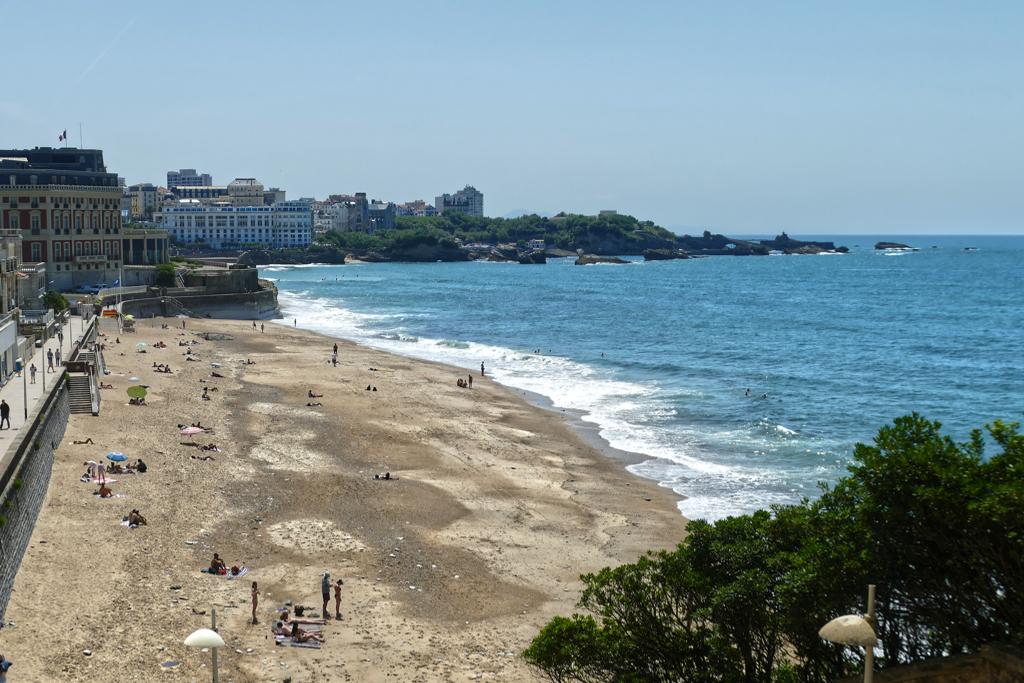
Even today, the characteristic crampottes, tiny fishermen’s cottages, often housing restaurants, stand in this charming and atmospheric fishing port.
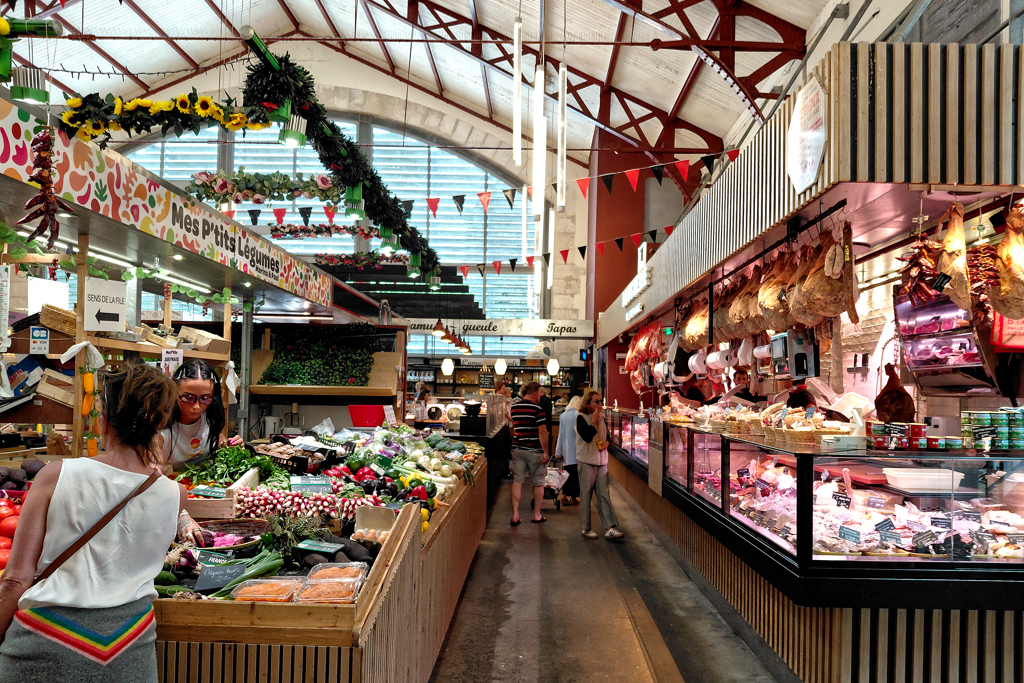
Not far from the old fishing port is my personal happy place. Biarritz’s iconic Halles de Biarritz, a covered market hall, is open daily from 7:30 a.m. to 2 p.m. year-round. Stalls offer fish and seafood, meat and sausages, cheese, fruit, vegetables, and baked goods. Some of the stalls are run as food and beverage outlets where you can enjoy food and drinks on-site.
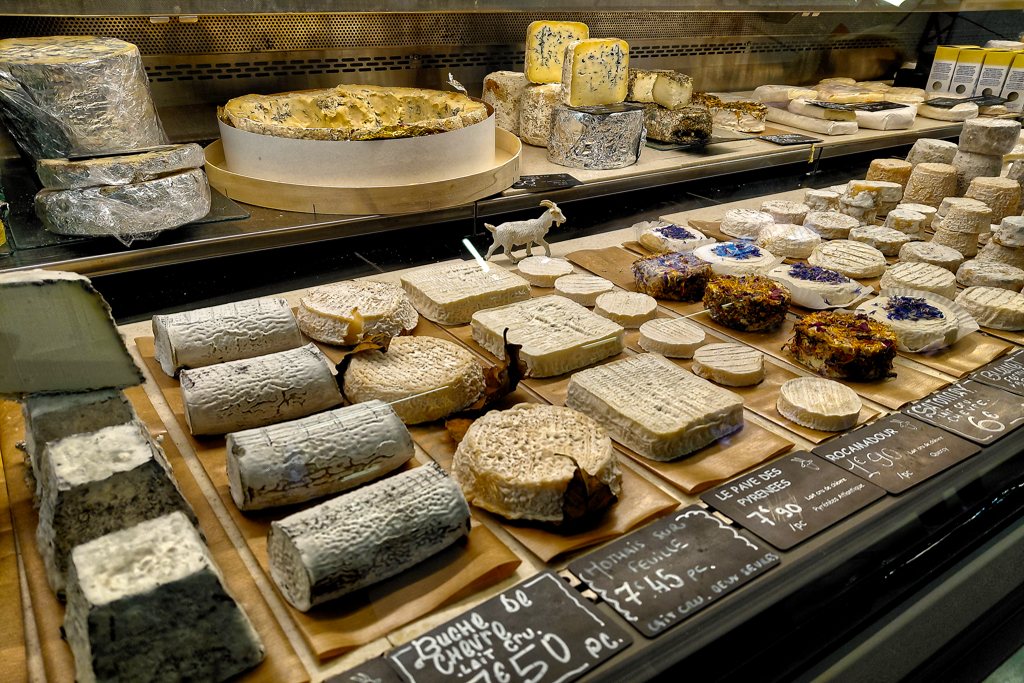
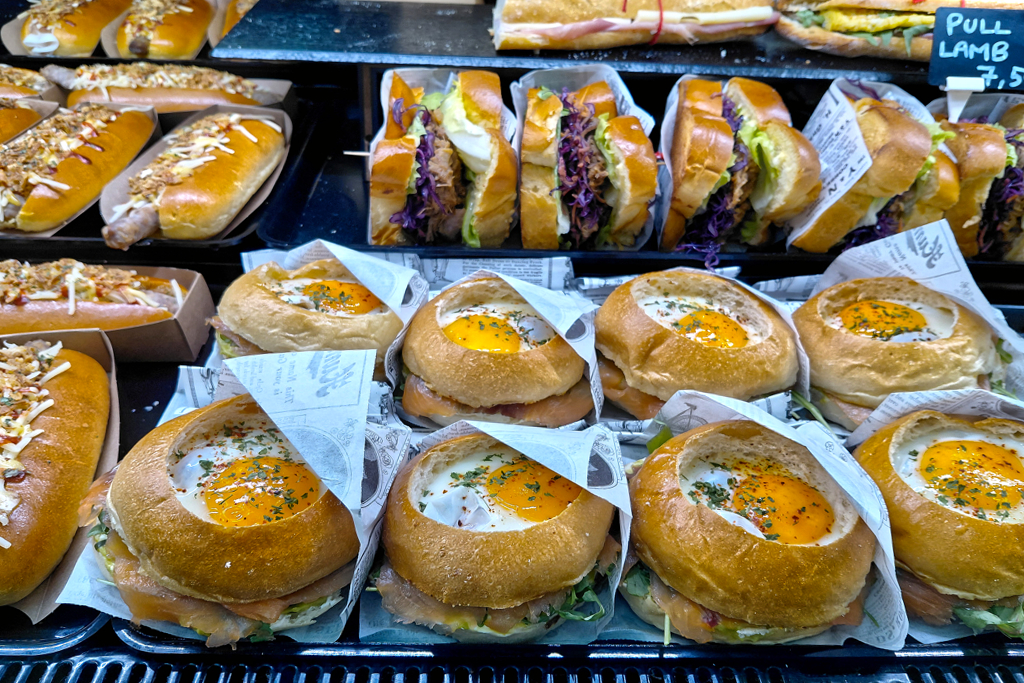
The market is complemented by an outdoor area. From Easter until the beginning of November, a textile and decoration market takes place next door on Place Sobradiel from 8:30 a.m. to 2:00 p.m. The exception to this is the Marché du Carreau farmers’ market, which is held on Saturdays.
Life is a Beach
To the north lies the Grande Plage, the large city beach in the heart of Biarritz. It merges into the Plage Miramar, which leads to the Phare de Biarritz lighthouse. Built in 1834 on the Pointe Saint-Martin, the 248 steps are well worth the climb, as they offer a fantastic panoramic view of Biarritz and the Basque coast.
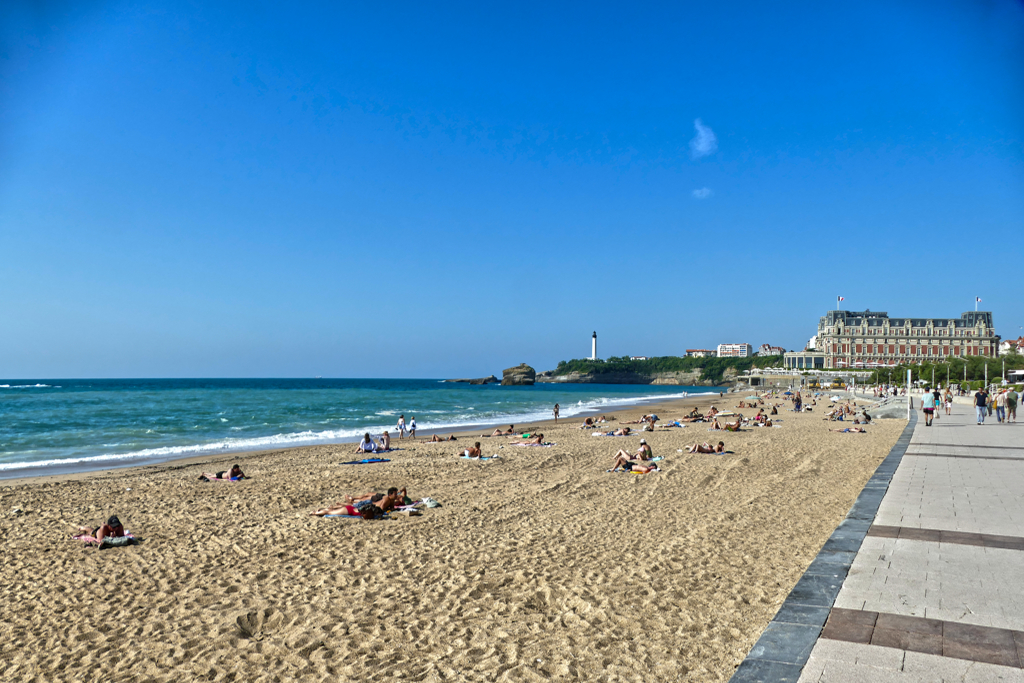
South of the Port des Pêcheurs stretches the Côte des Basques. This famous beach below the cliffs is considered the birthplace of surfing in Europe and is also one of the city’s most beautiful stretches of coastline. In 1956, American screenwriter and surfer Peter Viertel came to Biarritz during the filming of The Sun Also Rises. He began experimenting with the Atlantic waves on a surfboard. He was the one who made Biarritz the cradle of surfing in France, allowing it to later develop into an international surfing destination.
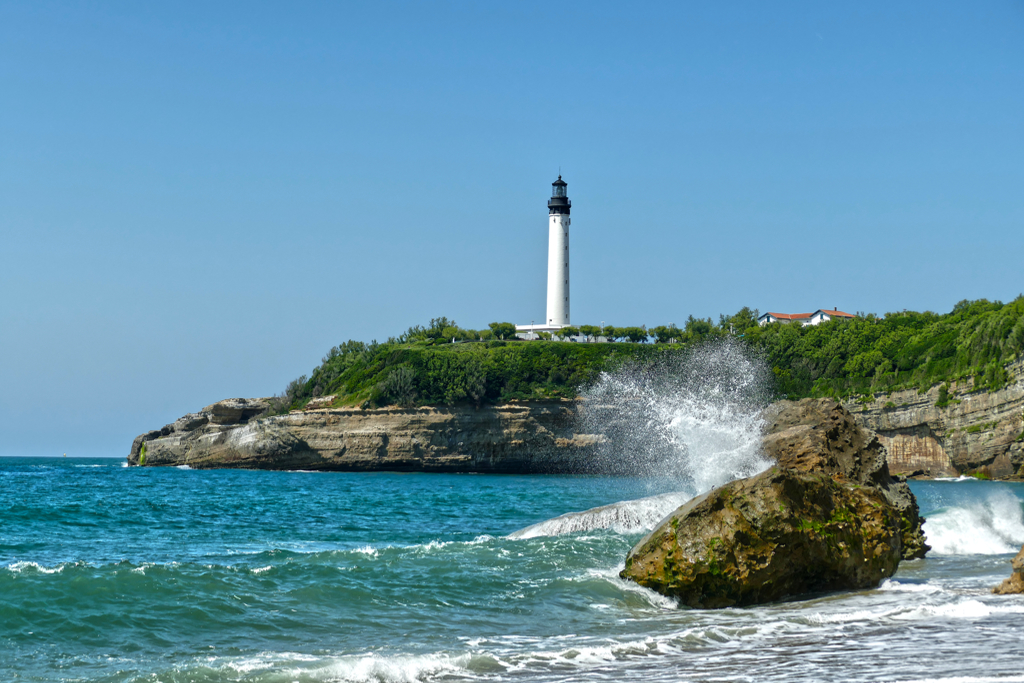
Today, several historical layers lie directly on top of each other in Biarritz: the memory of the secluded fishing village, the architecture of the imperial seaside resort, and the dynamic young surf culture. It is precisely this mix that makes the city and its coastline so unique.
Practical Information
How to Get There
Biarritz Airport offers around 25 direct flights to approximately 12 European and North African countries. It’s only about 8 kilometers from Bayonne city center, making onward travel easy. Buses # 3 or #4 will take you straight to Bayonne as well as to downtown Biarritz. A cab takes about 15 minutes and should cost around 20 €uro..
However, the airports of Bordeaux and Bilbao could be good alternatives. Trains run from Bordeaux, and from Bilbao, a long-distance bus will get you straight to Biarritz and Bayonne in about two hours.
Long-distance trains as well as major long-distance buses arrive in Bayonne, while Biarritz train station primarily serves regional services. High-speed trains run several times a day from Paris Montparnasse to Bayonne in just under four hours. Regional trains from Bordeaux take around two hours to reach the Basque Country. From Spain, the main train route goes via San Sebastián.
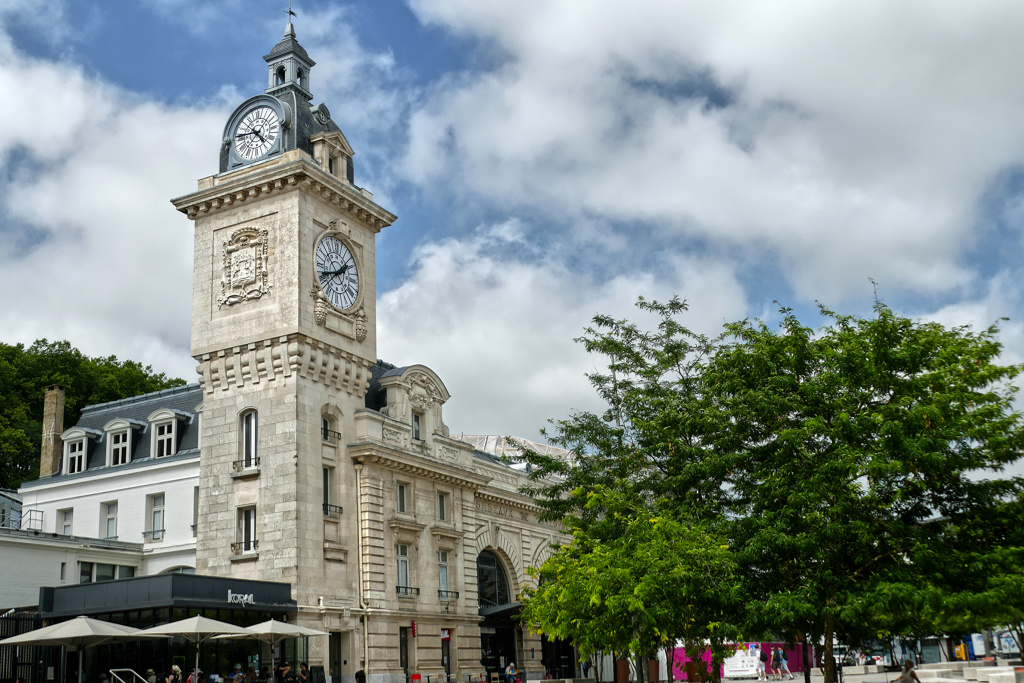
If you’re traveling by long-distance bus, the two largest providers in this region are FlixBus and BlaBlaCar. They usually stop about a ten-minute walk west of Bayonne train station. There are also connections to Bordeaux, San Sebastián, and Bilbao. If you book in advance, you can often find tickets for as little as 5 €uro! The bus journey to Paris, however, takes at least 10 hours and costs about €23. Keep in mind that prices can rise to 70 €uro during peak season and on weekends!
How to Get Around
The cities of Bayonne and Biarritz, together with the neighboring municipality of Anglet, form a contiguous metropolitan area, resulting in excellent and seamless public transport connections and intercity links. The heart of the public transport system is the regional bus network. A single ticket costs 1.50 €uro. You can easily purchase tickets at ticket machines in the stations, via a smartphone app, or directly with a contactless credit card when boarding. A day ticket, which allows unlimited travel on the entire network on the day of first validation, costs 3.80 €uro. If you simply tap your contactless card against the reader on the bus, the price is automatically capped at 3.70 €uro from the third trip onward on the same day. If you’re staying in the area longer, a 3-day ticket costs 8.70 €uro and a weekly ticket 14.60 €uro. These are valid for consecutive days, obviously.
The best way to travel between Bayonne and Biarritz is by tram-bus line T1. A trip from city center to city center takes about 30 minutes, with frequent service during the day.
Alternatively, you can take the regional train for about 3 €uro each way. The journey time is only about 10 minutes. However, the trains run much less frequently than the buses, and the train station in Biarritz is so far out that you then have to take a city bus for another 15 minutes to reach the actual city center or the beaches.
Both cities have the Txik Txak e-bike rental system with numerous fixed stations where you can rent bikes by the minute using an app. This is particularly convenient along the well-developed coastal cycle paths.
Visiting Organized
Although I’m an avid solo-travelling woman, I sometimes like to join organized tours. This way, I get extended info about a place, and it’s fun to visit landmarks in the company of like-minded fellow travellers. Here are some ideas for activities to choose from*:
Where to Stay
It was during my trip to Provence that I first realized just how popular aparthotels are in France. Honestly, I’d argue that no other European country has so many different hotel chains offering self-catering rooms. In most cases, you get a standard hotel room, but with a kitchenette along one wall, complete with a fridge, two stovetop burners, a microwave, a coffee maker, and dishes and cutlery for two. Sure, some people might need a moment to get used to the idea of sleeping next to a stove. But I love it! No, not the sleeping-next-to-a-stove part, but the convenience of being able to brew a coffee in my pajamas first thing in the morning and enjoy breakfast in bed – just like on Mother’s Day.
Beyond that practicality and comfort, it also makes the stay much more affordable. You pick up a few things at the supermarket and live like royalty. Of course, that doesn’t mean you have to eat every meal on your lap in front of the TV. But for me, the ability to have a light snack in the evening instead of a heavy dinner and, above all, to start the day in a relaxed way with a coffee in bed is priceless.
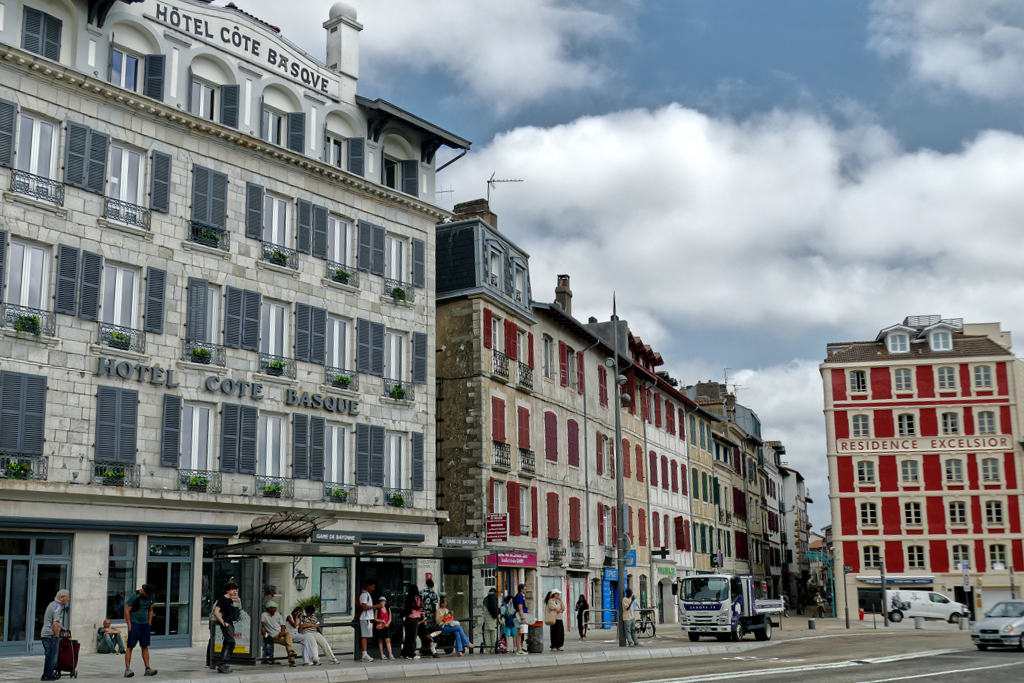
Whether you want to feel like home away from home in an apartment hotel or prefer more comfort, you are sure to find a nice accommodation on this map that suits your needs and budget*:
What to Eat
Basque cuisine is characterized by the combination of freshly caught fish from the Atlantic and the hearty produce of the agricultural hinterland.
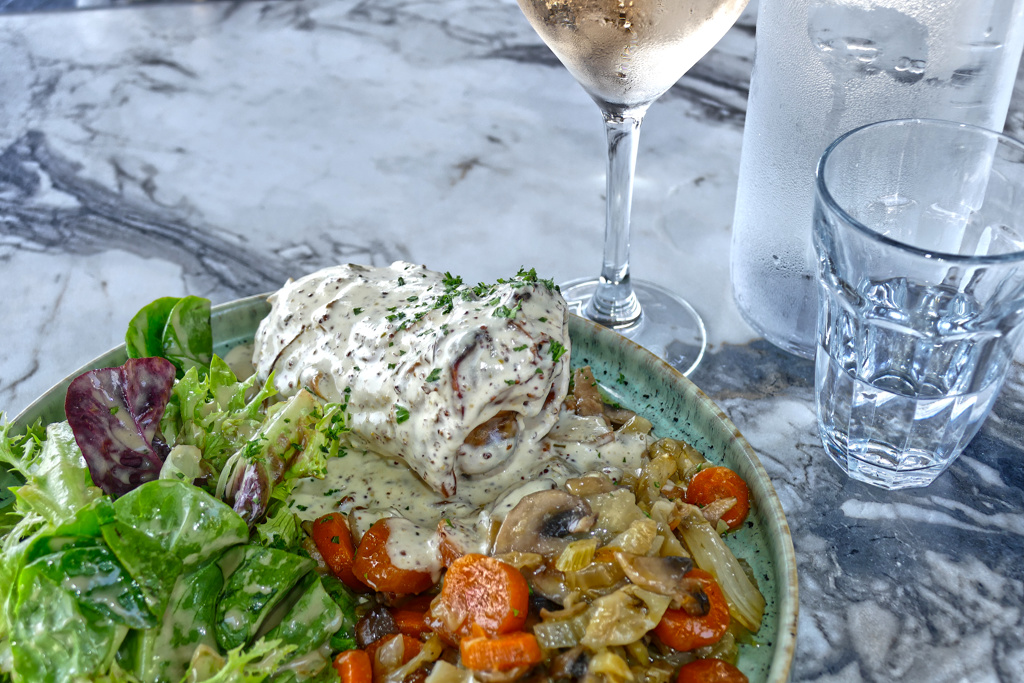
A true classic is Piperade, a traditional vegetable dish of braised tomatoes, onions, and green peppers, almost always seasoned with the fruity and spicy Espelette pepper and often served with roasted Bayonne ham and eggs. Another popular main course is poulet basquaise, in which chicken pieces are slowly braised in this same aromatic piperade sauce until the meat is exceptionally tender.

Also very popular is Axoa de Veau, a traditional festive dish from the interior, consisting of finely chopped veal, mild local chilies, onions, and spices, and usually served with boiled potatoes.
From the coastal regions comes Ttoro, a rich, traditional fish soup from Saint-Jean-de-Luz, which, unlike the Provençal bouillabaisse, contains whole pieces of fish, shellfish, and mussels, and is generously flavored with garlic.
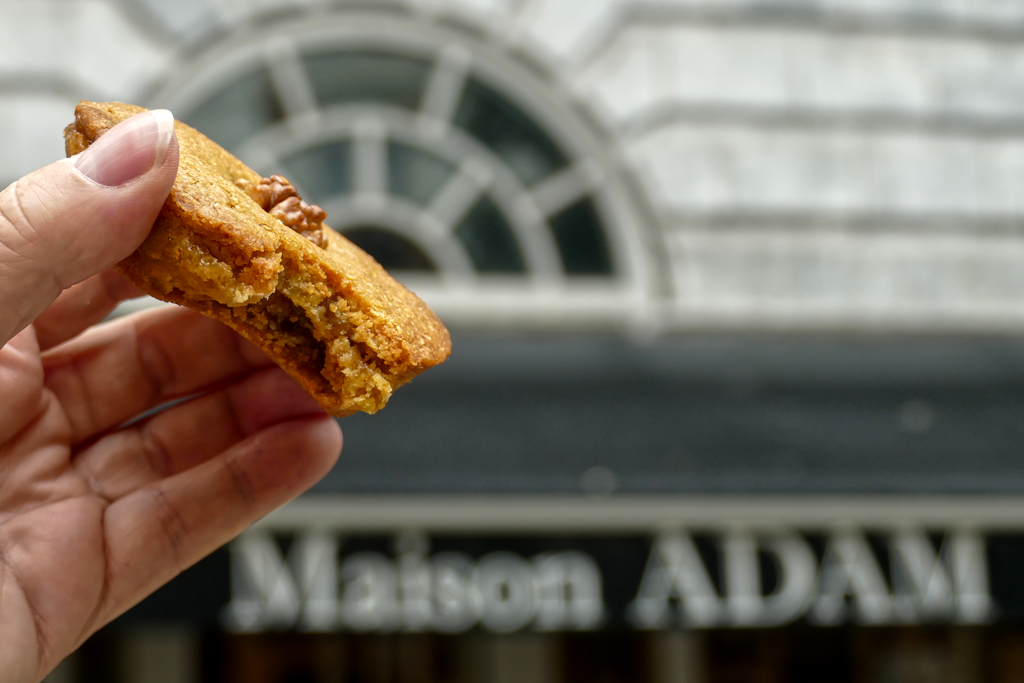
To conclude a typical meal, almost without exception, Gâteau Basque is served, a crumbly, golden-yellow cake traditionally filled with either a thick layer of local black cherry jam or a delicate pastry cream.
Cash’n’Cards
Until now, 21 European countries have replaced their former local currency with the €uro starting in 2002. Obviously, France is one of them. The exchange rate is 1 US$ = 0.84 EUR as of November 2026. However, you can check today’s conversion rate on this page.
Credit cards and contactless payments are accepted almost everywhere.
Connection and Communication
Since June 2017, no roaming charges have been applied within the EU with a European mobile phone contract. This applies in all 27 countries of the European Union as well as in Iceland, Liechtenstein, and Norway, and to all contracts.
In case European roaming is unavailable, you can connect to the internet without any issue at basically every museum, eatery, café, and, of course, hotel.
A great way to stay online on the road is to use an eSIM*. Unlike a physical SIM card, an eSIM is built into your smartphone, so you don’t need to buy or swap a tiny plastic card. You can simply download and activate your eSIM* before travelling and connect to a local mobile network as soon as you arrive. No searching for a phone shop, no fiddling with SIM cards, and no risk of losing your regular SIM in the process.
With eSIMPal*, you can choose from a range of data plans for your destination and get connected wherever your travels take you. Even better, you get 15% off your first order by using the code RENATA15!
In France, they use plug types C and E. Their voltage is 230 V and the frequency 50 Hz. Whereby, as nowadays, all these chargers have integrated adapters, in general, the voltage and frequency don’t really matter.
By the way, you’ll find this information and many more comprehensive travel tips in my post World’s Most Complete Travel Information – an indispensable globetrotter-classic.
Language
The French are famous for many great things. Presumably, speaking foreign languages isn’t one of them. Despite the geographic and even cultural proximity to Great Britain, people have rudimentary knowledge of English at most. And while they still might understand more or less what you are saying, they might not be able or willing to answer in English. Therefore, already out of respect, it won’t hurt to learn at least some polite phrases with the help of Babbel or Lingohut, for example.
Map
This map should help you find all the wonderful places I’m introducing in this post. This way, you can plan your itinerary accordingly. Clicking on the slider symbol at the top left or the full-screen icon at the top right will display the whole map, including the legend, which I divided into two layers, one for Bayonne and the other for Biarritz. This way, you have the option to open only the one you really need.
Pinnable Pictures
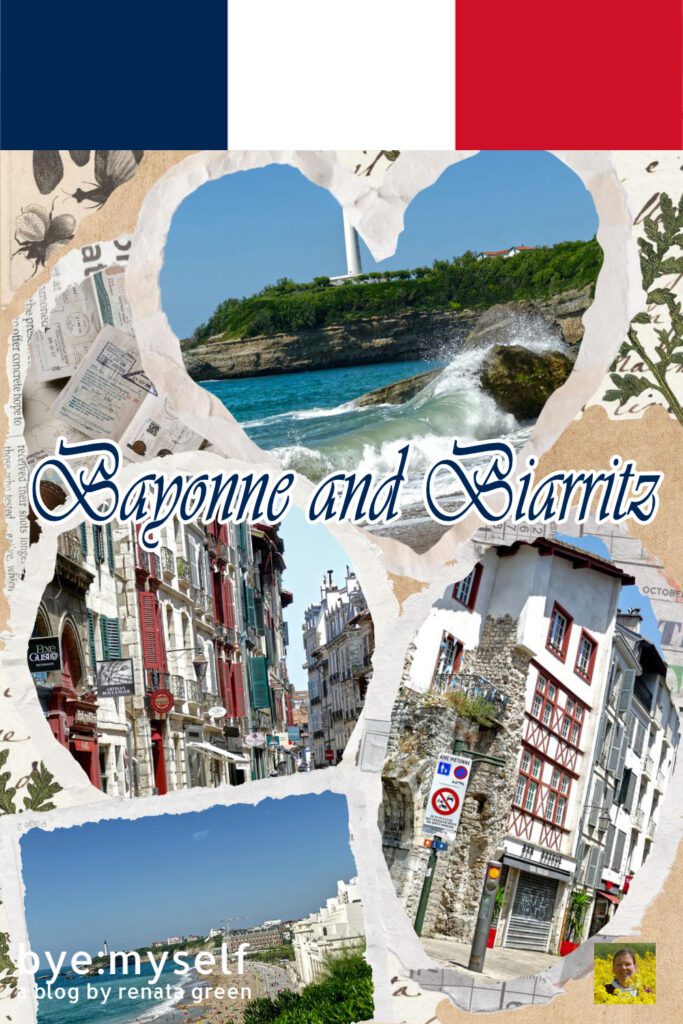
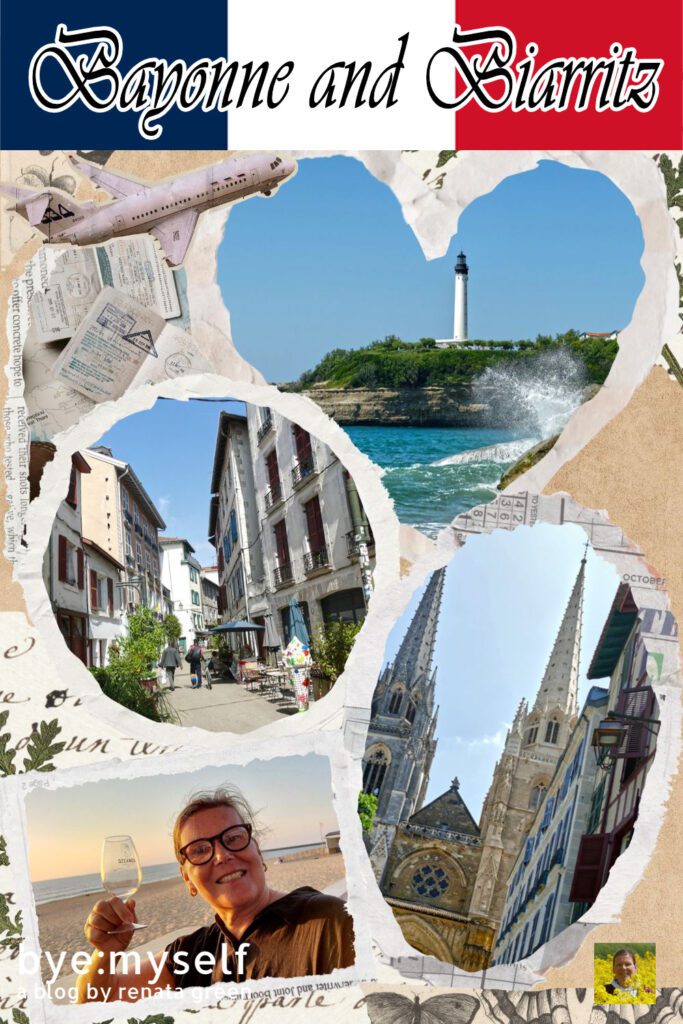
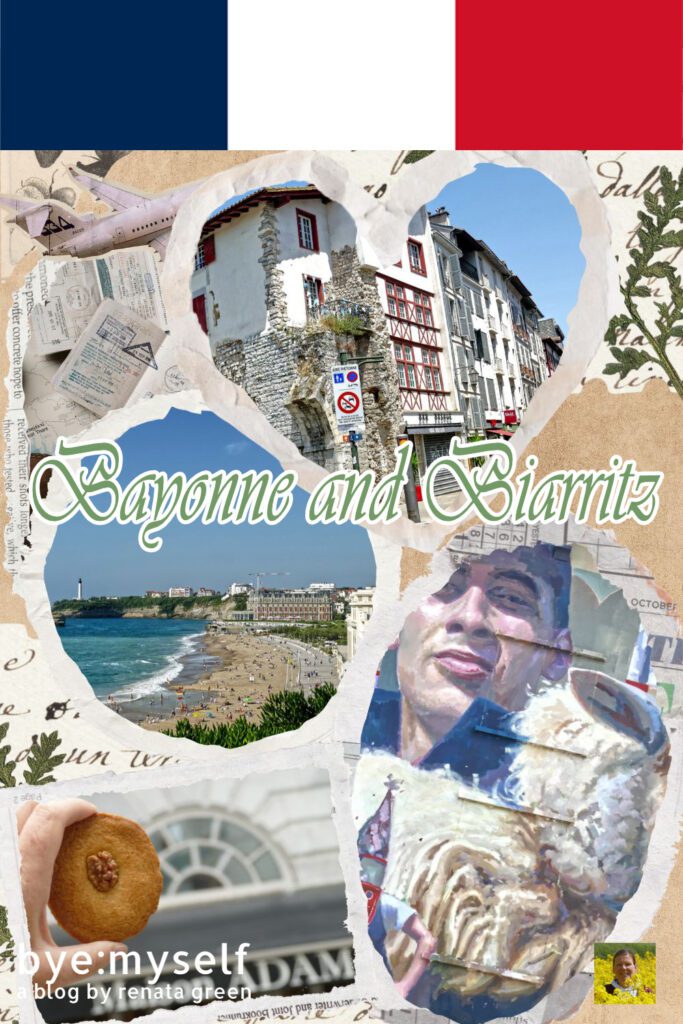
If you choose to pin this post for later, please use one of these pictures:
Did You Enjoy This Post? Then You Might Also Like These:
What Not to Miss in AVIGNON in One Day – Apart from Dancing on Bridges

Best Street Art in NÎMES

What Not to Miss in Saint-Martin, the French Half of the Friendly Island

BORDEAUX: Best Street Art on the Left Bank of the Garonne

BORDEAUX: Best Street Art on the Right Bank of the Garonne

MAGNIFICENT MARTINIQUE: Ten Places Not to Miss on Your Visit even when Exploring by Public Bus
PARIS for Free!

Best Street Art in GUADELOUPE

*Obviously, this is an affiliate link. If you book through this page, you not only get the best deal. I also get a small commission that helps me run this blog. Thank you so much for supporting me!