Every summer, the grounds of the historic Carlshütte iron foundry in the village of Büdelsdorf in northern Germany host one of the largest exhibitions of contemporary art in Europe. Around 200 artists from all over the world present their works in an impressive industrial setting. As in previous years, I’ll tell you everything you need to know for your visit to NordArt in 2026.

Büdelsdorf
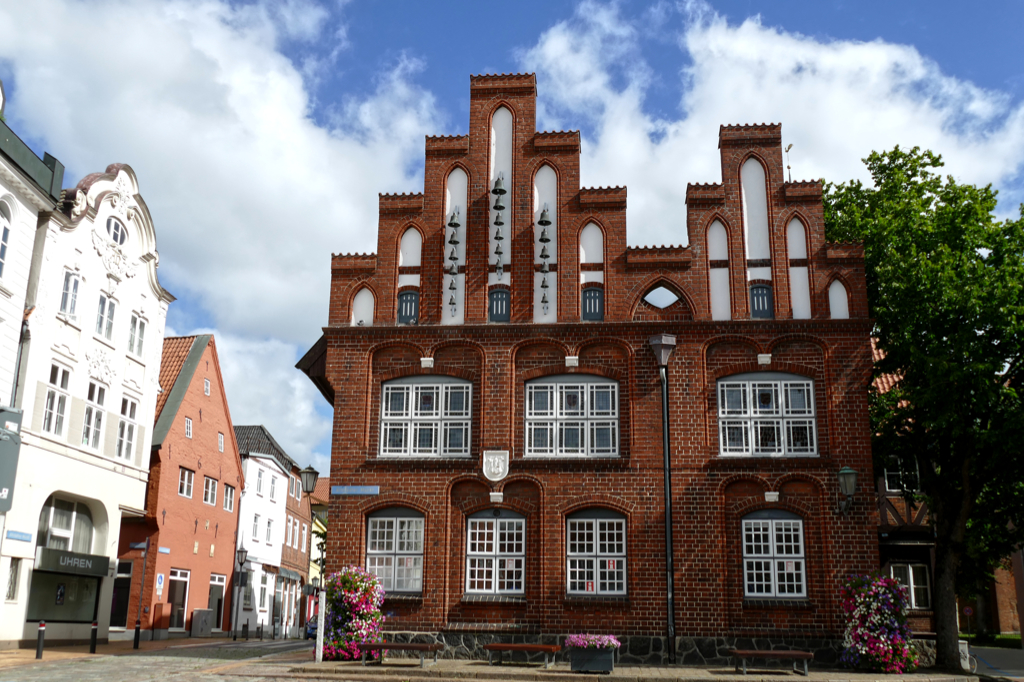
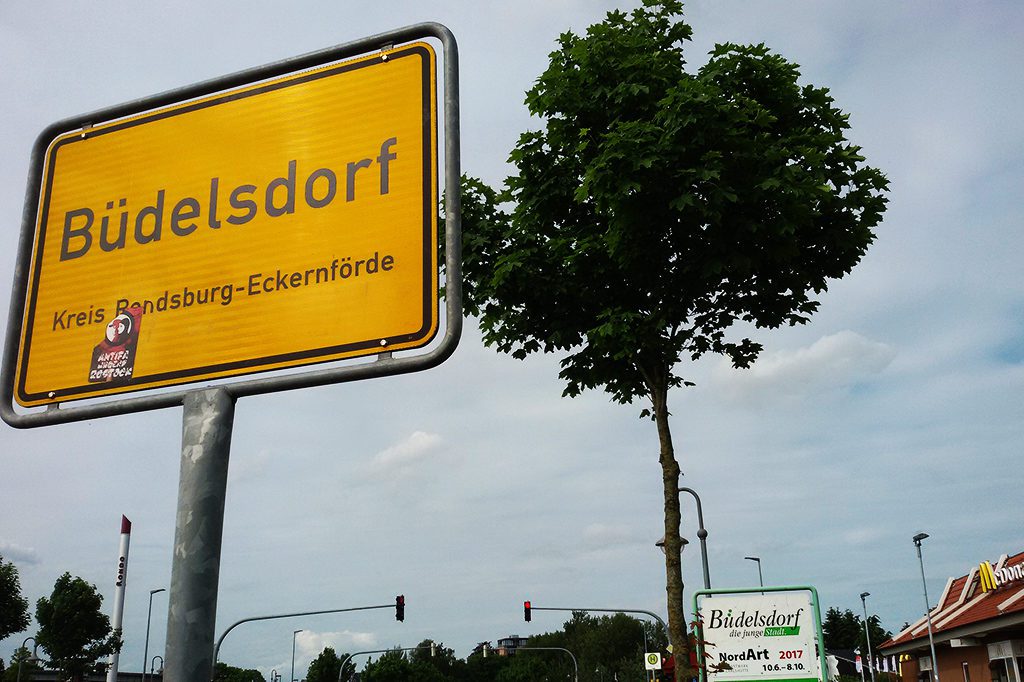
Büdelsdorf is a townlet on the outskirts of Rendsburg, which isn’t exactly a bright-lights, big-city place, either. Actually, Rendsburg is located in Germany’s Federal State of Schleswig-Holstein on the train route from Hamburg to Copenhagen. To this day, you find traces of the city’s historical function as the southern border fortress of the Danish Empire in the quite charming old town. Büdelsdorf is located north of Rendsburg and can be reached by walking in about 20 minutes. However, there are also public buses.
The iron foundry Carlshütte was founded in Büdelsdorf in 1827. It was the first industrial plant on the Jutland peninsula. This peninsula consists of the continental part of Denmark, most of the German Federal State of Schleswig-Holstein, and even a part of Hamburg.
While in 1850, the foundry had almost 500 employees, by 1965, the staff quintupled to over 2500. Obviously, the Carlshütte dominated the region’s economy for the longest time. Yet, in 1997, they had to file for bankruptcy and shut down the plant.
NordArt
One man’s trash is another man’s treasure: As the iron foundry closed in 1997, Hans-Julius Ahlmann, Managing Partner of the internationally active ACO Group, acquired the grounds with its massive industrial halls and historic housing. He converted them into an outstanding venue for cultural projects. Hence, today, the Carlshütte is not only an impressive industrial monument. The industrial buildings and vast gardens also offer a distinctive setting for cultural events of all kinds.

I guess this explains how the provincial town of Büdelsdorf gained a venue where one of Europe’s most important art shows takes place every year

Although the NordArt is by far not as famous as other European art shows such as the Documenta in Kassel let alone the Biennale di Arte in Venice, it has found its spot in the art scene and is an internationally acknowledged event.
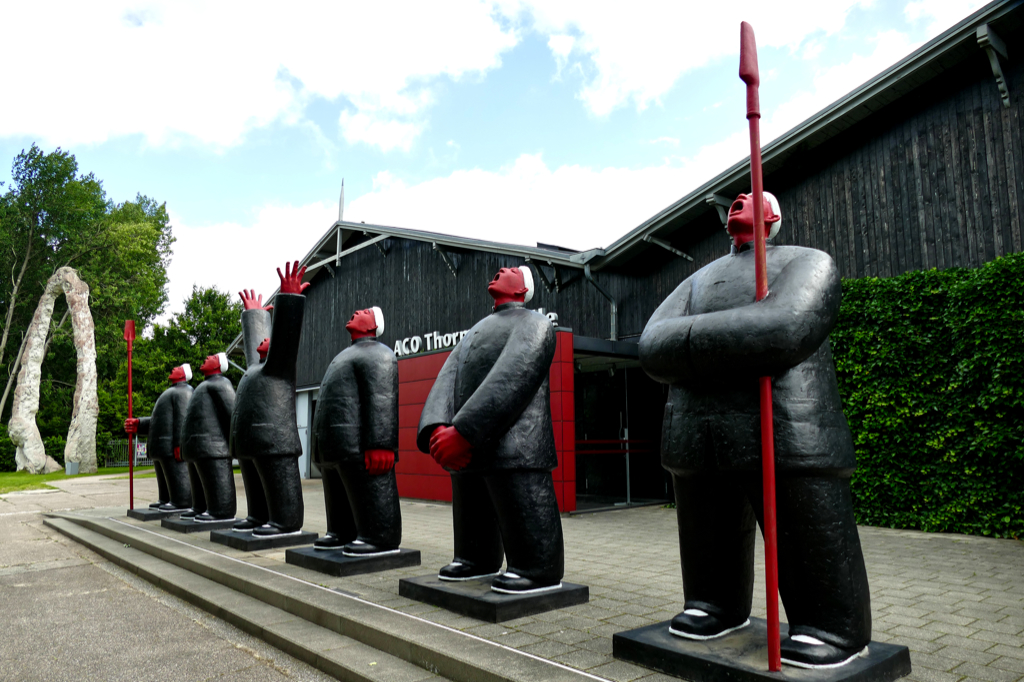
The first NordArt took place back in 1999. There are three exhibition spaces on the grounds: The former factory building, the old carriage shed, and the spacious park.
Over the years, most of the gigantic statues and installations in the park remained more or less in their places. That’s understandable since they are mostly made of iron, stone, and marble. Hence, they are a bit heavy to be shuffled around on the garden’s 80,000 square meters.

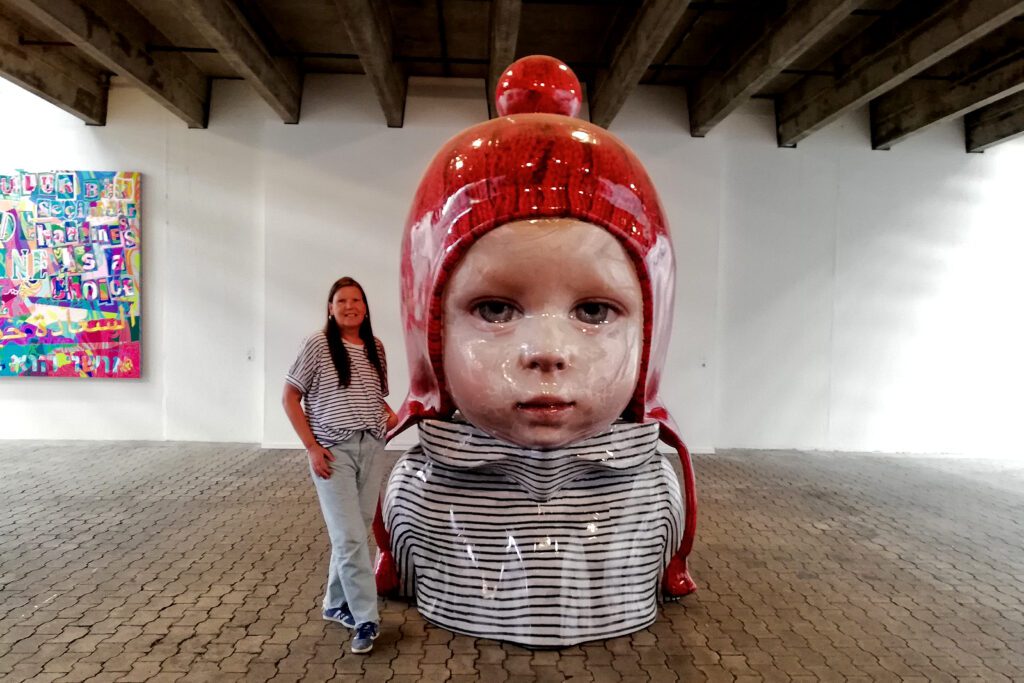
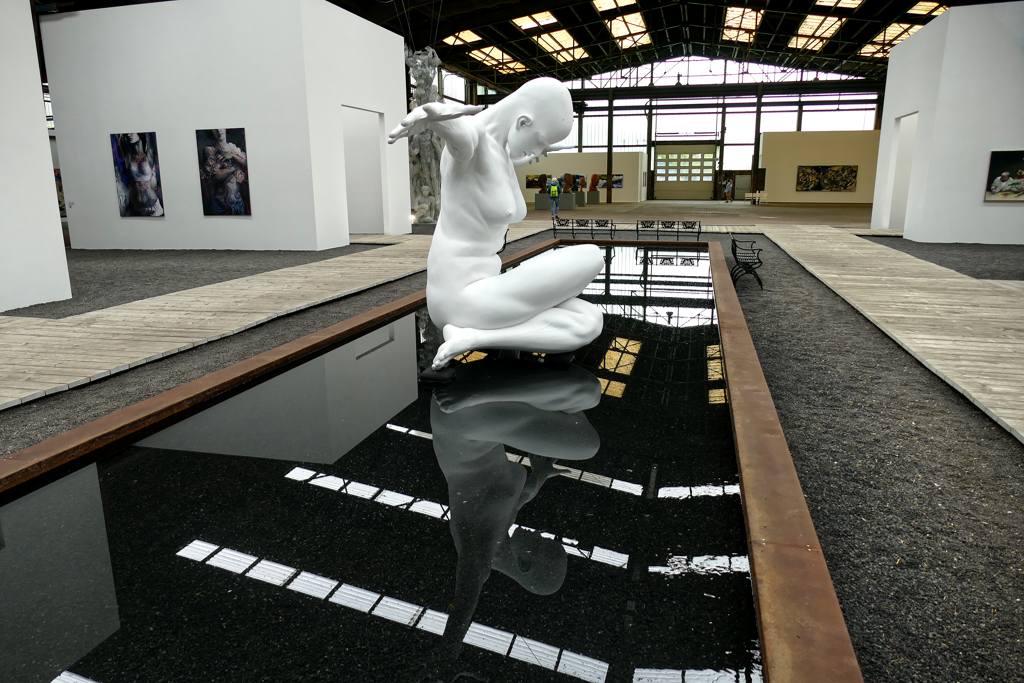
The exhibitions at the coach house and the industrial hall, however, show a comprehensive selection of works by contemporary artists from all over the world. And although you won’t always find the works of some big art scene players here, you’ll get to see fresh, inspiring art.
Every year NordArt receives around 3,000 applications from all over the world. The works of 200 selected artists form a kaleidoscope of very different contemporary art.
What to Expect in 2026
The trip to the NordArt in Büdelsdorf has always been worth the effort. But if you’ve never attended this mega art event before, 2026 is certainly a good year to become a new disciple.

I hate it when group exhibitions degenerate into a random hodgepodge. Quantity over quality. This certainly can’t be said of the curators of this year’s NordArt. Compared to some of the previous issues, the enormous halls remained quite empty.

This reinforces the notion that each piece of art was very thoughtfully selected and carefully handpicked. And with this being said, this year I saw a great deal that I found exceptionally good.

Hungarian artist Aniko Boda paints surrealistic motifs in an almost Preraffaelite style.
After my visit, I came to the conclusion that the NordArt was worth seeing every year, but the 2026 edition is a must!
Additional Features
Apart from the main curated exhibition, there are always some featured extras: Every year, one particular country is the main focus and exhibits a choice of contemporary art. This tradition started in 2012 with art from China. Since then, very different countries such as Denmark, France, Ukraine, and Poland have had the opportunity to put together a collection for their so-called country pavilion.
In 2015, contemporary art from Mongolia was in focus, which was great because most people associate the country with steppes and yurts, and folkloric leatherwork. It’s wonderful when an exhibition like this broadens your horizons and refutes common clichés.

This year again, 13 Mongolian artists are exhibiting their works. The exhibition called Between Wind and Spirit – Traces in Expanse presents significant works of contemporary art from Mongolia, referencing the cultural heritage of the nomadic way of life. Elements such as wind, mountains, and vast landscapes are translated into modern artistic forms of expression. This results in works that combine traditional symbolism with contemporary perspectives, making themes such as cultural memory, individual experiences, and the evolution of artistic expression tangible in a multifaceted way.

Particularly interesting is the section of the exhibition located in the old carriage shed this year: seven female artists from Central Asia are presenting their work under the title Silsila. Silsila translates from Arabic as chain or genealogy.

However, in Sufism, it refers to the transmission of knowledge across generations. It is largely women who keep cultural memory alive and pass on experience. The exhibition visualizes these often intangible lines of transmission.
Old Friends
But it wouldn’t be NordArt without at least a dozen contemporary artists from China participating.

In the background is the painting Wilderness Project No. 20 by LIU Shangying.
The special project Landscape of Thought presents a myriad of perspectives and projects by fifteen prominent Chinese artists in the impressive industrial hall.
Country Focus
As I mentioned above, the country focus has been an important element of every NordArt. This year, under the title Vilnius – Riga – Tallinn: Notes from the Fringe, three Baltic countries take center stage.

Lithuania, Latvia, and Estonia share a history marked by long periods of foreign hegemony. To this day, independence and cultural identity remain absolutely crucial for these long-oppressed nations. Twenty-two Baltic artists showcase their approaches to these topics.

The special exhibition is divided into three sections: Contemporary Tensions explores the state of being in an unstable environment. Inner Territories delves into the realm of fantasy, dreams, and the subconscious. Laboratory of World Design experiments with materials and form.
Plan Your Visit
Opening Hours And Tickets
In 2026, the NordArt takes place from June 6 to October 4. It’s open from Tuesday to Sunday between 11 a.m. and 7 p.m.

The general admission is 20 €uro on weekdays and 23 €uro on weekends. There is also a ticket for 32 €uros which grants access on two consecutive days – no matter if you are visiting during the week or on a weekend. Also, there are discounts for students and families as well as season tickets, so you’d better check out their website. There you can also buy your tickets online.
How to Get to Rendsburg and Büdelsdorf
The most convenient way to get to Rendsburg is by train. You get there, for instance, from Hamburg in about 90 minutes and from Berlin – via Hamburg – in about 3,5 hours. Then, it’s a 20-minute walk from the train station to the Kunstwerk Carlshütte. Alternatively, you can catch a bus, obviously. However, on Sundays and holidays, they don’t go very frequently.
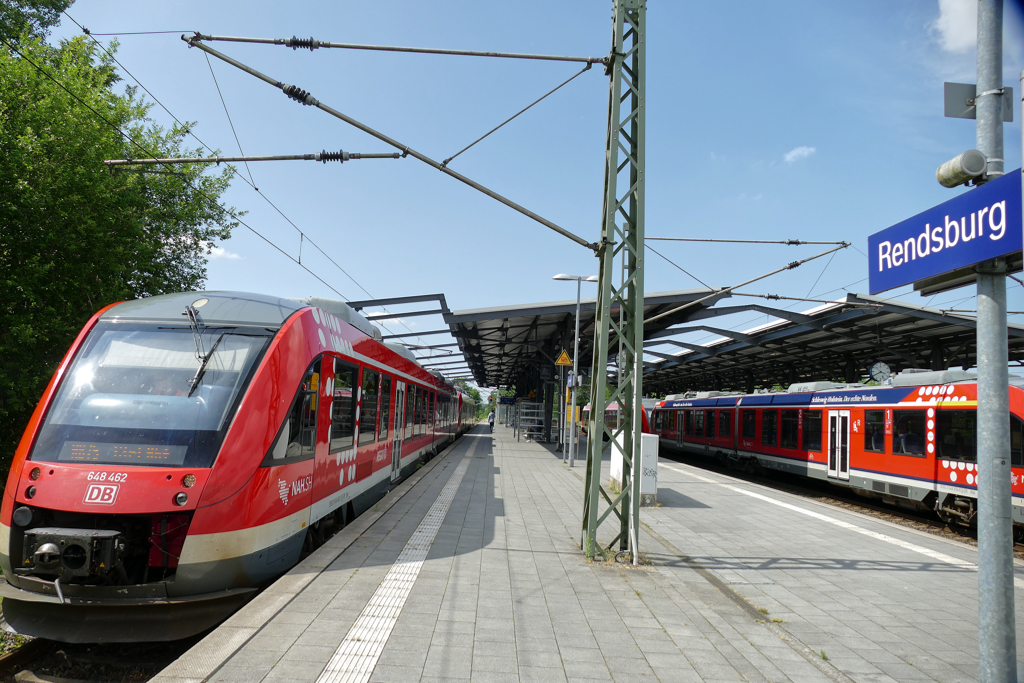
Here’s a special tip for you Germany travellers: For about 30 €uros, you can travel an entire day by train within every federal state. However, you are only allowed to take regional trains, not IC or ICE. The best part is: each further person pays only 3 to 6 €uros. Up to 5 people can travel on one regional day ticket. The basic fare as well as the supplement per person vary from federal state to federal state.
Due to its central position, Hamburg is automatically included in tickets for Schleswig-Holstein, Mecklenburg-Western Pomerania, and Lower Saxony, which also includes Bremen.
Büdelsdorf is in Schleswig-Holstein, and the day ticket for one person is 34 €uros. Additional fellow travellers pay 6 €uros per person.
The Germany-Ticket for 63 €uro
Following the fantastic 9 €uro ticket that allowed nationwide travel for an entire month from June to August 2022, there is now the 63 €uro ticket. For good.
With the 63 €uro ticket, you can travel basically the entire country by regional trains. Those train numbers begin, for instance, with RE or MET. But keep in mind, it is not valid on interregional trains such as the Intercity IC or Intercity-Express ICE. However, you can also use regular buses, trams, subways, and suburban trains as well as regional express trains everywhere in Germany.
While the 63 €uro ticket is valid throughout the country, it is not linked to German citizenship. Non-residents can also purchase it. Although it is an annual subscription, it can be canceled on a monthly basis.
So if you are planning on taking regional trains in Germany as well as intercity public transportation, the Germany Ticket might be your best option.
Just for the record: There is also a Flixbus going to Rendsburg, however, it’s not a valid alternative. It takes as long as the train but is less comfortable and just a couple of €uros cheaper.
Five Tips
After having been to several NordArt editions, I’m happy to share five tips that will make your visit even smoother and more enjoyable:
Wear comfortable, sturdy shoes
There are a couple of reasons why you should refrain from wearing fancy heels. Firstly, you might have to walk around 20 minutes from the train station in Rendsburg to the venue. Although there is a bus, it’s not going very often, so you’ll possibly even save time by walking.
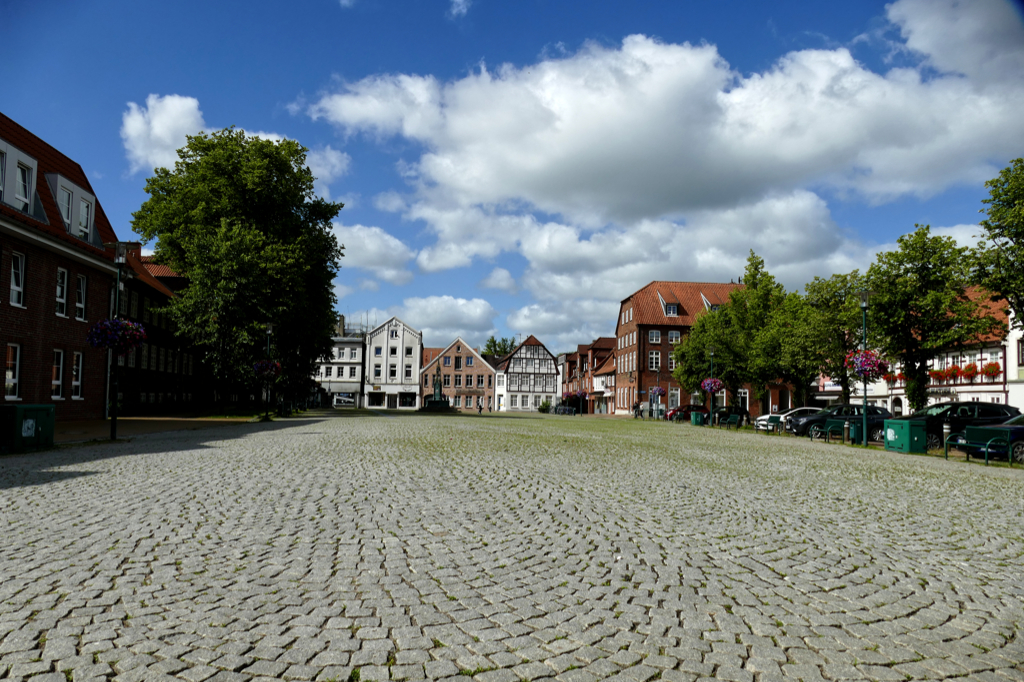
Then, if you have time to explore the historic center of Rendsburg, you’ll have to walk on cobblestones. And finally, keep in mind that the venue is an old industrial building with time-worn, uneven floors and simple iron stairs.
Bring some picnic and water
This is actually optional since there is a small charming café on the premises. However, it won’t surprise you that they are not exactly cheap. As a matter of fact, the prices aren’t even the main reason for bringing at least water with you.

The café is really very small, and chances are that you won’t find a free spot to enjoy some refreshments. However, coming from Rendsburg, you’ll pass a supermarket where you can stock up on drinks’n’snacks.
The café Alte Meierei is open from Tuesday to Sunday from noon until 6 p.m. and the pop-up cafeteria at the Alte Technikum is open from 11 a.m. to 5 p.m.
Visit also the Cast Iron Art Museum
Across the street from the NordArt is the so-called Eisenkunstguss Museum, a museum showing a vast collection of cast iron works. After extensive remodeling, the museum was reopened in 2016. A media guide navigates visitors through the exhibition with many interactive features and hands-on stations.
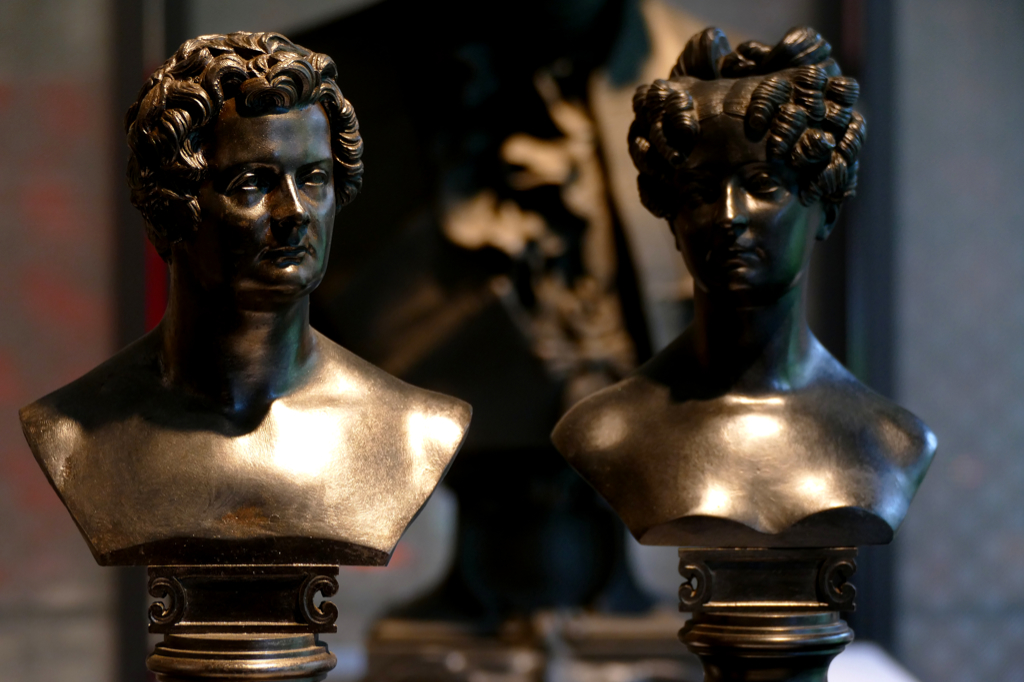
The Eisenkunstguss Museum opens from Tuesday to Sunday between noon and 5 p.m. You can visit it for free with your NordArt ticket. Otherwise, the general admission is 5 €uros.
Make Time for a Stroll Through Rendsburg and the Sculpture Park
Rendsburg is not that big, yet a stroll through the center is quite enjoyable.
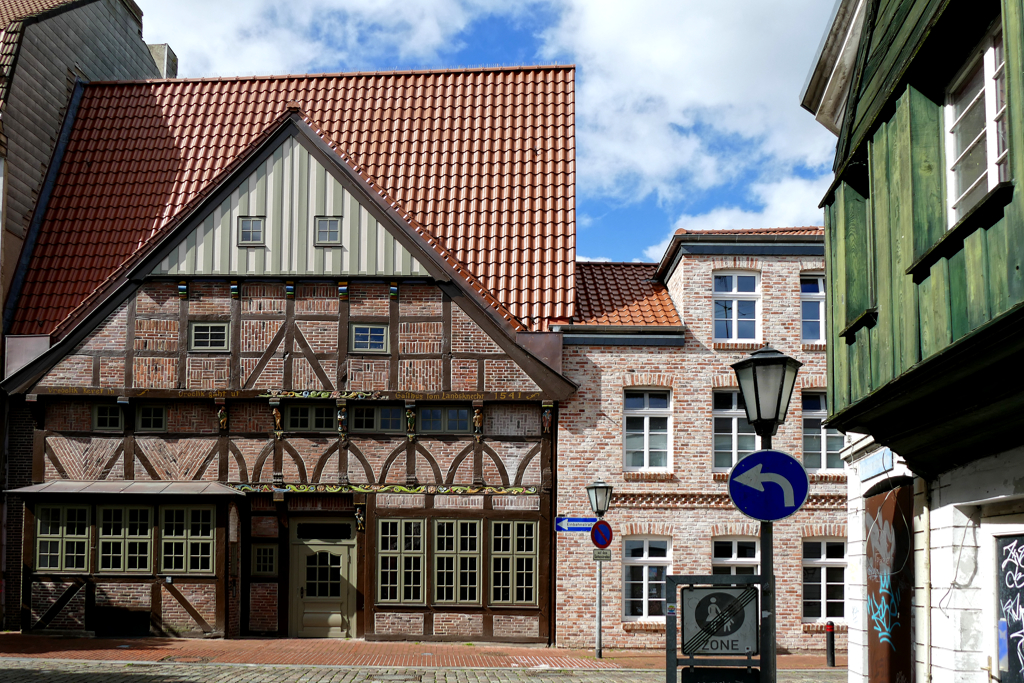
You’ll get to see lots of traditional North German architecture, and if you still have capacity to relish more art, there is the serene Hans Heinemann Park with 26 intriguing sculptures from different art epochs. The park was laid out in the 1950s and 1960s and is named after Hans Heinemann, a local painter, patron, and founder of the cultural association.
Try Local Cuisine
German cuisine is often associated with pork knuckle and schnitzel. That may be true for the southern states. We in the north eat differently. We’re living by the coast, and that impacts our cookery.
A great way to try regional cuisine is lunch at Geschmaxpiraten. This is a catering service connected to the Edeka supermarket right behind the Rendsburg train station. They are offering a daily changing lunch menu for just 10 €uro from Monday to Saturday. However, this is only until 2 p.m.

But alternatively, you can enjoy their so-called After Work from Wednesday to Friday between 5 p.m. and 8 p.m.
You can find the exact location on the map at the end of this post.
In Retrospect
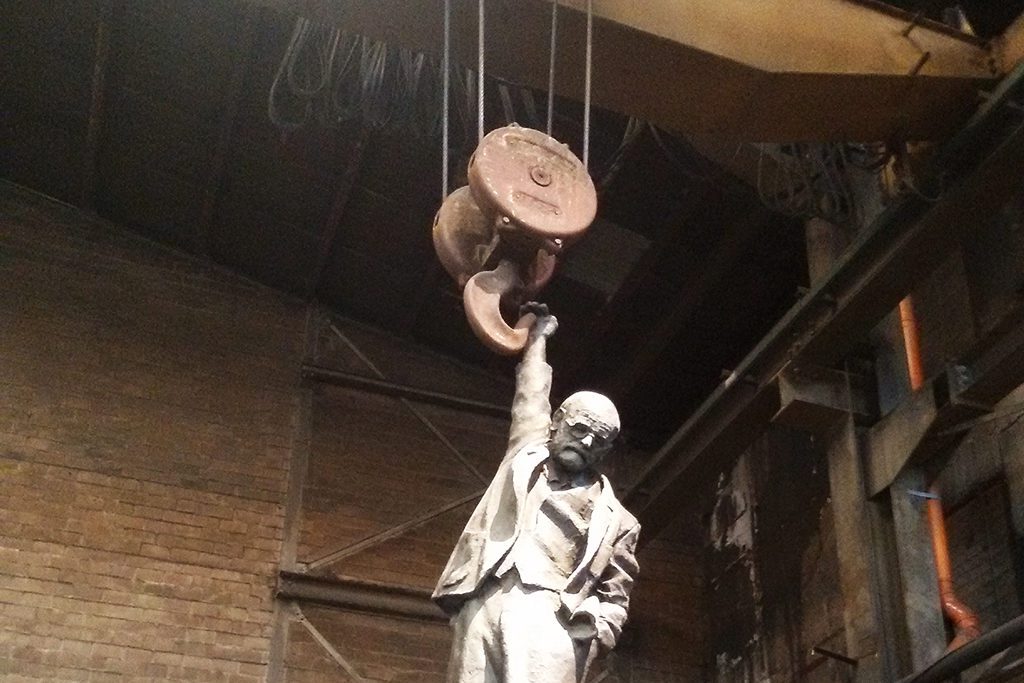
If this post inspired you to look back at further NordArt editions, here are my posts from the past years:

Map
On this map, you get an idea of how to get to the NordArt and also of what else to see in Rendsburg.
Pinnable Pictures
If you choose to pin this post, please use one of these pictures:


Did You Enjoy This Post? Then You Might Also Like These About More Art And Art Events:
Comprehensive Guide to FLORENCE – Home of the Medici, Cradle of the Renaissance
BOULOGNE-sur-MER – What to See, Do and Discover
Best Street Art in MALAGA
How to Visit the Biennale di Arte in Venice in 2026
Best Street Art in LONDON – Part I: Camden
Day Trip from Venice to Padua
Best Street Art in TENERIFE

Comprehensive Guide to ROME – For First-Timers, Repeat Visitors, And Eternal Admirers
Disclaimer: NordArt granted me free entrance to write about this year’s edition. However, all opinions in this post are mine and were by no means influenced by my cooperation partner.